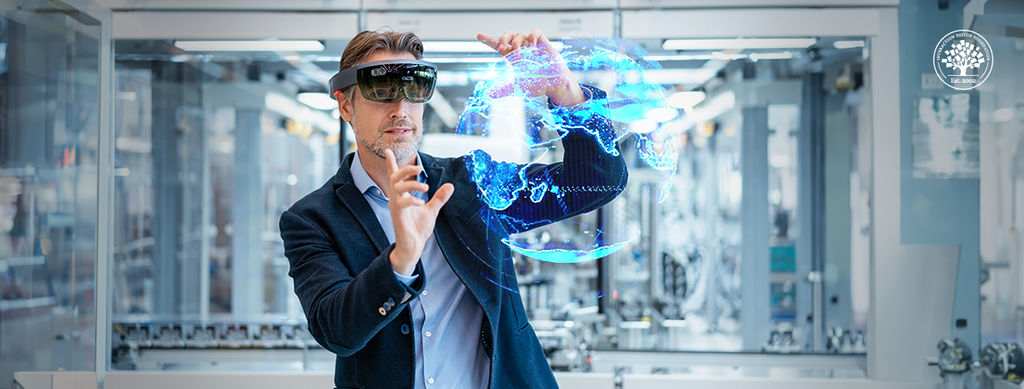
Innovation is the lifeblood of user experience (UX) design. As technological advancements continue to shape the digital world, designers aim to push boundaries to meet evolving user needs and expectations. To be innovative, designers rethink established norms, embrace new technologies and find creative solutions to complex problems.
UX Designer and Author of Build Better Products and UX for Lean Startups, Laura Klein explains important points about innovation:
Why is Innovation Vital to UX Design?
What makes the most popular digital products like mobile apps so successful? Is it that they solve problems in the most intuitive ways? Is it because they’re visually appealing with appropriate brand or industry colors and a minimalist look? Or maybe it’s because the brands’ user and market research departments zeroed in on the right parts of the customer experience—the ones they would need to create products that meet target users’ needs in full, and even dazzle them.
How a user interface (UI) guides users, the aspects of its visual design and how well it meets user needs are certainly vital factors—but one point in particular stands out for them as existing products. Before they went into product development, professionals had to work hard at generating ideas that found their way to the surface in what would become innovative solutions.

Household name Google's iconic, minimalist UI was once an innovation—and it remains popular because it stays relevant as a go-to for users around the world.
© Google, Fair Use
It might sound like a truism to state that design without innovation would be an oxymoron. However, if product design and innovation were not to connect, the results would include many bland retreads of a few original themes. There would be a near-total stagnation, with little choice and nothing substantial to differentiate brands in the marketplace. Fortunately, it’s human nature to advance—and UX design and innovation are synonymous. Designers and brands who aim to create successful design solutions for target audiences know that for successful service and product design, innovation—and the ability to remain innovative—is key.
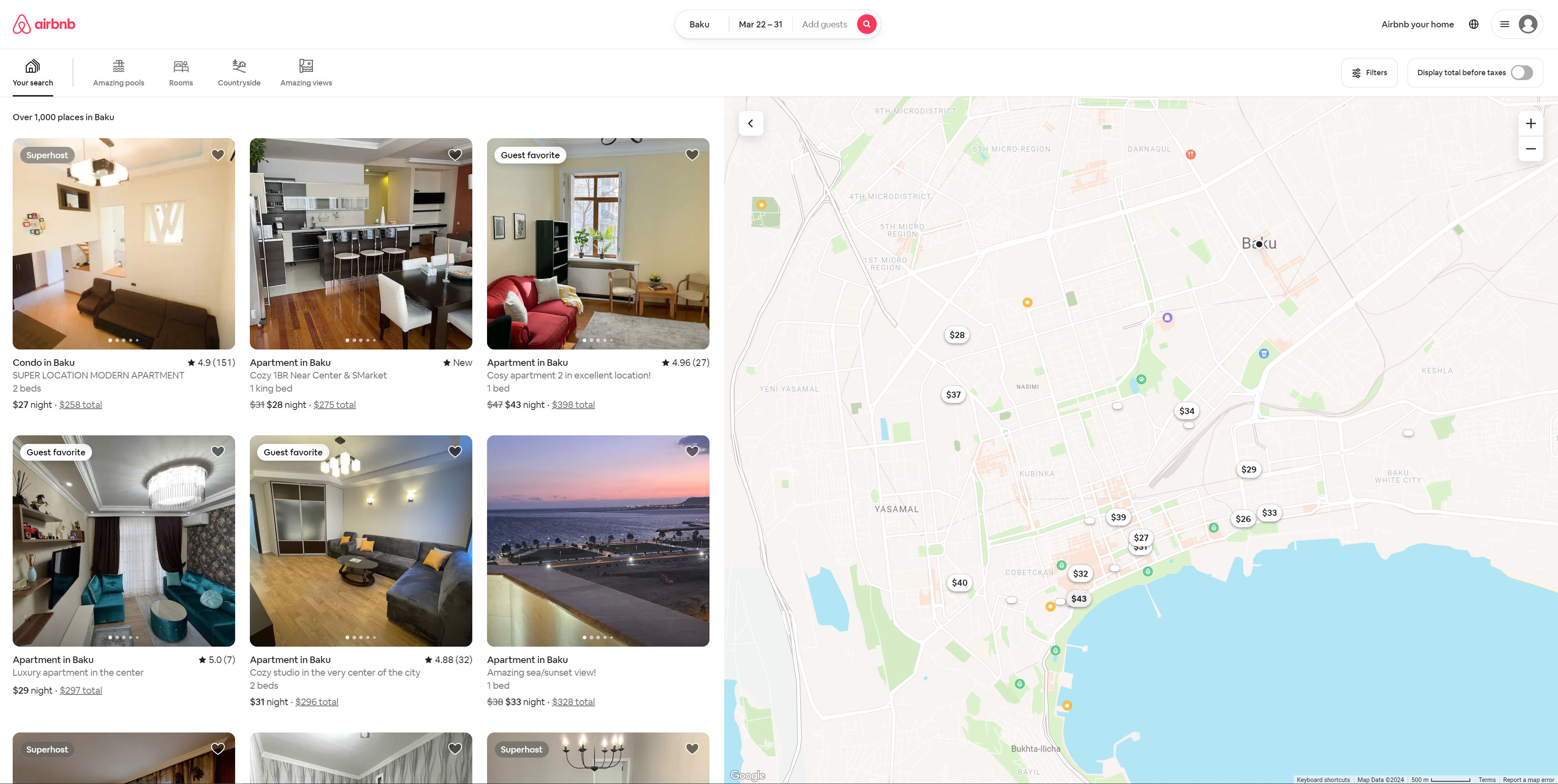
Airbnb’s concept remains an innovation that rethinks accommodation and empowers users around the world to sample richer aspects of their hosts’ services.
© Airbnb, Fair Use
The digital landscape of the 21st century has delivered many innovations that users quickly take for granted as they absorb them into everyday life. Examples include increasingly sophisticated micro-interactions and micro-animations like swiping a touchscreen or a celebratory animation for completing a task. This landscape presents UX designers with a continuum of ongoing challenges and opportunities to shape the future of design. It’s a continuum that is constantly evolving—perhaps not so much like the frontier of a territory as it might be more like a winding road in an impossibly large forest, with many hidden caves and cavern systems, awaiting discovery. Many of these undiscovered areas will be loaded with treasures to deliver to users and profits to brands.
However, with innovation comes risk. Consider the conveniences of innovations like biometric technologies such as facial recognition and fingerprint scanning—and the potential challenges to users’ privacy they might present. As technology progresses further into different spheres of human life, there may even be some unforeseen risks that will take maturity in the industry—and experience with the technology involved—to identify in full. What’s more, a technology itself is not what appears in the marketplace: Products that innovatively tap technology do. Plus, how users receive a new product or service—and ideally adopt it—takes a design team’s careful consideration to plan for and accommodate.
CEO of Experience Dynamics, Frank Spillers explains user adoption:
Another aspect of the place of innovation in design in this sense is the balance between a reliance on UI design patterns—established design norms that assure the designers who apply them well of reasonable chances of success for their brands—and pushing at the edges of what’s possible. The latter takes sparks of creativity—often generated during ideation sessions. It can lead a design team to adapt or rethink conventional approaches to digital products. Alternatively, they might inventively disrupt the status quo altogether and turn the usual ways of doing things upside down.
Watch our short video to understand more about UI design patterns:
Designers typically have a choice as to how much they can—or should—push at the edges of the established patterns and ways of doing things. Under the right conditions, they can showcase their expertise through design patterns that become truly their own. From there, they can score resounding wins for the brands they work for, the users they serve—and their own UX portfolios as examples of their creativity. They can include the evidence of how they came to access such imaginative heights in embracing new technologies and finding such creative solutions to complex problems through—for example—out-of-the-box thinking.
Author and Human-Computer Interaction Expert, Professor Alan Dix explains how to think outside the box:
Innovation is both a process and a reward in a self-perpetuating system. Clients with ideas for new products and services—or exciting new variations on existing ones—seek designers who can mirror their passion and vision, and translate it to workable and bankable marketplace wins. In any case, the natural flow of—and need for—technological advancement reflects the nature of human users. What’s new and exciting in the marketplace needs to stay as novel and as exciting as it can—and needed and desired—long into the future. Design history features many examples of innovations that have fared differently over time, with technology such as MiniDisc players, Google Glasses and smartphones, and brands such as Apple, BlackBerry and Nokia.
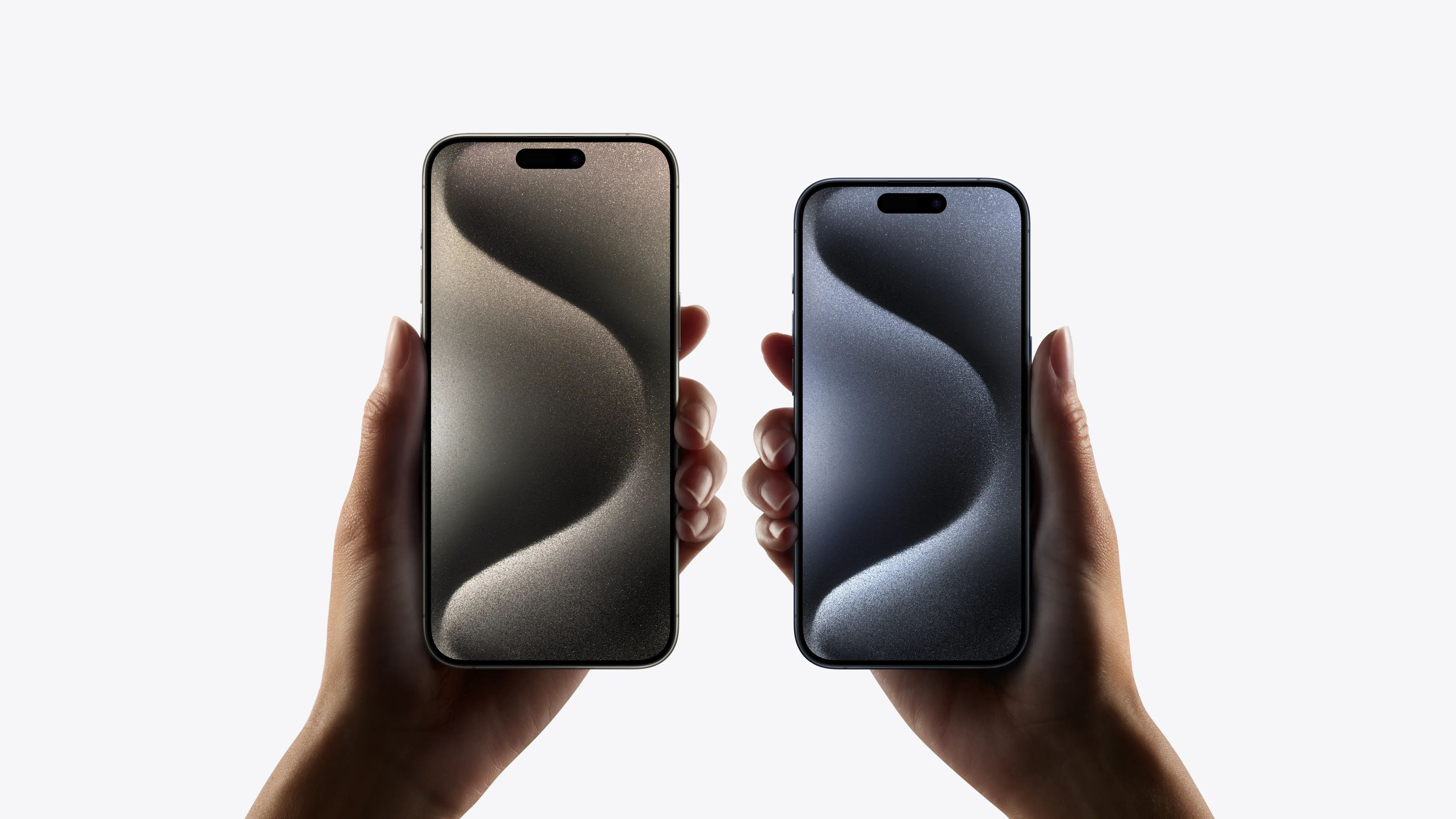
Innovative UX design examples include Apple’s iPhone. This UX design innovation remains popular and exciting—Apple have their finger on the pulse of what smartphone users desire and know how to more than live up to the expectations of a loyal user base.
© Apple, Fair Use
What are the Benefits of Innovative UX Design?
Perhaps a better way to frame that question at first would be to ask what the risks are of not being innovative.
“Most innovations fail. And companies that don't innovate die.”
—Henry Chesbrough, Innovation Thought Leader who launched the "Open Innovation" paradigm
In the dynamic reality of modern design, brands know that it takes a unique approach just to survive in the market—let alone conquer a substantial share of it. The rise of the smartphone has offered a kind of stable playing field for UX and UI designers. Nevertheless, technology continues to evolve, and no brand can afford to be complacent in any case. Designers need to keep advancing so that they can:
1. Examine The Most Avenues in Their Design Process
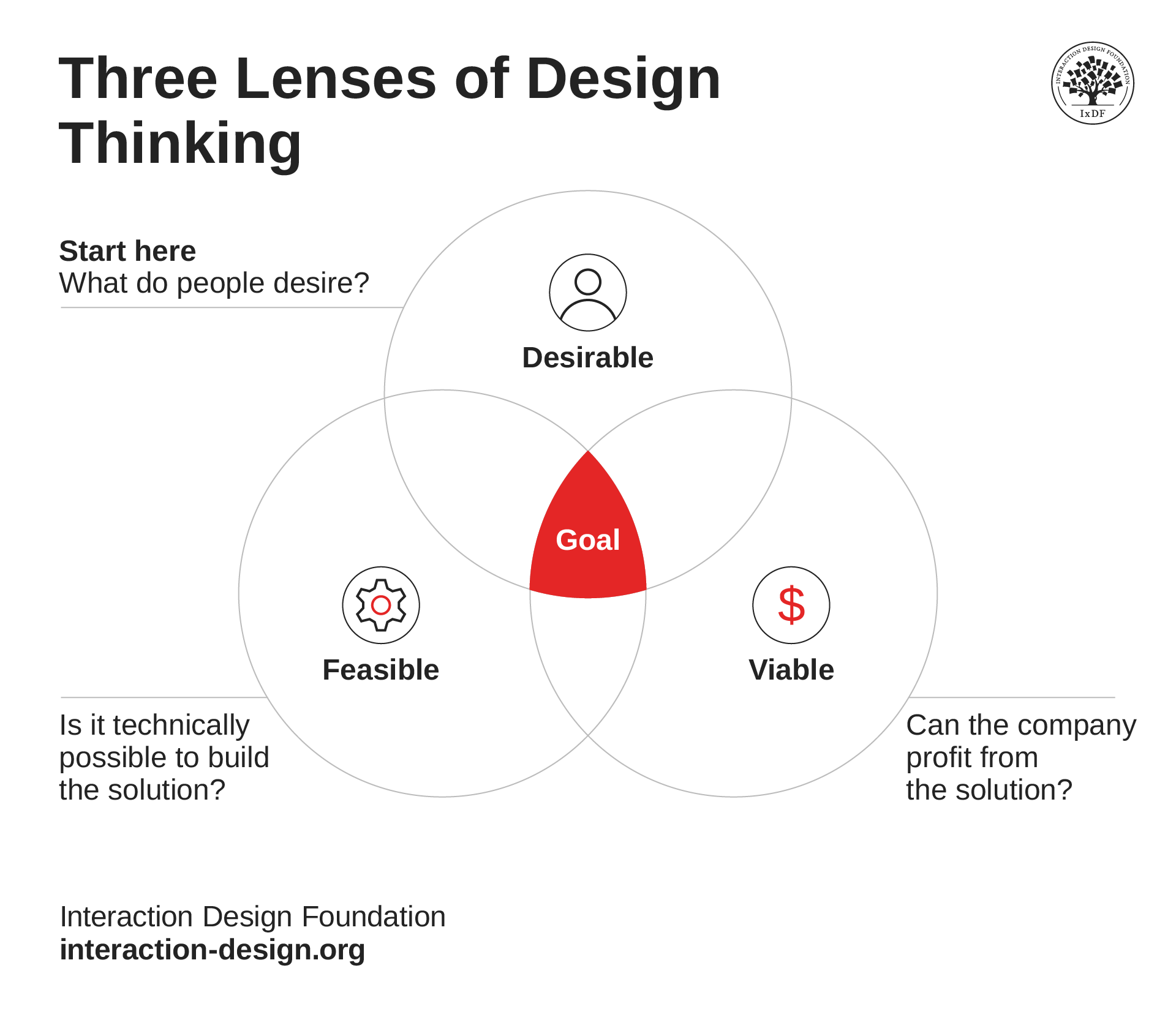
The design thinking innovation process empowers designers and design teams to work out what and where the goal is.
© Interaction Design Foundation, CC BY-SA 4.0
For true innovation, a UX design process such as design thinking is ideal. Since the design thinking process encourages such a vast exploration of the problem space and solution space, designers—and the team members they have ideation sessions with—can stand back and reapproach and reframe—and even radically depart from traditional ways of assessing—design problems and users’ needs and scenarios.
UX Strategist and Consultant, William Hudson explains important points about design thinking in this video:
Divergent thinking techniques such as out-of-the-box thinking and bad ideas offer valuable leeway for design teams to get the distance to look at problems and contexts from new and unimagined perspectives. Once they access these new angles, team members can sift and sort the ideas they generate via convergent thinking and then weave workable insights into prototypes they can test.
Professor Alan Dix explains divergent and convergent thinking:
2. Drive User Engagement
Another component in the calculus of design innovation is the often-elusive goal of not just to attract users with a new design, but to keep them actively involved, interested and satisfied with a product that’s new, exciting and truly “different” to distinguish the brand that users will be loyal to. Designers therefore need a clear idea of the user journeys on which the people who will encounter new products or services will find themselves:
Frank Spillers explains key points about user journeys:
User engagement is a key metric for understanding how users interact with a product or service and whether they find it valuable. Innovative UX design plays a vital role in this formula, as designers work to:
Improve usability: Innovative products should be easy to navigate and use effectively. They should have intuitive qualities that users can take to without detailed instruction.
Increase satisfaction: Users are more likely to come back to and recommend products that have innovative designs. They’re a sign of a forward-thinking company that looks to both the future and their users’ futures.
Boost the chances of success: Innovative UX design helps products fly high to reach solid goals, with more sales and strengthened customer loyalty.
Incorporate AI-driven personalization and real-time optimization: With advances in AI, designers can integrate it inventively into UIs and further boost user engagement—and their brands’ conversion rates.
Product Design Lead at Netflix, Nival Sheikh explains vital aspects about ethical AI:
3. Stay Competitive in the Digital Landscape
Innovation is a pressing need for the survival and sustainable growth of companies, and innovative UX design helps organizations:
Stand out in a competitive market: A brand that can offer exceptional and user-centered experiences can enjoy sustainable advantages over competitors.
Attract new clients: For agencies and designers, it’s a massive asset to have original design patterns to showcase to potential clients. The evidence of this expertise can lead them to work on more exciting projects with brands that seek to differentiate themselves.
Reflect company values: Innovative products often call for equally innovative digital properties to support them. That makes designers who create innovative designs more attractive to forward-thinking companies. One of the most vital values a brand can exhibit—and an aspect that designers mustn’t forget as they innovate—is a commitment to accessibility and inclusive design.
Watch our video to understand the vital nature of accessibility in design:
4. Meet Evolving User Expectations
User preferences and expectations are constantly changing. Innovative UX and UI designs help meet these evolving needs since they can:
Adapt to technological changes: Most people quickly adapt to technological advancements, making them more open to innovations that positively contribute to their lives.
Create intuitive interfaces: Innovations like kebab menus have long since become established web design patterns—to simplify and declutter interfaces, especially on mobile sites.
Embrace emerging technologies: Technologies like artificial intelligence (AI), voice interfaces, blockchain, IoT and wearables offer new ways to enhance user experiences and meet changing expectations.
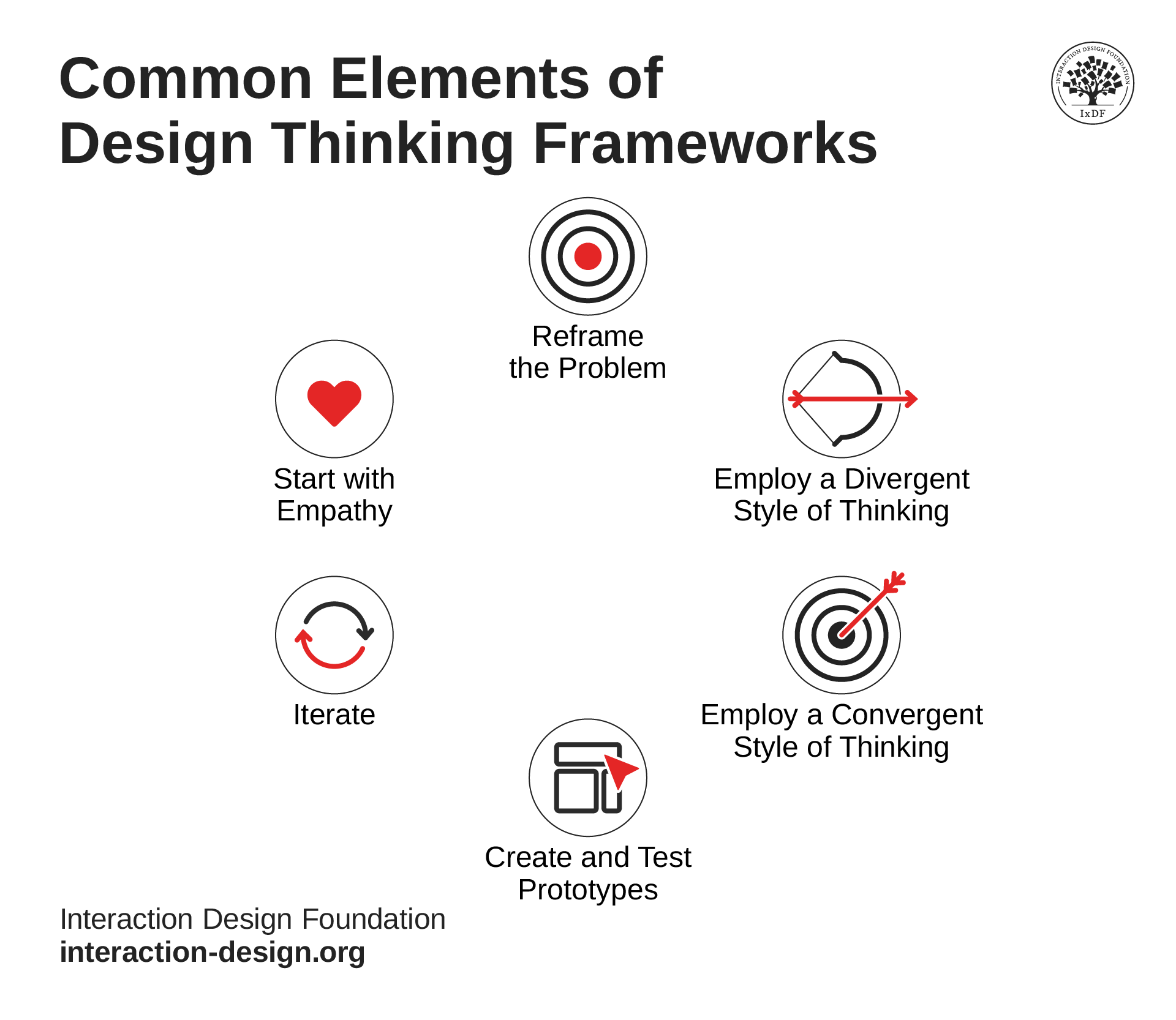
When a brand’s design team applies this framework well, it can afford to consider innovation as a learning process embedding design thinking—and take the time to arrive at the best solutions.
© Interaction Design Foundation, CC BY-SA 4.0
What are Key Areas for UX Innovation?
Here are some notable ones:
1. AI and Machine Learning Integration
Artificial intelligence and machine learning (ML) have become essential tools in UX design. They’ve revolutionized the way designers create, personalize and optimize user experiences. AI and ML algorithms can:
Analyze large volumes of user data to identify patterns and insights.
Predict user behavior and anticipate needs and preferences.
Optimize the user journey for a more intuitive experience with tailored content.
When mindful and innovative designers integrate AI into UIs, they can greatly boost user engagement and conversion rates through personalization and real-time optimization. AI-powered tools also automate tedious tasks and let designers focus on more creative and strategic work from higher altitudes.
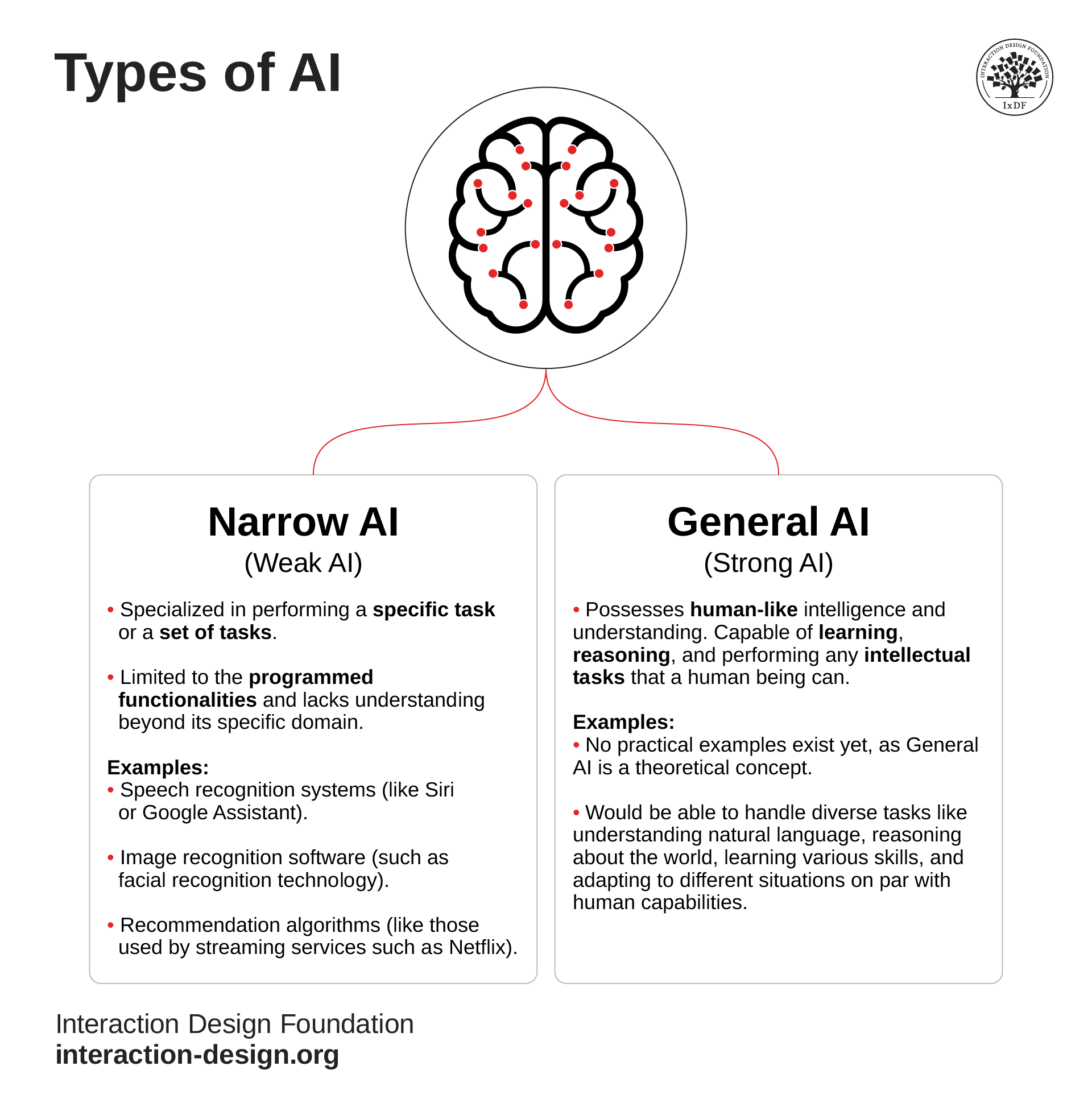
The potential for AI in innovative design is immense—and calls for responsible and ethical study and application.
© Interaction Design Foundation, CC BY-SA 4.0
2. Voice and Gesture Interfaces
Voice and gesture-based interfaces have evolved to highly sophisticated levels. Smartphone screens and Alexa devices are prime examples of how embedded these technologies are as staples of design and household names. What’s more, the advent of AI and machine learning has taken these interfaces to new heights, and made them increasingly sophisticated and user-friendly.
Key considerations for designing voice- and gesture-based interfaces include:
Natural language processing and speech recognition for voice interfaces.
Context-appropriate design based on the user's environment and tasks.
Intuitive and easy-to-perform gestures for gesture-based interfaces.
These interfaces offer many benefits that modern users have become used to—and that users expect to develop further and in new ways for their use—such as hands-free interaction and improved accessibility for users with disabilities. However, designers must be mindful of potential challenges such as providing adequate feedback, establishing good user experiences and addressing privacy concerns.
3. Augmented and Virtual Reality Experiences
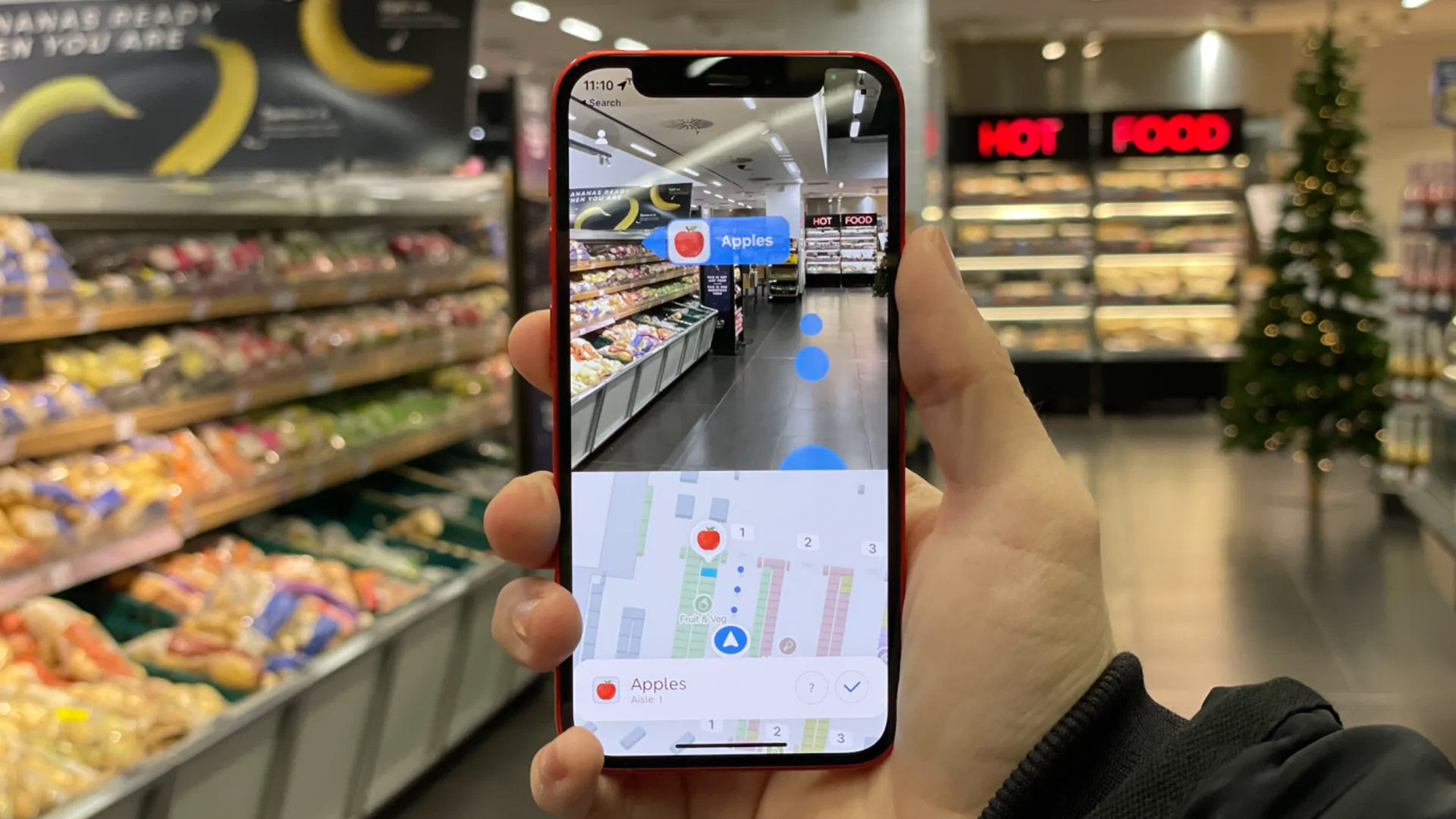
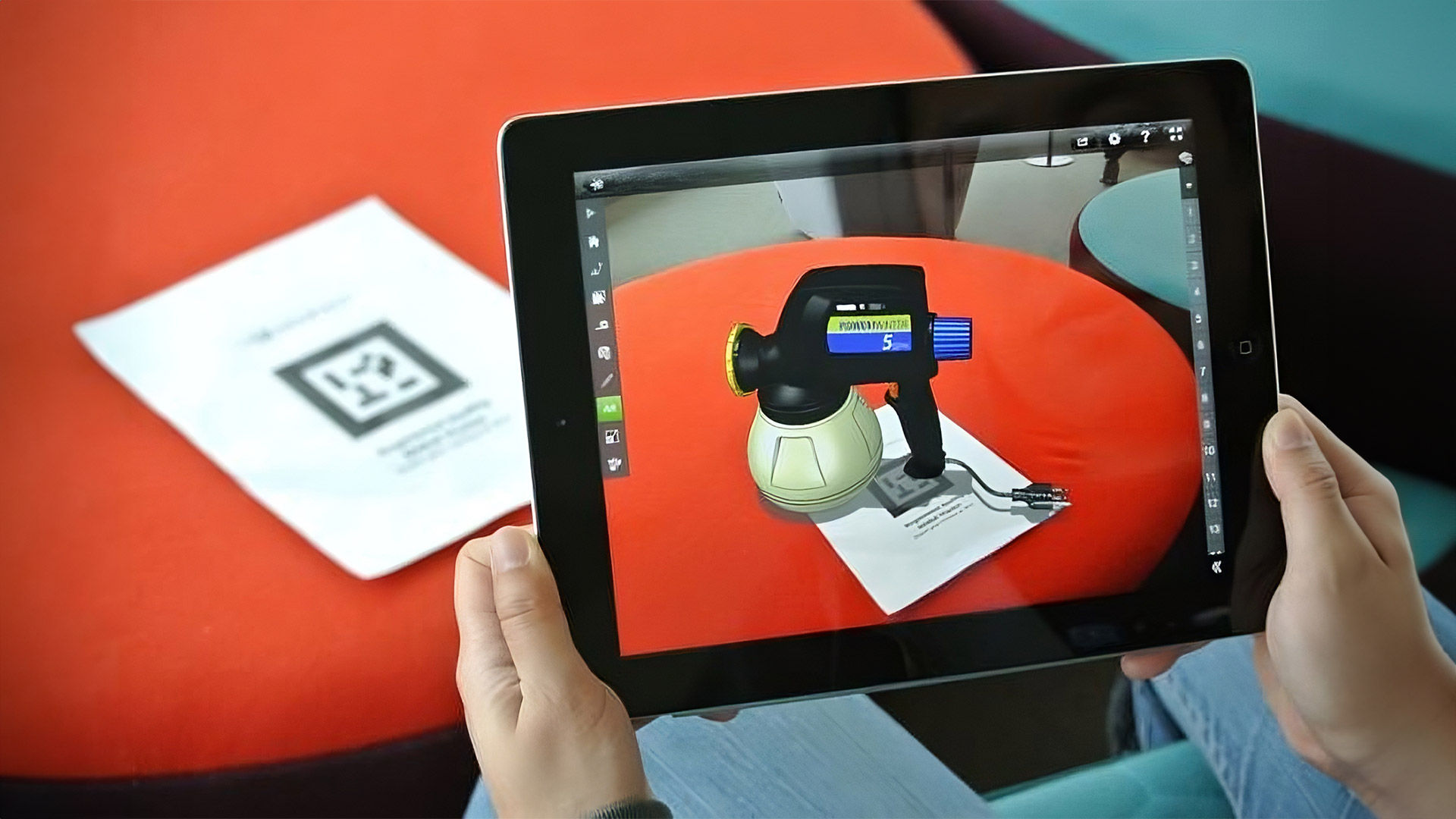
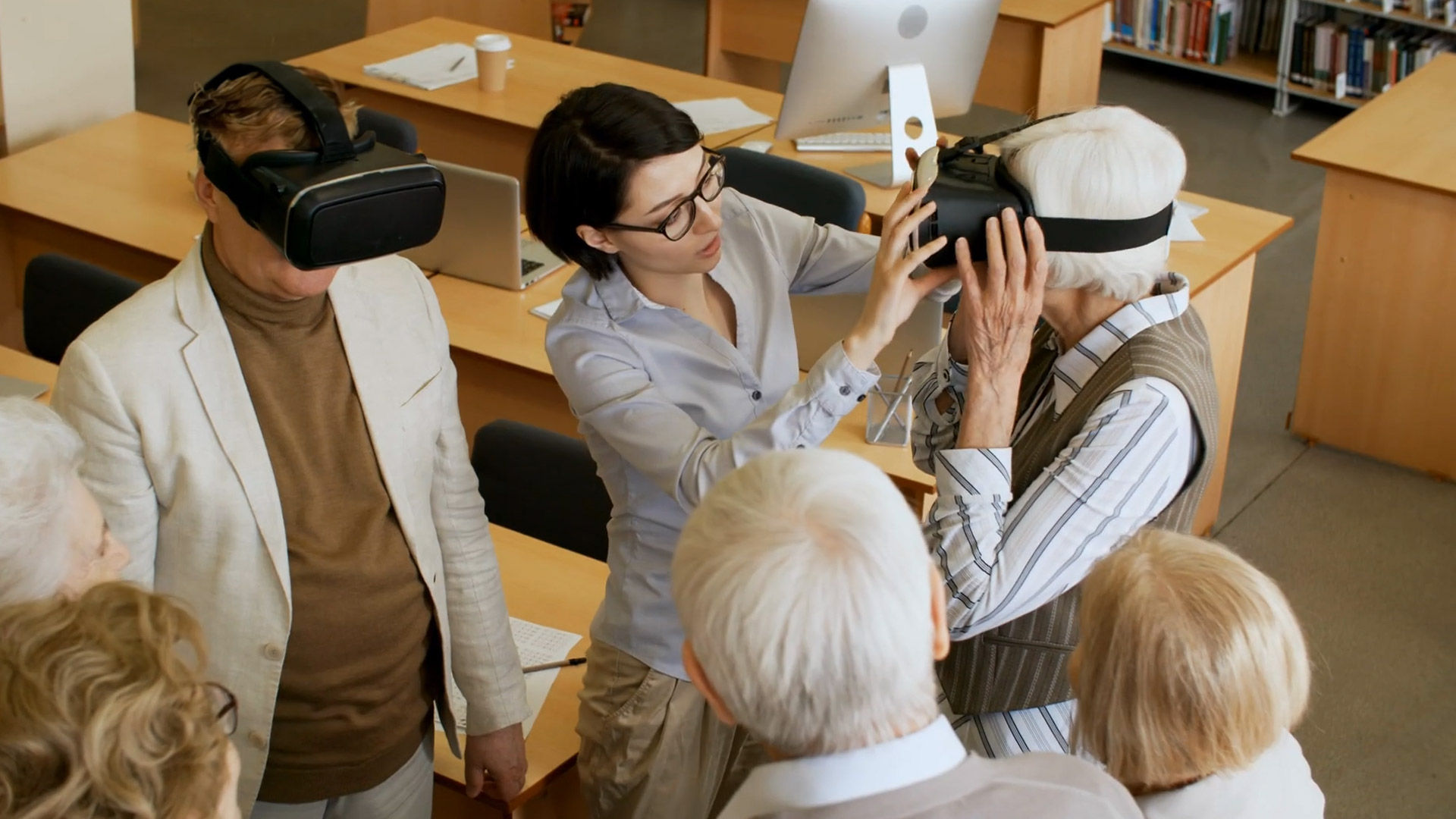
Augmented reality (AR) and virtual reality (VR) are continuing to transform UX design and users’ lives. From their early days as novelty experiences, for example, innovative AR and VR designs have grown to become ingrained in the popular psyche. Immersive and interactive experiences integrate digital data with the user's environment in real-time, allowing for more natural and intuitive interactions.
Watch Frank Spillers explain fascinating points about AR and its importance in the modern design world:
Key aspects of AR and VR for designers to keep innovating include in how they can:
Create tridimensional interfaces for more natural interactions.
Develop virtual prototypes for early user feedback and testing.
AR and VR technologies can also leverage sensors and AI to collect data about user behavior and preferences, which can enable highly personalized experiences. These immersive technologies continue to open up new possibilities for data visualization, accessibility and gesture-based interactions. So, they’re prime areas of attention for designers to focus pushing at the boundaries of—and help users emerge into powerfully helpful new conveniences that may become staples in everyday life.
Author and UX Pioneer, known as the Father of UX Design, Don Norman explains important points about the future of AR and VR in design:
How to Overcome Barriers to UX Innovation?
Designers encounter the professional face of innovation in many aspects of their lives, and it’s here where they can flex their imaginations and stoke powerful engines of creativity:
Author and Human-Computer Interaction Expert, Professor Alan Dix explains important points about the nature of creativity:
At the same time, the workplace is the main area for designers to explore and tap innovative insights. So, it’s vital to:
1. Nurture a Culture of Creativity
Designers and the teams they ideate and iterate with need an environment that’s conducive to creativity—one that doesn’t stifle wild-sounding notions with judgments. This involves thinking outside the box and developing exciting ideas for user interfaces that offer exceptional experiences. To encourage new and even seemingly crazy ideas among team members can lead to innovative breakthroughs. It's important to remember that great ideas often sound unconventional at first.
To stimulate creativity, designers can:
Use design thinking exercises to encourage collaboration and facilitate problem-solving.
Employ structured but open-ended frameworks that foster creativity.
Challenge assumptions and explore diverse perspectives.
Treat uncertainty as an opportunity for meaningful and creative solutions.
Professor Alan Dix explains the bad ideas approach to innovation:
2. Embrace User-Centered Design
User-centered design (UCD) is crucial for creating valuable and innovative products or services. To practice it, designers put their users’ needs and wants first, make data-driven decisions and create intuitive designs that satisfy—and, ideally, exceed—user needs. So, designers should:
Conduct thorough user research to gain insights into users' core needs.
Observe users in their natural environments, to understand their preferences and values.
William Hudson explains essential points about user research:
Create personas that represent principal user groups to provide a shared understanding among team members.
Professor Alan Dix explains important points about personas:
Start early in the design process with wireframes, prototyping and usability testing to keep a valuable user experience core at the heart of all that they design.
Watch as Alan Dix explains prototyping and why it’s important:
Constantly seek feedback from users and revise products accordingly. It’s impossible to understate how the continuous nature of this is vital—only when brands keep a finger on the pulse of their user base can they prevent themselves from becoming blindsided by complacency and hard-to-notice marketplace threats.
Watch as William Hudson explains some vital dimensions of user testing:
3. Leverage Data-Driven Insights
To practice data-driven design, UX researchers and designers use data from quantitative research and qualitative research to inform and shape design decisions. To find their ways to more effective and user-centric solutions—and leverage data-driven insights—designers can:
Use analytics tools to gather quantitative data on user behavior, demographics and engagement.
Conduct user surveys and interviews to collect qualitative data on user opinions, preferences and motivations.
Alan Dix explains the difference between quantitative and qualitive research:
Use A/B testing so they can compare design variants and determine which performs better with users.
William Hudson explains A/B testing and why it’s helpful:
Harness heatmaps and click-tracking tools to visually represent user interactions and identify popular elements or areas where users struggle.
How to Measure the Impact of Innovative UX Design?
Designers and businesses need to track various metrics and collect feedback to assess how well their innovative designs are performing in the marketplace. The only way to see how well they’re doing “in the wild” is to look at:
1. Key Performance Indicators
To gauge the success of innovative UX designs, designers and businesses can track several key performance indicators (KPIs). These metrics provide insights into user behavior and engagement:
User engagement: Measure time users spent on the platform, number of interactions and frequency of visits.
Conversion rates: Track how many users complete desired actions, such as making purchases or signing up for newsletters.
Task completion rates: Assess how efficiently users can accomplish specific tasks within the interface.
CEO of Experience Dynamics, Frank Spillers explains vital points about task analysis, and why it’s so valuable:
Error rates: Monitor how frequently user errors crop up, to find areas for improvement.
2. User Feedback and Testing
User feedback is critical to the success of any design, let alone the real-world impact of innovative UX designs. Designers can collect valuable insights in various ways, including:
User surveys: Conduct surveys to gather qualitative feedback on user satisfaction and preferences.
UX Strategist and Consultant, William Hudson explains important aspects of surveys:
Usability testing: Observe users interacting with the design to identify pain points and areas for improvement.
A/B testing: Compare different design variations to determine which performs better with users.
Heat maps, eye tracking and click tracking: Analyze user behavior patterns to optimize layout and content placement.
3. Long-Term Business Outcomes
The ultimate measure of innovative UX design's impact lies in its long-term effects on business outcomes. So, how do changes or innovations match the business goals? Here are areas to examine:
Customer retention: Track how many users continue to engage with the product or service over time.
Brand loyalty: Measure customer satisfaction and likelihood to recommend the product to others.
Revenue growth: Analyze how innovative UX design contributes to increased sales and overall business growth.
Market share: Find out how the improved user experience affects the company's position in the market.

Whatever the business goals, it’s vital to keep a sharp focus on the people who will—ideally—come to love an innovative design solution. Personas are valuable UX deliverables to constantly refer to and examine.
© Interaction Design Foundation, CC BY-SA 4.0
What are Risks to Consider with Innovation in UX Design?
By its nature, innovation comes with risk. The greatest risk of all is to innovate for the sake of innovation. There must be at least one solid—and bankable—reason for an innovation to shake up the marketplace as a game-changer.
The judgments of the brands and the designers are critical to weigh up the potential consequences of rolling out a product that few, if any, are ready to experience or if the ways of achieving goals are already the best. When the discerning designer considers an innovative new product or service—or innovative changes to an established one—they should ask:
1. Could It Improve The Users’ Experience?
The users come first—and always will. Their needs define their expectations, which in turn determine how much a truly innovative product—or service—might be able to delight them in their numerous user contexts. This is where it’s important to consider the various scenarios in which users might access and use a new product or service:
Professor Alan Dix explains scenarios and why they’re important stories for design:
What’s more, a conscientious designer must determine the value proposition on offer to users, and they must prove their empathy with users:
See why empathy is vital fuel for innovative designs:
Designers should also see if someone else tried that “innovative” or “new” idea in another form elsewhere, and failed. If so, what lessons are there to learn? If not, then it’s a good idea to start prototyping to validate the innovative design.
2. Is The Market Ready For It?
This ties in closely with the first question, but deserves its own consideration. For example, a designer of a wealth-management app might have novel ideas about how to make it easier for elderly users to access their banking details, investment portfolios and more. However, the ingenuity of an easy new way to do so might put these users—who are likely to be more wary of new technology—on their guard.
3. Would It Be Feasible And Viable?
If the design seems promising—and can delight users—what about the realities of developing and carrying it to market? Brands need to carefully examine the development costs of proposed digital products or services and releasing them to the mass market or niche ones. Again, how helpful, usable and delightful a product is is a vital determinant in its success.
However, there are the potentially harsh realities of how to support a product in the marketplace and ensure its sustainability with a strong return on investment (ROI). For example, an app may seem intuitive and have strong signifiers that label the functionality on every screen—but some users will still need technical support. There may be bugs. There may be compatibility issues across operating systems (OS). These dimensions all require careful thought, long before the innovation reaches the users in its mass-release form. There is value, therefore, in also examining the potential of a minimum viable product (MVP).
UX Designer and Author of Build Better Products and UX for Lean Startups, Laura Klein explains essential points about MVPs:
4. What Does The Evidence Point To?
This question is more suitable for designers with case studies in their portfolios. The most vital aspect of showcasing innovation in a portfolio is to show every step of the journey that led to the realization of an innovation. Prospective employers and clients want to see the reasoning behind the decisions that brought about the change—or changes.
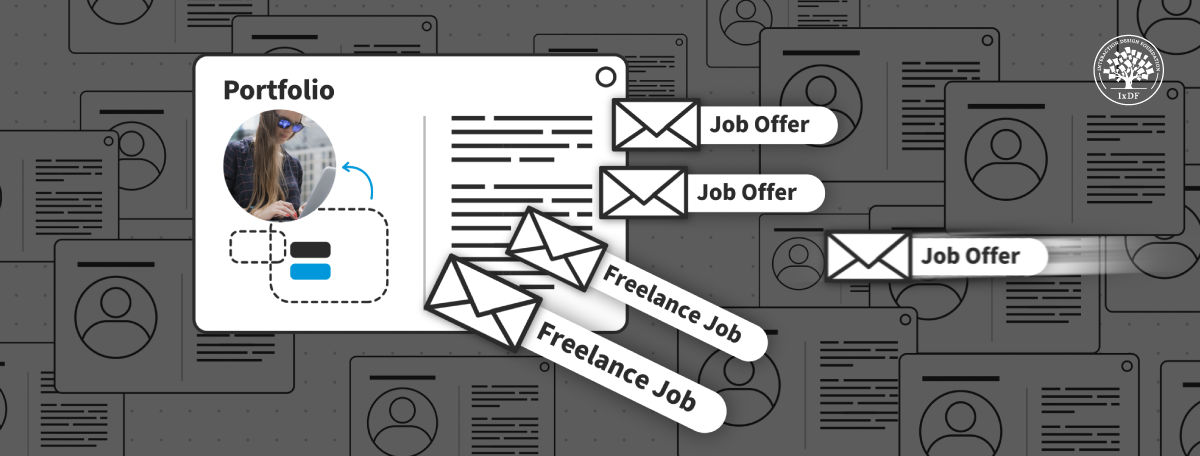
If you want to innovate in your future job, make sure your portfolio is innovative, too. This works like a job offers magnet!
© Interaction Design Foundation, CC BY-SA 4.0
Innovative design is a path of discoveries, often failures, many iterations and then—eventually—the first recognizable form of a product or service whose time has come, or whose time is fast approaching. The designers who can prove the value of their innovations most clearly—and in carefully selected case studies—will be the ones who are more likely to see those innovations bear fruit when they work with the brands who nurture their ideas and mirror their passion to drive positive change. A consideration that’s related to this is who owns the innovations. That’s a matter for designers and brands to take up in non-disclosure agreements (NDAs) and the like.
Design Director at Societe Generale CIB, Morgane Peng offers precious tips on what a designer’s portfolio should contain:
Overall, innovation is a natural driving force in any industry—and especially so in the UX design world. What’s state of the art now will quickly become the norm. Designers face perhaps their greatest challenge in how to think creatively so they can work strands of new tech into novel and exciting designs for users with ever-higher expectations. Two considerations should stay top of mind. One is the fickle nature of consumer culture; users can quickly adapt to new ways, patterns and interfaces, become used to them—and then forget what excited them in the first place. The second is that the need for intuitive interfaces will always exist, and that users are real people, who experience real contexts with real-time needs, emotions and reactions.
Truly innovative designs aren’t about enthralling the public with a kind of magic. To become bankable solutions, they need to be extremely usable and useful. For the brands behind these solutions to stay bankable, they need designers who can seize on the right angle of an existing concept to lift it up into a new light so users and customers can see how it can improve their lives in the form of enjoyable experiences and ultra-helpful conveniences. The most important aspect of innovation, then, lies in the meaningfulness of what designers do to be innovative—and how that must mirror the meaningful contexts of the lives of the users they seek to help.
“Nothing else in the world... not all the armies... is so powerful as an idea whose time has come.”
—Victor Hugo, Poet, Author and Dramatist