Problem Statements

Your constantly-updated definition of Problem Statements and collection of videos and articles.
Be a conversation starter: Share this page and inspire others!

1,183 Shares

What are Problem Statements?

Problem statements are concise descriptions of design problems. Design teams use them to define the current and ideal states, and to freely find user-centered solutions. Then, they use these statements—also called points of view (POVs)—as reference points throughout a project to measure the relevance of ideas they produce.

“If I had an hour to solve a problem, I’d spend 55 minutes thinking about the problem and 5 minutes thinking about solutions.”

— Albert Einstein

How to Write a Problem Statement?

Well-constructed, valid and effective problem statements are vital for your design team to navigate the entire design process. Essential to design thinking, problem statements are what teams produce in the Define stage. To find the best solutions, your team must know what the exact problems are—i.e., you first need to define a problem statement.

The goal is to articulate the problem so everyone can see its dimensions and feel inspired to systematically hunt for suitable solutions. When you unite around a problem statement, your team will have a common view of how users see what they must tackle. From there, all your team will know exactly what to look for and what to avoid. Therefore, you should make your problem statements:

  1. Human-centered: Frame problem statements from insights about users and their needs.

  2. Have the right scope:

    1. Broad enough to permit creative freedom, so you don’t concentrate too narrowly on specific methods for implementing solutions or describing technical needs; but

    2. Narrow enough to be practicable, so you can eventually find specific solutions.

  3. Based on an action-oriented verb (e.g., “create” or “adapt”).

  4. Fully developed and assumption-free.

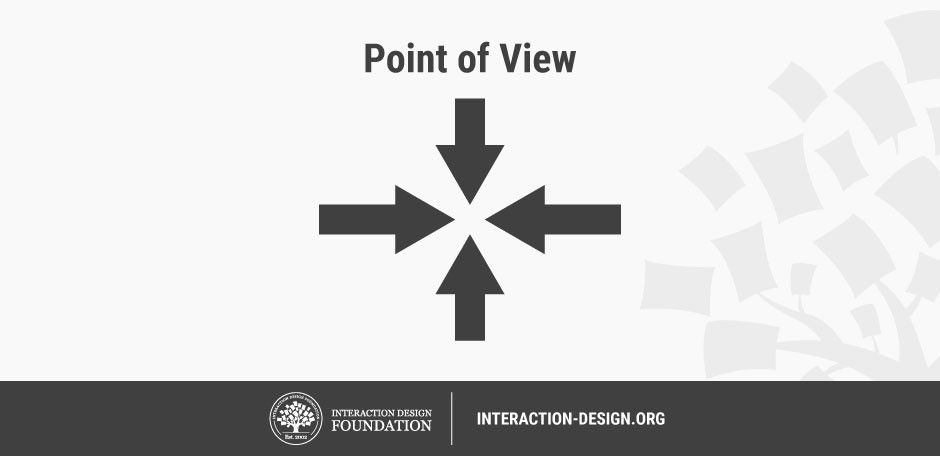
Design teams sometimes refer to a problem statement as a “point of view” (POV) because they should word problem statements from the users’ perspective and not let bias influence them. Your team will have a POV when it comes up with a narrowly focused definition of the right challenge to pursue in the next stage of the design process.

With an effective POV, your team can approach the right problem in the right way. Therefore, you’ll be able to seek the solutions your users want.

Advance Your Career With This Free Template for “Point of View - Problem Statement”
Point of View - Problem Statement
We respect your privacy
Get 1 powerful email each week: Design a life you love!

How to Define Problem Statements through a Point of View Madlib

To define a problem statement, your team must first examine recorded observations about users. You must capture your users’ exact profile in the problem statement or POV. So, you need to synthesize research results and produce insights that form solid foundations. From these, you can discover what those specific users really require and desire—and therefore ideate effectively.

Teams typically use a POV Madlib to reframe the challenge meaningfully into an actionable problem statement. The POV madlib is a framework you use to place the user, need and insight in the best way. This is the format to follow:

[User… (descriptive)] needs [need … (verb)] because [insight… (compelling).]

Point of view Madlib, which reads as: [user] needs to [user's need] because [insight].

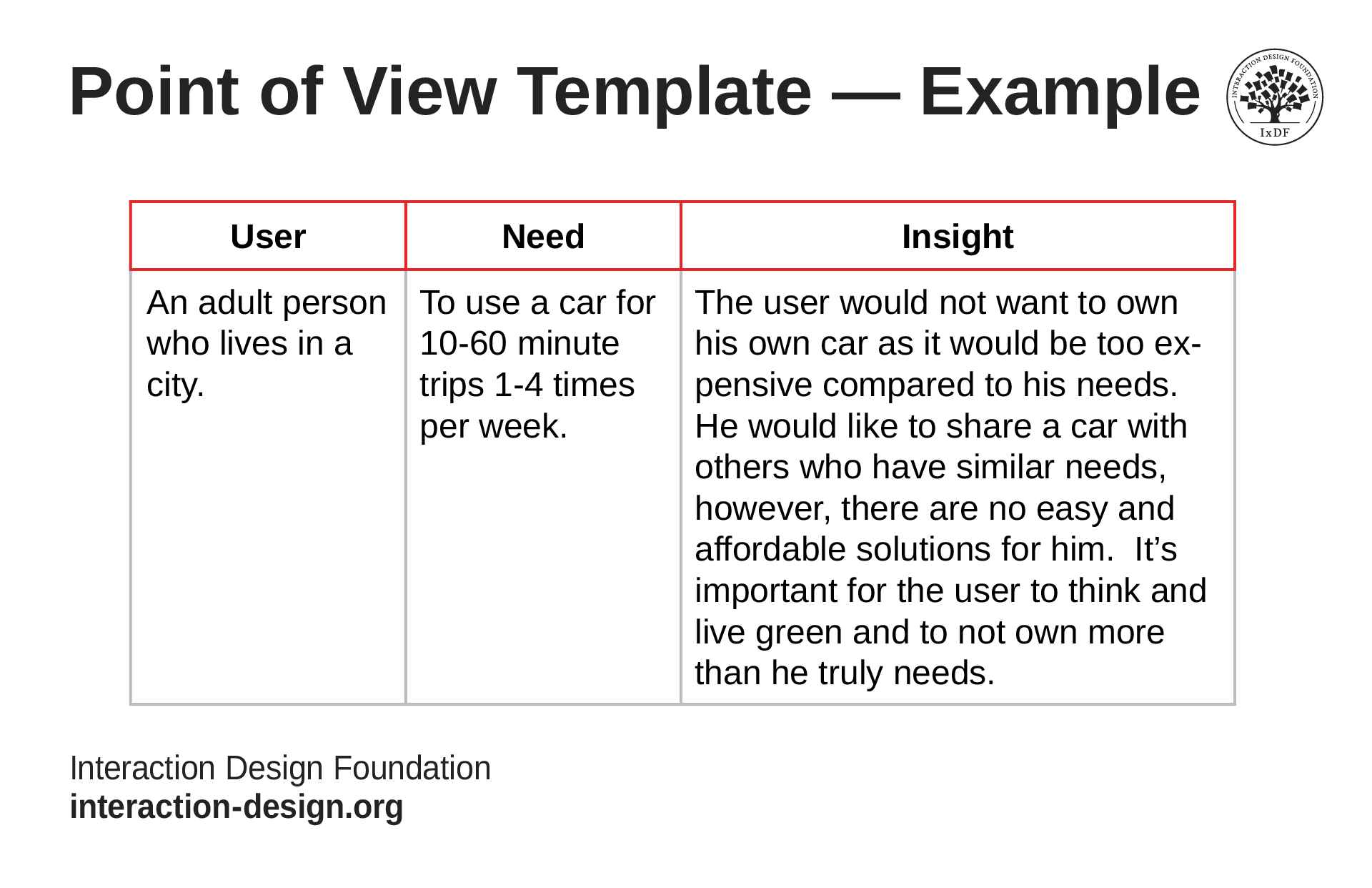
You articulate a POV by combining these three elements—user, need, and insight—as an actionable problem statement that will drive the rest of your design work. Find an example below.

Template of a point of view, that includes a table with the columns: User, Need and Insight.

With a valid problem statement, your team can explore the framed “why” questions with “how”-oriented ones. That’s how you proceed to find potential solutions. You’ll know you have a good problem statement if team members:

  1. Feel inspired.

  2. Have the criteria to evaluate ideas.

  3. Can use it to guide innovation efforts.

  4. Can’t find a cause or a proposed solution in it (which would otherwise get in the way of proper ideation).

When your team has a good problem statement, everyone can compare ideas, which is vital in brainstorming and other ideation sessions. It also means everyone can keep on the right track. Problem statements are powerful aids because they encourage well-channeled divergent thinking.

Rather than rush toward solutions that look impressive but aren’t effective, your team can work imaginatively to find the right ones. Once you’ve discovered what’s causing problems, you can give users the best solutions in designs they like using.

Questions About Problem Statements?
We've Got Answers!

How do you write a strong problem statement?

Keep in mind that a strong problem statement clearly defines an issue, why it matters, and who it affects֫—and so it’s best to be specific, focused, and actionable.

Start by identifying the problem. Don’t use vague or broad descriptions. Instead of “Users struggle with our app,” say “New users find the checkout process confusing, leading to a 40% drop-off rate.”

Next, explain why the problem matters and show its impact on users, business goals, or efficiency. Things like “If customers abandon their carts, the company loses revenue and users become frustrated.”

Then, define who experiences the problem—and remember that a strong statement focuses on a specific group, not the faceless (and useless!) “everyone.”

Finally, don’t suggest solutions too early. Keep within the “problem space.” A problem statement should guide research and brainstorming, not limit options.

Here’s an example of a good problem statement:
"Young professionals using our budgeting app struggle to track daily expenses because of a cluttered interface, leading to frustration and a 30% drop in engagement within a week."

Watch as UX Strategist and Consultant, William Hudson explains important points about brainstorming:

Transcript

What are the key elements of a problem statement?

A strong problem statement has four key elements to it:

  1. The Problem—Clearly describe what’s wrong and don’t use vague phrases. Instead of “Users dislike the app,” say “Users struggle to complete the checkout process, causing a 40% drop-off rate.”

  2. Who It Affects—Identify the specific group experiencing the problem; so, instead of saying “Everyone has trouble,” define the audience: “First-time users on our e-commerce site.”

  3. Why It Matters—Explain the impact. For instance, does it lower sales? Cause frustration? Waste time? Example: “This issue leads to lost revenue and poor user retention.”

  4. The Context—Provide background or relevant data; so, if users drop off after step three of checkout, include that detail.

Example:
"New customers on our website struggle with the checkout process because of unclear navigation, causing a 40% drop-off rate and $50,000 in lost monthly revenue."

Overall, a problem statement should be specific, measurable, and focused to guide effective solutions—and one of the keys to the enterprise is a strong sense of empathy.

Watch our video on empathy to understand more about why it’s vital in design:

Transcript

How long should a problem statement be?

A problem statement should be short and clear. “Short” is usually one to three sentences. “Clear” means it needs to explain the problem, who it affects, and why it matters without adding unnecessary details.

If it’s too long, the main point gets lost; if it’s too short, it might lack clarity or impact. A good length is 50 to 100 words, enough to define the issue without suggesting solutions. It’s best to keep a focused view of it as a tool that helps a great deal in design thinking.

Example:
"First-time users struggle with our app’s navigation, leading to a 40% drop in engagement within a week. This confusion affects customer retention and reduces conversions."

Watch as UX Strategist and Consultant, William Hudson explains important points about design thinking:

Transcript

How do I identify the real problem before writing a problem statement?

To find the real problem, you’ll want to start by observing users and listening to feedback. Then, watch how they interact with the product and ask open-ended questions about their experience.

Use the “5 Whys technique to dig deeper—a major source of help to drill down beneath apparent causes to the real deals that lurk behind. If users abandon checkout, then ask them why. If they say it’s confusing, ask what part—keep on going until you reach the root cause.

Look at data and patterns: high drop-off rates, low engagement, or repeated support tickets often point to deeper issues. And be sure to talk to customers, support teams, and stakeholders—each group will see the problem from a different angle, a point that you can leverage to get behind each pair of eyes. For instance, a business might see low sales, while users struggle with a complicated form.

Remember to stay in the problem space and explore it without jumping to solutions too early. Focus on what’s wrong, not how to fix it. It may be difficult to resist the urge, but keep your eyes on—or “peeled” for—a real problem that affects users, business goals, or both. Research, ask questions, and analyze data before writing a clear and focused problem statement. When you get the full picture in sharp relief, you’ll feel relieved that you held on until you found the true cause of the real problem rather than chasing a shadow into a dark zone where you might end up building the wrong thing.

Watch as UX Pioneer Don Norman explains important points about the 5 Whys method:

Transcript

How do I validate a problem statement with users or stakeholders?

To validate a problem statement, talk to users and stakeholders to confirm if the issue is real and important. Start by asking open-ended questions—and let users describe their challenges in their own words. If their feedback matches your statement, you’re on the right track.

Use surveys, interviews, or usability tests to get the insights you want. Look for patterns in complaints or struggles; if multiple users mention the same issue, it likely needs attention.

Share the problem statement with stakeholders—team members, managers, or clients—and ask if it aligns with business goals and real user needs.

Check data to support your findings. High drop-off rates, low engagement, or repeated support tickets often confirm a problem and data-driven design is the sort of design that, via the power of such foundations as quantitative research, will act as the fulcrum over which you can lever your eventual design solution to the best possible effect and turn on your users—and so, minimize the risk of their turning on your brand after they dislike design missteps you might make otherwise.

In a similar vein, stay away from confirmation bias—don’t lead users toward agreeing; let them respond in earnest, and it will help to let their feedback shape the statement.

Watch as UX Strategist and Consultant William Hudson explains why Data-Driven Design works—and can work well for you:

Transcript

Can a problem statement help in competitive analysis?

Yes, a problem statement helps in competitive analysis by showing where competitors fail and where opportunities exist. It defines what users struggle with and helps compare how competitors handle the same issue.

Start by analyzing competitors’ products, and then go on and look at reviews, complaints, and user feedback to see if they face similar problems. For instance, if users mention slow checkout on a competitor’s site, compare it to your own process.

Use the problem statement to find gaps in the market—you might be surprised at what turns up. If competitors offer complex solutions, simplify yours; if they lack key features, consider adding them. The possibilities may not be endless, but there can be a good number of ones you can “milk” to great effect.

Another thing is that a clear problem statement also helps position your product—and that’s because it guides decisions on pricing, messaging, and features to stand out. Above all, a problem statement is rather like a compass—in that it gives you direction on how to solve real-world user problems better. Think of it like sailing in a regatta where competitors are the other “vessels.” Although they might have a good idea of the general direction and what they need to do to get there—and win!—they might lack the “compass” of a problem statement. And that means that if you can use a problem statement (or POV) to guide you—and not just follow their path (i.e. trends) and copy what they’re doing—you can end up “winning the race,” or, that is, solving real users problems best.

Watch as UX Designer and Author of Build Better Products and UX for Lean Startups, Laura Klein explains important points about competitive research:

Transcript

What are some highly cited scientific articles about problem statements?
  1. Ellis, T. J., & Levy, Y. (2008). Framework of Problem-Based Research: A Guide for Novice Researchers on the Development of a Research-Worthy Problem. Informing Science: The International Journal of an Emerging Transdiscipline, 11, 17–33.

This paper provides a comprehensive framework to assist novice researchers in developing research-worthy problem statements. It emphasizes the centrality of a well-structured problem statement in guiding quality research and offers practical guidelines for its formulation.

  1. Annamalai, N., Kamaruddin, S., & Azid, I. A. (2013). Importance of Problem Statement in Solving Industry Problems. Applied Mechanics and Materials, 421, 857–863.

This study discusses the role of problem statements in industrial problem-solving contexts. It highlights how a well-defined problem statement—encompassing scope, structure, and purpose—is crucial for effective analysis and the development of solution strategies in industrial environments.

  1. Garrett, J. J. (2011). The Elements of User Experience: User-centered design for the web and beyond (2nd ed.). New Riders.


Jesse James Garrett provides a comprehensive framework for understanding all aspects of user experience design. The book emphasizes the importance of defining clear problem statements to guide the design process, and so to ensures that solutions are aligned with user needs and business goals.

  1. Kolko, J. (2014). Well-designed: How to use empathy to create products people love. Harvard Business Review Press.

In this book, Jon Kolko emphasizes the role of empathy in design thinking. He discusses how understanding user emotions and behaviors leads to the formulation of insightful problem statements, which guide the creation of meaningful and engaging user experiences.

Earn a Gift Earn a Gift, Answer a Short Quiz!

1
2
3
4
1
2
3
4
Question 1
Question 2
Question 3
Get Your Gift
Interaction Design Foundation logo

Question 1

What is a key feature of a well-constructed problem statement in design?

1 point towards your gift

  • It focuses on business goals.
  • It is human-centered and based on user insights.
  • It provides a detailed technical solution.
Interaction Design Foundation logo

Question 2

Why is it important to avoid solutions within problem statements?

1 point towards your gift

  • Solutions limit creative problem-solving.
  • Solutions help define the project scope early.
  • Solutions reduce time spent on ideation.
Interaction Design Foundation logo

Question 3

What does it mean for a problem statement to be broad enough?

1 point towards your gift

  • It allows for multiple technical solutions.
  • It encourages creativity without being restricted by specific methods.
  • It includes all user requirements.

Learn More About Problem Statements

Make learning as easy as watching Netflix: Learn more about Problem Statements by taking the online IxDF Course Design Thinking: The Ultimate Guide.

Why? Because design skills make you valuable. In any job. Any industry.

In This Course, You'll

  • Get excited when you discover that you don't need to start from scratch to use the secret recipes that empower companies like Apple and Google to shape the future. You just need a structure and proven methods to optimize what you already do. As AI becomes part of your day-to-day workflows, your ability to guide it with timeless human-centered skills such as strategic thinking, creativity, and empathy for real users is what turns AI into your superpower and delivers meaningful results.

  • Build on your existing creativity, problem-solving, and people skills to learn the powerful 5-stage method called Design Thinking. It's one of the key drivers behind Apple and Google's continuous innovation and provides a clear, structured way to solve real-world problems. You've already got the instincts, so it's easy to learn the method. 

  • Make yourself invaluable with hands-on skills in Design Thinking. Design Thinking can help you break into User Experience Design, product design, and tech. It's widely applicable, impactful, and fun! Use your skills to improve customer support processes, create new products, and even tackle big challenges like climate change. This human-centered approach is a key driver of business success because it guides you to systematically understand and address what your users really need and want. That's why Design Thinking skills can help you increase sales, keep customers loyal, and turn them into powerful advocates for your company.

  • Gain confidence and credibility as you effortlessly apply methods from all five stages of the Design Thinking process. You'll be guided to build empathy and gather insights into people's habits through user interviews. 

  • Use our downloadable templates to create affinity diagrams, empathy maps, and actionable "How Might We" questions. Develop solutions as you apply ideation and innovation methods. Create a paper prototype early and fast, then test and optimize your prototype to ensure that your users love it. More love, more impact, greater salary potential. 

  • Apply your new skills in an optional project where you'll design and test a user-centered experience that's perfect for your portfolio and career growth. Master Design Thinking to amplify your uniquely human strengths like empathy, intuition, and creativity, and confidently stay in demand as AI reshapes how teams work.

It's Easy to Fast-Track Your Career with the World's Best Experts

Master complex skills effortlessly with proven best practices and toolkits directly from the world's top design experts. Meet your experts for this course:

  • Don Norman: Father of User Experience (UX) Design, author of the legendary book “The Design of Everyday Things,” and co-founder of the Nielsen Norman Group.

  • Alan Dix: Author of the bestselling book “Human-Computer Interaction” and Director of the Computational Foundry at Swansea University.

  • Mike Rohde: Experience and Interface Designer, author of the bestselling “The Sketchnote Handbook.”

Get an Industry-Recognized IxDF Course Certificate

Increase your credibility, salary potential and job opportunities by showing credible evidence of your skills.

IxDF Course Certificates set the industry gold standard. Add them to your LinkedIn profile, resumé, and job applications.

Course Certificate Example

Be in distinguished company, alongside industry leaders who train their teams with the IxDF and trust IxDF Course Certificates.

Our clients: IBM, HP, Adobe, GE, Accenture, Allianz, Phillips, Deezer, Capgemin, Mcafee, SAP, Telenor, Cigna, British Parliament, State of New York

All Free IxDF Articles on Problem Statements

Read full article
The 5 Stages in the Design Thinking Process - Article hero image
Interaction Design Foundation logo

The 5 Stages in the Design Thinking Process

Design thinking is a methodology that provides a solution-based approach to solving problems. It’s extremely useful when used to tackle complex problems that are ill-defined or unknown—because it serves to understand the human needs involved, reframe the problem in human-centric ways, create numerou

Social shares
2k
Published
Read Article
Read full article
Stage 2 in the Design Thinking Process: Define the Problem and Interpret the Results - Article hero image
Interaction Design Foundation logo

Stage 2 in the Design Thinking Process: Define the Problem and Interpret the Results

An integral part of the Design Thinking process is the definition of a meaningful and actionable problem statement, which the design thinker will focus on solving. This is perhaps the most challenging part of the Design Thinking process, as the definition of a problem (also called a design challenge

Social shares
1.4k
Published
Read Article
Read full article
Stage 2 in the Design Thinking Process – Define the Problem by Synthesising Information - Article hero image
Interaction Design Foundation logo

Stage 2 in the Design Thinking Process – Define the Problem by Synthesising Information

An essential part of the Design Thinking process is the Define phase as this is the phase where you will explicitly express the problem that you and your team aim to address. In Design Thinking, the first phase is the research or Empathise phase, and then you move on to the Define phase, where you w

Social shares
733
Published
Read Article
Read full article
Affinity Diagrams: How to Cluster Your Ideas and Reveal Insights - Article hero image
Interaction Design Foundation logo

Affinity Diagrams: How to Cluster Your Ideas and Reveal Insights

Affinity diagrams are a great method to use when you want to make sense of a large volume of mixed information and data—facts, ethnographic research, ideas from brainstorms, user opinions, user needs, insights and design issues, just to name a few! Affinity diagrams require you to cluster informatio

Social shares
1.3k
Published
Read Article
Read full article
Empathy Map – Why and How to Use It - Article hero image
Interaction Design Foundation logo

Empathy Map – Why and How to Use It

Here’s an interesting fact you may—or may not—know: users are more likely to choose, buy, and use products that meet their needs than products that just meet their wants. And an Empathy map will help you understand your user’s needs while you develop a deeper understanding of the persons you’re desi

Social shares
1.4k
Published
Read Article
Read full article
Personas – A Simple Introduction - Article hero image
Interaction Design Foundation logo

Personas – A Simple Introduction

Personas are fictional characters, which you create based upon your research to represent the different user types that might use your service, product, site, or brand in a similar way. Creating personas will help you understand your users’ needs, experiences, behaviors and goals. Creating personas

Social shares
1.6k
Published
Read Article

Stage 2 in the Design Thinking Process: Define the Problem and Interpret the Results

Stage 2 in the Design Thinking Process: Define the Problem and Interpret the Results

An integral part of the Design Thinking process is the definition of a meaningful and actionable problem statement, which the design thinker will focus on solving. This is perhaps the most challenging part of the Design Thinking process, as the definition of a problem (also called a design challenge) will require you to synthesise your observations about your users from the first stage in the Design Thinking process, which is called the Empathise stage.

When you learn how to master the definition of your problem, problem statement, or design challenge, it will greatly improve your Design Thinking process and result. Why? A great definition of your problem statement will guide you and your team’s work and kick start the ideation process in the right direction. It will bring about clarity and focus to the design space. On the contrary, if you don’t pay enough attention to defining your problem, you will work like a person stumbling in the dark.
Author/Copyright holder: Teo Yu Siang and Interaction Design Foundation. Copyright terms and licence: CC BY-NC-SA 3.0

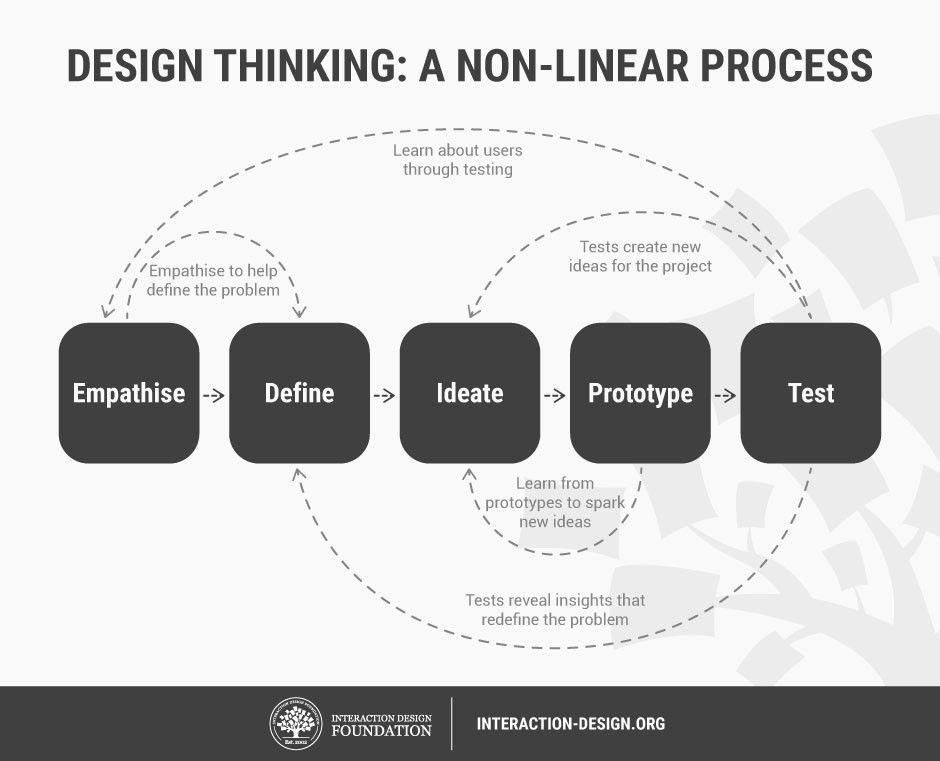
In the Define stage you synthesise your observations about your users from the first stage, the Empathise stage. A great definition of your problem statement will guide you and your team’s work and kick start the ideation process (third stage) in the right direction. The five stages are not always sequential — they do not have to follow any specific order and they can often occur in parallel and be repeated iteratively. As such, the stages should be understood as different modes that contribute to a project, rather than sequential steps.

Analysis and Synthesis
Author/Copyright holder: Teo Yu Siang and Interaction Design Foundation. Copyright terms and licence: CC BY-NC-SA 3.0

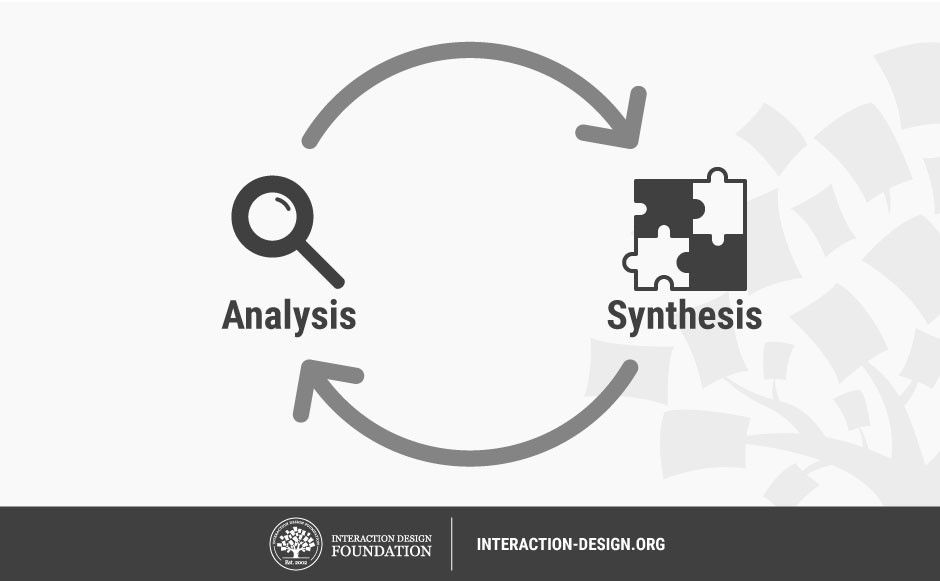
Before we go into what makes a great problem statement, it’s useful to first gain an understanding of the relationship between analysis and synthesis that many design thinkers will go through in their projects. Tim Brown, CEO of the international design consultancy firm IDEO, wrote in his book Change by Design: How Design Thinking Transforms Organizations and Inspires Innovation, that analysis and synthesis are “equally important, and each plays an essential role in the process of creating options and making choices.”

Analysis is about breaking down complex concepts and problems into smaller, easier-to-understand constituents. We do that, for instance, during the first stage of the Design Thinking process, the Empathise stage, when we observe and document details that relate to our users. Synthesis, on the other hand, involves creatively piecing the puzzle together to form whole ideas. This happens during the Define stage when we organise, interpret, and make sense of the data we have gathered to create a problem statement.

Although analysis takes place during the Empathise stage and synthesis takes place during the Define stage, they do not only happen in the distinct stages of Design Thinking. In fact, analysis and synthesis often happen consecutively throughout all stages of the Design Thinking process. Design thinkers often analyse a situation before synthesising new insights, and then analyse their synthesised findings once more to create more detailed syntheses.

What Makes a Good Problem Statement?

A problem statement is important to a Design Thinking project, because it will guide you and your team and provides a focus on the specific needs that you have uncovered. It also creates a sense of possibility and optimism that allows team members to spark off ideas in the Ideation stage, which is the third and following stage in the Design Thinking process. A good problem statement should thus have the following traits. It should be:

  • Human-centered. This requires you to frame your problem statement according to specific users, their needs and the insights that your team has gained in the Empathise phase. The problem statement should be about the people the team is trying to help, rather than focusing on technology, monetary returns or product specifications.

  • Broad enough for creative freedom. This means that the problem statement should not focus too narrowly on a specific method regarding the implementation of the solution. The problem statement should also not list technical requirements, as this would unnecessarily restrict the team and prevent them from exploring areas that might bring unexpected value and insight to the project.

  • Narrow enough to make it manageable. On the other hand, a problem statement such as , “Improve the human condition,” is too broad and will likely cause team members to easily feel daunted. Problem statements should have sufficient constraints to make the project manageable.

As well as the three traits mentioned above, it also helps to begin the problem statement with a verb, such as “Create”, “Define”, and “Adapt”, to make the problem become more action-oriented.

How to Define a Problem Statement

Methods of interpreting results and findings from the observation oriented Empathise phase include:

Space Saturate and Group and Affinity Diagrams – Clustering and Bundling Ideas and Facts

Author/Copyright holder: Giorgio Montersino. Copyright terms and licence: CC BY-SA 2.0

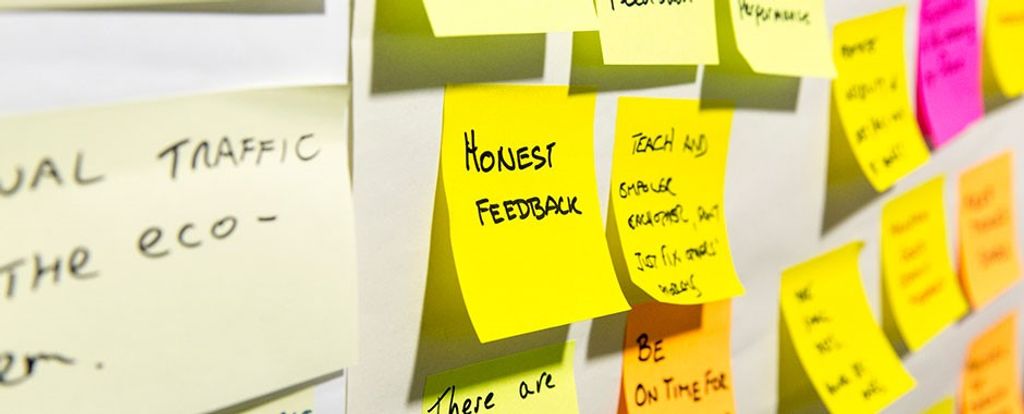
In space saturate and group, designers collate their observations and findings into one place, to create a collage of experiences, thoughts, insights, and stories. The term 'saturate' describes the way in which the entire team covers or saturates the display with their collective images, notes, observations, data, experiences, interviews, thoughts, insights, and stories in order to create a wall of information to inform the problem-defining process. It will then be possible to draw connections between these individual elements, or nodes, to connect the dots, and to develop new and deeper insights, which help define the problem(s) and develop potential solutions. In other words: go from analysis to synthesis.

Empathy Mapping
Author/Copyright holder: Teo Yu Siang and Interaction Design Foundation. Copyright terms and licence: CC BY-NC-SA 3.0

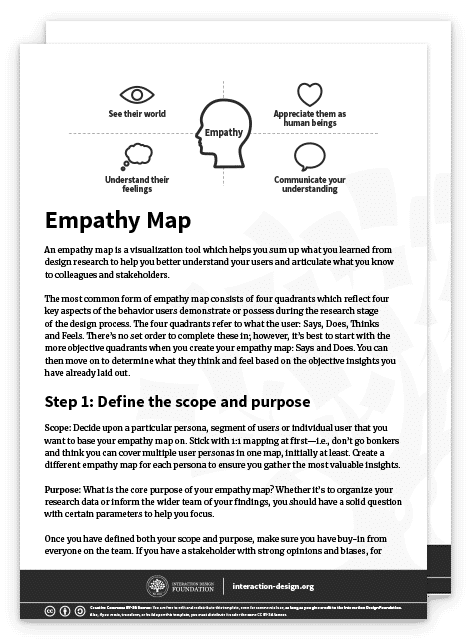
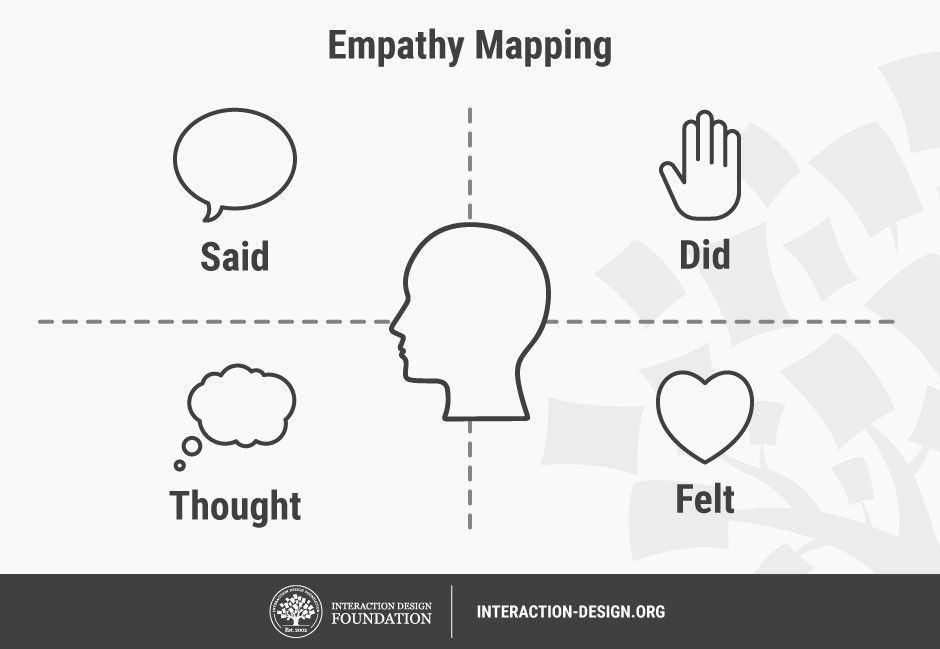
An empathy map consists of four quadrants laid out on a board, paper or table, which reflect the four key traits that the users demonstrated/possessed during the observation stage. The four quadrants refer to what the users: Said, Did, Thought, and Felt. Determining what the users said and did are relatively easy; however, determining what they thought and felt is based on careful observation of how they behaved and responded to certain activities, suggestions, conversations etc. (including subtle cues such as body language displayed and the tone of voice used).

Advance Your Career With This Free Template for “Empathy Map”
Empathy Map
We respect your privacy
Get 1 powerful email each week: Design a life you love!

Point Of View – Problem Statement

Author/Copyright holder: Teo Yu Siang and Interaction Design Foundation. Copyright terms and licence: CC BY-NC-SA 3.0

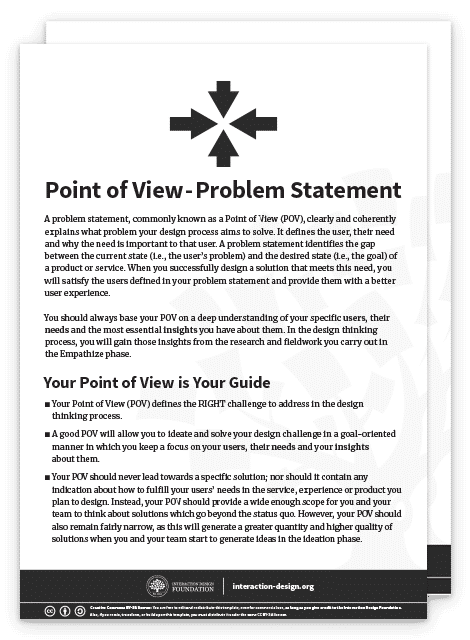
A Point Of view (POV) is a meaningful and actionable problem statement, which will allow you to ideate in a goal-oriented manner. Your POV captures your design vision by defining the RIGHT challenge to address in the ideation sessions. A POV involves reframing a design challenge into an actionable problem statement. You articulate a POV by combining your knowledge about the user you are designing for, his or her needs and the insights which you’ve come to know in your research or Empathise mode. Your POV should be an actionable problem statement that will drive the rest of your design work.

You articulate a POV by combining these three elements – user, need, and insight. You can articulate your POV by inserting your information about your user, the needs and your insights in the following sentence:

[User . . . (descriptive)] needs [need . . . (verb)] because [insight. . . (compelling)]

Advance Your Career With This Free Template for “Point of View - Problem Statement”
Point of View - Problem Statement
We respect your privacy
Get 1 powerful email each week: Design a life you love!

“How Might We” Questions

Author/Copyright holder: Teo Yu Siang and Interaction Design Foundation. Copyright terms and licence: CC BY-NC-SA 3.0

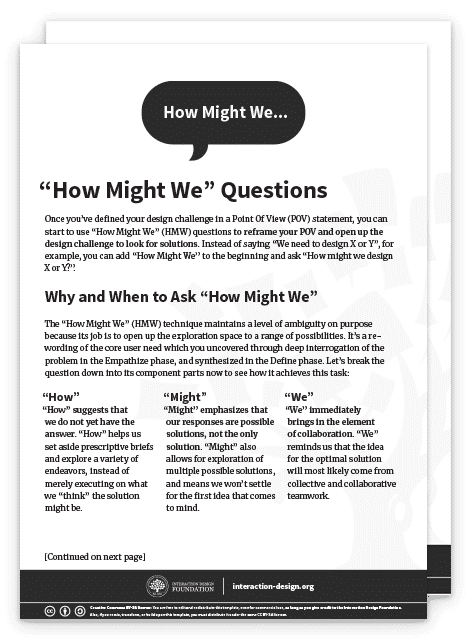
When you’ve defined your design challenge in a POV, you can start to generate ideas to solve your design challenge. You can start using your POV by asking a specific question starting with: “How Might We” or “in what ways might we”. How Might We (HMW) questions are questions that have the potential to spark ideation sessions such as brainstorms. They should be broad enough for a wide range of solutions, but narrow enough that specific solutions can be created for them. “How Might We” questions should be based on the observations you’ve gathered in the Empathise stage of the Design Thinking process.

For example, you have observed that youths tend not to watch TV programs on the TV at home, some questions which can guide and spark your ideation session could be:

  • How might we make TV more social, so youths feel more engaged?

  • How might we enable TV programs to be watched anywhere, at anytime?

  • How might we make watching TV at home more exciting?

The HMW questions open up to Ideation sessions where you explore ideas, which can help you solve your design challenge in an innovative way.

Advance Your Career With This Free Template for “How Might We Questions”
How Might We Questions
We respect your privacy
Get 1 powerful email each week: Design a life you love!

Why-How Laddering

"As a general rule, asking 'why’ yields more abstract statements and asking 'how’yields specific statements. Often times abstract statements are more meaningful but not as directly actionable, and the opposite is true of more specific statements."
– d.school, Method Card, Why-How Laddering

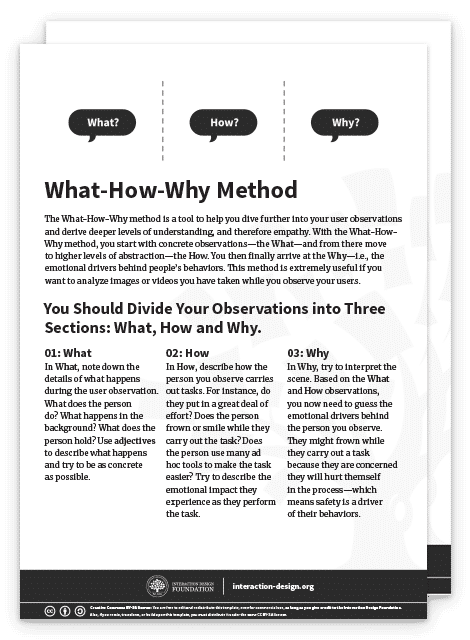
For this reason, during the Define stage designers seek to define the problem, and will generally ask why. Designers will use why to progress to the top of the so-called Why-How Ladder where the ultimate aim is to find out how you can solve one or more problems. Your How Might We questions will help you move from the Define stage and into the next stage in Design Thinking, the Ideation stage, where you start looking for specific innovative solutions. In other words you could say that the Why-How Laddering starts with asking Why to work out How they can solve the specific problem or design challenge.

Advance Your Career With This Free Template for “What-How-Why Method”
What-How-Why Method
We respect your privacy
Get 1 powerful email each week: Design a life you love!

The Take Away

The second stage in a typical Design Thinking process is called the Define phase. It involves collating data from the observation stage (first stage called Empathise) to define the design problems and challenges. By using methods for synthesising raw data into a meaningful and usable body of knowledge — such as empathy mapping and space saturate and group — we will be able to create an actionable design problem statement or Point of View that inspire the generation of ideas to solve it. The How Might We questions open up to Ideation sessions where you explore ideas, which can help you solve your design challenge in an innovative way.

References & Where to Learn More

Course: “Design Thinking - The Ultimate Guide”.

d.school: Space Saturation and Group.

d.school: Empathy Map.

d.school: “How might we” questions.

Hero Image: Author/Copyright holder: gdsteam. Copyright terms and licence: CC BY 2.0
Feel Stuck?
Want Better Job Options?

AI is replacing jobs everywhere, yet design jobs are booming with a projected 45% job growth. With design skills, you can create products and services people love. More love means more impact and greater salary potential.

At IxDF, we help you from your first course to your next job, all in one place.

See How Design Skills Turn Into Job Options
Privacy Settings
By using this site, you accept our Cookie Policy and Terms of Use.
Customize
Accept all

Be the One Who Inspires

People remember who shares great ideas.

Share on:

Academic Credibility — On Autopilot

Don't waste time googling citation formats. Just copy, paste and look legit in seconds.