An essential part of the Design Thinking process is the Define phase as this is the phase where you will explicitly express the problem that you and your team aim to address. In Design Thinking, the first phase is the research or Empathise phase, and then you move on to the Define phase, where you will use a wide variety of methods to help crystallise your essential findings from the research phase. Your goal is to synthesise and develop an understanding of who exactly you’re designing for and what your users really need. In order to be innovative and be able to create significant results which matter to your users, you must first define a specific and compelling problem statement, which you can then use as a guide for the solution that you are seeking to design.
“Two goals of the define mode are to develop a deep understanding of your users and the design space and, based on that understanding, to come up with an actionable problem statement.”
– d.school, Bootcamp Bootleg
In the Define mode, your goal is to define a meaningful and actionable problem statement, which you and your team can focus on solving. The Define mode is about understanding the meaningful challenge you should address and the insights that you can—and should—leverage in your design work.
When you learn how to master the definition of your problem or design challenge by constructing a problem statement, it will greatly improve your Design Thinking process and result. Why?—a precise definition of your problem statement will guide you and your team’s work and kick-start the ideation process in the right direction. It will invite clarity and focus into the design space. On the contrary, if you don’t pay enough attention to defining, you will work like a blind man stumbling in the dark.
 Author/Copyright holder: Teo Yu Siang and Interaction Design Foundation. Copyright terms and licence: CC BY-NC-SA 3.0
What is Defining?
In the Define mode, you and your team will collect the information gathered during the first stage of the Design Thinking process, the Empathise stage. In the Define mode, you will analyse your observations and synthesise them so as to define the core problems you and your team have identified up to this point.
“The define mode is when you unpack and synthesise your empathy findings into compelling needs and insights, and scope a specific and meaningful challenge. It is a mode of ‘focus’ rather than ‘flaring.’”
– d.school, Bootcamp Bootleg
The Define Mode is perhaps the most challenging part of the Design Thinking process, as the definition of a problem will require that you synthesise your observations about your users from the first stage, the Empathise Stage, in the Design Thinking process.
 Author/Copyright holder: Teo Yu Siang and Interaction Design Foundation. Copyright terms and licence: CC BY-NC-SA 3.0
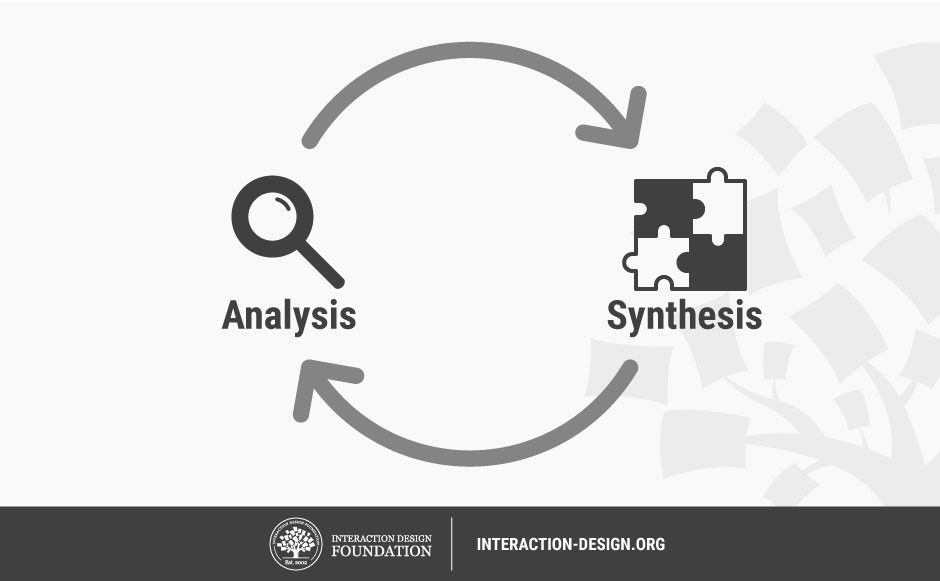
Tim Brown, CEO of international design consultancy firm IDEO, wrote in his book Change by Design: How Design Thinking Transforms Organizations and Inspires Innovation, that analysis and synthesis are “equally important, and each plays an essential role in the process of creating options and making choices.”
Analysis in the Empathise Phase
Analysis is about breaking down complex concepts and problems into smaller, easier-to-understand constituents. We do that, for instance, during the first stage of the Design Thinking process, the Empathise stage, when we observe and document details relating to our users.
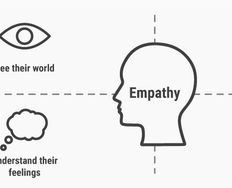
“Empathy is the centerpiece of a human-centered design process. The Empathize mode is the work you do to understand people, within the context of your design challenge. It is your effort to understand the way they do things and why, their physical and emotional needs, how they think about world, and what is meaningful to them.”
– d-school, An Introduction to Design Thinking PROCESS GUIDE
The Empathise mode will help you to analyse, conduct relevant research, and become an instant expert on the subject and gain invaluable empathy for the person you are designing for.
Define and Synthesise in the Define Phase
Synthesis, on the other hand, is about creatively putting together your analysis and research in order to form whole ideas. This takes place during the Define stage, during which we organise, interpret, and make sense of the data we have gathered in order to create a problem statement. It takes practice and hard work to generate a precise and specific problem statement that makes sense of the widespread information we gathered during the Empathise mode:
“The Define mode of the design process is all about bringing clarity and focus to the design space. It is your chance, and responsibility, as a design thinker to define the challenge you are taking on, based on what you have learned about your user and about the context.”
– d-school, An Introduction to Design Thinking PROCESS GUIDE
Although we mentioned that analysis takes place during the Empathise stage and synthesis takes place during the Define stage, they do not only happen during the distinct stages of Design Thinking. In fact, analysis and synthesis often take place consecutively throughout all stages of the Design Thinking process. Design Thinkers often analyse a situation before synthesising new insights, and then analyse their synthesised findings once more so as to create more, higher-level syntheses.
Methods which will Help you Synthesise Your Research and Define Your Design Challenge
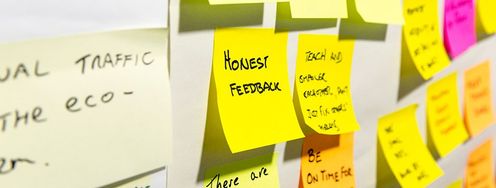
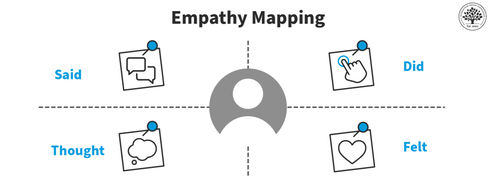
There is a wealth of effective and fun methods which will help you synthesise and make sense of all the data you’ve gathered during your research. For example, it’s often relevant to tell the most significant and surprising user stories. Often, you will want to bring all of your data out into the open and visualise them in a mapping session with your fellow team members. You will develop empathy maps and personas based on your research about your users. You will immerse your personas in stories and flesh out the scenarios in which they find themselves. Once you understand the full scope of your users’ worlds, you can then form a problem statement which is also known as a Point Of View. You are then ready to proceed with crystallising your problem statement into inspirational How Might We questions. The How Might We questions will lead you on the way into the Ideation sessions, which follow in the next and third phase of the Design Thinking process.
The Take Away
Analysis and synthesis are equally important. Each of them play an essential role in the process of creating options, making choices and guiding you in defining your design challenge in a problem statement. Analysis involves researching and breaking down complex concepts and problems into smaller, easier-to-understand constituents. You will analyse, research, and gain empathy for the person you are designing for in the Empathise mode. Synthesis involves creatively putting your analysis and research pieces together in order to form whole ideas. You synthesise in the Define phase: You organise, interpret, discover connections and patterns and make sense of the data that you have gathered. Your goal in the Define phase is to create a problem statement, also known as a Point Of view. Your Point Of View will be your transit into crystallising inspirational How Might We questions, which will lead you into the Ideation sessions, which follows as the next and third phase of Design Thinking process.
References & Where to Learn More
Course: “Design Thinking: The Ultimate Guide”.
IDEO, HCD Connect, Extract Key Insights Method Guide.
OPEN IDEO, Design Challenges.
d.school, Bootcamp Bootleg, 2018.
Idea.org, Methods.
Hero Image: Author/Copyright holder: gdsteam. Copyright terms and licence: CC BY 2.0