Empathy in UX/UI Design

Your constantly-updated definition of Empathy in UX/UI Design and collection of videos and articles.
Be a conversation starter: Share this page and inspire others!

1,579 Shares

What is Empathy in UX/UI Design?

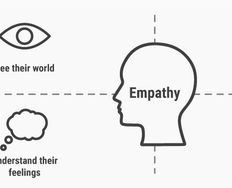
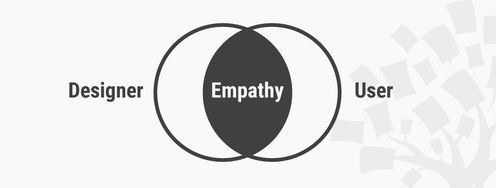
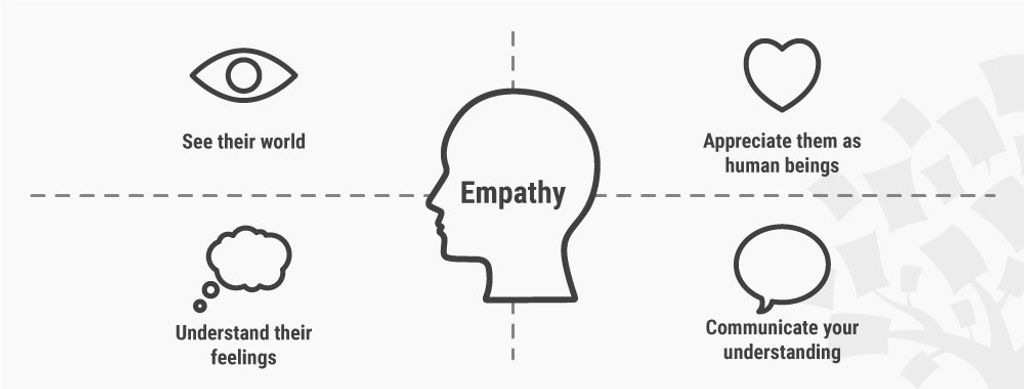
Empathy is the ability designers gain from research to understand users’ problems, needs and desires fully so that they can design the best solutions for users. Designers strive for empathy by deeply probing users’ worlds, to define their precise problems and then to ideate towards solutions that improve users’ lives.

“What makes us human is what is delightful.”

— Genevieve Bell, Anthropologist noted for cultural-practice-and-technological-development work

See why empathy is absolutely vital in design.

Empathy – The Glow You Put in Your Users’ and Customers’ Hearts

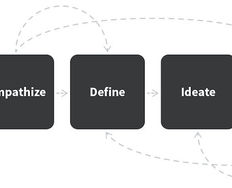
To understand your users/customers fully, you must see and feel their worlds from their perspective. And to access these core vantage points, you’ll first need the right research methods. You want to gather reliable information from which you can distill your users’ essences, as personas, to take forward in your design process. In user-centered design, user experience (UX) design and elsewhere, you need empathy. It even has a themed stage in the design thinking process: Empathize.

Your biggest challenge is to dig deep into your users’/customers’ subconscious; they can’t fully explain their precise needs. Designing for the human world is tricky, especially when users/customers access brands across many touchpoints and channels (e.g., online). In service design, ethnography is key to understanding their habits, motivations, pain points, values and whatever else influences what they think, feel, say and do on their user journeys. In ethnographic field studies, you observe what these users/customers do. Four methods are:

  • Shadowing – following users/customers around to get a day-in-the-life-of feel of what they experience.

  • Unstructured/Semi-structured Interviews – exploring hard-to-reach areas of their behavior in a naturalistic atmosphere, not systematically questioning them. This “hanging out” with them yields more honest, accurate insights. It’s usually better to conduct semi-structured interviews, strung loosely around an “areas-to-cover” framework in a discussion guide.

  • Diary Studies – letting users self-report. As with surveys, you rely on users to record things for you. Unlike surveys, diary studies help to capture “after-effects” over (typically) a 1-to-2-week period. Note: diary studies alone can’t reveal pain points effectively; they’re best combined with interviews.

  • Video Ethnography – video-recording enough material of participants in their environment as users/customers to gather insights about them.

How to Discover What Users Really Want

It’s best to remain informal and open-minded.

  1. Here’s what to consider for an ethnographic study where you directly observe users interacting with a service (e.g., booking short-stay accommodation):

  • Introduction – Thank them and briefly explain your research’s purpose.

  • Context Look around and note your users’ surroundings.

  • Note/observe/ask Encourage them to continue their activities as though you weren’t there, letting you observe and ask as few questions as possible. When you do ask questions, ensure they’re open-ended and encourage more observations (e.g., “How?”).

  • Touchpoints  & Channels – Pay attention to the touchpoints and service channels your users interact with (e.g., paying for room/property bookings by phone). 

  • Tools – Note which tools these customers use throughout their journey.

  • Familiarity with Domain/Task Note how comfortable they are with the various tools and tasks they use/perform.

  • Service Artifacts Pay attention to the artifacts that are important throughout the service experience between the customers’ various touchpoints:

    • Physical items

    • Cognitive constructs (e.g., the customer’s changing understanding of the steps involved)

    • Social or emotional elements (e.g., hunting for a lockbox in an unfamiliar street)

  • Disconnects Notice these, which happen anytime customers experience a problem with the service (e.g., they can’t access the accommodation/property).

  • Needed ecosystem support Watch for the points in the service where support from the backstage of the service is needed (e.g., the service-providing organization/agency must contact the landlord if the customer can’t).

  • Wrap-up – Thank them at the end of the session and answer any relevant questions they have.

  1. For Semi-structured interviews, order and ask your questions properly, stringing them loosely in a discussion guide featuring the following types of questions:

  • Introductory – e.g., “What was it like the last time you…?”

  • Follow-up – on what they’ve just said.

  • Probing – ask them to give an example/explain something.

  • Specifying – if their descriptions are too general.

  • Direct – to introduce topics, etc.

  • Indirect – if you sense a direct question might lead the user, etc. 

  • Structuring – to get back on-topic, etc.

  • Interpreting – to confirm you’ve understood the previous answer correctly.

Also, let silence help the user/customer give you honest, unpressured answers.

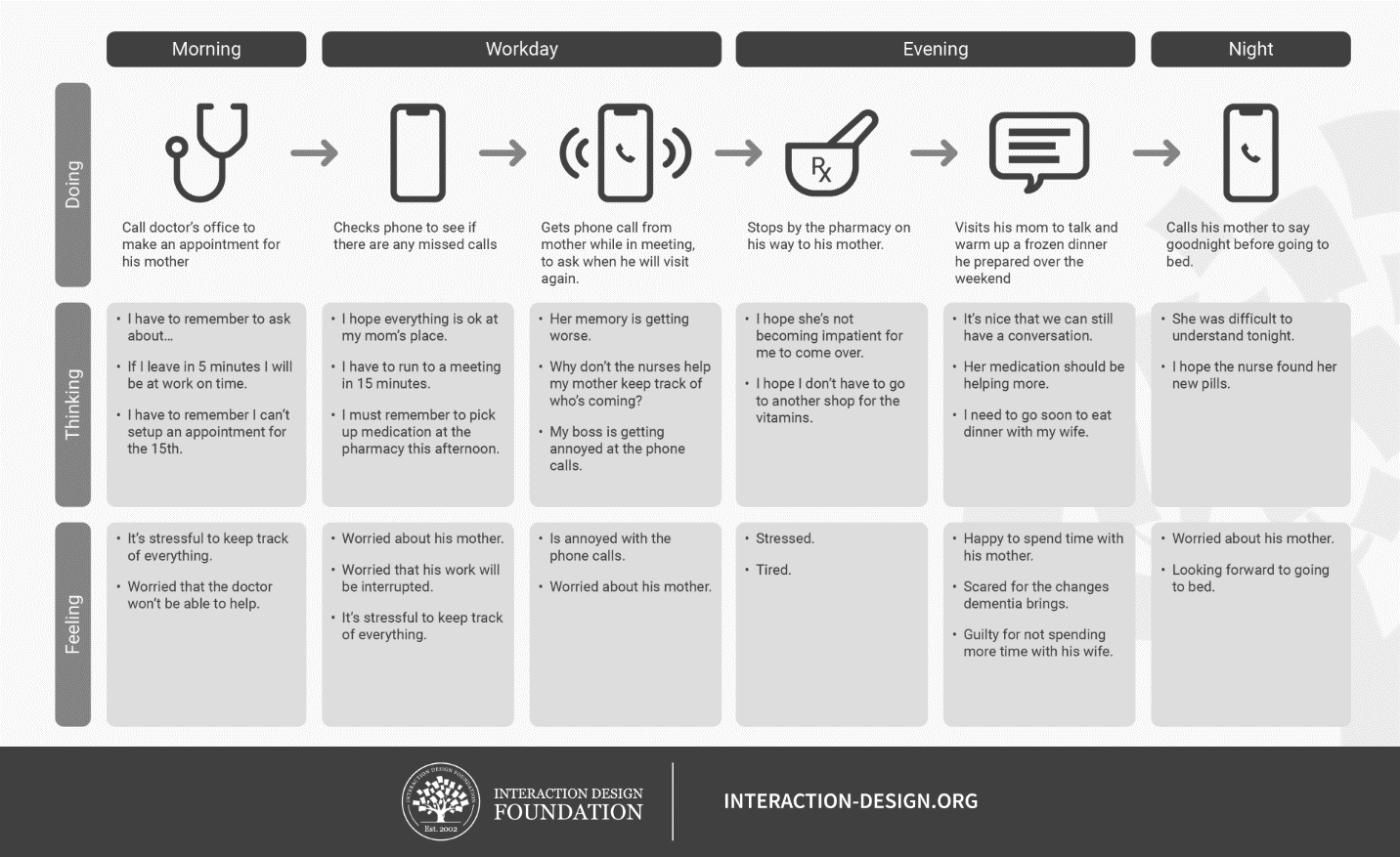
From your findings, you can now create personas, empathy maps and user journey maps (image below) / customer journey maps.  

Tips

  • Service safaris are a great way to go into the field to see what users experience.

  • Brainstorming with your team can help reveal the right, open-ended questions to ask users.

  • Engage with extreme users – If you can find and interview users who face greater challenges, you’ll find the full scope of problems which all users can encounter.

  • Find effective analogies to draw parallels between users’ problems and problems in other fields, to find further insights.

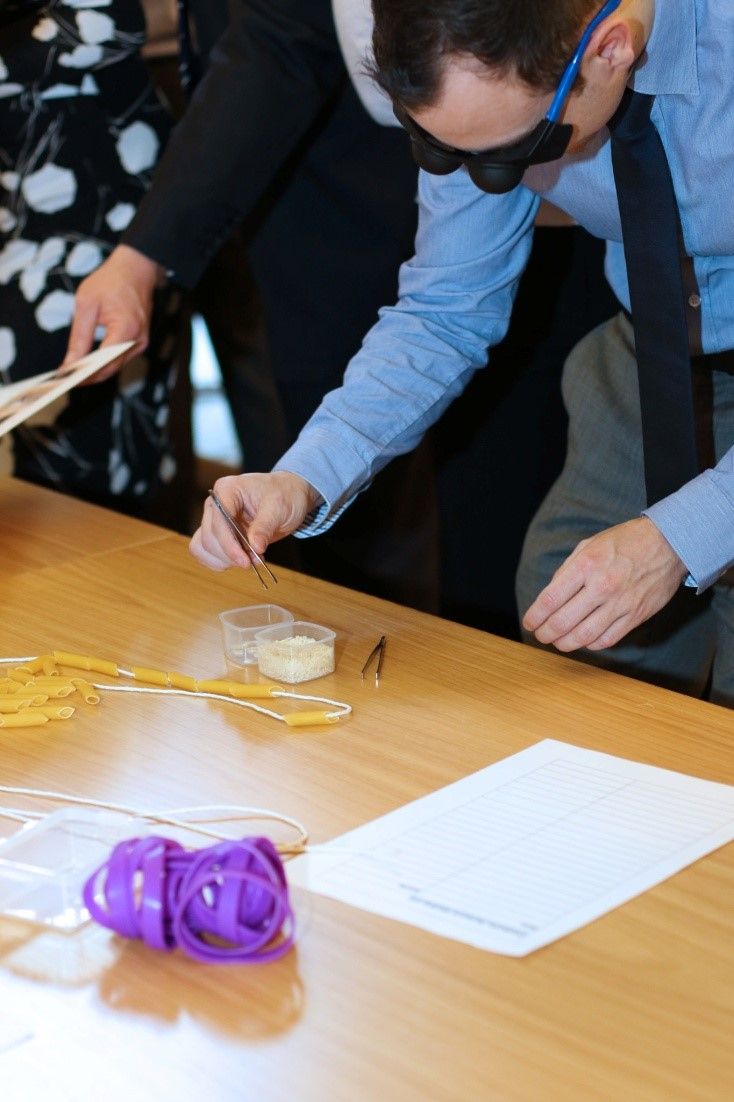
  • Bodystorming – Wearing equipment gives you first-hand experience of what your users encounter in their environment (e.g., goggles to simulate vision problems).

Overall, remember: what users/customers do and what they say they do are two different things.

© Yu Siang and Interaction Design Foundation, CC BY-SA 3.0

Questions About Empathy?
We've Got Answers!

How do UX designers apply empathy during the design process?

UX designers apply empathy throughout the design process by stepping into the users' shoes at every stage—from research to testing. They start by actively listening to users during interviews and observing behavior during field studies. These early steps help designers understand users’ goals, pain points, and emotions.

Next, they create personas and empathy maps that capture the user’s mindset. This keeps the user’s voice front and center during ideation and wireframing. During prototyping, designers walk through user journeys to spot emotional friction points and smooth them out. Lastly, they test with real users, listen deeply to feedback, and revise designs based on lived experiences—not assumptions.

A great example is how IDEO’s human-centered design process begins with empathy, allowing them to redesign everything from hospital experiences to toothpaste packaging with emotional impact in mind.

Watch as Author and Human-Computer Interaction Expert, Professor Alan Dix explains important points about personas:

Transcript

Take our course Design Thinking: The Ultimate Guide.

What’s the difference between sympathy and empathy in UX?

In UX design, empathy and sympathy might seem similar, but they serve very different purposes. Empathy means feeling with the user—you understand their emotions because you mentally walk in their shoes. Sympathy, on the other hand, means feeling for someone—more like observing their struggle from a distance and feeling sorry for them.

Empathy drives better design because it helps designers connect with users on a deeper level. Instead of designing out of pity, designers solve real problems by seeing the world through the user’s lens. For instance, when designing for users with disabilities, empathy leads to inclusive features. Sympathy might just result in a sad acknowledgment with no real impact, and empathy is far better to bring on board to design for users of all ability levels.

The key takeaway is that sympathy can tend to create distance while empathy builds bridges. We can also look at compassionate empathy—or empathic concern—which is about truly understanding and sharing someone’s emotional experience and then being motivated to help or take supportive action with that understanding as the basis. That differs from sympathy as the latter generally refers to feeling pity or sorrow for what someone else is going through without fully sharing in their emotional state or not having the same drive to fix things so they’re not distressed.

Watch our video about empathy in design:

Transcript

Enjoy our Master Class User Journey Mapping for Better UX with Kelly Jura, Vice-President, Brand & User Experience at ScreenPal.

When should I use an empathy map in a UX project?

Use an empathy map early in a UX project—ideally right after initial user research. This is when you’ve gathered interviews, observations, or surveys and need to make sense of the emotional and behavioral patterns behind user actions. Mapping what users think, feel, say, and do turns raw data into a shared understanding that teams can act on.

Empathy maps work best during the ideation phase. They help generate ideas rooted in real user needs and align stakeholders around those needs. They’re also useful before prototyping to validate that concepts address the emotional and cognitive realities of your users.

It’s wise to revisit empathy maps during usability testing to check if the design still resonates with the user perspective you uncovered early on.

Read our piece Empathy Map – Why and How to Use It for further insights.

How do I avoid bias when practicing empathy in UX research?

To avoid bias while practicing empathy in UX research, start by becoming and staying aware of your own assumptions. Designers often project personal experiences onto users without realizing it. Combat this by asking open-ended questions and actively listening, not leading.

Use diverse user samples to avoid “sample bias”—designers who only interview users like themselves risk designing for a narrow audience. Furthermore, practice reflexivity: after each research session, reflect on how your own background might influence your interpretations.

Record and transcribe sessions to ensure team members hear users’ actual voices, not filtered impressions. And use tools like affinity diagrams to let patterns emerge from data, not preconceptions.

Watch as CEO of Experience Dynamics, Frank Spillers explains important points about designer bias:

Transcript

Enjoy our Master Class User Stories Don't Help Users: Introducing Persona Stories with William Hudson, User Experience Strategist and Founder of Syntagm Ltd.

How can I identify user pain points through empathy?

To spot user pain points through empathy, start by deeply listening to users. Don’t just focus on what they say—watch what they do, how they react, and where they hesitate. Emotional cues like frustration, confusion, or hesitation often point to underlying pain points.

Use open-ended interviews to let users tell their stories. Ask questions like: “What’s the hardest part of using this product?” or “When was the last time you felt stuck?” Then, analyze responses with empathy maps or journey maps to pinpoint where emotions dip. Observation matters, too. During usability tests, note moments of struggle or workarounds—those signal design gaps. Look beyond surface feedback to understand the “why” behind user behavior.

Watch as Professor of Human-Computer Interaction (HCI) at University College London (UCL), Ann Blandford explains important points about user interviews:

Transcript

Enjoy our Master Class User Stories Don't Help Users: Introducing Persona Stories with William Hudson, User Experience Strategist and Founder of Syntagm Ltd.

How do I foster empathy in cross-functional design teams?

To foster empathy in cross-functional design teams, create direct connections between team members and users. Bring engineers, product managers, and marketers into user interviews or usability tests—seeing user struggles firsthand creates a shared emotional anchor that unites the team around real needs.

Use tools like empathy maps or journey maps in workshops to translate user research into emotional insights that everyone can relate to. Encourage storytelling: have team members reflect on what resonated with them most from a user session.

Lead by example—when design leaders prioritize empathy, it becomes a cultural value. And celebrate moments where empathetic decisions led to better outcomes.

Companies like Atlassian and IDEO routinely integrate empathy into cross-functional collaboration, resulting in stronger alignment and more user-centered solutions.

Watch as UX Designer and Author of Build Better Products and UX for Lean Startups, Laura Klein explains important points about cross-functional collaboration:

Transcript

Enjoy our Master Class User Journey Mapping for Better UX with Kelly Jura, Vice-President, Brand & User Experience at ScreenPal.

Kolko, J. (2014). Well-designed: How to Use Empathy to Create Products People Love. Harvard Business Review Press.

Jon Kolko’s Well-Designed presents a compelling case for embedding empathy into the heart of the product design process. Drawing on real-world examples and case studies, Kolko outlines how emotionally intelligent design fosters innovation and builds stronger connections between users and products. The book stresses that empathy is not just a soft skill, but a critical tool for identifying real user problems and designing meaningful solutions. Its blend of actionable frameworks and philosophical insights has made it a foundational read in UX and product design. The book’s influence is especially strong among design leaders and product teams aiming to humanize digital experiences.

Norman, D. A. (2004). Emotional design: Why We Love (or Hate) Everyday Things. Basic Books.

In Emotional Design, UX pioneer Don Norman reveals how emotions influence our interactions with everyday products. He presents a framework of three design levels—visceral, behavioral, and reflective—that shape user experience beyond mere usability. The book integrates cognitive science with product design, exploring why aesthetically pleasing or emotionally resonant products succeed. Norman uses real-life examples to show how emotion-rich design enhances satisfaction and loyalty. This influential work shifted the design world’s focus from function alone to the emotional resonance of objects. It remains foundational for UX designers, product developers, and innovators seeking to understand the psychological depth of user-product relationships.

What are some highly cited scientific articles about empathy in design?

Mattelmäki, T., & Battarbee, K. (2002). Empathy probes. Proceedings of the Participatory Design Conference 2002, 266–271.

In this influential paper, Mattelmäki and Battarbee introduce "empathy probes" as a method for designers to gain deep insights into users’ personal experiences and contexts. By providing participants with specially designed material packages—such as diaries, cameras, and postcards—users document aspects of their daily lives, emotions, and interactions. This approach enables designers to move beyond rational and practical considerations, fostering a more profound understanding of users’ subjective experiences. The study exemplifies how empathy probes can bridge the gap between designers and users, leading to more human-centered and contextually relevant design solutions. This method has since become a cornerstone in user-centered design practices, emphasizing the importance of empathy in the design process.

Leonard, D., & Rayport, J. F. (1997). Spark innovation through empathic design. Harvard Business Review, 75(6), 102–113.

In this seminal article, Leonard and Rayport introduce the concept of empathic design, emphasizing the importance of observing customers in their natural environments to uncover unarticulated needs and inspire innovation. They outline a five-step process—observation, capturing data, reflection and analysis, brainstorming for solutions, and developing prototypes—that enables companies to identify latent customer needs and redirect existing technological capabilities toward new business opportunities. This approach has been influential in shifting product development strategies from traditional market research to more immersive, user-centered methods, fostering a deeper understanding of customer experiences and driving innovative solutions.

What role does empathy play in UX design?

Empathy plays a central role in UX design—it lets designers relate to the problems and experiences their users have. When designers empathize, they don’t just guess user needs; they understand them deeply. That understanding helps them create experiences that feel intuitive, useful, and human-centered.

Empathy drives designers to ground design decisions in real user behavior, not assumptions. For example, it helped Airbnb’s founders identify why hosts were struggling—poor photos—and led to a redesign of the listing process. It wasn’t a tech issue. It was a human one.

Designers can cultivate empathy by conducting user interviews, observing real-world behavior, and mapping emotional user journeys. Always design with the user—as in, seeing things from their perspective—not just for them as a target audience to sell something to.

Watch our video about empathy in design:

Transcript

Enjoy our Master Class User Journey Mapping for Better UX with Kelly Jura, Vice-President, Brand & User Experience at ScreenPal.

What techniques help UX designers build empathy with users?

UX designers use specific techniques to build empathy and truly understand user needs. One of the most powerful is user interviews—open-ended conversations that reveal goals, frustrations, and emotional triggers. Field studies and contextual inquiries go a step further by placing designers in users’ real environments to observe behavior firsthand.

Another effective technique is empathy mapping, where teams document what users think, feel, say, and do. This keeps user emotions at the center of the design process. Personas—fictitious representations of users based on real data—also help maintain a constant connection to user stories. And during journey mapping, designers visualize the user’s path and identify emotional highs and lows.

Watch as Professor of Human-Computer Interaction (HCI) at University College London (UCL), Ann Blandford explains important points about user interviews:

Transcript

Enjoy our Master Class User Stories Don't Help Users: Introducing Persona Stories with William Hudson, User Experience Strategist and Founder of Syntagm Ltd.

Earn a Gift Earn a Gift, Answer a Short Quiz!

1
2
3
4
1
2
3
4
Question 1
Question 2
Question 3
Get Your Gift
Interaction Design Foundation logo

Question 1

Why is empathy essential for designers?

1 point towards your gift

  • It ensures designs are visually appealing.
  • It helps designers understand user needs and experiences.
  • It simplifies the design process.
Interaction Design Foundation logo

Question 2

Which method do designers use to gain insights into users' daily experiences?

1 point towards your gift

  • Financial audits
  • Quantitative surveys
  • Shadowing
Interaction Design Foundation logo

Question 3

At what stage of the design thinking process do designers primarily develop empathy?

1 point towards your gift

  • Empathize
  • Ideation
  • Testing

Learn More About Empathy in UX/UI Design

Make learning as easy as watching Netflix: Learn more about Empathy by taking the online IxDF Course Service Design: How to Design Integrated Service Experiences.

Why? Because design skills make you valuable. In any job. Any industry.

In This Course, You'll

  • Get excited when you learn how to turn everyday services into seamless experiences people love. Service Design helps you make life better for others and more fulfilling for yourself by applying timeless human-centered design skills to everyday services. Whether you help people book a flight, order takeout, or use government services, every interaction matters. Service Design is valuable to everyone, in all jobs and industries, because every role involves creating, improving, or interacting with services in some way. As automation and AI take over more of the technical execution, you stay in demand when you can understand the full service from the human side and decide where improvements actually matter. Whether you're designing customer experiences, improving internal workflows, or streamlining processes, you'll create smoother, more efficient, and more people-friendly interactions. You'll learn the Service Design secrets used by brands like Amazon, Disney, and Southwest Airlines.

  • Make yourself invaluable as the go-to expert in a field where 1 in 3 leaders admit they're in the dark. With 82% of people happy to pay more for great service, this is your chance to stand out and bring in those profits left on the table. With Service Design skills, you'll improve the customer experience, optimize workflows, and save time and resources. Your efforts will pay off in increased revenue, customer loyalty, and recognition—a win for your users, your company, and your career. Why? Because people love smooth, thoughtful service—and so do businesses. You'll create more love, more impact, and the kind of salary that reflects your value. With step-by-step guidance and real-world case studies, you'll apply your skills right away.

  • Gain confidence and credibility as you build a research foundation with journey mapping, role-based personas, and service safaris. You'll work with lifecycle maps, ecosystem maps, and service blueprints as you prototype. You'll master the Business Model Canvas and learn how to connect service design decisions to business goals and strategy. With over 30 downloadable templates, you'll easily apply what you've learned to your own work. Showcase your ability to lead and collaborate on Service Design initiatives with an optional portfolio-ready project.

It's Easy to Fast-Track Your Career with the World's Best Experts

Master complex skills effortlessly with proven best practices and toolkits directly from the world's top design experts. Meet your experts for this course:

  • Frank Spillers: Service Designer and Founder and CEO of Experience Dynamics.

  • David Bill: Interaction Designer who led service design for five U.S. federal agencies at Booz Allen Hamilton before driving innovative design solutions as a Senior UX Designer at Amazon Web Services (AWS).

  • Kendra Shimmell: Vice President of Design at Remitly and former Senior Director of Research and Central Science at Twitch (Amazon).

Get an Industry-Recognized IxDF Course Certificate

Increase your credibility, salary potential and job opportunities by showing credible evidence of your skills.

IxDF Course Certificates set the industry gold standard. Add them to your LinkedIn profile, resumé, and job applications.

Course Certificate Example

Be in distinguished company, alongside industry leaders who train their teams with the IxDF and trust IxDF Course Certificates.

Our clients: IBM, HP, Adobe, GE, Accenture, Allianz, Phillips, Deezer, Capgemin, Mcafee, SAP, Telenor, Cigna, British Parliament, State of New York

All Free IxDF Articles on Empathy in UX/UI Design

Read full article
The 5 Stages in the Design Thinking Process - Article hero image
Interaction Design Foundation logo

The 5 Stages in the Design Thinking Process

Design thinking is a methodology that provides a solution-based approach to solving problems. It’s extremely useful when used to tackle complex problems that are ill-defined or unknown—because it serves to understand the human needs involved, reframe the problem in human-centric ways, create numerou

Social shares
2k
Published
Read Article
Read full article
Stage 1 in the Design Thinking Process: Empathise with Your Users - Article hero image
Interaction Design Foundation logo

Stage 1 in the Design Thinking Process: Empathise with Your Users

Design Thinking cannot begin without a deeper understanding of the people you are designing for. In order to gain those insights, it is important for you as a design thinker to empathize with the people you’re designing for so that you can understand their needs, thoughts, emotions and motivations.

Social shares
1.3k
Published
Read Article
Read full article
10 Insightful Design Thinking Frameworks: A Quick Overview - Article hero image
Interaction Design Foundation logo

10 Insightful Design Thinking Frameworks: A Quick Overview

If you’ve just started to embark on your journey into the field of design thinking, you may have noticed different frameworks cropping up here and there. This is nothing to worry about—it’s simply the result of different people’s perceptions of the design thinking process. To help you get your head

Social shares
1.2k
Published
Read Article
Read full article
What Is Empathy and Why Is It So Important in Design Thinking? - Article hero image
Interaction Design Foundation logo

What Is Empathy and Why Is It So Important in Design Thinking?

It’s fairly safe to assume you want your products to actually work, right? Then you need to start the design process with empathy — one of the most important elements in both design thinking and the wider area of human-centered design. But what is empathy exactly, and why is it so vital? Let’s take

Social shares
1.3k
Published
Read Article
Read full article
How to Develop an Empathic Approach in Design Thinking - Article hero image
Interaction Design Foundation logo

How to Develop an Empathic Approach in Design Thinking

Empathy requires us to put aside our learning, culture, knowledge, opinions, and worldview purposefully in order to understand other peoples’ experiences of things deeply and meaningfully. It requires a strong sense of imagination for us to be able to see through another person’s eyes. It requires h

Social shares
1k
Published
Read Article
Read full article
7 Simple Ways to Get Better Results From Ethnographic Research - Article hero image
Interaction Design Foundation logo

7 Simple Ways to Get Better Results From Ethnographic Research

The first step in any user experience or design thinking process will involve you getting to know your users. The problem is, when you start a project from scratch or move into a new industry, it’s unlikely you’ll have either relevant experience or a deep understanding of your users!This is where et

Social shares
856
Published
Read Article

Stage 1 in the Design Thinking Process: Empathise with Your Users

Stage 1 in the Design Thinking Process: Empathise with Your Users

Design Thinking cannot begin without a deeper understanding of the people you are designing for. In order to gain those insights, it is important for you as a design thinker to empathize with the people you’re designing for so that you can understand their needs, thoughts, emotions and motivations. The good news is that you have a wide range of methods at your command for learning more about people. The even better news is this: with enough mindfulness and experience, anyone can become a master at empathizing with people.

"Engaging with people directly reveals a tremendous amount about the way they think and the values they hold. Sometimes these thoughts and values are not obvious to the people who hold them. A deep engagement can surprise both the designer and the designee by the unanticipated insights that are different from what they actually do - are strong indicators of their deeply held beliefs about the way the world is."

– d. School Bootcamp Bootleg, 2013

Developing Empathy towards People

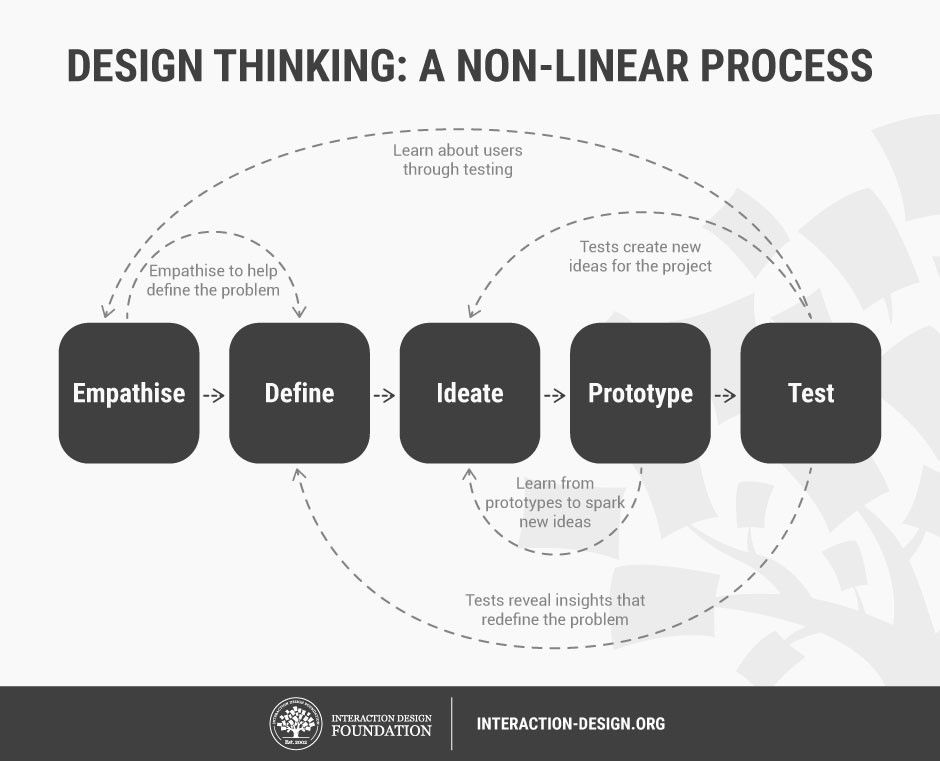
The first stage (or mode) of the Design Thinking process involves developing a sense of empathy towards the people you are designing for, to gain insights into what they need, what they want, how they behave, feel, and think, and why they demonstrate such behaviors, feelings, and thoughts when interacting with products in a real-world setting.
Copyright holder: Teo Yu Siang and Interaction Design Foundation. Copyright terms and license: CC BY-NC-SA 3.0

The five stages of Design Thinking are not always sequential — they do not have to follow any specific order, and you will find they can often occur in parallel and you can repeat them iteratively. As such, the stages should be understood as different modes that contribute to a project, rather than sequential steps. However, most projects begin with an “Empathizing” phase.

To gain empathy towards people, we as design thinkers often observe them in their natural environment passively or engage with them in interviews. Also, as design thinkers, we should try to imagine ourselves in these users’ environment, or stepping into their shoes as the saying goes, in order to gain a deeper understanding of their situations. In the following sections, we will outline some methods from d.school Bootcamp Bootleg that will allow you to gain empathy towards your users.

Assuming a Beginner’s Mindset
Copyright holder: the Author. Copyright terms and license: CC0

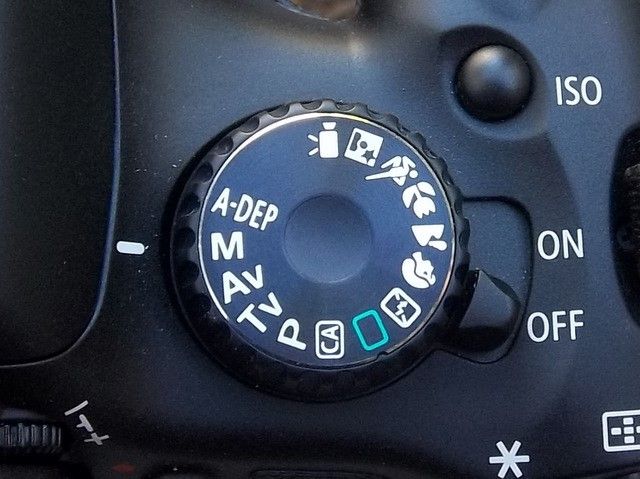
The mode dial of a Canon EOS Digital SLR camera. How would a beginner photographer know what to choose? To help beginners, fully automatic modes are represented with icons on the dial, which makes it easy for a non-expert to guess what they mean (e.g., clockwise from top, video, night portrait, sports, closeups, etc.). Icons are also universal – i.e., independent of language. More advanced (expert) modes are shown with abbreviations – you really need to read the manual before you use any of these (e.g., “Tv” doesn’t mean “television”, but “time value” – i.e., shutter priority)! You could only imagine how much confusion this must cause to novice Canon users. Nikon use single letters instead for the advanced modes.

If we are to empathize with users, we should always try to adopt the mindset of a beginner. What this means is that, as designers (or design thinkers), we should always do our best to leave our own assumptions and experiences behind when making observations. Our life experiences create assumptions within us, which we use to explain and make sense of the world around us. However, this very process affects our ability to empathize in a real way with the people we observe. Since completely letting go of our assumptions is impossible (regardless of how much of a checkered reputation the word “assumption” has!), we should constantly and consciously remind ourselves to assume a beginner’s mindset. It’s helpful if you always remind yourself never to judge what you observe, but to question everything—even if you think you know the answer—and to really listen to what others are saying.

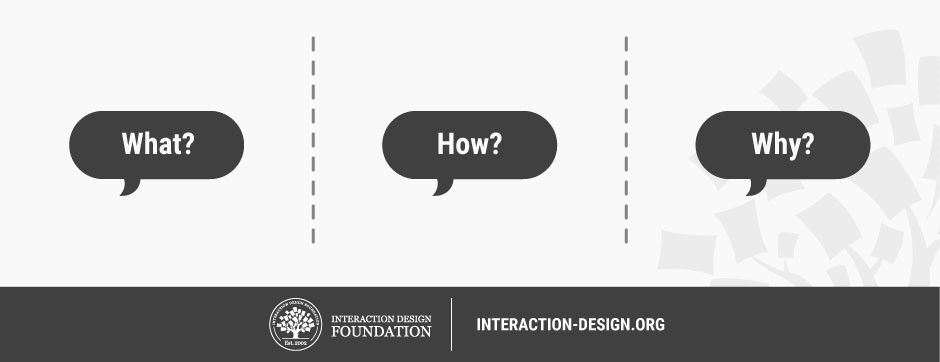
Ask What? How? Why?
Copyright holder: Teo Yu Siang and Interaction Design Foundation. Copyright terms and license: CC BY-NC-SA 3.0

UX designers’ attitudes towards their work stem from natural curiosity, inquisitive behavior and constant critical appraisal of everything they encounter. Looking for the underlying factors and motives that drive users’ behaviors and needs is what leads to successful design.

By asking the three questions — What? How? Why? — we can move from concrete observations that are free from assumptions to more abstract motivations driving the actions we have observed. During our observations, for instance, we might find separately recording the “Whats”, “Hows” and “Whys” of a person’s single observation helpful.

In “What”, we record the details (not assumptions) of what has happened. In “How”, we analyze how the person is doing what he/she is doing (is he/she exerting a lot of effort? Is that individual smiling or frowning?). Finally, in “Why”, we make educated guesses regarding the person’s motivations and emotions. These motivations we can then test with users.

Photo and Video User-based Studies

Photographing or recording target users, like other empathizing methods, can help you uncover needs that people have which they may or may not be aware of. It can help guide your innovation efforts, identify the right end users to design for, and discover emotions that guide behaviors.

In user camera-based studies, users are photographed or filmed either: (a) in a natural setting; or (b) during sessions with the design team or consultants you’ve hired to gather information. For example, you might identify a group of people who possess certain characteristics that are representative of your target audience. You record them while they’re experiencing the problem you’re aiming to solve. You can refresh your memory at a later time with things people said, feelings that were evoked, and behaviors that you identified. You can then easily share this with the rest of your team.

Copyright holder: NJM2010, Wikimedia. Copyright terms and license: CC BY-SA 3.0

A group of three tourists, trying to find their way in a city. In this, the researchers’ photo, they are huddled around the map shown on the mobile phone. In the photo, we see how hard a time people have when they try to collaborate using the small screen – the girl in the background, for example, has no way of pointing at things on the screen, and hence can’t help her group as much (photo courtesy of A. Komninos, from Besharat et al. 2016).

Personal Photo and Video Journals

In this method, you hand over the camera to your users and give them instructions, namely to take pictures of or video-record their activities during a specified period. The advantage is that you don’t interfere or disturb the users with your personal presence, even though they will adapt and change their normal behavior slightly as they know that you’ll watch the video or see the photo journal later. In a similar way to using personas, by engaging real people, as designers we gain invaluable personal experiences and stories that keep the human aspect of design firmly in mind throughout the whole process. While we probably know, deep down, what limits are involved when three people are trying to use one phone, there’s nothing like the first-hand evidence of a live (and recorded) performance to put this front and center in our awareness from the outset.

Copyright holder: Andreas Komninos, University of Strathclyde. Copyright terms and license: CC0

Photographs returned by users during a study where they were asked to record cases where they needed to enter text on their mobile or tablet devices. Because the context of use is clearly shown in the pictures, the researchers can understand a lot about where and how text needs to be entered when the returned pictures are good (e.g., in the left image, the user needed to enter a number to pay for parking via mobile, and we can see how much text needed to be entered, the device and even the weather). But not all returned pictures are great! Users are not expert photographers, and they will often return material that isn’t of much use (e.g., on the right, we can see the user is sitting comfortably with their tablet, but we have no idea what they were trying to do, because of the camera flash). Images courtesy of A. Komninos, M.D. Dunlop and E. Nicol, University of Strathclyde.

With that in mind, let’s hear from IDEO, a leading international design consulting firm founded in California in 1991:

“We use this method to go beyond an in-person Interview to better understand a person’s context, the people who surround them, community dynamics, and the journey through how they use a product or service. Photojournals can help create a foundation for richer discussion as they prime an individual before an interview which means they start thinking about the subject a few days in advance.”

– IDEO, Designkit.org, Photojournal

Interviews
Copyright holder: Teo Yu Siang and Interaction Design Foundation. Copyright terms and license: CC BY-NC-SA 3.0

Interviews are an important part of the UX designer’s skillset for empathizing with users. However, an interview will yield only minimal results if you are not prepared to conduct it with genuine empathy.

One-on-one interviews can be a productive way to connect with real people and gain insights. Talking directly to the people you’re designing for may be the best way to understand needs, hopes, desires and goals. The benefits are similar to video- and camera-based studies, but interviews are generally structured, and interviewers will typically have a set of questions they wish to ask their interviewees. Interviews, therefore, offer the personal intimacy and directness of other observation methods, while allowing the design team to target specific areas of information to direct the Design Thinking process.

Most of the work happens before the interviews: team members will brainstorm to generate questions to ask users and create themes or topics around the interview questions so they can flow smoothly from one to another.

Engaging with Extreme Users
Copyright holder: Teo Yu Siang and Interaction Design Foundation. Copyright terms and license: CC BY-NC-SA 3.0

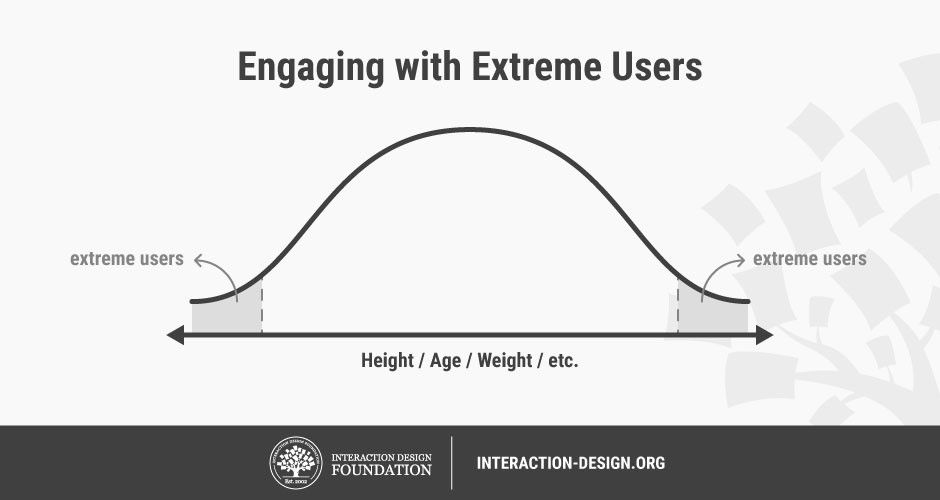
Extreme users are few in number, but it doesn’t mean you should disregard them and aim just for the main bulk of users instead. In fact, they can provide excellent insights that other users may simply be unprepared to disclose.

By focusing on the extremes, you will find that the problems, needs and methods of solving problems become magnified. First, you must identify the extremes of your potential user base; then, you should engage with this group to establish their feelings, thoughts and behaviors, and then look at the needs you might find in all users. Consider what makes a user extreme and you’ll tend to notice it’s the circumstances involved. A basic example is a grocery store shopping cart and a shopper with five very young children in tow – there are two fold-down seats in the cart, but the other kids (who are also too young to walk) must go somewhere. Our shopper is, therefore, an extreme user of the shopping cart design.

On the one hand, if you can manage to please an extreme user, you should certainly be able to keep your main body of users happy. On the other hand, it is important to note that the purpose of engaging with extreme users is not to develop solutions for those users, but to sieve out problems that mainstream users might have trouble voicing; however, in many cases, the needs of extreme users tend to overlap with the needs of the majority of the population. So, while you may not be able to keep everyone happy at all times with your design, you can certainly improve the chances that it will not frustrate users.

Analogous Empathy

Using analogies can help the design team to develop new insights. By comparing one domain with another, we as designers can conjure different solutions that would not necessarily come to mind when working within the constraints of one discipline. For example, the highly stressful and time-sensitive procedure of operating on a patient in a hospital emergency room might be analogous to the process of refuelling and replacing the tires of a race car in a pit stop. Some of the methods you might use in analogous empathy include comparing your problem and another in a different field, creating an 'inspiration board' with notes and pictures, and focusing on similar aspects between multiple areas.

Sharing Inspiring Stories
Copyright holder: Teo Yu Siang and Interaction Design Foundation. Copyright terms and license: CC BY-NC-SA 3.0

In the words of the great author Terry Pratchett, “People think that stories are shaped by people. In fact, it's the other way around.” We might paraphrase slightly here, as it’s true that products are shaped by the stories that people tell about them.

Each person in a design team will collect different pieces of information, have different thoughts, and come up with different solutions. For this reason, you should share your inspiring stories to collect all of the team members’ research, from field studies, interviews, etc. By sharing the stories that each member has observed, the team can get up to speed on progress, draw meaning from the stories, and capture interesting details of the observation work.

Bodystorming
Copyright holder: Bank of England, Flickr. Copyright terms and license: CC BY-ND 2.0

A person wearing special goggles that simulate vision impairments, trying to accomplish a simple task (seizing a grain of rice with the tweezers and moving it to the adjacent empty container). Acting out different scenarios can help the researchers themselves better understand the problems that a particular user group might face. This is literally stepping into the users’ shoes!

Bodystorming is the act of physically experiencing a situation in order to immerse oneself fully in the users’ environment. This requires a considerable amount of planning and effort, as the environment must be filled with the artifacts present in the real-world environment, and the general atmosphere/feel must accurately depict the users’ setting. Bodystorming puts the team in the users’ shoes, thereby boosting the feelings of empathy we need as designers in order to come up with the most fitting solutions. Having that ‘real-life’ experience will serve as a reference point for later in the process, enabling us to stop, stand back and ask ourselves: “Remember when we tried being the user? How would this new thing fit in with that?”

The Take Away

When we are in a Design Thinking team, we have a wealth of ways at our disposal to enable us to empathize with our users. Collectively, these methods offer us insight into the users’ needs, and how they think, feel, and behave. Each method attempts to enhance the design team's understanding of their target user and market, and to appreciate exactly what users need and want from their product(s). Observation methods will not only enable us to gather raw data, statistics and demographics; they will also offer opportunities for us to draw insights that we can then apply in designing a solution. Empathizing with users is an essential component of the Design Thinking process; to ignore the benefits of learning from others is to forget what Design Thinking is truly about. Hence, we must, to an appropriate degree, ‘become’ our users if we are to offer them fine-tuned solutions that lead in the market.

References & Where to Learn More

Course: “Design Thinking - The Ultimate Guide”.

d.school Bootcamp Bootleg, 2018.

IDEO.org.

Besharat, J., Komninos, A., Papadimitriou, G., Lagiou, E., & Garofalakis, J. (2016). Augmented paper maps: Design of POI markers and effects on group navigation. Journal of Ambient Intelligence and Smart Environments, 8(5), 515-530.

Feel Stuck?
Want Better Job Options?

AI is replacing jobs everywhere, yet design jobs are booming with a projected 45% job growth. With design skills, you can create products and services people love. More love means more impact and greater salary potential.

At IxDF, we help you from your first course to your next job, all in one place.

See How Design Skills Turn Into Job Options
Privacy Settings
By using this site, you accept our Cookie Policy and Terms of Use.
Customize
Accept all

Be the One Who Inspires

People remember who shares great ideas.

Share on:

Academic Credibility — On Autopilot

Don't waste time googling citation formats. Just copy, paste and look legit in seconds.