User experience (UX) designers are professionals who create meaningful and user-centric digital experiences. They use design principles, psychology and research methodologies to make sure that products and services are easy to use, visually appealing and in line with user expectations. Designers understand user needs and behaviors to make intuitive interfaces, optimize users’ journeys and satisfaction—and drive business success.
Author and Human-Computer Interaction (HCI) Expert, Professor Alan Dix explains why UX design is so important:
Why are UX Designers So Important?
UX designers play a vital role to shape the digital landscape. They’re the architects of seamless and intuitive interactions between users and digital products or services. These designers craft compelling experiences that meet—and exceed—the needs and expectations of a design solution’s target users. As team members, they form the backbone of design teams and stick to a UX design process like design thinking. Designers strive to create products—like apps and websites—that ultimately drive customer satisfaction and loyalty.
The roles and responsibilities of a UX designer can vary—and these depend on the company and project. In the main, though, their responsibilities include:
1. Research and Analysis
UX designers do extensive research to get insights into user needs, behaviors and pain points. They use various techniques—like interviews, surveys and usability testing—to collect data and inform the design process. User research is a really vital part of a designer’s role. Without the insights collected from the various methods they use to observe and interview the people who will use a product or service, designers cannot create the right or needed design.
UX Strategist and Consultant, William Hudson explains the importance of user research:
2. User Persona Development
UX designers take research findings and apply them to create user personas. These personas represent the target audience. Personas highlight the audience’s goals, motivations and preferences. They also reflect the user flows—what users experience in the context of how they approach, encounter and use a given product or service.
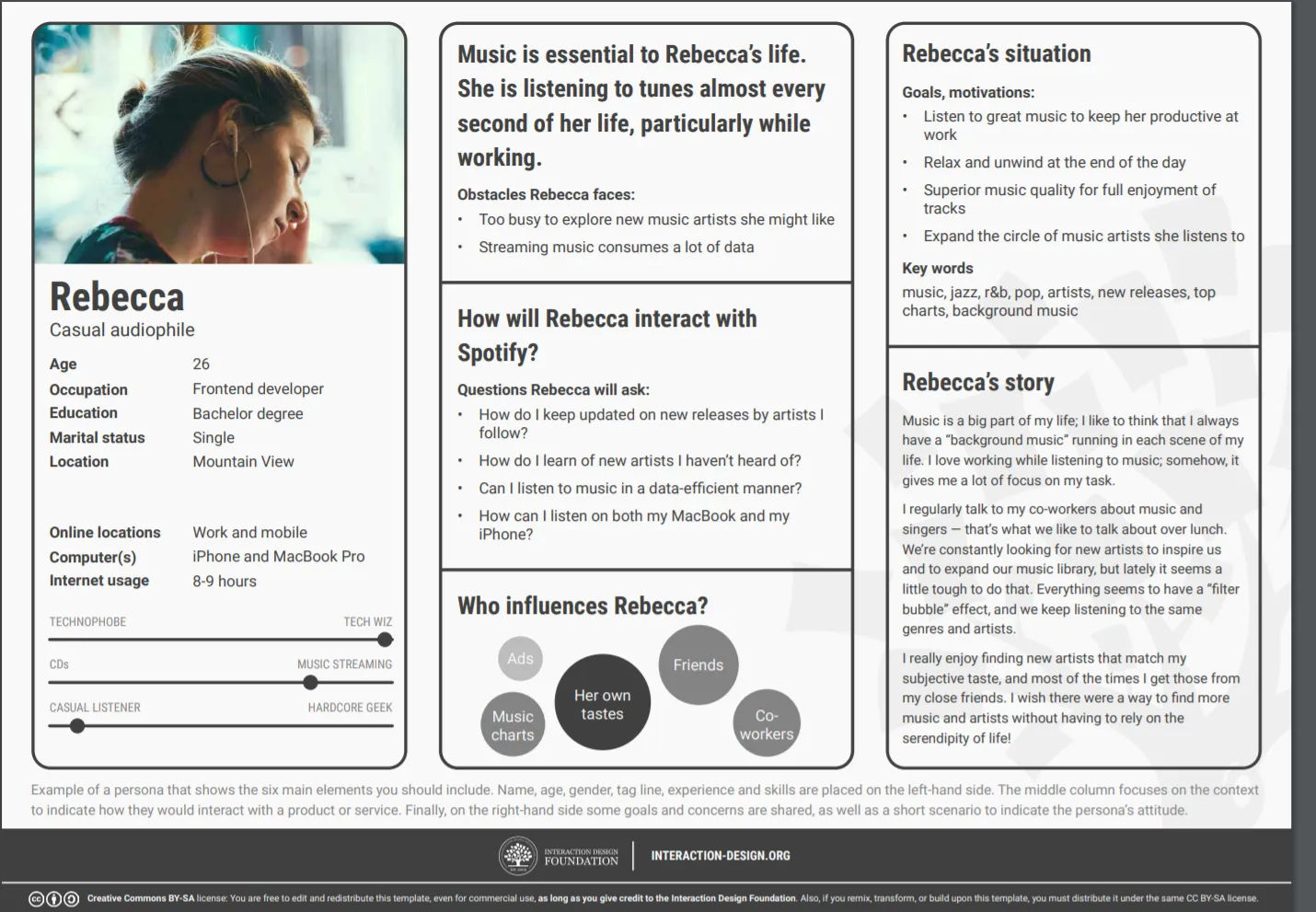
An example of a persona.
© Interaction Design Foundation, CC BY-SA 4.0
User personas serve as a reference point throughout the design process, and ensure that the final product or service meets user expectations.
Professor Alan Dix explains personas:
3. Information Architecture and Wireframing
UX designers organize and structure content to make it as usable and accessible as they can. They create information architecture—which defines the hierarchy and flow of information within a product. Wireframing is another crucial step where UX designers make low-fidelity layouts so they can visualize the product's structure and functionality. These visual representations let designers visualize a product or service’s layout and flow. And wireframes are basic representations of the interface.
William Hudson explains wireframing:
4. Prototyping and User Testing
UX designers build interactive prototypes so they can test—and validate—design concepts. Prototypes—interactive models that simulate the user experience—are tools that help UX designers iterate and refine their designs before going into development. Like wireframes, prototypes are essential tools for UX designers, and they let users interact with the product—and then give feedback on it. They can be low-fidelity (lo-fi) or high-fidelity (hi-fi) in terms of how sophisticated they are. The former are especially useful early in the design process, while the latter are typically far more expensive representations of how the final product will look. In any case, prototypes enable designers to iterate and refine their designs based on user insights.
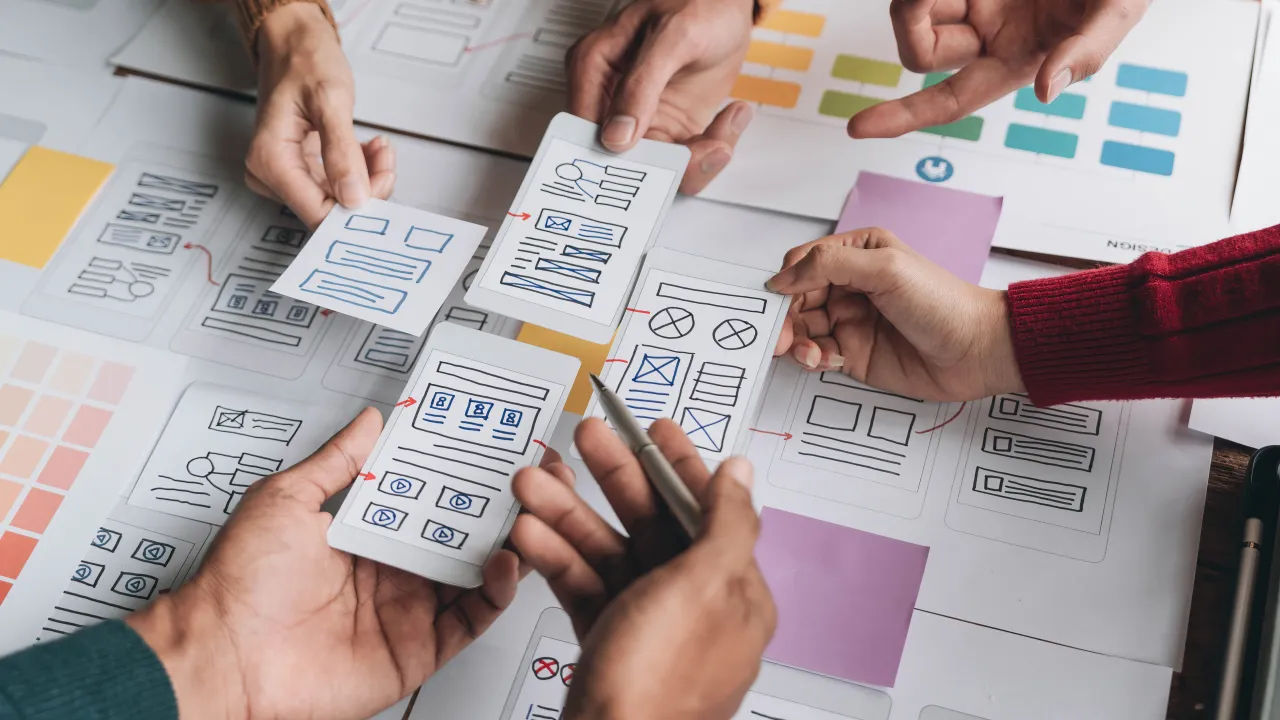
Prototyping is a highly effective way to get design ideas “out there” for testing—and paper prototyping is a great way to do it early and smartly.
© Interaction Design Foundation, CC BY-SA 4.0
5. Collaboration with UI Designers and Developers
UX designers collaborate with user interface (UI) designers to make sure that the visual elements of a product run in line with the overall user experience strategy. They work closely with developers to make sure that the design gets implemented seamlessly.
6. Continuous Improvement
Even after a product gets launched, UX designers look at the user feedback and behavior so they can spot areas for improvement. They do usability testing and collect data to make data-driven decisions so they can boost the user experience.
How important UX designers are for brands is something that’s impossible to overstate. As designers focus on user needs, they make digital experiences that are intuitive, engaging and memorable. This—in turn—drives customer satisfaction, loyalty and positive perceptions of the brand.
Careers and Roles in UX Design
UX designers have diverse career opportunities—and they can specialize in various roles. Common ones include:
1. UX Designer
UX designers are responsible for a product or service’s overall user experience. They do user research, create wireframes and prototypes, and they collaborate with UI designers and developers to bring the design to life.
2. UX Researcher
UX researchers focus on how to understand user needs, behaviors and motivations through various research methods. UX research splits into two approaches. Quantitative research focuses on the “what,” “where” and “when” of users’ needs and problems, and includes such techniques as A/B testing, analytics and tree testing. Meanwhile, qualitative research focuses on why users think and feel the way they do, and involves—for example—diary studies, interviews and usability testing. UX researchers gather data and insights both to inform the design process, and to make it so that the final product does indeed meet user expectations.
3. UX/UI Designer
UX/UI designers combine both user experience and user interface design skills. They’re responsible for making visually appealing and user-friendly interfaces—ones that are lined up with the overall user experience strategy.
4. UX Writer
UX writers specialize in making content that’s clear and concise—content that guides users throughout their journey. They make sure that the language that’s in the product is consistent, informative and easy to understand.
Author, Speaker and UX Writer, Torrey Podmajersky explains what UX writing involves:
5. UX Consultant
UX consultants provide their guidance and expertise to organizations that seek to improve the user experience of their products or services. Consultants conduct audits, provide recommendations and develop strategies on how to enhance the overall user experience.
To excel in these roles, UX designers will typically have a background in design, psychology, human-computer interaction or some field that’s related. They’ve got a deep understanding of user-centered design principles, research methodologies and emerging trends in technology.
Challenges that UX Designers Face
UX designers contend with a variety of challenges—and here are some:
1. Balance User Needs and Business Goals
UX designers have to strike a balance between how they meet user needs and align with the organization’s business goals. It’s something that calls for effective communication and collaboration with stakeholders—to make sure the design meets both what the users and the business expect. Users have diverse needs and preferences—and some core considerations are vital to work into the final product. So, UX designers have got to advocate for users, and educate stakeholders and clients about the need to keep user needs in sharp focus throughout the design process.
Design Director at Societe Generale, Morgan Peng gives valuable advice on this key issue that designers face:
2. Adapt to Evolving Technology and Trends
As technology rapidly evolves, UX designers need to stay updated with the latest trends and tools—adapt their skills and design approaches to accommodate new platforms, devices and user behaviors.

For example, both the cashier and the customer have their own user experiences, which the Point-of-Sale (PoS) system and the ordering system influence. UX designers help shape these experiences as they keep up with new ways to pay and more.
© Jacob Lund Photography and Noun Project, Fair Use
3. Acknowledge and Handle User Research Limitations
It can be a challenge to do user research—whenever there are budget and time constraints. UX designers must find innovative ways to collect insights and validate design decisions, all within these limitations.
4. Design for Accessibility and Inclusivity
UX designers also have a challenge facing them to design inclusive experiences that cater to diverse user needs and abilities. They need to consider accessibility standards and make sure that their designs really are usable for all users.
See why accessibility is such a crucial design consideration:
5. Collaborate with Cross-Functional Teams
UX designers work closely with other members of the product team—such as UI designers, graphic designers, developers and product managers—as well as stakeholders from different disciplines. They collaborate to make sure that the design goes in line with the overall product vision and meets business goals. Effective communication and solid teamwork are crucial things for successful collaboration to be a reality.
UX Designer and Author of Build Better Products and UX for Lean Startups, Laura Klein explains the value of cross-functional teams.
6. Experience Variations in the Definition of Their Role
For various reasons—including budgetary constraints—some organizations can blur the job description of a UX designer with that of a UI designer. And they can expect a combined UI-UX designer in one. UX designers focus on the overall experience of the user, as interaction designers or experience designers. UI designers, meanwhile, are responsible for the look and feel of the product—like the UI elements. Similarly, UX design skills are more concerned with how to understand user behavior and make a product that’s functional and is one that really meets their needs. UI design skills—though—focus on how users interact with the interface. UI designers have deep knowledge of visual design and create visuals that guide users well through the product. Meanwhile, UX designers take a more holistic approach to design and its many facets—including how to implement an interface.
The perspective that UX designers bring to the table is unique. They advocate for the user and make sure that the design runs in line with the overall product vision. As such, they form a vital foundation—or runway—for the right thing ultimately taking off in the marketplace.
Educational Background and Expertise
There’s no specific educational path one must take to become a UX designer. Even so, most professionals do have a background in design, psychology or a related field. Employers often prefer a bachelor's degree in design, human-computer interaction or some disciple that’s related. Even so, practical experience, a strong portfolio and relevant certifications can also be invaluable assets.
What UX designers need is a combination of technical skills and soft skills. Technical skills for designers include having proficiency in design software such as Figma, Sketch, Adobe XD and InVision. They should also be familiar with user research methods, information architecture and usability testing. Soft skills—like communication, empathy and problem-solving—are equally important for effective collaboration, and for really understanding user needs.
See why empathy for users is an essential ingredient in UX design:
Salary of a UX Designer
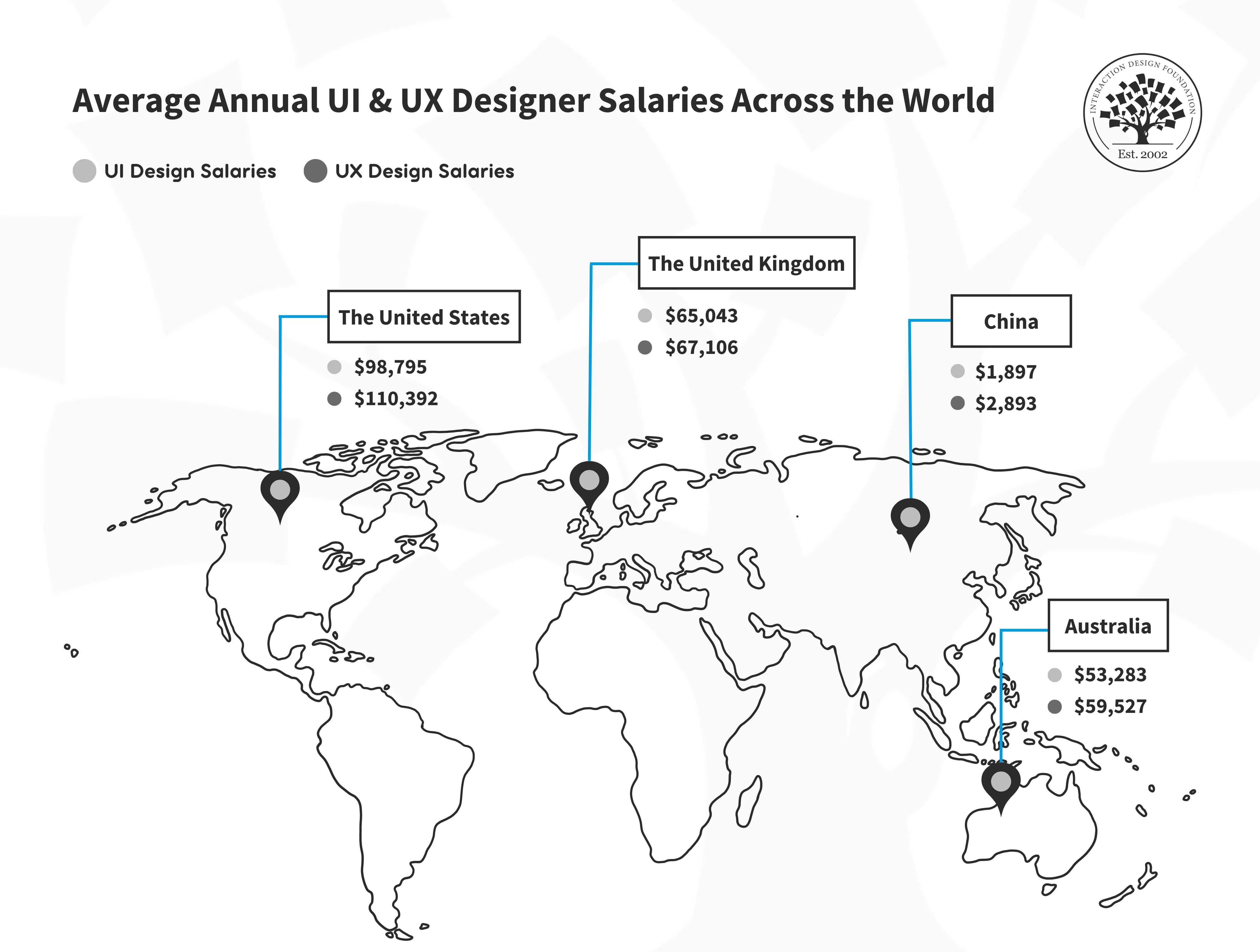
The salary of a UX designer can vary—it’s based on factors such as experience, location and industry. At the junior level, UX designers can expect an average salary of $60,000 to $80,000 per year. Mid-level UX designers earn around $80,000 to $100,000. Meanwhile, senior designers can earn upwards of $100,000 per year.
© Interaction Design Foundation, CC BY-SA 4.0
It's important to note that salary ranges can differ—geographical location and industry demand decide that. As the demand for skilled UX designers continues to grow, the salary prospects are promising for those entering—or advancing in—the field.
Examples of UX Designers and Their Impact
Numerous UX designers have made great contributions to the field and left a lasting impact on the digital landscape. Some notable examples include:
Steve Jobs
Steve Jobs—co-founder of Apple—was renowned for his emphasis on user experience. His vision and attention to detail shaped iconic products like the iPhone, iPad and Mac, and really revolutionized the way users interact with technology.

Steve Jobs
© Magnolia Pictures, Fair Use
Don Norman
Known as the “father of UX design,” Norman coined the term "user experience"—and he’s written influential books on the subject. He’s urged designers to embrace highly relevant challenges to the modern world through humanity-centered design as well as other approaches.
Don Norman
© Interaction Design Foundation, CC BY-SA 4.0
Sarah Doody
Sarah Doody is a UX designer and consultant—known for her expertise in user research and design thinking. She’s the founder and CEO of Career Strategy Lab and an author.

Sarah Doody
© www.SarahDoody.com, Fair Use
Alan Cooper
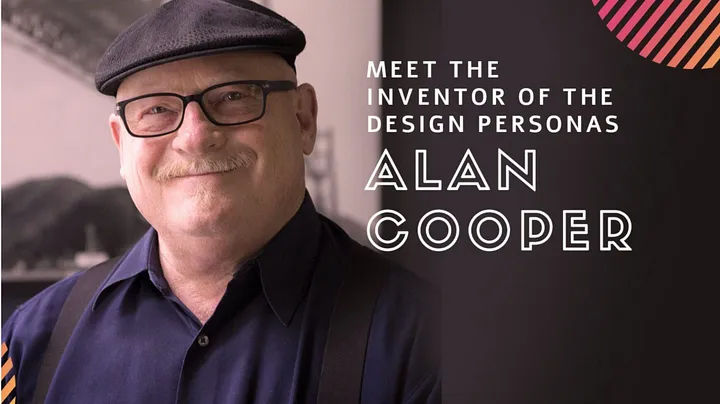
Alan Cooper—often termed the "Father of Visual Basic"—is a pioneer in the field of interaction design. He introduced the concept of personas, and he advocated for user-centered design principles, too.
Alan Cooper
https://mralancooper.medium.com, Fair Use
Steve Krug
Krug—author of Don't Make Me Think—is famous for his insights on usability and user-centered design, and he’s an important contributor to UX design overall.

Steve Krug
https://theagilerevolution.com, Fair Use
Irene Au
Au—the former head of design at Google—has played a key role in shaping the user experiences of various Google products.

Irene Au
© Paula Macedo, Fair Use
Tips on How To Become a Successful UX Designer
Aspiring UX designers should consider the following tips:
1. Build a Strong Design Foundation with a Diverse Skill Set
Designers should get a solid understanding of design principles, user-centered design methodologies and industry-standard tools. It’s also vital for them to keep on expanding their knowledge and technical skills so they stay ahead in this rapidly evolving field.
2. Practice Empathy
Designers need to put themselves in their users’ shoes and strive to understand the latter’s needs, goals and pain points. Empathy’s a key trait to have for user-centered design that’s effective.
3. Hone Research Skills
Designers should invest the time so they learn various research methods and techniques. User research is crucial for informed design decisions—and to make sure that designs really do address user needs effectively.
4. Cultivate Collaboration Skills
UX design is a collaborative field—one that calls for effective communication and teamwork all the way through the design process. So, it’s vital to develop strong collaboration skills for them to work harmoniously with cross-functional teams and stakeholders.
5. Learn from Others
Designers should consider collaborating with peers, joining design communities and seeking mentorship so they can build up their skills and knowledge. It’s a vibrant and expanding industry, so it’s a vital asset to be part of a network.
6. Build a Portfolio
Designers should create a compelling portfolio—one that showcases their design projects, thought process and problem-solving skills in the best way possible. A portfolio should show their ability to create meaningful and user-centric experiences. The portfolio’s a vital asset. It will travel ahead of the designer to tell prospective clients or employers what they’re capable of, and how. It’s vital to show the journey as well as the thinking that went into the ultimate product—not just the results.
Stephen Gay, Design Lead for the Adword Display & Apps Team at Google, gives valuable advice about UX portfolios:
7. Stay Curious and Updated
Designers should keep up with the latest trends, technologies and best practices in UX design. It’s important for them to attend workshops, conferences and webinars—as well as read highly regarded books—to expand their knowledge and network with industry professionals. As technologies evolve, for instance, the elements that go into experiencing and using those technologies do change as well. So, it’s ultra-important to keep a finger on the pulse and stay up to date so they keep ahead of the game.
8. Seek Feedback and Iterate
Designers should embrace feedback and continuously iterate on their designs based on the user insights they get. User testing and feedback are essential both for refining designs and for improving the overall user experience.
9. Remember the Vital Factors
Whatever emerges during the design process, including—for example—a client’s failure to recognize necessary design points, designers should keep core considerations top of mind—always.
These include usability, desirability and accessibility—to make sure that end products really do meet user expectations and provide positive experiences.
Watch this video to understand the Elements of User Experience:
10. Stay Passionate and Persistent
Passion and persistence are true keys to success—and that goes for any career. Designers should stay passionate about creating exceptional user experiences and stay persistent in how they pursue excellence.
Overall, it’s essential to bear in mind that good UX design involves a big-picture view—a view of who the users of a product or service are, the many aspects of their user journeys, and more. UX designers are the driving force behind the brands that shape products and services that meet user needs, drive business success and contribute to the progress of technology—at the global level.