Qualitative research is the methodology researchers use to gain deep contextual understandings of users via non-numerical means and direct observations. Researchers focus on smaller user samples—e.g., in interviews—to reveal data such as user attitudes, behaviors and hidden factors: insights which guide better designs.
"To find ideas, find problems. To find problems, talk to people."
-- Julie Zhou, Former VP of Product Design at Facebook
In this video, William Hudson, UX Strategist and Founder of Syntagm Ltd, discusses the differences between qualitative and quantitative research.
See how you can use qualitative research to expose hidden truths about users and iteratively shape better products.
Qualitative Research Focuses on the “Why”
Qualitative research is used extensively in user experience (UX) and user research. By doing qualitative research, you aim to gain narrowly focused but rich information about why users feel and think the ways they do. Unlike its more statistics-oriented “counterpart”, quantitative research, qualitative research can help expose hidden truths about your users’ motivations, hopes, needs, pain points and more to help you keep your project’s focus on track throughout development. UX professionals do qualitative research typically from early on in projects because—since the insights they reveal can alter product development dramatically—they can prevent costly design errors from arising later. Compare and contrast qualitative with quantitative research here:
Qualitative research | Quantitative Research | |
You Aim to Determine | The “why” – to get behind how users approach their problems in their world | The “what”, “where” & “when” of the users’ needs & problems – to help keep your project’s focus on track during development |
Methods | Often loosely structured (e.g., contextual inquiries) – to learn why users behave how they do & explore their opinions | Highly structured (e.g., surveys) – to gather data about what users do & find patterns in large user groups |
Number of Representative Users | Typically 5 to 20 | Ideally 30+ |
Level of Contact with Users | More direct & less remote (e.g., usability testing to examine users’ stress levels when they use your design) | Less direct & more remote (e.g., analytics) |
You need to take great care with handling non-numerical data (e.g., opinions), as your own opinions might influence findings | Reliable, given enough test users, but bias remains an issue to monitor |
You can enjoy greater success through triangulation, as different research methods have different strengths, and so when you use multiple approaches, you can obtain a more complete picture. For example:
Analytics might show you where users drop off in a funnel (the “what”).
User interviews uncover the frustrations and mental models causing that drop-off (the “why”).
A/B testing can validate whether addressing those pain points does indeed improve the experience (the “Does the solution work?” aspect).
Discover how to complement your research through triangulation, in this video with William Hudson.
Qualitative Research Methods You Can Use to Get Behind Your Users
You have a choice of many methods to help gain the clearest insights into your users’ world, which you might want to complement with quantitative research methods. In iterative processes such as user-centered design, you and your design team would use quantitative research to spot design problems, discover the reasons for these with qualitative research, make changes and then test your improved design on users again. The best method/s to pick will depend on the stage of your project and your objectives. Here are some:
Diary studies – You ask users to document their activities, interactions, etc., over a defined period. This empowers users to deliver context-rich information. Although such studies can be subjective—since in-the-moment human issues and emotions will inevitably influence users—they’re helpful tools to access generally authentic information.
Interviews – These are either structured, semi-structured, or ethnographic:
Structured – You ask users specific questions and analyze their responses with others.
Semi-structured – You have a more free-flowing conversation with users, but still follow a prepared script loosely.
Ethnographic – You interview users in their environment to appreciate how they perform tasks and view aspects of tasks.
Advance Your Career With This Free Template for “How to Structure a User Interview”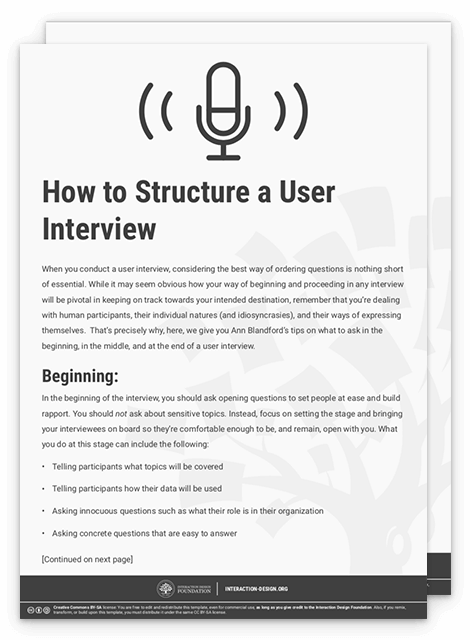
Usability testing
Moderated – In-person testing in, e.g., a lab.
Unmoderated – Users complete tests remotely: e.g., through a video call.
Guerrilla – “Down-the-hall”/“down-and-dirty” testing on a small group of random users or colleagues.
Advance Your Career With This Free Template for “How to Plan a Usability Test”
User observation – You watch users get to grips with your design and note their actions, words and reactions as they attempt to perform tasks.
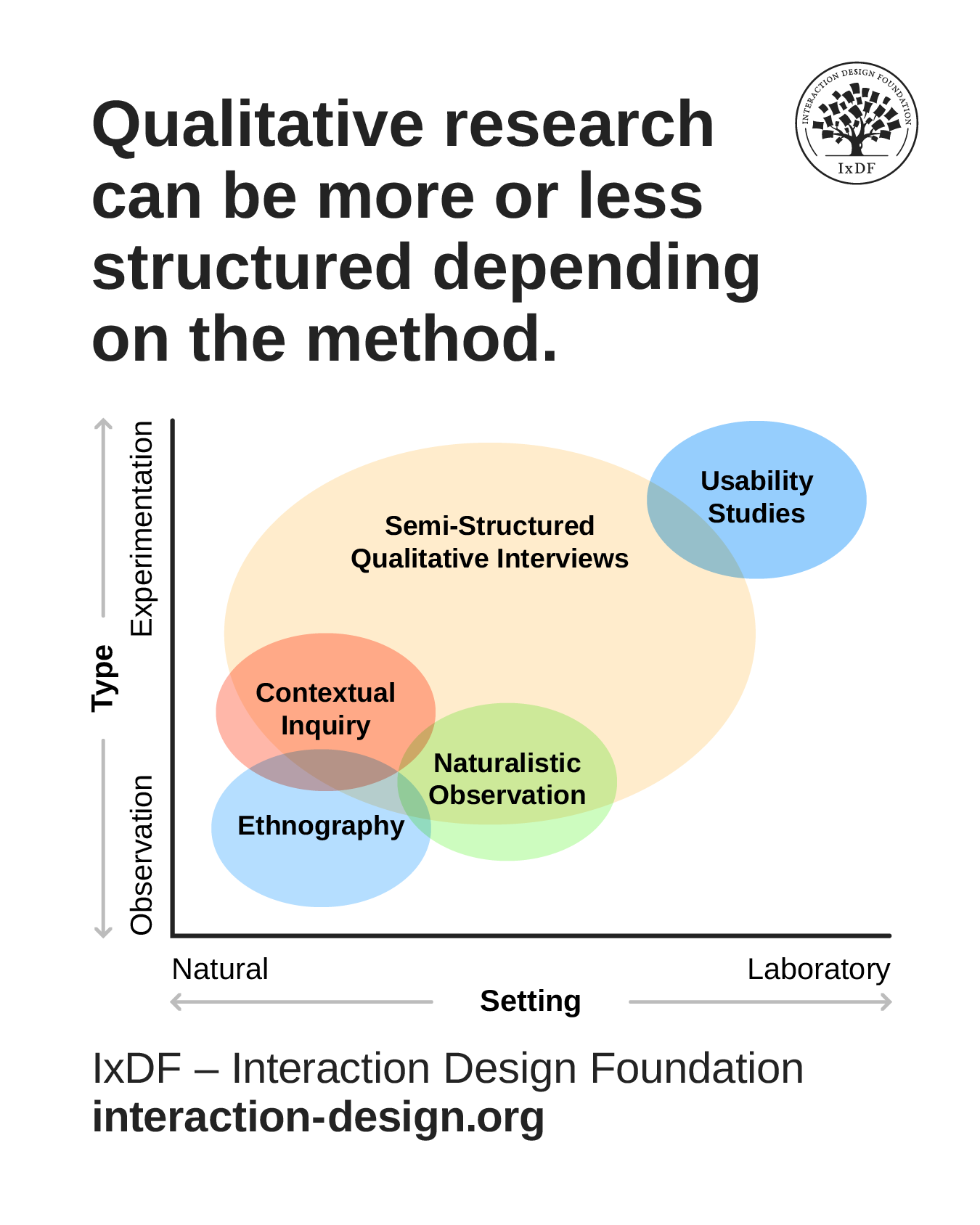
Qualitative research can be more or less structured depending on the method.
Qualitative Research and Usability Testing – How to Get Reliable Results
Some helpful points to remember are:
Participants – Select a number of test users carefully—typically around 5 for single sessions of usability testing, often more sessions are needed—but for other types of qualitative research such as contextual inquiry you might need 10 or 20 participants. Observe the finer points such as body language. Remember the difference between what they do and what they say they do.
Moderated vs. unmoderated – (Specific to usability testing) You can obtain the richest data from moderated studies, but these can involve considerable time and practice. You can usually conduct unmoderated studies more quickly and cheaply, but you should plan these carefully to ensure instructions are clear, etc.
Types of questions – You’ll learn far more by asking open-ended questions. Avoid leading users’ answers – ask about their experience during, say, the “search for deals” process rather than how easy it was. Try to frame questions so users respond honestly: i.e., so they don’t withhold grievances about their experience because they don’t want to seem impolite. Distorted feedback may also arise in guerrilla testing, as test users may be reluctant to sound negative or to discuss fine details if they lack time.
Location – Think how where users are might affect their performance and responses. If, for example, users’ tasks involve running or traveling on a train, select the appropriate method (e.g., diary studies for them to record aspects of their experience in the environment of a train carriage and the many factors impacting it).
Research Bias – Beware of bias when you conduct research, as it can be extremely difficult to spot. You may be unconsciously relying on assumptions and exercising confirmation bias, for example, where you pay attention to findings that confirm your expectations but ignore evidence that suggests otherwise.
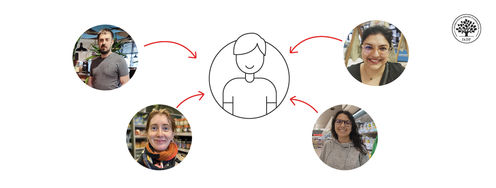
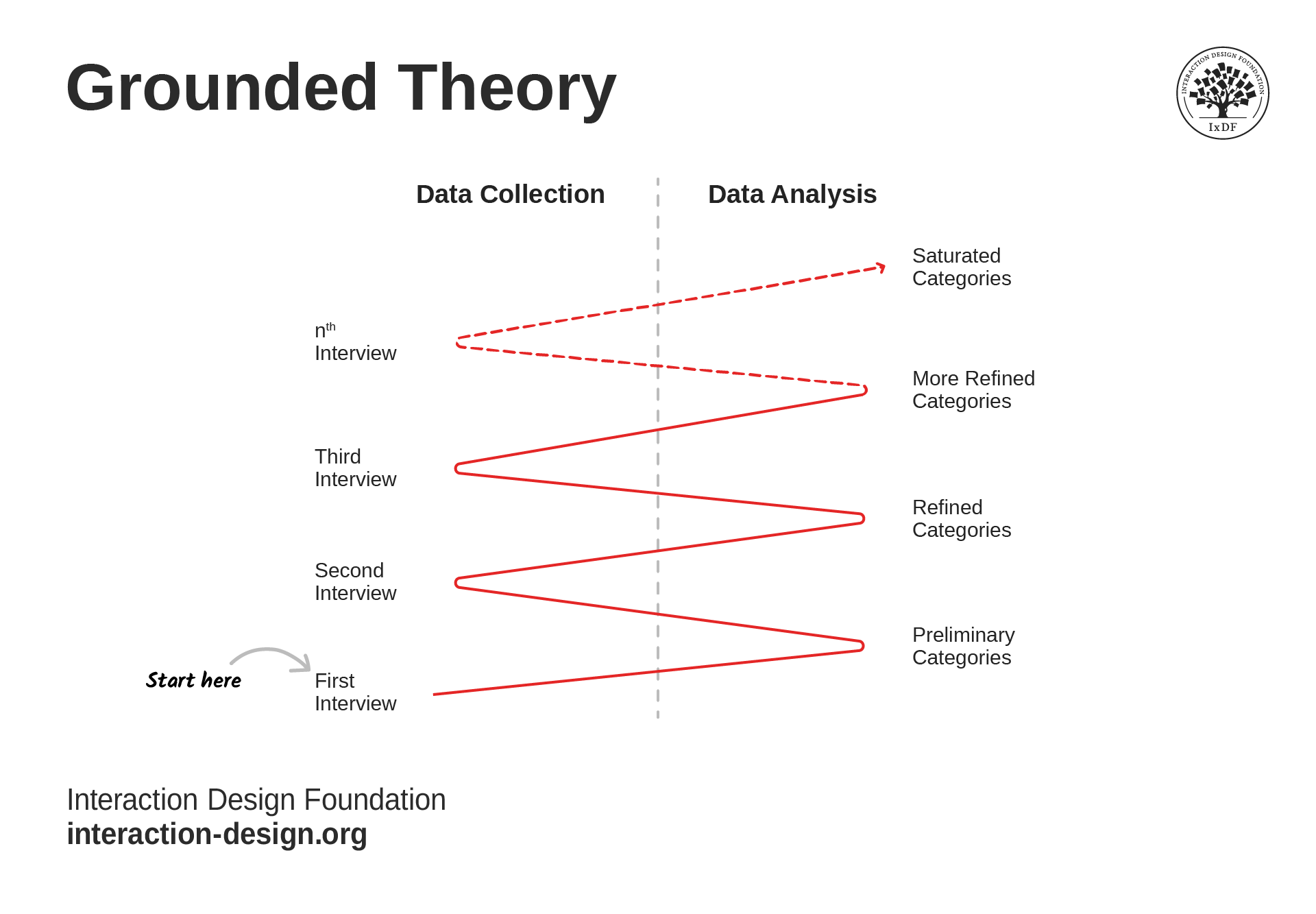
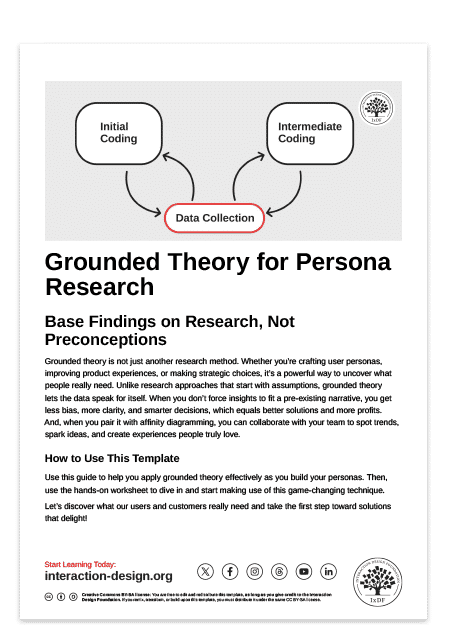
Another approach to get reliable research is grounded theory. It helps to reduce bias and discover your users’ true needs and behaviors. In this video, William Hudson, User Experience Strategist and Founder of Syntagm Ltd, explains more.
Overall, no single research method can help you answer all your questions. Nevertheless, The Nielsen Norman Group advise that if you only conduct one kind of user research, you should pick qualitative usability testing, since a small sample size can yield many cost- and project-saving insights. Always treat users and their data ethically. Finally, remember the importance of complementing qualitative methods with quantitative ones: You gain insights from the former; you test those using the latter.