Light up Your User Research – Understanding the Hawthorne Effect

• 8 min read

678 Shares

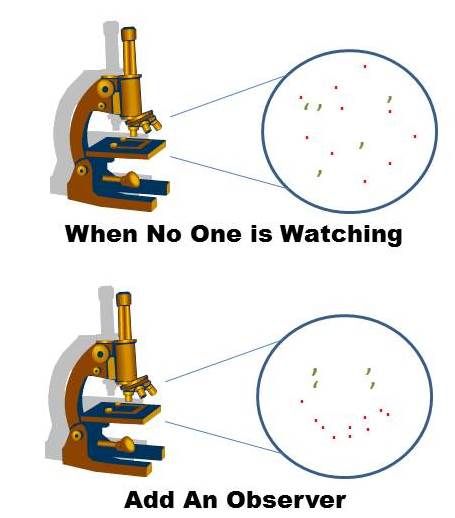
If you’re going to observe your users in your UX research, and you probably should, you need to know that the act of observation can have an impact on individual behaviour. The Hawthorne effect is common in research and by understanding it, you can (to some extent at least) moderate its effect on your research.

Imagine that you work in a factory for a second. One day, your boss comes to you and says that they want to do a little experiment on productivity. They’re going to increase the lighting in your workplace and see whether that makes you more productive. Then you go to the pub after work and sit with a couple of friends. You tell the story of your boss’s experiment and they look at you a little strangely and then tell you their stories.
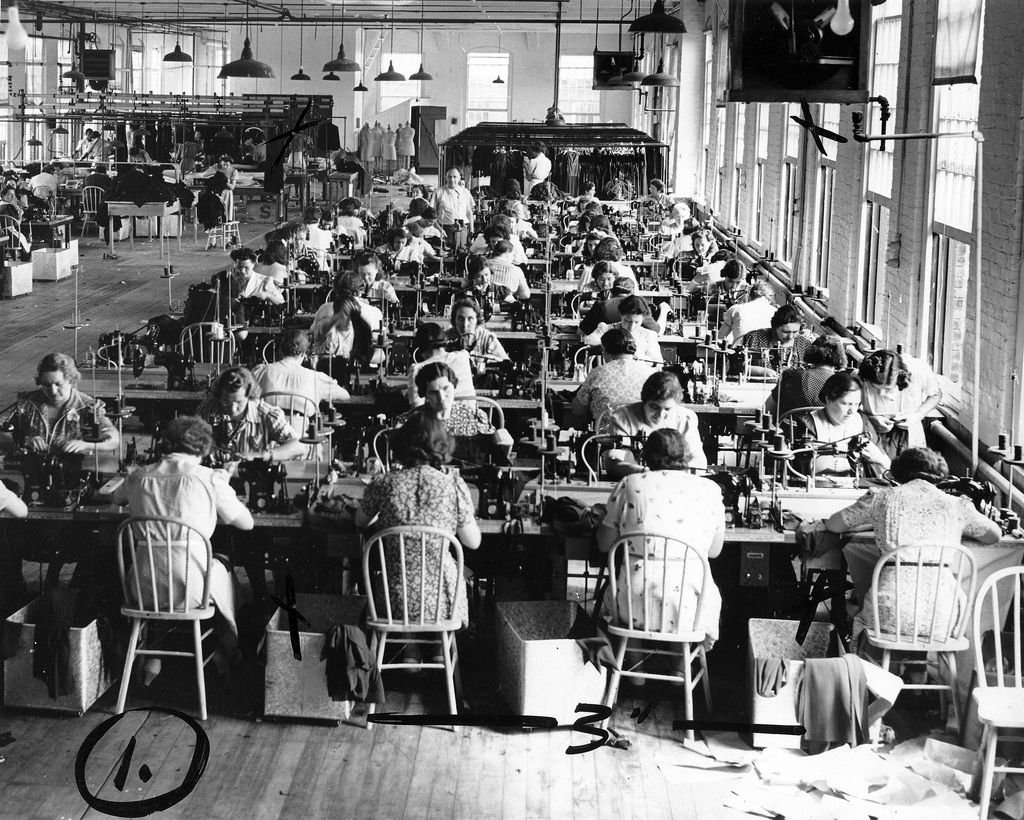
Author/Copyright holder: Kheel Center. Copyright terms and licence: CC BY 2.0

Their bosses are also looking at lighting and its effect on productivity and one of your friends is having the lighting decreased in their environment. The other friend has been told they are a control and that their lighting will be left at the same level.

The experiment is going to take place next week and you all agree to meet back in the pub to discuss the results at the end of the week. When you return, who do you think will report the greatest increase in productivity? (For the sake of this thought experiment – you can assume you all do similar jobs and that lighting conditions are identical prior to the experiment).

The Peculiar Result

It doesn’t matter whether the lighting is increased, decreased or left alone. You all report similar levels of increased productivity.

But when you return to the pub a week after the experiment has ended – you find that all of your levels of productivity have returned to normal.

The Hawthorne Effect

In 1958, the term “Hawthorne Effect” was minted by Henry A. Landsberger. He was investigating research which had been carried out between 1924 and 1932 in the Hawthorne Works (which was a factory based near Chicago).

They found that whenever they manipulated the lighting to see what effect it had on productivity – productivity went up. In fact, it went up even when the changes were imperceptible to the human eye (the equivalent of not making a change at all).

Yet, once they’d finished making changes; productivity quickly returned to normal.

They also tested other factors regarding productivity; they focused on the neatness and cleanliness of work stations, then on keeping floors free of any possible obstacles and even moved workspaces around the environment. All of the results showed something similar; a change was made, an improvement arose in productivity, shortly after that – productivity slumped back to normal.

Author/Copyright holder: BAKOKO. Copyright terms and licence: CC BY-ND 2.0

What Landsberger deduced was that the studies had played a part in the increase of productivity. When the observers looked for productivity improvements they found them. When they stopped looking, those improvements disappeared.

The Hawthorne Effect is, in essence, a phenomenon of research. By focusing a researcher’s attention on something; the subject is likely to strive to deliver the expectation of that research.

The Controversy

It is worth noting that not everyone agrees with Landsberger’s conclusions. Other researchers feel that the management climate of the Hawthorne Works and the specific types of interaction that researchers had with workers would have played their part in this outcome.

Many argue that a simple manipulation check (where manipulations are delivered at random to act as a control for the manipulation used by the researcher to insure that the manipulation had no bearing on the results) will eliminate the Hawthorne Effect.

However, there is no doubt that the Hawthorne Effect is now well-established in multiple studies and that no matter how much controversy it attracts – it is likely that the action of observing someone in research affects the way that they behave.
Author/Copyright holder: Unknown. Copyright terms and licence: Unknown.

Interestingly, a very common place for the Hawthorne Effect to be found is in corporate training. The action of training can often provide a temporary boost to productivity and skill which disappears in the longer term.

Why Does This Matter for UX Design?

It matters because we need to think about our research in context. If a short-term study designed to find an outcome invokes the Hawthorne Effect – it is likely that our study will give us the results that we expect even if they don’t reflect the user’s reality on a day-to-day basis.

There are two actions we can take to try and minimize this. The first is to address the issue of expectation in research. If we can keep the participants unaware of our expectations (and the best way to do this is to use research to try and test a hypothesis as opposed to using it to prove an expectation) then we can reduce the likelihood that they will produce the results we expect to see.

The second is to account for the Hawthorne Effect. If you are going to have to indicate an expectation from your research; then the research needs a longer “follow up” period. Where you can examine whether a behaviour (or change in product) is sustained beyond the research or whether it only exists in a short-period during and following the research. If the former is the case – the Hawthorne Effect is irrelevant, if the latter – you may need to revisit the design of the product.

The Take Away

If you know that the act of observation may potentially influence the results of your research, which is what the Hawthorne Effect suggests, you can take steps to eliminate the impact of the Hawthorne Effect. This gives you a greater chance of delivering an end product that satisfies the user and delivers a great user experience.

References

You can better understand manipulation checks by delving into their development here.

The Economist supplies some interesting analysis of why the Hawthorne Effect exists and further reading on the original studies here.

A recent paper confirms the existence of the Hawthorne Effect but fails to demonstrate the underlying reasons for it. See here.


Learn More in This Course:

AI for Designers

12 days
13 % booked
View Course

What You Should Read Next

  • Read full article
    What is Interaction Design? - Article hero image
    Interaction Design Foundation logo

    What is Interaction Design?

    Interaction design is an important component within the giant umbrella of user experience (UX) design. In this article, we’ll explain what interaction design is, some useful models of interaction design, as well as briefly describe what an interaction designer usually does.A simple and useful unders

    Social shares
    1.5k
    Published
    Read Article
  • Read full article
    Apple’s Product Development Process – Inside the World’s Greatest Design Organization - Article hero image
    Interaction Design Foundation logo

    Apple’s Product Development Process – Inside the World’s Greatest Design Organization

    Apple’s Product Development Process may be one of the most successful design processes ever implemented. With a valuation that exceeds $2 trillion, there’s a lot that designers can learn from Apple and introduce into their own design environments.Apple is a notoriously secretive business. In Steve J

    Social shares
    1.4k
    Published
    Read Article
  • Read full article
    Shneiderman’s Eight Golden Rules Will Help You Design Better Interfaces - Article hero image
    Interaction Design Foundation logo

    Shneiderman’s Eight Golden Rules Will Help You Design Better Interfaces

    Follow Ben Shneiderman’s 'Eight Golden Rules of Interface Design' if you want to design great, productive and frustration-free user interfaces. Apple, Google and Microsoft are among some of the highly successful companies whose well-designed products reflect Shneiderman’s rules. The characteristics

    Social shares
    1.4k
    Published
    Read Article
  • Read full article
    How to Change Your Career from Graphic Design to UX Design - Article hero image
    Interaction Design Foundation logo

    How to Change Your Career from Graphic Design to UX Design

    If there’s an occupation that is 100% linked with the public’s idea of what design is all about, it’s graphic design. From the familiar golden arches of the McDonald’s brand to the typography and colors of movie posters, graphic designers create some of the most iconic and ubiquitous designs around

    Social shares
    1.4k
    Published
    Read Article
  • Read full article
    The Grid System: Building a Solid Design Layout - Article hero image
    Interaction Design Foundation logo

    The Grid System: Building a Solid Design Layout

    Now that we’ve seen some grids at work in the Rule of Thirds article, let’s examine them a little more deeply. As a concept that deals so fundamentally with the fabric and background of our work as designers, it’s easy to overlook the power of grids and think more about the elements we want to creat

    Social shares
    1.4k
    Published
    Read Article
  • Read full article
    The Principles of Service Design Thinking - Building Better Services - Article hero image
    Interaction Design Foundation logo

    The Principles of Service Design Thinking - Building Better Services

    Service design is all about taking a service and making it meet the user’s and customer’s needs for that service. It can be used to improve an existing service or to create a new service from scratch. In order to adapt to service design, a UX designer will need to understand the basic principles of

    Social shares
    1.4k
    Published
    Read Article
  • Read full article
    A Simple Introduction to Lean UX - Article hero image
    Interaction Design Foundation logo

    A Simple Introduction to Lean UX

    Lean UX is an incredibly useful technique when working on projects where the Agile development method is used. Traditional UX techniques often don’t work when development is conducted in rapid bursts – there’s not enough time to deliver UX in the same way. Fundamentally Lean UX and other forms of UX

    Social shares
    1.3k
    Published
    Read Article
  • Read full article
    Dieter Rams: 10 Timeless Commandments for Good Design - Article hero image
    Interaction Design Foundation logo

    Dieter Rams: 10 Timeless Commandments for Good Design

    Let’s pay a virtual visit to a famous industrial designer’s workshop. By examining the principles of his winning approach, we can incorporate vital elements into our designs in the “less is more” age.As user experience practitioners, most of us have worked with Nielsen and Molich’s 10 heuristics or

    Social shares
    1.3k
    Published
    Read Article
  • Read full article
    The 7 Factors that Influence User Experience - Article hero image
    Interaction Design Foundation logo

    The 7 Factors that Influence User Experience

    User Experience (UX) is critical to the success or failure of a product in the market but what do we mean by UX? All too often UX is confused with usability which describes to some extent how easy a product is to use and it is true that UX as a discipline began with usability – however, UX has grown

    Social shares
    1.3k
    Published
    Read Article
  • Read full article
    How to Do a Thematic Analysis of User Interviews - Article hero image
    Interaction Design Foundation logo

    How to Do a Thematic Analysis of User Interviews

    You have been in the field talking to users and you now find yourself with a massive amount of audio, notes, video, pictures, and interesting impressions. All that information can be overwhelming, and it’s difficult to know where to start to make sense of all the data. Here, we will teach you how to

    Social shares
    1.3k
    Published
    Read Article

Top Articles

Top Topic Definitions

Feel Stuck?
Want Better Job Options?

AI is replacing jobs everywhere, yet design jobs are booming with a projected 45% job growth. With design skills, you can create products and services people love. More love means more impact and greater salary potential.

At IxDF, we help you from your first course to your next job, all in one place.

See How Design Skills Turn Into Job Options
Privacy Settings
By using this site, you accept our Cookie Policy and Terms of Use.
Customize
Accept all

Be the One Who Inspires

People remember who shares great ideas.

Share on:

Academic Credibility — On Autopilot

Don't waste time googling citation formats. Just copy, paste and look legit in seconds.

Feel Stuck? Want Freedom?

Join 326,020+ designers who get one powerful email each week. Learn to design a life you love.

Next email in
1
day
15
hrs
18
mins
21
secs

Free forever. No spam. Unsubscribe anytime.