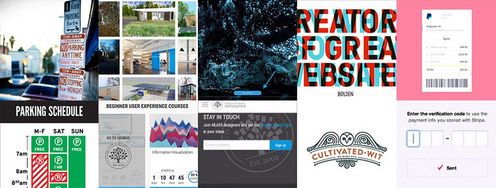
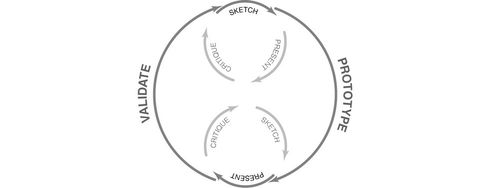
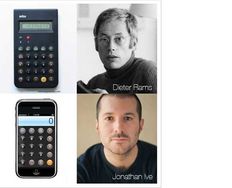
The seven factors that influence user experience; useful, usable, findable, credible, desirable, accessible and valuable.

The 7 Factors that Influence User Experience

• 8 min read

1,317 Shares

User Experience (UX) is critical to the success or failure of a product in the market but what do we mean by UX? All too often UX is confused with usability which describes to some extent how easy a product is to use and it is true that UX as a discipline began with usability – however, UX has grown to accommodate rather more than usability and it is important to pay attention to all facets of the user experience in order to deliver successful products to market.

There are 7 factors that describe user experience, according to Peter Morville a pioneer in the UX field who has written several best-selling books and advises many Fortune 500 companies on UX:

  • Useful

  • Usable

  • Findable

  • Credible

  • Desirable

  • Accessible

  • Valuable

Let’s take a look at each factor in turn and what it means for the overall user experience:

Useful

If a product isn’t useful to someone why would you want to bring it to market? If it has no purpose, it is unlikely to be able to compete for attention alongside a market full of purposeful and useful products. It’s worth noting that “useful” is in the eye of the beholder and things can be deemed “useful” if they deliver non-practical benefits such as fun or aesthetic appeal.

Thus a computer game or sculpture may be deemed useful even if they don’t enable a user to accomplish a goal that others find meaningful.

Usable

Usability is concerned with enabling users to effectively and efficiently achieve their end objective with a product. A computer game which requires 3 sets of control pads is unlikely to be usable as people, for the time being at least, only tend to have 2 hands.

Products can succeed if they are not usable but they are less likely to do so. Poor usability is often associated with the very first generation of a product – think the first generation of MP3 players; which lost their market share to the more usable iPod when it was launched. The iPod wasn’t the first MP3 player but it was the first truly usable MP3 player.


Findable

Findable refers to the idea that the product must be easy to find and in the instance of digital and information products; the content within them must be easy to find too. If you cannot find a product, you’re not going to buy it and that is true for all potential users of that product.

If you picked up a newspaper and all the stories within it were allocated page space at random, rather than being organized into sections such as Sport, Entertainment, Business, etc. you would probably find reading the newspaper a very frustrating experience. Findability is vital to the user experience of many products.

Credible

Randall Terry said; “Fool me once, shame on you. Fool me twice, shame on me.” Today’s users aren’t going to give you a second chance to fool them – there are plenty of options in nearly every field for them to choose a credible product provider.

Credibility relates to the ability of the user to trust in the product that you’ve provided. Not just that it does the job that it is supposed to do but that it will last for a reasonable amount of time and that the information provided with it is accurate and fit-for-purpose.

It is nearly impossible to deliver a user experience if the user thinks the product creator is a lying, clown with bad intentions – they’ll take their business elsewhere instead.

Desirable

Skoda and Porsche both make cars. They are to some extent both useful, usable, findable, accessible, credible and valuable but Porsche is much more desirable than Skoda. This is not to say that Skoda is undesirable they have sold a lot of cars under that brand but given a choice of a new Porsche or Skoda for free – most people will opt for the Porsche.

Desirability is conveyed in design through branding, image, identity, aesthetics and emotional design. The more desirable a product is – the more likely it is that the user who has it will brag about it and create desire in other users.

Author/Copyright holder: slayer. Copyright terms and licence: CC BY 2.0

Accessible

Sadly, accessibility often gets lost in the mix when creating user experiences. Accessibility is about providing an experience which can be accessed by users of a full range of abilities – this includes those who are disabled in some respect such as hearing loss, impaired vision, motion impaired or learning impaired.

Design for accessibility is often seen by companies as a waste of money because the impression is that people with disabilities make up a small segment of the population. In fact, in the United States at least 19% of people have a disability according to the census data and it is likely that this number is higher in less developed nations.

That’s 1 in 5 people in the audience for your product that may not be able to use it if it’s not accessible or 20% of your total market!

It’s also worth remembering that when you design for accessibility, you will often find that you create products that are easier for everyone to use not just those with disabilities. Don’t neglect accessibility in the user experience.

Finally, accessible design is now a legal obligation in many jurisdictions including the EU and failure to deliver it may result in fines. Sadly, this obligation is not being enforced as often as it should be.
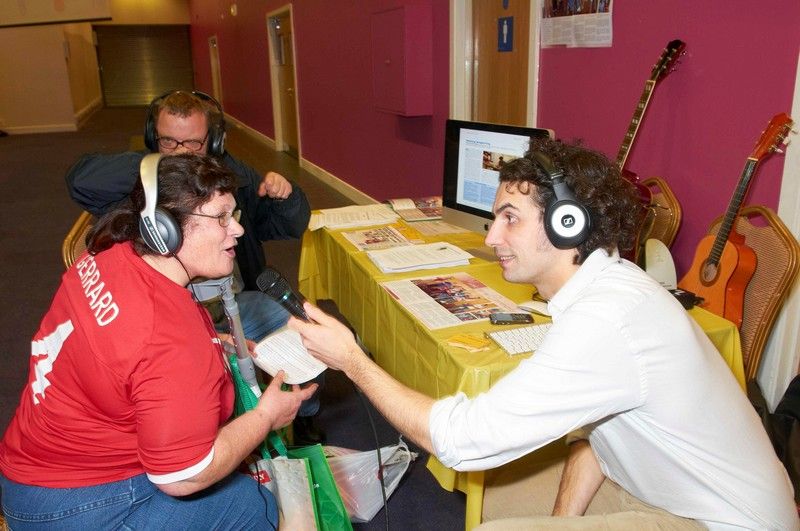
Author/Copyright holder: Birmingham Culture. Copyright terms and licence: CC BY 2.0

Valuable

Finally, the product must deliver value. It must deliver value to the business which creates it and to the user who buys or uses it. Without value it is likely that any initial success of a product will eventually be undermined.

Designers should bear in mind that value is one of the key influences on purchasing decisions. A $100 product that solves a $10,000 problem is one that is likely to succeed; a $10,000 product that solves a $100 problem is much less likely to do so.

The Take Away

The success of a product depends on more than utility and usability alone. Products which are usable, useful, findable, accessible, credible, valuable and desirable are much more likely to succeed in the market place.

References & Where to Learn More

Course: User Experience: The Beginner's Guide

The US census results for disability

Peter Morville’s original work on the 7 facets of user experience may be found here

Learn More in This Course:

User Experience: The Beginner's Guide

Course Closed
100 % booked
View Course

What You Should Read Next

  • Read full article
    Bad Design vs. Good Design: 5 Examples We Can Learn From - Article hero image
    Interaction Design Foundation logo

    Bad Design vs. Good Design: 5 Examples We Can Learn From

    Looking at examples of bad design alongside counter-examples of good design is not only fun but also draws important lessons for designers. They highlight pitfalls for designers to avoid and let us understand how to translate design theories into solutions that work in the real world. Jared Spool, t

    Social shares
    1.5k
    Published
    Read Article
  • Read full article
    What is Interaction Design? - Article hero image
    Interaction Design Foundation logo

    What is Interaction Design?

    Interaction design is an important component within the giant umbrella of user experience (UX) design. In this article, we’ll explain what interaction design is, some useful models of interaction design, as well as briefly describe what an interaction designer usually does.A simple and useful unders

    Social shares
    1.5k
    Published
    Read Article
  • Read full article
    Apple’s Product Development Process – Inside the World’s Greatest Design Organization - Article hero image
    Interaction Design Foundation logo

    Apple’s Product Development Process – Inside the World’s Greatest Design Organization

    Apple’s Product Development Process may be one of the most successful design processes ever implemented. With a valuation that exceeds $2 trillion, there’s a lot that designers can learn from Apple and introduce into their own design environments.Apple is a notoriously secretive business. In Steve J

    Social shares
    1.4k
    Published
    Read Article
  • Read full article
    Shneiderman’s Eight Golden Rules Will Help You Design Better Interfaces - Article hero image
    Interaction Design Foundation logo

    Shneiderman’s Eight Golden Rules Will Help You Design Better Interfaces

    Follow Ben Shneiderman’s 'Eight Golden Rules of Interface Design' if you want to design great, productive and frustration-free user interfaces. Apple, Google and Microsoft are among some of the highly successful companies whose well-designed products reflect Shneiderman’s rules. The characteristics

    Social shares
    1.4k
    Published
    Read Article
  • Read full article
    User Interface Design Guidelines: 10 Rules of Thumb - Article hero image
    Interaction Design Foundation logo

    User Interface Design Guidelines: 10 Rules of Thumb

    Learn to design with your user’s needs and expectations in mind by applying Jakob Nielsen and Rolf Molich’s Ten User Interface Guidelines. These heuristics have been reflected in many of the products designed by some of the most successful companies in the world such as Apple, Google, and Adobe. Fur

    Social shares
    1.4k
    Published
    Read Article
  • Read full article
    How to Change Your Career from Graphic Design to UX Design - Article hero image
    Interaction Design Foundation logo

    How to Change Your Career from Graphic Design to UX Design

    If there’s an occupation that is 100% linked with the public’s idea of what design is all about, it’s graphic design. From the familiar golden arches of the McDonald’s brand to the typography and colors of movie posters, graphic designers create some of the most iconic and ubiquitous designs around

    Social shares
    1.4k
    Published
    Read Article
  • Read full article
    The Grid System: Building a Solid Design Layout - Article hero image
    Interaction Design Foundation logo

    The Grid System: Building a Solid Design Layout

    Now that we’ve seen some grids at work in the Rule of Thirds article, let’s examine them a little more deeply. As a concept that deals so fundamentally with the fabric and background of our work as designers, it’s easy to overlook the power of grids and think more about the elements we want to creat

    Social shares
    1.4k
    Published
    Read Article
  • Read full article
    The Principles of Service Design Thinking - Building Better Services - Article hero image
    Interaction Design Foundation logo

    The Principles of Service Design Thinking - Building Better Services

    Service design is all about taking a service and making it meet the user’s and customer’s needs for that service. It can be used to improve an existing service or to create a new service from scratch. In order to adapt to service design, a UX designer will need to understand the basic principles of

    Social shares
    1.4k
    Published
    Read Article
  • Read full article
    A Simple Introduction to Lean UX - Article hero image
    Interaction Design Foundation logo

    A Simple Introduction to Lean UX

    Lean UX is an incredibly useful technique when working on projects where the Agile development method is used. Traditional UX techniques often don’t work when development is conducted in rapid bursts – there’s not enough time to deliver UX in the same way. Fundamentally Lean UX and other forms of UX

    Social shares
    1.3k
    Published
    Read Article
  • Read full article
    Dieter Rams: 10 Timeless Commandments for Good Design - Article hero image
    Interaction Design Foundation logo

    Dieter Rams: 10 Timeless Commandments for Good Design

    Let’s pay a virtual visit to a famous industrial designer’s workshop. By examining the principles of his winning approach, we can incorporate vital elements into our designs in the “less is more” age.As user experience practitioners, most of us have worked with Nielsen and Molich’s 10 heuristics or

    Social shares
    1.3k
    Published
    Read Article

Top Articles

Top Topic Definitions

Feel Stuck?
Want Better Job Options?

AI is replacing jobs everywhere, yet design jobs are booming with a projected 45% job growth. With design skills, you can create products and services people love. More love means more impact and greater salary potential.

At IxDF, we help you from your first course to your next job, all in one place.

See How Design Skills Turn Into Job Options
Privacy Settings
By using this site, you accept our Cookie Policy and Terms of Use.
Customize
Accept all

Be the One Who Inspires

People remember who shares great ideas.

Share on:

Academic Credibility — On Autopilot

Don't waste time googling citation formats. Just copy, paste and look legit in seconds.

Feel Stuck? Want Freedom?

Join 326,013+ designers who get one powerful email each week. Learn to design a life you love.

Next email in
1
day
17
hrs
25
mins
1
secs

Free forever. No spam. Unsubscribe anytime.