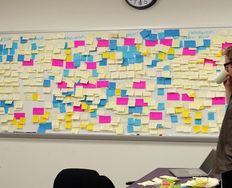
An SSQS (A semi-structured qualitative study) refers to research methods with qualitative rather than quantitative outputs. There are many types of SSQS research such as ethnography, interviews, observations, etc. For them, it can be useful to have a checklist to ensure that you’re making the most of the design research techniques and delivering the maximum value to the projects that you’re working on.
You will often find that you have to systematize and code the data generated from such studies in order to analyse it effectively.
It’s worth noting that these methods can be:
Positivist – which is the assumption that the reality can be investigated and then agreed upon by a group of researchers
Constructivist or Interpretivist – which is the assumption that there is no reality but rather that it is possible for some form of reality to be constructed between the researchers, participants in the study or indeed those accessing the study.
In both instances there is no hypothesis to test. The researcher is looking to see what is happening rather than to propose a theory of what is happening and then comparing that theory to the reality.
SSQS research methodologies are very much unique to the project that you are working on, however it is possible to suggest a checklist to enable you to consider the design, conduct and reporting of SSQS studies.
Ann Blandford (Professor of Human Computer Interaction at University College London), in her chapter “Semi-Structured Qualitative Studies” written for the Interaction Design Foundation, proposes the following framework:
The SSQS Checklist
Considerations for Planning and Conducting Studies | Additional Considerations for Reporting the Results of Studies | |
Purpose | What will be the purpose of your study? Why is it necessary to conduct the study? What knowledge do you expect to gain from the study that you don’t have already? | During the course of the study – did its purpose change? If it did change, why did it change and how? What are the most novel and important findings you will report? Why will these findings matter to the reader of the report? |
Resources and Constraints | Which resources do you have to work with? What are the constraints that might limit the possibilities of the study? | Did you use anything new or novel to conduct the study? Did the availability of resources (time, money, etc.) limit what you could achieve? |
Researcher Attributes and Roles | How many people will be in the research team? What roles will they fulfil? What specific knowledge and expertise does each team member add to the study? What (if any) training will you need to provide? Will you conduct observation of the researchers themselves? How will you conduct that? What relationship do you intend to foster between your researchers and the study’s participants? | What attributes of the research team may have influenced the outcome/output of the study? What roles did the researchers fulfil in the study setting? If it’s something you can determine, you might also want to consider: how did the relationships between researchers and participants influence the data that you collected? |
Advocacy | Will you need an advocate(s) in the setting of the study? If so, how can you identify them and work effectively with them? | Who did you end up working with? What influence did they have on the research, recruitment, etc? |
Participant Recruitment | How will you recruit your participants? What’s your sampling approach for participants? What inclusion/exclusion criteria will you use? Will this change over the course of the study? | How did you end up recruiting participants? Did you need to change your initial approach and did this change have any bearing on the reliability or quality of the eventual outcomes? What roles did the participants and researchers play in the study? |
Location and Intervention | Where will you base the study? How natural will this environment be? What forms of intervention are to take place? (For example, will you introduce unfamiliar prototypes?) | Did the location have any influence over the way the study was conducted?
|
Role of Theory | What theory will you use to base your data gathering, analysis and reporting on? | How did that theory shape your study? How did the theory relate to the findings? |
Ethical Considerations | What (if any) ethical considerations will you need to address to run the study? What will you do to make sure that participants benefit from taking part in the study? What will you tell participants about the study and when will you tell them? How will you protect the data of the participants? How are you going to gather data from participants? How will you record that data? If you intend to use multiple-methods – how will you sequence and co-ordinate them. | Did the ethical considerations you address shape or alter the study? How? How did you ensure that participants were fully informed about the study and how their data would be used? |
Techniques for Data Gathering | What data will you gather? How will you structure the gathering of data? Is it to be related to a specific theory? What protocols will you use for observations, interviews, instructions, etc? What time controls (if any) will you use for data gathering? | How did the data actually get generated? Did you divert from your protocols at any stage? Did this alter the study? How were participants given instructions? |
Interleaving, recruitment, data gathering and analysis | Will your participant recruitment, data gathering and analysis be interdependent? How so? When you analyse data – how will you do it? Will you use transcription services? What tools will be used in the analysis? | How was your data gathering and analysis interleaved? Did your analysis change the way you gathered data during the course of the study? |
Analysis of Data | If you are going to code your data – how will the codes be determined? Beforehand? Team agreement? Etc? If you are using a group of coders – will they code independently or negotiate as a group? How will you involve (if at all) your participants in analysing or validating? When analysis is done on an individual reflective basis – how will you ensure the validity of findings? | How did you analyse the data in the study? How iterative/reflexive was your process? How did you validate the data? |
Reporting | Who is your audience(s)? How will you report your findings? | What is new? What’s most important? Are the claims you make supported by the evidence? |
The Take Away
While this checklist is designed for reporting and conducting SSQS, it can also be useful in other forms of research. The idea is to ensure that you have given proper thought to the research and the way that you will report your findings. This in turn, should lead to stronger results from your research.
Resources
You can read Ann Blandford’s entire book on the Interaction Design Foundation website and find out all you need to know about SSQS with Human-Computer Interaction research
Hero Image: © Sam Ladner, CC BY 2.0