Thinking about conducting some user research? Wondering which techniques are most likely to provide useful results? Then look no further. We’ve compiled a list of 7 excellent techniques which are tried and tested and have been proven to deliver real value in UX projects. Let’s take a look at each technique and see what it is and why it works:
Technique Number 1 – Card Sorting
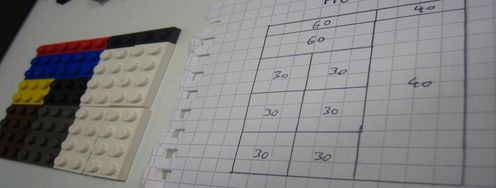
Card sorting was originally a technique used in psychological research long before UX research was a “thing”. It’s a simple concept, you write words or phrases on cards, then you ask the user to categorize them. You might also ask them to label the categories. It’s a great way to determine whether your Information Architecture (IA) is heading in the right direction or to examine IA for new products.
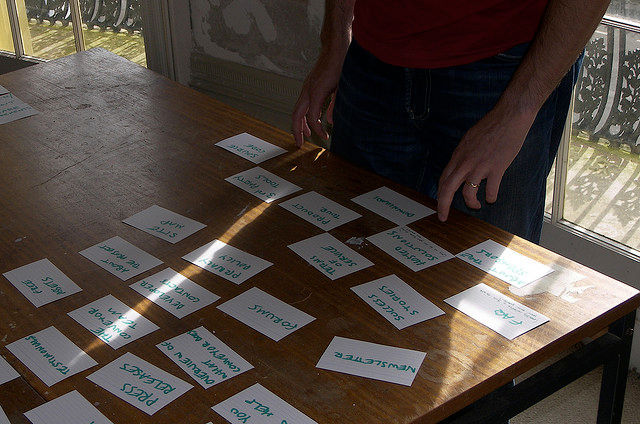
Author/Copyright holder: Yandle. Copyright terms and licence: CC BY 2.0
There are all sorts of card sorting techniques and choosing the right one is important. Better still, there are a bunch of online tools that let you do card sorting remotely now – allowing you to use the technique globally and not just locally.
Why is card sorting a good technique?
It’s a very cheap form of research – particularly face-to-face, online tools may be more expensive.
It’s a very easy technique for users to understand and for clients to understand too.
It’s a very easy method to get user input (or even to get user validation) for ideas early on in a UX project.
It requires next to no effort to prepare a card sorting study.
Technique Number 2 – The Expert Review
Expert reviews involve a single “expert” walking through a product via the User Interface (UI) and looking for issues with the design, accessibility, and usability of the product. There’s no fixed process to follow and the expert review can vary from professional-to-professional as well from product-to-product. The more expertise the reviewer has in usability and UX design – the more valuable their input (in most cases).
Why is an Expert Review a Good Technique?
It’s quick, easy and cheap. This is doubly so when you compare it to more formal usability testing methods.
It only takes a single professional to conduct an expert review.
It is a great way to inform further UX research and caution should be used in taking an expert review at face value without further user testing.
Technique Number 3 – Eye Movement Tracking
It can be really useful to know where your users are looking when they’re using your system. It helps with UI design and it helps with knowing how to prioritize certain kinds of content. This technique was developed for academic research and has been used extensively in medical research and has now become popular and cost-effective enough to be deployed by the UX team too.
Why is Eye Movement Tracking a Good Technique?
Now that technology is advanced enough, eye movement tracking systems are no longer bulky and invasive and they do not interfere with the results of usability tests.
The technology is reasonably affordable now. It won’t suit every project budget but it often won’t break the bank either.
The technology is now reliable enough for results to be easy to reproduce and for researchers to be able to rely on the outputs.
Clients love eye movement tracking. It’s a great way to demonstrate why they might want to invest in further usability testing.
Technique Number 4 – Field Studies
This is actually a number of techniques under a broad heading. It’s all about going out and observing users “in the wild” so that behaviour can be measured in the context where a product will actually be used. It includes; ethnographic research, interviews and observations, plus contextual enquiry.
Why are Field Studies a Good Technique?
There’s no stronger form of research than observing users behaving as they will when they use your product. Researchers love these techniques and are often passionate about persuading their clients to take them on board.
When conducted well, the outputs of field studies provide the deepest insights into user issues and how they might be solved.
Technique Number 5 – Usability Testing
A firm favourite that has a long and prestigious history in UX research. Usability testing is the observation of users trying to carry out tasks with a product. They can focus on a single process or be much more wide ranging.
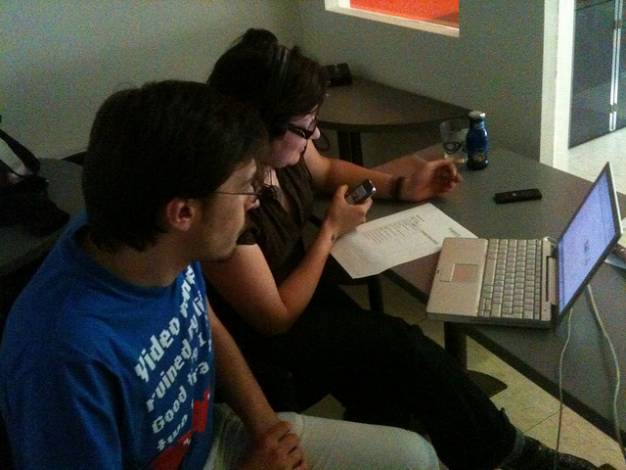
Author/Copyright holder: Luca Mascaro. Copyright terms and licence: CC BY-SA 2.0
Why is Usability Testing a Good Technique?
Can you think of a better way to understand what users do than watching them do stuff? Of course, you have to pick the right users – they need to be a good representation of the user base as a whole but that’s pretty much the only constraint.
Usability tests produce specific results that lead to specific action. Better still, it’s very hard for people to contradict decisions based on these tests; it’s nearly impossible to refute evidence of user behaviour.
You can bring clients into usability testing easily as observers. This increases their enthusiasm for such testing and shows clearly why such testing adds value.
Technique Number 6 – Remote Usability Testing
This is usability testing but without the need to drag users into your laboratory environment. It was once complex and expensive but technology has moved on and now it’s fairly simple to set up and reasonable value for money too.
Why is Remote Usability Testing a Good Technique?
It often saves time and money when compared to lab testing and it allows for a wider range of participants when you complete your participant screening.
It is closer to field testing in some respects in that the tests are conducted in the user’s environment and not an artificial lab environment. This delivers better results in many cases than a lab environment.
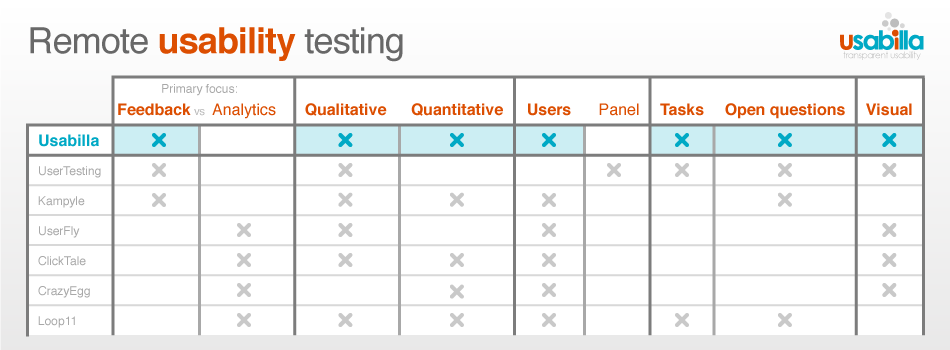
Author/Copyright holder: Paul Veugen. Copyright terms and licence: CC BY-SA 2.0
Technique Number 7 – User Personas
User personas are a fictional representation of the ideal user. They focus on the goals of the user, the characteristics that they have and the attitudes that they display. They also examine what the user expects from the product.
User personas are created from other forms of user research and thus offer an in-depth real-life vivid portrait that is easy for the whole team to keep in mind when designing products. User personas have a name and a backstory. They inspire the imagination and keep focus on the user.
Why are User Personas a Good Technique?
They are a step above the old user profile and give a more in depth and specific look at a user.
They are easy for people to relate to and become part of the team as they are constantly spoken about during a project.
They are a lot of fun and they tend to be interesting, easy for people to engage with and more memorable than many other research outputs.
Summary
There are many user research techniques but these 7 have shown time and again to offer valuable input into UX projects. Which is your favourite?
Header Image: Author/Copyright holder: Zeke Franco. Copyright terms and licence: CC BY-NC-ND 2.0