Your constantly-updated definition of Product Design and collection of videos and articles. Be a conversation starter: Share this page and inspire others!
Product design is the process designers use to blend user needs with business goals to help brands make consistently successful products. Product designers work to optimize the user experience in the solutions they make for their users—and help their brands by making products sustainable for longer-term business needs.
Cover More Angles on Projects – with Product Design
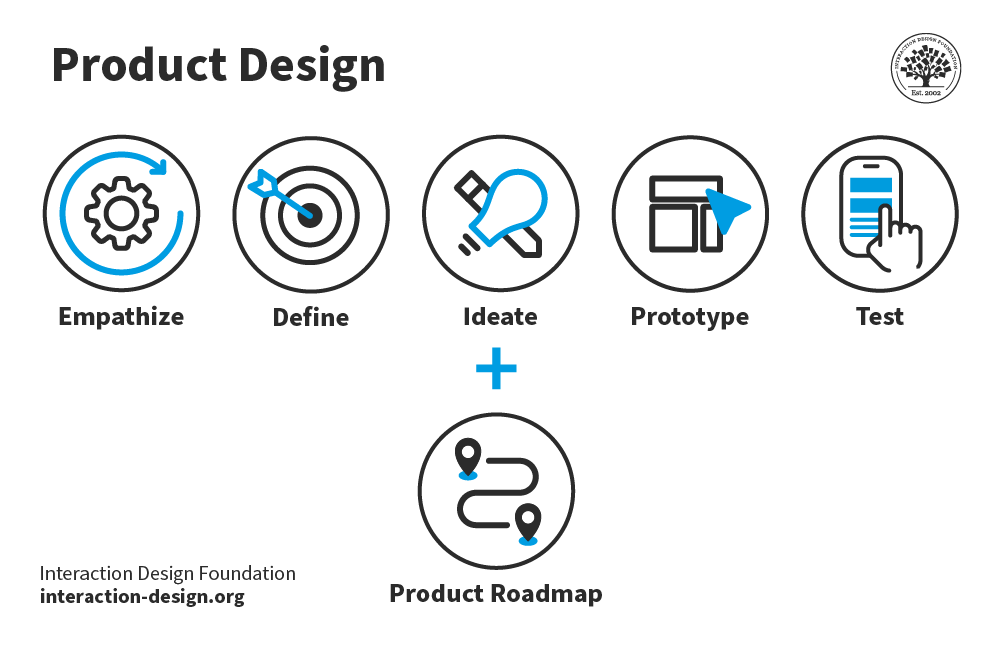
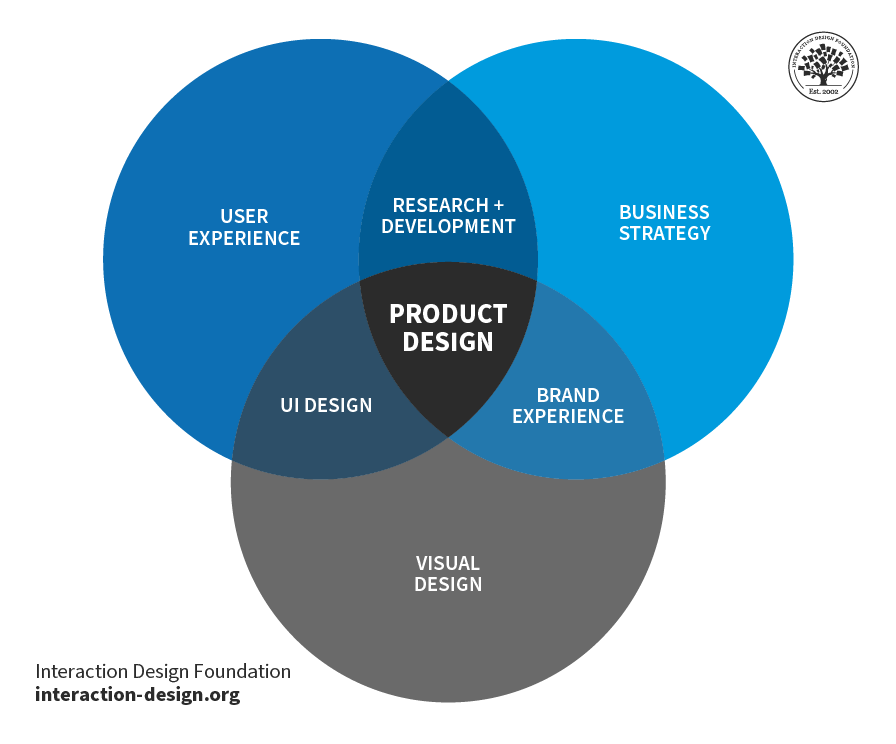
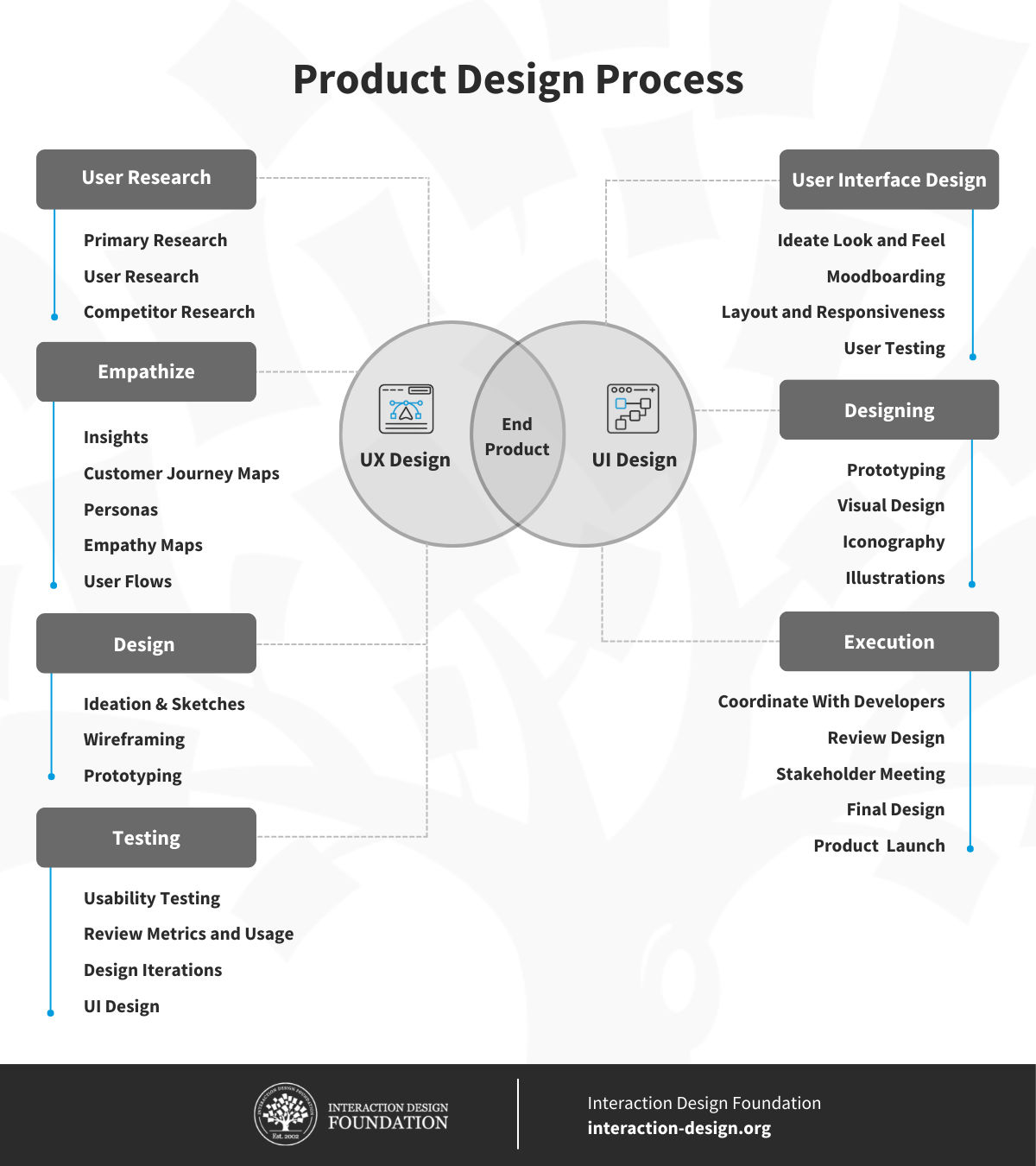
Product designers help make products which aren’t just easy and delightful (or at least satisfying) to use, but also fine-tuned to do consistently well in the marketplace. They help define product goals, create product roadmaps (high-level summaries or 6–12-month forecasts of product offerings and features) and, ideally, help brands release successful products. Much like usability and user interface (UI) design are subsets of user experience (UX) design, UX design fits within product design. Indeed, UX designersare concerned with the entire process of acquiring and integrating a product (including aspects of branding). However, product designers extend this scope to carefully monitor their brands’ positions in the market over time. They gauge likely impacts of design decisions based on in-depth domain knowledge and keep teams and organizations mindful of bigger-picture and bottom-line realities, particularly for the mid- to long term. They can therefore prevent or minimize risky consequences of implementing designs, and help maximize and sustain gains.
Throughout a project, a product designer will usually guide your design team and stakeholders on return on investment (ROI) and lower-level concerns such as the placement of interface elements. The product designer’s eye for factors such as product desirability and value is a vital safeguard to keep a brand competitive. In addition to what they would do as generalist-oriented UX designers (e.g., conducting UX research, creating personas) product designers also inform and plan roadmaps in close collaboration with development and marketing teams to ensure the feasibility of implementing designs.
Author/Copyright holder: Teo Yu Siang and the Interaction Design Foundation. Copyright terms and licence: CC BY-NC-SA 3.0
See if Product Design may be Right for You
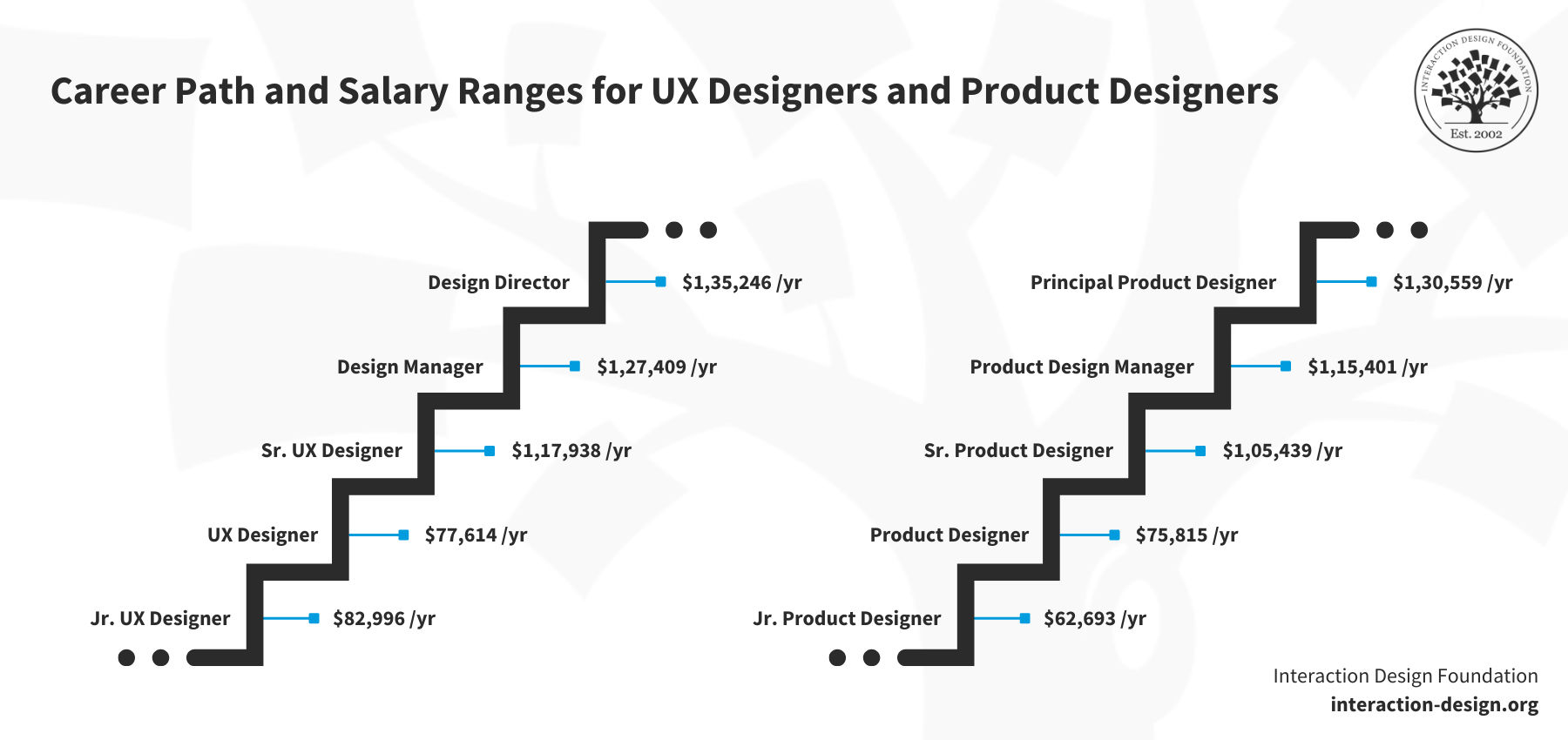
Product design can be demanding and intricate work. Typically, more responsibilities and specialized experience mean higher pay. As a designer and higher-level advisor, you can suggest viable alternatives to short-sighted company decisions and challenge obstacles such as the local maxima of UX. It’s important to bear in mind that the similarities between product designers and UX designers sometimes lead brands to have different definitions of the product designer’s role and the duties they expect. Some organizations may therefore fail to distinguish them from UX designers, while others may load even more responsibilities into the job description. In some instances, such as start-ups, you may find yourself acting as half the design team alongside a developer.
“Product designer” may be your dream role if you:
Enjoy developing and integrating business goals into design and product decisions;
Love participating in the entire design process;
Have deep knowledge in design and a solid understanding of business; and
Can analyze complex data to synthesize designs that satisfy business goals and user needs.
Overall, you should build brand value as you design for two overarching contexts—your users’ realities and your brand’s marketplace health—and “marry” user-centered design with market-friendly, affordable design. Your efforts in guiding the design of popular products will showcase your skills as a visionary problem-solver.
Questions About Product Design? We've Got Answers!
How to become a product designer?
To become a product designer, you need to have a combination of technical, creative, and interpersonal skills. Begin by understanding the complete product lifecycle, focusing on integrating beauty with functionality. As highlighted in our article, a product designer’s role is broader than a UX designer's, encompassing a range of responsibilities from concept to completion. Acquiring a solid foundation in design principles and hands-on experience is critical. Interaction Design Foundation offers many courses that can guide you in honing your design skills and techniques, setting the groundwork for a promising product design career.
Is UI/UX the same as product design?
Product designers oversee the entire product lifecycle, integrating both form and function. They handle aesthetics, functionality, and user needs. On the other hand, UX designers specifically focus on user experience, ensuring products are user-friendly and meet users' needs. As outlined in the article from Interaction Design Foundation, while there's overlap, product design is broader, encompassing many aspects that UX design homes in on. For a deeper understanding, consider enrolling in Interaction Design Foundation's comprehensive courses to distinguish and master both realms.
Does product design require coding?
No, product design doesn't inherently require coding. While the core focus is aesthetics, functionality, and user-centric design, knowing how to code can be beneficial. It bridges communication gaps with developers and allows for prototyping interactive elements. However, many successful product designers don't code but collaborate closely with development teams. Familiarity with technical constraints and prototyping tools can enhance design decisions, but coding isn't a prerequisite.
What does a product designer do?
A product designer creates user-centric products that offer functionality and aesthetic appeal. They blend user experience (UX) principles with visual design to shape how a product looks, feels, and functions. Using research and user feedback, product designers identify pain points and craft solutions that enhance usability. Their role spans ideation, prototyping, testing, and refining designs to meet user needs and business goals. They work closely with developers, marketers, and stakeholders, ensuring the product aligns with user expectations and brand identity. While their tasks overlap with UX designers, product designers have a broader responsibility, considering the complete product lifecycle. Learn more from our detailed article on the difference between product and UX designers.
How much do product designers make?
Product designers' salaries vary based on experience, location, and company size. According to Glassdoor, the national average salary for a product designer in the US is approximately $85,277 annually. However, top professionals in sought-after companies can earn significantly more. Specialized skills, portfolio quality, and industry demand can influence pay rates. Additionally, further education and courses can enhance potential and career growth. Researching and negotiating is essential based on your qualifications and the job's requirements.
Is product design a good career?
Absolutely! Product design offers a dynamic and creative career path. As the Ultimate Guide to Understanding UX Roles highlights, product designers are crucial in crafting user experiences and solving real-world problems. With the digital world expanding, the demand for skilled product designers is rising. This profession provides opportunities to work in diverse industries, ensuring variety and continual learning. Moreover, it offers competitive salaries and the chance to leave a tangible impact on products many use daily. Product design is undoubtedly a rewarding career choice for those passionate about merging creativity with functionality.
What is the difference between product design and product management?
Product design and product management are distinct yet collaborative roles. As discussed in our guide on becoming a product manager, product managers define a product's 'what' and 'why,' focusing on strategy, roadmap, and feature definition. They ensure the product aligns with business goals and user needs. On the other hand, product designers emphasize the 'how.' They dive deep into user experiences, crafting the product's look, feel, and functionality. While product managers set the vision and direction, product designers bring it to life through user-centered design. Both roles are vital in creating successful products, working hand-in-hand to ensure user satisfaction and business success.
Is product design easy?
Product design is a nuanced discipline that requires a blend of creativity, empathy, and technical knowledge. As our article on behavioral science in product creation highlights, understanding user behavior is pivotal. It's not just about crafting aesthetically pleasing products but ensuring they meet user needs and solve real-world problems. The process demands continuous learning, adaptability, and a user-centric approach. While some aspects may come naturally to specific individuals, achieving mastery in product design necessitates dedication, practice, and a deep understanding of design principles and human behavior. While it's a rewarding field, it's not necessarily "easy."
What skills do I need for product design?
For product design, essential skills include:
Human-centered approach: Focus on understanding and designing for people's needs.
Problem-solving: Address the root cause, not just the symptoms.
Systems thinking: Recognize the complexity and interrelatedness of components in a design.
Prototyping and Iteration: Continuously refine designs based on feedback and testing.
Design research: Spend time observing and understanding the end-users.
Technical know-how: Familiarize yourself with the latest technologies and materials.
Teamwork and Collaboration: Often, product design involves collaborating with specialists from various fields.
Communication and Diplomacy: Articulate your ideas and negotiate design choices effectively with stakeholders.
Why? Because design skills make you valuable. In any job. Any industry.
In This Course, You'll
Get excited to move past what just works well and looks good as you learn to design products and experiences people love. Every morning your alarm goes off, you shuffle to the kitchen, and you start your daily ritual. Still half-asleep, you boil the kettle, scoop the coffee, and add the milk. And out of every mug you own, you reach for the same one. Every single time. We all have things we choose over and over, sometimes without knowing why. It feels like instinct, but that pull comes from emotional design: It's not just what a product does, but how it makes you feel each time you use it. It's why some things earn a place in our lives while others, even when they're just as functional, get forgotten in a drawer. In this course, design legend and author of the bestselling book "Human-Computer Interaction," Professor Alan Dix, shows you how to use psychology to design for emotion, so that the feelings your product evokes are intentional, not accidental.
Make yourself invaluable when you can turn products and experiences that are functional into ones that make people actually feel. In this course you'll learn why people fall in love with some things and abandon others, using Don Norman's three levels of design to make sense of why people respond the way they do. You'll understand the cognitive and affective systems running in every user's head, so you can shape how your work feels before anyone consciously thinks about it. Through Maslow's hierarchy and MacLean's three brains, you'll ground what you build in the instincts, emotions, and reasoning every user carries with them. And with real examples from brands like Apple and Swatch, you'll see how your design choices can earn that connection. AI has made it possible to build more products faster and cheaper than ever, and users are now flooded with endless options. Your timeless, human-centered design skills are what let you look past the screen to the human on the other side, so the people who use what you build feel understood.
Gain confidence and credibility because when you design for emotion, you build things that genuinely serve people, earn their trust, and keep them coming back. Emotion is often treated as the soft, unprovable part of design, but according to Gallup, behavioral economists estimate that up to 70% of consumer decisions are driven by emotion rather than logic. In this course, you'll learn to make the business case for emotional design and trade "it just feels better" for a clear explanation of what's working, why it matters, and what you can do about it. You'll also see why a beautiful design isn't just nice to look at: Research shows people perceive attractive things as more usable, even when their actual experience suggests otherwise. And with downloadable templates like the 5 Principles of Humanity-Centered Design, you'll apply your skills immediately.
Learn From Industry Leaders
Master complex skills with proven best practices and toolkits directly from industry leaders. Meet your expert for this course:
Alan Dix: Author of the bestselling book “Human-Computer Interaction” and Director of the Computational Foundry at Swansea University.
Earn Industry-Recognized Certificates
Industry giants trust our courses to train their teams, and prestigious universities integrate our content into their curricula. Add your certificates to your LinkedIn profile, résumé, and job applications.
UX Roles: The Ultimate Guide – Who Does What and Which One You Should Go For?
Do you have the ambition and enthusiasm for a career in UX design but don’t know where to start? You’ll be pleased to know there are many paths you can take. Even as a relatively new field, user experience (UX) design has both general and specialist job roles. This variety means there is a role wait
Product Design and UX Design Roles: Unveiling the Differences
Product and user experience (UX) design are both prominent fields—and make rewarding career choices. People often use the two terms interchangeably in conversation, but they’re not the same. Product designer vs. UX designer isn’t a simple “either-or” scenario—and each role has got unique responsibil
5 Ways to Use Behavioral Science to Create Better Products
A myriad of fields, skills and insights come together to create the overarching discipline of user experience design. Psychology and behavioral science play a big part in UX design because understanding people, the way their minds work, what they want and don’t want, will help us create better produ
As digital designers, we know the bulk of our day is spent looking at screens. Give your eyes some rest, and tune into podcasts instead. They are a great way to stay updated, gain insights, be inspired or experience “A-ha” moments. The best part about podcasts is that unlike reading or watching vide
How to Become a Product Manager: Best Career Advice
Pick any product and you’ll find that product management is vital to how successful it is—and product managers are who make sure that a product’s life cycle runs smoothly, and it means they know how to align strategy, vision, and user needs. Product managers split into multiple roles that have got u
What the Numbers Missed: 4 Times Personas Could Have Saved Millions
Numbers answer a big question—"What?” What is the problem? What happened when we did this? “What” gives us so much. It contributes to important decisions that improve people’s lives and business outcomes. But numbers cannot answer another big question—"Why?” Why is this a problem? Why did this happe
Social shares
418
Published
Read Article
Product Design and UX Design Roles: Unveiling the Differences
Product and user experience (UX) design are both prominent fields—and make rewarding career choices. People often use the two terms interchangeably in conversation, but they’re not the same. Product designer vs. UX designer isn’t a simple “either-or” scenario—and each role has got unique responsibilities and focal points that contribute in different ways to a brand’s end product. Stay tuned to find out the differences between a UX designer and a product designer so you know their roles, responsibilities, skills, tools, and more and see which might be a more compelling calling for you.
What is a Product Designer?
A product designer is someone who leads—or who’s part of—the team that creates a new product or makes an existing one better. They take care of the entire design process for that. A product designer is a professional who works in cross-functional teams to address technical constraints and ensure usability is well in place from ideation to production. The contribution they make to the overall product experience goes far beyond its visual appeal.
"Our role is to imagine products that don't exist and guide them to life."
What are Responsibilities and Job Duties of a Product Designer?
They translate their firm grasp of those needs into functional and appealing designs. However, it’s not a solo affair, as they collaborate with cross-functional teams to bring their designs to life and the best possible—or most improved—end product to show for it.
Product designers take on the task of understanding user needs and user behavior—which is why one of their main activities is to conduct user research and create user personas to understand their needs and motivations. A product designer might use interviews, surveys, questionnaires, diary studies, secondary market research data, or many other tools and resources to understand the users and the business context of the product they’re working on.
Then, from that, they ideate and sketch design concepts based on insights they’ve gained from research. They can then move on to develop and test prototypes (starting with low-fidelity ones and then on to mid- and high-fidelity prototypes). After that, they’ll want to collect user feedback to see what’s right and wrong with the prototypes and from there refine designs. And once the prototype works best—or maybe that should be, the best prototype works best—product designers collaborate with developers, project managers, and other team members to implement their designs. It’s about a user-centered design approach—and the mission is always to make the best user experience possible for what the brand wants.
What are Key Skills and Qualifications for Product Designers to Succeed?
If you’re going to be a product designer, you’ll need a wide array of skills and qualifications to excel in the role—and the types of ones to have include:
Visual design is a big one, and it takes a good knowledge of elements of visual design—such as layout, color theory, imagery, and typography—to create aesthetically appealing products.
UI design is up there, too (not that this list is in any order as such). Skills in creating interactive visuals and front-end development contribute to designing user-friendly interfaces.
UX design is next—and it’s often confused with UI design. UX skills like prototyping, information architecture, and wireframing are things to have if you’re going to craft products that deliver a positive user experience.
Prototyping is a critical one, and the ability to quickly create prototypes that are effective is going to serve you well. Prototypes allow designers to test concepts and general approaches to understanding if the design does meet business and user goals.
User research—and effective research that includes planning, surveying methods, auditing, and all the joys of handling quantitative research and qualitative research data—is pivotal to understand user behavior and user needs.
Communication may be a so-called soft skill, but you’ll want strong communication skills to facilitate task delegation, project completion on time, and a “watertight” understanding of client requirements.
Teamwork is another one that seems to get corporate-buzzworded into overuse, but collaboration is vital in product design. It’s what nurtures the generation of solutions, understanding of project goals, and incorporation of diverse ideas.
Problem-solving completes the “trilogy” of “corporate buzzwordy” attributes, but make no mistake—you’ll want strong skills here to find innovative solutions and identify and fix design errors.
Attention to detail is in the “mix,” too, because a keen eye for detail ensures things line up with client guidelines and helps you spot areas that want—or scream for—design improvements.
Creativity is a happy ingredient—you’ll probably be glad to hear. Innovation and creativity are integral parts when you need to generate fresh product ideas and interpret stakeholder information in ways that can “wow.”
Empathy is all about the users—and rightly so, as empathy helps understand and address user needs effectively; and it’s what leads to—you guessed it—user-friendly products.
Computing awareness—in that, while you don’t need coding skills as such, a broad knowledge of what’s involved on that side of things will help you envision how the product might get realized by the developers. What’s more, you’ll be able to liaise better with development team members from having that knowledge.
(Watch this video to learn more about Empathy and why it is crucial in product design.)
Critical thinking: The ability to explore and test multiple design ideas and observe and improve design processes is more than a little valuable. You’ll need it to apply your user research in the most effective ways.
Emotional intelligence is another “biggie,” as when you’ve got a high “EQ,” you can do wonders to meet—and exceed—user needs. Think about how it can enhance user engagement and experience when you design products that bring specific emotions out of your (brand's) users.
These skills make you a proficient product designer and enhance your ability to create products that meet and exceed user needs.
What are Examples of Successful Product Designs and Their Impact?
Uber's product design shines with its Base design system—which makes functionality and visual consistency priorities. A standout feature is the one-handed design, a nifty thing that caters to on-the-go users. Key features are strategically located for easy reach for users. Flyout menus in the design enhance the experience, showcasing the profound influence of thoughtful product design.
Another compelling example is Medium. It excels in product design through its open writing platform—which makes for a nice and immersive reading and writing experience. Its minimalistic design—characterized by a clean white background—minimizes clutter and distractions. What's remarkable is its embodiment of polite design principles, carefully balancing user engagement with respect for the users’ time and attention. Notifications like subscription renewals subtly reinforce trust and respect for user choices.
What is a UX Designer?
A UX (user experience) designer focuses on enhancing user satisfaction by improving usability, accessibility, and interaction between the user and the product—and, by association, the brand behind the product. They focus on creating seamless and meaningful experiences that speak to users on all levels required for that “magic” to happen. Their work influences the entire process of acquiring and integrating the product—and that includes branding, design, usability, and function.
"There are three responses to a piece of design — yes, no, and WOW! Wow is the one to aim for."
What are Responsibilities and Job Duties of a UX Designer?
UX designers are the users’ advocates—not that product designers aren’t. “UXers” place the user at the center of the design process to ensure they meet their users’ needs and expectations in the design solution that comes out. Their responsibilities typically include the need to:
Understand and define user goals, motivations, and behaviors through user research.
Create user personas, journey maps, and wireframes to represent and guide the user experience.
Design the user interface layout and navigation flow.
Test design concepts and iterate based on user feedback and usability testing results.
Collaborate with UI designers, developers, and product managers, which will ensure the final product delivers a seamless user experience.
What are Key Skills and Qualifications for UX Designers to Succeed?
Research is a massive one, and the ability to plan, conduct, and analyze user research is essential. It allows UX designers to understand their audience better and their needs, helping shape more effective design strategies.
Technical skills for prototyping, including familiarity with programming are up there, too. Although knowledge of actual programming in Java or JavaScript may not be required, it’s crucial to understand how live prototyping tools work.
UX design tools are vital to be familiar with—ones like Sketch and Figma—to create and adjust designs efficiently.
Information architecture (IA) is a big one, too, and organizing information in a user-friendly and intuitive way is key. This includes designing clear navigation systems, labeling, and search functions that make the product easy to use.
Wireframing skills such as creating wireframes, or blueprints, for each screen of an interface are important. They help to define the necessary elements for each page and how they will work, instead of focusing on aesthetic aspects.
Visual communication is vital, as in to be proficient in visual language. That may include an understanding of layout, color, typography, icons, images, and design theory.
Interaction design and user-centered design principles are important for UX designers, as they’ve got to understand the interaction and user-centered design principles strongly. These principles help designers create designs that facilitate a smooth user experience.
Problem-solving skills—while perhaps easy to overlook as something that “goes without saying,” excellent problem-solving skills help UX designers identify and overcome design challenges—the crux of their work.
Communication skills are another one that can be easy to overlook, but effective communication skills are vital to collaborate with various stakeholders and clearly explain design decisions.
You don’t always need a design degree to become a UX designer. Many people in this field come from different careers and have taught themselves or gone through intensive short-term programs known as boot camps.
Transcript
Transcript loading ...
Autoscroll
(Learn about the history of UX and what it means to be a UX designer.)
What are Examples of Exceptional UX Design in Websites or Digital Products?
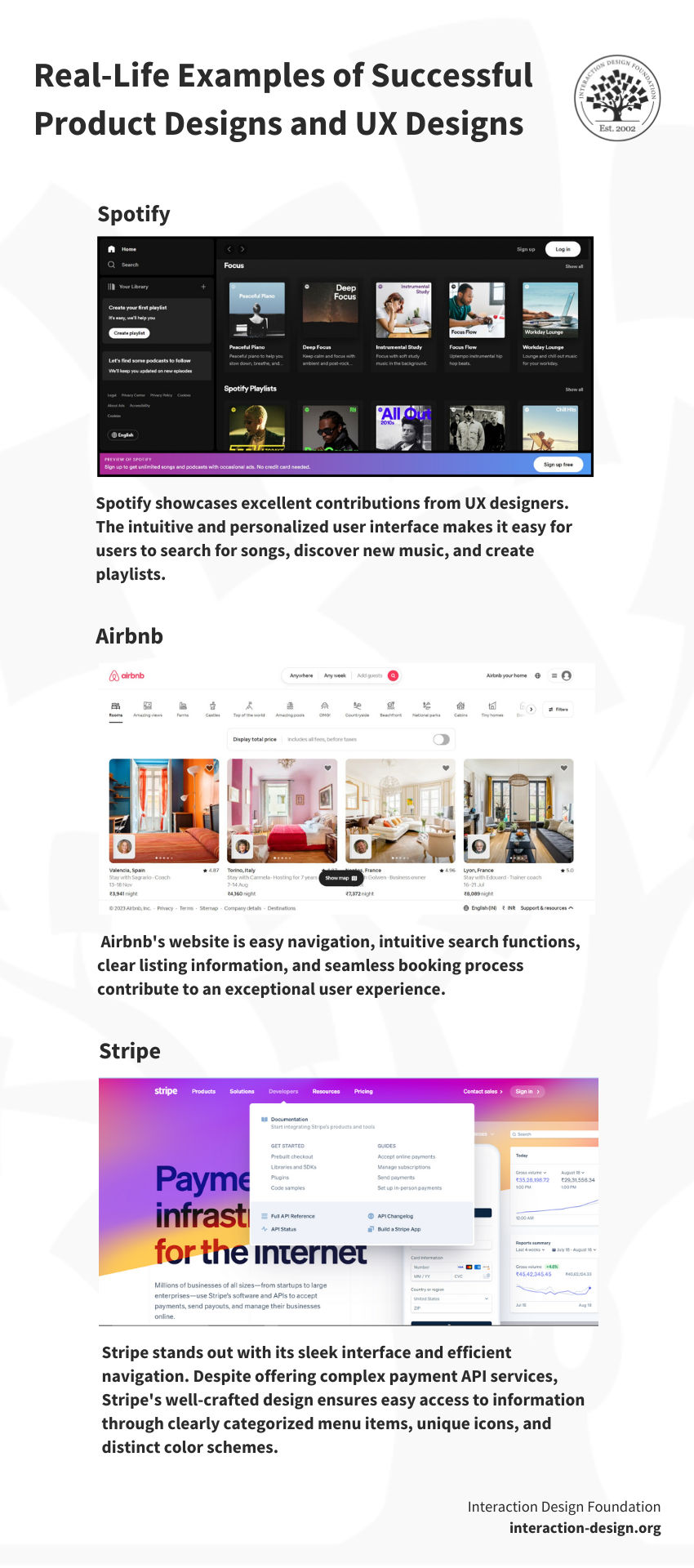
We encounter countless examples of effective UX design in our digital interactions. Airbnb's website is one such example. Its easy navigation, intuitive search functions, clear listing information, and seamless booking process contribute to an exceptional user experience.
Apple's website exemplifies superior UX design with its intuitive “compare products” feature. It presents a detailed comparison of selected items in a structured, easy-to-follow format. This tool streamlines online shopping and decision-making for users—and it shows that innovation and user support can greatly elevate the digital customer experience.
In both examples, the UX designers have excelled in understanding and meeting user needs, demonstrating UX design’s pivotal role in creating successful digital products.
What are The Differences Between Product Designers and UX Designers?
While product and UX design have a great deal in common, they’ve each got a unique focus that differentiates them. Let’s explore these roles more deeply, highlighting their similarities, differences, and exceptional contributions to the design process.
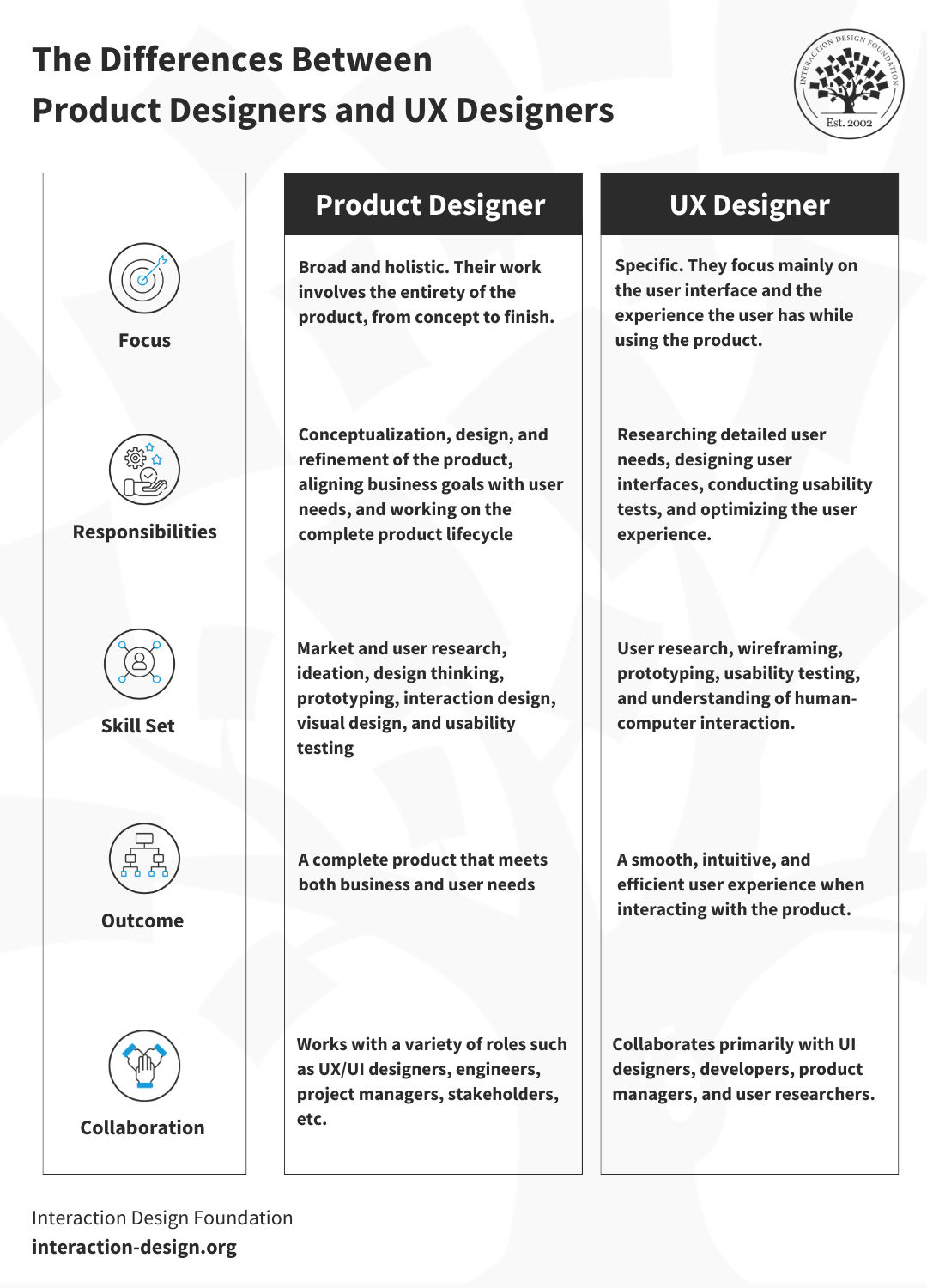
Here’s a table of differences between product designers and UX designers to give you a neat overview:
Product Designer
UX Designer
Focus
Broad and holistic. Their work involves the entirety of the product, from concept to finish.
Specific. They focus mainly on the user interface and the experience the user has while using the product.
Responsibilities
Conceptualization, design, and refinement of the product, aligning business goals with user needs, and working on the complete product lifecycle
Researching detailed user needs, designing user interfaces, conducting usability tests, and optimizing the user experience
Skill Set
Market and user research, ideation, design thinking, prototyping, interaction design, visual design, and usability testing
User research, wireframing, prototyping, usability testing, and understanding of human-computer interaction
Outcome
A complete product that meets both business and user needs
A smooth, intuitive, and efficient user experience when interacting with the product
Collaboration
Works with a variety of roles such as UX/UI designers, engineers, project managers, stakeholders, etc.
Collaborates primarily with UI designers, developers, product managers, and user researchers
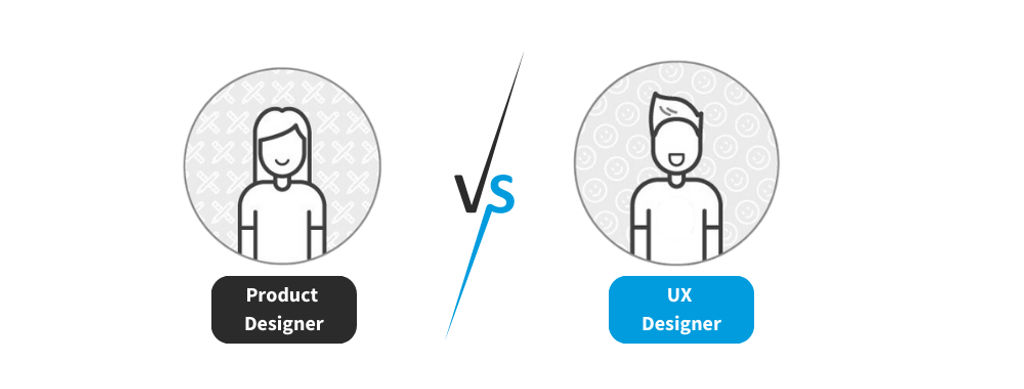
Product Designer Vs. UX Designer: Comparison of Job Roles
To be sure, product designers and UX designers both work towards creating user-friendly and engaging designs, but their roles differ in terms of scope and focus.
A product designer guides a product through its entire lifecycle, and that goes from initial concept to final execution. However, their responsibilities aren’t confined to user experience (UX) and user interface (UI) design. They also consider business goals, market viability, and the product’s technical feasibility.
Meanwhile, a UX designer focuses primarily on the user experience. They research user behavior, create user personas, and design the interaction between the user and the product. They prioritize the user’s needs and emotions, and so they make sure the product is intuitive, satisfying, and enjoyable.
Distinct Areas of Focus and Expertise
Product design and UX design have distinct focus areas, too.
Product design: Product designers focus on the big picture. They strategize, brainstorm, and make crucial decisions about the product’s design and features. They consider various aspects of the product to deliver a complete package that fulfills the user's and the business's needs on point. These aspects may include aesthetics, functionality, and the overall business strategy.
UX design: UX designers are primarily concerned with the user’s experience. They have a deep understanding of the user’s needs, motivations, and behavior. They prototype and test designs to meet user expectations and create a seamless, enjoyable experience for all users.
Contributions to the Overall Design Process
Both roles contribute significantly to the overall design process—each in its own unique way.
A product designer tends to be involved from the initial concept to the final execution. They define the product’s direction, set design goals, and coordinate with different teams to ensure these goals are met.
A UX designer is involved from the get-go, from the very start of a project. They conduct user research, create user journeys, and test prototypes to identify and fix usability issues.
What are Real-Life Examples of Unique Contributions?
To understand the differences better, let’s consider a few examples.
Product designer:In product design, Stripe stands out with its sleek interface and efficient navigation. Despite offering complex payment API services, Stripe’s well-crafted website design ensures easy access to information through clearly categorized menu items, unique icons, and distinct color schemes. This focus on user-friendly navigation demonstrates the depth of a product designer’s role in creating a compelling, intuitive, and ultimately successful product.
UX designer:Spotify, the popular music streaming service, showcases excellent contributions from UX designers. The intuitive and personalized user interface makes it easy for users to search for songs, discover new music, and create playlists. The designers also conceived user-focused features such as Discover Weekly and Year in Review to enhance the overall experience and make Spotify a top choice for music enthusiasts.
The key in design is to know how these roles differ, and it helps put the right skills to use at the right time. Even though these roles do share some similarities, each has its own view and skills. Both of them bring a unique perspective and set of skills that contribute to creating a successful, user-friendly product.
The Interconnectedness of Roles
Despite their differences, the roles of product designers and UX designers are far from silos. In fact, there’s a significant amount of overlap and collaboration needed between the two. For example, a product designer’s decision about a feature will influence the user experience, and the UX designer’s research and testing can provide valuable insights into product development.
Skills and Qualifications
While both roles require a keen eye for design, the specific skills and qualifications differ.
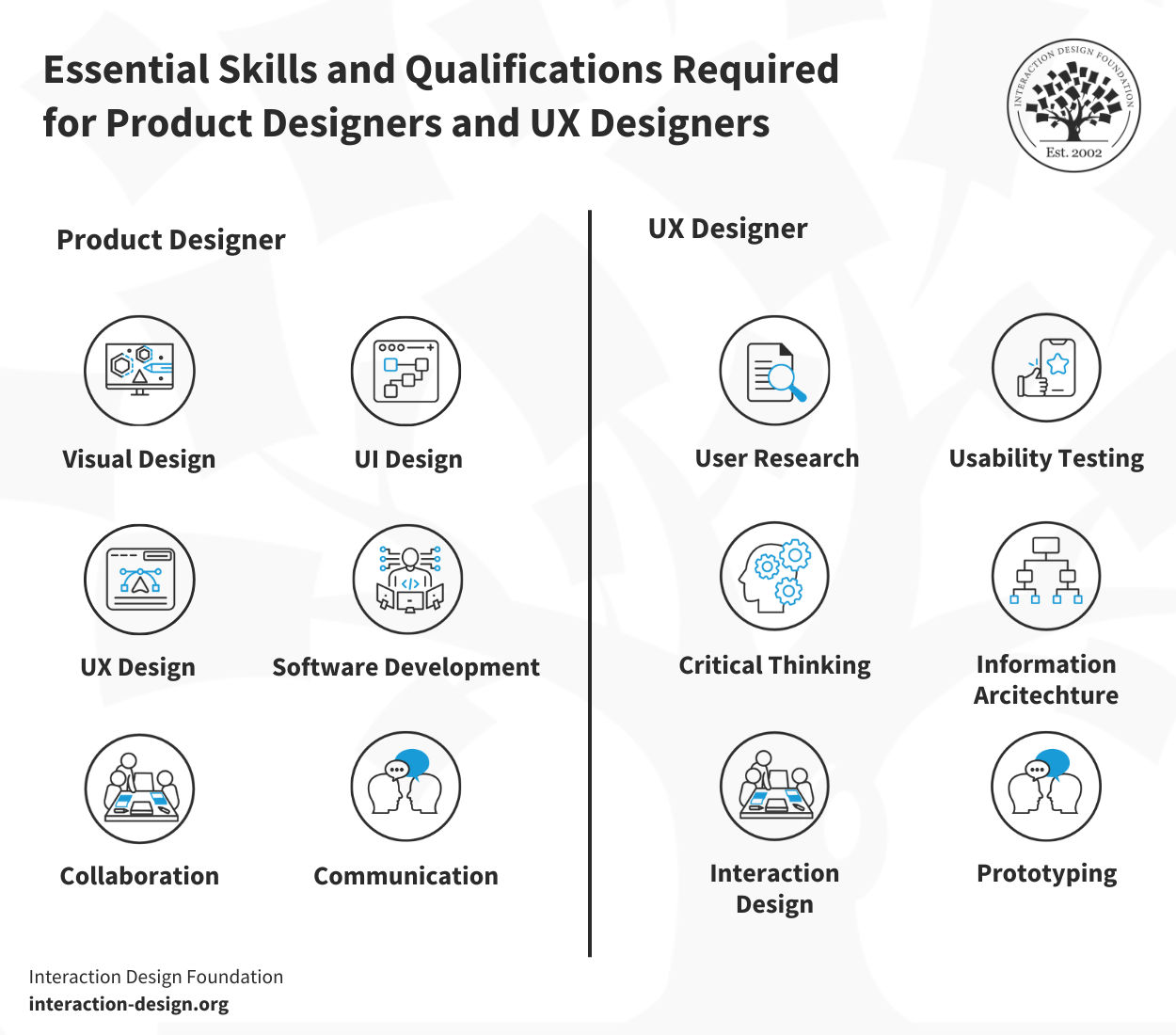
Product designers: Product designers need a broad set of skills, including visual design, UI design, UX design, familiarity with software development, and an understanding of business and market strategy. They also need excellent problem-solving skills, the ability to think critically and make decisions, and strong communication skills to effectively collaborate with various stakeholders.
UX designers: UX designers need expertise in user research, usability testing, information architecture, interaction design, and prototyping. They must be empathetic to understand users’ needs, have strong problem-solving skills to improve the user experience, and be effective communicators to advocate for users’ needs.
The Impact on the End Product
Product and UX designers’ distinctive contributions greatly impact the end product.
Product designers: Product designers influence the product’s overall direction and functionality. Their decisions determine the product’s features, how it will look, and how it aligns with the company’s strategic goals and market needs.
UX designers: UX designers directly influence how users interact with the product at the same time as ensuring that business needs get met. Their work ensures the product is intuitive, enjoyable, and meets the users’ needs, influencing user satisfaction and loyalty.
While product designers and UX designers have distinct roles, they both play a critical role in creating a successful product. It’s a vital mix on a project, and using their unique skills and perspectives, they work together to create a product that meets business objectives and delivers a satisfying user experience.
Which One Should You Choose?
Choosing between a career in product design or UX design will depend a great deal on your interests, skills, and the kind of work you enjoy doing. Both roles can offer rewarding and lucrative career paths. Still, each requires a different set of skills and focuses on different aspects of the design process.
1. Product Designer Vs. UX Designer: Evaluating Interests and Skills
First, you’ll want to take stock of your interests and abilities. If you love to think big-picture and enjoy handling multiple aspects of a product, this might be a sign that you’re suited for product design. What’s more, if you want to get involved in the entire product lifecycle—from conceptualization to market release—then product design could be the right choice for you. This role calls for a solid understanding of technology, user interface design, market trends, and strong problem-solving and leadership skills.
On the other hand, if you’re drawn to understanding user behavior, conducting research, and creating intuitive and engaging user interfaces, then UX design might be more suitable. UX designers often need strong empathy, analytical thinking, and skills in user research, along with proficiency in using UX design tools and creating wireframes and prototypes.
2. Product Designer Vs. UX Designer: Career Paths and Opportunities
Both fields offer significant opportunities for career growth. As a product designer, you can advance to senior roles, lead design teams, or even become a product manager. Product designers often find opportunities in tech companies, design agencies, and startups.
In the field of UX design, you can progress to senior UX designer, UX manager, or UX strategist roles. UX designers are in high demand in industries like tech, e-commerce, digital marketing agencies, and any business with a strong digital presence.
3. Product Designer Vs. UX Designer: Personal Preferences and Aptitude
Consider what you value most in a job. Product design might be the right choice if you like having varied responsibilities and directly impacting a product’s end result. However, if you prefer to specialize in creating optimal user experiences and working closely with user data and feedback, UX design could be a better fit for you.
Last, but not least, consider where your natural aptitudes lie. Do you have a knack for aesthetics, technology, and overseeing projects? You might excel in product design. But you might find your calling in UX design if you’re a strong communicator with an analytical mind and a passion for understanding and improving user experiences.
4. Product Designer Vs. UX Designer: Making an Informed Decision
Before you decide, it can be a good idea to gain some practical experience. Try taking online courses or participating in design challenges to get a feel for each role. Speak to professionals in both fields to understand their day-to-day work and their challenges to make an informed decision based on a realistic understanding of what each job entails.
Remember, there’s no one-size-fits-all answer—it’s about finding the role that aligns best with your interests, skills, and career aspirations. Whichever path you choose, both product design and UX design are exciting fields with the potential to shape the future of technology.
The Take Away
Understanding the differences between product designers and UX designers is crucial, whether you’re an aspiring designer, a hiring manager, or interested in the field. Product designers focus on the overall product, and they integrate multiple facets from concept to market. In contrast, UX designers hone in on the user experience to make products intuitive, enjoyable, and user-friendly.
Consider your interests, skills, and long-term goals when you’re choosing a career. Both fields offer rewarding career opportunities, but they each require a unique set of skills and focus. You can gain a deeper understanding of these roles to make an informed decision that aligns with your career aspirations.
Are you ready to kick-start your journey in design? Upskill for your next role with our intermediate courses, or if you're new to the field, join our beginner UX courses today! Let's embark on this exciting journey together!
39% of Today's Skills Will Change by 2030
The World Economic Forum expects 39% of today's skills to be transformed or become outdated by 2030.
The good news is that jobs in UX / UI design and AI are among the fastest-growing professions globally.