Good Design

Your constantly-updated definition of Good Design and collection of videos and articles.
Be a conversation starter: Share this page and inspire others!

591 Shares

What is Good Design?

Good design is a concept defined by industrial designer Dieter Rams’s principles: It makes a product useful and understandable, is innovative, aesthetic, unobtrusive, honest, long-lasting, thorough to the last detail, environmentally friendly, and involves as little design as possible. Designers strive for good design.

“You cannot understand good design if you do not understand people.”

— Dieter Rams

Discover what good design truly involves.

Dieter Rams’ 10 Principles of Good Design

The Timeless Appeal of Good Design

The term “good design” sounds deceptively self-evident. As something for designers to practice, it begs the question of what it involves as a clear set of elements. Design is a field where we understand, communicate with and enhance the world around us, particularly by improving people’s lives. Indeed, the cost of bad design is frustrated users and a damaged brand name.
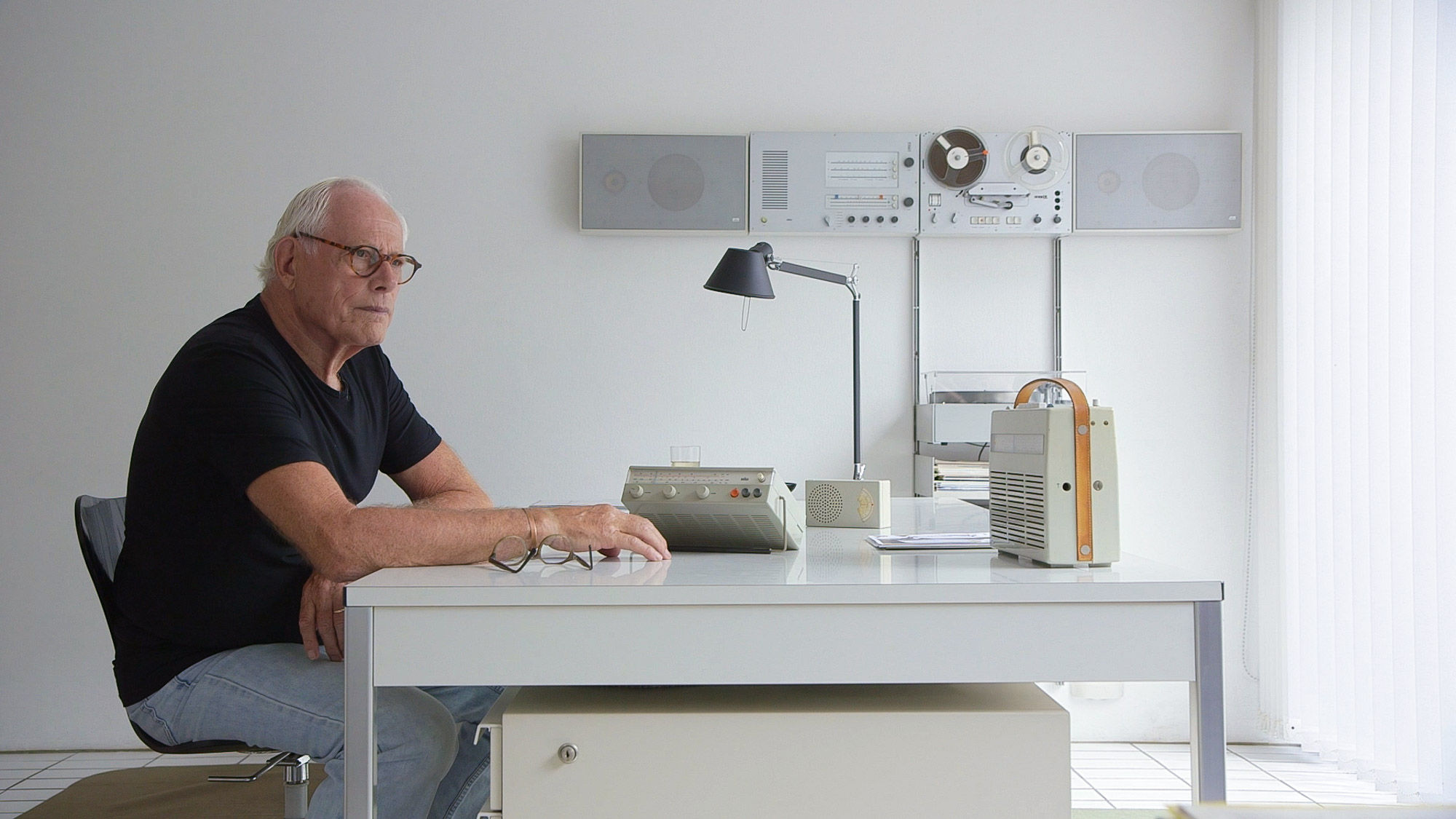
Image depicting Dieter Rams in his office

© Gary Hustwit and Film First, Fair-Use

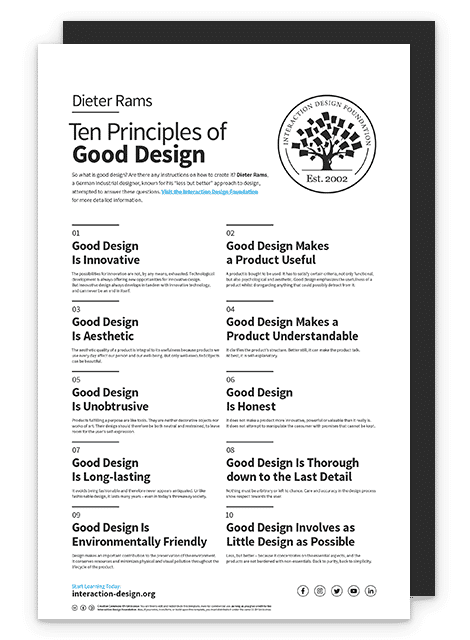
Dieter Rams, a German industrial designer renowned for his less-but-better approach to design, addressed the nature of good design to determine exactly what it requires of designers. Rams’s influence is far-reaching, having helped shape how most consumer products used in the late 20th and early 21st centuries look and work. From alarm clocks to toothbrushes, coffeemakers and far beyond, Rams’s hallmarks surround us. His aesthetics stand for honesty, restraint and simplicity. In the late 1970s, Rams studied the world around him—finding “an impenetrable confusion of forms, colors and noises”—and asked himself this essential question: “Is my design good design?” Rams’s answer is expressed in his ten principles, whereby good design:

  1. Is innovative.

  2. Makes a product useful.

  3. Is aesthetic.

  4. Makes a product understandable.

  5. Is unobtrusive.

  6. Is honest.

  7. Is long-lasting.

  8. Is thorough down to the last detail.

  9. Is environmentally friendly.

  10. Involves as little design as possible.
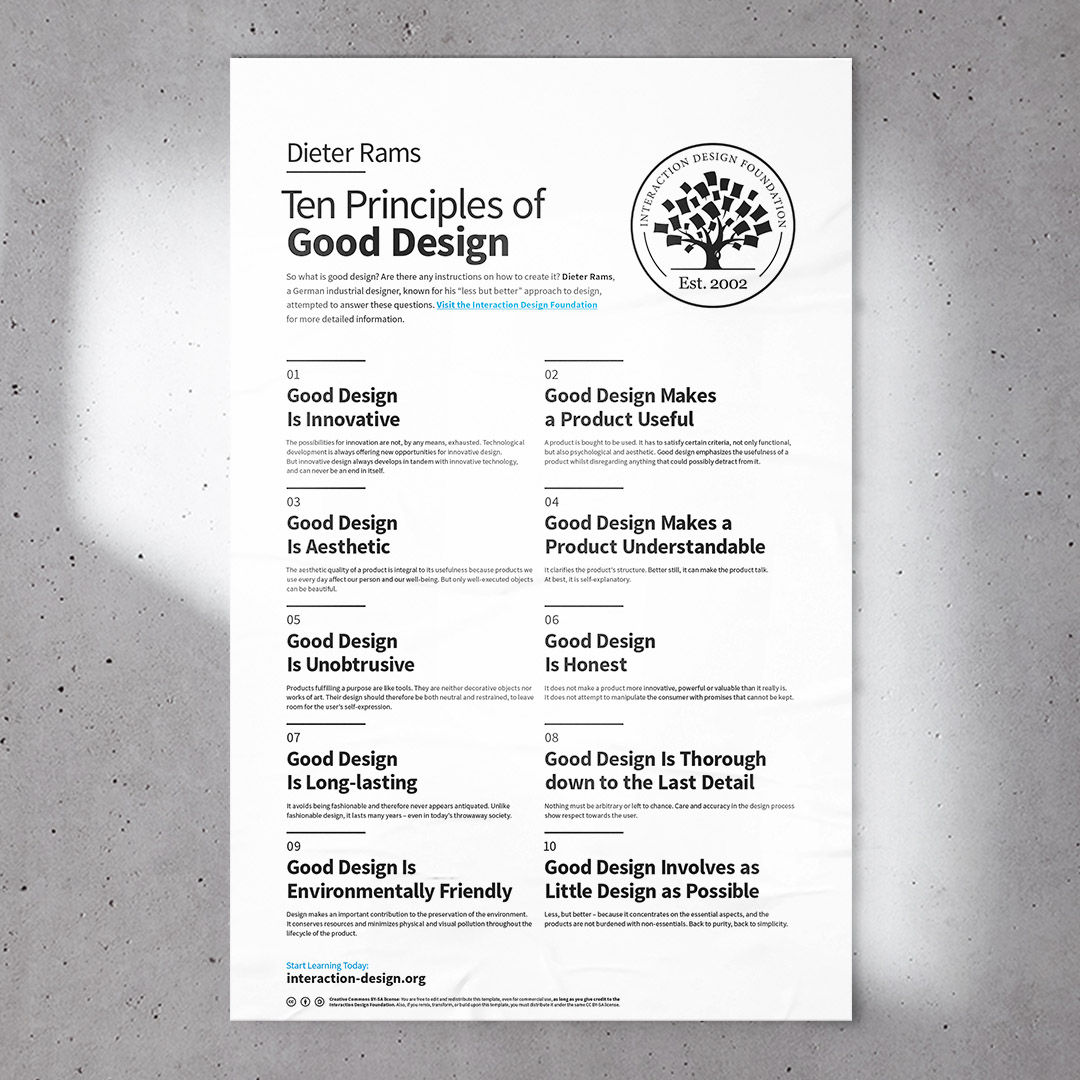
Image depicting the ten principles of good design

© Daniel Skrok and Interaction Design Foundation, CC BY-SA 3.0

How to Pursue Good Design to Produce Great Designs

Throughout your design process, these points are crucial to remember:

  1. Strive for innovation. The world is always progressing, and technological development is always offering new opportunities for innovative design. Being innovative in design means moving alongside the developments in innovative technology. So, try to keep in step with those developments rather than attempt a novel design for the sake of it.

  2. Let form follow function, alongside the psychological and aesthetic aspects for your users. Products (and services) are bought to be used. Users/customers want to enjoy good experiences (or at least be spared from frustrating ones) and have expectations for you to satisfy. Your design’s usefulness means nothing should detract from that usefulness.  

  3. Go for good looks and sensations. The products we use every day affect our personal well-being. So, if your design is around users and is something you’ve crafted well, they’ll enjoy it all the more if it’s beautiful.

  4. Make your design speak clearly. An intuitive look and feel will inform users what to do with your design. If you can coax them to cross that magic bridge where they take to your product without having to stop to think (i.e., become confused), you’ll optimize how they can achieve their goals with it.

  5. Make it unobtrusive. Your design serves a purpose; being pretty for decoration’s sake isn’t it. It’s up to the users to express themselves through your design. That’s why a neutral and restrained approach works, why clean and simple aesthetics help users.

  6. Keep it honest and upfront. Users want promises kept, not false hopes dangled before them, so your design should only be as innovative, powerful and/or valuable as it claims to be. When you consider the solution/s it offers to what problems and design for those, you can help maintain this balance.

  7. Keep it unfashionably in style. Good design never looks dated or antiquated. Classic, clean looks help prevent the unwanted signature styling that pegs a product to an era and makes it discardable.

  8. Keep an eye on the finest details. When you pay attention to the tiniest elements, it tells users you cared enough to follow them on their list of design wants. This could be anything from an extra button on a wearable device to a failsafe feature that shows users all their activity and messages. So, know your users and aim to please them to the maximum degree and alleviate their worries.

  9. Conserve the environment. The world’s problems are complex, and pollution can arise from wasted resources throughout your product’s lifecycle. The big-picture view means creating more devices we can recycle more easily and with less resources invested. Also consider the users’ immediate environment: e.g., does your design pollute it visually and sonically?

  10. The least possible is the best possible. When you focus on just the essential aspects in your design, you can make the best of their purity. For example, the clean feel of a UI with well-defined, simple buttons is a winning “formula” compared with the clutter of options users would experience if you inserted every nice-to-have feature.
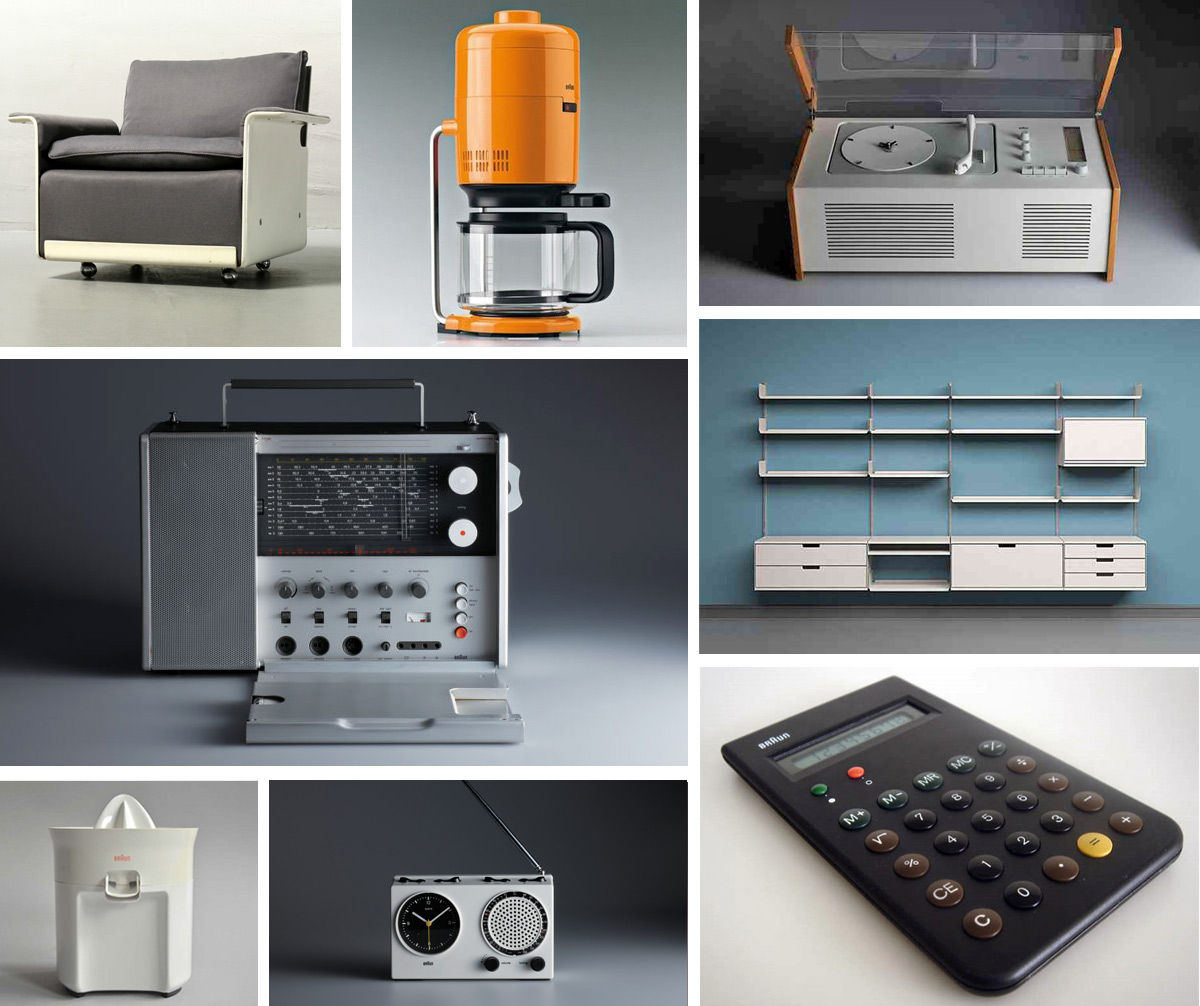
Image depicting examples of good design

© Gary Hustwit and Film First, Fair-Use 

Overall, your best designs will be self-explanatory to your users and customers, who’ll appreciate how these simple-yet-wonderful creations prove that you understand the people you design for.

Questions About Good Design?
We've Got Answers!

Where to learn more about good design?

In online education, there are many ways to educate yourself about design. You can explore courses like IxDFs' visual design course to learn more about good design. Witness the designs in action and delve into code-level examples. Additionally, broaden your knowledge by reading firsthand accounts from seasoned designers. This will help gain insights into how they apply and leverage good design principles in their projects. Engage with design communities and forums, where discussions and shared experiences contribute to a rich learning environment. Staying updated on industry trends through design blogs and podcasts and attending design conferences further fuels your understanding of good design. This will foster a continuous learning journey in the dynamic and evolving field of UX design.

Why is design so difficult?

Design is a balance of innovation and functionality that must be appealing while meeting user needs. Doing this with clarity and simplicity is hard enough, but we must also consider the physical and technological environment. The challenge lies in meeting immediate design goals, anticipating future trends, and ensuring adaptability. It's a process that demands a keen understanding of the ever-shifting dynamics in the design world.

What makes a bad design?

Bad design emerges from a lack of innovation, poor functionality, unclear communication, excessive complexity, and a disregard for user or customer needs. It prioritizes profit over user experience, lacks aesthetic appeal, and ignores the environment. Poor functionality is another trait that can be found in bad designs. Unclear communication adds to the problem, making it difficult for users to understand the design's purpose. Excessive complexity further increases issues as designs become cluttered and challenging to navigate. Additionally, disregarding user needs creates a disconnect, where the design prioritizes business needs over enhancing the user experience. In essence, bad design frustrates users, impacts brand reputations, and ultimately fails to achieve its intended purpose. Read this article on bad design for a better understanding.

What is the most powerful design principle?
What separates good design from great design?

Great user experience design surpasses good design by blending innovation, user-centric functionality, and aesthetic brilliance. It elevates itself beyond merely meeting basic requirements. While good design meets expectations, great design exceeds them, offering an experience that resonates more deeply. It portrays a thorough understanding of users' needs and desires, anticipating and addressing them in ways beyond the ordinary. Great design often possesses a timeless quality, defying existing trends and ensuring longevity. It leaves an effective mark not only in terms of visual appeal but also in terms of the lasting impression it leaves on the user. This establishes a connection that goes beyond the immediate interaction with the design.

Transcript

Watch this short clip by Don Norman to learn how to use human centricity to make your design great.

Why are visual skills important?

Visual skills are crucial for effective design, enabling clear communication, intuitive user interactions, and aesthetically pleasing outcomes. A well-defined visual language enhances the user experience by guiding individuals through the design. Understanding and mastering visual elements ensures effective communication and the creation of perfect designs. Mastery of visual elements extends beyond aesthetics; it empowers designers to create visually pleasing and highly functional designs. The ability to leverage colors, typography, and layout cohesively enhances the overall impact of a design. In essence, visual skills are not merely about making things look good. They help in optimizing the communication and usability of a design. This elevates the design from visually appealing to a robust and user-centric solution.

How do you create a good design system?

To create a good design system for interactive solutions, focus on innovation, user experience, aesthetic appeal, clarity, and environmental considerations. Strive for simplicity, honesty, and thoroughness in design. Tailor the system to users' needs, emphasizing functionality and visual clarity while minimizing unnecessary complexity. A successful design system looks good and considers its impact on the environment, promoting sustainability. Refining and updating the system is crucial to keep it relevant and effective. You should adopt a system for clear communication within the design team. This ensures the whole team is on the same page and working towards shared goals. Tailoring the system to users' needs becomes a versatile tool, accommodating diverse requirements while enhancing overall user satisfaction.

What is a successful design system?

A successful design system involves maintaining innovation, prioritizing user experience, and adhering to the principles of good design. It requires clear communication, functional aesthetics, and an understanding of user expectations. This approach creates a cohesive and practical design across products or services. It is an ongoing process of staying creative and meeting users' needs. Following the basic rules of good design, like keeping things clear and simple, is essential. Communication is vital to ensure everyone working on the design is on the same page. Understanding what users expect helps shape the design to fit their needs. All these elements together create a design system that works well in the present and can adapt to changes in the future.

Want to learn how to use storytelling to create successful design systems? Take the IxDF's masterclass today.

What are the main qualities of a good design?

The main qualities of a good design incorporate innovation, functionality, aesthetics, user-friendliness, unobtrusiveness, honesty, durability, attention to detail, environmental consciousness, and simplicity. For products and services, user-friendliness is paramount, ensuring accessibility and intuitive interactions. Unobtrusiveness and honesty highlight ethical design, fostering trust and transparency. Durability speaks to longevity, emphasizing quality materials and craftsmanship. Attention to detail elevates the user experience, while environmental consciousness promotes sustainability. Simplicity remains a guiding principle, converting complexity into elegant solutions. These qualities align with Dieter Rams's ten principles, ensuring products are practical and visually appealing while minimizing unnecessary complexity. Following these vital attributes of a good design will make your design accessible and attractive. Each quality mentioned caters to some element a user might look for in any product or web design.

Earn a Gift Earn a Gift, Answer a Short Quiz!

1
2
3
4
1
2
3
4
Question 1
Question 2
Question 3
Get Your Gift
Interaction Design Foundation logo

Question 1

What is the main purpose of good design?

1 point towards your gift

  • To follow current design trends
  • To increase product prices
  • To make products useful and understandable
Interaction Design Foundation logo

Question 2

Why is aesthetics important in good design?

1 point towards your gift

  • It makes products expensive.
  • It affects the usefulness and user experience of products.
  • It implements trending design processes only.
Interaction Design Foundation logo

Question 3

What does innovation in good design involve?

1 point towards your gift

  • Avoid technological advancements and implement classic designs only
  • Copy existing designs
  • Develop new solutions in tandem with technological advancements

Learn More About Good Design

Make learning as easy as watching Netflix: Learn more about Good Design by taking the online IxDF Course Design for the 21st Century with Don Norman.

Why? Because design skills make you valuable. In any job. Any industry.

In This Course, You'll

  • Get excited as you learn to design a better world. Whether you want to help families save money while reducing their carbon footprint, redesign how cities manage waste, or improve public health systems, this course will show you how. You don't need to be a designer. You just need the desire to make things better. Led by world-renowned designer Don Norman, you'll learn the powerful tools of human-centered design, systems thinking, and design thinking to tackle real-world challenges like climate change, inequality, public health, and more.

  • Make yourself invaluable when you build timeless human-centered design skills that are essential to make AI your superpower, so speed never comes at the cost of people's wellbeing. This course builds on and expands your deeply human skills like empathy, problem framing, and root-cause thinking that guide AI toward better, more responsible outcomes. You'll learn to apply these skills to drive innovation at work, lead meaningful projects, communicate your ideas clearly, and capture people's attention. This course helps you grow your impact, salary potential, and confidence—and feel deeply fulfilled. Did you know that design-driven companies are twice as likely to outperform their industry peers in revenue growth? The key is to go beyond traditional approaches and solve the real problems behind surface-level symptoms while integrating solutions seamlessly into real people's lives. You'll get the ability to design lasting change and learn how to work effectively with stakeholders to make it happen. You'll also discover how to move up in your company and take on bigger challenges.

  • Gain confidence and credibility as you apply your new skills from day one with ready-to-use templates such as the 5 Whys method. Create an optional case study aligned with the UN Sustainable Development Goals. By the end of this course, you'll have the skills and mindset to make a difference, whether that's in your job, your community, or the world. Let's co-create a better future starting now.

It's Easy to Fast-Track Your Career with the World's Best Experts

Master complex skills effortlessly with proven best practices and toolkits directly from the world's top design experts. Meet your expert for this course:

  • Don Norman: Father of User Experience (UX) Design, author of the legendary book “The Design of Everyday Things,” co-founder of the Nielsen Norman Group, and former VP of the Advanced Technology Group of Apple.

Get an Industry-Recognized IxDF Course Certificate

Increase your credibility, salary potential and job opportunities by showing credible evidence of your skills.

IxDF Course Certificates set the industry gold standard. Add them to your LinkedIn profile, resumé, and job applications.

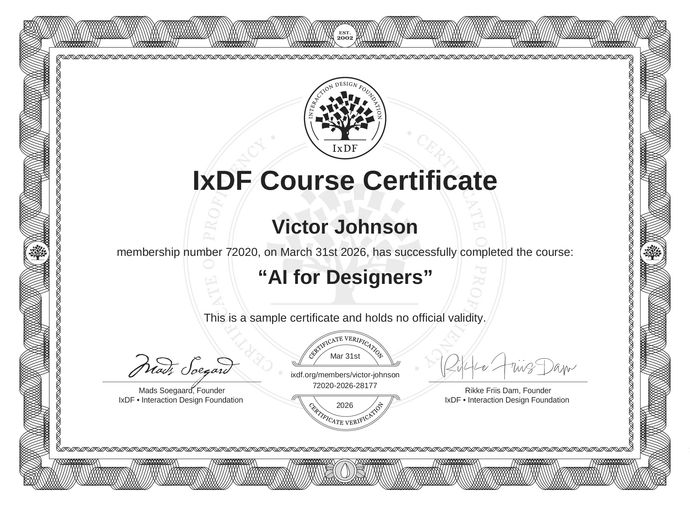
Course Certificate Example

Be in distinguished company, alongside industry leaders who train their teams with the IxDF and trust IxDF Course Certificates.

Our clients: IBM, HP, Adobe, GE, Accenture, Allianz, Phillips, Deezer, Capgemin, Mcafee, SAP, Telenor, Cigna, British Parliament, State of New York

All Free IxDF Articles on Good Design

Read full article
Dieter Rams: 10 Timeless Commandments for Good Design - Article hero image
Interaction Design Foundation logo

Dieter Rams: 10 Timeless Commandments for Good Design

Let’s pay a virtual visit to a famous industrial designer’s workshop. By examining the principles of his winning approach, we can incorporate vital elements into our designs in the “less is more” age.As user experience practitioners, most of us have worked with Nielsen and Molich’s 10 heuristics or

Social shares
1.3k
Published
Read Article
Read full article
Bad Design vs. Good Design: 5 Examples We Can Learn From - Article hero image
Interaction Design Foundation logo

Bad Design vs. Good Design: 5 Examples We Can Learn From

Looking at examples of bad design alongside counter-examples of good design is not only fun but also draws important lessons for designers. They highlight pitfalls for designers to avoid and let us understand how to translate design theories into solutions that work in the real world. Jared Spool, t

Social shares
1.5k
Published
Read Article
Read full article
What is Good Design? - Article hero image
Interaction Design Foundation logo

What is Good Design?

Design matters. It enables us to understand, communicate and improve the world around us. When done right, design has the power to improve the everyday lives of users. When done wrong, design can disrupt and frustrate users. As a designer, you have the power to improve the everyday lives of your use

Social shares
650
Published
Read Article
Read full article
Top 10 UI Trends Every Designer Should Know - Article hero image
Interaction Design Foundation logo

Top 10 UI Trends Every Designer Should Know

People get easily bored with trends, and every few years, the pendulum swings from one way to another. We have all seen the rise and fall of iconic fashion pieces or art movements. The same thing happens in User Interface (UI) design. UI trends go from interfaces that mimic real-world objects to sup

Social shares
1k
Published
Read Article
Read full article
Graphic Artist vs. Graphic Designer: What's the difference? - Article hero image
Interaction Design Foundation logo

Graphic Artist vs. Graphic Designer: What's the difference?

Graphic art versus graphic design is pretty much still a bone of contention, and that’s after a long-standing debate that just keeps going on and on—more a source of intrigue than anything negative. Some believe the two overlap with a great deal of things that are interchangeable between them—but, f

Social shares
860
Published
Read Article
Read full article
How to Present Like Steve Jobs (Without the Turtleneck) - Article hero image
Interaction Design Foundation logo

How to Present Like Steve Jobs (Without the Turtleneck)

Steve Jobs treated every presentation like a user journey. He shaped the emotional pacing with the precision of a product designer. If you think presenting is about speaking, you’re missing the deeper craft: Guiding someone’s experience. He made people see the world through his eyes. The power of hi

Social shares
255
Published
Read Article

What is Good Design?

What is Good Design?

Design matters. It enables us to understand, communicate and improve the world around us. When done right, design has the power to improve the everyday lives of users. When done wrong, design can disrupt and frustrate users. As a designer, you have the power to improve the everyday lives of your users if you practice good design.

“You cannot understand good design if you do not understand people.”

— Dieter Rams

So, what is good design? Are there any instructions on how to create it? Dieter Rams, a German industrial designer known for his “less but better” approach to design, attempted to answer these questions. Let’s watch.

© Gary Hustwit and Film First, Fair-Use (Link)

Dieter Rams is considered one of the most influential industrial designers of the late twentieth century. His work has influenced the way most of today's consumer products look and function. Dieter’s iconic work at Braun and Vitsoe touched the lives of millions of people. His design aesthetics championed simplicity, honesty and restraint — which is evident in the products he designed including the Braun coffee maker, shaver, stereo, calculator, speakers, alarm clock and Oral-B toothbrush. In fact, the computer or phone you're reading this on looks the way it does because of Dieter Rams.

In the late 1970s, Dieter Rams became increasingly interested in the state of the world around him — “an impenetrable confusion of forms, colors and noises.” Aware that he was a significant contributor to that world, he asked himself an important question: is my design good design? His answer is expressed in his ten principles for good design.

According to Dieter Rams, good design:

  1. Is innovative.

  2. Makes a product useful.

  3. Is aesthetic.

  4. Makes a product understandable.

  5. Is unobtrusive.

  6. Is honest.

  7. Is long-lasting.

  8. Is thorough down to the last detail.

  9. Is environmentally friendly.

  10. Involves as little design as possible.

These principles have become iconic and have inspired designers across the world. Let’s see each of them in a little more detail.

Good design is innovative. 

The possibilities for innovation are not, by any means, exhausted. Technological development is always offering new opportunities for innovative design. But innovative design always develops in tandem with innovative technology, and can never be an end in itself.

Good design makes a product useful. 

A product is bought to be used. It has to satisfy certain criteria, not only functional, but also psychological and aesthetic. Good design emphasizes the usefulness of a product whilst disregarding anything that could possibly detract from it.

Good design is aesthetic. 

The aesthetic quality of a product is integral to its usefulness because products we use every day affect our person and our well-being. But only well-executed objects can be beautiful.

Good design makes a product understandable. 

It clarifies the product’s structure. Better still, it can make the product talk. At best, it is self-explanatory.

Good design is unobtrusive. 

Products fulfilling a purpose are like tools. They are neither decorative objects nor works of art. Their design should therefore be both neutral and restrained, to leave room for the user’s self-expression.

Good design is honest. 

It does not make a product more innovative, powerful or valuable than it really is. It does not attempt to manipulate the consumer with promises that cannot be kept.

Good design is long-lasting. 

It avoids being fashionable and therefore never appears antiquated. Unlike fashionable design, it lasts many years — even in today’s throwaway society.

Good design is thorough down to the last detail. 

Nothing must be arbitrary or left to chance. Care and accuracy in the design process show respect towards the user.

Good design is environmentally friendly. 

Design makes an important contribution to the preservation of the environment. It conserves resources and minimizes physical and visual pollution throughout the lifecycle of the product.

Good design is as little design as possible. 

Less, but better — because it concentrates on the essential aspects, and the products are not burdened with non-essentials. Back to purity, back to simplicity.

We’re inspired by the relevance of the principles above. If you are too, feel free to download our Ten Principles of Good Design Poster to reference or even print and hang on your wall. And don’t worry — we’ve included both a light and dark theme poster, so you can match your personal aesthetics. :)

Advance Your Career With This Free Template for “Ten Principles of Good Design”
Ten Principles of Good Design
We respect your privacy
Get 1 powerful email each week: Design a life you love!

The Take Away

Good Design enables us to understand, communicate and improve the world around us. When done right, it has the power to improve the everyday lives of users. Dieter Rams’s 10 Principles of Good Design are proof of his minimalist and functional approach to design, but, more than that, they are proof of his professional stand. This is why we can easily make these principles our values, our philosophy of how design — hence, UX design — should be for any product or service.

“You cannot understand good design if you do not understand people.”

— Dieter Rams

We, as designers, need to be creative engineers who solve people’s needs and respect the 10 principles:

Good design is innovative. Good design must be useful. Good design is aesthetic design. Good design makes a product understandable. Good design is honest. Good design is unobtrusive. Good design is long-lasting. Good design is consistent in every detail. Good design is environmentally friendly. And, last but not least, good design is as little design as possible.

References and Where to Learn More

Learn more about the power of good design and Dieter Rams’s ideology at Vitsœ.

Watch the exciting documentary film, Rams, by Gary Hustwit and Film First.

Images

© Interaction Design Foundation, CC BY-SA 3.0

Feel Stuck?
Want Better Job Options?

AI is replacing jobs everywhere, yet design jobs are booming with a projected 45% job growth. With design skills, you can create products and services people love. More love means more impact and greater salary potential.

At IxDF, we help you from your first course to your next job, all in one place.

See How Design Skills Turn Into Job Options
Privacy Settings
By using this site, you accept our Cookie Policy and Terms of Use.
Customize
Accept all

Be the One Who Inspires

People remember who shares great ideas.

Share on:

Academic Credibility — On Autopilot

Don't waste time googling citation formats. Just copy, paste and look legit in seconds.