Public speaking is the art of communicating ideas effectively to an audience, whether in person or online. When you speak well publicly, you present design work clearly, advocate for users, and win trust from stakeholders so ideas gain traction, projects move forward, and you grow as an influential speaker.
Discover what delivering effective messages to audiences who want to hear from you helps you achieve, in this video with Morgane Peng, Managing Director, Global Head of Product Design and AI Transformation.
Great Public Speaking Gets You Far
Think for a moment about what public speaking means outside of political speeches and theatrical plays; does it conjure pictures of nervous speakers at weddings? A class presentation from a school project? Or perhaps a debating team in action? Consider, for example, what a debater aims to achieve; much like a lawyer in court; the purpose of public speaking in that context is to engage the audience and influence opinion. Effective public speakers don’t just transfer knowledge; they inspire action, build trust, and create alignment among diverse audiences, too.
Reap the Benefits of Public Speaking
For UX and product designers alike, and for most professionals, public speaking skills are vital, since as a designer you spend about as much time communicating as you do designing. Fortunately, as a designer, you also practice effective communication in the very craft of designing, anyway. Even if you think you’re the most introverted type of designer, you still practice good communication in ways you mightn’t realize. How? You do it through well-considered design choices that show users what they can do with a digital solution and how to use it best, in the interfaces and digital products you create. Still, your ability to articulate ideas often determines whether your work gets recognized, approved, and implemented.
Here are the three main reasons public speaking matters in UX design and beyond:
1. Collaboration Requires Communication
Effective design is highly collaborative, not a “one-person show.” You don’t produce first-class work in a vacuum, all on your own, and release it. You need input from stakeholders, feedback from users, and alignment with product teams. Clear presentations make this possible, with the help of clear presentation skills.
2. Advocacy for Users
To deliver solutions that meet the mark and prove empathy with users, you need to act as the voice of the user. Business leaders and other team members typically won’t be able to envision users in this way, let alone champion user needs. That’s why it’s up to you to explain research insights, design choices, and usability findings in ways that stakeholders understand and value.
Explore how to spot disconnects between how some stakeholders see “good design” and how designers do, in this video with Morgane Peng.
3. Career Progression
Speaking in front of people and presenting well isn’t just about projects and advancing users’ best interests while designing for the brand’s best interests; it’s also about personal growth. You’ll be glad to know that if you can confidently explain your impact, you’ll stand out in performance reviews, job interviews, and leadership opportunities. It pays to be able to clearly articulate that conscientious understanding of what users need, and why, because it shows people in power that the brain behind a great design knows what’s going on and can apply that know-how higher up. How you convince the people with power at your company that you have this confident understanding is by presenting what’s important and doing it well. To put it simply, when you’re a great presenter, you can become a great leader because you:
Influence decisions and secure buy-in.
Inspire teams and motivate action.
Build credibility and executive presence.
Amplify your personal brand inside and outside your organization.
Key Elements You Need for Effective Public Speaking
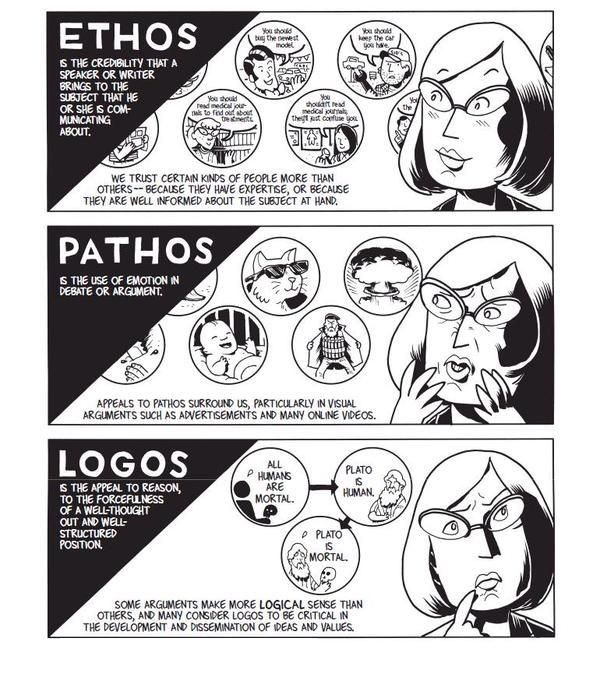
Skilled presenters can find their practice described as far back as the works of the ancient Greek philosopher Aristotle. Aristotle identified a trinity of “appeals” in the craft of persuasion, which involve logos (appealing to an audience’s logic), pathos (appealing to their emotions), and ethos (appealing to their ethics, morals, and character). Over two thousand years ago, Aristotle defined these essential ingredients for establishing trust and therefore making it more likely a listener will believe a speaker.
For you as a modern designer, Aristotle’s findings still hold true: indeed, the art of public speaking combines multiple elements that shape how the audience who listen to a message receive it. These elements don’t just convey content for the public speaker; they influence credibility, trust, and impact and are:
1. Clarity of Content
Public speaking is about presenting and advocating, and presentations should have a clear beginning, middle, and end, structured for the audience to remember them and you as the speaker who delivers clear and relevant points. This first ingredient forms the “backbone” of the presentation: get the structure right and it will be easier to keep the audience on board.
2. Audience Awareness
Great speakers adapt their vocabulary, level of detail, and examples to match the needs of the audience. Consider a variety of presentations given to different audiences, in schools, colleges, workplaces, or even television programs (again, for a variety of audiences); think about the presenter’s vocabulary. How do they adjust and fine-tune the message so it’s appropriate to the audience? When you know who is watching and listening, and why, you can “dress” your presentation appropriately for these people to identify with and understand.
3. Engagement
A speaker who puts across a clear set of points in the right vocabulary can get people listening, all right, but capturing and holding attention requires storytelling, relevance, and interactivity. Consider two presenters; both have the same points to mention and language to mention them in, but one’s presentation resonates more because they made the subject and points matter to the audience. While the other presenter merely spoke facts and figures using the right words, the one who crafted them into a narrative the audience could relate to had that audience follow what was happening, appreciate why it was important (to themselves), and feel part of the experience because the presentation was about their world. The difference is that the less-successful presenter spoke at the audience, while the one who won their audience over spoke to them and impressed them more deeply.
4. Delivery Style
Another factor that reflects how to get the language right for the audience is another part of how to deliver the right words and ideas to that audience. For example, you as a speaker can take a “role” in your presentation such as these ones:
Demonstrator: a hands-on approach that gets right into showing a prototype or proposed design solution, good for sharing information when everyone is already familiar with the project.
Storyteller: a style that connects with the audience through a story and creates a narrative around the core subject, like a problem in the user journey which they as a designer solved.
Instructor: a teacher’s approach that breaks down complex concepts for the audience to understand.
Collaborator: more of a two-way presentation style where the presenter invites audience feedback.
5. The Physical Dimensions
Speaking of style, your style as a public speaker involves the more direct or physical aspects of speech delivery, including:
Pitch is the rise and fall of your voice, signaling emphasis and emotion. Nerves and stress can raise your pitch, which signals less confidence to the audience.
Pace is the speed at which you speak, influencing comprehension and energy. Nerves and stress can make some speakers speed up their words, as if to get the presentation “over with” faster, and the audience can pick up on that.
Tone is the attitude and emotional quality that comes through in your voice. Too much enthusiasm might seem insincere or even signal mockery; too little can make for a lackluster performance and put listeners to sleep.
Articulation is the clarity with which you pronounce words, ensuring understanding. Fortunately, practice can make perfect, so you can be aware of where to say problematic terms (like jargon or difficult words) more clearly, for example.
All together, these elements define how persuasive and memorable a presentation becomes.
How To Speak with Confidence in Public and Influence the Audience
Effective public speaking involves adopting deliberate practices more than it has anything to do with natural talent. Below are actionable ways to strengthen every dimension of your delivery, from before and during to afterwards, so you can improve further.
1. Practice and Rehearse
Know your material, your audience, and the relevance of that presentation material to them. When you try out the first “draft” of your presentation, you’ll likely find areas where you need to expand on the subject matter or even a few where you slow down or stop. These are prime points to research and fix. If any presentation data is sensitive, try presenting a practice version a few times with yourself or a trusted department colleague.
2. Train Your Voice and Manage Stress
Take heart; glossophobia or “presentation anxiety” is natural and common, and, along with solid rehearsal of what you’ll present, you can try support strategies to help with how you do it, such as:
Voice training: Work with a coach, join a theater group, or practice improv to develop range and confidence: your voice is a tool you can “sharpen” this way. Also, you’ll notice similarities between actors’ “stage fright” and public speaking anxiety, but note that actors often need to remember far more than a presenter for UX public speaking. Actors also must learn to project their voices to the audience and often do face judgement for their performances. UX design public speaking doesn’t typically involve such “risks.”
Stress control: Use power poses to help lower cortisol and project confidence. Safely practice 4-7-8 breathing (inhale for 4 seconds, hold for 7, and exhale for 8) to slow your heart rate and steady your voice. Remember, your audience members are just people, too, there to listen to and participate in an engaging presentation; they’re not judgmental entities endowed with preternatural powers to make you feel bad and wreck your presentation.
3. Strengthen Your Voice: Pitch, Pace, Tone, Articulation, and Silence
You’ll have noticed how you sound and come across in your rehearsal. Even with rehearsing and knowing your material by heart, a live presentation might feel challenging enough to change your:
Pitch: Vary pitch to emphasize excitement or seriousness: avoid staying flat, which drains energy, but don’t come across as too excited.
Pace: Slow down when explaining complex ideas; speed up slightly when telling stories for energy: bring the content to life through speed, appropriately.
Tone: Match your tone to the content, empathetic when discussing user pain points, assertive when presenting solutions. In design, empathy is key to bringing effective solutions to genuine user pain points, and you can mirror that in your tone.
Explore how empathy in design reflects a dimension of a designer’s nature as a caring and credible authority on a subject, as our video shows.
Articulation: Speak clearly, especially when you’re introducing technical terms or acronyms. Pre-empt any questions about what “strange” terms mean by showing you know they may be unfamiliar and that you’re considerate of your audience’s needs.
Use silence, too. Quietness is like your canvas to “paint” points upon and pace the delivery of especially important ones. Use pauses intentionally to create anticipation and give weight to key points. A bonus is that silence, in the right measure, shows confidence, that you’re neither “clamming up” and finding it hard to speak nor racing through your words to try and get to the end of the presentation for your sanity’s sake.
4. Set the Stage for Success
Once you’re sure of what to say to whom and how, continue your preparation by focusing on the room or meeting place. Your environment and setup will shape the audience’s perception of what you will deliver to them; therefore:
In-person: Arrive early, declutter the room, and arrange seating to encourage collaboration. Be close enough to the screen and not far from the audience, and if you’re sitting, reduce the chances of opposition or awkwardness by not having everyone else sit on the opposite side.
Online: Clear your desktop, hide bookmarks, and use chat or reactions early to keep people engaged.
First impressions: Greet attendees warmly, establish context, and use introductions to build credibility and their view of you as a relatable, friendly, competent, knowledgeable, and aware presenter. Think about which parts of you show your expertise and which show you as more likeable: two essential ingredients.
Grab a greater grasp of how to build trust and get a seat at the table with helpful insights and tips from Morgane Peng, in this video:
5. Capture Attention with Audience Awareness
Engagement comes from making your audience care; speak to them in their “language” and in a way that brings the subject matter “home” to them.
Map out stakeholders according to their interest and influence, and adjust your detail level accordingly.
Discover how to tap the power of stakeholder maps to determine what’s important to who are on the seats, in this video with Morgane Peng.
Replace jargon with accessible terms, especially when dealing with business stakeholders and “non-design people.” For example, say “feedback session” instead of “usability testing.”
Adapt in real time to emerging realities. The dynamic elements of a presentation can decide how captivated, or not, audiences become, so offer examples or summaries if attention drifts or you notice audience members’ brows knit or blank stares.
6. Structure Your Story with Proven Frameworks
Clear frameworks help your audience follow and remember your message, such as:
Freytag’s Pyramid: Create a narrative arc with exposition, rising action, climax, falling action, and resolution, a powerful way to frame case studies or design problem-solving stories.
STAR Method: Explain your role in projects concisely (Situation, Task, Action, Result) so you can put your presence across in no uncertain terms regarding the scenario you acted within, what it took to bring about change, and the impact of that change. It’s perfect for interviews or performance reviews.
SOLER Framework: Enhance non-verbal delivery with Sit squarely, Open posture, Lean forward, Eye contact, and Relax, an approach that communicates confidence and openness while balancing pride with humility.
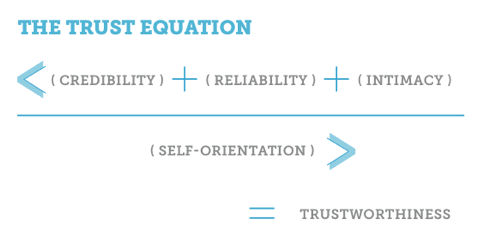
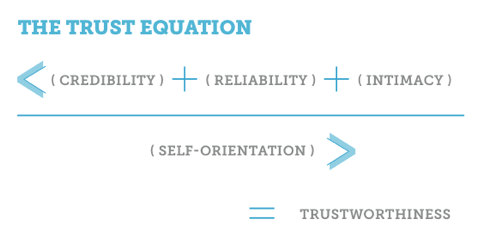
Explore how to use trust frameworks to help build and sustain that all-important ingredient in any presentation, in this video with Morgane Peng.
7. Evaluate and Follow Up
How did it go? Who commented and gave feedback and what did they say? An effective presentation “sells itself” when you deliver as the “agent” and the important ideas in it as the “goods.” If you’ve rehearsed at least once aloud before the presentation, to polish flow and build confidence, you’ll more likely enjoy the fruits of a successful presentation.
In any case, follow up; after the presentation, send recap notes, reflect on feedback, and update slides while they’re fresh in your memory. And note that the outcomes of meetings like this are only truly successful if team members act on insights and execute meaningful implementations or changes.
Myths About Public Speaking
Public speaking has a “larger than life” reputation that many people find intimidating. To define public speaking in the simplest way, it’s the practice of delivering information to an audience in a clear, structured, and impactful way. The definition of public speaking can conjure different imagery depending on the individual who considers it. Traditionally, people tend to think of speeches on a podium or stage, the “province” of politicians and (for those who see a difference between the two) actors. However, in twenty-first-century workplaces, including virtual meeting rooms, public speaking extends to take many forms: pitching ideas in a meeting, leading workshops, presenting design solutions, or even sharing updates.
The “speaking” element in “public speaking” can seem as misleading as the “public” part; as a designer, you generally won’t have to deliver keynote speeches at grand functions or address the general public, for example. And the act of speaking involves something other than just saying words.
Public speaking at work is often underestimated or even dismissed as something for corporate leaders or educators to do. Many professionals assume their technical expertise alone will carry them forward and they can leave the presenting dimension to the business leaders and department heads who “signed up” for it as part of their “remit.” However, while users should be able to intuitively use and enjoy effective UX design solutions without your being there as a designer to “present” it personally, in many contexts good work doesn’t magically speak for itself: the one who created it must speak for it.
One can’t discuss public speaking myths without starting with perhaps the most important aspect that powers them: dread or fear. Glossophobia is the fear of speaking in public, and it’s a common “phobia.” Many people hold back from improving their public speaking skills because of misconceptions, some of which can stem from this fear, and three myths rank as particularly common ones:
“It comes naturally.” This one is not necessarily fear-based, but it can harm the delivery of a speech if you just talk casually or chat your way through your presentation “on the fly.” Talking with friends is not the same as presenting at work. Imagine an authoritative speaker delivering a presentation: at work, in a lecture, or even in a podcast or a documentary about a serious subject. Professional public speaking uses proven techniques so the speaker can get messages across effectively to their target audience. They’re skills which anyone can learn.
“Soft skills matter less than technical skills.” This may come from wishful thinking about being able to prove one’s value from the comfortable privacy of one’s own silo or office without having to speak up. In reality, though, and because good design revolves around effective communication, managers consistently rank communication and collaboration among the most critical workplace skills.
“Introverts can’t be good speakers.” This is false, does a disservice to many highly intelligent individuals, and sadly ranks as an all-too-common belief that many people let get in the way of their advancement. In fact, introverts often excel because they listen deeply, prepare carefully, and deliver in ways that feel authentic. It doesn’t mean that extroverts can’t do this, or that they might pump hot air and bluster, instead of delivering points properly, because some might have a “gift of the gab,” love to hear their own voices, or like to stroke an inflated ego. It’s just that many introverts might underestimate their strength and value as presenters because of the stress of having to get up in front of people and persuade them.
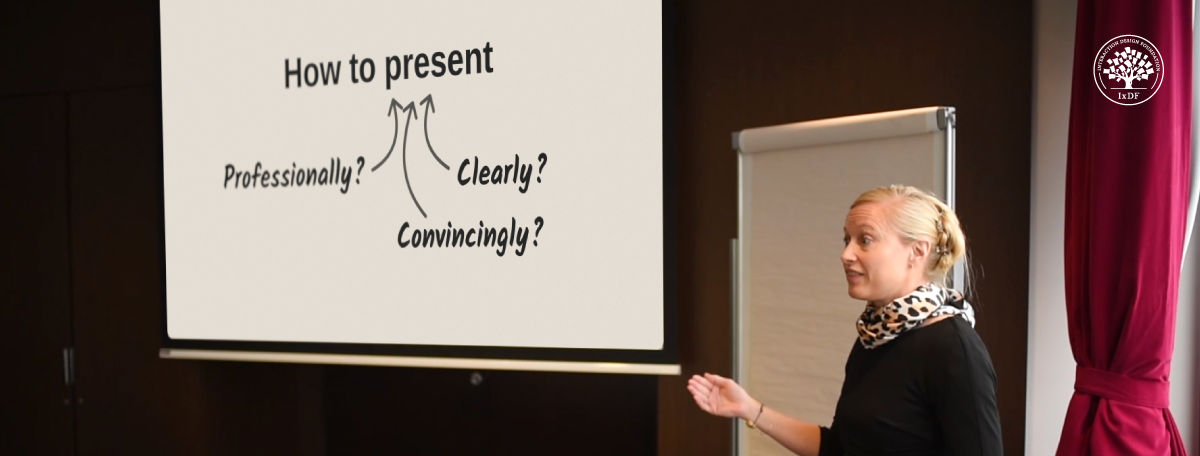
Effective public speaking needn’t be frightening; it’s a skill anyone can learn to present ideas or concepts clearly, professionally, and convincingly to an audience and bring about powerful change a designer can be proud of.
© Interaction Design Foundation, CC BY-SA 4.0
Types of Public Speaking
Public speaking is not one-size-fits-all activity, a fact which even the shiest personalities can take heart from knowing. Each context requires a tailored approach:
One-way presentations are status updates or pitches you give to senior stakeholders. They involve limited interaction and often feature a Q&A (questions and answers) session at the end.
Discover how to pitch effectively to clients in this video with Todd Zaki Warfel, Author, Speaker and Leadership Coach.
Two-way conversations take the form of workshops, design critiques, or user research sessions where discussion and collaboration form central activities.
Online presentations are remote meetings and webinars, where distractions are just one click away. Since the pandemic of the early 2020s and the associated rise in remote work, their “popularity” has skyrocketed. Engagement tools like polls and chats help keep attention during these forms of public speaking.
In-person presentations are probably the most frequently imagined form of public speaking in a design context. When you present in person, you benefit from eye contact and body language, and these situations call for strong presence and confidence, plus the ability to “read” the room to see how well individuals can receive points.
By knowing the difference between, and mastering, these formats, you can adapt to any situation and make your ideas resonate.
.png)
You can build and fine-tune this skill to make presentations more dynamic and outcomes more productive, and successful: the “trick” is engagement.
© Interaction Design Foundation, CC BY-SA 4.0
Overall, public speaking is far more than speech delivery and convincing an audience once or twice in a meeting room; it’s a lifelong skill that shapes how you communicate, influence, and lead. For you, it’s the bridge between great ideas and real-world impact; present with clarity, engage your audience, and build trust and you can become visible enough for your work to get the recognition it deserves.
Nerves can get in the way for anyone, but the good news is that public speaking is not an innate gift but a learnable skill, with clear frameworks and proven techniques. Whether you’re an introvert or extrovert, junior or senior, you can become a confident, persuasive communicator, and prove the worth of important ideas because you make them matter to people who understand why they must matter.
Every meeting, workshop, or project update is an opportunity to practice and improve. Over time, these moments build into a career advantage that sets you apart; not just as a designer, but as a leader who knows what is important, why, and how to ensure others recognize it as such.