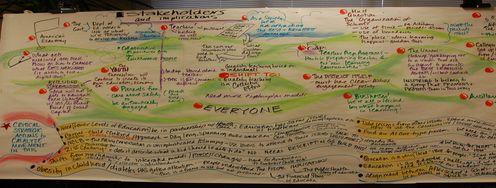
A stakeholder map is a practical, strategic tool that helps you analyze and categorize the people involved in, or affected by, your work. It provides a clear visual overview of who holds influence, who has interest, and how each stakeholder should be engaged.
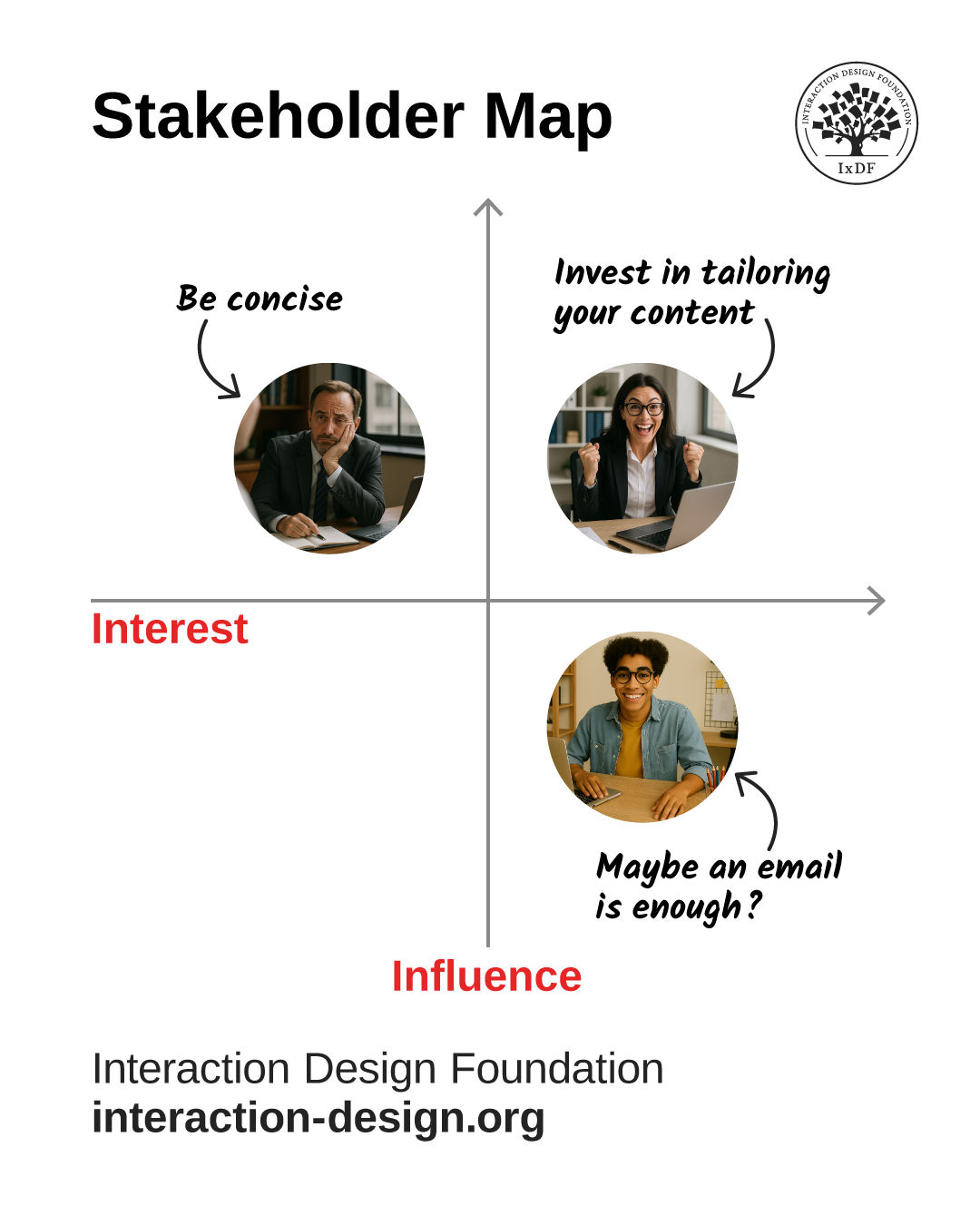
Typically, it’s built as a two-by-two matrix, plotting stakeholders based on:
Influence: How much power they have to affect outcomes.
Interest: How invested they are in the success or direction of the project.
You can use a stakeholder map to tailor your message to the right people in the right way. It enables more focused communication, better collaboration, and smoother decision-making. It’s especially useful when you prepare presentations, pitch ideas, or manage change.
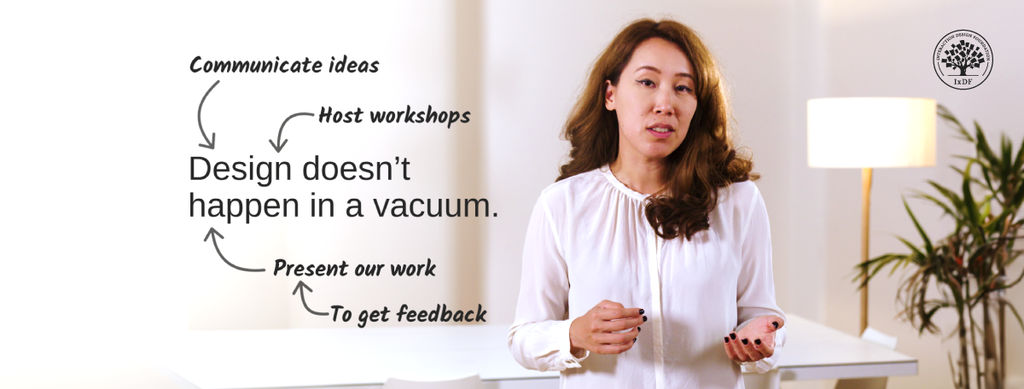
In this video, Morgane Peng, Head of Product Design & AI Transformation at Societe Generale, explains how you can use stakeholder maps in your own work.
Why Stakeholder Mapping Is Critical to Your Project Success
No project succeeds in isolation. Multiple parties—clients, end users, colleagues, executives, and sometimes regulators—can shape the direction and outcome of your work. If you don’t understand and manage their interests, your project risks delays, misalignment, or outright failure.
© Interaction Design Foundation, CC BY-SA 4.0
A stakeholder map gives you a clear picture of the “human landscape” you are working within. It highlights potential champions who can accelerate progress, as well as potential blockers who might resist change. They also reveal influencers who may not be decision-makers but shape the conversation.
When you map these relationships early, you can plan your communication strategies proactively and focus on what matters to each person. This way, you can make decisions that are more likely to gain support and move forward.
The Stakeholder Map Matrix: What to Say, and to Whom
Stakeholder maps use a standard two-axis matrix to guide communication strategies based on a stakeholder’s level of influence and degree of interest. Here’s how to approach each quadrant:
High Influence, Low Interest (Keep satisfied): These individuals may not be deeply involved, but their opinions carry weight. Keep them informed at a high level so they remain supportive and don’t become barriers later.
High Influence, High Interest (Manage closely): These are your key stakeholders. They care deeply and hold power. Engage them regularly, invite their input, and build a strong working relationship. Their support is critical to your success.
Low Influence, Low Interest (Monitor): This group requires minimal effort. You can keep them informed through general project updates, but you don't need to dedicate significant resources to them. Your primary action is simply to monitor them in case their position changes.
Low Influence, High Interest (Keep informed): These people may not control outcomes, but they care about the work. Keeping them informed shows respect, and they can become advocates, allies, or sources of insight.
The Practical Payoff: Use Stakeholder Maps to Save Time and Earn Trust
A stakeholder map is more than just a theoretical exercise; it helps you navigate workplace dynamics with more clarity and confidence. Here’s what they offer:
Strategic communication: It forces you to think about what each person needs from you. Instead of giving a one-size-fits-all presentation, you can provide the right level of detail and context to each group, making your communications more efficient and effective.
Build trust: Addressing individual concerns shows empathy and professionalism. It helps you earn trust and build credibility with decision-makers and collaborators.
Problem-solving: You can spot risks early and identify potential resistance or conflicting goals before they surface in meetings or derail your progress.
Saves time: You invest energy where it counts (on people who influence outcomes) rather than spreading yourself thin trying to involve everyone equally.
Create Your Own Stakeholder Map in 5 Simple Steps
Here’s how to create a stakeholder map that’s practical, easy to maintain, and effective in real work situations, especially when preparing for meetings or presentations.
Gather information
Start with brainstorming sessions, stakeholder interviews, or input from project sponsors. Ask: Who is affected? Who has influence? Who makes decisions?
Prioritize stakeholders
Use the influence-interest model to decide how much time and energy to allocate to each person or group.
Visualize the map
Choose a format that’s easy to update and share—mind maps, quadrant charts, or network diagrams are common options.
Plan engagement strategies
Define how and when to communicate with each stakeholder. Consider their preferred channels and what kind of information they value.
Review and update
Stakeholders’ roles and priorities can change. Keep your map current to reflect shifting dynamics or new stakeholders.
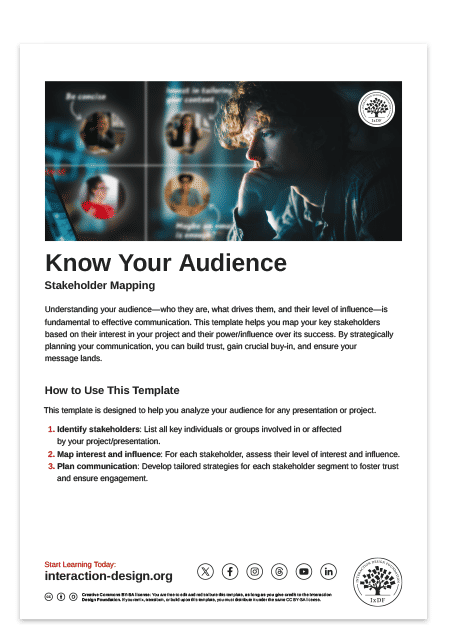
You can use our free stakeholder map template to quickly map out your own project.
The Skill Behind Great Presentations and Stronger Careers
Stakeholder mapping may seem like a behind-the-scenes task, but it’s one of the most valuable tools you can use when preparing to present your ideas. Whether you're pitching to executives, leading a workshop, or updating your team, stakeholder maps make the difference.
When you understand who’s in the room (or behind the decisions), you present with more clarity, relevance, and confidence. You anticipate concerns. You speak each stakeholder’s language. And as a result, you’re more likely to persuade, gain support, and move your work forward.
But the impact goes beyond one presentation. Over time, consistently applying this thinking helps you:
Build stronger working relationships.
Influence more effectively across roles and departments.
Get recognized as someone who thinks strategically, and not just creatively.
Stakeholder mapping is about credibility. It helps you deliver presentations that resonate, decisions that stick, and careers that grow.