Storytelling in UX/UI Design

Your constantly-updated definition of Storytelling in UX/UI Design and collection of videos and articles.
Be a conversation starter: Share this page and inspire others!

2,268 Shares

What is Storytelling in UX/UI Design?

Storytelling in UX/UI (user experience / user interface) design is using the power of narrative to create more intuitive, engaging, and emotionally resonant user experiences, which you shape as coherent narratives. Each interaction (every screen, message, or transition) acts as a chapter to guide users toward their goals. A well-designed product tells a story that feels natural, intuitive, and emotionally resonant, and storytelling is not just about the end product but is an essential ingredient to sprinkle throughout the entire design process.

When you tell a story about a user’s life, goals, obstacles, and how your interface helps them, you make abstract user needs concrete, empathetic, and actionable.

Explore the powers of storytelling you can leverage to compelling levels and captivate audiences of all types, in this video with Ellen Lupton: Designer, Writer, Curator, Educator and Author of Thinking with Type, Graphic Design Thinking, Health Design Thinking, and Extra Bold.

Transcript

Storytelling Helps You Make Better Designs that Resonate

For thousands of years, storytelling has been, and will remain, one of the most powerful ways for humans to relate information to each other and retain it well. In UX (user experience) and UI (user interface) design, storytelling helps you understand the people behind the screen, including their goals, their frustrations, and the daily realities they face. By framing design challenges as narratives with real characters facing real problems, you can step on the path to creating solutions that resonate with the actual lives you want to impact. Storytelling provides fertile ground to introduce personas, too, research-based fictional representations of those real users.

Explore how to bring personas into your design picture as powerful storytelling agents, in this video with William Hudson: User Experience Strategist and Founder of Syntagm Ltd.

Transcript

More specifically, you can enjoy the benefits of storytelling through how:

Empathy Becomes Sharper and Shared

Designers frequently conduct user research and hold user interviews, take surveys, or do usability tests. However, especially with quantitative data with numbers in charts, spreadsheets, and metrics, this raw data tends to sit flat and “lifeless”; it takes something else to evoke empathy with users. A well-told user story helps you and your team feel what the user goes through: their frustrations, hopes, daily routines, and more. That emotional connection is like a sparkplug that can fire up a powerful engine and lead to more human-centered decisions.

A powerful benefit of storytelling done well is how it causes everyone (developers, product managers, marketers, and others) to hear the same story, which is key to how empathy spreads across the team. Rather than siloed assumptions (“I think users want X”), you all can refer to a shared narrative.

Discover what empathy can do in design and why it’s a vital ingredient for your brand, in this video.

Transcript

You Center Design on Meaningful Problems

Since storytelling forces you to look deep and gain deeper insight into users’ emotional and behavioral motivations, you’ll find that all-important “what” element to accompany the “who.” You define conflict: namely, what the user is struggling with, that tricky gap between their current reality and desired future. That conflict highlights real, meaningful problems to solve rather than superficial features.

With storytelling, you get to sharpen your game so you’re on point, and you avoid designing for features that look cool but don’t matter. You ensure each interface decision ties back to a user’s real struggle or goal, something they can really apply in their user behavior to solve their real-world user needs.

Storytelling Permits Better Alignment and Less Rework

When your team clearly understands the user’s story and how your proposed design serves it, alignment happens earlier and you can build more effective solutions like digital products. It’s vital to communicate value clearly (inside your design team and externally) to minimize miscommunication and back-and-forth, as everyone can see, for example, how a feature fits into the narrative of solving user challenges. That leads to fewer pivots, fewer wasted prototypes, and smoother stakeholder buy-in.

Peak into the power of prototyping for essential tips and insights into a powerful design technique, in this video with Alan Dix: Author of the bestselling book “Human-Computer Interaction” and Director of the Computational Foundry at Swansea University.

Transcript

Storytelling Helps Make Memorable Experiences and Emotional Resonance

Humans remember stories far more easily than lists or specs; for example, facts and figures can’t make themselves relatable without you to frame and shape them into something meaningful for the target audience. When you embed narrative principles, your design can feel like a story unfolding because it speaks to them and their needs. When users feel emotionally connected, they engage more, stick around longer, and become advocates and even loyal followers of your brand.

Storytelling Helps Secure Stronger Communication and Marketing

Later in the project lifecycle, you’ll need to pitch or market your product, especially when giving UX presentations to stakeholders. You already have the story of how your design changes a user’s life. That narrative can now become your messaging: “Meet Jane… here’s how she struggled… now she succeeds with our app.” That dovetails with marketing, onboarding copy, and content strategy, another storytelling-related win you can enjoy.

Find out how you can use effective communication to get stakeholders on your side so they can support your ideas more readily, in this video with Morgane Peng, Managing Director, Global Head of Product Design and AI Transformation.     

Transcript
  

How to Use Storytelling in the UX Design Process, Step by Step

Storytelling isn’t something you tack on at the end of design; it runs through every stage and needs to start early on. To see it in action, try this process step by step with Clara, a user persona built from user research. “Clara” is a composite character who is based on recurring insights from interviews with, in this example, several freelancers. By blending shared patterns into one representative figure, Clara becomes easier for a team to empathize with and remember.

Here’s how her story helps you weave narrative into the design process:

1. Conduct User Research → Get Raw Insights → Find Narrative Seeds

Let’s say you interview a dozen freelancers. Across conversations, you hear:

  • “I have to reschedule tasks almost every day.”

  • “I’m always toggling between five different apps to get things done.”

  • “I feel guilty when I miss family time because of deadlines; as a freelancer, I was hoping to be ‘freer’ and living under my own rules.”

These are raw data points; but they’re also narrative seeds. They highlight motivations (work-life balance), tensions (too many tools, constant rescheduling), and potential turning points (a system that adapts to real life).

2. Create a Persona with Character and Context

From those patterns, you might create Clara the Persona:

  • Fictional but representative: Clara is a made-up character, a persona, but she embodies what you learned from multiple freelancers.

  • Profile: 32, freelance graphic designer, and single parent to an 8-year-old son.

  • Goals: Finish projects on time and retain her freedom away from what she terms “corporate control” and “HR-dictated hours” without sacrificing family life.

  • Pain points: Overlapping deadlines, juggling multiple apps, burnout, niggling doubts about the true value of “freedom” as a freelancer.

  • Emotional arc: Starts stressed and reactive → hopes for more control → feels calmer when routines hold and can believe in herself more.

When you personify the data, you give your team a protagonist to design for. Clara isn’t “User Group B”; she’s someone with a name, face, and story, and a person worth helping enjoy a better life.

3. Use Journey Mapping / Storyboarding

You map Clara’s week as a journey, almost like a plotline for a good story:

  • Morning: Prepares her son for school, checks emails on her phone.

  • Midday: Works across multiple apps, constantly switching contexts.

  • Afternoon: Gets urgent client requests while she’s already overbooked.

  • Evening: Works late after her son goes to bed, exhausted.

At each of these stages, you mark conflict points: double-bookings, last-minute changes, and wasted effort switching apps. You sketch a storyboard: Clara is stressed at her laptop, then feels relieved when a system auto-adjusts her calendar. These visuals make her struggles, and her future transformation, tangible as a happy ending worth your efforts to help realize for her.

Explore how journey mapping helps you and your design ideas get to where you want to go, in our video.

Transcript

4. Define the Narrative Arc (Beginning, Middle, End)

In our example, Clara’s story follows a classic arc:

  • Beginning: She’s juggling chaos with no clear overview.

  • Middle: She experiments with different tools, but they overwhelm her further.

  • End: Your design simplifies her schedule, gives her back evenings, restores her belief in herself as a freelancer and mother, and lowers her stress.

This arc becomes the backbone of your design decision; in the case of this persona, every choice should move Clara from “overwhelmed” to “in control.”

5. Integrate Conflict and Transformation

Note how conflict drives the story. For Clara, conflict is the gap between her desire for balance and the messy reality of tools and client demands. It’s a painful gap, one that challenges her self-belief and wears her down, almost into a state of despair.

Your app in this example acts as the guide, not the hero. Clara is the hero. The app enables her transformation: fewer reschedules, smoother weeks, calmer evenings, and far more security in the knowledge that she can be a good mother, an effective freelancer, and enjoy her life more as an individual, too, without burnout.

6. Embed Storytelling in Design Decisions

At each design choice, you test it against Clara’s narrative:

  • Flows: Does this idea or feature help her quickly see her schedule, or does it add clutter?

  • Content: Does the copy you include empathize with her (“Here’s your week simplified”) or alienate her with jargon?

  • Visuals: Do calming colors and clean layouts reinforce her story of balance?

Anything that doesn’t serve her journey needs to get cut out.

7. Prototype and Test the Narrative Path

You create a prototype and frame the test in Clara’s context. It could be a low-fidelity one where you use paper and card to simulate a proposed user interface, for example.

“Imagine you’re Clara. It’s Monday; you have three projects due this week and your son’s school project to check on top. Show me how you’d handle this in the app.”

Then, ask the users you test your prototype with to narrate their actions and think out loud:

  • “Oh good; I can see overlaps right away.”

  • “Wait; I thought dragging a task here would auto-adjust timing.”

These narrations reveal whether the intended story holds up in practice. If the flow doesn’t match expectations, you revise both design and narrative.

8. Use Storytelling in Stakeholder Presentations and Launch

When you pitch your design, you don’t start with UI screens; you start with Clara’s story:

  • Introduce the persona: “Meet Clara. She’s talented, but her work-life balance is slipping away and eroding her energy levels and self-esteem.”

  • Show her pain points and frustrations.

  • Walk through her transformation with your design.

  • End with resolution: Clara meets deadlines and has family dinners stress-free and starts to enjoy life much better.

Your storytelling approach here can make it so that stakeholders don’t just see features; they’ll see impact and become more likely to believe you can achieve great results.

Use Storytelling in Presentations to Shine

Storytelling isn’t just a design tool; it’s one of the most effective presentation strategies you can use, too. Whether you’re pitching a product, updating stakeholders, or presenting a portfolio case study, narrative frameworks like Freytag’s Pyramid and the STAR method can transform your delivery from a dry report into a story people remember and act on.
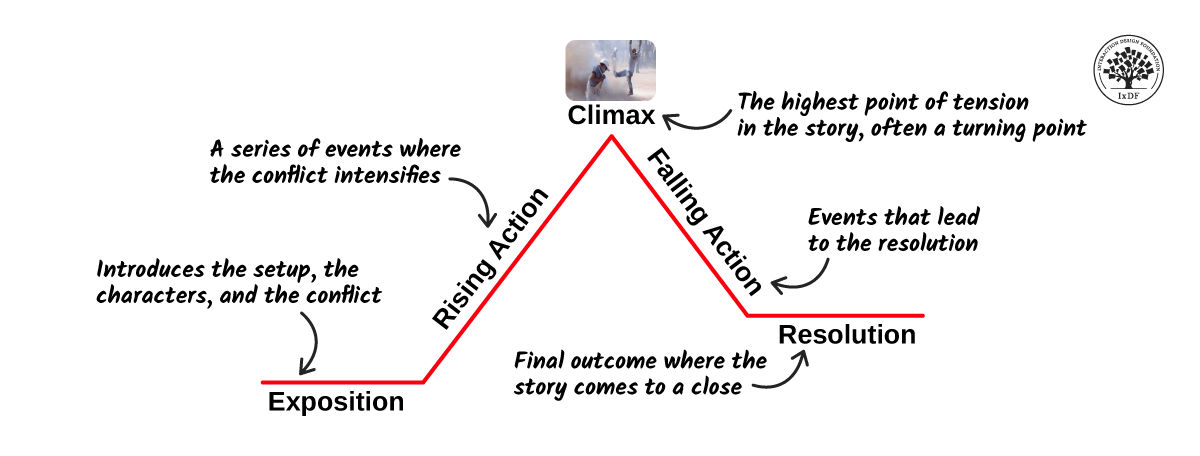
A diagram showing Freytag's Pyramid with its sequence of Exposition, Rising Action, Climax, Falling Action, and Resolution.

Use Freytag’s Pyramid to build up to an engaging climax and then take things neatly down to a satisfying resolution.

© Interaction Design Foundation, CC BY-SA 4.0

Use storytelling well when you present and you can:

Keep Attention Locked In

Stories hold attention far longer than bullet points can. Audiences can follow a narrative thread which, told well, can captivate them and compel them to want to hear how things end.

Boost Retention

Points stick better in audience members’ minds when they feel the impact at the human level, real results in the real world where humans buy and assess digital products like apps. Facts tend to fade, but a narrative can stick in the memory at that all-important human level.

Create Emotional Connection

Data appeals to logic, but stories engage feelings and prove you’re human (and can relate well to other human beings).

Build Trust and Influence

Storytelling humanizes your work, making you relatable and credible. As a professional you want to come across as competent and caring: those two ingredients of knowing your material and being a decent human being that come together to help you land powerful messages successfully with stakeholders.

Boost the levels of trust you inspire with your audience, through trust frameworks, in this video with Morgane Peng.

Transcript

Position Yourself as a Leader

Structured storytelling shows confidence and clarity, elevating your professional presence above a likeable and knowledgeable specialist to coming across as a true leader who deserves that promotion soon.

Use Proven Approaches

In presentations, structure matters as much as story since, without it, even strong content can fall flat on its face. Two approaches in particular can help you resonate with your target audience and keep them on board with your stories and ideas.

Freytag’s Pyramid

This classic five-part arc works when you want to take your audience on a journey, and it’s perfect for case studies, portfolios, and workshops. However, business stakeholders may not want to sit for an extended story, preferring something more “bottom-line”-oriented.

  1. Exposition: Set the context.

  1. Rising action: Show the problem intensifying.

  1. Climax: Present the turning point decision.

  1. Falling action: Explain the changes that occurred.

  1. Resolution: Share the outcome and impact.

For example, say you’re working on the redesign of a mobile banking app: the exposition sets up low onboarding rates, rising action shows growing frustration, the climax is the decision to fully redesign, the falling action describes smoother testing, and the resolution finds you sharing an increased conversion rate. Freytag builds the emotional resonance and suspense you can deliver through a strong story.

STAR Method (Situation, Task, Action, Result)

This one is best for executive updates, interviews, and status reports, STAR gets straight to the point, and hence why it’s great for when you’re facing time-starved business stakeholders. STAR stands for:

  • Situation: Define the challenge.

  • Task: Clarify your role.

  • Action: Detail the steps taken.

  • Result: Share measurable outcomes.

For example: “Our onboarding completion rate was only 55% (situation). As lead designer, I owned the redesign (task). I streamlined the flow and added progress cues (action). Post-launch, completion jumped 40% and tickets dropped by half (result).” Note how STAR delivers crisp clarity, a neat story that translates quickly and effectively.
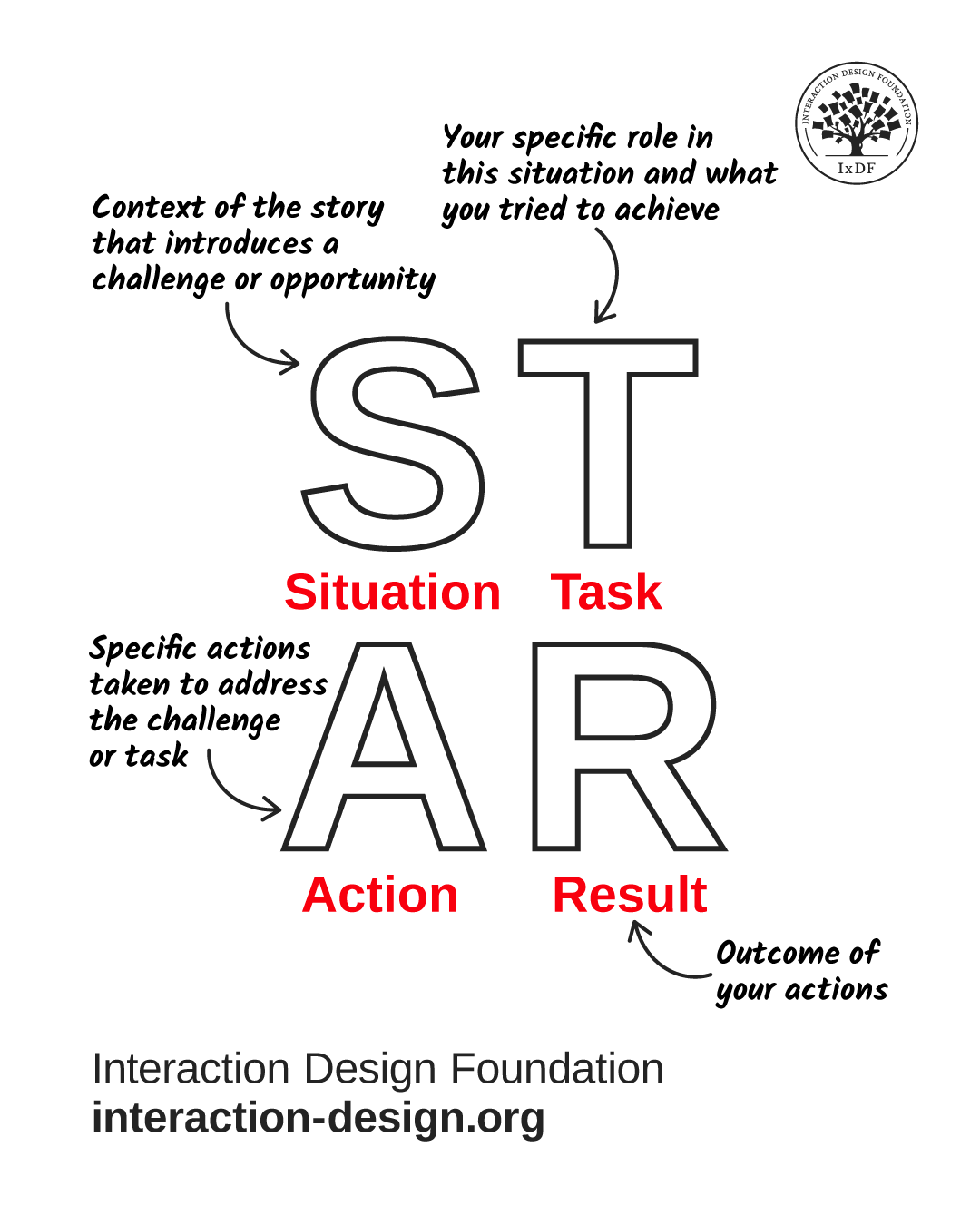
A diagram showing the STAR approach.

© Interaction Design Foundation, CC BY-SA 4.0

Beyond frameworks, remember that, aside from the heroes in the storytelling, you’re the “star” of the show. So, you can shine in storytelling presentations when you focus on delivery:

  • Start with a hook: Anecdote, question, statistic, or scenario, perhaps something like: “Imagine you’ve just arrived in a foreign country, and your credit cards don’t work, you don’t have enough cash, and you turn to your mobile phone as a last resort.”

  • Make it relatable with characters: Personas, users, stakeholders, or your team.

  • Use conflict and resolution: Frame a problem-solution journey that resonates with your target audience.

  • Blend data with narrative: Marry hard facts with human stories; facts and figures might look dramatic, but you can bring it home to your audience with why they’re dramatic.

  • Adapt to context: Consider using micro-stories for quick updates, and full arcs for high-stakes pitches.

  • Get the delivery right: Voice, pauses, tone, and body language reinforce your message. Everyone can get nervous before and when they’re presenting; that’s natural. Try breathing exercises to stay calm, rehearse your presentation, and record how you look in your nonverbal communication.

  • Use audience awareness: Tailor depth and detail to who’s listening.

Explore how to help win over an audience when you use active listening to monitor and keep them engaged, in this video with Morgane Peng.

Transcript

Overall, storytelling is a time-tested technique that accesses minds and hearts for good reason. Ancient humans knew that. The ancient Greek philosopher Aristotle “encoded” the “rules” of storytelling over two thousand years ago into a format that still speaks to humans, since it’s timeless. And people from all walks of life relate to stories whether they read them in fiction, watch movies and documentaries, or come to listen to presenters who’ll connect with them. For no small reason, storytelling gives you opportunities to connect, persuade, and inspire action.

Think of yourself as a narrator of change who offers an intervention that brings resolution. What makes a good UX story? It takes effective visuals to help set the stage and mood, for example, and complement the user journey narrative. It also needs a theme where your story has an underlying message or value, and let’s not forget memorable hooks to set a spectacle of standout “plot twists” and delightful moments.

UX designers who use storytelling effectively guide users from friction to flow. They take characters in specific situations through the barriers that bring conflict, and intervene with solutions that help these people realize goals and enjoy resolutions that really are happy endings.

In presentations, you guide your audience from confusion to clarity, from skepticism to buy-in, using tales that work because you don’t just explain something but make people feel it, remember it, and support it. When you master storytelling in both contexts, you don’t just inform; you inspire action, alignment, and lasting influence, and a happy ending for your own story as a professional who cares to make an impact.

Questions About Storytelling?
We've Got Answers!

Why should UX designers use storytelling?

UX (user experience) designers should use storytelling because it turns abstract research into relatable human experiences. Instead of presenting raw data, you tell stories that highlight user frustrations, goals, and transformations. Storytelling helps teams align around real needs, not assumptions. It also makes design choices easier to justify by showing the emotional and functional impact on users.

Stories improve empathy across stakeholders, such as engineers, marketers, executives, by painting a vivid picture of what users face. This shared understanding reduces rework, builds trust, and makes the value of design clearer. When you weave storytelling into UX practice, you bridge the gap between data and action, and ensure that design decisions feel meaningful, memorable, and connected to actual user lives in the real world.

Find out how to harness one of the most powerful forces in any industry, in our article Trust: Building the Bridge to Our Users.  

How do personas connect to storytelling?

Personas connect to storytelling by acting as the characters in your UX narrative. Instead of being abstract profiles, personas become relatable protagonists with goals, fears, and motivations. When you tell a story about “Clara, a freelance designer juggling deadlines and childcare,” for example, stakeholders immediately understand her struggles in a way that raw demographics can’t capture.

Storytelling gives personas depth, such as their daily routines, pain points, and emotional arcs, so the design process has a human face. This makes decisions far less about “a generic user” and more about helping a character achieve something important. Personas help keep stories consistent across research, design, and testing, too. When everyone follows the same protagonist’s journey, teams align better and focus on solving meaningful problems that drive real impact.

Peek at personas to get an in-depth understanding of how they can help catapult your design efforts into design wins.

How do I use storytelling in journey maps?

You use storytelling in journey maps by treating each stage of the map as a “scene” in your user’s story. Rather than just plot actions, you weave in what the user feels, thinks, and struggles with at each step. This creates a narrative flow: introduction, conflict, and resolution. For example, a journey map might show how a user starts with excitement, encounters friction during onboarding, and finds relief after completing a task.

By adding quotes, emotions, and decision moments, you help teams visualize the user’s experience more vividly. And by framing the journey as a story arc, you highlight conflict points and design opportunities. This narrative approach turns an otherwise “flat,” static diagram into a living story that teams can empathize with and act on.

Explore how to chart a successful design course using a customer journey map.

How do I use visuals in UX storytelling?

Visuals make UX storytelling more engaging and easier to understand. You can use storyboards, wireframes, and prototypes to illustrate the steps users take, almost like comic strips or film frames. For example, a sketch of a frustrated user abandoning a checkout page communicates more than a spreadsheet of drop-off rates could.

Journey maps with icons, color coding, or emotional markers can highlight conflict points clearly. Even simple infographics can turn complex research into a narrative snapshot.

Visuals help when presenting to stakeholders with limited time, too, as they can instantly grasp the user’s story without reading paragraphs of text. What is key is to keep visuals purposeful: every diagram, screenshot, or illustration should move the story forward and reinforce the emotional journey.

Discover how storyboards can help spring a user’s journey into a higher plane and help secure more buy-in from stakeholders and more.

Can UX storytelling help with onboarding?

Yes, UX storytelling can make onboarding much more intuitive and engaging. Onboarding is the first chapter in your user’s story, and if it feels confusing or overwhelming, the story ends before it begins. Storytelling guides users step by step, framing the process as a journey rather than a checklist.

For example, instead of asking for all personal details upfront, you introduce information gradually, matching the story flow. Microcopy can act like dialogue from a helpful guide, encouraging users and easing anxiety. Progress indicators reinforce momentum, showing the “plot” advancing. Design onboarding as a narrative and you’ll help users feel supported, not tested. This approach increases completion rates, reduces drop-offs, and builds early trust between the user and your product.

Enjoy our Master Class How to Attract Users Through Great Onboarding Experiences with Wes Bush, Founder and CEO, Product-Led Institute and Author, Product-Led Growth.

Does storytelling work with data-heavy UX projects?

Yes, storytelling can make data-heavy UX projects digestible and engaging. Large datasets often overwhelm stakeholders, but when you embed insights in a story, the meaning becomes clear. For example, instead of saying “40% drop-off,” frame it as: “Maria tries to sign up but abandons the process after three confusing forms. She represents thousands of users who quit at the same step.”

Note that storytelling doesn’t replace the data; it contextualizes it. You still use charts and analytics, but you anchor them in a narrative arc with characters, conflict, and resolution. This balance gives stakeholders both the credibility of numbers and the empathy of stories, and it’s especially powerful in presentations, where narrative framing ensures data leads to action rather than confusion.

Explore how to make the most of storytelling and to great effect in a project, in our article The Power of Stories in Building Empathy.

How do I test if my UX story works?

You test your UX story by validating whether real users follow and relate to the journey you’ve crafted. Run scenario-based usability tests where participants take on the role of your persona and narrate their experience. Ask them to describe their feelings, expectations, and frustrations as they interact with your design.

If their emotional journey matches the intended story arc, your narrative works. If not, you’ll want to adjust the story or the design to align better. You can test with stakeholders, too: present your user story and see if they recall the conflict and resolution clearly afterward. A good UX story is repeatable; different audiences should retell the essence of the journey consistently, which shows your narrative resonates.

Grab a better idea of testing and where it can take your designs, in our article Test Your Prototypes: How to Gather Feedback and Maximize Learning.

How do I start a presentation with storytelling?

Start a presentation with a hook that feels like the opening of a good story. You can use a short anecdote, a striking statistic, a bold question, or a scenario that places the audience in the user’s shoes. For example: “Imagine you’re 19 years old, trying to open a bank account on your phone. Before you even see the benefits, you’re asked to upload a passport photo and fill out 12 fields. Would you hang around and ‘comply’?”

This type of opening grabs attention and sets the stage for your narrative arc. By starting with storytelling, you turn passive listeners into engaged participants who want to know how the “plot” unfolds, and how your design or idea resolves the conflict.

Get more out of your presentations, and more from more interested attendees, with a wealth of helpful points to appreciate your value, in our article How to Communicate Clearly and Gain People’s Interest.  

How do I adapt storytelling for executives?

To adapt storytelling for executives, keep it concise, structured, and outcome-driven. Executives rarely have time for long narratives, so use the STAR method (Situation, Task, Action, Result) to get straight to impact and the business stuff. Focus on high-level conflict and resolution: what the problem cost the business, how your team intervened, and what measurable results followed.

Use visuals like dashboards or before-and-after comparisons instead of lengthy explanations. Frame your story around business value, such as improved revenue, reduced churn, or higher satisfaction, and not just design details. Tell stories that align with company goals and you can capture attention and show relevance. Executives don’t just want to hear the story of the user; they want to hear how it drives outcomes they care about.

Look out for these potential presentation pitfalls in this video with Morgane Peng, Managing Director, Global Head of Product Design and AI Transformation.    

Transcript

How do presenter styles affect storytelling?

Presenter styles are like roles you can adopt to shape how your story lands with an audience. As a Storyteller, you focus on emotional resonance, weaving narratives that stick. As a Demonstrator, you “show, don’t tell,” letting live demos or prototypes tell the story. As an Instructor, you break complex ideas into simple, step-by-step explanations, ideal for teaching methods or research outcomes. As a Collaborator, you involve your audience in shaping the story, turning presentations into conversations.

To choose the right style, it will depend on your audience and goals. For example, executives may value the Instructor’s clarity, while design teams may respond better to the Collaborator’s co-creation. Blending styles makes you adaptable, engaging, and better able to tailor stories to different professional contexts.

Explore how to leverage emotional intelligence to boost the impact of how you tell stories that influence, in this video with Morgane Peng.

Transcript

How do I use Freytag’s Pyramid in a presentation?

You use Freytag’s Pyramid in a presentation by structuring your content into five parts: exposition, rising action, climax, falling action, and resolution. Start with exposition by introducing context and key players: users, business, or problem. Then, move into rising action by showing how the problem intensifies and becomes more urgent. Then, present the climax as the critical turning point, such as the moment your team decided on a bold redesign.

Then, use falling action to show the steps taken and improvements observed. End with resolution by highlighting measurable results and positive change. Done well, this narrative arc builds suspense, keeps audiences engaged, and helps them remember your story as a good one. It’s especially effective for case studies and portfolio walkthroughs where you want to build empathy and impact.

Get a solid grasp of how to come across better in UX presentations, design team meetings, and more, in our article What Soft Skills Does a UX Designer Need?.  

How do I use the STAR method in a presentation?

You use the STAR method by structuring your story into four concise parts: Situation, Task, Action, and Result. Start with the situation: define the challenge or opportunity. Then, clarify your task by explaining your specific role and responsibilities. Then, describe the action you took, detailing the key steps and reasoning behind them. End with the result, showing measurable outcomes such as increased conversions, reduced churn, or improved satisfaction.

STAR works well in interviews, stakeholder updates, and executive presentations because it eliminates fluff and focuses on clarity and bottom-line concerns. Unlike Freytag’s Pyramid, STAR doesn’t build dramatic tension; it delivers straightforward cause-and-effect storytelling. So, use it when your audience values efficiency and results more than narrative suspense.

Get a clearer idea of the perspective many stakeholders will have by reading up on UX management.

What are some helpful resources about storytelling for UX designers and presenters?

Nielsen Norman Group. (2024, March 8). Storytelling in UX Work: Study Guide. Nielsen Norman Group. https://www.nngroup.com/articles/storytelling-study-guide/

This NN/g study guide compiles research-backed articles and videos about using storytelling in design. It covers the basics of why stories work, how to apply narrative to UX research, and how to use storytelling in presentations and stakeholder communication. The resource is structured like a curriculum, linking to foundational and advanced materials in one place. Its importance lies in offering designers a curated path: instead of piecing together scattered articles, readers get a clear roadmap for learning storytelling as a skill. NN/g’s authority in UX research makes this guide a highly reliable starting point for practitioners at any level.


Nguyen, C. (2023, May 22). The Power of Storytelling in UX Design: A Comprehensive Guide. https://uxplaybook.org/articles/guide-to-ux-storytelling

This guide introduces storytelling as a practical tool for UX designers to communicate user needs more effectively. It highlights how narratives transform raw data into stories that stakeholders can follow, creating empathy and shared understanding. The article provides practical tips for weaving story techniques into research, personas, and journey mapping. This work is important because it frames storytelling not as an “extra” but as a core skill for UX practitioners who want their design insights to resonate across teams and influence decisions.

Patidar, P. (2025, March 18). The power of storytelling in UX: How narratives elevate user engagement. Kaarwan. https://www.kaarwan.com/blog/ui-ux-design/the-power-of-storytelling-in-ux-how-narratives-elevate-user-engagement?id=1618
This article explores how storytelling enhances user engagement by providing emotional depth to digital products. It emphasizes how narratives guide users through interactions, making experiences more meaningful and memorable. The piece explains storytelling’s role in creating brand identity and building trust between product and user. Its importance lies in connecting storytelling to concrete engagement outcomes, showing that design decisions rooted in narrative can improve usability and emotional impact simultaneously. This makes it valuable for both aspiring and professional UX designers.

Inchauste, F. (2010, January 12). Better user experience with storytelling, part one. Smashing Magazine.
https://www.smashingmagazine.com/2010/01/better-user-experience-using-storytelling-part-one/

In this widely cited article, Francisco Inchauste explores how storytelling principles, characters, conflict, and resolution, translate into UX design practices. He explains how narratives help designers craft more engaging and empathetic digital experiences. The article is important because it introduced many in the UX community to storytelling as a structured method for design, bridging narrative theory with practical application. As one of the early mainstream discussions on the topic, it helped set the stage for the adoption of storytelling in UX case studies, personas, and journey mapping.


Valius, O. (n.d.). UX storytelling: How to craft experiences that resonate. Qubstudio.
https://qubstudio.com/blog/ux-storytelling/
Qubstudio’s article presents UX storytelling as a design method that humanizes user journeys. It explains how stories help designers communicate user challenges and product value more effectively. The piece covers practical methods such as creating personas, building narrative arcs, and integrating user emotions into design decisions. Its importance lies in its balance of theory and application, offering accessible entry points for both beginners and professionals. As an agency-produced resource, it also connects storytelling with business value, making it a practical guide for client-facing UX teams.

Quesenbery, W., & Brooks, K. (2010). Storytelling for User Experience: Crafting Stories for Better Design. Rosenfeld Media.
This book is the foundational text on UX storytelling. Quesenbery and Brooks show how stories make user research tangible, communicate insights, and guide design decisions. They outline methods like scenarios, storyboards, and personas, providing real examples from practice. The book is important because it established storytelling as a legitimate, structured practice in UX, moving it from a “soft skill” into a recognized design method. It remains one of the most cited works in the field and is recommended reading for UX designers at all levels.

How do I use storytelling in UX case studies?

Storytelling turns UX case studies from reports into compelling narratives. So, use a clear structure: beginning (the problem), middle (your process), and end (the results).

Introduce the “characters” (users and their struggles) so readers empathize with their challenges. Then build tension by showing how the problem worsened or blocked success. Highlight the turning point where you proposed or tested solutions.

Last, but not least, resolve the story by presenting outcomes, supported by data and testimonials. You can enhance the narrative with visuals such as before-and-after screenshots, sketches, or graphs. This approach makes your portfolio or report memorable as it reads like a human-centered journey instead of a technical summary. Recruiters and stakeholders walk away remembering your story, not just your wireframes, for example.

Get a firmer grasp of what UX case studies can do for you and your portfolio.

Earn a Gift Earn a Gift, Answer a Short Quiz!

1
2
3
4
1
2
3
4
Question 1
Question 2
Question 3
Get Your Gift
Interaction Design Foundation logo

Question 1

What is a key purpose of storytelling in UX design?

1 point towards your gift

  • To explain technical aspects to developers.
  • To create an emotional connection between users and the design.
  • To test the usability of a product.
Interaction Design Foundation logo

Question 2

How does storytelling help during the design process?

1 point towards your gift

  • It improves the aesthetic design of the product.
  • It ensures all design decisions are focused on user needs.
  • It speeds up the development process.
Interaction Design Foundation logo

Question 3

Why is creating personas important in storytelling for UX design?

1 point towards your gift

  • Personas help to represent user insights and needs.
  • Personas replace the need for user research.
  • Personas add complexity to the design process.

Learn More About Storytelling in UX/UI Design

Make learning as easy as watching Netflix: Learn more about Storytelling by taking the online IxDF Course Interaction Design for Usability.

Why? Because design skills make you valuable. In any job. Any industry.

In This Course, You'll

  • Get excited about designing products, services, and experiences people love. Interaction Design for Usability improves careers and transforms your life and the lives of the people you serve. Every tap, click, and swipe matters. Whether you design websites, apps, or physical products, you'll build trust, loyalty, and satisfaction. It's easy because you already have transferable skills like empathy, logical thinking, and problem-solving. As AI becomes part of how products are built, you stay in demand when you understand how people actually interact with interfaces and what makes interactions feel clear and predictable. These timeless human-centered interaction design skills help you turn AI from a tool into your superpower to ensure that faster production still leads to usable, ethical, and meaningful outcomes for real people.

  • Make yourself invaluable with design skills that save time, reduce costs, and create experiences people value. Did you know companies prioritizing usability achieve greater loyalty, less churn, and better Return on Investment (ROI)? Create work you're proud of when users praise your products for usability, accessibility, and elegance. Whether you use Agile workflows, design intuitive interfaces, manage products, develop content, or optimize customer experiences, these skills benefit any industry—including tech, healthcare, finance, education, and retail.

  • Gain confidence and credibility as you master the usability frameworks behind the world's most beloved designs—all in bite-sized, easy-to-follow lessons. You'll learn step-by-step techniques like card sorting, heuristic evaluation, and paper prototyping. No matter your background, you'll easily master Interaction Design for Usability. With clear guidance and real-world examples, you'll apply your skills immediately. Understand the psychology of persuasion and confidently advocate for usability within cross-functional teams. Get ready to make products better for people, businesses, and society, and make a meaningful impact in your industry. If you want more meaning, more impact, and greater earning potential, this course is perfect for you. 

It's Easy to Fast-Track Your Career with the World's Best Experts

Master complex skills effortlessly with proven best practices and toolkits directly from the world's top design experts. Meet your expert for this course:

  • William Hudson: User Experience Strategist and Founder of Syntagm.

Get an Industry-Recognized IxDF Course Certificate

Increase your credibility, salary potential and job opportunities by showing credible evidence of your skills.

IxDF Course Certificates set the industry gold standard. Add them to your LinkedIn profile, resumé, and job applications.

Course Certificate Example

Be in distinguished company, alongside industry leaders who train their teams with the IxDF and trust IxDF Course Certificates.

Our clients: IBM, HP, Adobe, GE, Accenture, Allianz, Phillips, Deezer, Capgemin, Mcafee, SAP, Telenor, Cigna, British Parliament, State of New York

All Free IxDF Articles on Storytelling in UX/UI Design

Read full article
Aristotle on Storytelling in User Experience - Article hero image
Interaction Design Foundation logo

Aristotle on Storytelling in User Experience

The classical Greek philosopher Aristotle (384-322 b.c.e.) made many groundbreaking discoveries about the way people interact, masterfully breaking down a phenomenon such as public speaking into its constituent parts. Aside from his famous three appeals (logos, pathos, and ethos—the fundaments of an

Social shares
643
Published
Read Article
Read full article
The Persuasion Triad — Aristotle Still Teaches - Article hero image
Interaction Design Foundation logo

The Persuasion Triad — Aristotle Still Teaches

The Greek philosopher Aristotle (384-322 b.c.e.) classified properties of items and concepts in the known universe. One of his most fundamental discoveries was the composition of persuasive speaking. Although Aristotle identified the “three appeals” that make it up 23 centuries ago, when the known u

Social shares
971
Published
Read Article
Read full article
The Power of Stories in Building Empathy - Article hero image
Interaction Design Foundation logo

The Power of Stories in Building Empathy

Storytelling plays a huge role in User Experience design and in the Design Thinking process. Storytelling creates a compelling narrative around the people we’re designing for so that we as designers can develop a deep and emotional understanding of their motivations and needs. Stories have the abili

Social shares
779
Published
Read Article
Read full article
Methods to Help You Define Synthesise and Make Sense in Your Research - Article hero image
Interaction Design Foundation logo

Methods to Help You Define Synthesise and Make Sense in Your Research

So you’ve got piles of data gathered from the inspiring empathy research activities you’ve undertaken, and you’re blankly staring at the data thinking, “Where to from here …?” and “What do I do with all this information?” It’s time to bring all the research you’ve collected together and make sense o

Social shares
821
Published
Read Article
Read full article
Test Your Prototypes: How to Gather Feedback and Maximize Learning - Article hero image
Interaction Design Foundation logo

Test Your Prototypes: How to Gather Feedback and Maximize Learning

Once you’ve built your prototypes, it’s time to gather feedback from your users. It’s essential for you to optimize how you gather feedback, because you not only save time and resources but also learn more from your prototypes and test sessions. So, to help you maximize what you can learn from your

Social shares
1.1k
Published
Read Article
Read full article
The Use of Story and Emotions in Gamification - Article hero image
Interaction Design Foundation logo

The Use of Story and Emotions in Gamification

Gamification projects can benefit from storytelling features; these features can help arouse emotional connections with players. They can enhance the player experience and improve the longevity and fun factor of the gamified features. Let’s take a closer look at how that might work, even if you don’

Social shares
683
Published
Read Article

The Power of Stories in Building Empathy

The Power of Stories in Building Empathy

Storytelling plays a huge role in User Experience design and in the Design Thinking process. Storytelling creates a compelling narrative around the people we’re designing for so that we as designers can develop a deep and emotional understanding of their motivations and needs. Stories have the ability to form a common thread throughout a project, so team members can stay focussed and inspired. Stories are a great way to infuse empathy into your design project, and can be extremely useful for design thinkers. Here we’ll tell you about the elements of good storytelling, as they were taught by Aristotle, and we’ll go into the various design methods you can employ to enable stories to be a part of your design project.

Tim Brown, CEO of international design and innovation firm IDEO, advocates the use of stories to enhance a design thinking project:

“It is essential that storytelling begins early in the life of a project and be woven into every aspect of the innovation effort. It has been common practice for design teams to bring writers in at the end to document a project once it has been completed. Increasingly they are building them into the design team from day one to help move the story along in real time.”
– Tim Brown, Change by Design

It is no wonder that many of the ethnographic research methods which design thinkers use in the first stage of the Design Thinking process, the “Empathise” stage, involve some form of storytelling. To understand the true power of stories and why they teach us so much about the people we study, we can turn to the ancient teacher of storytelling, Aristotle.

Aristotle’s 7 Elements of Good Storytelling

Author/Copyright holder: Giovanni Dall’Orto. Copyright terms and licence: Free to use.

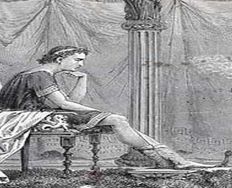
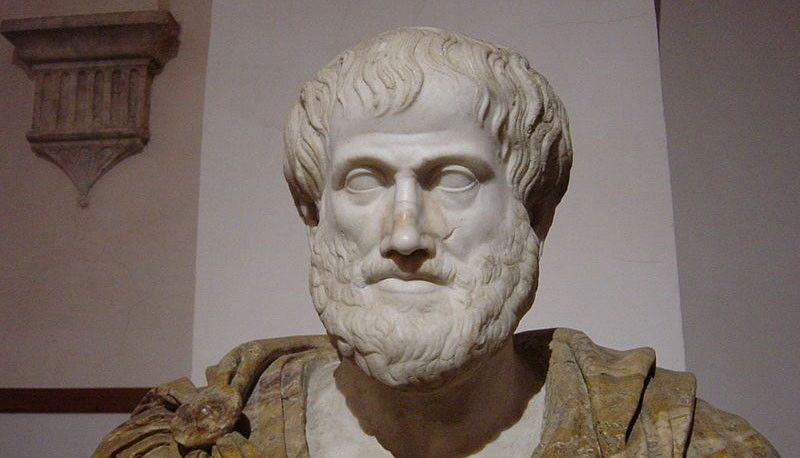
Aristotle, student of Plato and teacher of Alexander the Great, knew a great deal about life, the universe and everything... and more than a fair deal about putting together stories.

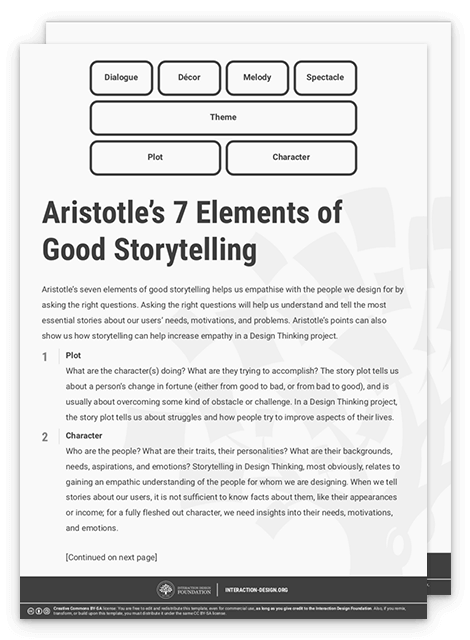
Aristotle’s seven elements of good storytelling will help us empathise with the people we design for by asking the right questions. Asking the right questions will help us understand and tell the most essential stories about our users’ needs, motivations, and problems. Although initially written to describe the elements of good theatre (novels had not yet been invented yet), Aristotle’s writings on theatre are nonetheless widely used in general storytelling. Aristotle’s points can also show us how storytelling can help increase empathy in a Design Thinking project.

1. Plot

What are the character(s) doing? What are they trying to accomplish? The story plot tells us about a person’s change in fortune (either from good to bad, or from bad to good), and is usually about overcoming some kind of obstacle or challenge. In a Design Thinking project, the story plot tells us about struggles and how people try to improve aspects of their lives.

2. Character

Who are the people? What are their traits, their personalities? What are their backgrounds, needs, aspirations, and emotions? Storytelling in Design Thinking, most obviously, relates to gaining an empathic understanding of the people for whom we are designing. When we tell stories about our users, it is not sufficient to know facts about them, like their appearances or income; for a fully fleshed out character, we need insights into their needs, motivations, and emotions.

3. Theme

Why are you, the design thinker, undertaking the project? Why are the people you are studying doing what they are doing? The theme of a story tells us the overarching obstacle that needs to be crossed, or the end goal of the project. Use a theme to help keep yourself focussed and provide your team with a strong narrative to keep you going.

4. Dialogue

What are the people saying? Do they say different things when you observe them as compared to when you interview them? How are they saying it? Are they angry, disappointed, sad, or happy? While observing their dialogue, are you losing focus on the things they did not say? People often convey so much more in what they don’t say, compared to what they actually vocalise.

Dialogue is also a two-way process: it is crucial to keep track of how we, the observers, speak to the people we are observing. Having a superior or condescending tone when conversing with our users is a sure way to get their guards up and put a limit on how much we can learn from them.

5. Melody/Chorus

To be effective, your stories should have a pleasant “melody”, a chorus that resonates with your emotions and convictions. The power of storytelling often lies in its ability to stir emotion and motivate us to find a solution. When you design a solution with empathy, the story you present to your users will also help drive its success.

6. Décor

Décor is about the setting. It’s about the physical environment in which your characters perform their acts. What’s the décor, setting, and physical environment in which your users perform their acts like? Effective storytelling does not ignore the setting, because often the interactions between characters and the set will tell us a lot about their motivations and behaviours. As a design thinker, you should pay attention to the opportunities or obstacles present in your users’ environments.

7. Spectacle

Are there any plot twists in your stories? Any unexpected insights about your users? The spectacle is something that the audiences who listen to your story will remember, and will generate discussions and ideas. If your design thinking story includes a spectacle, it will be a powerful tool to drive the project forward.

Knowledge is captured in Stories

Aristotle’s seven elements of good storytelling show how a good story can not only allow us to have an empathic understanding of our users, but how it will also motivate the design team to push forward in search of a design solution. In fact, Mark Zeh, design leader at IDEO and Bose, says:

“Knowledge is captured in stories. Stories are the foundation of the process for examining a customer need and how they are behaving.”
– Mark Zeh

You can download a template for Aristotle’s 7 Elements of Good Storytelling method here:

Advance Your Career With This Free Template for “Aristotle's 7 Elements of Good Storytelling”
Aristotle's 7 Elements of Good Storytelling
We respect your privacy
Get 1 powerful email each week: Design a life you love!

How to add Storytelling into your Design Thinking Process

Stories are powerful tools that can inspire action, but how do you incorporate stories into your Design Thinking process? The Institute of Design at Stanford (or d.school) encourages a few methods that design thinkers can use in order to take advantage of the power of stories. We will examine two of them below — story share-and-capture and the journey map, and you will also find templates that you and your team can easily start using.

Story Share-and-Capture

Author/Copyright holder: Teo Yu Siang and Interaction Design Foundation. Copyright terms and licence: CC BY-NC-SA 3.0
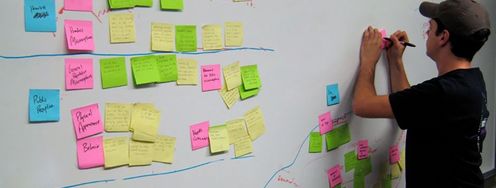
A story share-and-capture session is usually undertaken after ethnographic research—i.e., using design thinking methods such as “conducting interviews with empathy”, “building empathy with analogies”, and asking the “5 why’s.” In a story share-and-capture session, team members share the observations they each made in the field in the form of stories. Each member will share what they observed, and the rest of the team will note down interesting insights or quotes from the story.

This process allows the team to be on the same page when it comes to progress in understanding users. It also allows for discussions about the stories that each person has seen and heard, which enables the team to dig deeper into the meanings behind observations.

You can download a template for the story share-and-capture method here:

Advance Your Career With This Free Template for “Story Share-and-Capture”
Story Share-and-Capture
We respect your privacy
Get 1 powerful email each week: Design a life you love!

Journey Map

Author/Copyright holder: Teo Yu Siang and Interaction Design Foundation. Copyright terms and licence: CC BY-NC-SA 3.0
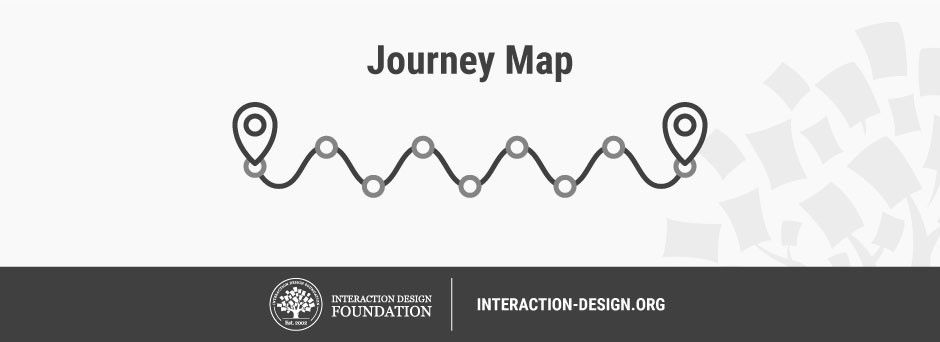
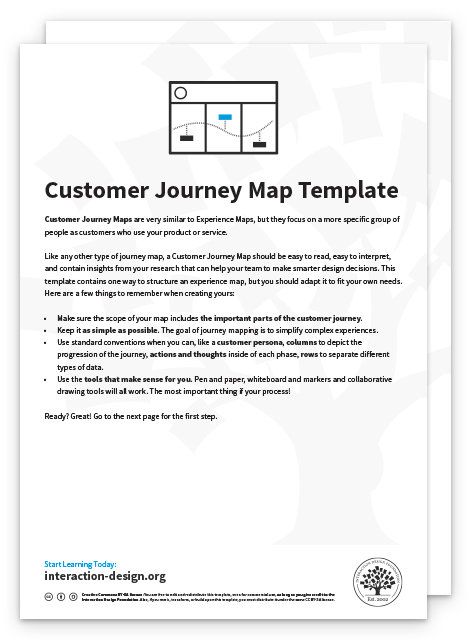
A journey map is a detailed record of a user’s experience of doing something. It could either be constructed based on your observations and interviews with the user, or it could be something that you ask the user to draw out and explain. It would contain a journey that the user goes through, and could be either closely relevant or even tangential to the focus of your project.

For instance, you could document the journey of a user’s experience of waking up in the morning and making their way to work via public transport. Try to be as comprehensive as possible, rather than filtering out details that you assume to be meaningless or irrelevant. You could organize the journey map in whatever way you think is most effective, from a timeline to a series of images.

A journey map can help you build empathy towards your users as you try to experience what they go through. It can also uncover insights, such as when you compare journeys between users to find common threads or find conflicting behaviours within a user’s journey.

You can download a template for creating a journey map here:

Advance Your Career With This Free Template for “Customer Journey Map”
Customer Journey Map
We respect your privacy
Get 1 powerful email each week: Design a life you love!

Storytelling and Design Thinking – When Should You Tell Stories?

Author/Copyright holder: Teo Yu Siang and Interaction Design Foundation. Copyright terms and licence: CC BY-NC-SA 3.0

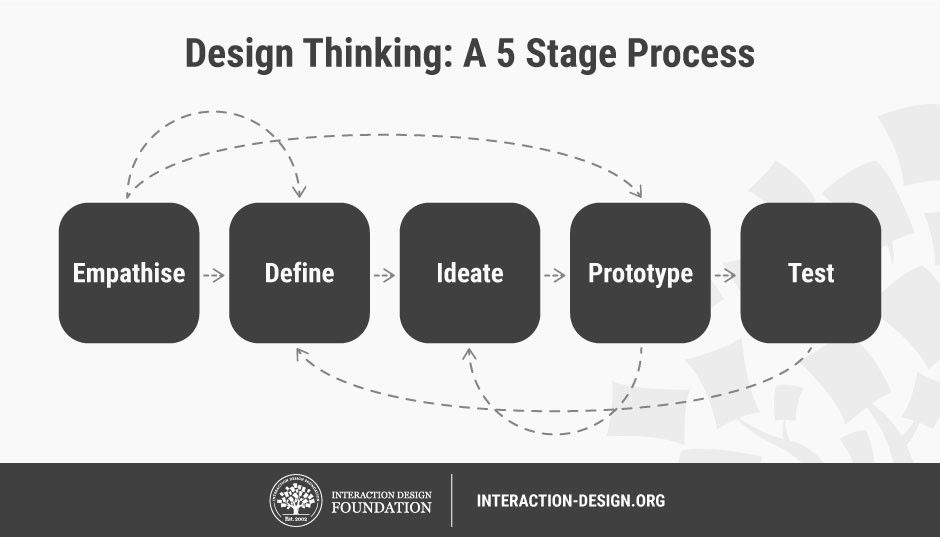
Stories can be a great help when you seek to develop empathy with your users, but they are not restricted to the Empathise stage of the Design Thinking process. In fact, you should use stories throughout the Design Thinking process and other Human-centred design processes. For example, you should tell stories when you create prototypes for users and when you try to figure out how the prototype is supposed to fit into users’ lives. It will often be a great idea to tell stories when you explain the prototypes to users when you’re testing them. Mary Catherine Bateson, writer and cultural anthropologist, sums it up beautifully in a sentence:

“The human species thinks in metaphors and learns through stories.”
– Mary Catherine Bateson

The Take Away

Stories play a significant role in the Design Thinking process. A story constructs a narrative so that we can gain a deep and emotional understanding of our users. It allows us to pay attention to various aspects of the users, including their environment, their needs, desires and problems, and allows us to design Human-centred solutions that meet their needs. Aristotle’s seven elements of good storytelling should always be applied to the Design Thinking process; doing so, we can have a holistic and well-rounded comprehension of our users. These seven elements will help us to observe and tell the essential stories—and there are also several methods, such as story share-and-capture and journey mapping, which enable us as design thinkers to take advantage of the power of storytelling so as to build empathy with our users.

References & Where to Learn More

Tim Brown, Change by Design: How Design Thinking Transforms Organizations and Inspires Innovation, 2009

d.school Bootcamp Bootleg, 2013.

Hero Image: Author/Copyright holder: Teo Yu Siang and Interaction Design Foundation. Copyright licence: CC BY-NC-SA 3.0

Feel Stuck?
Want Better Job Options?

AI is replacing jobs everywhere, yet design jobs are booming with a projected 45% job growth. With design skills, you can create products and services people love. More love means more impact and greater salary potential.

At IxDF, we help you from your first course to your next job, all in one place.

See How Design Skills Turn Into Job Options
Privacy Settings
By using this site, you accept our Cookie Policy and Terms of Use.
Customize
Accept all

Be the One Who Inspires

People remember who shares great ideas.

Share on:

Academic Credibility — On Autopilot

Don't waste time googling citation formats. Just copy, paste and look legit in seconds.