Meaningful design feedback is essential to the collaborative and iterative design process, and it’s equally important for UX/UI designers, graphic designers, product managers and most creative professionals. However, getting design feedback from clients can be one of the most painful aspects of the job.
Morgane Peng, Design Director at Societe Generale, sums up the common types of feedback designers receive. You've likely experienced some or all of them.
In this video, Morgane Peng compares the type of feedback designers usually receive with the type of feedback they should receive. This video is a part of Morgane Peng’s Master Class on “How To Deal With People Who Don't Get Design” (if you’d like to watch the full Master Class, you can sign up here).
Ambiguous feedback such as “Can you make it pop more?” or “I don’t like this color” makes the job of creative professionals extremely difficult, and it’s one of the main causes behind project delays and cost overrun. However, the good news is that you have the power to take charge and lead the design feedback process to build a fruitful collaboration with your client!
Here are a few tips to help you transform one of the most unpleasant parts of your job into a catapult to a successful and happy career.
Get to Know your Client
As the saying goes, “to each their own”. Every person is unique and has unique circumstances. Taking the time to get to know your client and their specific situation will prove highly rewarding as you’ll have an invaluable source of information. Think of the following questions:
Design knowledge: Do they have any knowledge about the design process?
Decision-making power: Do they have the autonomy to make decisions, or is there another person who greenlights the projects to who they report?
Business characteristics: Do they work in an established brand? Is the business pivoting and taking a major risk?
Personal characteristics: Do they have a clear sense of aesthetics?
All this information will help you assess your client’s current situation and will allow you to manage the project more effectively. You can use this information to tailor your processes and presentations and then ensure that the project runs smoothly. Think of it as another dimension of research that will give you valuable insights that will help you secure the success of your projects. Although it may seem like extra effort at the beginning of the project, it’ll prove extremely beneficial later on.
Todd Zaki Warfel, author, speaker and leadership coach, explains why tailoring your narrative to your client is essential for the success of your solutions.
In this video, Todd Zaki Warfel exposes a real-life example where adapting the narrative to the relevant stakeholder changed the outcome of an important executive decision. This video is a part of Todd Zaki Warfel’s Master Class on “Win Clients, Pitches & Approval: Present Your Designs Effectively” (if you’d like to watch the full Master Class, you can sign up here).
Use Visual References
Imagine you’re pitching an idea to a new client, and you’re explaining verbally what you’re thinking of. You probably have a clear image in your head that you’re trying to describe. How do you make sure the client is “seeing what you're seeing”?
If you’re a creative person, chances are that thinking in images comes naturally for you. Although more research is needed on the topic “How do humans think?”, generally speaking, thought can be divided into two modes: the visual and the verbal. The majority of people have the capacity to do both; however, they may not have trained their skill to “visualize” as much as you have. In fact, there are people who can’t create mental images. They have a condition named aphantasia.

Ed Catmull, co-founder of Pixar and former president of Walt Disney Animation Studios, has aphantasia. It is thought that around one in fifty people has this condition.
Make sure you back up your verbal explanations with visual resources. It may take you more time to prepare for the meeting, but it’ll ensure that you and your client are on the same page from the beginning. If you don’t share visual references, misunderstandings can happen, even if your client has a great capacity to visualize concepts in their mind. It’s very likely that when you talk about creating a fresh and modern design that appeals to a younger audience, you may have a different concept or mental image of what that looks like.
If you show them concrete images, you can ensure that you’re both talking about the same things and you’ll be able to manage expectations very effectively.
Create a Framework for your Clients
It may sound counterintuitive, but you have the power to give your clients the necessary tools to give you useful feedback. If you take ownership of the process and create a framework that works for you, you can transform one of the most painful moments of your job into a surprisingly pleasurable one.
As a designer or creative professional, you’re very familiar with the design process. It’s like going to the grocery store; you know what to expect. You get a shopping cart at the entrance, pick up the products you need and put them in the cart, and then go to the cash register to finalize your purchase. But what if you had never been to a grocery store before and you didn’t even know what it looked like? It’s very likely that your client has very little knowledge of the design or creative process. Furthermore, they have a specific idea about the product or the results they want—or even need—to produce, but they don’t know how to get there and they’re hiring you to create it. In a sense, they’re placing a lot of trust in you.
Put yourself in their shoes; it was probably hard for them to get the budget to do the project, and they have to go through a process they don’t know, with someone they don’t know—you—and cross their fingers hoping that, in the end, they’ll get the result they need.
How can you help them manage this anxiety-inducing situation? Create structure. The more unfamiliar your client is with the creative process, the more structure you’ll need to create.
There are many ways you can collect feedback. You can use project management tools, prototyping tools, feedback meetings, etc. Try to avoid using email or phoning to ask for feedback unless it’s a very specific issue that is time-sensitive. Don’t hesitate to test and evaluate different methods and find the one that works best for you.
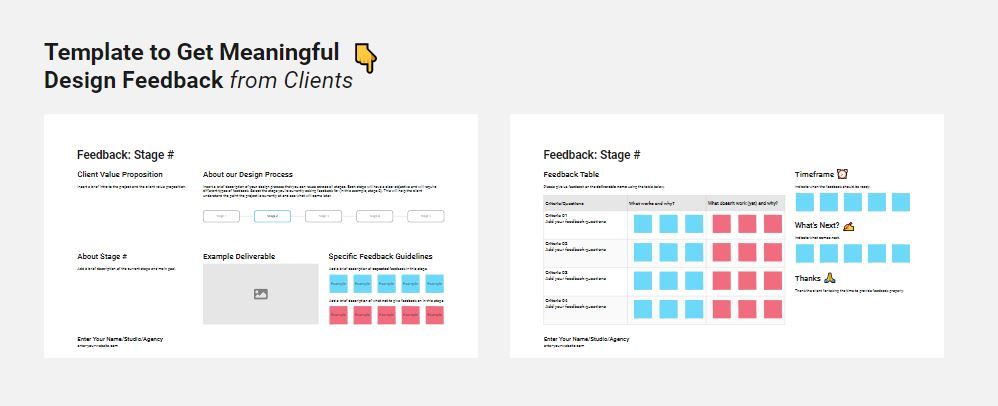
Find here a free Miro template that you can customize to your needs to collect clients' feedback easily and efficiently.
Decode your Client’s Feedback—Find the Root Problem
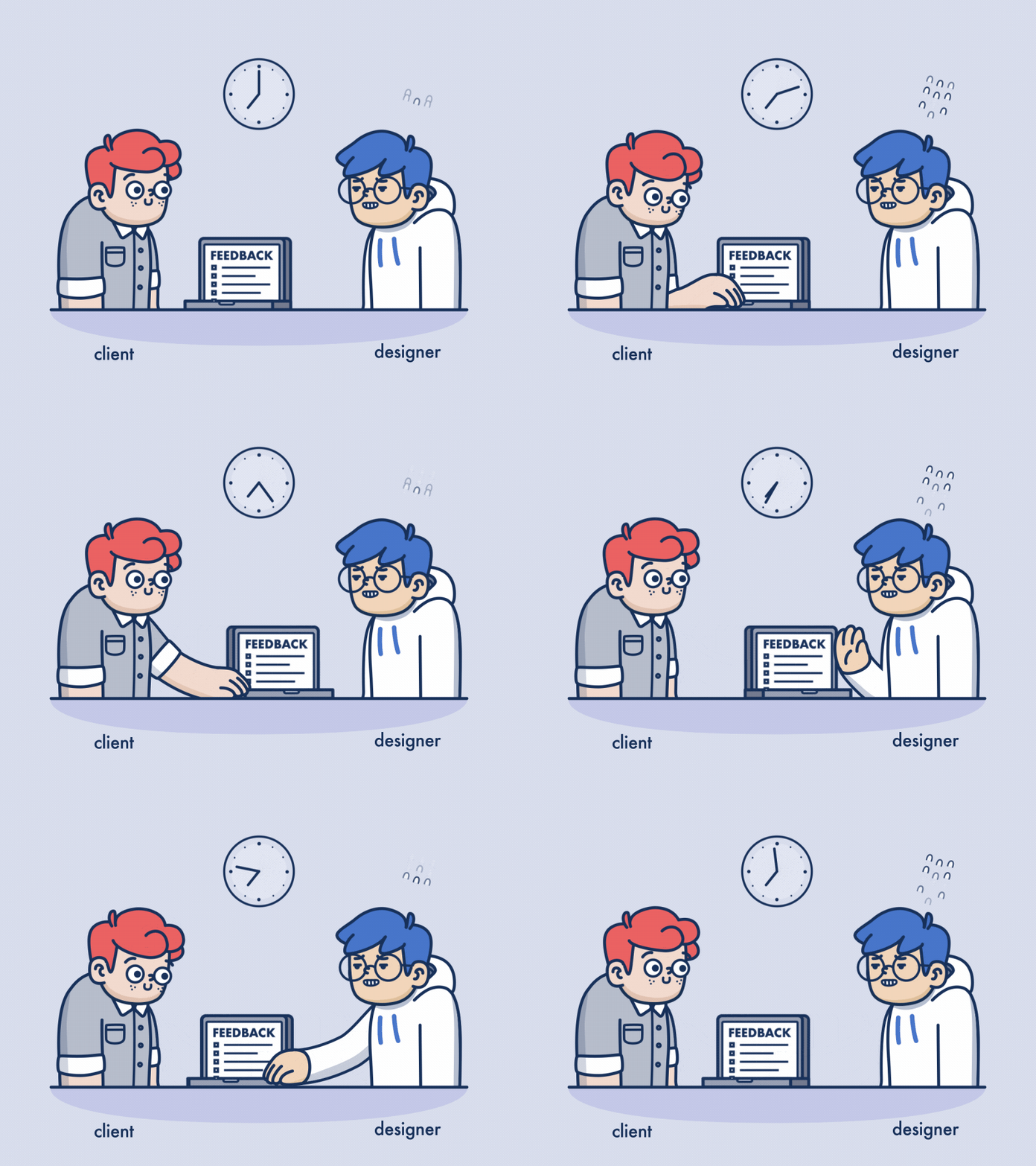
© Designer and Client collection by DeeKay Kwon, Freelance Animator, Fair-Use (link)
If you collect the right feedback from the get-go, you’ll be able to define the root problem that your client perceives and address it without losing any time in trying to become a mind-reader. Your clients do know more about their business needs than you, and their feedback—where appropriate—can take your designs to the next level; what they don’t know is how to use their knowledge to improve the design, but you do. Focus on the why (i.e., why they see problems), like we may lose revenue, instead of on the what: e.g., the button doesn’t pop.
As a designer, sometimes you have to take on the role of the translator—especially if you’re a freelancer. Sometimes you talk directly with the client, and sometimes you talk with an account manager. In both cases, you’re the expert in the design language. Remember that good design solves problems, and thus you’re the problem solver. Focus on this mindset, and let your clients know that you’re there to solve any problems, not to sell them your ideas or to “make something pretty”.
Have you ever heard the dreaded “make the logo bigger”? Chances are you have. What if instead of letting this get to you, you just asked, “Are you worried about brand recognition?”? Just by asking this question, you’re redirecting the conversation to where it needs to go and lighting the way ahead with the reassuring glow of “let’s figure out the root problem and solve it” and “we’re in this together”. There might be a million reasons why the client is asking you to make the logo bigger, and most of them will help you improve the final design.
Assume Positive Intent
“Assuming positive intent” from the client may sound easy, but it is not, especially with tight deadlines. You may even feel that they’re trying to make your life impossible just for the sake of it. Rest assured that this is never the case. Unless you have a previous history with the client where you scratched their car or spoiled the ending of the book they were reading, you should never take feedback personally.
“Whatever anybody says or does, assume positive intent.”
— Indra Nooyi, former Chairman and CEO of PepsiCo
There might be instances where clients project their insecurities onto you and your design. Will this design work and generate more sales? Will this new app take our startup to the next level, or will we fail? Again, they’re probably risking a lot in this project and they’re putting their faith in you. In a perfect world, they would be aware of their own expectations and manage them better, but in the fast-paced environment of today, that may not happen.
Try thinking of your client as a “team member” instead of “the other”. Then, you might have a more compassionate and constructive attitude, and the other person might feel more comfortable sharing their concerns with you. This approach will build trust and will probably result in less micromanaging on their part and much more pleasurable work for you. You might belong to different organizations, but you’re a team and share the same goal: to make the design successful and achieve the best possible outcome.
The Take Away
As a designer or creative professional, you have the power to realize and make your clients’ projects tangible. However, the road to delivering great solutions can be painful. Using a clear framework for the feedback process can be the key resource you need to ensure smooth collaboration between your team and your clients!
Try this free Miro template that you can customize to your needs to collect clients' feedback easily and efficiently.
References and Where to Learn More
Learn more about how, as a designer, you can successfully communicate with clients or colleagues who have no knowledge about design and get a seat at the table for every big business decision in Morgane Peng’s Master Class on “How To Deal With People Who Don't Get Design”.
Learn more about how to present your work to win over your clients and stakeholders and get recognized for new opportunities in Todd Zaki Warfel’s Master Class on how to “Win Clients, Pitches & Approval: Present Your Designs Effectively”.