The designer used to be a famous self-centered personality behind a product, like Philippe Starck. But now, the designer is just one of the many faces behind a brand. Against a long established design star system, this dimming of the spotlight is a sign of the ever-increasing product complexities.
If we understand how design is being assimilated, particularly in a business scenario, we will be able to make wiser choices both during our design education and also while managing our design careers.

A book cover of Phillippe Starck picturing him with objects he designed tattooed to his body.
© Tachen, All rights reserved
Philippe Starck: Everything I have designed is unnecessary!
In March 2008, star designer Philippe Starck gave a short but provoking interview to the German newspaper Die Zeit that was titled “I am ashamed". In Starck’s own words:
“Everything I have designed is unnecessary. Structurally, design is useless. A profession that makes sense is an astronomer, biologist or something similar. Design is nothing. I tried to give my products a little sense and energy. Even though I did my best, it was useless.(…)
I was a producer of materiality. I am embarrassed about it. I want to be a producer of future concepts.”
Immediately after Starck’s interview, Bruce Nussbaum, former assistant editor with Business Week and design advocate, commented and published on his blog that the kind of design Starck was giving a death sentence to was already dead. Therein, he also gave alternative examples of good design:
“When David Rockwell designs a better experience for kids getting cancer treatments in a hospital, design is absolutely useful. When Cameron Sinclair runs a contest for the best, most inexpensive architecture for housing in poor villages, that’s pretty good design.”
Nussbaum’s choice of names was not innocent. Rockwell is the leader of an architecture and design firm that specialized in hotel and hospital design while Sinclair specialized in humanitarian architecture.
What comes with the celebrity designer figure?
Although these barely known exceptions are increasingly more frequent, there is still a dominant image of the designer in pop culture. Each time people think of a designer, they picture someone with funny round glasses, aneccentric way of dressing, in trendy offices, working odd hours for clients that have to put up with their unstable, creative moods and the like. This image of a designer always had a flare of independence and playfulness.
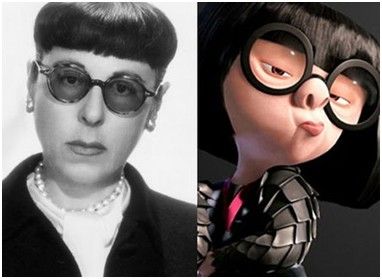
Edith Head, was the real deal, the fashion designer of the stars. This Hollywood fashion designer was the woman who won more Academy Awards than any other in any category. She is a good example of the celebrity designer and she clearly inspired the character Edna Mode, from “The Incredibles” movie.
© Ó Kalben Sağdıç, All rights reserved
To picture such a time, imagine yourself working in Don Draper’s office in the acclaimed TV show - Mad Men. It is probably the best example we have today from the past era of self-centered men turning ideas into sales.
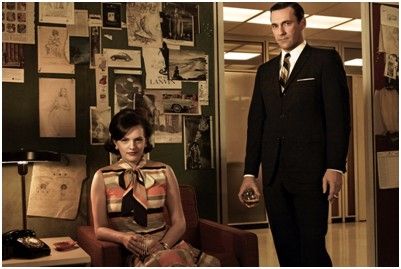
© Frank Ockenfels/AMC, All rights reserved
Till date, there are many people, often outside the world of design who want to retain design an instrument for consumerism. The much-debated concept of creative industries from the early 2000’s is a more recent reminiscence of this self-centered image of the designer. Creative industries are the places harbouring multiple creative people who are supposed to feel special and accomplished owing to their contributions that drive the other productive industries. With this concept in mind, cities saw an opportunity to become creative-friendly and have established design districts. City politicians who suggest tolerance, cosmopolitanism, and inclusion, hope that the young and educated are attracted to make a living there. In these trendy neighbourhoods, design is not just selling products anymore, now design is about selling entire blocks of fashion stores and gourmet restaurants.
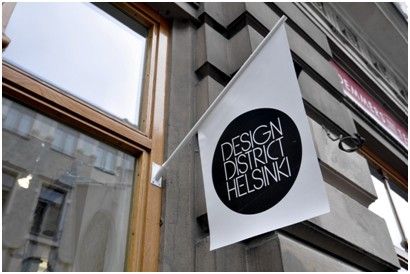
A trendy design district in Helsinki. Now, almost every major city in the western world has one.
© Frankfurt Fashion, All rights reserved.
Essentially, the celebrity designer as a pop culture personality, was established during the twentieth century between Raymond Loewy in the 1930’s and Philippe Starck in the 1980’s and it usually relates to a certain type of design - the kind that kept tossing mass produced, self-contained, and soon-to-be-outdated objects of fashion, furniture, advertising into the world, and more recently, websites or interactive games, among many other products.
But what is happening to this image now? How is design being perceived today?
Moving away from the object, thinking bigger
In July 2009, at a TED talk, Tim Brown, CEO of the leading design consultancy IDEO, managed to move the spotlight away from the designer. Brown said that this dominant image is recent in terms of design history and that it has given design a bad reputation for thinking small; he urged everyone to think bigger.
“I would like to suggest that we take a different view of design and focus less on the object and more on design thinking as an approach, we might see a bigger impact.”
It is touted that apparently, there will be no more self-contained objects to be associated with a single skillful and inspired person. Products and services now combine in complex systems with many components and variables to create experiences. These experiential ecosystems can not be tackled by an individual anymore. We need teams of many skillful and knowledgeable people to design these increasingly complex product/service platforms. What does this mean? This means that the star designer that we all knew is now out of the spotlight.
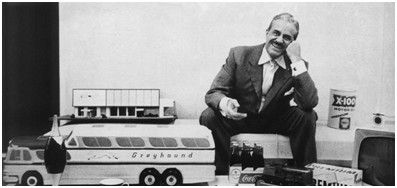
Raymond Loewy with his objects. The star designer was always the author of many unrelated objects.
© Estate of Raymond Loewy, All rights reserved.
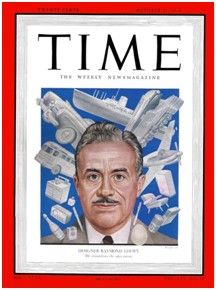
Raymond Loewy in a Time Magazine cover, October 31, 1949Au
© Time Magazine, All rights reserved
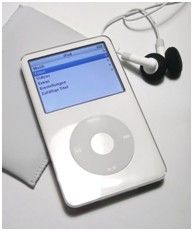
Objects like an iPod combine services and information to become complex platforms.
© Stahlkocher, CC BY-SA 3.0
It is important to discuss and see the kind of designer that is emerging today. What kind of star is in the works today?
Let’s take Apple as an example. If we asked any layman who designed the first iPod, I am sure that his instant answer will be Steve Jobs. While the answer will not be entirely wrong, it is only fair to say that Jobs had an important role to play in the design of the iPod. At the same time, if we needed to associate the name of a designer to it, it would be Jonathan Ive. He was the Chief of Industrial Design when the iPod was launched to the public. Then he also became the leader of the software design team and moved on to become the Chief Design Officer in Apple now.
Although Jony Ive is a popular reference among designers or few of the most passionate Apple fans, the truth is that it has always been Jobs who has been in the spotlight. Even some time after his death, his name is associated extensively with almost all of Apple’s products.
This makes us think. It makes us wonder. How is it that someone who is acclaimed to be one the greatest design geniuses the world has ever had, was not even trained as a designer?
Well, the answer here is quite simple in fact. What Jobs did was that he envisioned Apple’s path breaking experience and combined the efforts and work of a diverse group of people to turn that vision into reality. This new star designer adopted a collective and more collaborative approach. He gave away some of his own brilliance to form a design constellation of many individuals. This constellation is not based on predestined skill and transient creativity anymore. It is all about vision, planning, collaboration, and perseverance now.
Design is a way of thinking today
Design is increasingly being seen as a capacity that everyone possesses quite naturally. It encompasses different aspects such as:
The power to envision the future and make it happen
The empathy anyone can master in understanding other human beings
A sort of entrepreneurship boosted with critical visual skills
Design as a professional practice for the predestined few has come to an end. Instead, design has become a way of thinking and thus has gone mainstream into healthcare, education, management, charities, and so on.
The radical shift from shining like a star to twinkling in a constellation will have long-lasting implications in all realms of design. From design education and career management to business innovation and design management, we should better start anticipating what skills we need to navigate through this new interstellar design space.