If you’ve just started to embark on your journey into the field of design thinking, you may have noticed different frameworks cropping up here and there. This is nothing to worry about—it’s simply the result of different people’s perceptions of the design thinking process. To help you get your head around these interpretations, we’ve prepared a useful summary of the most popular design thinking frameworks used by global design firms and national design agencies.
Design thinking means many things to many people—not only in its definition, but also in its practical implementation. A wide variety of design thinking frameworks and visualizations exist in the world today, and each typically contains between three and seven stages. Before we dive into these different frameworks, let’s look at a quick overview of the fundamental principles which form the basis behind all variations of the design thinking process.
Traits that are common across design thinking processes:
Starts with empathy. A deep focus on the humans involved will ensure you stay on track and follow the course of action most likely to bring about preferred solutions for individuals, business and society.
Reframes the problem or challenge at hand. This helps you gain new perspectives and explore different ways to think about the problem, and allows a more holistic approach towards reaching a preferred solution.
Initially employs divergent styles of thinking. This allows participants to generate and explore as many solutions as possible in an open, judgment-free ideation space.
Later employs convergent styles of thinking. This will allow your team to isolate, combine and refine potential solution streams out of your more mature ideas.
Creates and tests prototypes. Solutions which make it through the previous stages get tested further to remove any potential issues.
Iterates. You will revisit empathic frames of mind as you progress through the various stages and may redefine the challenge as new knowledge is gathered.
The process is all done in a collaborative, multidisciplinary team that leverages the experience and thinking styles of many folks to solve complex problems. It can feel quite chaotic at first, if you’re not used to it—however, if done correctly, it can result in emergent solutions that are desirable, feasible and viable.
Different implementation frameworks or models have different names and numbers of stages, but they all consist of the same principles and all involve points at which you will empathize, reframe, ideate, prototype and test. Let’s now take a quick look at 10 popular frameworks to further understand this innovative and revolutionary process.
1. The 5-Stage Design Thinking Process—d.school
First, let’s look at the 5-stage model that we will be following in this course.
The Stanford Design School (d.school), now known as the Hasso Plattner Institute of Design, initially taught design thinking via a simple but powerful 3-step process: Understand, Improve, Apply.
They have since built upon this, to formulate and openly share a famous 5-stage process which is widely used around the world, including here at the Interaction Design Foundation. The process they outlined is as follows:
Empathize
Define
Ideate
Prototype
Test
The d.school also represents this 5-stage process through their hexagonal design thinking visualization. This ensures the stages are seen more as enablers or modes of thinking, rather than concrete linear steps.
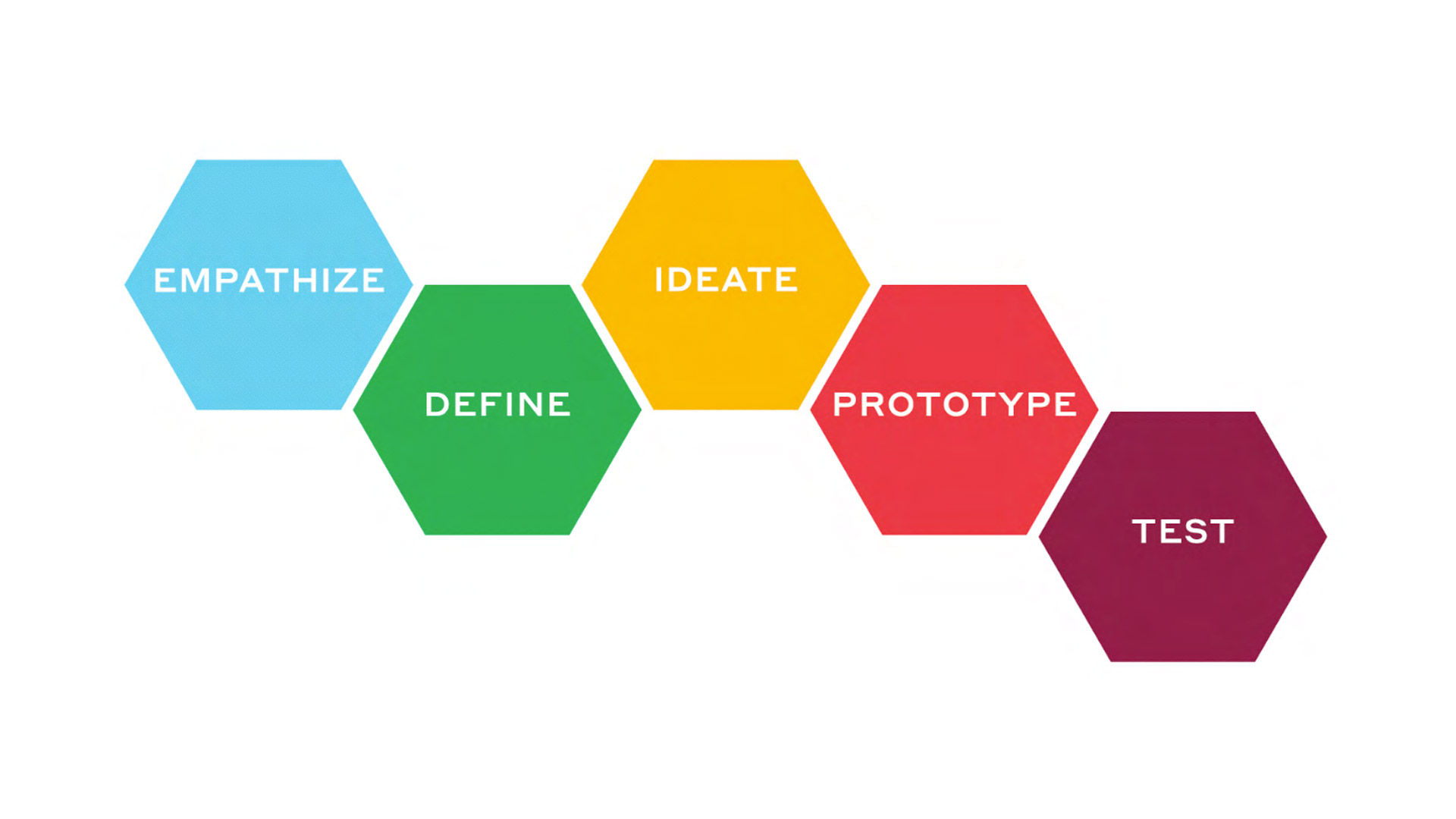
The d.school’s model of design thinking consists of five iterative, non-linear phases: Empathize, Define, Ideate, Prototype and Test.
© Stanford d.School web, Public License. Source.
2. The Early Traditional Design Process—Herbert Simon
The earliest versions of the design thinking process still reflected the traditional design process. As design thinking evolved, however, deeper empathy, more collaboration and a multidisciplinary approach were thrown into the mix.
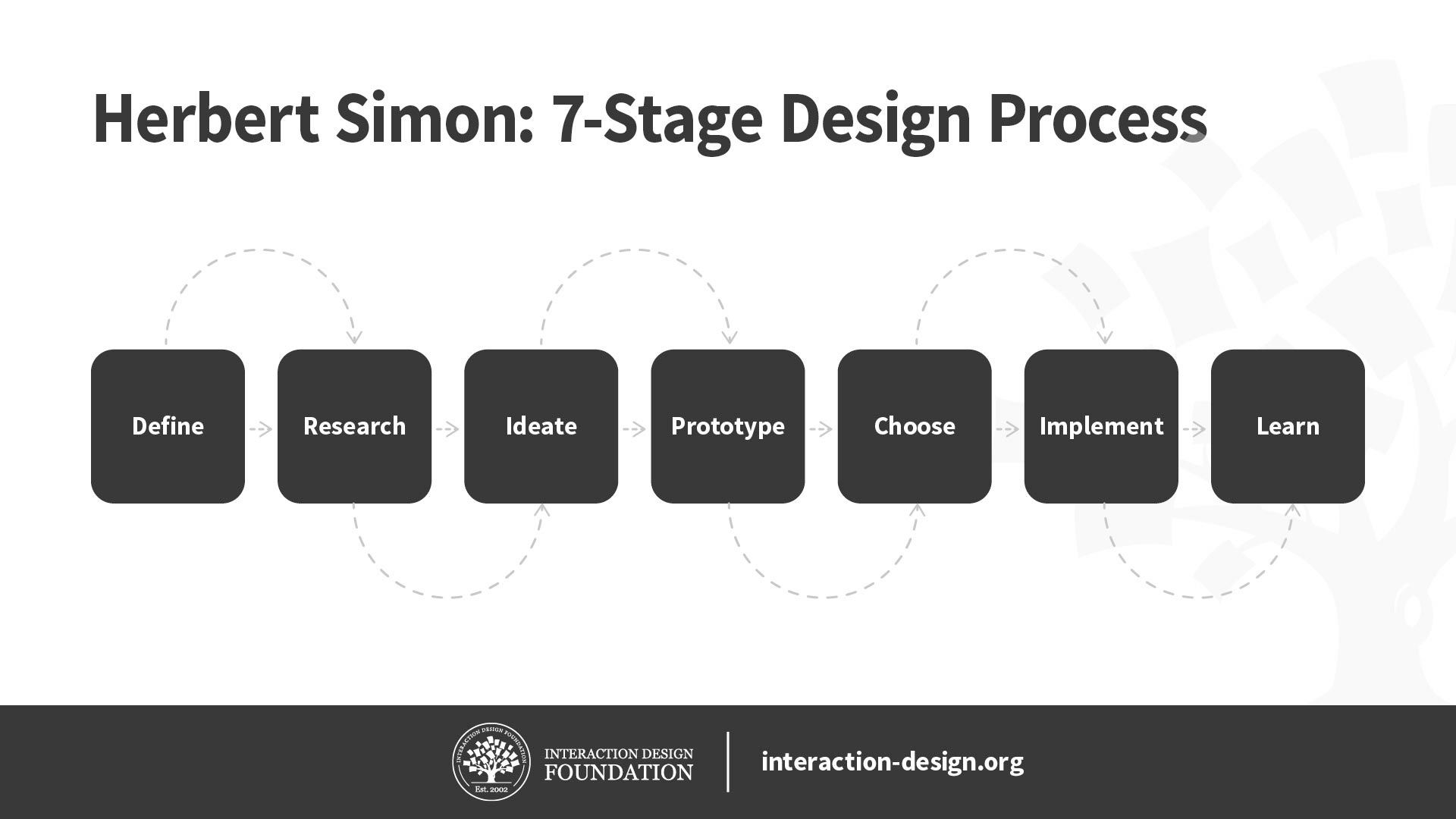
As Herbert Simon states in his 1969 seminal work The Sciences of the Artificial, the design process consists of the following seven stages: define, research, ideate, prototype, choose, implement and learn—and this has been the cornerstone of design processes ever since.
© Daniel Skrok and the Interaction Design Foundation, CC BY-NC-SA 3.0.
3. Head, Heart and Hand—AIGA
The American Institution of Graphic Arts (AIGA) states the value of modern design practice comes from designers’ unique blend of head, heart and hand. For example, design thinking participants wear many hats during the process and rely on their heads to solve complex problems. In the early stages, they also use their hearts to empathize and understand human needs and emotions. The particular gift of designers, however, is their ability to dive into practical creation by hand. The three combined create a holistic process which utilizes input from all of our faculties to be successful.
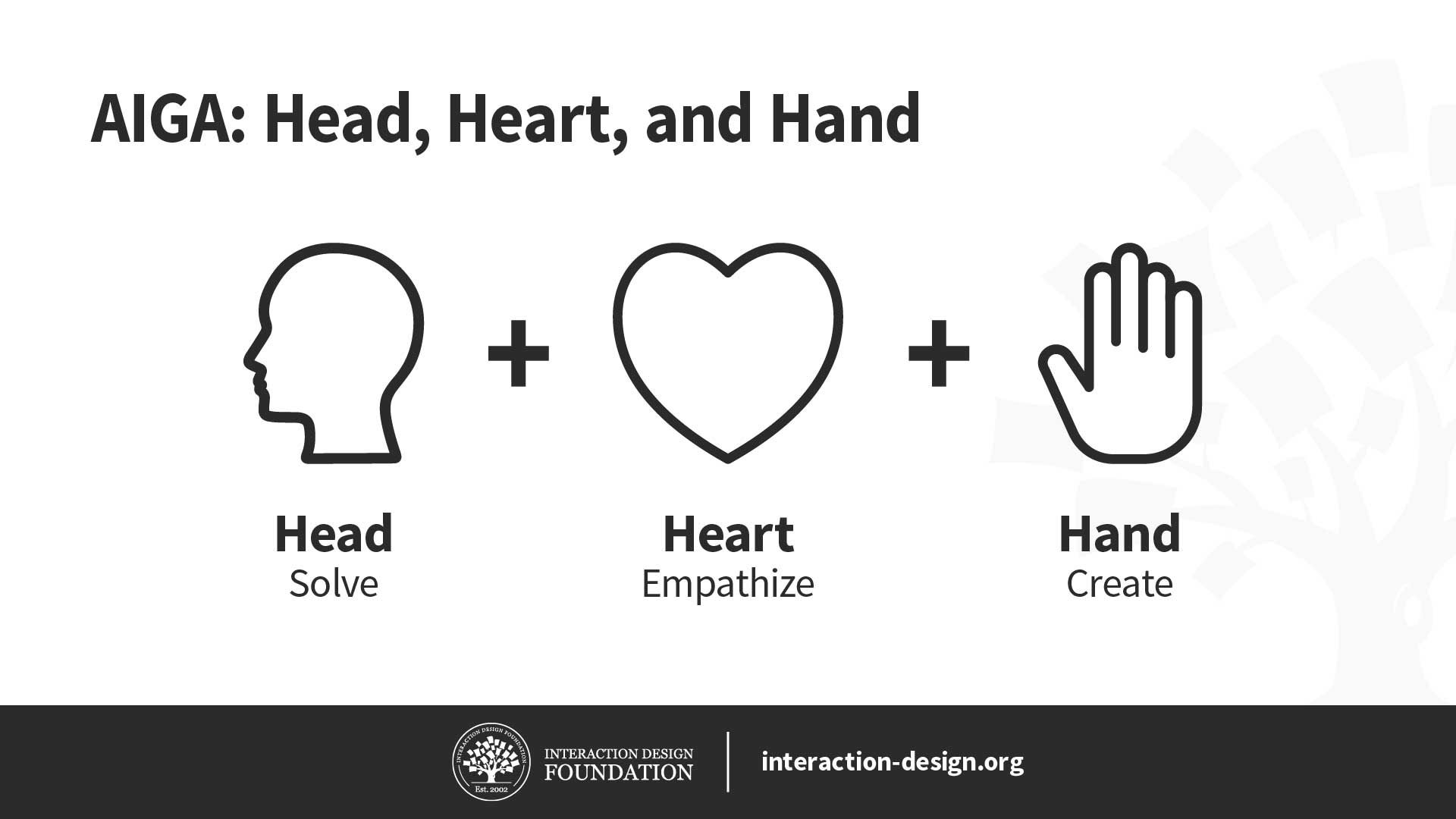
Designers have a unique blend of head, heart, and hand skills which combine to create holistic problem-solving abilities.
© Daniel Skrok and the Interaction Design Foundation, CC BY-NC-SA 3.0.
4. DeepDive™ Methodology—IDEO
The DeepDive™ technique was developed by IDEO as a way to rapidly immerse a group into a situation where they can effectively problem-solve and generate ideas. They expressed this variant of the design thinking process live on ABC Nightline back in the late ’90s.
An abridged version from the report about IDEO's DeepDive™ Methodology that was aired on ABC Nightline in the late '90s.
IDEO's DeepDive™ comprised the following steps:
Understand
Observe
Visualize
Evaluate
Implement
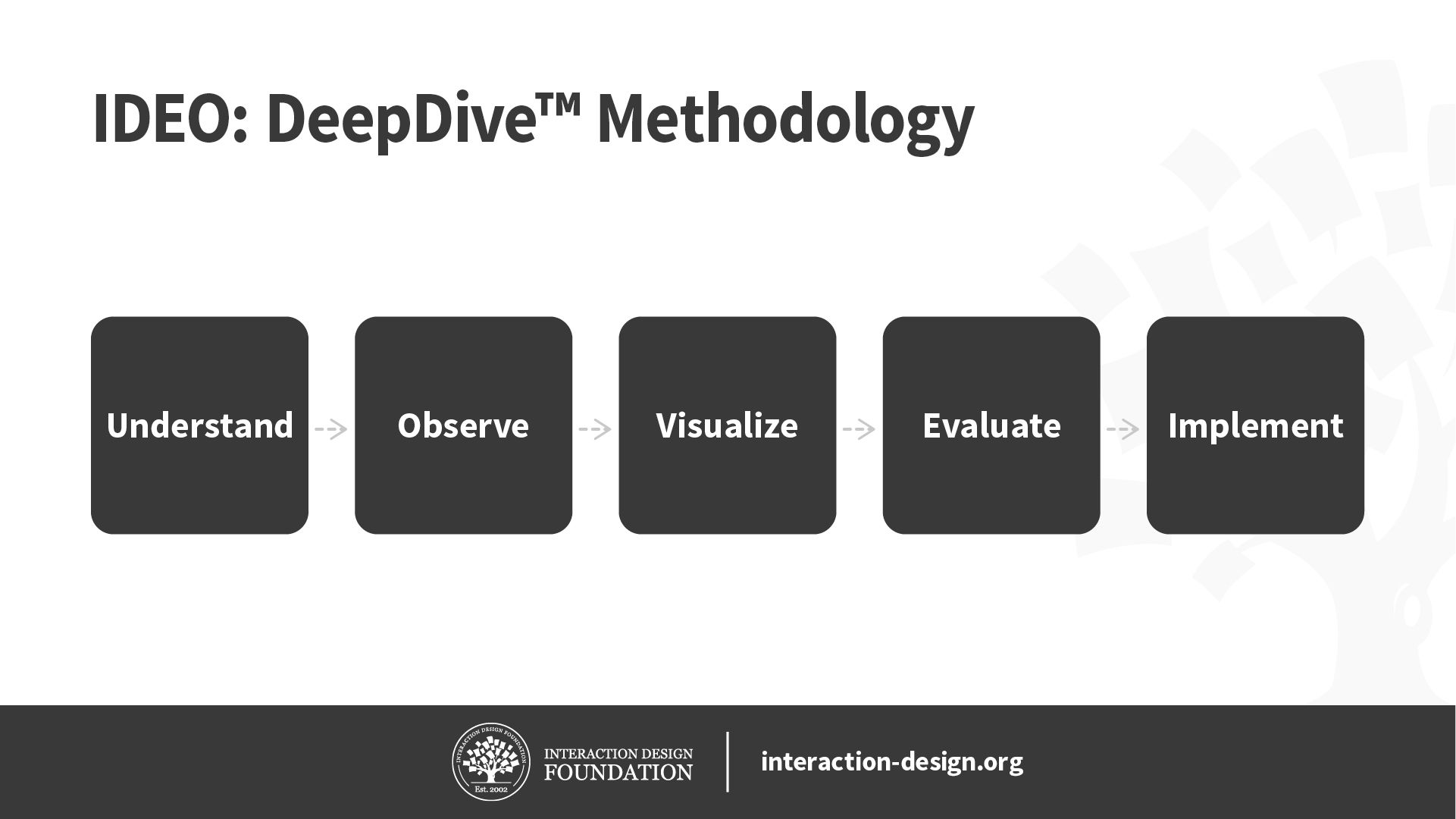
© Daniel Skrok and Interaction Design Foundation, CC BY-NC-SA 3.0.
The DeepDive™ methodology was further documented and enhanced by Andy Boynton and Bill Fischer of the International Institute for Management Development (IMD) business school, and Deloitte Consulting then acquired the rights in 2006.
5. The 3-Stage Design Thinking Process—IDEO
IDEO uses a different process and, while it only has three stages, it covers pretty much the same ground as the other processes in this compilation.
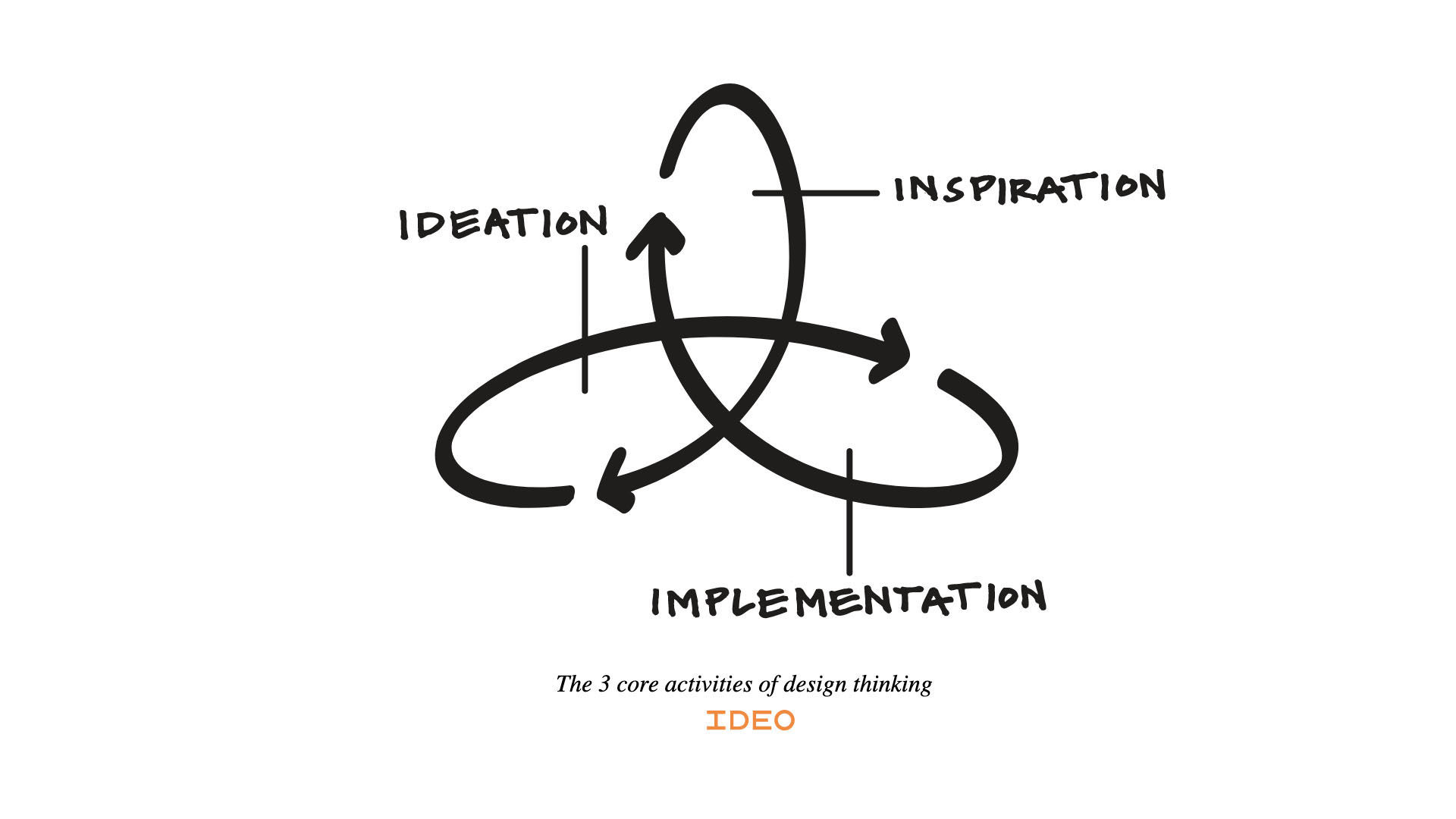
IDEO’s 3-Stage Design Thinking Process consists of inspiration, ideation and implementation.
© IDEO, Public License.
The three stages are:
Inspire: The problem or opportunity inspires and motivates the search for a solution.
Ideate: A process of synthesis distills insights which can lead to solutions or opportunities for change.
Implement: The best ideas are turned into a concrete, fully conceived action plan.
IDEO also released a deck of IDEO Method Cards which cover the modes Learn, Look, Ask and Try—each with their own collection of methods for an entire innovation cycle.
6. Design Kit: The Human-Centered Design Toolkit—IDEO
IDEO has also developed contextualized toolkits, which repackage the design thinking process. One such iteration focuses on the social innovation setting in developing countries. For this context, the terminology needs to be simplified, made memorable and restructured for the typical challenges faced in those environments. The Human-Centered Design (HCD) Toolkit they developed for this purpose was re-interpreted as an acronym to mean hear, create and deliver.
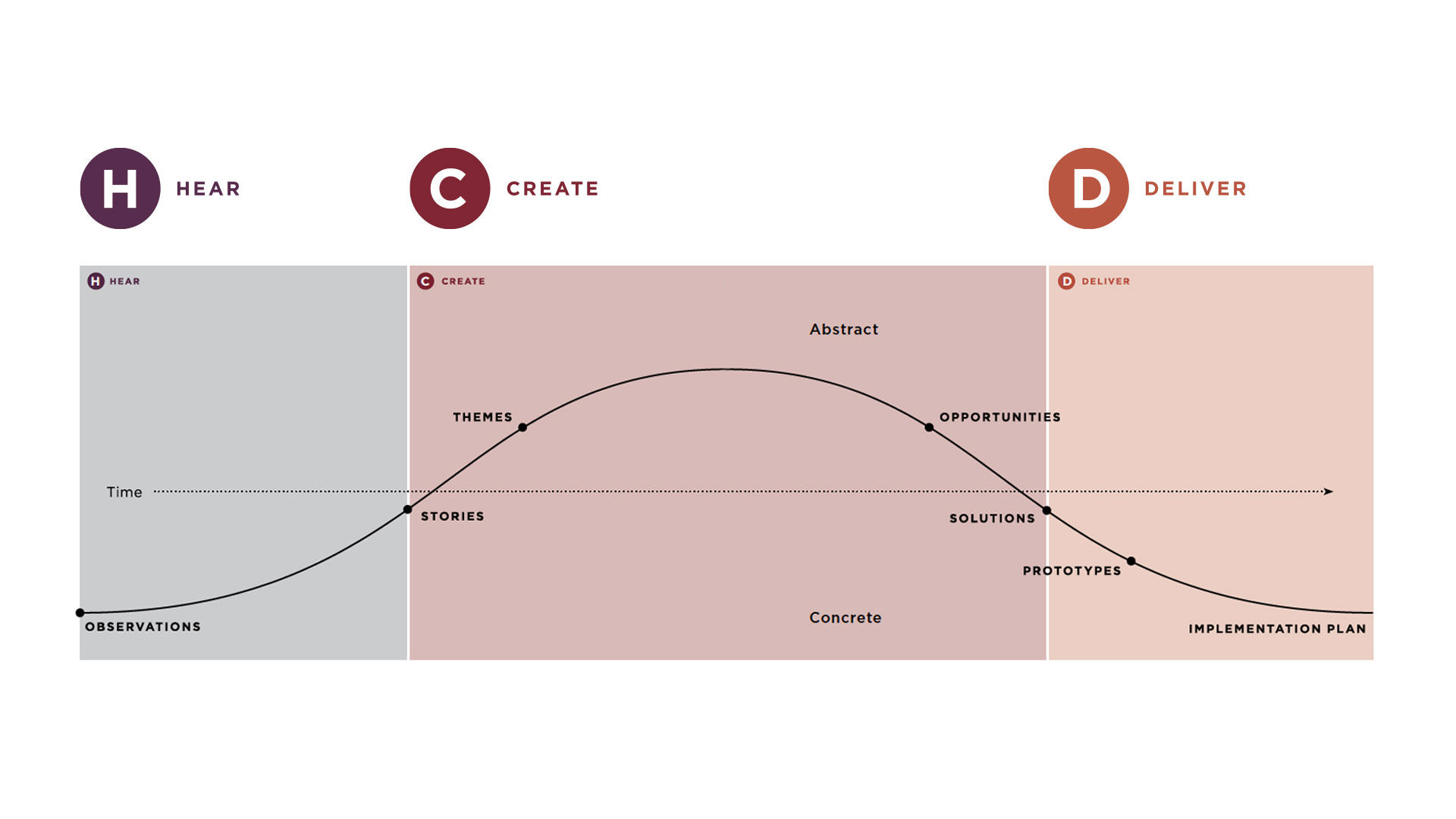
IDEO’s 3-Stage Design Thinking Process was reinterpreted as Hear, Create, Deliver to coincide with the “HCD” acronym for Human-Centered Design.
© IDEO, Public License.
Hear: Similar to early phases in other design thinking processes, the hear stage develops an empathic understanding of users, and defines the problem the team is trying to solve. It helps participants gain a solid foundation in the context of the problem and sufficiently reframe it to take on new perspectives.
Create: The create stage is concerned with exploration, experimentation and learning through making—similar to the ideate and prototype phases in d.school’s 5-stage approach. Potential areas of exploration are pinpointed, and those closest to the problem will be engaged with further to co-create solutions. This allows design teams to maintain the highest levels of empathy during early design phases and weed out any potential problematic assumptions made by designers who do not sufficiently understand the context.
Deliver: The deliver phase of the HCD process is centered around logistical implementation. It also aims to help overcome any obstacles which may exist when rolling out a solution within the required context. It is essential that solutions integrate into communities and bypass other roadblocks during implementation, and this stage will help participants achieve that.
7. The “Double Diamond” Design Process Model—Design Council
In the mid-2000s the British Design Council popularized the Double Diamond diagram, based on Béla H. Bánáthy’s 1996 “divergence-convergence” model. The Double Diamond diagram graphically represents a design thinking process. It highlights the divergent and convergent styles of thinking involved, and is broken down into four distinct phases:
Discover: The start of the project is based around an initial idea or inspiration, often gained from the identification of user needs.
Define: These user needs are interpreted and aligned with business objectives.
Develop: Design-led solutions are developed, iterated and tested.
Deliver: The end product or service is finalized and launched into the market.
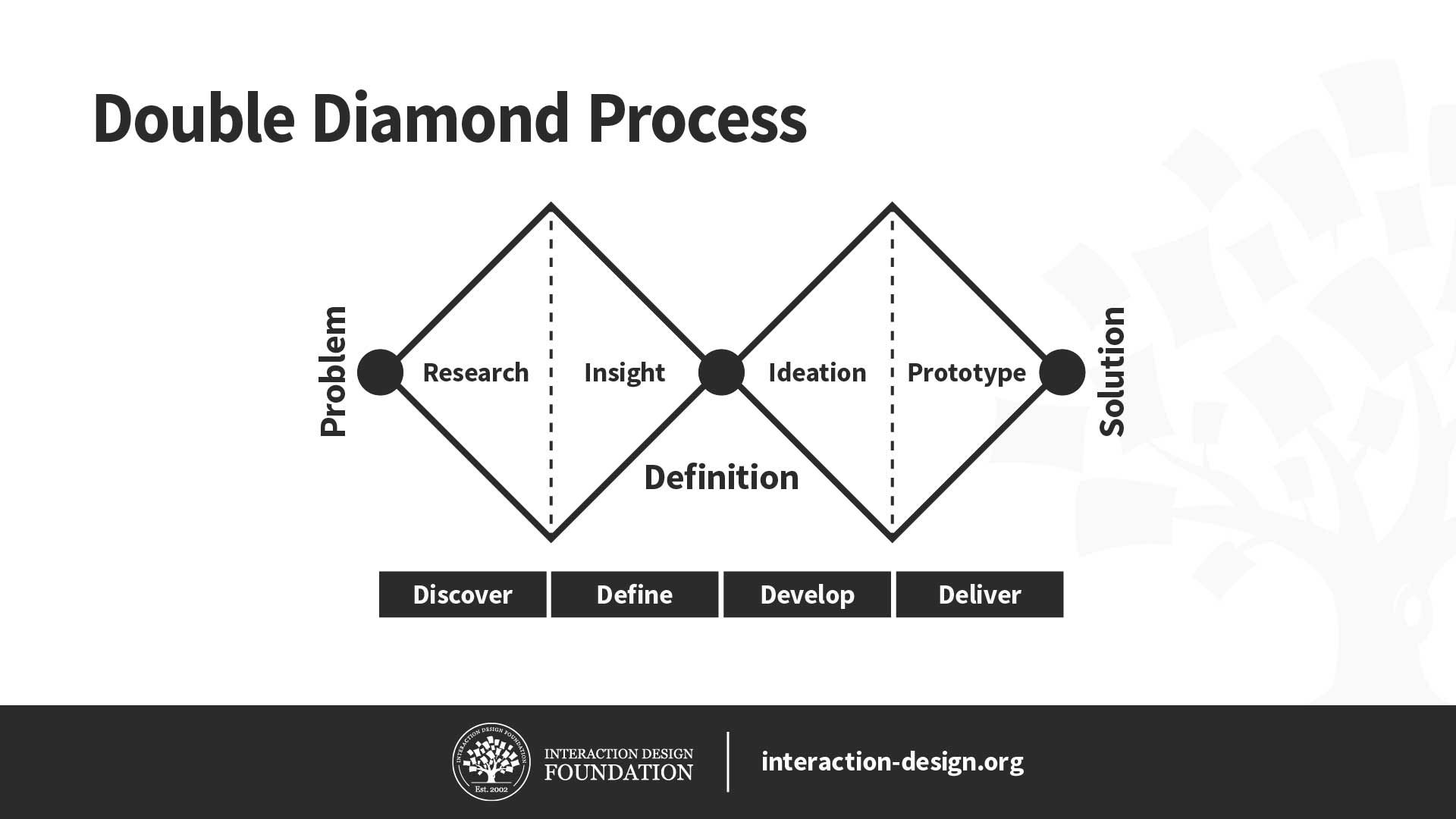
The Double Diamond diagram from the Design Council helps to visualize the divergent and convergent stages of the design thinking process, and highlights the different modes of thinking that designers use.
© Daniel Skrok and the Interaction Design Foundation, CC BY-NC-SA 3.0.
8. Collective Action Toolkit (CAT) — Frog Design
Frog Design is an organization committed to social impact. They developed the Collective Action Toolkit (CAT) as a way to make the design process accessible to communities around the world—with the hope it will help them organize, collaborate and create solutions for the specific problems which affect their local area.
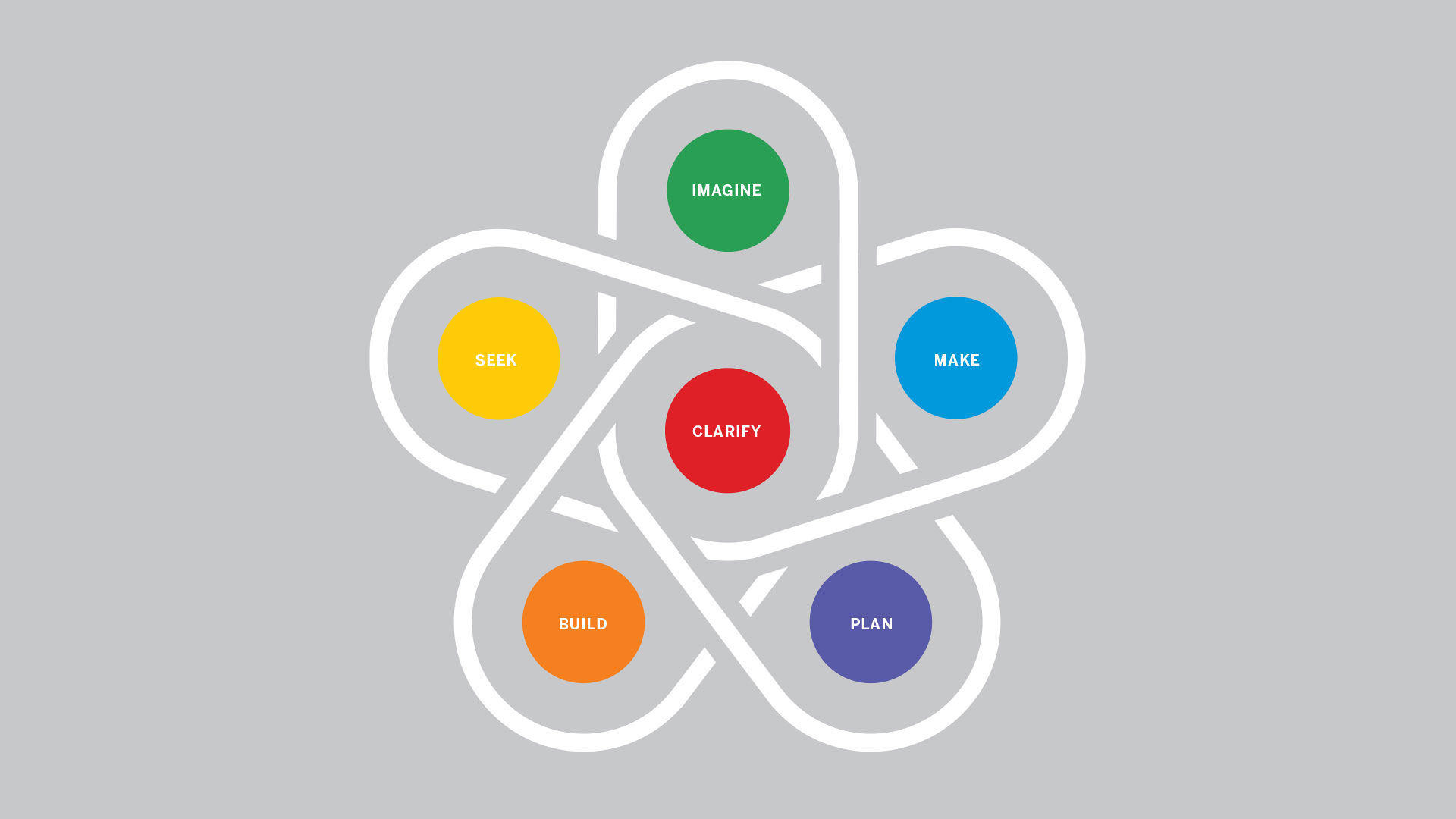
Frog’s Collective Action Toolkit process.
© Frog, Public License.
Frog’s CAT breaks the process down into six stages:
Clarify your goal: Agree on the problem you want to try and solve, as well as what goals you want to achieve.
Build your group: Bring people together in your community, identify their strengths and map out their commitment to your goals.
Seek new understanding: Ask questions, explore how people live and discover unmet needs to inform and inspire your group, and gain others’ perspectives.
Imagine new ideas: Come up with new solutions and decide what makes some of them more achievable than others.
Make something real: Test and experiment your better ideas and see what you discover.
Plan for action: Organize what each group member should do to reach your shared goals.
Frog make it clear these stages form a non-linear process, and you might have to revisit stages multiple times during a project—particularly the clarification stage.
9. Designing for Growth—Jeanne Liedtka & Tim Ogilvie
Jeanne Liedtka is a professor at the University of Virginia’s Darden School of Business, and Tim Ogilvie is CEO of innovation strategy consultancy firm Peer Insight. Both are experts in design thinking and strategic thinking, and their book, Designing for Growth, puts forward a unique spin on the design thinking journey. It reframes the terminology into a more inquisitive and intuitive set of four what questions:
What is? Explore the current reality.
What if? Envision alternative futures.
What wows? Get users to help you make some tough choices.
What works? Make the solution work in-market, and as a business.
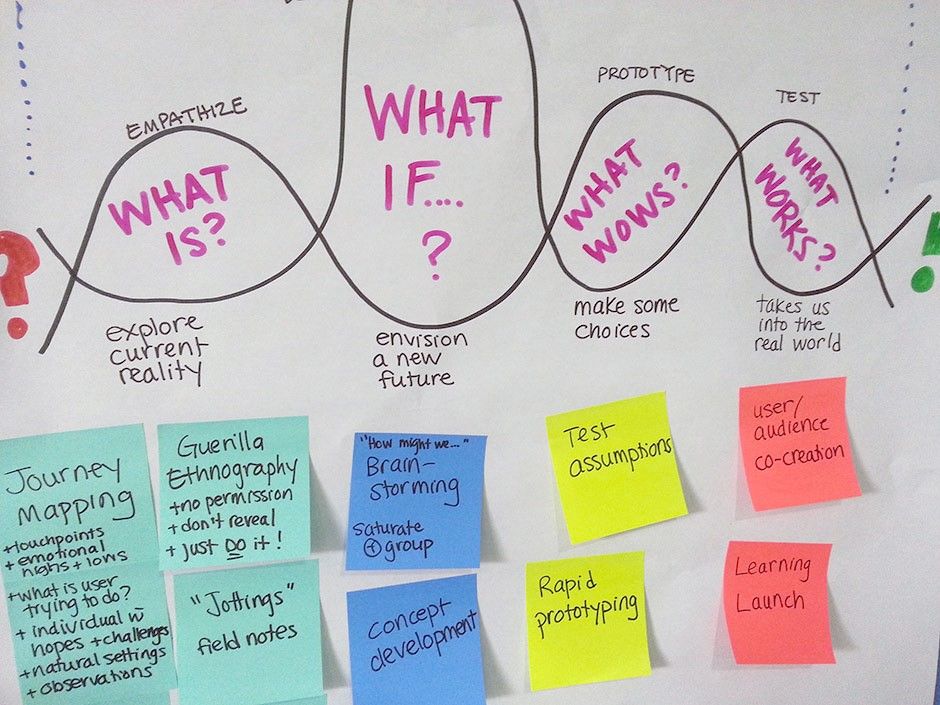
“What if...?”—one of the most powerful phrases in the English language, and for good reason.
© Christine Prefontaine, CC BY-SA 2.0.
10. The LUMA System of Innovation—LUMA Institute
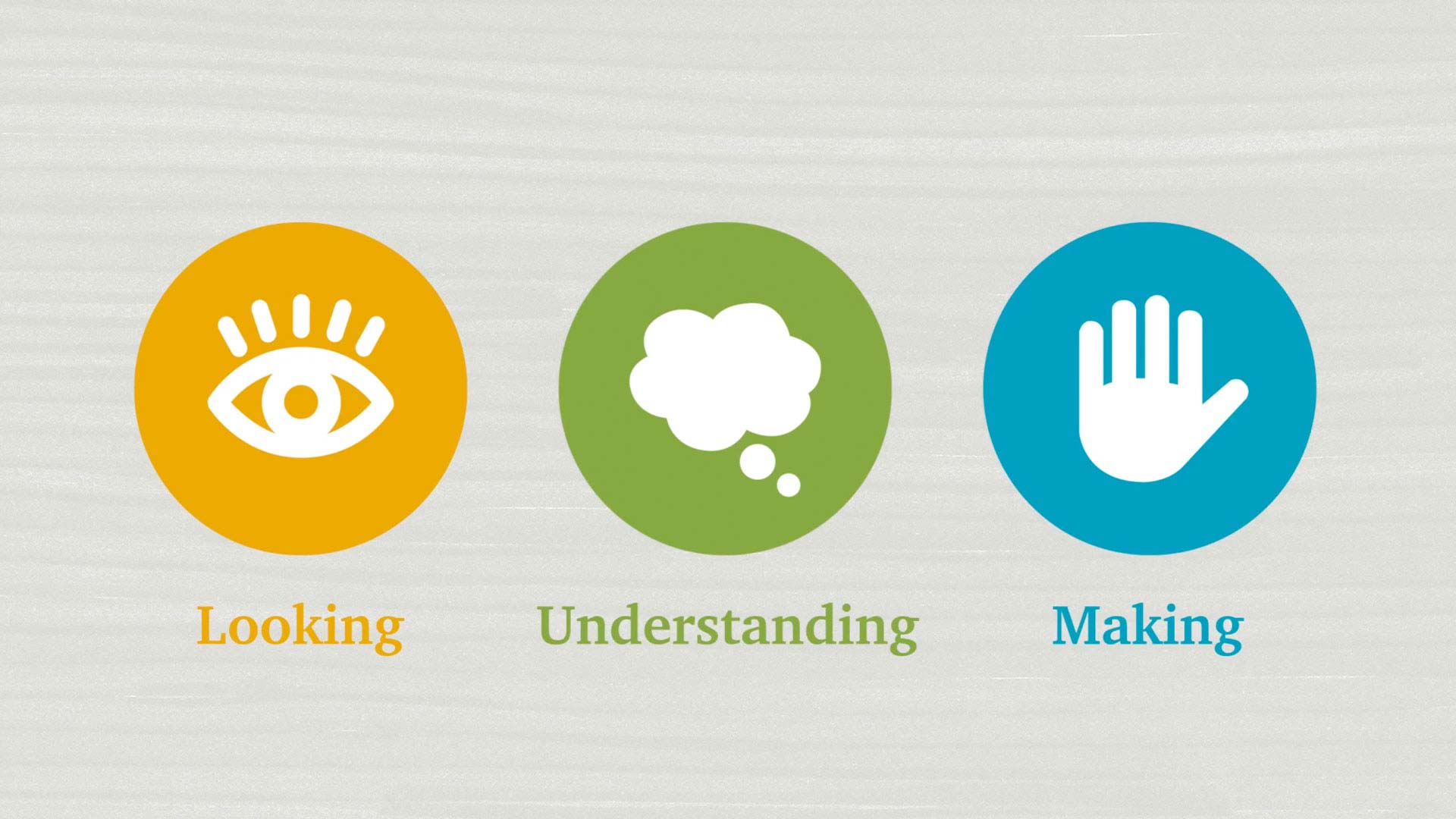
The LUMA System of Innovation process consists of looking, understanding and making.
© LUMA Institute, Public License.
The LUMA Institute is a global firm that teaches innovation and human-centered design. The team at LUMA have developed their own expression of the design thinking process which they have distilled into three key design skills: Looking, Understanding and Making.
They claim their system is flexible and versatile so it can be used for any type of problem, in any type of setting. The process unfolds through either a single set of activities or a combination of multiple methods—the latter being required for more complex challenges.
The Take Away
You could spend weeks exploring the many versions of the design thinking process which exist in the world today. Their differences and similarities are, in fact, celebrations of variety and non-conformity.
Now you’ve read the 10 most popular frameworks above, maybe you’ve decided on a favorite. Regardless of which approach you like the most, it’s important you peel away the steps and terminology and focus instead on its principles. At first sight, the design thinking process can seem mysterious, chaotic and, at times, complex. However, it's a discipline which will mature in you with direct practice. You will learn things in a practical manner and grow in confidence with each new experience of it. You may even be tempted to develop your own expression of these steps, modes and phases to suit a completely new context—that's part of the beauty of design thinking!
References & Where to Learn More
Herbert Simon, The Sciences of the Artificial, 1969.
d.school, An Introduction to Design Thinking PROCESS GUIDE, 2010.
Jeanne Liedtka and Tim Ogilvie, Designing for Growth: A Design Thinking Tool Kit for Managers, 2011.
Images
Hero Image: © Teo Yu Siang and the Interaction Design Foundation, CC BY-NC-SA 3.0.