Why-how laddering is a UX (user experience) research method that helps designers uncover users’ deep motivations and translate them into actionable design solutions. Designers systematically ask “why” to explore underlying needs and “how” to find practical implementations and move from surface-level actions (how) to higher values and reasons (why).
Researchers use why-how laddering in user interviews to uncover deep user insights. Find out how to get the most out of your user interview questions with Ann Blandford: Professor of Human-Computer Interaction at University College London:
How Does Why-How Laddering Help UX Designers?
The power of why-how laddering makes it an effective way for any researcher to explore what goals and motivations individuals have and consider how to meet or exceed them with a solution. It’s more involved than, for example, the decision-making process of someone who wants to buy a friend who likes gardening and cookery a birthday present of seeds for a herb garden. When researchers must drill down deeper into a matter—including to find the true nature and dimensions of that issue—they can use why-how laddering more consciously and purposefully.
The ladder structure involves two key questions: “Why?” and “How?”
To ladder “up” is to ask, “Why?” This question helps uncover the underlying reasons or motivations behind a user’s action or need, which leads to more abstract insights. To ask and obtain answers to this question moves from actions to values; it exposes deeper goals and motivations. Designers use it to understand user intent and ensure that features support meaningful outcomes.
To ladder “down” is to ask, “How?” This question explores the practical steps or features that can fulfill the identified needs, leading to more concrete solutions. This moves from abstract goals to specific tasks or interface elements. Designers use it to ground strategy in action and find how to implement a user-centered design vision.
When researchers alternate between these questions, they can build a ladder of insights that connects specific actions to broader motivations and move down to actionable design elements. They can cover a wide range of points to account for what should go in a solution—and why.
When designers understand the “why” behind user behaviors clearly, they can create and refine solutions that resonate on a far deeper level than if they were to assume or base decisions on what they see on the surface. For example, a user who sells crafts from their small shop might want a feature in a merchant app that saves time—and everybody likes to save time—but also prevents mishaps if they need to use one hand or take their eye off the screen to watch their storefront.
When UX researchers and designers ask “why,” they can get behind the user and discover points that can help them empathize better. For example, the small storeowner who sells crafts at a popular fair might be extremely busy and need to process payments while making sure nobody steals or damages their merchandise. Because many customers won’t use cash, this user needs a solution that can take several forms of electronic payment and confirm funds have transferred instantly. Another consideration may be that the storeowner is older and isn’t used to some cash applications—a potential stressor in a busy environment.
When a designer “climbs” above what’s on the surface with a why-how ladder, they can find the user’s desire to reduce stress and process payments quickly and properly. From there, they can prioritize features that not only save time but also promote ease and simplicity in a busy user scenario. So, they can craft a solution that’s ideal for a small businessowner who might be busy talking to customers, watching their store, and processing payments.
Discover why and how design with empathy helps create more successful solutions, in this video:
The process alternates between asking “why” and “how” to climb up or down the ladder of abstraction—whatever a designer or researcher needs to do to build empathy, clarify user goals, and ensure that features serve meaningful outcomes.
Why Do Designers Need To “Climb”?
Users rarely explain their needs clearly. It’s not because they choose to be difficult or obtuse; it’s just that they often have no concrete idea of the true nature of issues they face, let alone potential solutions to help them. Often, they’ll see their context and problem from an angle where they can’t help it. They might be too close to their everyday lives to be able to get the distance that an observant researcher can use to examine their scenario clearly. A user researcher applies qualitative research methods to access those parts of the user’s world and capture valuable insights—insights from which they can begin to consider how to create the best solution for the user’s needs.
Discover the difference between qualitative and quantitative research and how each kind helps designers create more effective solutions, with William Hudson, User Experience Strategist and Founder of Syntagm Ltd:
It’s impossible to overstate how perspective can define a user’s world and “lock” them into a distorted view of their situation. To illustrate with an analogy, consider two people—a researcher and a user—as they go into a zoo’s aquarium. They stop in different parts of the viewing area where people go to see fish, rays, dolphins, and other water-based “residents” through underwater windows. These windows have curtains covering them. The researcher stands in one spot in the middle of the viewing gallery, while the user goes all the way up to a place by the curtain. Suddenly, the curtain opens. Standing farther back, the researcher admires the tank of stingrays. However, from the position right by the window, where one ray is hovering—with its underside hugging the glass—the user instantly sees a “ghostly face.” The user jumps back in alarm, and then smiles, realizing it’s the animal’s “nostrils” and mouth. Perspective is everything.

Up close, the underside of many rays can create the impression of a ghostly “face”—the real eyes are on the top of the animal.
© Magda Ehlers, Pexels
In UX design, users might want a faster checkout or more personalized results, but the real value lies in why they want those things. Faster checkout might reflect a desire to save time or reduce stress, while personalized results might mirror a need to feel understood. Why-how laddering gives a structured questioning approach to this discovery process. It prevents teams from designing in a vacuum or over-focusing on features without asking what purpose they serve. It also bridges the gap between strategy and execution as it links big-picture goals to interface-level actions. Designers can get the best angles to be able to map user needs, align their designs with user intent, and sharpen focus on delivering meaningful experiences.
The process begins with a user behavior or design feature and asks “why” to uncover the deeper reason behind it. Then it flips to ask “how” to explore the practical steps a designer would take to fulfill that purpose. “How” helps designers break down abstract goals into tangible features. If a user’s goal is to feel more in control, a designer who climbs to “how” might discover the way to implement customizable settings or provide clear feedback mechanisms. The designer can break down abstract needs into concrete functions and connect everyday behaviors to high-level values. In short, it helps teams prioritize what matters.
For example:
Why does the user want to filter search results?
To find relevant content faster.
Why do they want to find content faster?
To feel in control and productive.
How can we support that feeling of control?
By offering intuitive, customizable filters and showing real-time feedback.
Each step reveals a deeper insight or a practical design direction.
What are Practical Uses of the Why-How Ladder in UX Work?
Why-how laddering helps researchers, designers, and other team members as they progress through their design process to gain the clearest view of what users need, why they need it, and—once they have those insights—how to delight them.
User Research
Why-how laddering improves interviews and usability studies; rather than stop at what users say they want, researchers can dig deeper:
“Why do you use that feature often?”
“Why do you avoid this screen?”
“How do you complete this task when the tool doesn’t work?”
A researcher who asks questions like these helps build a richer understanding of user behavior. The technique helps them reveal hidden assumptions and unmet needs that might not surface through other types of approach—such as surveys or closed-ended questions (with “yes/no” answers). For example, design teams can fine-tune their discoveries and embody their research in personas, fictitious representations of real users.
Learn how personas help designers gear better design solutions around what’s really important to their brand’s users, as William Hudson explains how design without personas falls short:
Journey Mapping
When a researcher or designer maps user journeys, laddering helps identify not only what steps users take but why each step matters, too. It highlights emotional triggers and decision points that influence the experience. This informs better prioritization and storytelling in the journey map.
Explore how journey mapping can set designers on the trail of what users truly want in a service, in this video with Frank Spillers: Service Designer, Founder and CEO of Experience Dynamics:
Feature Prioritization
When teams work through their UX design process and product planning, they often face a flood of feature requests and ideas. Why-how laddering helps filter these requests by asking:
Why does this feature matter to the user?
How does it support a broader goal?
Does it align with our value proposition?
When they ask these questions, designers and teams can get distance on the problem, avoid bloated feature sets, and keep the product focused on user outcomes. Here’s how it might look in action:
Feature: Auto-save notes.
Why? To prevent users from losing work.
Why? To reduce anxiety and frustration.
Why? To create a sense of trust and reliability.
How? Show visual confirmation of saving.
How? Store versions for easy recovery.
How? Allow users to restore changes easily without worrying about lost work.
This zigzag pattern ensures that every “how” traces back to a meaningful “why.”
Team Alignment
Cross-functional teams often work at different “altitudes”—and often can have substantially different perspectives. For example, a UX strategist will talk about values, while developers focus on execution. Why-how laddering bridges the gap. It shows how a user’s need for “autonomy” connects to a button that lets them undo actions, or how “saving time” leads to a pre-filled form.
In ideation sessions, the why-how ladder helps teams align quickly, as they use it to reframe vague problems (such as “We need better onboarding”) into actionable plans (“New users feel overwhelmed → they want confidence → we show quick wins in the first 3 screens”).
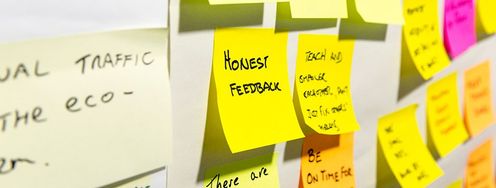
Facilitators can draw ladders on whiteboards or digital tools, and ask teams to start with known issues or design goals and then ladder up and down to find insights and potential solutions.
Get a clear view of how cross-functional collaboration helps teams explore the dimensions of how to meet—and exceed—what users want from a brand and its product, with Laura Klein: Product Management Expert, Principal at Users Know, Author of Build Better Products and UX for Lean Startups.
How to Use Why-How Laddering, Step by Step with Best Practices
Try this general set of guidelines to stand on the “rungs” of insight and move up and down to fine-tune more accurate insights.
Identify a User Need or Behavior
Start with a specific user action or requirement. For example, “Users want to receive notifications.”
Ask “Why?”
Explore the underlying motivation. “Why do users want notifications?” Maybe it’s to stay informed about important updates.
Keep Asking “Why?”
Delve deeper and see what comes up. “Why is staying informed important?” Perhaps it’s so users feel connected and in control.
Reach the Core Motivation
Continue until you reach a fundamental human need, such as the need for security or belonging. Sometimes it takes a few questions, and it’s here where the why-how ladder shares common ground with another helpful research tool in UX design: the 5 Whys method.
Learn how the handy 5 Whys method helps feel out the real edges of problems, with Don Norman: Father of User Experience design, author of the legendary book The Design of Everyday Things, and Co-Founder of the Nielsen Norman Group.
Switch to “How?”
Now you’ve reached the core motivation, it’s time to ask, “How can we fulfill this need?” For instance, “How can we help users feel connected?” This might lead to features like real-time updates or personalized content. Just as the 5 Whys method complements the “why” aspect in why-how laddering, another handy technique is like the “how” aspect—a method where researchers ask “how might we” (HMW) questions.
Explore “how might we” questions as a powerful way to complement research, in this video:
Develop Actionable Solutions
From the “hows” and the “whys,” you and your team can build the insights into design features that address both the practical and emotional needs of users.
Practical Example
Scenario: Users frequently use the “save for later” feature in a shopping app.
Why do users save items for later?
It’s because they want to compare options before they make a purchase.
Why do they want to compare options?
It’s to ensure they make the best choice and feel confident in their decision.
Why is confidence in decision-making important?
It reduces buyer’s remorse and increases satisfaction—no looking back from happier users and customers.
Now, switch to “how”:
How can we help users feel confident in their decisions?
Provide comparison tools, user reviews, and detailed product information.
How can we make comparisons easier?
Implement side-by-side comparison features and highlight key differences—get the information clearly well-positioned so users can minimize the time they’ve shelved the “saved for later” item.
Through this process, designers can create features that not only meet functional needs but address emotional drivers, too.
Find out how emotion and usability work together in great designs, as Alan Dix: Author of the bestselling book Human-Computer Interaction and Director of the Computational Foundry at Swansea University explains:
Best Practices
Be patient: Users might not immediately articulate their deeper motivations; they mightn’t be able to. So, allow the conversation to unfold naturally.
Avoid leading questions: Ensure that your questions are open-ended so users can give genuine responses instead of “yes” or “no”; use neutral language.
Document the ladder: Visual representations can help you identify patterns and connections between different user needs. Post-its or digital canvases work well to help track movement and spot patterns.
Collaborate: Involve cross-functional teams to gain diverse perspectives during the laddering process—non-designers can introduce ideas that a designer might not consider.
Start with real behavior or pain points. Don’t ladder from abstract concepts—keep it real, grounded in real-world perspectives, to save your team from building “castles in the sky.”
Ask “why” to go higher, but stop when the answer becomes too vague. Once you reach a core value (e.g., trust, ease, confidence), don’t overreach; you’re at the top rung.
Ask “how” to explore solutions. This keeps the team grounded—take the time to come back from higher “up” and explore how to meet users’ practical needs and problems.
Discover important tips on how to get the most from what users tell you, as Ann Blandford explains semi-structured interviews:
Special Considerations for Why-How Laddering
Don’t over-interpret answers: Not every “why” leads to a universal truth, so use context.
Don’t force the ladder: If you (or anyone else on the team who’s asking questions) can’t go higher or deeper or the answer becomes repetitive, stop; you’re either at the most extreme level or on the wrong piece of research ground. If it’s the latter, consider a new ladder.
Don’t design only from the top: Don’t skip the “how” steps—big ideas need real execution to bring them down to “user level”; otherwise, they’ll stay on that top rung and serve nobody.
Don’t forget feelings: Laddering should reveal feelings, not just tasks—bring it back to the human being and what user-centric meaning is all about. Trust in your well-made personas for this.
To get back on the “ladder” for another example of how this works, imagine a team who’s designing a task management or productivity app: a user says they want task reminders.
Instead of building reminders outright, the team ladders with questions and insights relevant to the app’s users:
“Why do you want reminders?”
“To avoid missing deadlines.”
“Why does that matter?”
“It helps me feel on top of my work.”
Why is that important?
“It lowers stress and keeps me feeling confident.”
Then they go down:
“How might we support that confidence?”
Let users set their own reminder timing.
Offer morning summaries of due tasks.
Highlight what’s done, not just what’s pending, to build and boost morale and keep momentum high.
Note how the final feature set does more than remind—it supports emotional needs like control and reassurance and plants the feature on solid ground where users can sense it. Users will appreciate that practicality and how it makes them feel. It’s not “floating” above their everyday experience as something the designer assumed they wanted; instead, it speaks to them and is totally relevant to their needs.

A ladder can offer many points of view; just be sure to look carefully at all the branches of ideas—and between them—as you proceed up or down, and keep your balance. (Note: you may have to build your own “guard rail” to prevent “mishaps”).
© Jeremy Levin, Pexels
Overall, why-how laddering helps UX designers stay grounded in what users truly need while being able to get heightened perspectives on the “real deal” of a user’s issue or need. It uncovers deep motivations and highest desires, and ties them to actionable designs. The method sharpens research, aligns teams, and helps ensure that every feature supports a clear purpose—one users will recognize and feel the brand speaking to them through.
The system of inquiry works because it means to ask the right questions in the right order. It doesn’t assume that the team using it knows what users want or the users know what they want—this process is about seeking to understand. When designers and their teams use why-how laddering consistently, they can help themselves prototype, test, refine, and release products that feel intuitive, focused, and meaningful.
Users will rarely know what they want in exact terms—let alone be able to tell designers. For their part, researchers and designers can use the ladder mindfully, and neither get stuck staring at assumptions about features nor trapped wondering into the space above the highest “rung.” Few users will be interested in lofty concepts or philosophies that designers can’t translate to something concrete for them. Because this method links purpose to action, it keeps design human-centered, not feature-driven—and that, at its core, is what great UX design always aims to achieve.