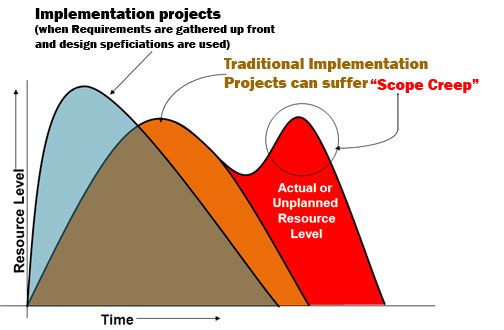
Feature Creep, the Bane of Our Existence

• 8 min read

631 Shares

If you’re ever tempted to answer the question; “How long will it take before this is ready?” with “How long is a piece of string?” then it’s likely that your projects are suffering from feature or scope creep. UX designers, project managers and freelancers alike need to be able to either resist or accommodate feature creep sensibly in order to bring their projects to a successful conclusion.

Feature creep is the bane of our existence. UX designers, project managers, freelancers of almost any description can share their horror stories of feature creep over a cup of coffee or a beer.

What is it? Well, simply put it’s when people start adding features to the scope of work (which is why it’s called scope creep too) after the project has been signed off and started.

Why is it a problem? It’s a problem because it leads to overly-complex products (a UX designer’s nightmare), to delays and cost over runs (the project manager’s problem) and to ridiculous client expectations that all the additional work can be done in no time and at no extra cost (the freelancer’s dilemma).

Feature creep is also called scope creep, creeping featurism and featuritis. It’s not known who coined the phrase but it’s commonly used across all industries where products are designed.

There is also a tendency over the life span of a product for feature creep to turn into “feature bloat” where in a mature market the core product cannot be improved; so features of limited (or indeed no) value are added for the sake of it. In these markets; the only useful improvement is usually going to be disruptive rather than enhancements for the sake of it (rather like the modern day Office-suite which is experiencing declining sales as new features tend to add minimal value for users who are content to stick with their old software rather to the detriment of Microsoft’s bottom line).

Handling Feature Creep as a UX Designer
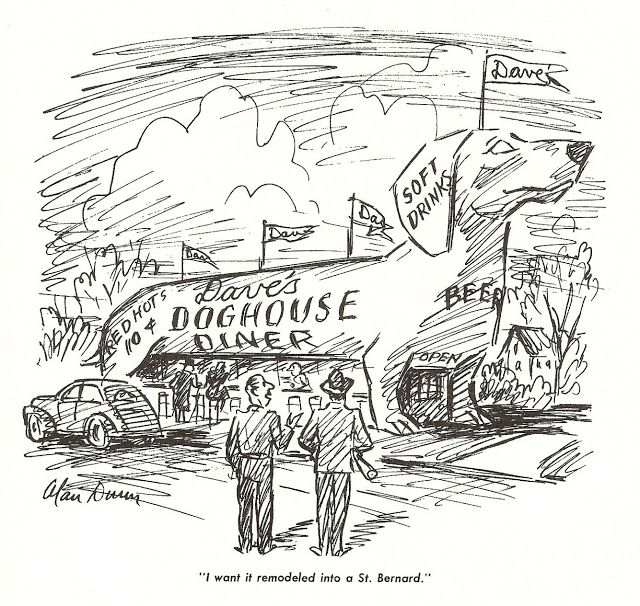

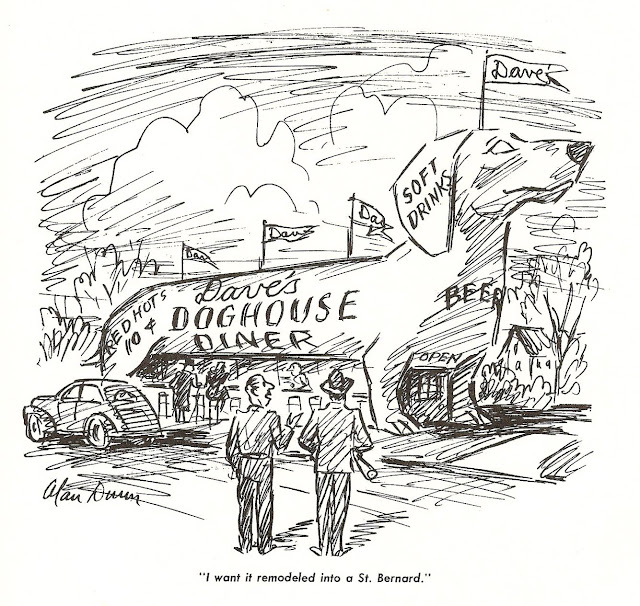
Author/Copyright holder: Alan Dunn. Copyright terms and licence: All rights reserved Img source

It is vital that before you begin work on a project that you have a written scope of work and that it has been agreed to by all your stakeholders. Without this, it’s very difficult to combat feature creep.

Your principle should be to try, as best as possible, to adhere to this scope of work. If new features are requested you should require an agreement of all stakeholders before adding them and that they consider the impact on the project as a whole before doing so.

Of course, you may find that there are times when your research indicates that pursuing a certain course of action is not valuable. At these times you may want to get agreement from stakeholders to ditch that course of action and replace it with another.

Handling Feature Creep as a Project Manager

Feature creep costs money and causes delays; two things that project managers carry the responsibility for. Project managers facing feature creep can often avoid it by having a list of the key features in development and asking the stakeholders to choose one of those features to be eliminated to make space for the new one. (Ideally, you want to indicate clearly which features are still to be developed – you don’t save any time by eliminating a feature that’s already complete).
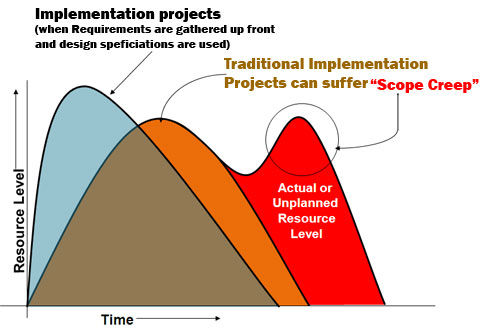

Author/Copyright holder: ETQ Blog. Copyright terms and licence: All rights reserved Img source

If that’s not an acceptable course of action then you need to negotiate a new timeline and budget for the additional work. You should resist feature creep as best as you can as a Project Manager but it’s not always possible and in those instances, it’s better to make room for the new feature in the schedule and budget.

Handling Feature Creep as a Freelancer

To handle feature creep as a freelancer you need two things: a scope of work (just like the UX designer) and a contract with your client that specifies how feature creep will be handled. Otherwise, you may find it impossible to address the problem with your client.

When feature creep arises, you need to identify it early and address it directly with the client. You should explain that it will delay delivery of the product and that it will cost more to get the project finished. If they become agitated by this, draw their attention to the clause in your contract that speaks about feature creep. You’d be amazed at how quickly feature creep disappears when there’s a cost associated with it. You’d also be amazed at how many clients out there expect this extra work to be covered in the original cost estimates if you don’t have a contract to rely on.

Handling Feature Creep in General

The best way to handle feature creep is to keep the project on course and resist new features being added in the current iteration of the project. You can always add additional features in a future iteration. If that’s not possible – you should ensure that everyone involved with the project is clear about the implications of feature creep on cost and timescale. UX designers may also want to stress that increasingly complexity of a product may also reduce its initial usability and the overall user experience.

The Take Away

Feature creep is costly. It bloats projects and products. It slows down delivery of a project. It costs more money too. It’s vital that designers, project managers and freelancers get a handle on how to deal with feature creep early in their careers.

In the worst cases, feature creep can completely ruin a product or project. Stakeholders must be made aware of the impact that it can have on the bottom line.

References

Wikipedia offers an interesting case study of the Sony Walkman as the product reached maturity and began to suffer from feature bloat.

Leardon Solutions give some great tips on resisting feature and scope creep here: http://leardon.com/how-to-avoid-feature-creep-and-scope-creep-tip-3

Want to see the full horrors of feature creep? This great infographic and explanation is by Intercom.

We also like this wonderful cartoon that encapsulates succinctly the damage feature creep does.

Hero Image: Author/Copyright holder: Unknown. Copyright terms and license: Unknown.

Learn More in This Course:

AI for Designers

11 days
13 % booked
View Course

What You Should Read Next

  • Read full article
    What is Interaction Design? - Article hero image
    Interaction Design Foundation logo

    What is Interaction Design?

    Interaction design is an important component within the giant umbrella of user experience (UX) design. In this article, we’ll explain what interaction design is, some useful models of interaction design, as well as briefly describe what an interaction designer usually does.A simple and useful unders

    Social shares
    1.5k
    Published
    Read Article
  • Read full article
    Apple’s Product Development Process – Inside the World’s Greatest Design Organization - Article hero image
    Interaction Design Foundation logo

    Apple’s Product Development Process – Inside the World’s Greatest Design Organization

    Apple’s Product Development Process may be one of the most successful design processes ever implemented. With a valuation that exceeds $2 trillion, there’s a lot that designers can learn from Apple and introduce into their own design environments.Apple is a notoriously secretive business. In Steve J

    Social shares
    1.4k
    Published
    Read Article
  • Read full article
    Shneiderman’s Eight Golden Rules Will Help You Design Better Interfaces - Article hero image
    Interaction Design Foundation logo

    Shneiderman’s Eight Golden Rules Will Help You Design Better Interfaces

    Follow Ben Shneiderman’s 'Eight Golden Rules of Interface Design' if you want to design great, productive and frustration-free user interfaces. Apple, Google and Microsoft are among some of the highly successful companies whose well-designed products reflect Shneiderman’s rules. The characteristics

    Social shares
    1.4k
    Published
    Read Article
  • Read full article
    How to Change Your Career from Graphic Design to UX Design - Article hero image
    Interaction Design Foundation logo

    How to Change Your Career from Graphic Design to UX Design

    If there’s an occupation that is 100% linked with the public’s idea of what design is all about, it’s graphic design. From the familiar golden arches of the McDonald’s brand to the typography and colors of movie posters, graphic designers create some of the most iconic and ubiquitous designs around

    Social shares
    1.4k
    Published
    Read Article
  • Read full article
    The Grid System: Building a Solid Design Layout - Article hero image
    Interaction Design Foundation logo

    The Grid System: Building a Solid Design Layout

    Now that we’ve seen some grids at work in the Rule of Thirds article, let’s examine them a little more deeply. As a concept that deals so fundamentally with the fabric and background of our work as designers, it’s easy to overlook the power of grids and think more about the elements we want to creat

    Social shares
    1.4k
    Published
    Read Article
  • Read full article
    The Principles of Service Design Thinking - Building Better Services - Article hero image
    Interaction Design Foundation logo

    The Principles of Service Design Thinking - Building Better Services

    Service design is all about taking a service and making it meet the user’s and customer’s needs for that service. It can be used to improve an existing service or to create a new service from scratch. In order to adapt to service design, a UX designer will need to understand the basic principles of

    Social shares
    1.4k
    Published
    Read Article
  • Read full article
    A Simple Introduction to Lean UX - Article hero image
    Interaction Design Foundation logo

    A Simple Introduction to Lean UX

    Lean UX is an incredibly useful technique when working on projects where the Agile development method is used. Traditional UX techniques often don’t work when development is conducted in rapid bursts – there’s not enough time to deliver UX in the same way. Fundamentally Lean UX and other forms of UX

    Social shares
    1.3k
    Published
    Read Article
  • Read full article
    Dieter Rams: 10 Timeless Commandments for Good Design - Article hero image
    Interaction Design Foundation logo

    Dieter Rams: 10 Timeless Commandments for Good Design

    Let’s pay a virtual visit to a famous industrial designer’s workshop. By examining the principles of his winning approach, we can incorporate vital elements into our designs in the “less is more” age.As user experience practitioners, most of us have worked with Nielsen and Molich’s 10 heuristics or

    Social shares
    1.3k
    Published
    Read Article
  • Read full article
    The 7 Factors that Influence User Experience - Article hero image
    Interaction Design Foundation logo

    The 7 Factors that Influence User Experience

    User Experience (UX) is critical to the success or failure of a product in the market but what do we mean by UX? All too often UX is confused with usability which describes to some extent how easy a product is to use and it is true that UX as a discipline began with usability – however, UX has grown

    Social shares
    1.3k
    Published
    Read Article
  • Read full article
    10 Free-to-Use Wireframing Tools for UX Designers in 2026 - Article hero image
    Interaction Design Foundation logo

    10 Free-to-Use Wireframing Tools for UX Designers in 2026

    Wireframes help you quickly ideate and test your ideas. While paper wireframes are the fastest to create, digital wireframes look more polished and presentable. If you are looking for a pocket-friendly wireframing tool, look no further.Whether you prefer browser-based apps or offline desktop tools,

    Social shares
    1.3k
    Published
    Read Article

Top Articles

Top Topic Definitions

Feel Stuck?
Want Better Job Options?

AI is replacing jobs everywhere, yet design jobs are booming with a projected 45% job growth. With design skills, you can create products and services people love. More love means more impact and greater salary potential.

At IxDF, we help you from your first course to your next job, all in one place.

See How Design Skills Turn Into Job Options
Privacy Settings
By using this site, you accept our Cookie Policy and Terms of Use.
Customize
Accept all

Be the One Who Inspires

People remember who shares great ideas.

Share on:

Academic Credibility — On Autopilot

Don't waste time googling citation formats. Just copy, paste and look legit in seconds.

Feel Stuck? Want Freedom?

Join 326,035+ designers who get one powerful email each week. Learn to design a life you love.

Next email in
1
day
10
hrs
13
mins
33
secs

Free forever. No spam. Unsubscribe anytime.