Don Norman, the “Father of User Experience,” pioneered user and human-centered design and coined the term “user experience.” An accomplished author, teacher, and practitioner, he is one of the most influential figures in user experience design. His bestselling book “The Design of Everyday Things” introduced many foundational UX design principles.
Watch this video to learn from Don Norman, Founding Director of the Design Lab at the University of California, and Co-Founder of the Nielsen Norman Group, about his history, career, and success:
The Father of User Experience: Don Norman’s Influence on UX/UI Design
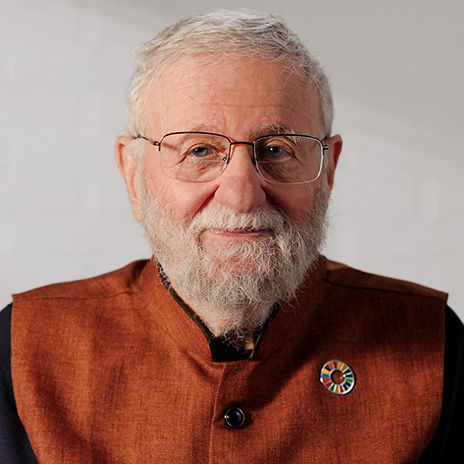
Don Norman’s work and teachings have significantly impacted the development and practice of user experience (UX). This influence has led to many calling him the “Father of User Experience.”
© Interaction Design Foundation, CC BY-SA 4.0
Don Norman has earned his title as the “Father of User Experience” because:
He coined the term “user experience,” commonly known as “UX,” and defined it as follows: “‘User experience’ encompasses all aspects of the end user’s interaction with the company, its services, and its products.”
He defined and developed the concept of “user-centered design” (UCD) and later evolved it into “human-centered design” (HCD).
He wrote The Design of Everyday Things (DOET) (originally The Psychology of Everyday Things (POET)), a landmark book on usability and human-centered design.
He has introduced and popularized several essential UX design principles, such as affordances, signifiers, and the three levels of emotion.
He co-founded the influential user experience consulting and research firm Nielsen Norman Group (NN/g) with Jakob Nielsen.
He is an accomplished academic and lecturer in cognitive science, computer science, and psychology and has influenced the inclusion of UX in many educational programs.
User-Centered Design and Human-Centered Design
User-centered design (UCD) is an approach that focuses on user needs, preferences, and difficulties and puts them at the center of the design process. UCD helps designers create products that align with, resonate with, and delight their users.
Don introduced the concept of user-centered design in his book with co-author Stephen Draper, User-Centered System Design: New Perspectives on Human-Computer Interaction. He later dropped the “system” part and expanded on the approach in his pivotal book, The Design of Everyday Things.
The definition and processes of UCD have evolved over time, and after DOET was published, Don began to call it “human-centered design.” HCD seeks to humanize users by calling them “people” instead of the dehumanizing “users.”
Don explains UCD, HCD, and their evolution in this video:
Human-centered design consists of these four principles:
Human-centered: Focus on all the people who will interact with your design and the contexts in which they will interact with it.
Define the right problem: Always try to solve the root problem, not just the symptoms. If you solve the root problem, the symptoms will disappear.
Everything is part of a system: Consider the big picture and where your design fits into it. If the goal of a system is for people to get to their destination on time, then a ticket machine user interface (UI) design must contribute toward this goal.
Take small, simple steps: Continuously prototype, test, and iterate each component of a design or system to ensure it consistently meets people’s needs.
The Design of Everyday Things
In 1988, Don Norman released his book The Psychology of Everyday Things. Publishers later renamed it The Design of Everyday Things to better represent and market its contents. In DOET, Don says design should align with human psychology to make products intuitive and user-friendly. This approach allows people to understand and interact with everyday objects easily.
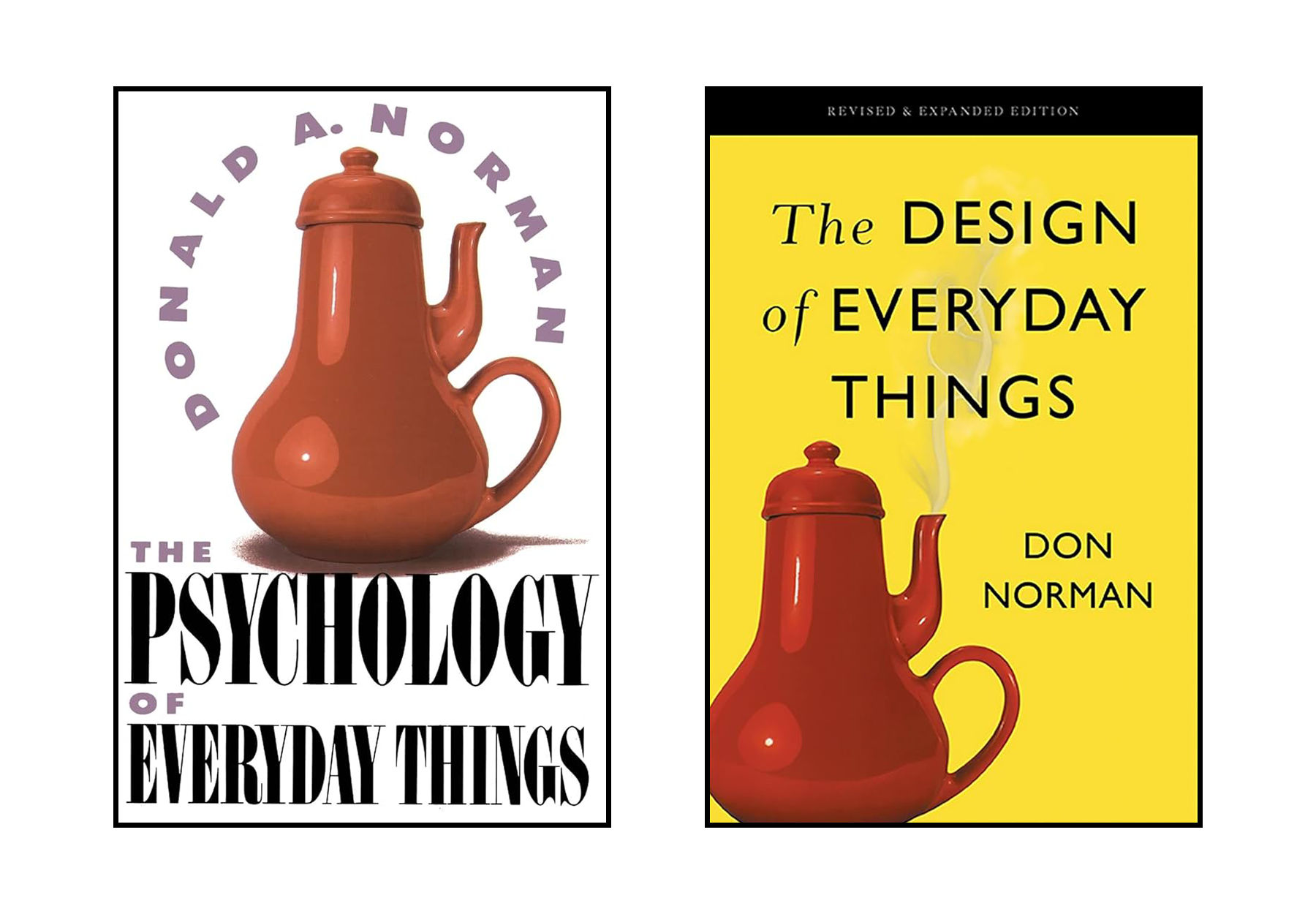
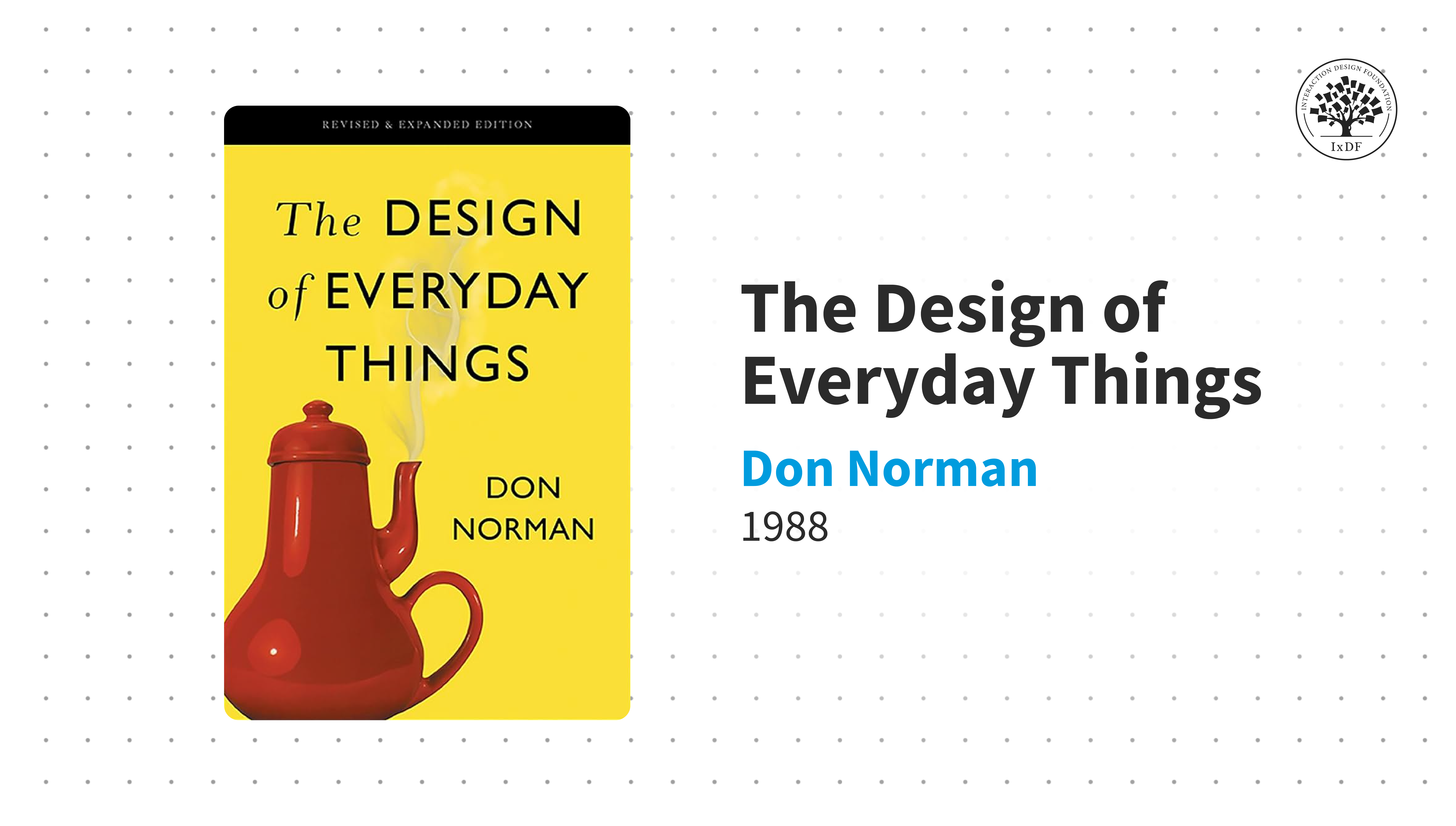
Don Norman revised and expanded his bestselling book, originally titled “The Psychology of Everyday Things,” in 2013. The revised edition includes Don’s evolution of UCD to HCD and introduces signifiers, among other updates. All versions feature the “Coffeepot for Masochists” on the cover—an aesthetically pleasing design with zero usability.
© Basic Books, Fair use
DOET is a groundbreaking book that tops many recommended reading lists for both beginner and experienced designers. In DOET, Don introduced several foundational principles and definitions to the world of UX design. These include:
7 Principles of Design: In DOET, Don introduced six fundamental principles of design that aim to make products and systems easier to use. They do this by examining how people interact with the world around them. Don later added a seventh principle, signifiers, in the updated edition of DOET. The principles are:
Visibility: Ensure users can easily see essential elements so they know what actions are possible.
Feedback: Provide users with immediate responses to actions to confirm the outcomes and guide them.
Constraints: Limit the actions users can take to prevent errors and show them the correct usage.
Mapping: To support usability, create a clear relationship between controls and their effects.
Consistency: Use familiar elements and patterns to make interactions predictable and understandable.
Affordances: Design objects to suggest their use and help users know how to interact with them intuitively.
Signifiers: Provide clear cues or indicators that guide users on how to interact with elements and where actions should take place.
Affordances: Of Don’s principles, affordances and signifiers, in particular, have been widely discussed and adopted in UX design. An affordance is an inherent quality of an object that suggests its function. For example, a door handle affords pushing or pulling—its appearance suggests what you can do with it. Psychologist James J. Gibson introduced the term “affordance” in the late 1960s, and Don adapted it for design.
Signifiers: A signifier communicates the function of an object. In the door example, a label that says either “push” or “pull” clarifies the action you can take. The term “signifier” originated in semiotics, and Don adopted it for design.
7 Stages of Action: This model describes how people interact with products in a goal-oriented cycle. The seven stages help designers create intuitive products, guide users smoothly through each stage, and make every interaction more satisfying.
They form a goal. For example, a user decides to send a message to a friend.
They form an intention. The user intends to open the messaging app and type out their message.
They specify an action. The user plans to tap the app icon, open the conversation, type the message, and press “send.”
They execute the action. They tap the app icon, open the chat, type the message, and press “send.”
They perceive the state of the world. They see a confirmation (for example, a “sent” checkmark) appear next to their message.
They interpret the state of the world. They understand the checkmark means the app has sent the message successfully.
They evaluate the outcome. They reflect on whether sending the message fulfilled their initial goal of communicating with their friend and consider if any further action is needed.
Academia, Industry, and Beyond: Don Norman’s Career in Design
Don Norman has had a varied and successful career across multiple industries. He began in academia, transitioned to industry, founded a company, and then returned to academia.
Academia
Much of Don’s success has stemmed from his cross-disciplinary academic career. He began his academic journey at Massachusetts Institute of Technology (MIT), where he graduated in 1957 with a Bachelor of Science in electrical engineering. He then earned a Master’s in electrical engineering from the University of Pennsylvania.
Next, he shifted his focus to psychology and earned a Ph.D. in 1962 from the University of Pennsylvania. Norman’s interdisciplinary interests led him to positions at Harvard and then the University of California, San Diego (UCSD), where he served as a professor of psychology, cognitive science, and computer science.
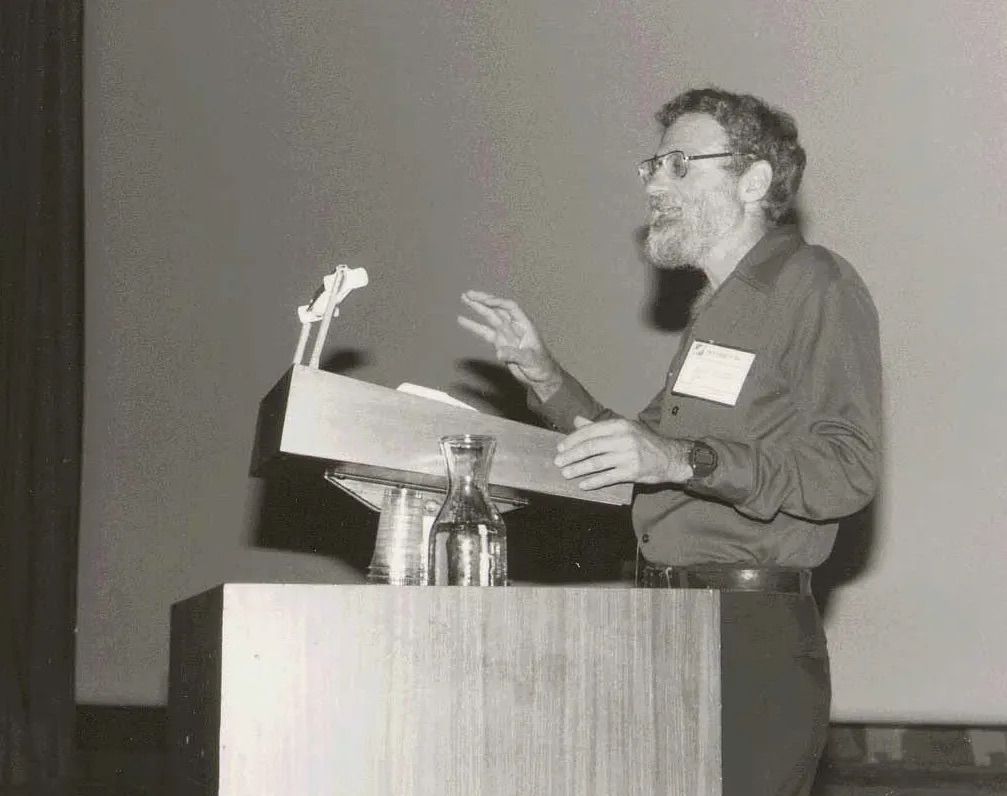
Don is a prolific speaker and lecturer who has presented at many conferences across multiple disciplines. In this image, he speaks at the INTERACT IFIP Conference in London, England, in 1984. As of the 2020s, Don no longer gives talks but prefers to host discussions. He finds discussions more valuable to the audience as he knows his responses will interest them.
© Ben Shneiderman, Fair use
At UCSD, he co-founded the Institute for Cognitive Science and became a leader in human-computer interaction (HCI) and user-centered design. His research during this time focused on human cognition, usability, and the psychology of everyday interactions. This research laid the groundwork for DOET and began his influence in the world of design.
Apple Computer
Don transitioned from academia to industry and joined Apple Computer in 1993 as an “Apple Fellow.” This position was very high in the company, and it allowed Don the freedom to do as he wished. He noticed Apple’s reputation for excellent usability was beginning to fade and made it his mission to change this. Don collaborated with Tom Erickson and Harry Saddler to form the “User Experience Architect’s Office,” and Don became a “User Experience Architect”—the first instance of “user experience” in a job title.
Thanks to Don’s and the group’s work, Apple placed user experience at the same level as marketing and engineering in their product development process. This achievement led to a strong focus on UCD within Apple. When Don’s boss, the Advanced Product Group Vice President, was promoted, Don assumed the vacant role until he left the company.
Nielsen Norman Group (NN/g)
After he left Apple, Don formed the Nielsen Norman Group in 1998 with usability expert Jakob Nielsen. NN/g is dedicated to enhancing the field of user experience and helping companies design human-centered products. The company also produces evidence-based research and provides industry-recognized training and UX certification.
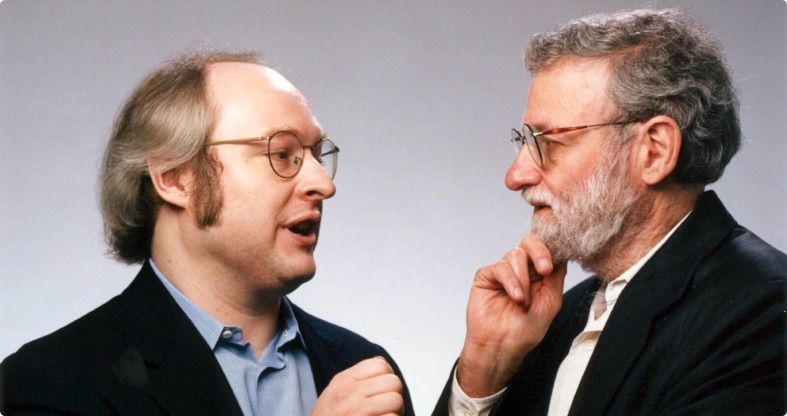
Don Norman (right) and Jakob Nielsen (left) are two prominent voices in UX, usability, and human-centered design. NN/g’s research has strongly influenced how designers understand user behavior today. Their work has especially affected web and mobile experience design.
© Don Norman (jnd.org), Fair use
Return to the University of California
Don returned to the University of California, San Diego, in 2014 to become the founding director of The Design Lab, an interdisciplinary research center dedicated to advancing human-centered design. The lab seeks to promote design thinking as an approach to problem-solving across industries. Its work has focused on:
Human-computer interaction
Large-scale education
Automation
Healthcare
Visualization of complex phenomena
Public health
The future of work
Ethical concerns of growing importance
In this video, Don Norman explains the role that design and designers can play in tackling wider social issues:
Retirement
Don retired from UCSD in 2020 but remains a leading voice in user experience, cognitive science, and design. He serves on multiple advisory boards, hosts discussions at conferences and events, and launched the Don Norman Design Award and Summit (DNDA) in 2024.
DNDA is a worldwide platform for new designers and educational groups to show projects that positively impact society. The award also organizes an international meeting for all groups working to improve society through humanity-centered design.
In this video, Don explains the idea and purpose behind the awards:
Other Work and Achievements
In addition to the above, Don Norman has:
Worked for Hewlett-Packard (HP) as an executive.
Been a fellow at the design and consulting firm IDEO.
Been a member of the board of trustees for many organizations, including the Interaction Design Foundation, Institute of Design at the Illinois Institute of Technology (ITT), and Nissan Research Center.
Been granted Emeritus status at UCSD, ITT, and NN/g.
Received many honors and awards, including the Sir Misha Black Medal for distinguished service to design education.
Essential Literature: A Selection of Don Norman’s Books
Throughout his career, Don has published several impactful books on design. Below is a selection of his most prominent works.
The Design of Everyday Things, Revised and Expanded Edition
© Basic Books, Fair use
The Design of Everyday Things is ideal for anyone interested in design, including beginners and experienced designers, engineers, and product managers. Even non-designers who want to know why some products are easy to use and some are not can learn from this book.
Readers will learn:
The basic principles of good design.
How to think from the user’s point of view.
How to make products simple and user-friendly.
How to create designs that meet user needs.
Don has built significantly on his work since the release of DOET and, in this video, shares the skills designers need to create successful solutions in the 21st century:
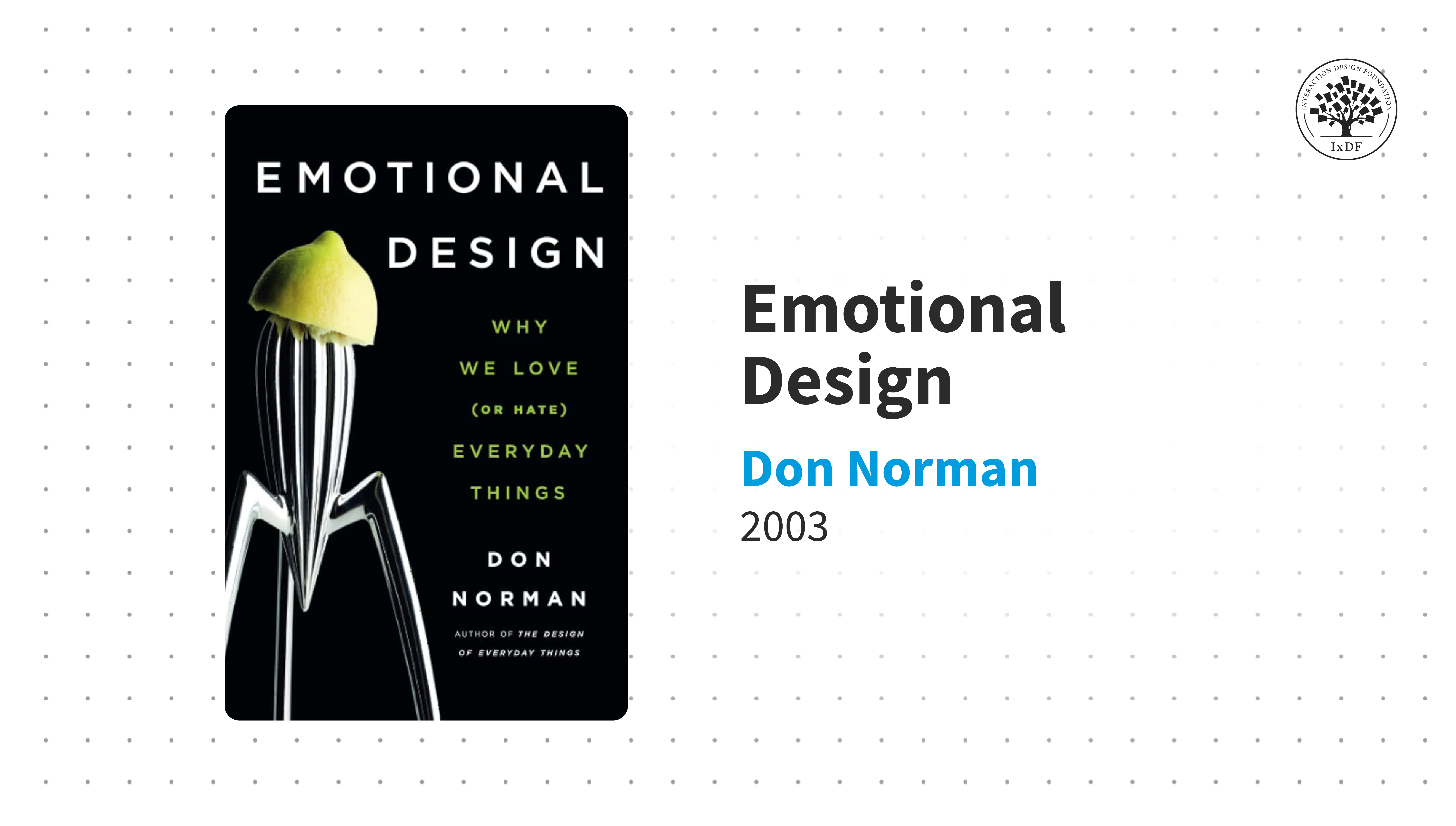
Emotional Design: Why We Love (or Hate) Everyday Things
© Basic Books, Fair use
Emotional Design explores how emotions profoundly influence the way we perceive and interact with everyday objects. This book reveals why attractive designs work better and how to use emotion in the design process to build more engaging and successful products.
Readers will learn:
The three levels of emotion: visceral, behavioral, and reflective.
How emotions affect our perceptions and interactions with products.
How aesthetics enhance user satisfaction.
How to create designs that evoke positive emotional responses.
Insights into why we form emotional attachments to certain products.
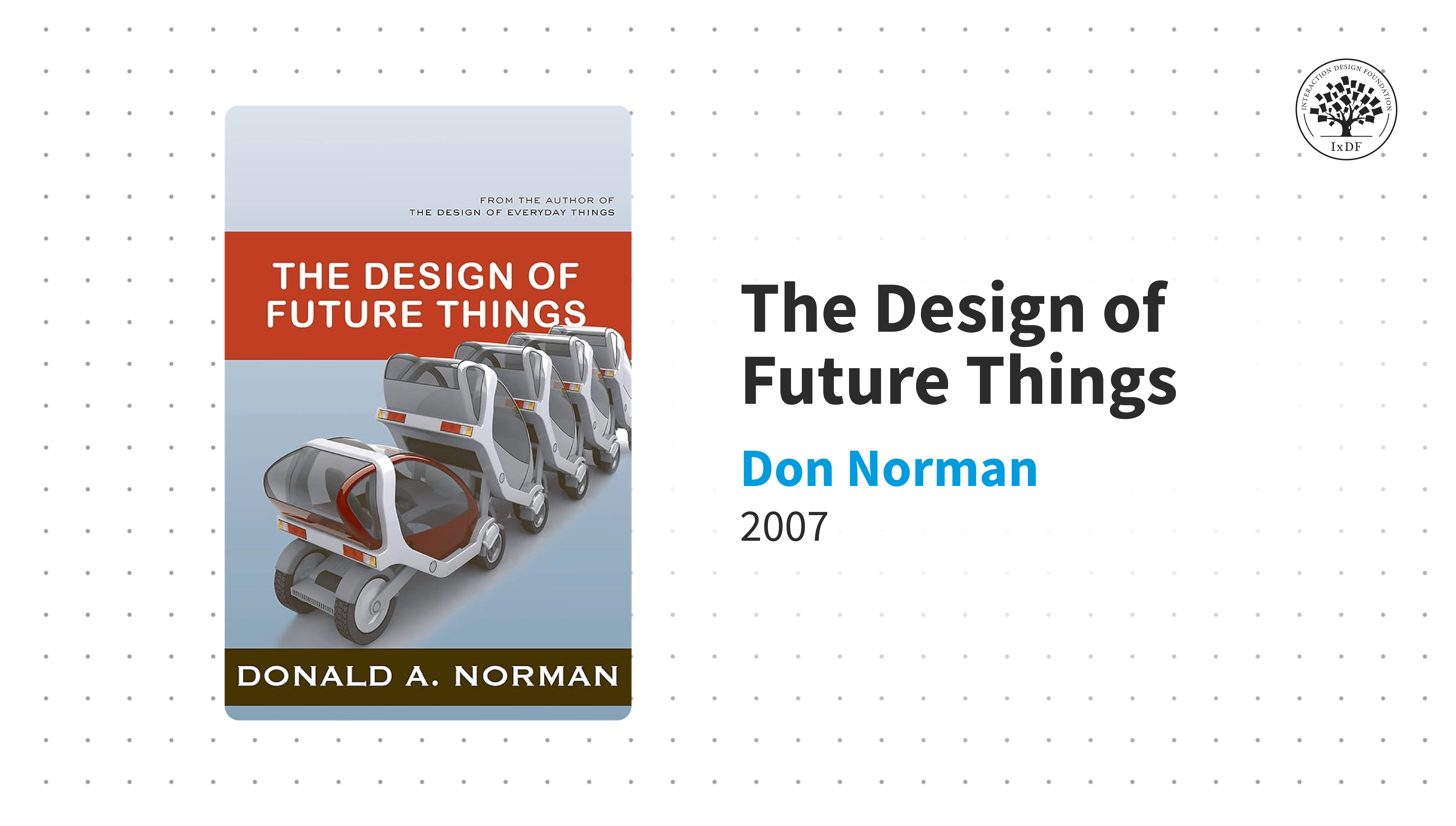
The Design of Future Things
© Basic Books, Fair use
The Design of Future Things explores the evolving relationship between humans and intelligent machines. Don examines how automation and smart devices are changing our lives. He emphasizes that designers should anticipate human needs and behaviors in an increasingly complex world to create fitting technologies.
Readers will learn:
The challenges of designing for autonomous and intelligent systems.
How to create technologies that communicate effectively with users.
The significance of human-centered design in the era of smart machines.
How to enhance interaction between people and advanced technologies.
Insights into the future trends of design and technology integration.
In this video, Ioana Teleanu, Senior Product Designer of AI at Miro, explains why designers must lead the way and design for trust and transparency in Artificial Intelligence (AI):
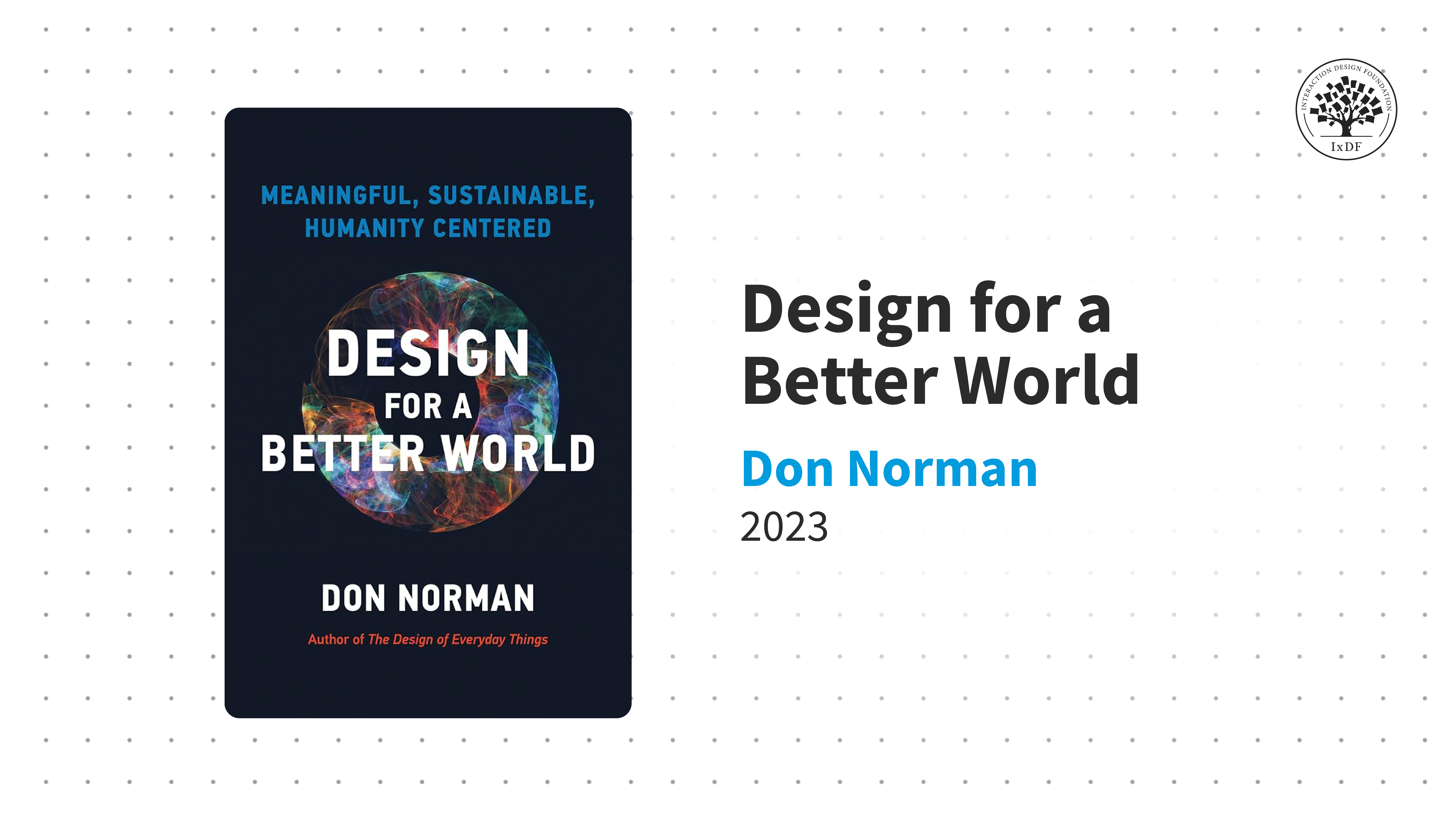
Design for a Better World: Meaningful, Sustainable, Humanity Centered
© The MIT Press, Fair use
Design for a Better World offers an insightful look into how design can address global challenges and improve society. This book is ideal for designers, engineers, architects, policymakers, and anyone passionate about the power of design to create positive change. Don invites readers to rethink traditional design approaches and focus on sustainability, social responsibility, and humanity-centered solutions that benefit everyone.
Readers will learn:
The principles of humanity-centered design.
How design can contribute to sustainability and social well-being.
Strategies for creating meaningful and impactful solutions.
How to tackle complex global issues through design thinking.
In this video, Don Norman explains how if everything about the way we live is designed, then we can use design for the better:










.jpg)


#/media/File:Ed_lines.jpg)