Divergent thinking is an ideation mode which designers use to widen their design space as they begin to search for potential solutions. They generate as many new ideas as they can using various methods (e.g., oxymorons) to explore possibilities, and then use convergent thinking to analyze these to isolate useful ideas.
“When you’re being creative, nothing is wrong.”
— John Cleese, Famous comedian and actor
Convergent and divergent thinking
Divergent Thinking Can Open up Endless Possibilities
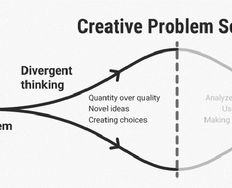
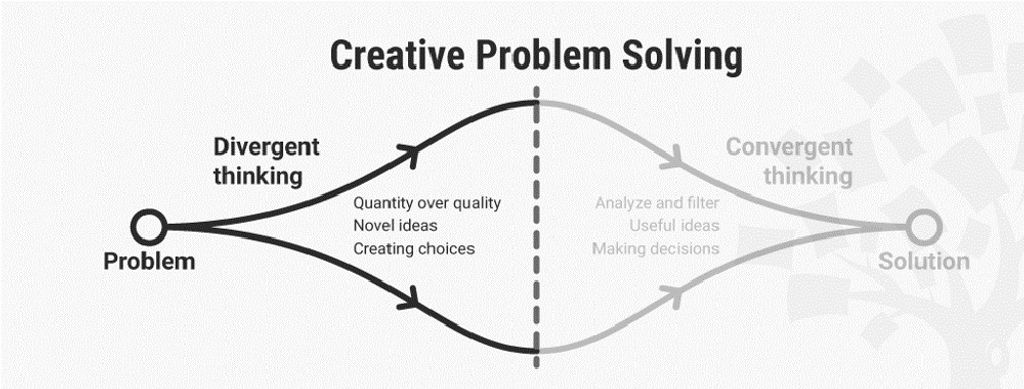
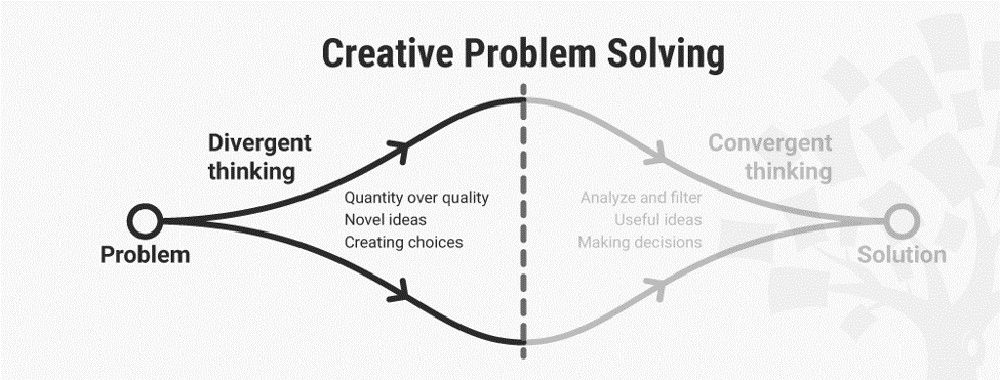
The formula for creativity is structure plus diversity, and divergent thinking is how you stretch to explore a diverse range of possibilities for ideas that might lead to the best solution to your design problem. As a crucial component of the design thinking process, divergent thinking is valuable when there’s no tried-and-tested solution readily available or adaptable. To find all the angles to a problem, gain the best insights and be truly innovative, you’ll need to explore your design space exhaustively. Divergent thinking is horizontal thinking, and you typically do it early in the ideation stage of a project. A “less than” sign (<) is a handy way to symbolize divergent thinking – how vast arrays of ideas fan out laterally from one focal point: Design team members freely exercise their imaginations for the widest possible view of the problem and its relevant factors, and build on each other’s ideas. Divergent thinking is characterized by:
Quantity over quality – Generate ideas without fear of judgement (critically evaluating them comes later).
Novel ideas – Use disruptive and lateral thinking to break away from linear thinking and strive for original, unique ideas.
Creating choices – The freedom to explore the design space helps you maximize your options, not only regarding potential solutions but also about how you understand the problem itself.
Divergent thinking is the first half of your ideation journey. It’s vital to complement it with convergent thinking, which is when you think vertically and analyze your findings, get a far better understanding of the problem and filter your ideas as you work your way towards the best solution.
A Method to the “Madness” – Use Divergent Thinking with a Structure
Here are some great ways to help navigate the uncharted oceans of idea possibilities:
Bad Ideas – You deliberately think up ideas that seem ridiculous, but which can show you why they’re bad and what might be good in them.
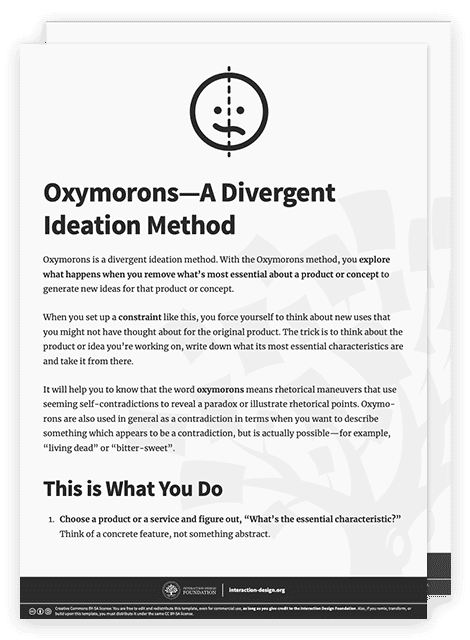
Oxymorons – You explore what happens when you negate or remove the most vital part of a product or concept to generate new ideas for that product/concept: e.g., a word processor without a cursor.
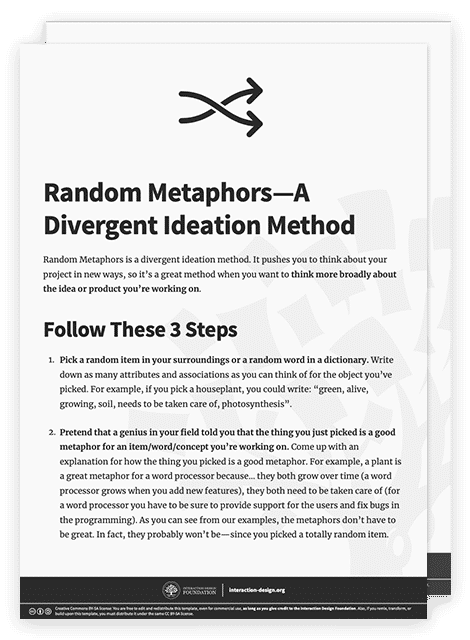
Random Metaphors – You pick something (an item, word, etc.) randomly and associate it with your project to find qualities they share, which you might then build into your design.
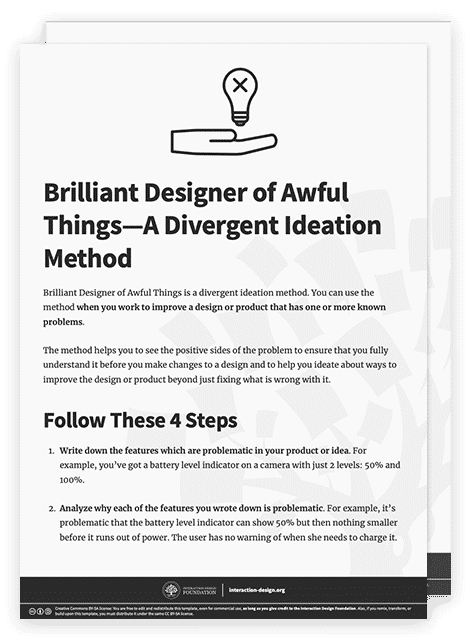
Brilliant Designer of Awful Things – When working to improve a problematic design, you look for the positive side effects of the problem and understand them fully. You can then ideate beyond merely fixing the design’s apparent faults.
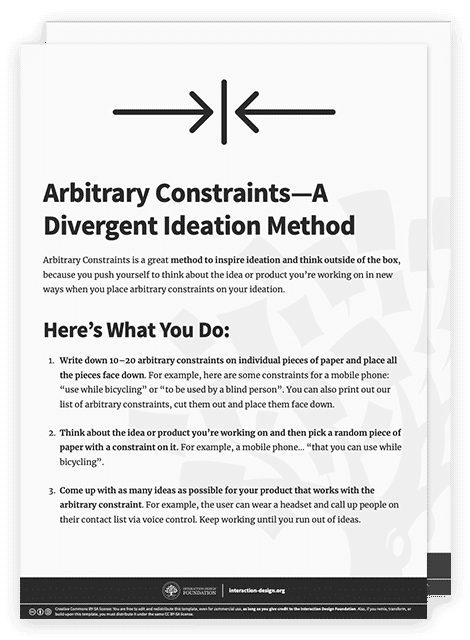
Arbitrary Constraints – The search for design ideas can sometimes mean you get lost in the sea of what-ifs. By putting restrictions on your idea—e.g., “users must be able to use the interface while bicycling”—you push yourself to find ideas that conform to that constraint.
© Yu Siang and Interaction Design Foundation, CC BY-SA 3.0