Ideation is the creative process UX (user experience) designers use to generate a wide range of ideas that solve user problems. You use it with your team to move beyond the obvious and explore potential solutions in depth. Then you choose which ideas to develop further through prototyping and testing. With structure and collaboration, ideation helps you identify the most effective solutions to correctly defined problems.
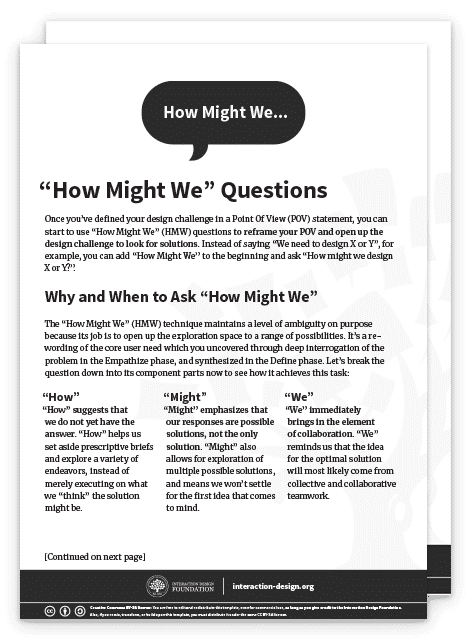
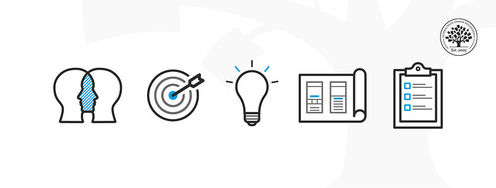
Explore the five phases of the design thinking process here, and how this flexible, iterative design process drives innovation you can count on.
How to Run an Ideation Session Effectively
Ideation may sound self-explanatory, almost too obvious and “organic” a stage in the UX design process to approach with an analytical mindset. However, it’s virtually impossible to overstate its importance. One reason is the misconception that great ideas “just happen.” Although wonderful notions can sometimes come from “out of the blue,” a deliberate approach is best.
Use this step-by-step approach to get the most out of your ideation sessions.
Step 1: Frame the Right Problem
Before you start ideating, you need to know the design challenge and what’s involved. Make sure you’ve got:
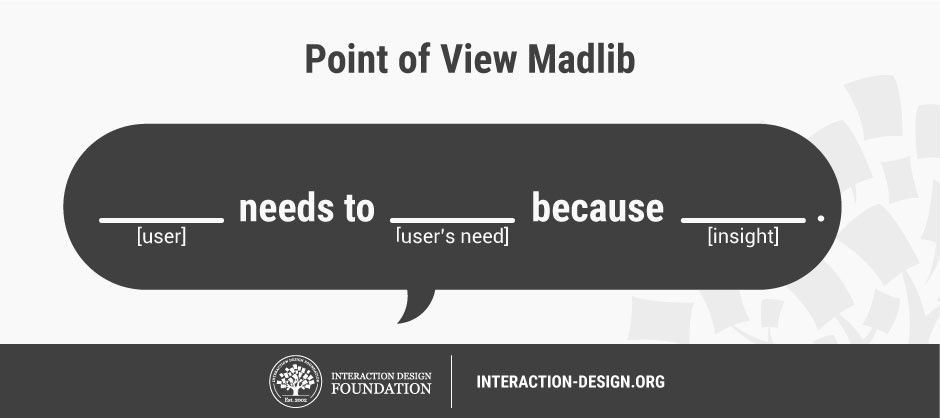
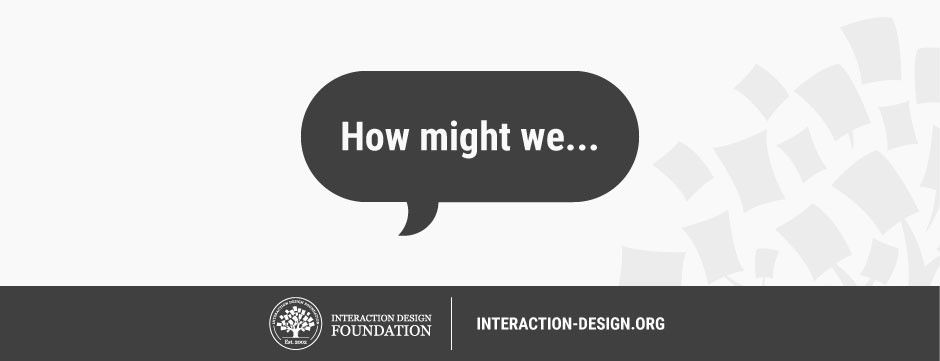
A clear problem statement or “How might we…” question that you have rooted in user insight and design constraints: for example, “How might we help remote workers feel connected through our collaboration tool?”
A shared understanding of user needs, pain points, and context. For this, it’s wise to create some personas (research-based representations of real user groups) you can empathize with and plug into your design process.
In this video, William Hudson: User Experience Strategist and Founder of Syntagm Ltd., explains how personas help you keep real users at the center of your design process.
Established constraints, such as technology, business goals, brand, and budget, so your team can push creativity within realistic boundaries to rein in the more extravagant ideas you might generate at first.
In this video, William Hudson explains how clearly identifying constraints early, including requirements like accessibility compliance and data encryption, helps you frame the right problem and avoid costly rework later in development.
A prepared space, facilitator, materials (whiteboard, sticky notes, markers), and a mindset that fosters open generation of ideas.
Step 2: Set the Stage and Rules
In terms of “venue,” you might run in-person workshops (with sticky notes, whiteboards); remote sessions (using digital whiteboards); individual sketching or silent idea generation followed by group sharing; or contextual ideation (in the field, or using roleplay, bodystorming, or scenario creation).
You’ll want structure and rules to serve a key part in ideation, though not to stifle creativity. So:
The facilitator should explain rules like: “No idea is too wild,” “Go for quantity over quality,” “Build on each other’s ideas,” “Avoid off-topic tangents,” and “Suspend judgment.” You need a judgment-free environment, so encourage wild ideas first, and then let them evolve into more realistic solutions.
Decide on a length for the ideation session, such as 30–60 minutes.
Orient the group with a warm-up exercise if they need to break the ice, and remind everyone to keep an open mindset.
Provide materials for in-person sessions, like sticky notes, markers, and sketch pads.
Step 3: Use Generative Techniques
Select one or more ideation techniques that fit your team and challenge, including:
Brainstorming: This classic verbal idea sharing approach can work wonders in a group.
In this video, William Hudson explains how to run an effective brainstorming session that sparks creativity and collaboration.
Brainwriting / Brainwalking: In these brainstorming variants, participants write down ideas, pass them on, or rotate between stations.
Crazy eights: Each participant folds a sheet into eight panels and quickly sketches eight ideas in eight minutes.
Mind-mapping: Write a keyword in the center and draw branches of associated ideas, then connections between them. It’s useful for exploring a large idea space.
Bad ideas: Encourage everyone to come up with bad ideas deliberately, to discover what makes them “bad” and find useful insights. You’ve also got the worst possible idea approach, where you invite the group to propose hilariously bad solutions and then flip them into useful ones. The weirdest, wildest, and worst ideas can help break inhibitions and reveal hidden directions to optimal design destinations.
In this video, Alan Dix: Author of the bestselling book “Human-Computer Interaction” and Director of the Computational Foundry at Swansea University, shows you how deliberately creating bad ideas can spark unexpected creativity and lead to innovative solutions.
Bodystorming / Roleplay: Physically act out the scenario or simulate the environment to spark ideas. It’s a famously useful technique as it helps team members get closer to empathize with users as they can feel more what it’s like to be them.
In this video Frank Spillers: Service Designer, Founder and CEO of Experience Dynamics, shows you how bodystorming and role play can help you experience user interactions firsthand.
You can combine techniques in one session, such as mind-mapping and then crazy eights, for example.
Step 4: Capture and Record Everything
Even ideas that feel silly or irrelevant might spark a later insight, so don’t let them get away. Capture all ideas on sticky notes, digital boards, or whiteboards. Document who said what, if needed, and keep a photo or export of the board so the resource is there to tap. You might have some “diamonds in the rough”; don’t overlook them.
Step 5: Sort, Cluster, and Refine Ideas
Once idea generation slows, you’ll likely have explored most, if not all, of what you can. The strength of divergent thinking means you should have a wide variety of ideas, so now it’s time to switch to convergent thinking and look at what you have and sift and sort it all to find useful ideas.
So, move into a clustering or affinity-mapping activity: group similar ideas, identify themes, merge duplicates, and highlight interesting directions. Begin narrowing toward feasibility and alignment with constraints so you can filter ideas that are creative and feasible.
Find valuable insights as this video explains how affinity diagramming helps you organize and cluster ideas to uncover key patterns and insights.
Pick one or more ideas to develop further, in the prototyping and then testing stage. Use criteria such as user value, business viability, technical feasibility, and uniqueness. Store other ideas for future use; not all ideas will be viable right now.
Step 6: Transition to Prototyping
Once you’ve selected promising ideas, hand them over to the team for prototyping, storyboarding, sketching or wireframing. Early prototyping empowers you to quickly find answers about your idea for a possible design solution. From testing it with users, you’ll come away with essential insights as to what works and what doesn’t. Note that ideation doesn’t stop here; you may repeat the process as you test and learn.
Explore how prototyping and iteration help you refine designs through user testing and continuous improvement in this video with Alan Dix.
The Benefits of Ideation
Ideation represents a crucial transition: a bridge from user research and problem definition into solution exploration. Here are some key reasons why good ideation matters.
Expands Possibilities and Supports Innovation
When you deliberately widen your thinking and approach it as a dedicated activity, you create space for unexpected, creative responses to user needs. First, concentrate on idea generation itself and mentally “go wide” in terms of concepts and outcomes. When you adopt effective ideation techniques, you can challenge assumptions you might not realize you have. From there, you can access new angles to examine the problem and surface valuable insights on where to go for a solution.
Anchors Ideas in a User-Centered Context
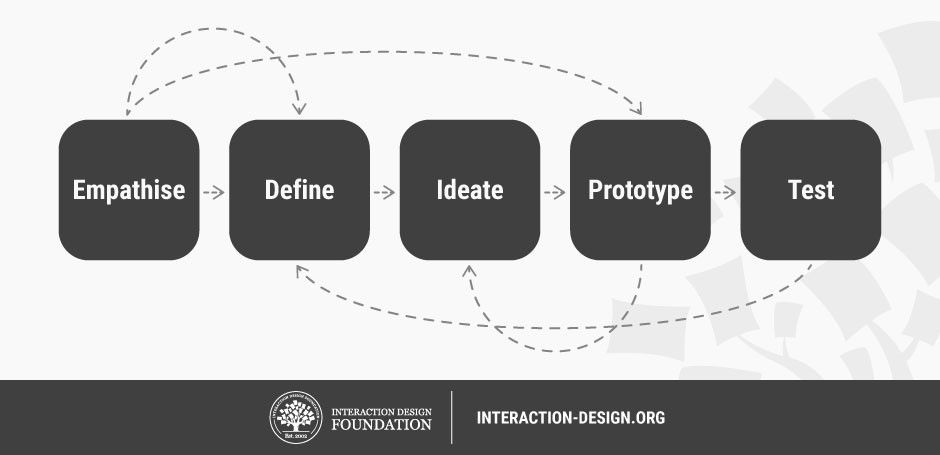
Because ideation follows design thinking’s empathize phase (where you research your target audience to understand their user needs and more) and define phase (where you isolate and define the right problem these users face), the ideas you generate remain grounded in real user needs rather than personal preferences or technology hype. With that alignment, target users will more likely find your solution meaningful and usable. For even the most complex problems, ideation often can help crack the “code” you need to determine what users really want, not what you (or they) think they might want.
Avoids Premature Commitment to One Solution
Ideation helps you keep the door open so you can explore many paths without committing resources to detailed designs. One of the dangers of design work is that design teams can jump to conclusions based on assumptions or go along with the first promising-looking idea. However, when you ideate you can think ahead without making commitments and avoid wasted time or effort on ideas you end up not using.
Encourages Collaboration and Shared Ownership
Running ideation workshops makes great sense. It fosters cross-disciplinary collaboration, engages people from different backgrounds and skill sets, brings in diverse perspectives, and helps team members align around possibilities rather than just technical or business constraints. Ideating with other teams, such as marketing, development, and business stakeholders, can stoke the “fires” of creativity tremendously. You can light your way to examine the true problem more fruitfully, and from more angles, and find the best viewpoint on what’s needed in a solution.
Sets the Stage for Prototyping and Testing
The output from ideation becomes the input for you and your design team to advance to prototyping and experimentation in the best direction. From the many ideas you’ll likely generate in divergent thinking, where you push the limits to explore a vast array of possibilities, you then narrow your focus on the most promising options in convergent thinking. And through further refining at this stage, you can find great ideas to prototype and test if they’re valid.
In this video, Alan Dix explains how divergent and convergent thinking work together to turn creative ideas into practical design solutions.
Overall, treat ideation not as an exercise in “we generated ideas” but “we selected ideas to explore.” Like myths about creative individuals, misconceptions about ideation may lead some people in the organization, especially business stakeholders, to misread it as an excuse to waste time under the guise of “creativity.” Nothing could be further from the truth. Blue-sky ideation can cover almost innumerable angles before you zero in on promising contenders. Plus, the team-building in ideation sessions enables groups to gel together around a common goal of participation and team-ownership of a golden opportunity.
Perhaps best of all, because ideation is not a “one-and-done” activity but circular, you and your team can re-explore new avenues as you move back and forth in your design process. The right solution is out there, waiting for you. You may unwittingly find the doorway to it and won’t realize it at first. Or it might just take a fresh ideation effort to push into that section of the vast idea space and lock onto the “coordinates” of an exceptionally powerful solution. From there, you can bring it down to “street level” and fine-tune your way to serving up a truly innovative and successful digital solution, one which users will love your brand for delighting them with.









 Author/Copyright holder: Teo Yu Siang and
  Author/Copyright holder: Teo Yu Siang and Interaction Design Foundation. Copyright terms and licence: CC BY-NC-SA 3.0
 Author/Copyright holder: Teo Yu Siang and Interaction Design Foundation. Copyright terms and licence: CC BY-NC-SA 3.0
 Author/Copyright holder: Teo Yu Siang and Interaction Design Foundation. Copyright terms and licence: CC BY-NC-SA 3.0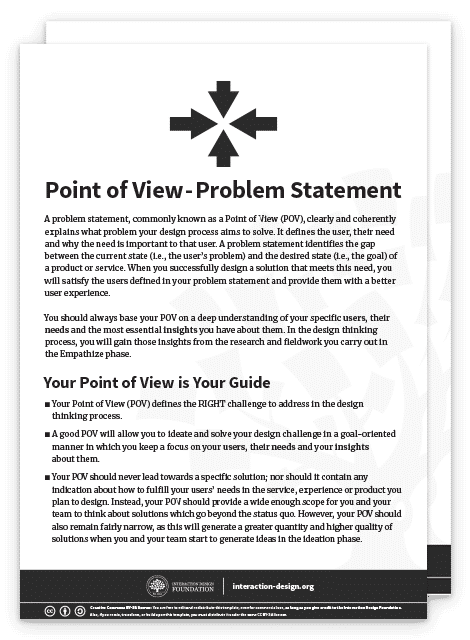
 Author/Copyright holder: Teo Yu Siang and Interaction Design Foundation. Copyright terms and licence: CC BY-NC-SA 3.0