Your constantly-updated definition of UX Career Development and collection of videos and articles. Be a conversation starter: Share this page and inspire others!
5,421 Shares
What is UX Career Development?
UX career development is the activity professionals take to grow into more fulfilling user experience design roles. They can create career maps to measure their progress and stay focused in the right direction. Whatever their role, individuals should invest in themselves to avoid stagnation and realize their potential.
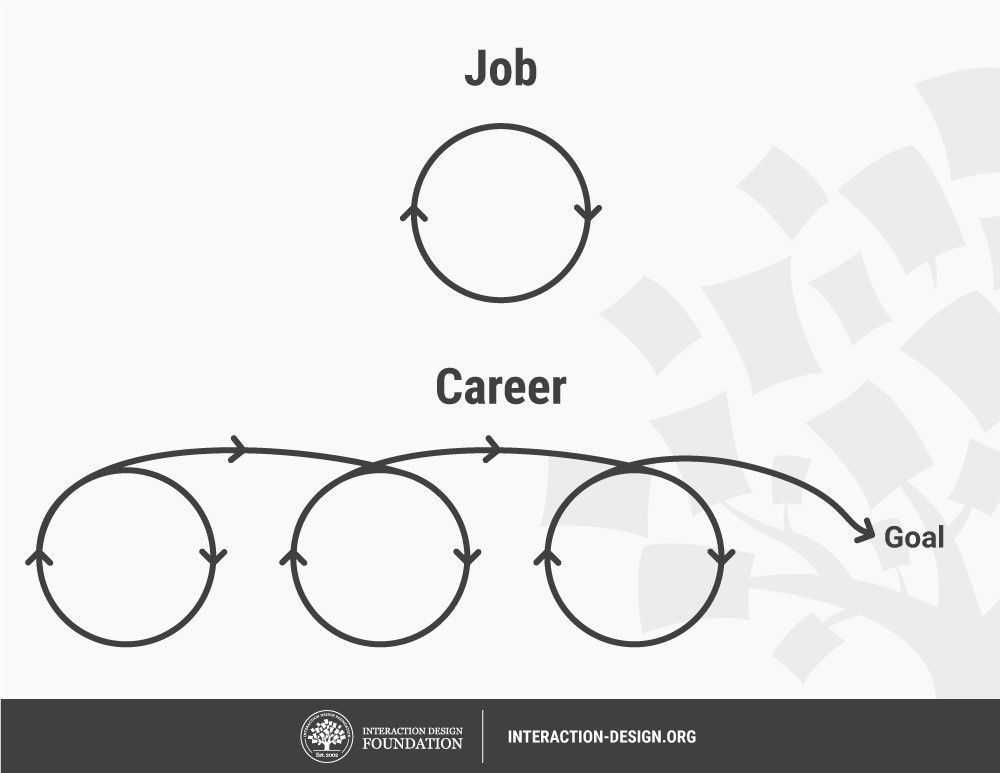
Your UX career development is a journey you should plan. However the role begins—e.g., networking—a career map helps you focus on long-term goals, find relevant shorter-term ones and stay motivated as you log your progress. So, as you deliver on job expectations, you can invest in your career and master your expertise.
"Obstacles can't stop you. Problems can't stop you. Most important of all, other people can't stop you. Only you can stop you.”
– Jeffrey Gitomer, Author, professional speaker & business trainer
See why following your passion and doing great work is the most important career development device for a junior designer.
UX Career Development—Set a Course to Meet a Happier Future You
Whatever your proficiency and career status in user experience (UX) design, the only way to advance is to work on yourself. That means to focus on growing your skillset and planning actionable goals. These should become vital stops on a liberating personal voyage. The alternative is to stay on a “safe”, familiar plateau—to keep practicing your craft as “a job” and hope years of hard work will somehow automatically catapult you to somewhere better. The reality is that a circular path leads nowhere. Career satisfaction is about proactive self-actualization—tapping the resources you find and taking the time to strategize how to blossom into what (and where) you want to ultimately be, stage by stage while leading a productive work life.
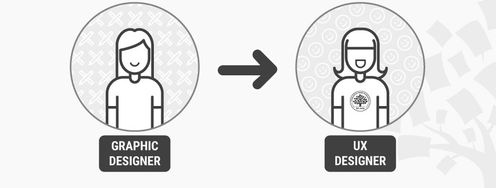
As UX tools and UX roles keep evolving, this is a risky industry in which to stagnate, regardless of how content or accomplished professionals may feel. There’s always something new to learn, to stay competitive. If you’re applying straight from university/college or hoping to side-step from, e.g., graphic design, some inroads are:
Internships—Typically 1 month–1 year at low/no pay, these can be powerful career starts (with the right organization and program).
Offering your services informally, cheaply—E.g., designing friends’ websites.
Career development programs at work—Developing your skillset to transfer to your company’s UX department.
Networking—Joining online and/or local groups to make connections.
For designers, these are often fundamental stepping stones to gaining the experience they’ll need for compelling UX portfolios and can serve as important parts of their UX resumes.
Use a Career Map to Stay Hired and Inspired
Unless you’re well established at the most senior stage of your career, you should prioritize creating a career map. It’s a customizable tool to help you plot how to develop and advance. Work on your map daily to get a clear picture of the direction, objectives and assistance you’ll need, and to course-correct that much earlier when you feel lost.
You should use these steps, paraphrased from the Addison Leadership Group:
Put as much into self-development as into your career daily—Even with a hectic schedule, you can make time without overcommitting to a rigid educational or training program. Instead, you can find ideal at-your-own-pace online courses and books. Snatches of time you spend here and there throughout your day will help.
Take incremental steps—Break your long-term goal into a series of shorter-term, week-to-week objectives: e.g., seek small managerial duties to build experience.
Master your strong points—Rather than raise your weaknesses to a mediocre level, stick to optimizing your specialization/s. Complement your expertise by keeping up with the latest industry-respected software releases.
Find a coach/mentor—The former can help you structure everyday efforts; the latter, longer-term ones. If you ask for help from others (e.g., colleagues), you may find a wealth of insights, too.
Keep moving forward, daily—Don’t let fatigue or drudgery derail your dream. Provided they’re useful and meaningful, those moments you invest in keeping your self-development efforts current will add up.
Log your progress:
By reviewing how far you’ve progressed, you’ll find it easier to stay motivated.
You’ll notice which activities are worth pursuing most.
You’ll have a document to help explain your objectives and efforts—and prove a serious mindset about your ambition.
Remember to keep self-development a daily activity. By working well at what you do now, you may get recognition (or at least keep your job), but you’ll need to take charge of your own path to a better future and treat it as a separate concern—to arrive somewhere ideal instead of escaping. Only you can care enough to make it happen.
Questions About UX Career Development? We've Got Answers!
Is 40 too old to become a UX designer?
Absolutely not! Age is not a hurdle in the UX design world. What truly counts is passion, commitment, and the skills you acquire. Transitioning to UX after 40 can be advantageous, as experience from other sectors can provide unique insights. Many have successfully made the switch at this age and beyond. If you're considering a shift, check our guide on How to Become a UX Designer. Age is just a number; your skills and perspective matter in UX design!
How much a UX designer make?
Are you thinking about a job in UX? Good news – it pays well! In the US, in 2023, a new UI/UX designer can make about $75,057 a year. With more experience, you might earn between $90,000 and $128,000 yearly. Want details on what you might earn in different places? Check out UI & UX Designer Salaries: How Much Can I Earn in 2023?
How hard is it to get a UX job in 2023?
In 2023, the demand for UX professionals remains robust as companies prioritize user-centric designs. However, with the growing awareness of UX's value, there's also an increase in the number of aspirants. This makes the field competitive, especially for entry-level positions. Factors like your portfolio's strength, practical experience, and the region you're applying to play crucial roles. For detailed insights on earnings and market trends, refer to our article UI & UX Designer Salaries: How Much Can I Earn in 2023. Nevertheless, a UX career in 2023 is entirely achievable with dedication and the right resources.
Do you need a college degree to become a UX designer?
Transcript
Transcript loading ...
No, you don't necessarily need a UX-focused degree to kickstart a career in UX. Many UX professionals come from varied backgrounds and have learned through hands-on experience. While a bachelor's degree might be a plus for some employers, showcasing a robust portfolio often matters more. It's essential to have the right skills, an understanding of the UX process, knowledge of critical tools, and a grasp of foundational design principles.
To help navigate the UX realm, consider exploring the vast resources available at the Interaction Design Foundation. We pride ourselves on offering many quality UX materials, including expert advice and in-depth articles.
AI has its strengths in automation and data handling, but replacing the human touch in UX design isn't on the horizon. AI can't mimic the depth of human creativity and the innate understanding of emotions. Human designers grasp subtle aspects of behavior and can craft unique, creative solutions. While AI can support designers by streamlining tasks and offering insights, the core of design remains human-centric. Curious about blending AI with UX design? Dive into our Master Class on AI-Powered UX Design: How to Elevate Your UX Career.
What does a UX designer do?
Depending on the project size and team dynamics, a UX designer's responsibilities can vary. In smaller teams or projects, they often wear multiple hats, handling everything from user research to visual design elements like icons. They might also craft user flows, wireframes, and prototypes, or even shape the brand identity. On the flip side, in bigger teams or for intricate products, roles may be more specialized. You might encounter positions such as UX researcher, interface designer, or UX writer.
Dive into these free articles for a clearer picture on UX roles:
In a nutshell, no, you don't need to code to be a UX professional. But, understanding basic coding can be a plus. It helps you work smoothly with developers and grasp how digital products function. It's not about becoming a coding expert but enhancing collaboration and efficiency. In most organizations, UX specialists focus on design, not coding. For more insights, check out:
Diving into a UX career can sometimes require a specific UX degree. Many in the field are self-learners, building skills on the job. While some employers prefer a bachelor's, a strong design portfolio can sometimes speak louder. The key is showing you've got the essential UX skills, know the design flow, and can use industry tools effectively.
Be cautious, as there's a mix of accurate and misleading info online. The Interaction Design Foundation offers a trusted, extensive, open-source library for UX learning. Curious? Explore our free articles. New to UX? Dive in with User Experience: The Beginner's Guide. If you're looking to impress with your portfolio, our course How to Create a UX Portfolio can guide you.
Where to learn more about UX design?
For those keen to delve deeper into UX Design, the Interaction Design Foundation is an invaluable resource. We recommend starting with the course User Experience: The Beginner’s Guide, designed for those new or looking to reinforce their foundation in UX. For a comprehensive grasp of the underpinnings of UX, our course on HCI Foundations of UX Design is perfect. These courses, combined with our extensive literature and articles, offer a holistic understanding, setting you on a path to mastering UX Design.
Transcript
Transcript loading ...
Earn a Gift! Answer a Short Quiz at the End of This Page
Earn a Gift, Answer a Short Quiz!
1
2
3
4
1
2
3
4
Question 1
Question 2
Question 3
Get Your Gift
2
3
4
2
3
4
Question 1
Question 2
Question 3
Get Your Gift
3
4
3
4
Question 1
Question 2
Question 3
Get Your Gift
4
4
Question 1
Question 2
Question 3
Get Your Gift
Try Again! IxDF Cheers for You!
0 out of 3 questions answered correctly
Remember, the more you learn about design, the more you make yourself valuable.
Improve your UX / UI Design skills and grow your career!
Join IxDF now!
Congratulations! You Did Amazing
3 out of 3 questions answered correctly
You earned your gift with a perfect score! Let us send it to you.
1
Check Your Inbox
We've emailed your gift to name@email.com.
Improve your UX / UI Design skills and grow your career! Join IxDF now!
Learn More About UX Career Development
Make learning as easy as watching Netflix: Learn more about UX Career Development by taking the
online IxDF Course How to Create a UX Portfolio.
Why? Because design skills make you valuable. In any job. Any industry.
What You’ll Learn
What you should include in your UX portfolio to land your dream job
How to create your UX portfolio from scratch—even if you don’t have any prior experience in UX design
Which UX tools you need to create your portfolio, and how to use them
How to craft compelling UX case studies that tell a story and motivate recruiters to invite you for job interviews
The difference between an online and a PDF UX portfolio, as well as how to create both types
How to craft a stand-out resume and cover letter tailored towards UX jobs
How to make full use of your UX portfolio to land a job in UX design and progress in your UX career
Did you know the average UX recruiter spends less than 5 minutes skimming through your UX portfolio? If you want to join the growing and well-paid field of UX design, not only do you need a UX portfolio—you’ll need a great UX portfolio that showcases relevant skills and knowledge. Your UX portfolio will help you get your first job interviews and freelance clients, and it will also force you to stay relevant in your UX career. In other words, no matter what point you’re at in your UX career, you’re going to need a UX portfolio that’s in tip-top condition.
So, how do you build an enticing UX portfolio, especially if you’ve got no prior experience in UX design? Well, that’s exactly what you’ll learn in this course! You’ll cover everything so you can start from zero and end up with an incredible UX portfolio. For example, you’ll walk through the various UX job roles, since you can’t begin to create your portfolio without first understanding which job role you want to apply for! You’ll also learn how to create your first case studies for your portfolio even if you have no prior UX design work experience. You’ll even learn how to navigate non-disclosure agreements and create visuals for your UX case studies.
By the end of this practical, how to oriented course, you’ll have the skills needed to create your personal online UX portfolio site and PDF UX portfolio. You’ll receive tips and insights from recruiters and global UX design leads from SAP, Oracle and Google to give you an edge over your fellow candidates. You’ll learn how to craft your UX case studies so they’re compelling and relevant, and you’ll also learn how to engage recruiters through the use of Freytag’s dramatic structure and 8 killer tips to write effectively. What’s more, you’ll get to download and keep more than 10 useful templates and samples that will guide you closely as you craft your UX portfolio. To sum it up, if you want to create a UX portfolio and land your first job in the industry, this is the course for you!
Get an Industry-Recognized IxDF Course Certificate
Increase your credibility, salary potential and job opportunities by showing credible evidence of your skills.
IxDF Course Certificates set the industry gold standard. Add them to your LinkedIn profile, resumé, and job applications.
Be in distinguished company, alongside industry leaders who train their teams with the IxDF and trust IxDF Course Certificates.
How to Change Your Career from Graphic Design to UX Design
If there’s an occupation that is 100% linked with the public’s idea of what design is all about, it’s graphic design. From the familiar golden arches of the McDonald’s brand to the typography and colors of movie posters, graphic designers create some of the most iconic and ubiquitous designs around
How to Change Your Career from Web Design to UX Design
Changing careers isn’t as hard as it’s often made out to be, especially if you’ve got the right resources to help you make the change. For many web designers, now is the perfect time to make the switch into UX design. To start with, there’s the monetary boost that comes with the change in career. Ac
I’m a business manager. How do I become a UX designer?
Career changes aren’t always money-oriented. While UX designers can earn up to $120,000 a year according to Dashburst’s(1) analysis of UX jobs, it’s fair to say that many business managers make similar salaries. However, business managers like you are often concerned with the bottom line, and there’
The Business Models of Freelancing and Design Agencies and Who Can Start Their Own Business
When you’re looking at going freelance or starting your own design agency, you’ll want to understand and examine the business models and the different types of work available to you before you start. This will help you understand and define what you intend to do with your business and how you will d
15 Popular Reasons to Become a Freelancer or Entrepreneur
You can pick from literally hundreds of reasons to become a freelancer or entrepreneur, but some crop up more than others. This section provides an overview of 15 of the most popular reasons that people choose to go out on their own and start a business rather than staying in the safe, secure and so
11 Characteristics of Successful Freelancers and Entrepreneurs
No two freelancers or entrepreneurs are the same, but the best and most successful do share some similar characteristics. The ability to work hard, professionalism, communication skills, persistence, passion, self-discipline and initiative are some of the most important characteristics. Here, we def
Social shares
785
Published
Read Article
UX Roles: The Ultimate Guide – Who Does What and Which One You Should Go For?
Do you have the ambition and enthusiasm for a career in UX design but don’t know where to start? You’ll be pleased to know there are many paths you can take. Even as a relatively new field, user experience (UX) design has both general and specialist job roles. This variety means there is a role waiting for you that fits you perfectly based on your passions and experience. However, UX roles can sometimes be confusing—you may find the same position at different companies but with different names. Here, we’ll look at eight common UX roles and how they contribute to the design process. Soon, you’ll clearly understand which job role is the right fit for you.
A common misconception is that UX is just what you see in the final product. However, the tangible elements of a product are just the tip of the UX iceberg, as explained in this video:
Transcript
Transcript loading ...
UX design is still a relatively new industry. The first job to include the term “user experience” was Don Norman’s role as User Experience Architect at Apple in 1993. New UX roles and specializations are appearing constantly, and the field continues to evolve as technology and user needs change. For this reason, user experience is an incredibly exciting industry to be a part of—a fact that has likely brought you here.
Unravel UX Roles and Find Your Perfect Fit
Kate Conrick, a designer working for the Australian government, aptly sums up the sometimes-confusing state of UX roles:
“I built on my background in tech and design, picked up some solid research skills, added some business process and a sprinkle of marketing, and voila! A user experience designer. Or a Service Designer? A UX Researcher? A digital strategist? An experience analyst? Design thinker? Stuff tinkerer? Unicorn? Power ranger? You tell me. Because I’m not sure I know the answer.”
—Kate Conrick
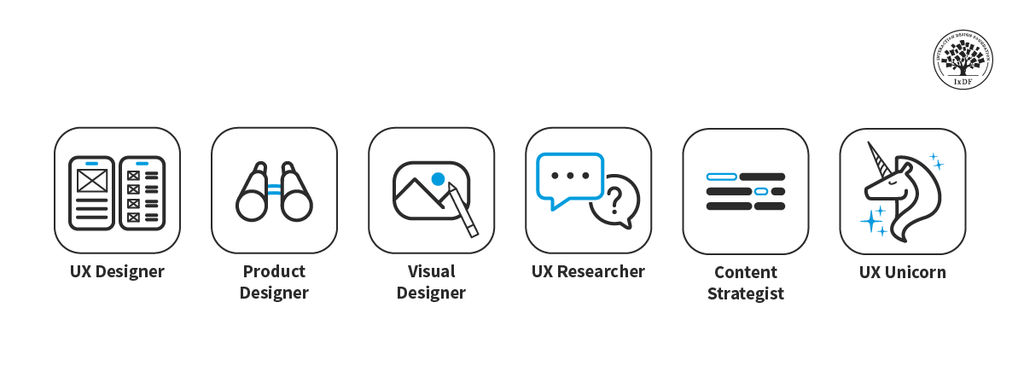
If you’re confused about UX roles, you’re not alone. But don’t worry; you’ll soon have a strong grasp of the different UX roles available and which one you’d like to pursue. With your destination in hand (i.e., the role you aspire to), you can plot your course to becoming a UX extraordinaire. Eight of the most common UX roles are:
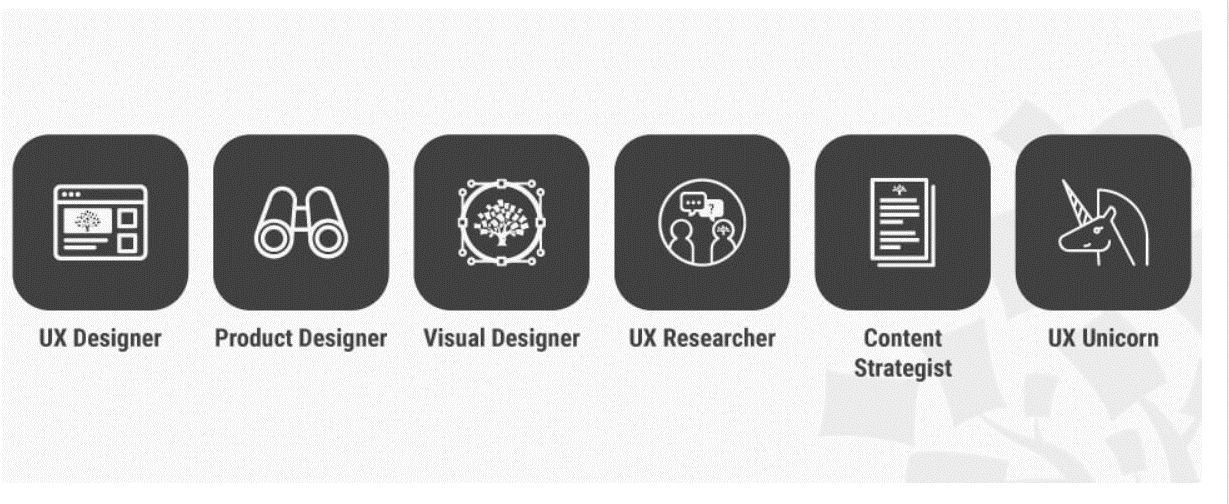
UX Designer.
UI Designer.
Product Designer.
UX Researcher.
UX Engineer.
UX Writer.
Service Designer.
UX Unicorn (yes, this is a real job title!)
Once you’ve chosen your role, one of the primary stepping stones on your journey is to build your UX/UI design portfolio—an essential asset for your UX career. In this video, Morgane Peng, Design Director at Societe Generale CIB, explains what a portfolio is and its purpose:
Transcript
Transcript loading ...
For each UX role, you’ll learn the expected tasks and deliverables and get a rough idea of whether you’ll like the role. Ready to make sense of UX roles?
Forget The Semantics and Focus on the Design Process
With all these job titles, it’s essential to contextualize their collective purpose—allUX roles exist to serve the design process. A great way to understand UX roles is to examine how they contribute to the design process. UX professionals perform a whole slew of UX tasks as they go through a design process to create a final design.
For instance, designers usually start by understanding users before they create designs and test them. Different UX roles simply take charge of various subsets of these UX tasks.
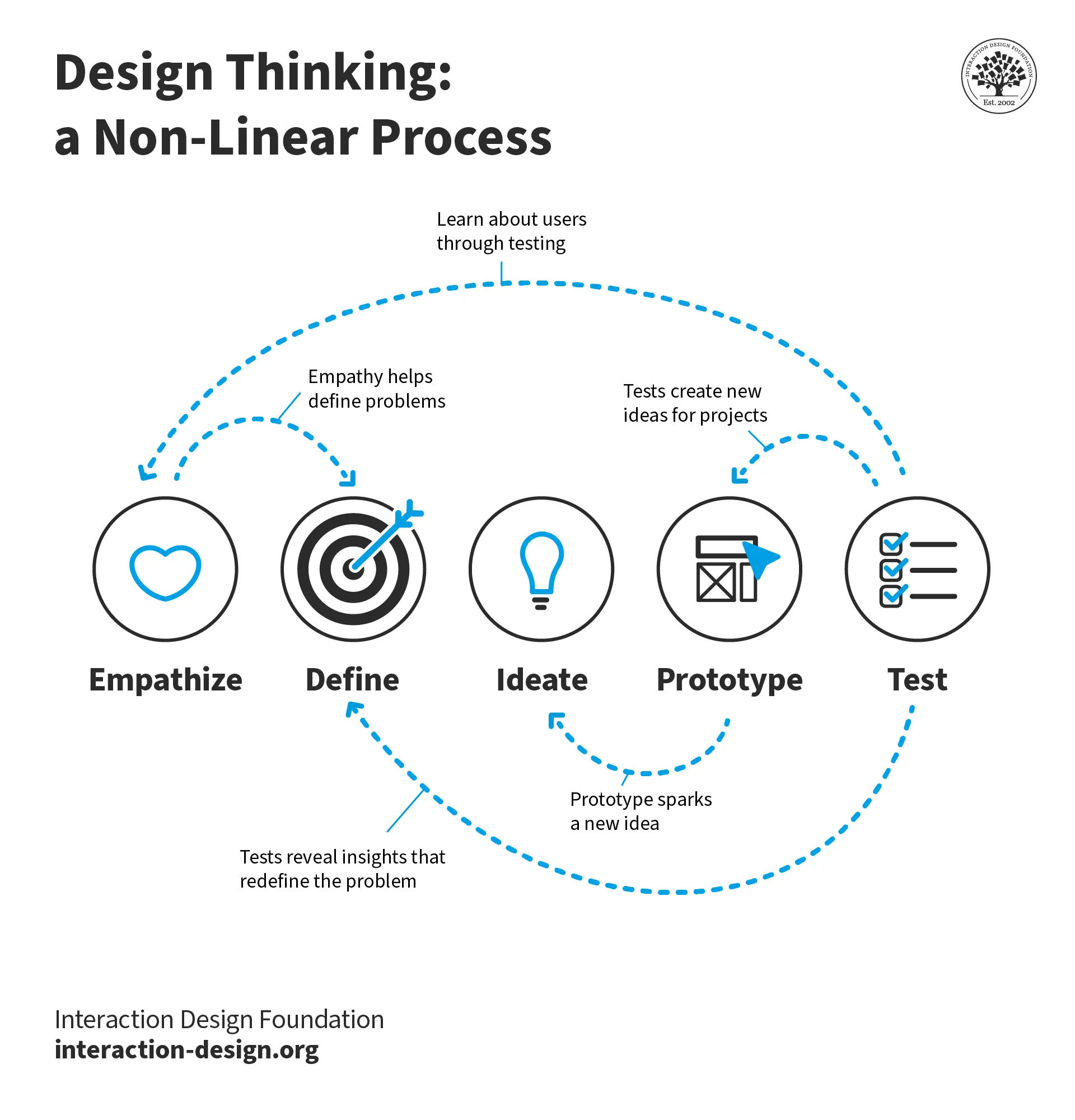
Design thinking is one of the most common design methodologies and helps illustrate where each UX role fits. As you can see, the stages are closely connected; they overlap and are iterative by nature. This overlap is partly why job roles are often so difficult to define and separate completely.
Each UX role explained below performs a slightly different range of these key UX tasks. For instance, a UX Designer is a generalist who takes charge of all the UX tasks, while a UX Researcher focuses on the empathize and test phases.
If you frame each role within the design process, it will help you see the big picture. That way, when a new job title pops up, you’ll be able to understand it in the context of the design process.
On top of that, companies might define UX roles differently. However, once you understand UX roles as “how they contribute to the design process,” you’ll be less confused when you go job hunting and portfolio building. In other words, you’ll focus less on the job title and more on what you’ll be doing.
The design process will also aid in your portfolio, as you’ll be able to target specific roles based on the stages you include in your UX case studies. For example, if you want to become a UX Researcher, you will want to focus on the empathize, define, and test stages in your case studies.
Enough talk; let’s look at the eight most common UX roles!
UX Designer: The All-Rounder
The role of a UX Designer is an exciting one!UX Designerscoverthe entire design process. This means you’ll get the satisfaction of seeing products or features go from a user problem to a final solution. As a UX Designer, you’ll:
Deeply understand your users, their needs, and what they want to achieve.
Generate and ideate ideas to solve your users’ problems.
Prototype designs and test them with users.
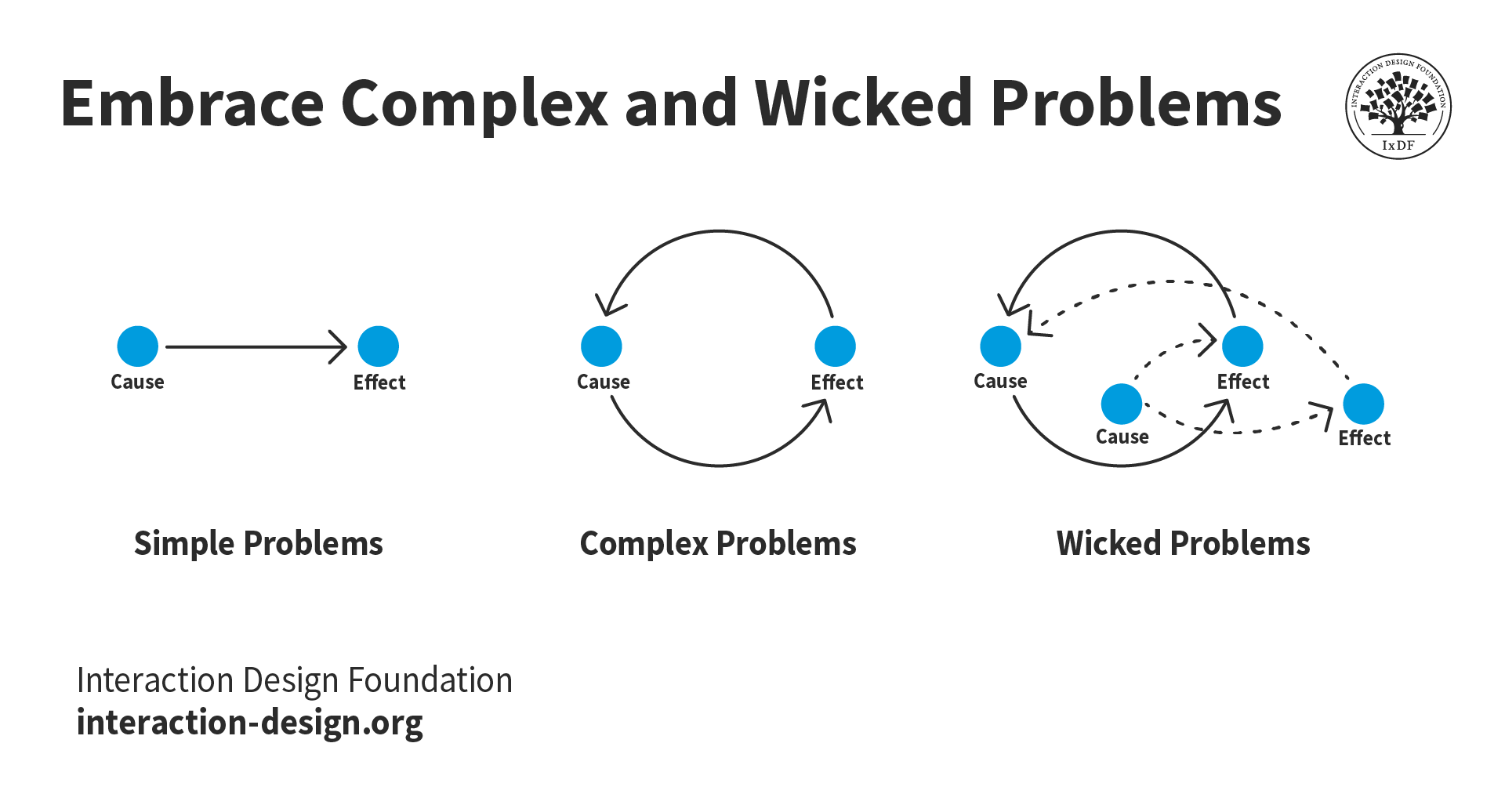
Do you have excellent problem-solving abilities? Then you’re in the right place! UX design is all about problem solving, from simple problems that have a single cause and effect to wicked problems that require a little more thought and ingenuity to solve.
The role of a UX Designer can look different depending on the size of the company. In large companies, a UX Designer typically works in a dynamic team with other UX professionals, including UX Researchers and UI Designers. In smaller companies like start-ups, UX Designers tend to handle all the design work. This means there’s a UX Designer role out there for you, whether you love to collaborate with specialists or own the whole design process.
UX Designers Are Also Known as...
UI/UX or UX/UI Designers (a User Interface (UI) Designer with some UX skills or vice-versa).
Experience Designers.
What Tasks Will You Perform as a UX Designer?
A UX Designer conducts all kinds of UX activities as part of their role. As a UX Designer, you will:
Conduct user research through interviews, observations, and other research methods.
Based on your user research, analyze and identify pain points from the users’ perspective.
Generate ideas through ideation techniques, such as brainstorming and worst possible idea. These techniques help to solve the users’ needs in a way that provides value to the company.
Select the most promising idea(s) based on their feasibility, desirability, and viability.
Prototype designs, which can range from simple paper sketches to high-fidelity digital mockups.
Provide and solicit feedback on your designs as well as the designs of your teammates.
Conduct usability and user tests to determine if you can improve your design(s) further.
Push a design solution out into the world that will benefit both your company and your users.
What UX Deliverables Will You Produce as a UX Designer?
While each company—and indeed, each team within a company—expects different deliverables from a UX Designer, the most common ones are:
“How might we” statements that capture a problem that your design aims to solve.
Paper prototypes.
Wireframes.
High-fidelity, pixel-perfect mockups.
Usability reports.
Heuristic evaluation reports.
User testing reports.
Design pattern libraries, style guides or design systems.
You’ll Love Being a UX Designer if you...
Want to be involved in the entire design process, from the initial stage of understanding users to the final stage of producing a high-fidelity prototype.
Love to learn and master a wide range of topics and skills, including:
Are fulfilled by analyzing complex data to produce design goals that you then work towards.
Thrive on creating intuitive and useful solutions that solve the problems users face in their lives.
UI Designer: Where Aesthetics and Usability Meet
UI Designers combine usability with visual design to build intuitive user interfaces. This role is an excellent fit if you’re a creative person who wants to incorporate psychology, user behavior analysis, and visual storytelling into your work.
Since a UI is a significant component of a product, it requires research, ideation, prototyping, and testing. Therefore, as a UI Designer, you have the chance to get involved in all five stages of the design thinking process.
Many UX Designers also take on UI design responsibilities, but it's important to remember that UI design is a component of UX design—they are not synonymous. Discover more about UI vs UX in this video:
Transcript
Transcript loading ...
UI Designers Are Also Known as...
Interface Designer.
UX/UI or UI/UX Designer.
What Tasks Will You Perform as a UI Designer?
As a UI Designer, you will:
Use your visual design skills to create attractive interfaces that align with brand guidelines and meet user needs. Color, typography, graphics, and Gestalt principles all play a role in UI design.
Design layouts with well-organized, consistent, and accessible content across all devices.
Develop and maintain product design systems. Design systems include components like buttons, icons, and typography styles.
Apply accessibility standards and cultural considerations to produce inclusive designs.
Collaborate with UX Designers to turn wireframes and prototypes into refined, high-fidelity designs.
Provide detailed design specifications and assets to front-end developers.
What UX Deliverables Will You Produce as a UI Designer?
As with UX design, UI design deliverables vary from company to company. However, the most common deliverables include:
High-fidelity UI designs.
Interactive prototypes that showcase animations and transitions.
Design systems, including components like buttons, icons, and other reusable elements.
Visual style guides that include typography, color palettes, spacing rules, and more.
Responsive design layouts for various screen sizes and devices (such as mobile and tablet devices).
Documentation and design files for developers.
You’ll Love Being a UI Designer if you...
Relish the challenge of perfecting the balance between aesthetics and usability.
Are passionate about visual design and its principles, such as typography, color theory, and layout.
Thrive in the structure that comes from design systems and clear rules for branding, but know when to break the rules.
Are ready for the challenge of making complex information easy to navigate through thoughtful design.
Aspire to collaborate with UX Designers and developers to bring high-fidelity designs to life.
Have excellent attention to detail and get obsessed with the minutia of a design.
Product Designer: Upgrade to Business Class
Are you excited about becoming a UX Designer, but wish you could incorporate your business acumen into the role? Well, you’re in luck! Product Designers pay special attention to the product as a whole on top of the user’s experience.
As a Product Designer, you will contribute to the creation and management of the product’s designs, goals, and roadmap. A product roadmap is a high-level strategic summary of the direction of the product’s offerings and features.
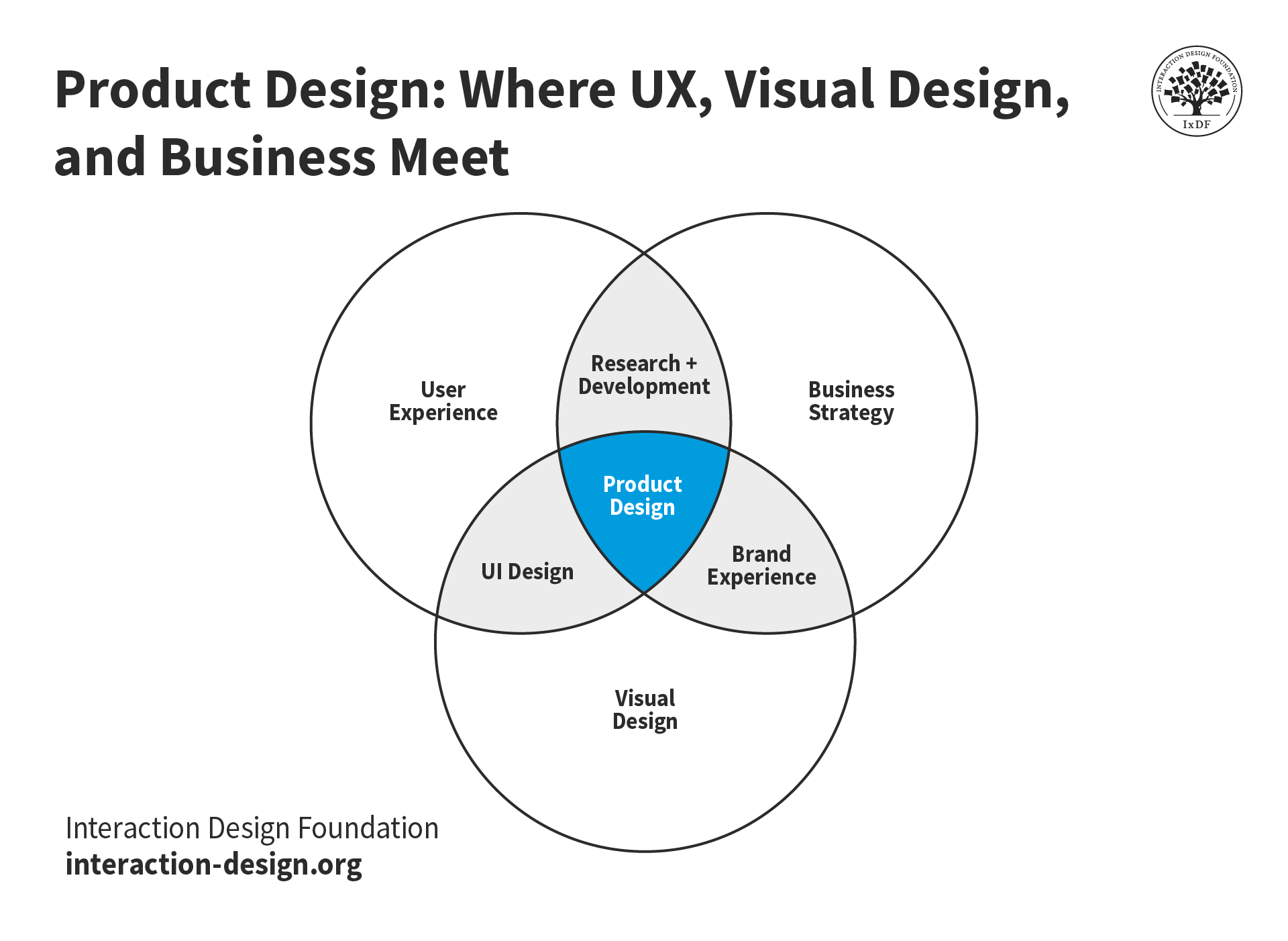
Product design lies at the intersection of UX, visual design, and business strategy. While all UX designers consider business goals when designing user experiences, product designers must consider not only today’s business goals but also those of the long term.
There aren’t any synonyms for Product Designers. Some companies define Product Designers as identical to UX Designers. Other companies view Product Designers as senior UX Designers who have the added responsibility of charting a product’s goals and roadmap.
What Tasks Will You Perform as a Product Designer?
All the tasks listed under “UX Designer” above, plus:
Inform and plan the product’s roadmap 6–12 months into the future.
Collaborate closely with development to ensure they can successfully implement designs.
Work with marketing teams to communicate and plan product launches.
What UX Deliverables Will You Produce as a Product Designer?
Product Designers produce all the deliverables listed under “UX Designer” above, in addition to product roadmaps. You will likely co-develop roadmaps with stakeholders such as team leaders, the product manager and the CEO.
You’ll Love Being a Product Designer If You…
Are passionate about design and business.
Are excited by developing and integrating business goals into design and product decisions.
Want to participate in the entire design process.
Are ready to develop a deep knowledge of design and a good understanding of business.
Have a knack for analyzing data and reaching conclusions that balance business goals with user needs.
UX Researcher: The User’s Champion
UX Researchers bring the voice of the user into every part of the design process. They spend their days talking with users, analyzing data, and using their findings to influence design decisions. As a UX Researcher, you’ll participate in the empathize, define, and testing phases:
You’ll empathize with users to really get to know them and their needs.
You’ll define the problems that the product should solve.
Once the design team has created a prototype, you will test it with users and help validate and improve designs.
Gain a rich and complete understanding of users through qualitative user research methods. Methods include user interviews, user observations, and field studies.
Conduct quantitative user research using methods like surveys and card sorting. This research will confirm your qualitative research outcomes and inform design decisions.
Analyze the data you’ve gathered on users to synthesize key findings and make design proposals.
Advocate for users’ needs and perspectives within the design team.
Help inform product goals by presenting your research findings to stakeholders.
Test and improve designs by conducting evaluative research, such as usability and user testing.
What UX Deliverables Will You Produce as a UX Researcher?
These are the main deliverables you’ll create as a UX Researcher:
Have a strong passion for human psychology and the study of people.
Enjoy stepping into users' shoes to empathize with them and build a rich and deep picture of their perspectives and problems.
Are well-versed in psychology or interested in learning deeply about it.
Get excited about generating and analyzing complex data.
UX Engineer: A Bridge Between Design and Development
UX Engineers exist in the gap between design and development teams. If you’re a developer who understands and advocates for user experience, then you might have just found your perfect role. You can find UX Engineer positions at large companies with strong UX maturity. Given their coding and UX abilities, a typical responsibility of UX Engineers is to build high-fidelity prototypes that closely resemble the final product.
In this video, Syzmon Adamiak, Co-Founder of Hype4, explains the importance of good communication when designers hand off designs to developers:
Transcript
Transcript loading ...
UX Engineers Are Also Known as...
Creative Technologists.
Product Design Engineers.
Design Technologists.
What Tasks Will You Perform as a UX Engineer?
Build high-fidelity, functioning prototypes using your UX and coding skills.
Package designs and communicate them in a developer-friendly format.
Work across research, design, development, and product management teams.
Front-end development tasks such as implementing UIs and new features.
What UX Deliverables Will You Produce as a UX Engineer?
Many of the same deliverables as a UX Designer, plus:
Polished and final prototypes.
Component libraries.
Code documentation.
You’ll Love Being a UX Engineer if you...
Perform best with a varied and multidisciplinary workload.
Have the desire to utilize both coding and UX skills.
Enjoy a fast-paced work environment where you will build rapid but functioning prototypes.
UX Writer: The Master Communicator
If you’re passionate about words and user-centered design, then you will make an excellent UX Writer. Copy is one of the most essential parts of a design, and it requires a specialist touch to optimize it for the best results.
As a UX Writer, you’ll write instructional text, onboarding content, and microcopy for buttons, error messages, and tooltips. You’ll contribute to the prototype phase of the design process, and you are crucial in finalizing the product before launch.
Torrey Podmajersky, UX Writer, explains how to get into UX writing:
Transcript
Transcript loading ...
UX Writers Are Also Known as...
Copywriters.
Content Strategists.
Content Designers.
What Tasks Will You Perform as a UX Writer?
As a UX Writer, you will:
Write copy for user interfaces so people can easily navigate, use, and troubleshoot the product.
Create compelling page titles and navigation menu item names for optimal usability.
Write error messages that are simple, effective, and blame-free. In the unfortunate event of an error, users should feel assured rather than annoyed.
Craft effective emails and newsletters to achieve product goals (such as account signups).
Weave a cohesive narrative throughout the product. Users should experience a consistent tone of voice and direction no matter which screen or page they access.
Define and maintain a vision for the product’s language that other stakeholders will use.
Test your copy for performance and improvements.
What UX Deliverables Will You Produce as a UX Writer?
As a UX Writer, most of your work will be directly incorporated into the product itself, so it often won’t appear as a standalone deliverable. As a result, your most common deliverables are:
Copy, which you will incorporate into the product itself.
Editorial guidelines or product language guidelines that set the tone and content style for the product.
You’ll Love Being a UX Writer if you...
Have a strong desire to help users achieve their goals with the least cognitive load.
Can strongly empathize with your users and understand their goals.
Are passionate about achieving product and business goals.
Possess deep knowledge in writing and a solid understanding of UX design.
Enjoy using empathy, data, business goals, and logic to inform your writing.
Service Designer: People, Processes, and Places
Service Designers create cohesive, end-to-end solutions for services. This role is for you if you’re passionate about UX but want to take a wider view and design a service holistically. Service Designers focus on every touchpoint a customer or user interacts with and the internal processes that support the service. For example, a UX Designer may focus on the design of an ordering screen at a fast-food restaurant. However, a Service Designer will consider the entire customer journey, from how they find the restaurant to when they pick up their order.
Service Designers are involved in every stage of the design process, from research to testing. They cover multiple disciplines, including UX, customer experience (CX), and operations. In this video, Frank Spillers, CEO of Experience Dynamics, explains what service design is and isn’t:
Transcript
Transcript loading ...
Service Designers Are Also Known as...
Experience Designers.
Customer Experience Designers.
What Tasks Will You Perform as a Service Designer?
Service Designers have a broad remit and carry out many tasks. They:
Map the entire service journey, including both customer-facing and behind-the-scenes processes.
Visit competitors, analyze their services, and discover what works and what doesn’t.
Conduct research with customers and employees to understand pain points and moments of delight.
Design service blueprints to outline how all parts of the service interact.
Collaborate with UX Designers, CX professionals, and operations teams to optimize service delivery.
Prototype and test solutions with customers and employees.
Align digital and physical service touchpoints for a consistent and immersive experience.
What UX Deliverables Will You Produce as a Service Designer?
Many of the same deliverables as a UX Designer, plus:
Service blueprints.
Customer journey maps.
Business model canvases.
Value proposition canvases.
Ecosystem maps.
Experience prototypes.
Employee experience maps.
You’ll Love Being a Service Designer if you...
Enjoy solving complex, system-wide challenges that cover multiple touchpoints and interactions.
Thrive on designing holistic, end-to-end experiences that benefit customers and service providers.
Are passionate about improving not only the user experience but the operational efficiency of services.
Love working at the intersection of UX, CX, and business strategy.
Enjoy collaborating with various stakeholders, from customers to frontline employees and business leaders.
Have a keen interest in research with both customers and employees to gain actionable insights.
UX Unicorn: The Mythical Start-up Beast
You will typically find UX Unicorns in the world of tech start-ups. If you’re someone who possesses the usual set of skills required for a role and additional skills in another domain, then you might just be one of them. These additional skills multiply the value a unicorn contributes to a business—hence the legendary name.
A UX Unicorn is similar to a UX Engineer and typically refers to a UX Designer proficient in design and front-end or even full-stack development. Where UX Engineers and unicorns differ, however, is that the engineer is part of a team, whereas the unicorn often is the team. However, UX Unicorns that can achieve results comparable to those of a designer and developer team are extremely rare.
What Tasks Will You Perform as a UX Unicorn?
All the tasks listed under “UX Designer” above, plus:
Develop live front-end prototypes to test with users for more realistic results than a static prototype.
Implement the front-end code of a design. In exceptional circumstances, the unicorn may also implement the back-end code.
What UX Deliverables Will You Produce as a UX Unicorn?
All the deliverables listed under “UX Designer” above, plus:
Front-end prototypes.
Front-end code that is ready for launch.
You’ll Love Being a UX Unicorn if you...
Excel at both UX design and development, and have a desire to take on both roles. A UX Unicorn is the sort of phenomenon that happens if, for instance, you have been an active hobbyist for years. If you’ve got a strong passion for and deep knowledge of front-end development, this might just be the role for you.
Take Your Pick: Which UX Role Should You Go For?
Which of these eight UX roles speaks to you the most? If you cannot decide, Stephen Gay’s advice might help you. Stephen Gay is the UX Lead of Google One, and he recommends that you choose your design role based on your passion and skills:
If you’re still unsure, know that many people start their UX journey with the UX Designer role. This allows you to experience the different specializations, and if you find you especially like one of them, you can dive deeper into it.
UX Roles Are Ever-Changing
UX roles are in flux—and likely always will be. After all, designers seem to have a limitless amount of creativity that makes them reinvent and redefine roles every few years. For example, artificial intelligence and voice interaction are two areas where the demand for new UX practices is rapidly growing.
When you go job-hunting, remember that different companies might define roles differently. Large companies, for instance, tend to hire specialist designers, so they often have specific roles such as “User Researcher” and “UI Designer.” Small and medium-sized companies, on the other hand, tend to prefer generalists and will have roles such as “UX Designer” or even “UI/UX Designer.” Always carefully read the job description of an opening before you apply, and check the requirements to see where they fit within the design process.
Next Steps: Build a Standout Portfolio
Once you’ve chosen your role, your next course of action is to build your UX portfolio. And you can get started right away! You can use student projects, hobby projects, hypothetical projects, and more to create case studies that will get you hired.
Remember that each case study is a story, and you’re in complete control of how it is told. For example, if you start as a UX Designer and realize you are most engaged with UI design, you can translate any project into a focused UI design case study.
You can even reframe your past non-design experiences into the UX role you’re aiming for, as Morgane Peng explains in this video:
Transcript
Transcript loading ...
The Take Away
UX roles can be confusing and overlap in some ways, but all exist to serve different parts of the design process. A great way to understand UX roles is to identify which phases of the design process they contribute towards.
“The only way to be truly satisfied is to do what you believe is great work, and the only way to do great work is to love what you do. If you haven't found it yet, keep looking, and don't settle. As with all matters of the heart, you'll know when you find it.”
—Steve Jobs
Here’s a quick summary of the eight common UX roles:
UX Designers take charge of the whole design process and work on all five phases of the design thinking process.
UI Designers focus specifically on a product’s UI and combine visual design with usability.
Product Designers are like UX Designers but also help chart a vision of the product’s mid-to-long-term roadmap.
UX Researchers focus on understanding and advocating for users. They participate in the empathize, define, and test phases.
UX Engineers fill the gap between designers and developers and use both UX and developer skills.
UX Writers are all about crafting persuasive, clear, consistent copy that contributes to the prototype phase.
Service Designers take a holistic approach when they design services and cover the disciplines of UX, CX, and operations.
UX Unicorns are rare people who handle both UX design and front-end development, typically by themselves.
Aim for a role that matches your passion and skills. If you’re still working out what excites you about UX, get started as a UX Designer to allow you to experience different areas of the field. You can then narrow your focus as you discover what you truly enjoy doing.
Finally, once you’ve chosen a role, you can get started on your portfolio, and you’ll be preparing for interviews in no time!
References and Where to Learn More
Want to create a portfolio that gets you hired? Take our course, Build a Standout UX/UI Portfolio: Land Your Dream Job, and learn how to showcase your skills, tell compelling project stories, and impress employers.
AI is replacing jobs everywhere, yet design jobs are booming with a projected 45% job growth.
With design skills, you can create products and services people love. More love means more impact and greater salary potential.
At IxDF, we help you from your first course to your next job, all in one place.