You can pick from literally hundreds of reasons to become a freelancer or entrepreneur, but some crop up more than others. This section provides an overview of 15 of the most popular reasons that people choose to go out on their own and start a business rather than staying in the safe, secure and sometimes more limiting field of employment. If you can identify with several of the reasons, chances are that you’ll love starting your own business as a freelancer or entrepreneur.
People can choose from so many reasons to start their own business that it would be impossible to list them all. Here, you’ll get an overview of the most popular reasons which will help you reflect upon and decide whether freelancing or entrepreneurship is for you.
Be Your Own Boss
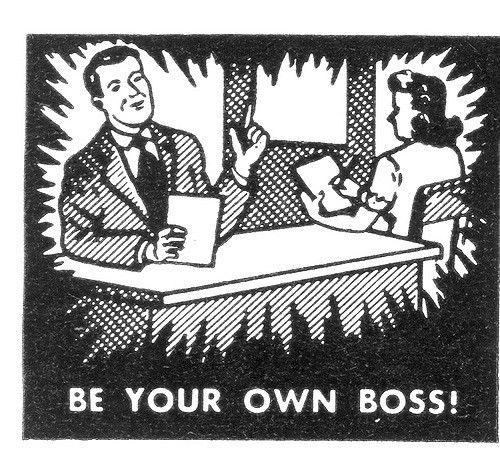
The most common reason for starting out as a freelancer or entrepreneur is the ability to be your own boss. No more working with control-freak management, no more being clocked in and out of the office, no more getting told off for being late—you are the master of your own ship, and that’s a great way to feel.
Author/Copyright holder: Todd Ehlers. Copyright terms and licence: CC BY 2.0
Being your own boss is the top reason to start your own business. It can mean becoming a self-contained, one-person company. Happily, the work that you do under this new system will take a skill that’s so close to your nature that you’ll see work and being a boss in an entirely new way.
The End of Office Politics
Office politics have a horrible habit of making people miserable. Many employees say that it’s the worst bit of their job, having to play for favour between competing managers or competing teams. Fortunately, from the day you start working for yourself, you can say goodbye to office politics forever.
You Are in Control
Freelancers and entrepreneurs make their own decisions. There’s no debating which version of a website to use or what the office dress code should be; it’s all up to you. If you want to work naked in your living room or if you want to wear a suit and sit in the suavest of cafes with your laptop, you can.
As the folk singer and influential artist Bob Dylan said, “A hero is someone who understands the responsibility that comes with his freedom.” (In a self-published interview for his Biograph album set).
Your Time is Your Own
There’s no 9 to 5 unless you want there to be. If you feel most productive between 2 a.m. and 6 a.m., you can work then. If your clients want you to be there 9 to 5, you can always excuse periods of absence as a “client meeting”—who’s going to know?
You’re Free to Work Anywhere – Freedom
The author has worked in hotel rooms, apartments, coffee shops, by the pool, and in some really strange places. You’re a business owner—you dictate where you work as long as the job gets done. Your clients pay for your work, and it’s not their decision where you work.
In fact, from a legal perspective—one of the key tests between “freelancer and entrepreneur” and “employee” is that a freelancer and entrepreneur can choose the times and places in which to work.
Today, many entrepreneurs and freelancers become location-independent workers or “digital nomads”. They choose to work wherever they like and change location on a regular or semi-regular basis.
Author/Copyright holder: Wet and Messy Photography. Copyright terms and licence: CC BY-NC 2.0
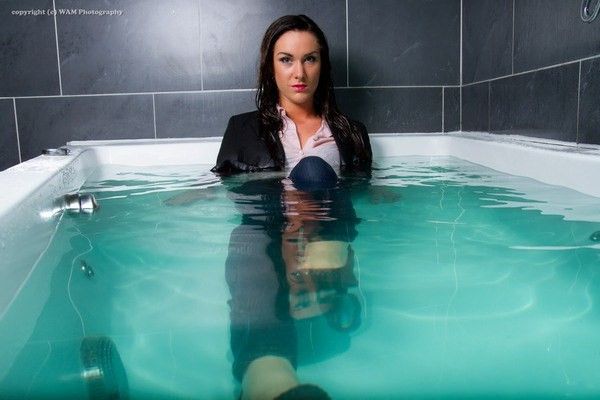
You can work anywhere, but that doesn’t mean you have to – the bath is, perhaps, not the most practical place to work from, not least because of the safety issues involved.
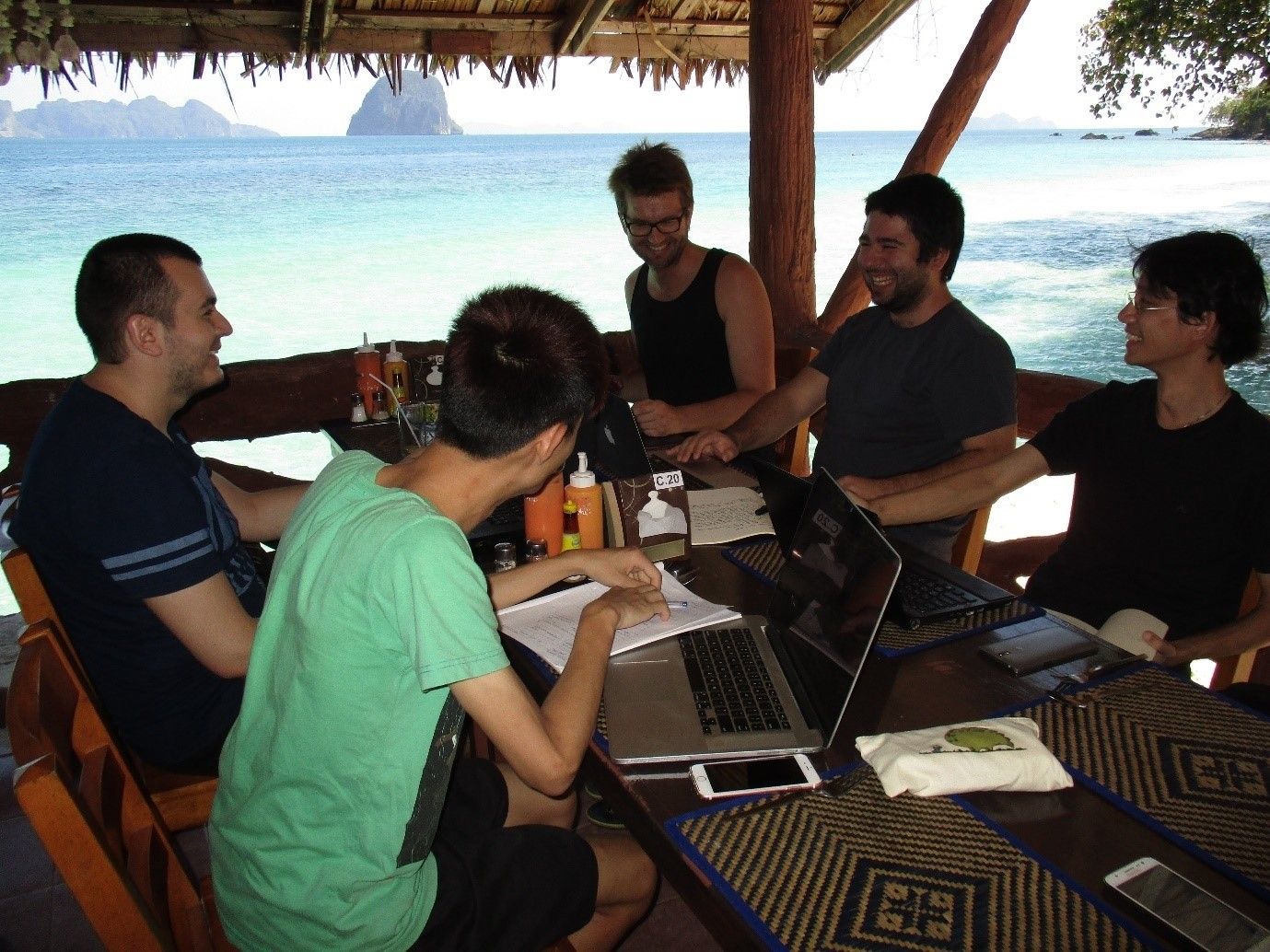 Author/Copyright holder: Rikke Friis Dam and the Interaction Design Foundation. Copyright terms and licence: CC BY-NC-ND.
Here, you see parts of the Interaction Design Foundation team working from a beautiful island in Thailand. It’s a lot of fun; it gives an amazing sense of freedom, but it also takes a lot of self-discipline to get the hard work done before going snorkelling after 8–14 hours of intense (but interesting) work.
You Choose the Projects You Want to Work On
If you’re a web designer and you hate working on tobacco company websites, you don’t have to. If you’re a writer and never want to write a single sales letter, you don’t have to. Employees have to work on projects their boss assigns them. Freelancers and entrepreneurs choose their own projects based on their expertise and passion. You might want to bear in mind that it’s unlikely you’ll ever find a “perfect” freelance or entrepreneur job which is 100% interesting and motivating all the time. There’s still boring, repetitive work to be done (such as accounting, admin, etc.), but the majority of your time should involve doing the things you love.
You Choose the Clients You Work With
Back when the author started freelancing, one of her first clients was insanely pernickety. The client had sent a document to ask her to change the position of a comma. The fact that moving the comma herself would take less time… completely escaped the client. So, what did the author do? She fired the client.
She’s happy to edit her work based on client feedback, but she’s not happy to waste 15 minutes reading an e-mail, changing a comma, and writing an e-mail to send that comma back.
Freelancers and entrepreneurs don’t have to work with people who annoy them. They’re free to choose the people with whom they work.
You Never Have to Do Unpaid Overtime Again
You remember that nonsense that companies like to tell you about how salaried employees are expected to hand over their free time for no compensation because they’re salaried? That’s not part of the freelancing life. If you’re working, you’re earning. You charge clients for work, and you don’t work unless you’re getting paid.
You Can Earn More than You Did Before
Sure, in the early days of your career as a business owner—you’ll take the work you can get. Over time, however, you’ll have more offers of work than you can handle. Then you can pick and choose, and, better still, you can raise your rates. Traditionally, freelancers get paid much higher rates than their employed equivalents. Why? Freelancers meet all their own expenses. They buy their equipment; they pay for their health insurance; they pay for their own vacations, etc., and so do entrepreneurs. That stuff doesn’t come free.
More importantly, business owners aren’t given contractual security and they charge a premium for that insecurity, too. As your businesses progresses – your earnings potential is unlimited.
Your Efforts Reward You
An employee is paid a set salary, and while they may get the occasional bonus, much of that usually depends on how other people work, too. If you’re a regular employee of a company which makes no money, you still get paid. On the other hand, you often don’t get a bonus if your work brings in lots of money for your company. On the contrary, freelancers and owners of design businesses get paid for the work that they put in and the results they create. The more they work, the more they get paid. The better results they create, the better they get paid. Every bit of work you do benefits you and only you—no more subsidizing the lazy guy/girl who spends all day talking about work without doing any. The money’s yours.
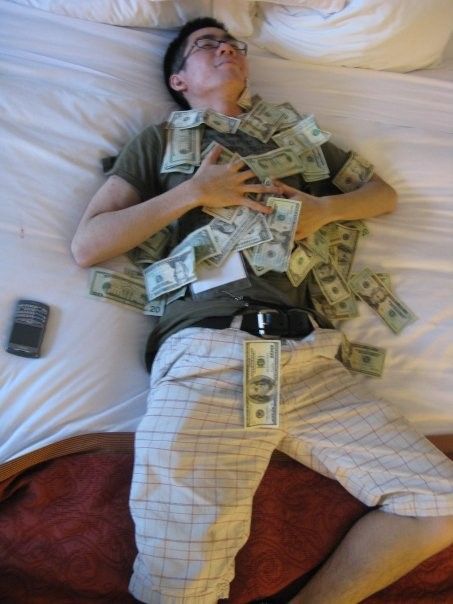
Author/Copyright holder: A dazed memory. Copyright terms and licence: CC BY-SA 3.0
Sit back and relax with all that money you’ve earned. Freelancers get paid for their efforts and not the efforts of other people.
You Have 100% Job Security
No one can fire you when you’re the boss. Sure, freelancing and entrepreneurship has its ups and downs, but—as long as you keep at it—in the long run you’ll have complete control over your future and your earnings. That’s far better than working for someone who can, at any moment, tell you that the company—the same one you’d given so much to—suddenly doesn’t need you anymore.
You’ll Learn More than You Ever Thought Possible
Every day in freelance and entrepreneurial life brings new challenges, and you’ll learn from each of them. You’ll be more than a designer or a writer or a developer; you’ll be a businessperson, and you’ll learn to solve business problems every single day.
You’ll Gain Confidence
The world’s different when you’re the boss. People see you differently and treat you differently. Plus, you’ll handle client relations, sales, meetings, etc. by yourself without the company of colleagues, managers, etc. Your confidence increases in leaps and bounds when you’re a freelancer.
You Do the Work You Love
Admittedly, not all successful freelancers or entrepreneurs follow their passions, but most do, and even those who don’t find themselves coming to love what they do. Freelancing and entrepreneurship gives you pride in a job well done. Making your customers happy is a thrill. Seeing them come back time and again for more work is incredibly fulfilling. You make things happen as a business owner, and every business owner comes to love that feeling.
The Potential for Growth
Most freelancers and design agencies start small with solo practices, but from little acorns come great oak trees. Many freelancers go on to form their own companies, to hire staff and to build a lasting legacy. That’s something that could never happen as an employee; you’re always building someone else’s legacy, not your own.
 Author/Copyright holder: David Patte/U.S. Fish and Wildlife. Copyright terms and licence: Public Domain.
Great things come from small beginnings. Freelancers and design agencies who embrace their potential can build bigger businesses in their own image.
The Take Away
You have dozens of reasons to start your own business as a freelancer or entrepreneur, and the list above comprises only a small section. Nevertheless, it certainly contains the most popular reasons. Take your time to consider which of them appeals the most to you.
References & Where to Learn More
Hero Image: Author/Copyright holder: Rikke Friis Dam and the Interaction Design Foundation. Copyright terms and licence: CC BY-NC-ND.
Course: How to Become a Freelance Designer
Here’s what some others have to say about the joys of freelancing:
10 advantages and disadvantages of becoming a freelancer
How to Become a Freelance Web Developer in 2022
You can’t go wrong exploring these wise Bob Dylan quotes.