User Research

Your constantly-updated definition of User Research and collection of videos and articles.
Be a conversation starter: Share this page and inspire others!

6,905 Shares

What is User Research?

User research is the methodic study of target users—including their needs and pain points—so designers have the sharpest possible insights to make the best designs. User researchers use various methods to expose problems and design opportunities and find crucial information to use in their design process.

Discover why user research is a crucial part of the design process in this video.

Transcript

User Research – Get to Know Your Users, and What They Want

To call user research a crucial part of an interaction design process might seem overly obvious. Indeed, it’s the only way to discover exactly what these users need, having first found out precisely who they are. To set out to generate these facts, you must gather data from your users through a structured approach. First, you must choose methods that 1) suit your research’s purpose and 2) will yield the clearest information. Afterwards—to get the insights you want—you’ll need to interpret your findings from all that data, which can be tricky. You can apply user research anytime during the design process. Typically, researchers begin with qualitative measures, to discover users’ needs and motivations. They might later test their results by using quantitative measures.

“Research is creating new knowledge.”

– Neil Armstrong, the First person to walk on the Moon

Qualitative Research

Ethnographic field studies and interviews are examples of methods that can help you build a deep understanding of why users behave the way they do (e.g., why they leave a website so quickly).

For instance, you can interview a small number of users and get sharp insights into their shopping habits by asking them open-ended questions. Usability testing is another dimension of this type of research (e.g., examining users’ stress levels when they use a certain design).

Qualitative research requires great care. As it involves collecting non-numerical data (e.g., opinions), your own opinions might influence findings.

Quantitative Research

With more structured methods such as surveys, you gather measurable data about what users do and test assumptions you developed from qualitative research.

An example is to use an online survey to ask users questions about their shopping habits (e.g., “Approximately how many items of clothing do you buy online per year?”). You can use this data to find patterns within a large user group. In fact, the larger the sample of representative test users is, the more likely you’ll have a statistically reliable way of assessing the target user population.

Regardless of the method, with careful research, you can gather objective and unbiased data. Nevertheless, quantitative data alone cannot expose deeper human insights.

Attitudinal vs Behavioral Research

We can also split user research into two approaches:

  1. Attitudinal – you listen to users’ words (e.g., in interviews).

  2. Behavioral – you watch their actions through observational studies.
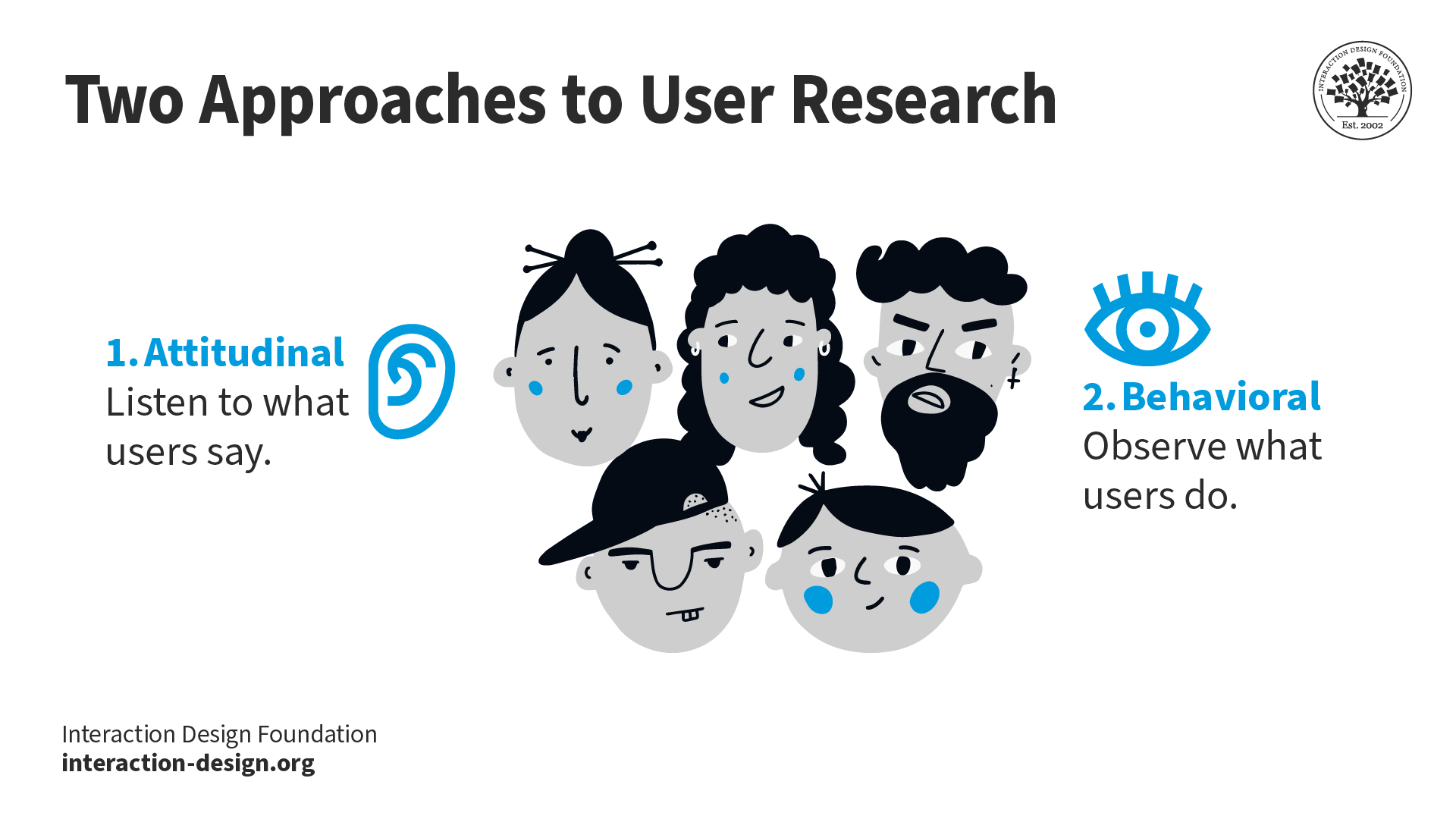
Two Approaches to User Research

Usually, you can get the sharpest view of a design problem when you apply a mixture of both quantitative and qualitative research as well as a mixture of attitudinal and behavioral approaches.

© Interaction Design Foundation, CC BY-SA 4.0

Leverage User Research Methods Throughout Development

Nielsen Norman Group, an industry-leading user experience consulting organization, names appropriate user research methods for you to use during your project’s four stages. Here are the key methods:

  1. Discover – Determine what’s relevant for users.

    • Diary studies – Have users log their performance of activities or record their daily interactions with a design.

    • Contextual inquiries – Interview suitable users in their own environment to find out how they perform the task/s in question.

  2. Explore – See how to address all users’ needs.

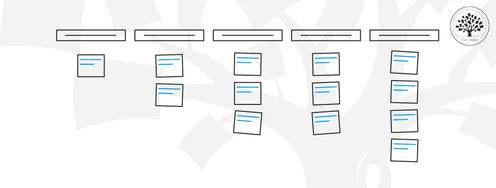
    • Card sorting – On cards, write words and phrases and then let participants organize these in the most meaningful way and label categories to ensure your design is logically structured.

    • Customer journey maps – Create user journeys to reveal potential pitfalls and crucial moments.

  3. Test – Evaluate your designs.

  4. Listen – Put issues in perspective, uncover any new problems and spot trends.

    • Analytics – Gather analytics/metrics to chart (e.g.) website traffic and generate reports.

    • Surveys/Questionnaires – Track how users’ feel about your product/design via these.

Learn when you can use user research throughout the design and development process in this video:

Copyright
Transcript

User Research: Key Considerations

However you approach user research, always consider the pros and cons of each technique. Card sorting is cheap and easy, for example, but may prove time-consuming when you proceed to analysis. Moreover, it might not provide in-depth contextual meaning.
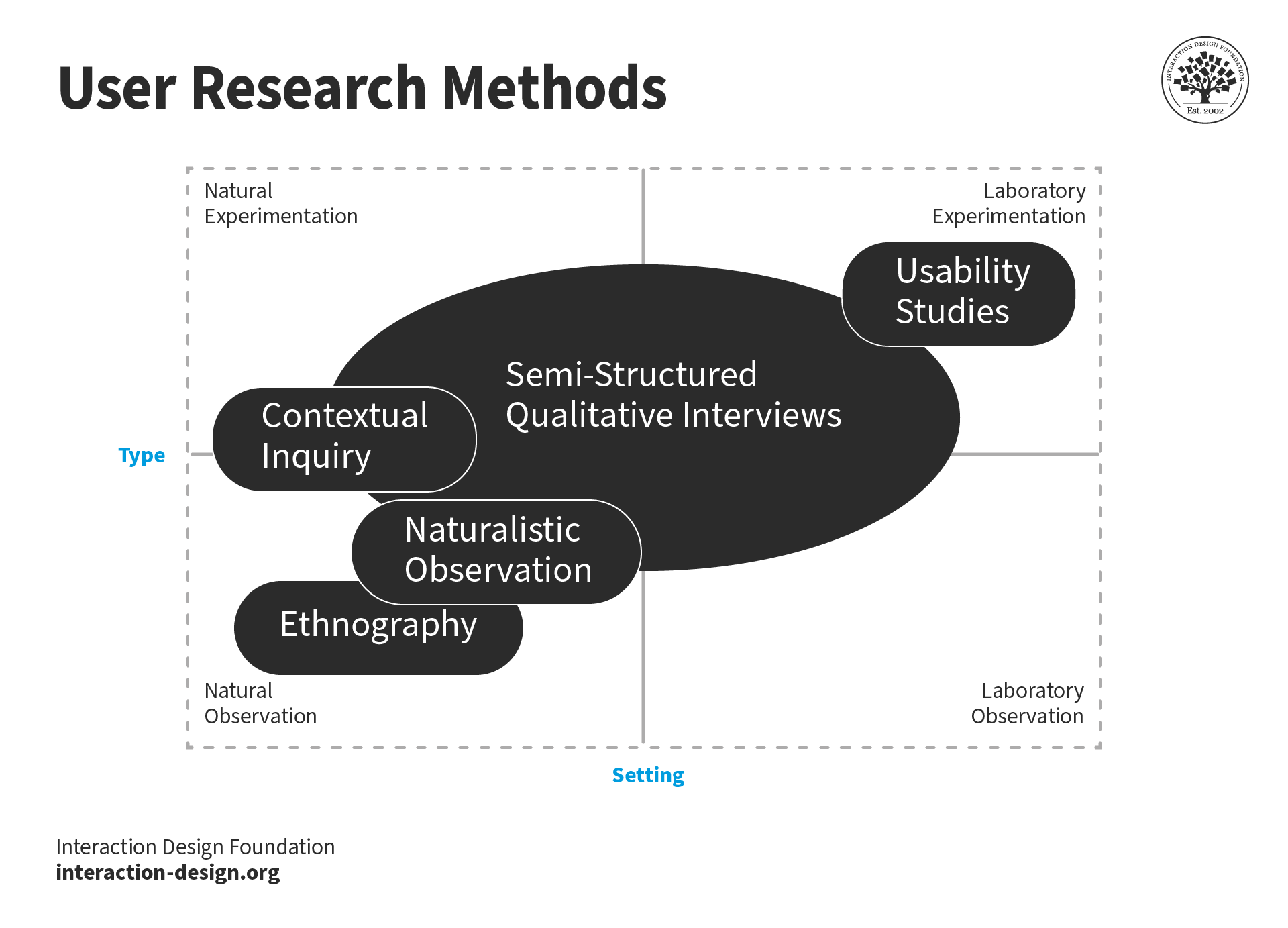
User Research Methods - from natural observation to laboratory experimentation

User research methods have various pros and cons and involve activities ranging from observations of users in context to controlled experiments in lab settings.

© Interaction Design Foundation, CC BY-SA 4.0

The resources available to you are another constraint. These will decide when, how much and which type of user research you can actually do. Therefore, carefully choose only the most relevant method/s for your research.

Also, get stakeholders from your organization involved early on. They can reveal precious insights and help keep your research on track regarding business goals.

Finally, always be wary of bias and how it can affect your research findings and, in turn, your products, services, and experiences. Bias can enter your studies through researchers, participants, and your chosen methods, among other sources. One way to limit bias and discover true user needs and behaviors is with grounded theory. In this video, William Hudson, User Experience Strategist and Founder of Syntagm Ltd, explains more:

Transcript

Overall, user research is a valuable way to validate the assumptions the design team makes concerning users in the field, cut the expense of the best deliverables and keep your product’s demand high and ahead of competitors’ in the marketplace.

Questions About User Research?
We've Got Answers!

Is User research a good career?

User Research is a fulfilling career for individuals driven to comprehend user behaviors and work collaboratively with teams. As a User Researcher, you're instrumental in steering teams towards crafting user-centric solutions. If you're intrigued by a career that combines both analytical and creative insights, consider delving into this field. For a comprehensive understanding, explore the User Researcher Learning Path on our platform.

How much does a User researcher earn?

User Researchers are seeing competitive pay in the industry. On average, they can earn from $92,000 to $146,000 annually. In some smaller firms, user research duties might be combined with a broader UX role. To understand how salaries can differ by region or delve into a broader perspective on UX-related pay, check out this detailed guide on UI UX Designer Salaries for 2023 or Glassdoor's breakdown of User Experience Researcher salaries.

User Research vs. UX Design: How do they differ?

While both are integral to the user experience, User Research and UX Design serve different purposes. User Research delves deep into understanding user preferences and needs, paving the way for informed design strategies. In contrast, UX Design is about sculpting a product based on that insight, ensuring it's both user-centric and aesthetically pleasing. 

Transcript

Sometimes, especially in compact teams, the roles might blur with a designer handling research. Want a comprehensive insight? Dive into User Experience: The Beginner's Guide to explore their interconnected dynamics.

Is there a difference between User Research and UX Research?

Yes, there is! Think of UX research as a subset of user research. While both focus on understanding users, user research casts a broader net, examining topics like pricing or delivery preferences. UX research, meanwhile, zeroes in on how users interact with a product and their experience doing so. In short, user research looks at broader interactions, while UX research specifically studies product use. To dive deeper, check out our course on User Research Methods and Best Practices.

Transcript

Which techniques are employed in user research?

User research utilizes varied techniques such as usability testing, A/B tests, surveys, card sorting, interviews, analytics analysis, and ethnographic studies. Every approach brings unique insights and is ideal for specific situations. It's essential to choose the proper technique based on your research goals and your audience. Discover these techniques further in 7 Great, Tried and Tested UX Research Techniques

Fast-Track Your Promotion With This Master Bundle of 17 “User Research” Templates
User Research

For a comprehensive understanding of usability testing, a popular user research method, check out our course on User Research Methods and Best Practices.

Is a degree necessary to become a user researcher?

While a related degree can be beneficial, it's not strictly required to become a user researcher. Many successful user researchers have degrees in diverse fields like psychology, design, anthropology, statistics, or human-computer interaction. What's crucial is a mix of relevant education, hands-on experience, and continuous learning. Even if some employers might favor candidates with a bachelor's degree, it can be in something other than a UX-focused area. Only some degrees specifically target user research. To strengthen your knowledge, consider courses like Data-Driven Design: Quantitative Research for UX or User Research Methods and Best Practices.

What does the user research process involve?


While each user research project is unique, some standard steps guide most endeavors:

  1. Determine the research question.

  2. Choose the proper research technique.

  3. Find participants.

  4. Execute the research.

  5. Evaluate the gathered data.

  6. Share the results.

For a thorough understanding of these steps and more, check out User Research – Methods and Best Practices.

Which tools are essential for user research?

There's a wide array of user research tools to pick from, tailored to your research goals, organizational size, and project specifics. Some popular choices include:

  • For surveys: Typeform or Google Forms.

  • Card sorting: Tools like Optimal Workshop, Maze or Trello.

  • Analyzing user activity: HotJar or CrazyEgg for heatmaps.

  • Usability evaluations: Platforms like Userlytics or Lookback.

  • Analyzing qualitative data: Miro or Lucidchart for affinity diagramming.

  • Crunching numbers: Google Sheets or Microsoft Excel for quantitative insights.

  • Usability testing on prototypes: Tools like Adobe XD or Figma.

  • Presenting findings: Use Google Slides, PowerPoint, or Prezi.

  • These tools often boast extra features to amplify your research.


Dive deeper into their applications with User Research – Methods and Best Practices.

Why is user research vital?

User research is paramount in creating products that align with users' genuine needs and preferences. Instead of basing designs on assumptions, it provides factual insights into how users feel and interact with products. By engaging in user research, designers can spot usability challenges, collect feedback on design ideas, and validate their design decisions. For businesses, this not only refines product offerings but also strengthens brand loyalty and reputation. A standout user experience gives a company a competitive edge and lowers the chances of product setbacks. Dive deeper into the significance of user research in design with Data-Driven Design: Quantitative Research for UX and User Experience: The Beginner’s Guide.

Earn a Gift Earn a Gift, Answer a Short Quiz!

1
2
3
4
1
2
3
4
Question 1
Question 2
Question 3
Get Your Gift
Interaction Design Foundation logo

Question 1

What is the primary goal of user research in UX design?

1 point towards your gift

  • To understand user needs and behaviors to inform design decisions
  • To reduce the cost of the product
  • To increase the speed of the design process
Interaction Design Foundation logo

Question 2

Which of the following is a qualitative method commonly used in user research?

1 point towards your gift

  • Surveys
  • Ethnographic field studies
  • A/B testing
Interaction Design Foundation logo

Question 3

How does user research validate design assumptions?

1 point towards your gift

  • By testing assumptions through user feedback and data
  • By relying solely on designer intuition
  • By skipping user testing and relying on market trends

Learn More About User Research

Make learning as easy as watching Netflix: Learn more about User Research by taking the online IxDF Course Personas and User Research: Design Products and Services People Need and Want.

Why? Because design skills make you valuable. In any job. Any industry.

In This Course, You'll

  • Get excited to create products, services, and experiences people actually love, without the guesswork. Personas grounded in research will help you move beyond assumptions and craft experiences that truly delight. Expanding requirements cause 47% of projects to overspend, launch late, or fail altogether. One additional feature turns into five, and before you know it, the project is unrecognizable, packed with things no one asked for. When you design for a persona, you get to focus on what truly matters and solve the real problems people have. Fewer problems, more smiles. More smiles, more profit.

  • Make yourself invaluable when you can transform raw research into powerful personas that turn ideas into user-centered solutions that smash business goals and improve people's lives. As AI accelerates how fast we build and iterate, your timeless human-centered skills become even more powerful. You'll direct AI with deep human insight, and ensure outcomes remain meaningful, ethical, and genuinely resonate with people. This is how you stay in demand: Human-centered design skills transform AI from a tool into your new superpower. With design personas, you’ll make smarter decisions, keep everything and everyone on track, and drive your team and projects to success.

  • Gain confidence and credibility as you learn the simple step-by-step method to create effective personas, complete with templates that turn knowledge into real-world results. Get to grips with observations, triangulation, and grounded theory, distill your findings with affinity diagrams, and pour it all into personas that work. Access real user research in the optional course project, and bring your new skills to life with a portfolio piece that'll open up exciting and fulfilling career opportunities.

You'll Learn from the Best

In this course, you'll learn from one of the world's leading experts:

  • William Hudson: User Experience Strategist and Founder of Syntagm Ltd.

Get an Industry-Recognized IxDF Course Certificate

Increase your credibility, salary potential and job opportunities by showing credible evidence of your skills.

IxDF Course Certificates set the industry gold standard. Add them to your LinkedIn profile, resumé, and job applications.

Course Certificate Example

Be in distinguished company, alongside industry leaders who train their teams with the IxDF and trust IxDF Course Certificates.

Our clients: IBM, HP, Adobe, GE, Accenture, Allianz, Phillips, Deezer, Capgemin, Mcafee, SAP, Telenor, Cigna, British Parliament, State of New York

All Free IxDF Articles on User Research

Read full article
Card Sorting: The Ultimate Guide for 2026 - Article hero image
Interaction Design Foundation logo

Card Sorting: The Ultimate Guide for 2026

Whenever you’re working in UX (User Experience) design, you have to understand user expectations if you’re going to be able to group information effectively. Card sorting is a handy and relatively simple way to engage participants so they categorize topics in a way they find logical. This approach h

Social shares
925
Published
Read Article
Read full article
The Basics of Recruiting Participants for User Research - Article hero image
Interaction Design Foundation logo

The Basics of Recruiting Participants for User Research

Recruiting the right participants is crucial if your user research is to get your design anywhere. Your research participants must be able to represent your target group or end users; otherwise, your results will not translate into something you can use. The level of difficulty you will face when re

Social shares
939
Published
Read Article
Read full article
5 Ways to Improve the UX of Your Applications - Article hero image
Interaction Design Foundation logo

5 Ways to Improve the UX of Your Applications

Application design is the biggest field of endeavour in technology at the moment. It seems that ever since Apple launched the iPhone that clever people are coming together to try and make our lives ever more interesting via the various app stores. Yet, there are some simple things that these wonderf

Social shares
764
Published
Read Article
Read full article
Preparing for UX Stakeholder Interviews - Article hero image
Interaction Design Foundation logo

Preparing for UX Stakeholder Interviews

UX isn’t all about the users. On the other side of the coin lurks the business and the UX pro that makes her users happy but fails to do the same for the business is the UX pro rapidly looking for a new job.A useful way to get the business’s input into your project is a UX Stakeholder interview. A s

Social shares
686
Published
Read Article
Read full article
5 Strong Ways to Improve the UX of Your Offerings - Article hero image
Interaction Design Foundation logo

5 Strong Ways to Improve the UX of Your Offerings

Investing in user experience is a good start. Understanding how to make the most from that investment takes time. The good news is that UX, in the majority of cases, is an iterative process. There’s almost always room for improvement in a product, website or service.The approach that your business t

Social shares
532
Published
Read Article
Read full article
6 Tips for Better International UX Research - Article hero image
Interaction Design Foundation logo

6 Tips for Better International UX Research

The whole world is coming online. Even here in Cambodia there’s internet available in nearly every town and village and Cambodia is one of the world’s “least developed nations”. Then there’s the fact that globally there are dozens of emerging economies starting to grow impressively the BRICs nations

Social shares
569
Published
Read Article

Understand the User’s Perspective through Research for Mobile UX

Understand the User’s Perspective through Research for Mobile UX

User research is crucial to design great user experiences for mobile apps. While any UX research technique can be adapted for mobile, some have proven more effective than others. Let’s look at how becoming proficient in these techniques will help you to develop mobile apps and sites that better meet your users' needs and expectations.

The mobile product development space offers immense potential, but it is essential to conduct thorough user research to create an optimal user experience and ensure success.

The app market is expected to be worth over $400 billion by 2026, according to a report by AlliedMarketResearch. Mobile apps must offer unique user experiences to stand out in this crowded market; thus, mobile user research becomes a powerful tool for UX designers to gain a competitive edge.

Qualitative User Research Methods for Mobile Apps

Qualitative research seeks to understand human behavior, attitudes and experiences. It collects and analyzes non-numerical data, such as observations, written responses or other insights that the researcher can use for product development.

There are four key research methodologies for qualitative user research for mobile apps:

  1. Diary Studies

  2. Lab Studies

  3. Task Analysis

  4. Ethnographic Field Studies

1. Diary Studies: Capture User Behaviors and Contextual Information

A diary study is a research method where users record their experiences with an app over a period of time. Typically, users take notes on when they use the app, in what contexts, and other observations each time they interact with it. 

The biggest drawback of diary studies is that they rely on the user to remember to note down each app use (something that may feel uncomfortable for participants). They also require a lot of management to ensure they provide the most value.

In this video, CEO of Experience Dynamics Frank Spillers explains how he used a diary study to research the behavior of Apple Watch users:

Transcript

2. Lab Studies

Lab studies test whether the user can actually use the product. In a lab study, researchers observe the user while they use a mobile device. Usually, the researcher will remain in a different room and watch while the user goes about their tasks.

Lab tests provide valuable insights into real-world scenarios, although they may not perfectly replicate every aspect of the environment. While there is a possibility of moderator bias and participants feeling the need to please the moderators, you can mitigate these issues through careful design and execution.

Lab tests provide empirical data on how users interact with digital products and help researchers identify areas for improvement.

3. Task Analysis

Task analysis helps you understand how users solve problems, achieve their goals, complete tasks and sub-tasks, in what sequence and which tools they use. This is essential for task-oriented design. To conduct a task analysis, a researcher observes and records subjects as they interact with the app or prototype, with or without technology.

Task analysis is used to understand how users perform tasks, solve problems and achieve their goals.

© Interaction Design Foundation, CC BY-SA 4.0

4. Ethnographic Field Studies

Field studies and ethnographic research provide insights into the context of how and when people use your app and consider cultural, social and emotional aspects that might be relevant to the task completion. Researchers mix methods, such as contextual interviews, task analysis, and even diary studies, to complement and get the most out of the field studies.

Quantitative User Research Methods for Mobile Apps

Quantitative research provides numerical data that can be more persuasive in decision-making than qualitative research. Both types of research are essential to create optimal user experiences.

There are four main types of quantitative techniques used in mobile app research:

  1. Online Surveys

  2. Behavioral Analysis

  3. Automated Logging Activity

  4. Experience Sample Methods

1. Online Surveys

Online surveys use questionnaires to gather insights into users' behavior, preferences, and opinions. The data collected through surveys is typically self-reported and does not involve monitoring or tracking participants' actual behavior.

They are a cost-effective way to generate large amounts of geographically diverse data, which can yield statistically significant results. However, online surveys lack direct user contact, which may limit the ability to understand the underlying reasons behind the patterns observed.

2. Behavioral Analysis

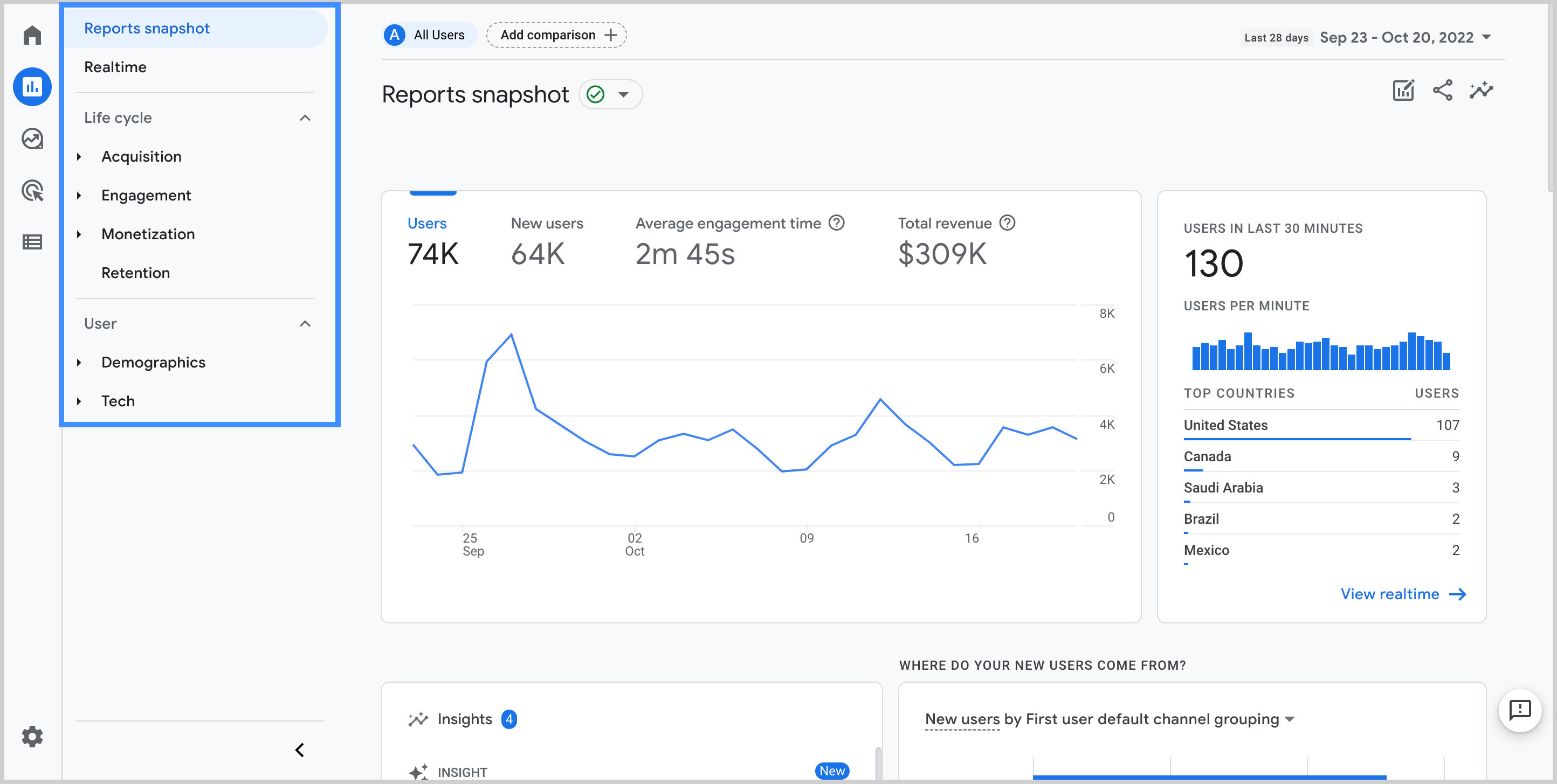
Behavioral analysis provides valuable insights into user behavior and traffic patterns but may require additional research to understand user intentions and context

©Google, Fair Use

Behavioral analysis involves the use of software, such as cookies to track how people interact with an app and perform tasks. This type of analysis can provide valuable information about the users' behavior and traffic patterns, which can be more reliable than self-reported data. However, behavioral data alone may not reveal users' intentions or context, so it is often combined with surveys or field studies to understand user behavior better.

3. Automated Logging

One approach to understand how users engage with your app is through automated logging, which captures device-generated events without the user's input. This method provides objective and consistent interaction data, but it's limited in its ability to analyze context or intent.

For example, an automated logging system might record that a user spent a significant amount of time on a particular page, which could suggest that the page was interesting or useful to the user. However, more than this data is needed to provide insight into the user's intent or motivation for spending time on the page.

4. Experience Sample Method (ESM)

This research technique collects data on an individual's natural environment multiple times throughout the day. A brief questionnaire or survey prompts participants to report regularly on their activities through a mobile phone or tablet.

While ESM does provide real-time insights into user experiences throughout their day, it does not involve recording observations over an extended period like diary studies do.

Let's say a research team wants to study the relationship between stress levels and social interactions in college students. They could use ESM to collect data on students' experiences throughout the day.

The research team would provide participating students with a mobile app that sends daily prompts, asking them to report on their current activities, mood, and social interactions. For example, a prompt might ask the student to rate their stress level on a scale of 1 to 10 and to describe their current social situation: alone, with friends, in class, etc.

The Take Away

Mobile user research is a powerful tool for UX designers to gain a competitive edge in today's crowded app market. We explored various user research methods that you can use to create great user experiences in mobile apps.

We began with qualitative research methods: first, lab tests and their ability to provide valuable insights into real-world scenarios. Next, we delved into diary studies to capture user behaviors and contextual information over an extended period. We then explored task analysis as a method used to understand how users solve problems. Lastly, we discussed field studies to identify pain points and opportunities for improvement that may be absent through other research methods.

We also looked at quantitative methods such as online surveys combined with automated data collection that reflects the user's actual behavior.

Finally, we examined experience sampling methods (ESM) as a research technique that collects data on individuals' subjective experiences in their natural environment using mobile devices such as smartphones or tablets. 

As a designer, you may use one or more of the various mobile UX research techniques to develop mobile apps that better meet users' needs and expectations.

References and Where to Learn More

Take the time to understand your users through user research and build on that knowledge from the outset in our User Research – Methods and Best Practices Course.

An interesting examination about using diaries in user experience.

Read this introduction to lab testing and its benefits.

Learn more about Field Studies and the user context in this article by the Norman Nielsen Group.

You may find this deep introduction into Experience Sampling for Building Predictive User Models valuable.

Read the report by Allied Market Research about the current trends in the mobile application market. 

Hero Image: © Interaction Design Foundation, CC BY-SA 4.0

Feel Stuck?
Want Better Job Options?

AI is replacing jobs everywhere, yet design jobs are booming with a projected 45% job growth. With design skills, you can create products and services people love. More love means more impact and greater salary potential.

At IxDF, we help you from your first course to your next job, all in one place.

See How Design Skills Turn Into Job Options
Privacy Settings
By using this site, you accept our Cookie Policy and Terms of Use.
Customize
Accept all

Be the One Who Inspires

People remember who shares great ideas.

Share on:

Academic Credibility — On Autopilot

Don't waste time googling citation formats. Just copy, paste and look legit in seconds.