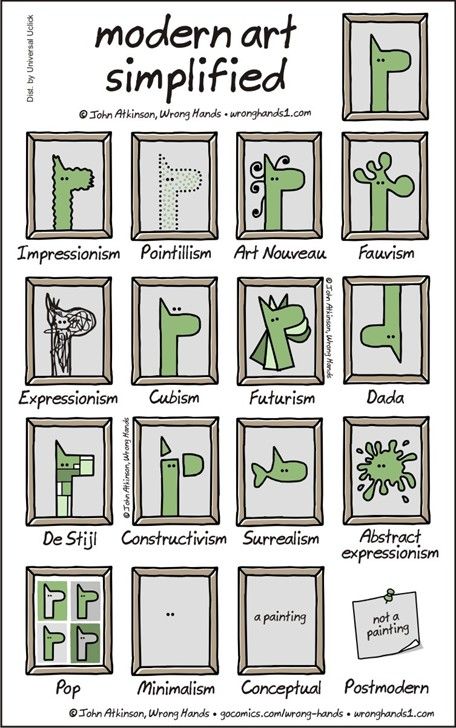
Design movements are deliberate, often collective, approaches to style, materials, function, and context in design that emerge when designers respond to broader social, technological, or economic forces.
For UX (user experience) designers, in addition to a product’s interface and functionality, the visual, physical, and behavioral language the user perceives shape its UX. By understanding how design movements structured decisions about form, function, materials, and user context, you can borrow the underlying principles to create more coherent, meaningful, and future-aware experiences.
In this video, watch how UX design grew from early aesthetic principles through the rise of personal computing to become a multidisciplinary practice focused on creating intuitive, meaningful experiences across products and services.
Know the Past, Admire the Movement, Adapt the Spirit
Why mention the past when you might feel you’re supposed to be looking forward to innovative designs? The past is past, after all, and however great the movements that once shaped design were, aren’t their products now largely the stuff of museums, history books, and retro-oriented living rooms and dens? However, consider what powerful design movements from other times achieved, including the Arts and Crafts movement, De Stijl, and Bauhaus. Each movement defined its own visual and material language, its values around how people use things, and the way design should respond to users, tools, and environments.
Sure, some movements may seem to have been more about furniture and buildings than anything “transferable” to, say, screens showing digital products. “Seem” is the operative term there. You’ll soon find that, beneath the surface, you’ll get to enjoy three important benefits when you know about design movements and what they can do, namely:
1. Richer Visual & Interaction Vocabulary
Understanding movements gives you metaphors and references, not just “make it flat” but “make it like De Stijl grid clarity” or “like Arts and Crafts tactility.” That versatility helps you design more memorable and coherent experiences. Knowledge of design movement context can help you avoid treating design as isolated elements and, instead, view interaction, layout, tone, visual style, and even technological affordances as part of a larger culture of design.
2. Deeper Meaning & Values Embedded in Design
Design movements encode values, such as craft, honesty, function, and sustainability: things you might notice when you look deeper at what the forms and visuals mean. When you pick a style for your UX design, you implicitly pick those values. And when you’re aware, you’ll find yourself more empowered to design more consciously and with clearer direction, being able to see things from far above the surface.
3. Better Anticipation of How Users Interpret Design
Users bring cultural expectations which design history has shaped. If you lean into a minimal, Bauhaus-inspired interface, for example, a user is going to expect certain behaviors of it: things like clean structure, minimal ornamentation, fast performance. If you ignore that, you’ll risk confusing them, such as a Bauhaus-looking design that might have too much going on inside it to actually be Bauhaus. However, if you design intentionally with that history in mind, you meet implicit expectations. There’s another “plus” in this, too: knowing about design movements can help you recognize recurring patterns in design decision-making, such as minimalism, ornamentation, modularity, and material honesty.
Speaking of culture, in this video, Alan Dix, Author of the bestselling book “Human-Computer Interaction” and Director of the Computational Foundry at Swansea University, explains how cultural differences shape how users interpret interfaces and why thoughtful localization helps you meet those expectations.
Design Movements Worth Understanding
While it’s not an exhaustive list, you can find “major players” below in terms of movements that have left their mark, and not just on the floors of antique stores, walls of art galleries, and boulevards of beautifully historic neighborhoods. It’s loosely grouped into sections that capture the type of contribution and status each movement has.
Historical Foundations: Arts and Crafts (c. 1880–1920)
This movement reacted to the industrial revolution’s mass production by celebrating craftsmanship and honesty in materials. It favored handmade objects, visible construction, and utility.
You can use this legacy when you’re designing with a human touch, and think tactile micro-interactions, transparent processes, and experiences that feel crafted, not generic.
Historical Foundations: De Stijl (1917–1931)
Founded in the Netherlands, De Stijl emphasized pure geometry, primary colors, and harmony through simplicity. It aimed to remove personal expression in favor of universal clarity.
De Stijl (Dutch for “the style”) shows up in clean grid systems, modular design, and minimalist UIs (user interfaces). When you want to create a balanced, rational experience, De Stijl’s principles can help you keep things focused and uncluttered.
Historical Foundations: Bauhaus (1919–1933)
Bauhaus merged art, craft, and industrial design, with a belief that design should be functional, democratic, and visually balanced. “Form follows function” became its core principle.
This one’s a root of modern UX, although Bauhaus wasn’t UX design’s sole “source” of “form follows function.” From flat design to user-first interfaces, Bauhaus influences usability, layout consistency, and the idea that beautiful things should work well for everyone.
Consumer & Lifestyle Influences: Mid-Century Modern (c. 1945–1970)
With roots in postwar optimism, this movement favored clean lines, organic shapes, and ease of use in everyday products. It emphasized comfort and friendly minimalism.
So, how do 1950s’ sideboards, coffee tables, and the like translate to UX design? Well, Mid-Century Modern is great for consumer-facing apps and devices, so you can use this sensibility to design welcoming, accessible, emotionally warm products that avoid technical coldness.
Consumer & Lifestyle Influences: Memphis Design (1980s)
This bold, playful movement rejected minimalism and instead embraced geometric forms, wild patterns, and vibrant color clashes to make design fun, loud, and unconventional.
UX-wise, Memphis is ideal for expressive, brand-heavy, or entertainment-driven interfaces. And, if your product targets younger users or niche creative audiences, this movement encourages experimentation and visual delight.
Visual-Systems Movements: Swiss / International Typographic Style (1940s–1970s)
Also known as the International Style, this movement prioritized typography, grid alignment, and neutrality and emphasized legibility and order.
This one is another heavyweight in terms of influence on UX, and its style is foundational to web design and information architecture (IA). It influences layout grids, clear hierarchy, and logical visual flow, especially so in data-heavy dashboards or content-first designs.
In this video, William Hudson, User Experience Strategist and Founder of Syntagm Ltd., explains how information architecture organizes content into clear structures that help users navigate complex digital spaces.
Visual-Systems Movements: Postmodernism (1970s–1990s)
Postmodern design challenged modernist “truths” by embracing contradiction, playfulness, and cultural reference. It blurred high and low design, often with a sense of irony.
When you use it with care, postmodern cues can work well in branding, gamified systems, or interfaces that aim to surprise and provoke. It encourages you to break patterns, intentionally, but to be mindful with complexity and ambiguity and all that deconstructed meaning.
Visual-Systems Movements: Web Brutalism (2010s)
This internet-age movement mimics the raw, “unstyled” look of early web pages, and, sure, it emphasizes honesty and speed over visual polish.
Brutalism can be useful for experimental projects, developer tools, or communities that value authenticity over gloss. Note, however, that it’s not always going to be ideal for accessibility or broad appeal.
Digital-Era Movements: Material Design (2014–present)
Developed by Google, Material Design blends tactile cues with digital clarity and uses shadows, layering, and motion to guide users and create depth.
Featuring widely across Android and web platforms in the 2020s, Material Design provides a clear system for visual hierarchy and interaction feedback. As such, it can be a strong choice for scalable, accessible designs you can put your brand stamp on.
In this video, Frank Spillers, Service Designer, Founder and CEO of Experience Dynamics, explains how Material Design provides clear affordances, strong hierarchy, and accessible contrast to support clean, scalable interfaces.
Digital-Era Movements: Neumorphism (2020s)
A kind of short-lived but eye-catching trend that combined soft shadows and subtle depth, neomorphism is a soft, minimalist “cousin” of skeuomorphism. Skeuomorphic designs include lined-paper icons for notepad applications and the recycle bin or trashcan icon as a holding area for deleted files on a laptop, for instance.
While it’s visually interesting, this one can sometimes be not all that great for accessibility. So, if you use neumorphic styles, test them carefully for contrast and usability, especially on touch interfaces.
Watch as this video explains how accessibility ensures that digital products remain usable and enjoyable for people with disabilities.
Digital-Era Movements: Flat Design (2010s)
As a response to skeuomorphism, flat design removed shadows, gradients, and depth, and it emphasized clarity, speed, and content over visual decoration.
Flat design is clean, efficient, and scalable, but it can lack affordance; for an idea as to how important affordances are, think of door handles. Make sure your minimalist choices still signal interaction clearly; users need cues to act properly.
Explore how visible affordances and clear signifiers help users understand what actions are possible in a design, in this video.
Ethical and Systemic Movements: Sustainable Design (2000s–present)
More of a philosophy than a visual style, sustainable design prioritizes environmental responsibility, lifecycle awareness, and long-term value. And it’s pretty much what it sounds like: looking out for people, communities, the planet, and designers doing right by designing mindfully for them.
In UX design, with all the screens and things that appear on them to help people, this means designing for durability, repairability, and ethical use. It’s like an “anthem” for building experiences that respect user time, reduce friction, and avoid dark patterns or manipulative nudges.
Ethical and Systemic Movements: Human-Centered Design (ongoing)
Human-centered design focuses on understanding human user needs, behaviors, and contexts through research and iteration. It emerged from design thinking and systems design and “humanized” the user considerably; better still, it evolved into humanity-centered design and advanced the cause of designing well and mindfully with a truly noble goal in sight.
Centering design around humans and humanity is foundational to a UX practice, as it reminds you to base design decisions on empathy, testing, and evidence that impact humans and the wider ecosystem in which humans need to thrive. That’s far better, and infinitely more inspiring, than designing with assumptions or aesthetics alone.
In this video, Don Norman, Father of User Experience (UX) design, author of the legendary book “The Design of Everyday Things,” and co-founder of the Nielsen Norman Group, shows you how humanity-centered design builds on empathy and user research by encouraging you to address root problems, consider interconnected systems, and refine solutions with the people they affect.
How to Use Design Movements in Your UX Work
Understanding these movements gives you a richer vocabulary and sharper judgment. Here’s how to put that knowledge to work:
1. Analyze the Influences in Your Current Design
Ask yourself: “What movement does this design borrow from, consciously or not?” If it’s a clean, grid-based layout, it might echo Swiss design. If it’s a bold splash page with animated shapes, then possibly Memphis.
2. Match Movement Principles to User Needs
If your users want speed and clarity, Swiss or Material Design might make the best sense. If you’re building a creative platform, maybe Postmodernism or Memphis can help you stand out. Knowing the use cases can help you attune your design choices to what users really want in a design.
In this video, William Hudson explains how use cases help you bridge the gap between requirements and design by mapping every interaction between a system and the outside world.
3. Extract Values, Not Just Visuals
Don’t copy the look; adapt the logic. Bauhaus didn’t mean “make it grey and minimalist”; it meant “remove what doesn’t serve function.” Arts and Crafts didn’t mean “add decoration”; it meant “show the process honestly.” That’s a vital point. The movements happened the way they did and their product designs looked the way they did as they occurred during their respective eras. The movements’ designers created within the respective context of their times; things would be different now for them if they hadn’t emerged then. If, for example, Bauhaus hadn’t existed at the time but “came along” later, then it possibly wouldn’t have produced those signature styles quite as we know them now; and it wouldn’t have been “Bauhaus.” So, as you’re in a different era from them, design with intention instead of lifting a style from the past and replicating it for the sake of a “retro” look in your own UI.
4. Communicate Your Design Language
Share your movement references with your team or stakeholders and the rationale for doing so. You might say, “We’re using a Mid-Century Modern approach for warmth and simplicity,” or “We’re testing Brutalist layouts to increase authenticity.” And if some stakeholders like it just because it “looks cool,” you can smile because you know the real reasons have deeper foundations.
5. Watch for User Interpretations
Users bring expectations shaped by visual history that makes sense to them. Their mental model may help them find that a flat button feels tappable, or it might make it invisible to them. Use design movement cues to guide users, not confuse them.
Overall, design movements offer far more than just style guides; they give you historical insight, cultural depth, and design reasoning to help get your own design right. When you learn their patterns, values, and visual languages, you can design with purpose and not just fall in with a trend or (perhaps worse) mimic for the sake of “quaintness.” For example, unless you’re designing a 1920s-themed site for an era-related purpose, don’t lift the form without reckoning carefully on the reason.
Whether you borrow the harmony of De Stijl, the clarity of Swiss design, or the ethical rigor of human-centered practices, movements help you anchor your UX decisions in something bigger. They make your interfaces not only usable, but meaningful, too. Speaking of meaning, remember to keep in step with the spirit of design movements. And take heart from knowing that the more you know about where design has been, the better the chances are that you can shape where it’s heading. You can make it a great destination for your users, your brand, and the product itself.