Sustainable Design

Your constantly-updated definition of Sustainable Design and collection of videos and articles.
Be a conversation starter: Share this page and inspire others!

492 Shares

What is Sustainable Design?

Sustainable design creates long-term solutions and helps societies ensure the well-being of their people and harmony with the environment for generations.

Designers reduce waste by making products that are recyclable, compostable and even better - endlessly reusable. They might also create a manufacturing process to reduce or remove carbon dioxide emissions, to support a circular economy. As the most significant challenge of our age, many of these designs relate to environmentalism or combatting climate change.

One of the world’s leading User Experience and design experts, Don Norman, help us understand how to design for a better world. Spoiler alert: sustainability is not enough.

Transcript

What Makes a Product Sustainable?

A sustainably designed product or service is one that considers the entire lifecycle of the product during development, from manufacturing to disposal. A truly sustainable design is optimized for reuse.

A physical product might use recycled materials, be manufactured in a plant that doesn’t use fossil fuels, or follow incremental modular design principles to become more sustainable. After the product is created, it should be useful for a long time. It should be designed in a way so it can be reused or repaired, or biodegrade once it is done being useful.

A sustainable service, designed with participatory design principles, should provide what the user needs while reducing the use of non-renewable resources. Ride-sharing apps are an example of a service that ultimately reduces the need for every individual to own a car. This has the potential to reduce waste since fewer cars are necessary. Options to carpool can also reduce gasoline use, further increasing the sustainability of the service.
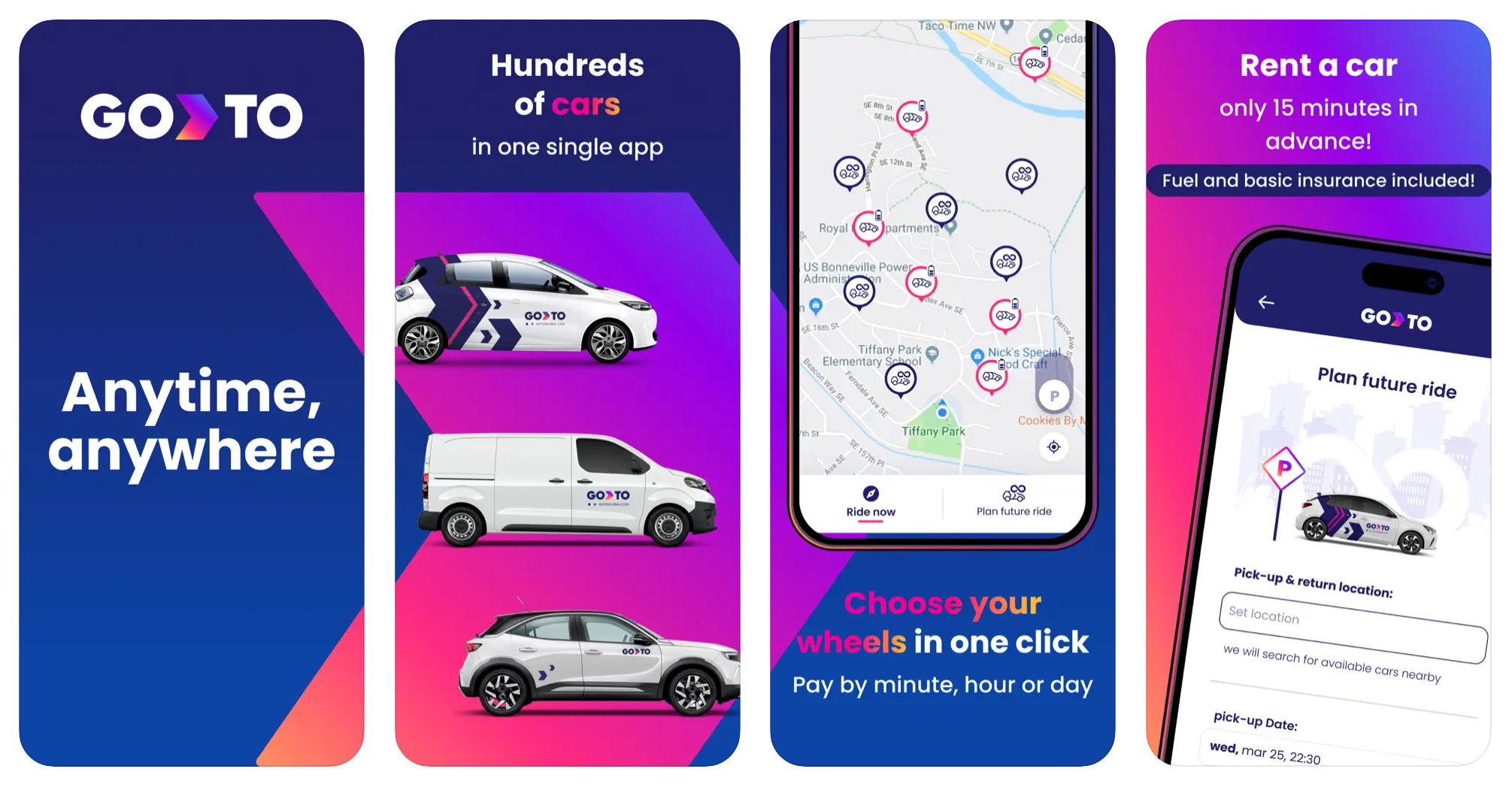
Carsharing services such as GoTo Carsharing seek to reduce car ownership using the Transportation-as-a-Service model.

Carsharing services such as GoTo Carsharing seek to reduce car ownership using the Transportation-as-a-Service model.

© GoTo Mobility, Fair Use

Is Sustainability Enough?
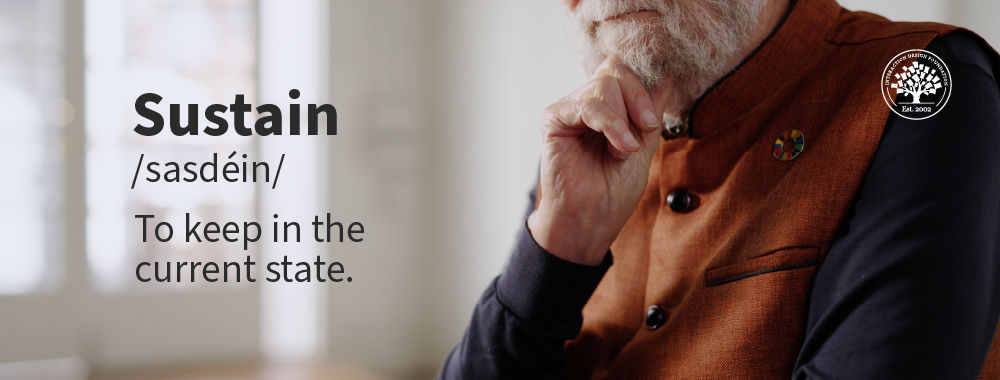
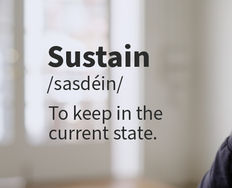
Sustain: To keep things in the current state

© Interaction Design Foundation, CC BY-SA 4.0

As important as sustainability is, it’s clear that the effects of climate change are already happening. In that regard “sustainability” is not enough, since that effectively means keeping things the way they are.

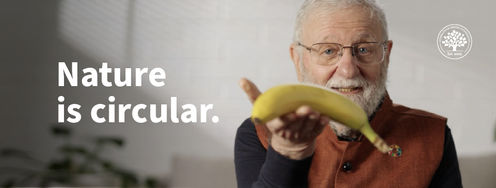
We have to stop creating products that create great harm to the planet. We have to create products that can last for a long time and that can be repaired and upgraded when they become outdated or stop working. Alternatively, we can design as nature does. We can design in a way where the waste itself is a valuable substance that can be reused by nature. Think of an orange. It’s protected by the peel (not a plastic wrap). Once we peel the orange the peel will naturally decompose and function as fertilizer for the planet.

What Does This Mean for Digital Products?

User experience designers who work solely on digital products might think sustainability is irrelevant for software or applications. That is somewhat true, but new industries like crypto mining have demonstrated that even purely digital products can have unforeseen ecological impacts.
Designers can develop energy-efficient apps that work on older devices to reduce energy consumption and slow the obsolescence of older devices, which causes more waste.

Dark Mode and Light Mode for Mobile

Dark mode vs. light mode.

© Apple Inc, Fair-Use

Even something as simple as a “dark mode” for the UI of an app can reduce the amount of strain on the battery of a smartphone or tablet, thus reducing energy consumption. If everyone who uses the app uses dark mode, it can have a significant impact.

How Can UX Designers Make a Difference?

Traditionally, UX design has primarily focused on human-computer interactions. However, we can scale up the practices of design thinking, user research, product design and interaction design to even larger projects. Now more than ever, designers are called on to rethink infrastructure, education and transportation to create more sustainable models on a national or even global scale.

Sustainable design processes include reforming energy-efficient infrastructure or designing sustainable buildings for housing.

The founder of User Experience, Don Norman, has coined the term “Humanity-Centered Design” to give a name to this movement and inspire designers to design a better world for all of us.

Questions About Sustainable Design?
We've Got Answers!

How does UX design affect sustainability in the real world?

UX (user experience) design affects sustainability by shaping how people use resources, both digital and physical. Thoughtful UX can reduce energy consumption, extend product life cycles, and encourage responsible user behavior. For example, a ride-sharing app that simplifies carpooling helps reduce emissions. Likewise, designing interfaces that encourage repair over replacement can reduce e-waste.

Designers also influence server load and data transfer through choices in UI complexity. Lightweight, efficient interfaces consume less bandwidth and processing power, which helps lower digital products' carbon footprint. Even small design decisions, like minimizing autoplay videos or defaulting to low-energy settings, add up at scale.

Even minor improvements matter. Designers hold the power to build more sustainable futures through everyday choices.

Watch as UX Pioneer and the Godfather of UX Design, Don Norman explains important points about sustainable design:

Transcript

Take our course, Design for a Better World with Don Norman.

What are the core principles of sustainable design?

Don Norman outlines key principles of sustainable design that urge designers to think long-term, reduce waste, and create products that work in harmony with people and the planet. First, he emphasizes durability and longevity—designers should create products that last and are easy to repair, not just to replace.

Next, Norman champions humanity-centered design—which itself has five principles and is an expansion of human-centered design. Humanity-centered design centers on how products align with real user needs, align with the needs of those whom the making and disposal of products affect, and don’t encourage overconsumption or unnecessary features. He also stresses circular thinking: products should be reusable, recyclable, or biodegradable, minimizing their environmental impact from start to finish.

Another core idea is systems thinking. Designers must consider the entire lifecycle of a product—manufacturing, use, and disposal—and understand how each part affects the larger ecological and social system.

These principles shift UX design from being convenience-focused to planet-conscious and sustainable.

Watch as UX Pioneer and the Godfather of UX Design, Don Norman explains important points about sustainable design:

Transcript

Take our course, Design for a Better World with Don Norman.

How does human-centered design fall short?

Don Norman argues that human-centered design (HCD) falls short when it focuses too narrowly on individual needs and ignores broader systems. Traditional HCD often optimizes for user satisfaction and convenience without considering long-term environmental or social consequences. For example, designing faster delivery interfaces may delight users but worsen carbon emissions and exploit gig workers.

This user-first mindset fails to account for sustainability, equity, and system-wide ripple effects. Norman calls for an expanded approach—humanity-centered design—that balances personal needs with collective well-being and planetary health.

He urges designers to think beyond immediate users and consider future generations, ecosystems, and cultural impact. In short, HCD must evolve to address the complexity of real-world challenges, not just usability.

Watch as Don Norman explains important points about humanity-centered design:

Transcript

Take our course, Design for a Better World with Don Norman.

How can I design digital products that support sustainability?

To design digital products that support sustainability, start by reducing energy and data consumption. Optimize your interface for speed and simplicity—lightweight pages load faster and use less server power. Avoid autoplay media, oversized images, and bloated code that waste resources.

Design for longevity, too. Create systems that evolve with user needs instead of pushing frequent replacements. Think modular updates instead of total redesigns. Support repairability and extend product lifespans by offering clear help, updates, and accessible documentation.

Also, encourage mindful behaviors. You can use nudges, like defaulting to eco-friendly settings or highlighting energy usage, to help users make sustainable choices. Prioritize inclusive, low-bandwidth experiences to reach more users while using fewer resources.

Every design choice—from architecture to interface—can reduce environmental impact when you approach it with an intention for sustainability.

Watch as Don Norman explains important points about sustainable design:

Transcript

Take our course, Design for a Better World with Don Norman.

How do I balance user needs with environmental impact?

To balance user needs with environmental impact, prioritize usability and sustainability. Instead of choosing between them, integrate eco-conscious thinking into the user experience. For example, simplifying interfaces to reduce data load will meet users’ desire (or need) for speed while cutting energy use.

Choose durable over disposable solutions. Design features that meet long-term needs so users don’t constantly upgrade or discard. Also, offer transparency: let users see their environmental impact and offer low-impact choices, like dark mode or minimal data settings.

When you expand your design goals from “user-centered” to “humanity-centered”—a mindset where good UX supports both individual goals and the planet’s well-being—you can shift up a gear to protect communities and the environment. Sustainable design doesn’t mean compromising quality. It means creating smarter, more intentional experiences that serve users today without harming tomorrow.

Watch as Don Norman explains important points about sustainable design:

Transcript

Take our course, Design for a Better World with Don Norman.

What methods help assess sustainability in UX projects?

To assess sustainability in UX projects, start with lifecycle analysis (LCA). This method evaluates the environmental impact of a product from design to disposal, measuring energy use, carbon emissions, and material waste. LCA helps teams understand where the most significant sustainability gains are possible.

Use carbon footprint tools to estimate the energy impact of digital experiences, especially data-heavy ones like video, animation, or high-resolution imagery. Also, you can track server load and optimize code to reduce resource consumption.

Behavioral analytics show how users interact with your product. This helps you cut redundant features and streamline the experience, lowering digital waste. Conduct user testing with sustainability in mind; ask how features influence user choices and behaviors.

Last, but not least, include sustainability goals in your UX design process and explain to stakeholders, especially in management, why it’s essential. Make energy efficiency, accessibility, and resource use part of your success metrics.

Enjoy our Master Class Exclusive: Design for a Better World, a Discussion with Don Norman, Founding Director - Design Lab, University of California, San Diego. Co-Founder, Nielsen Norman Group.

Watch as Don Norman explains key insights about designers’ role in sustainable projects:

Transcript

How do I use personas and journey maps in sustainable UX design?

To use personas and journey maps in sustainable UX design, focus on values, behaviors, and environmental context, not just goals and pain points. Build eco-conscious personas that represent users who care about sustainability or are impacted by sustainability. For example, a persona might value low-energy apps or prefer repairable devices. It’s not about a lofty ideal; real people care about their planet.

When mapping user journeys, highlight moments that involve high resource use, like streaming content, printing, or buying replacements. These touchpoints show where designers can reduce environmental impact—maybe by offering alternatives like downloads, digital receipts, or repair guides.

Also, include emotional drivers tied to sustainability: pride in saving energy or frustration with waste. This helps design more motivating, low-impact experiences.

You can align product goals with ethical, long-term design strategies by weaving sustainability into your personas and journeys.

Watch as William Hudson, User Experience Strategist and Founder of Syntagm Ltd, explains why design without personas falls short:

Transcript

Enjoy our Master Class Exclusive: Design for a Better World, a Discussion with Don Norman, Founding Director - Design Lab, University of California, San Diego. Co-Founder, Nielsen Norman Group.

How do I talk to stakeholders about sustainability in UX design?

When talking to stakeholders about sustainability in UX design, focus on the business value and the environmental impact. Frame sustainable UX design as a way to reduce costs; lighter interfaces use less bandwidth and server power, which saves money. Highlight growing consumer demand for ethical, eco-conscious products. Sustainability isn’t just good for the planet; it’s good for brand reputation and customer loyalty too.

Use real data. Show how your design choices can cut emissions, speed up performance, or improve accessibility. Link these benefits to customer satisfaction, retention, and system efficiency KPIs.

Also, speak their language. If they care about innovation, frame sustainability as a competitive edge. If they focus on risk, talk about regulations and long-term viability. Keep it practical and goal-aligned, and you’ll get lasting buy-in.

Watch Don Norman discuss what designers can do to influence the brands they work for, for the better:

Transcript

Take our course, Design for a Better World with Don Norman.

What are some recent or highly cited scientific articles about sustainability?

Löchtefeld, M. (2023). User experience considered harmful (for the planet). arXiv preprint arXiv:2305.11874.

In this thought-provoking paper, Markus Löchtefeld critiques the prevailing emphasis on user experience (UX) within the tech industry and academia, arguing that such focus can negatively impact the sustainability of ICT devices. By presenting two illustrative examples, he advocates for the inclusion of sustainability perspectives in UX metrics, emphasizing the need to consider third-order effects. This work has sparked discussions in the Human-Computer Interaction (HCI) community about integrating environmental considerations into UX design practices.

Huang, T. (2016). Disruptive UX for sustainability: Radically resolving user needs is good for business and environment. In M. Kurosu (Ed.), Design, user experience, and usability: Novel user experiences (pp. 485–493). Springer.

Tao Huang’s conference paper introduces the concept of “Disruptive UX for Sustainability,” advocating for a radical rethinking of business paradigms through user experience (UX) design. The paper discusses how UX and Human-Computer Interaction (HCI) can drive sustainability by encouraging reduced consumption and promoting recycling. It emphasizes the role of UX as a bridge between hardware and software, essential for successful sustainability initiatives. Huang also explores the cultural shift towards the sharing economy and identifies challenges in UX research related to sustainability. This work contributes to the discourse on leveraging UX design for environmental and societal benefits.

Frick, T. (2016). Designing for Sustainability: A Guide to Building Greener Digital Products and Services. O’Reilly Media. Publisher

Tim Frick’s book is a key text for digital professionals seeking to integrate environmental ethics into UX and web design. It provides actionable strategies for reducing the carbon footprint of digital services through performance optimization, thoughtful content strategies, and sustainable hosting. Frick emphasizes the importance of inclusive, accessible design in building long-term value and usability. The book stands out for its practical frameworks and real-world examples, making it a critical resource for anyone looking to align design with sustainability goals and corporate social responsibility initiatives.

Chick, A., & Micklethwaite, P. (2011). Design for Sustainable Change: How Design and Designers Can Drive the Sustainability Agenda. AVA Publishing.

This pivotal book by Anne Chick and Paul Micklethwaite redefines the designer's role in addressing global sustainability. Unlike narrow "green design" approaches, it integrates design thinking with broader socio-environmental challenges, exploring how designers can influence behavioral, systemic, and lifestyle changes. The book maps out the evolution from traditional product-focused design toward participatory, open-source, and service-oriented practices. It is especially valuable for UX and design professionals seeking to expand their influence into strategic, ethical, and transformative domains. Through case studies, theory, and tools, it provides a roadmap for engaging design as a force for sustainable innovation and responsible change across industries and communities.

Earn a Gift Earn a Gift, Answer a Short Quiz!

1
2
3
4
1
2
3
4
Question 1
Question 2
Question 3
Get Your Gift
Interaction Design Foundation logo

Question 1

What is a primary goal of sustainable design?

1 point towards your gift

  • To guarantee products are usable only within local markets
  • To lower the environmental impact across a product's lifecycle
  • To prioritize aesthetic elements over functionality
Interaction Design Foundation logo

Question 2

How do designers minimize waste in sustainable design?

1 point towards your gift

  • They design products with shorter lifespans.
  • They increase the use of non-renewable resources.
  • They use recyclable or biodegradable materials.
Interaction Design Foundation logo

Question 3

Why is it important for designers to design for longevity?

1 point towards your gift

  • It increases the turnover rate of new products.
  • It minimizes the number of resources needed over time.
  • It reduces the initial costs of production.

Learn More About Sustainable Design

Make learning as easy as watching Netflix: Learn more about Sustainable Design by taking the online IxDF Course Design for a Better World with Don Norman.

Why? Because design skills make you valuable. In any job. Any industry.

In This Course, You'll

  • Get excited when you use humanity-centered design to improve lives and solve global challenges. Don Norman's insights aren't just game-changing, they're world-changing. Between 2030 and 2050, the climate crisis is projected to cause about 250,000 additional deaths every year. This course gives you the tools to use Design Thinking and timeless, human-centered skills to drive positive change and shape a more sustainable future. You'll learn to solve real-world problems like climate change, inequality, wars, and waste. You'll get the confidence and practical methods to create solutions that make a real impact, locally and globally.

  • Make yourself invaluable with in-demand skills to tackle both small and large-scale projects. You'll discover how to mobilize people towards common goals, overcome resistance to change, and move into leadership roles that influence systemic change. This course will give you the tools to solve complex socio-technical problems in any industry. You'll position yourself as an expert in eco-friendly solutions. You'll learn how to drive lasting business success with circular design solutions that reverse harm and design a better world.

  • Gain confidence and credibility as you use design as a way of thinking to influence entire ecosystems! No matter your background, you'll apply your new skills from day one. Step-by-step, you'll learn to apply incremental modular design, measure what truly matters, and incorporate AI into your work. You'll master timeless human-centered skills like empathy, ethics, systems thinking, creativity, and deep societal insight that form the foundation of humanity-centered design. As AI accelerates ideation, prototyping, and simulation in complex challenges, these uniquely human perspectives become even more powerful: They turn AI into your superpower for creating meaningful, ethical, and genuinely sustainable design outcomes that only your human insight can deliver. It's easier than you think! The optional portfolio case study helps you identify organizations that truly make a difference, and quickly spot those that are merely superficial. With downloadable templates and guided projects, the Design for a Better World course gives you the tools to build real expertise and create solutions that make a difference.

It's Easy to Fast-Track Your Career with the World's Best Experts

Master complex skills effortlessly with proven best practices and toolkits directly from the world's top design experts. Meet your expert for this course:

  • Don Norman: Father of User Experience (UX) Design, author of the legendary book “The Design of Everyday Things,” co-founder of the Nielsen Norman Group, and former VP of the Advanced Technology Group of Apple.

Get an Industry-Recognized IxDF Course Certificate

Increase your credibility, salary potential and job opportunities by showing credible evidence of your skills.

IxDF Course Certificates set the industry gold standard. Add them to your LinkedIn profile, resumé, and job applications.

Course Certificate Example

Be in distinguished company, alongside industry leaders who train their teams with the IxDF and trust IxDF Course Certificates.

Our clients: IBM, HP, Adobe, GE, Accenture, Allianz, Phillips, Deezer, Capgemin, Mcafee, SAP, Telenor, Cigna, British Parliament, State of New York

All Free IxDF Articles on Sustainable Design

Read full article
Use More Meaningful Measurements in Design and in the World - Article hero image
Interaction Design Foundation logo

Use More Meaningful Measurements in Design and in the World

What we measure and how we do it significantly impact people’s lives. Often, we measure certain things just because they’re easy to measure, and that’s how it’s always been done. But we have to ask ourselves; are the measurements meaningful or not?We measure a country’s Gross Domestic Product (GDP)

Social shares
486
Published
Read Article
Read full article
Recycling is Not Enough. Let's Design for Reuse - Article hero image
Interaction Design Foundation logo

Recycling is Not Enough. Let's Design for Reuse

“We live in the age of technology and luxury, but we also live in the age of waste,” Don Norman explains. In this video, the grandfather of User Experience Design, Don Norman unpacks the world of waste we have collectively generated. He examines aspects of our daily lives that we take for granted an

Social shares
452
Published
Read Article
Read full article
Sustainability Is Not Enough - Article hero image
Interaction Design Foundation logo

Sustainability Is Not Enough

Sustainable design. Sustainable fashion. Sustainable living. We often hear these terms in marketing campaigns and popular media. But what does sustainability mean and why does pioneer of User Experience Design Don Norman think that sustainability shouldn’t be our goal when we design?In this video, D

Social shares
452
Published
Read Article
Read full article
Use Circular Design To Reverse Harm - Article hero image
Interaction Design Foundation logo

Use Circular Design To Reverse Harm

Nature is circular. Nothing ever goes to waste. The banana peel we discard degrades into nutritious compost for plants. Even the remains of deceased animals and humans disintegrate into the soil. Human engineering and design, on the other hand, are linear processes. And that has put us on a one-way

Social shares
417
Published
Read Article
Read full article
How Designers Can Help Companies Design for the Circular Economy - Article hero image
Interaction Design Foundation logo

How Designers Can Help Companies Design for the Circular Economy

The circular economy sounds like a simple idea to resolve the crisis we face as a species. A circular economy generates zero waste. Once a component enters the cycle, it continues to be used for a long time. And once it is unusable, it can degrade naturally. However, as UX pioneer Don Norman explain

Social shares
527
Published
Read Article

Feel Stuck?
Want Better Job Options?

AI is replacing jobs everywhere, yet design jobs are booming with a projected 45% job growth. With design skills, you can create products and services people love. More love means more impact and greater salary potential.

At IxDF, we help you from your first course to your next job, all in one place.

See How Design Skills Turn Into Job Options
Privacy Settings
By using this site, you accept our Cookie Policy and Terms of Use.
Customize
Accept all

Be the One Who Inspires

People remember who shares great ideas.

Share on:

Academic Credibility — On Autopilot

Don't waste time googling citation formats. Just copy, paste and look legit in seconds.