Customer journey maps are visual representations of customer experiences with an organization. They provide a 360-degree view of how customers engage with a brand over time and across all channels. Product teams use these maps to uncover customer needs and their routes to reach a product or service. Using this information, you can identify pain points and opportunities to enhance customer experience and boost customer retention.
“Data often fails to communicate the frustrations and experiences of customers. A story can do that, and one of the best storytelling tools in business is the customer journey map.”
— Paul Boag, UX designer, service design consultant & digital transformation expert
In this video, Frank Spillers, CEO of Experience Dynamics, explains how you can include journey maps in your design process.
Customer Journey Maps – Tell Customer Stories Over Time
Customer journey maps are research-based tools. They show common customer experiences over time To help brands learn more about their target audience.
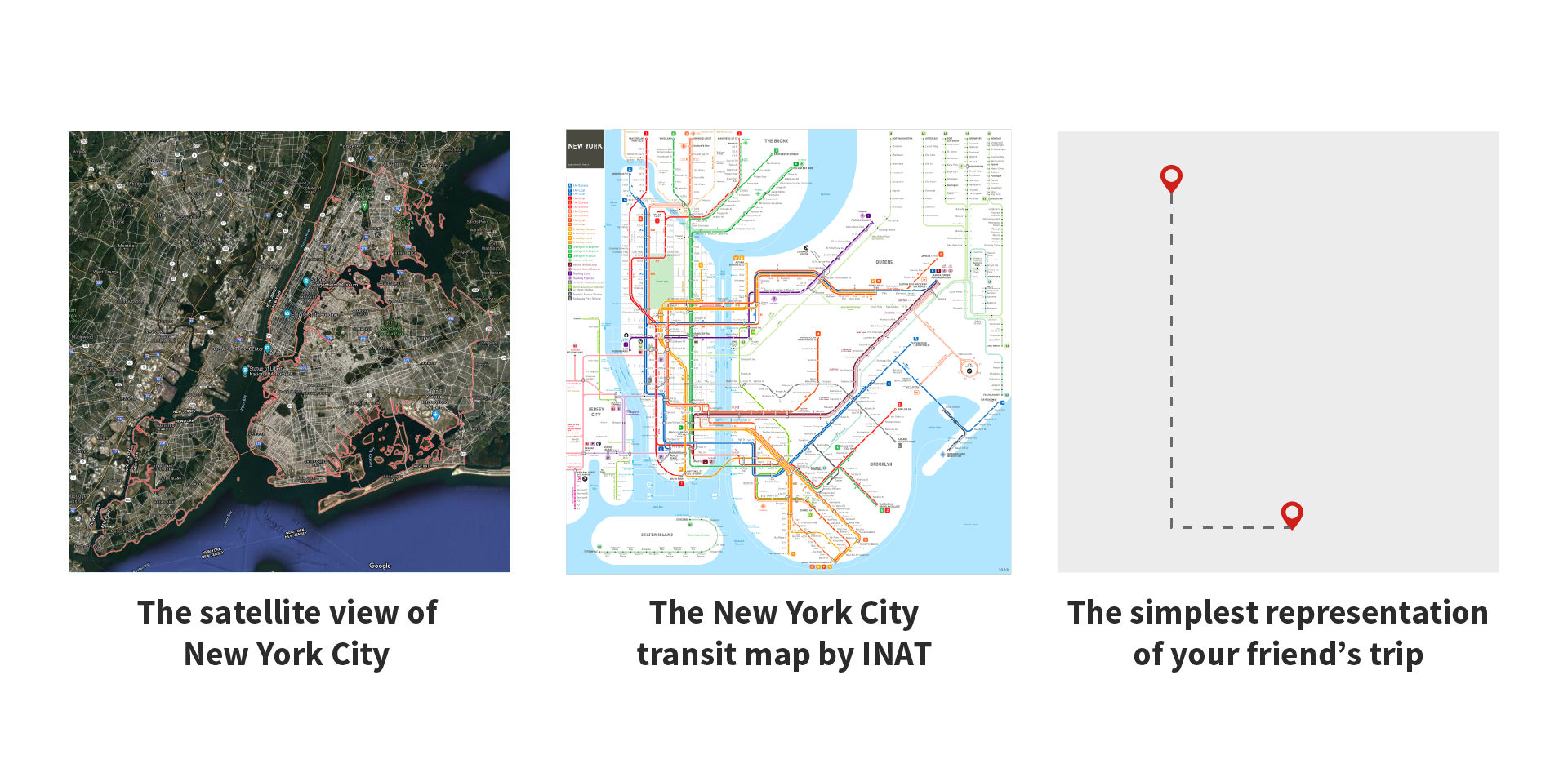
Maps are incredibly effective communication tools. See how maps simplify complex spaces and create shared understanding.
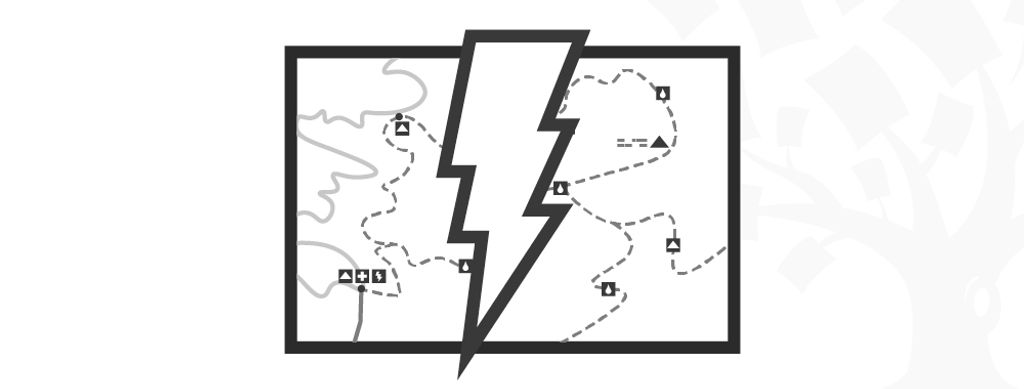
Unlike navigation maps, customer journey maps have an extra dimension—time. Design teams examine tasks and questions (e.g., what-ifs) regarding how a design meets or fails to meet customers’ needs over time when encountering a product or service.
Customer journey maps should have comprehensive timelines that show the most essential sub-tasks and events. Over this timeline framework, you add insights into customers' thoughts and feelings when proceeding along the timeline. The map should include:
A timescale - A defined journey period (e.g., one week). This timeframe should include the entire journey, from awareness to conversion to retention.
Scenarios - The context and sequence of events where a user/customer must achieve a goal. An example could be a user who wants to buy a ticket on the phone. Scenarios are events from the first actions (recognizing a problem) to the last activities (e.g., subscription renewal).
Channels – Where do they perform actions (e.g., Facebook)?
Touchpoints – How does the customer interact with the product or service? What actions do they perform?
Thoughts and feelings – The customer's thoughts and feelings at each touchpoint.
A customer journey map helps you understand how customer experience evolves over time. It allows you to identify possible problems and improve the design. This enables you to design products that are more likely to exceed customers’ expectations in the future state.
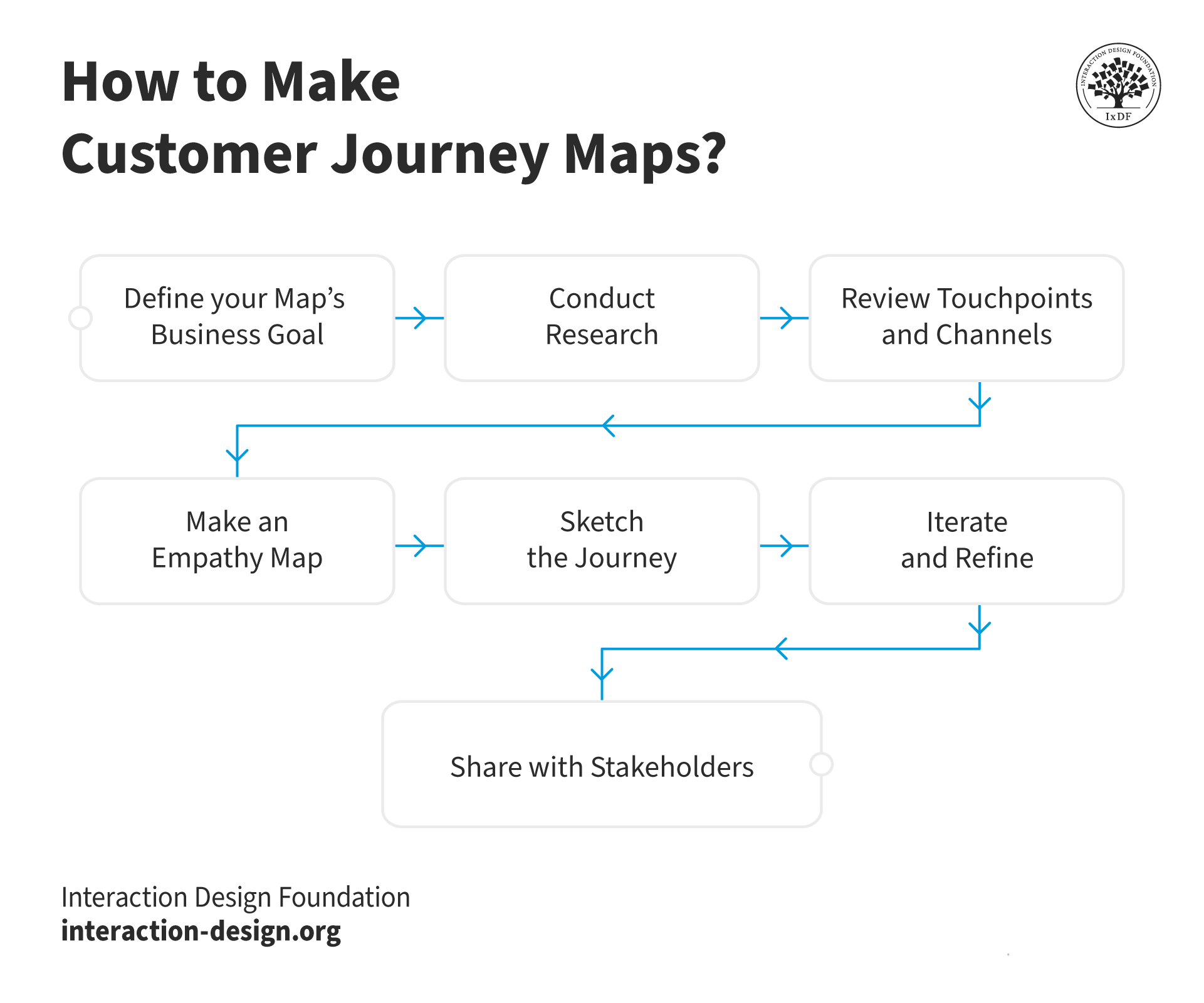
How to Create a Customer Journey Map for Exceptional Experiences?
© Interaction Design Foundation, CC BY-SA 4.0
Define Your Map’s Business Goal
Before creating a customer journey map, you must ask yourself why you're making one in the first place. Clarify who will use it and what user experience it will address.
Conduct Research
Use customer research to determine customer experiences at all touchpoints. Get analytical/statistical data and anecdotal evidence. Leverage customer interviews, surveys, social media listening, and competitive intelligence.
Watch user researcher Ditte Hvas Mortensen talk about how user research fits your design process and when you should do different studies.
Review Touchpoints and Channels
List customer touchpoints (e.g., paying a bill) and channels (e.g., online). Look for more touchpoints or channels to include.
Make an Empathy Map
Pinpoint what the customer does, thinks, feels, says, hears, etc., in a given situation. Then, determine their needs and how they feel throughout the experience. Focus on barriers and sources of annoyance.
Sketch the Journey
Piece everything—touchpoints, timescale, empathy map output, new ideas, etc.). Show a customer’s course of motion through touchpoints and channels across the timescale, including their feelings at every touchpoint.
Iterate and Refine
Revise and transform your sketch into the best-looking version of the ideal customer journey.
Share with Stakeholders
Ensure all stakeholders understand your map and appreciate how its use will benefit customers and the organization.
Buyer Journey vs User Journey vs Customer Journey: What's the Difference?
You must know the differences between buyer, user, and customer journeys to optimize customer experiences. A customer journey map is often synonymous with a user flow diagram or buyer journey map. However, each journey gives unique insights and needs different plans.
Customer Journey
The customer journey, or lifecycle, outlines the stages a customer goes through with a business. This journey can vary across organizations but includes five key steps:
1. Awareness: This is the first stage of the customer journey, where the customers realize they have a problem. The customer becomes aware of your brand or product at this stage, usually due to marketing efforts.
2. Consideration: Once customers know about your product or service, they start their research and compare brands.
3. Purchase: This is the stage where the customer has chosen a solution and is ready to buy your product or service.
4. Retention: After the purchase, it's about retaining that customer and nurturing a relationship. This is where good customer service comes in.
5. Advocacy: Also called the loyalty stage, this is when the customer not only continues to buy your product but also recommends it to others.
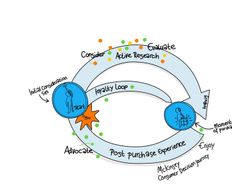
The journey doesn't end when the customer buys and recommends your solution to others. Customer journey strategies are cyclical and repetitive. After the advocacy stage, ideally, you continue to attract and retain the customers, keeping them in the cycle.
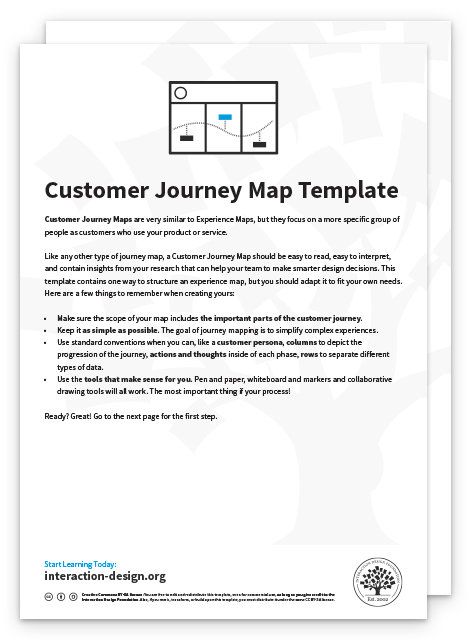
There is no standard format for a customer journey map. The key is to create one that works best for your team and product or service. Get started with customer journey mapping with our template:
This customer journey map template features three zones:
Top – persona and scenario.
Middle – thoughts, actions, and feelings.
Bottom – insights and progress barriers.
Buyer Journey
The buyer's journey involves the buyer's path towards purchasing. This includes some of the steps we saw in the customer journey but is specific to purchasing:
1. Awareness Stage: This is when a prospective buyer realizes they have a problem. However, they aren't yet fully aware of the solutions available to them.
2. Consideration Stage: After identifying their problem, the buyer researches and investigates different solutions with more intent. They compare different products, services, brands, or strategies here.
3. Decision Stage: The buyer then decides which solution will solve their problem at the right price. This is where the actual purchasing action takes place.
4. Post-Purchase Evaluation: Although not always included, this stage is critical. It's where the buyer assesses their satisfaction with the purchase. It includes customer service interactions, quality assessment, and attitudinal loyalty to the brand.
All these stages can involve many touchpoints, including online research, social media interactions, and even direct, in-person interactions. Different buyers may move through these stages at different speeds and through various channels, depending on a wide range of factors.
User Journey
The user journey focuses on people's experience with digital platforms like websites or software. Key stages include:
1. Discovery: In this stage, users become aware of your product, site, or service, often due to marketing efforts, word-of-mouth, or organic search. It also includes their initial reactions or first impressions.
2. Research/Consideration: Here, users dig deeper, exploring features, comparing with alternatives, and evaluating if your offering suits their needs and preferences.
3. Interaction/Use: Users actively engage with your product or service. They first-hand experience your solution's functionality, usability, and usefulness to achieve their goal.
4. Problem-solving: If they encounter any issues, how they seek help and resolve their issues fall into this stage. It covers user support, troubleshooting, and other assistance.
5. Retention/Loyalty: This stage involves how users stay engaged over time. Do they continue using your product, reduce usage, or stop altogether? It includes their repeated interactions, purchases, and long-term engagement over time.
6. Advocacy/Referral: This is when users are so satisfied they begin to advocate for your product, leaving positive reviews and referring others to your service.
Download this user journey map template featuring an example of a user’s routine.

Understanding these stages can help optimize the user experience, providing value at each stage and making the journey seamless and enjoyable.
Always remember the journey is as important as the destination. Customer relationships start from the first website visit or interaction with marketing materials. These initial touchpoints can influence the ongoing relationship with your customers.
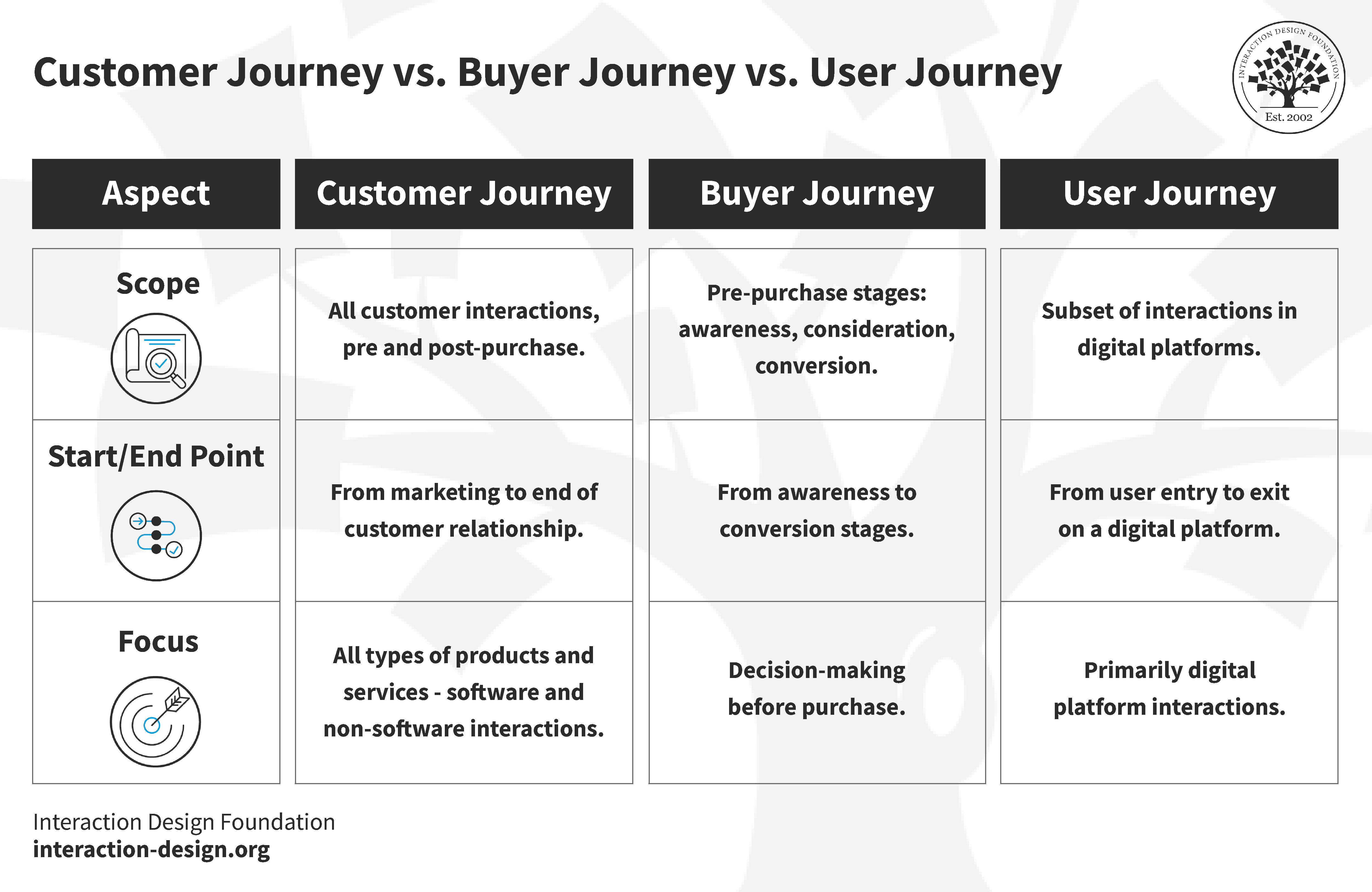
© Interaction Design Foundation, CC BY-SA 3.0
Aspect
Customer Journey
Buyer Journey
User Journey
Scope
All customer interactions, pre and post-purchase.
Pre-purchase stages: awareness, consideration, conversion.
Subset of interactions in digital platforms.
Start/End Point
From marketing to end of customer relationship.
From awareness to conversion stages.
From user entry to exit on a digital platform.
Focus
All types of products and services—software and non—software interactions.
Decision-making before a purchase
Primarily digital platform interactions.
Drawbacks of Customer Journey Maps
Customer journey mapping is valuable yet has limitations and potential drawbacks. Recognize these challenges and create more practical and realistic journey maps.
Over-simplification of Customer Experiences
Customer journey maps often risk simplifying complex customer experiences. They may depict varied and unpredictable customer behaviors as straightforward and linear. This simplification can lead to misunderstandings about your customers' needs and wants. As a result, you might overlook customers' diverse and unique paths.
Always remember that real customer experiences are more complex than any map. When you recognize this, you steer clear of decisions based on simple models.
Resource Intensity
Creating detailed customer journey maps requires a lot of resources and time. You must gather extensive data and update the maps to keep them relevant. This process can strain small businesses or those with limited resources.
You need to balance the need for comprehensive mapping with available resources. Efficient resource management and prioritization are crucial to maintaining effective journey maps.
Risk of Bias
Creating customer journey maps carries the inherent risk of biases. These biases can arise from various sources. They can impact the accuracy and effectiveness of the maps.
Alan Dix, an expert in HCI, discusses bias in more detail in this video.
Common biases in customer journey mapping include:
Assumption Bias: When teams make decisions based on preconceived notions rather than customer data.
Selection Bias: When the data doesn’t represent the entire customer base..
Confirmation Bias: When you focus on information that supports existing beliefs and preferences. Simultaneously, you tend to ignore or dismiss data that contradicts those beliefs.
Anchoring Bias: Relying on the first information encountered (anchor) when making decisions.
Overconfidence Bias: Placing too much trust in the accuracy of the journey map. You may overlook its potential flaws.
These biases may misguide the team, and design decisions based on these maps might not be effective.
To address these biases, review and update journey maps with real user research data. Engage with different customer segments and gather a wide range of feedback to help create a more accurate and representative map. This approach ensures the journey map aligns with actual customer experiences and behaviors.
Evolving Customer Behaviors
Customer behaviors and preferences change with time. A journey map relevant today can become outdated. You need to update and adapt your maps to reflect these changes. This requires you to perform market research and stay updated with trends and customer feedback.
Getting fresh data ensures your journey map stays relevant and effective. You must adapt to evolving customer behaviors to maintain accurate and valuable customer journey maps.
Challenges in Capturing Emotions
Capturing emotions accurately in customer journey maps poses a significant challenge. Emotions influence customer decisions, yet you may find it difficult to quantify and represent them in maps. Most journey maps emphasize actions and touchpoints, often neglecting the emotional journey.
You must integrate emotional insights into these maps to understand customer experiences. This integration enhances the effectiveness of customer engagement strategies. You can include user quotes, symbols such as emojis, or even graphs to capture the ups and downs of the users’ emotions..
Misalignment with Customer Needs
Misalignments in customer journey maps can manifest in various ways. It can impact the effectiveness of your strategies. Common misalignments include:
Putting business aims first, not what customers need.
Not seeing or serving the varied needs of different customer types.
Not using customer feedback in the journey map.
Thinking every customer follows a simple, straight path.
Engage with your customers to understand their needs and preferences if you want to address these misalignments. Incorporate their direct feedback into the journey map. This approach leads to more effective customer engagement and satisfaction.
Over-Reliance on the Map
Relying too much on customer journey maps can lead to problems. These maps should serve as tools rather than definitive guides. Viewing them as perfect can restrict your responsiveness to customer feedback and market changes. Treat journey maps as evolving documents that complement direct customer interactions and feedback.
Make sure you get regular updates and maintain flexibility in your approach. Balance the insights from the map with ongoing customer engagement. This approach keeps your business agile and responsive to evolving customer needs.
Data Privacy Concerns
Collecting customer data for journey mapping poses significant privacy concerns. Thus, you need to create a balance. You must adhere to data protection laws and gather enough information for mapping.
You need a careful strategy to ensure customer data security. Stay vigilant to adapt to evolving privacy regulations and customer expectations. This vigilance helps maintain trust and compliance.