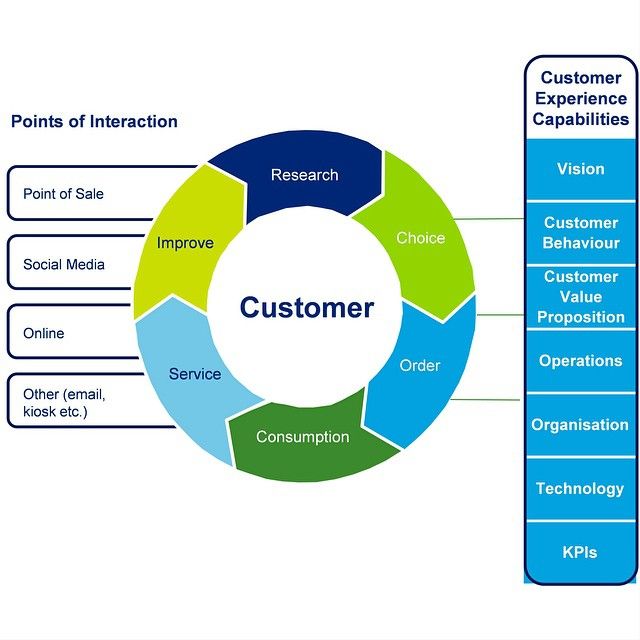
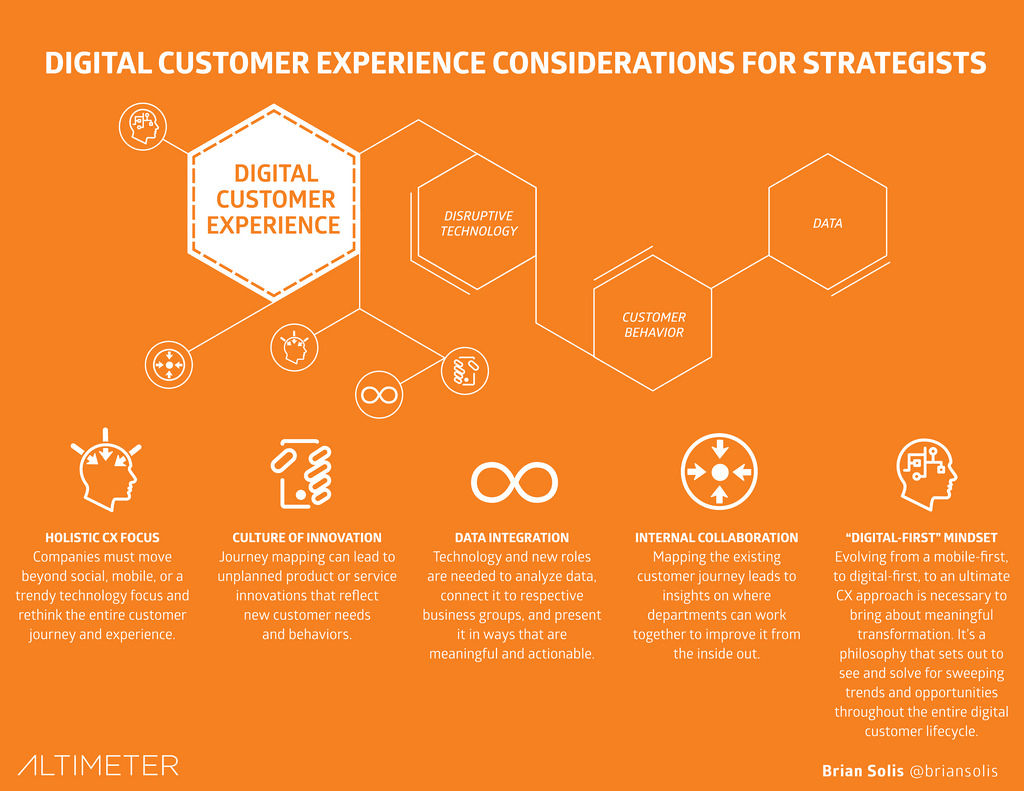
Customer experience (CX) design is the discipline of deliberately shaping and optimizing every interaction a person has with a brand, before, during, and after a purchase or conversion. As a CX designer, you strive to deliver consistent value, provide emotional resonance, and instill loyalty in customers who are glad to have converted and continue enjoying products and services while they support brands they trust.
In this video, Frank Spillers, Service Designer, and Founder and CEO of Experience Dynamics, explains how customer experience extends beyond user interactions to include the entire brand relationship, showing how CX and user experience (UX) complement each other in shaping satisfaction and loyalty.
Why Customer Experience Design Matters
CX design deserves its place in design terminology because it involves so much. Instead of treating CX as an afterthought or a marketing add-on, brands with CX designers embed customer-centric thinking across the entire business so that the sum of all touchpoints fosters trust, delight, and preference.
Because CX is broad, it naturally overlaps with:
UX design, itself a broad discipline with a focus on interactions with specific products or systems and user satisfaction.
Service design, which deals with the systems and backstage processes that support consistent experiences across channels.
Operations
Marketing
Support.
Still, CX forms a kind of umbrella under which many of those disciplines live.
A core aspect of this “super-discipline” is that as a CX designer, you view customers as whole human beings whose perceptions, emotions, and behaviors evolve over time. Another point: each brand is far more than just a product or interface and the sum thereof; it’s a living relationship that must earn coherence, predictability, and empathy. Last, but not least, CX design stands apart as both strategic and tactical; it spans massive concepts, such as brand promise, promise delivery, emotional tone, and granular moments: “items” like onboarding emails, wait times, and help desk scripts.
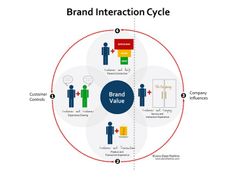
The Nielsen Norman Group splits CX into three levels: the single‑interaction, journey, and relationship levels of experience. More specifically:
The interaction level focuses on single touchpoints, like completing a purchase or clicking a button; each one should feel seamless and intuitive.
The journey level looks at how those interactions connect across time and channels to help users achieve a broader goal, such as researching, buying, and receiving a product.
The relationship level considers the customer’s long-term perception of the brand. Repeated interactions, emotional tone, and consistency shape this over months or years.
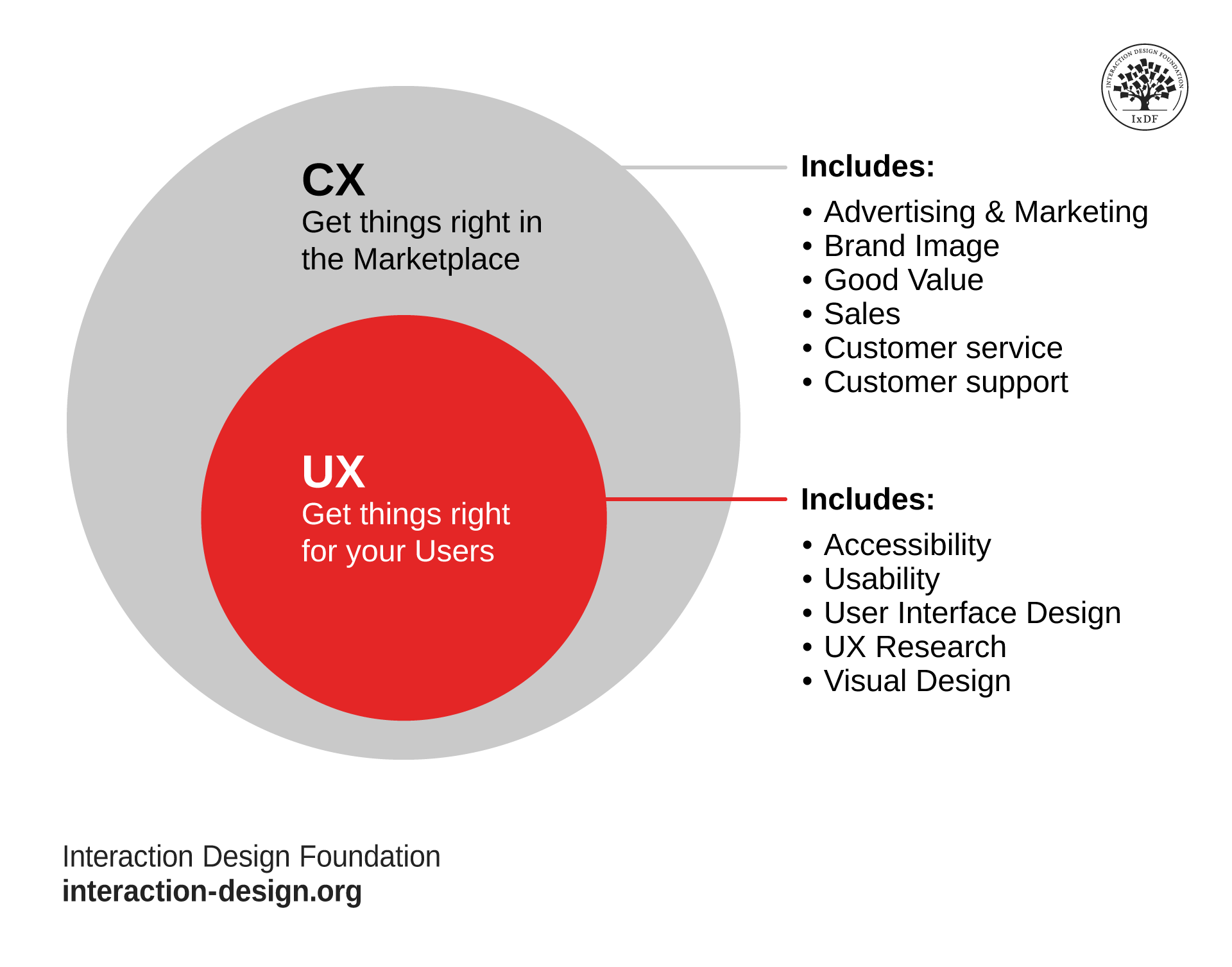
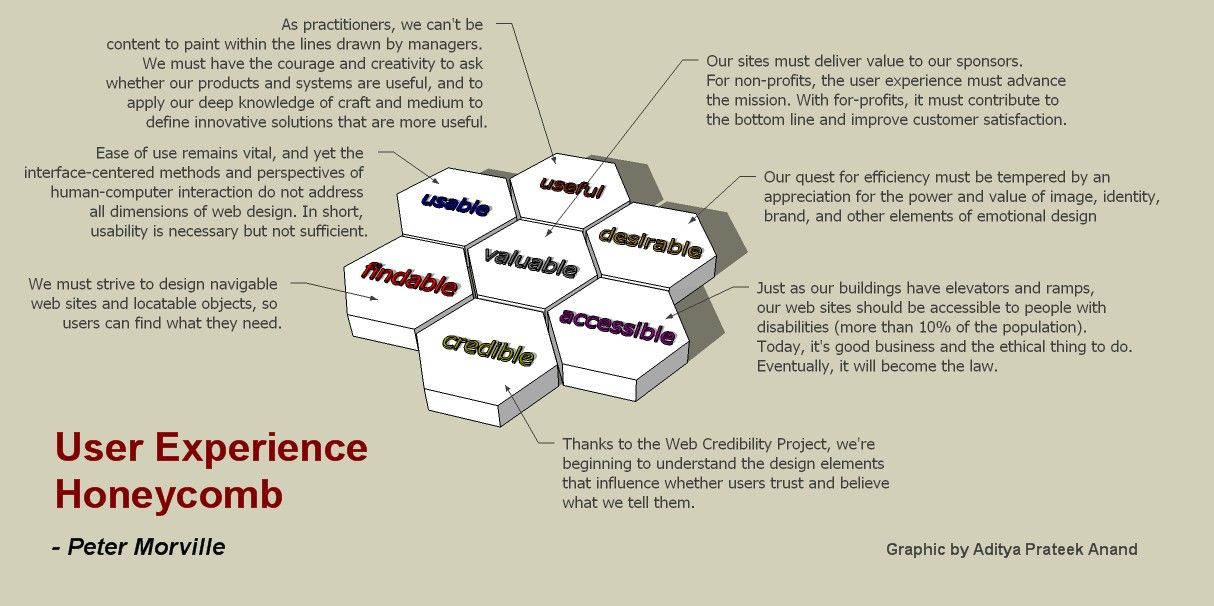
CX professionals need a good working knowledge of UX as it forms a large chunk of their responsibilities.
© Interaction Design Foundation, CC BY-SA 4.0
Effective CX Design Improves Business Outcomes and Customer Satisfaction
When you’re good at your craft as a CX designer, you and your brand can enjoy:
Differentiation in a Crowded Market
Many industries offer similar products, making it all the more difficult to stand out. Enter customer experience into the equation: it becomes the distinguishing factor when functionality and price are equal, and prospective users turn into content customers because your product’s CX reaches them in ways your competitors can’t.
Customer Retention and Lifetime Value
Getting people to buy and love your product or marketplace offering is one thing; keeping it successful is another. A positive, consistent experience is the “X” factor that keeps people coming back and recommending brands that deliver that factor to others.
Reduced Friction and Churn
What’s one element of the “magic” of successful design? It’s where smooth, thoughtful interactions reduce customer effort and increase satisfaction in experiences that satisfy and please seamlessly.
Emotional Connection and Trust
Customers return to brands they trust, ones that prove true empathy with them. CX done well builds that trust over time and helps your product or service weave itself into the fabric of real people’s everyday experiences.
Operational Efficiency
When internal systems and touchpoints align with customer needs, processes improve across the board and can deliver success solidly and consistently. CX design professionals know what it takes to delight customers and keep them happy, and a customer-centric consciousness helps flow between departments and keeps things running smoothly.
Data-Driven Improvement
CX design allows teams to connect feedback, metrics, and experience data to real design decisions. It pays to measure customer satisfaction and account for, and accommodate, the details that matter to the people who matter to the brand.
Discover how analytics tools reveal behavioral and demographic patterns that help you understand user goals and enhance their experience, in this video with William Hudson, User Experience Strategist and Founder of Syntagm Ltd.
CX design done well can show up in many forms. Here is an example of where you might apply it:
Physical + Digital Retail
A customer buys in-store but manages their account via an app. With both “bricks-and-mortar” and digital at play, CX design ensures consistency between:
In-store service tone
App functionality
Promotions and loyalty programs
Returns and exchanges
Build with The Core Principles of Effective CX Design
Use the following process to set a course for exceptional customer experiences for your product, service, brand, and customers.
1. Start with Customer Goals
First things first: adopt a customer-first mindset and shift the focus away from product features and internal goals to the all-important human factors of customer outcomes and emotions.
Design around what customers are trying to achieve, not what’s easiest for your internal processes. Customers won’t care about the inner workings of the brand; they just want products and services that speak to them and delight them. Define their problem with solid and active research.
User research methods like interviews, observations, and usability testing help you design around real customer goals and behaviors, as this video explains.
2. Use Deep Customer Insight
Expand that research to conduct interviews, observe behavior, run surveys, and analyze data to uncover real motivations and pain points. This is your chance to explore the many angles that make up the behavior and needs of the people who pay for what you deliver to them. Listen and learn from real customers; they’re already telling you what’s broken.
Analyze behavioral data and support logs to flesh out findings. Also, audit current touchpoints and identify inconsistencies. And, another essential ingredient: create personas (research-based, synthetic representations of real customers).
In this video, William Hudson explains how personas help teams shift from technology-driven or role-based assumptions to a truly user-centered design approach by maintaining focus on who the users are, what they need, and how they work.
3. Map The Full Journey
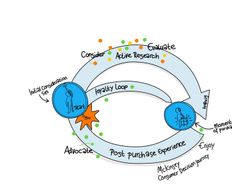
Use journey mapping to document each stage your customer goes through. Include both emotional highs and pain points, everything that means something to the customer and what they feel as they encounter the various points where they find, use, and interact with your brand.
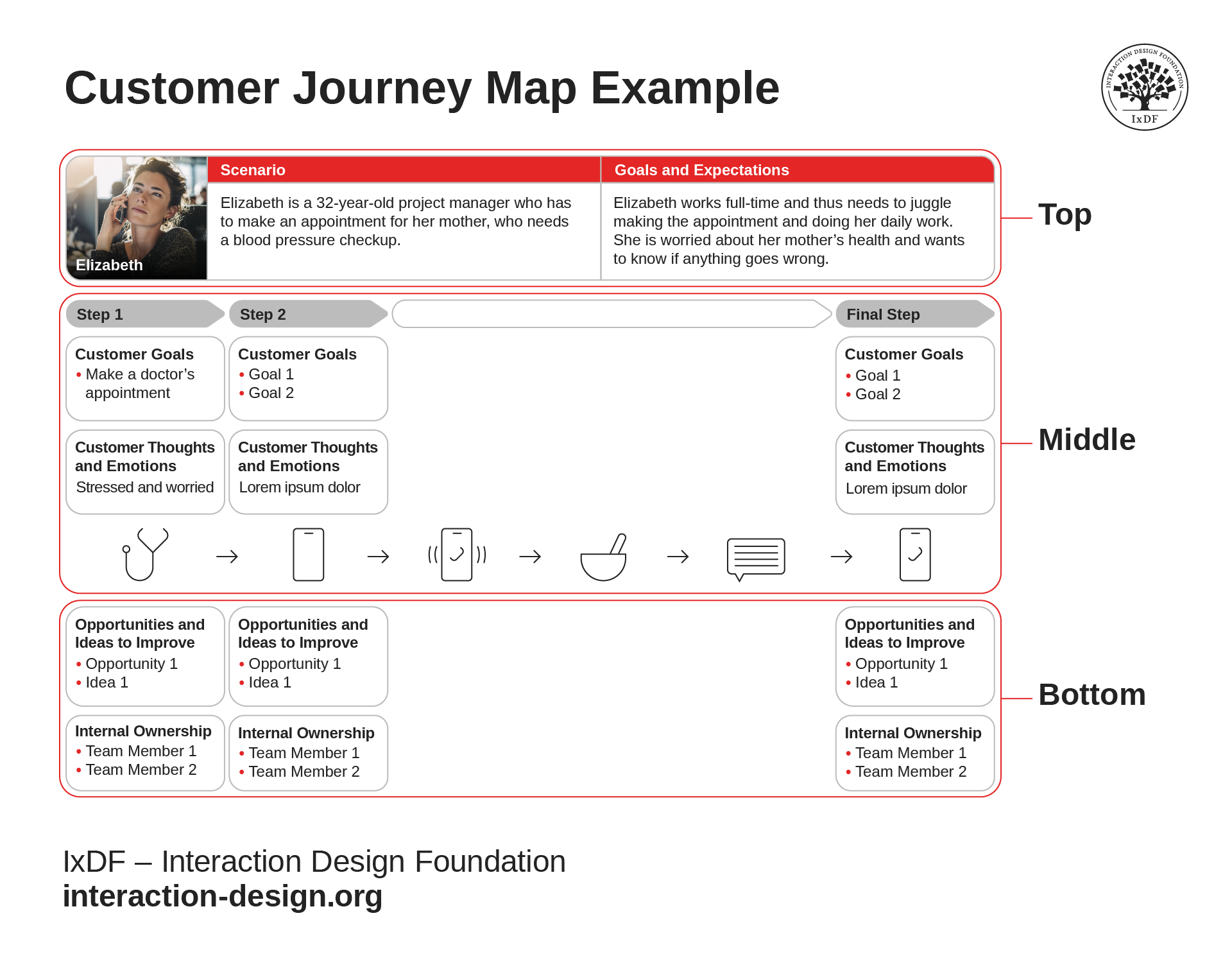
Create detailed journey maps that include feelings, needs, and context. When you do, highlight pain points, inconsistencies, and critical moments of truth.
© Interaction Design Foundation, CC BY-SA 4.0
4. Ideate
Brainstorm improvements collaboratively across your organization’s departments. Then, prioritize ideas based on customer impact and implementation ease. Particularly prioritize experience opportunities; identify where small changes can make big differences. Begin where pain is high and effort is low.
Ensure you align teams, such as marketing, product, support, and ops, to agree on shared CX goals and ideate towards them. When you help break down silos, everyone can find clearer ideas of the complexities of real-world user behavior, needs, and much more.
In this video, William Hudson explains how to structure brainstorming sessions that encourage free thinking, collaboration, and the development of innovative, workable ideas.
5. Prototype and Test
Design lightweight prototypes for key experiences and test them with real users. Prototyping is like a magic key to access a wealth of insights, so test with users who can validate solutions. It’s an excellent, if not essential, way to learn early and learn quickly so you can get on the right track to deliver exceptional customer experiences.
In this video, Alan Dix, Author of the bestselling book “Human-Computer Interaction” and Director of the Computational Foundry at Swansea University, shows you how prototyping, testing, and refining designs with users help you learn quickly, uncover problems early, and improve usability step by step.
6. Implement
Align front-end design with back-end systems. Ensure team members across all relevant departments receive training to deliver on new experience principles.
In this video, Frank Spillers explains how understanding the line of visibility and the line of interaction helps you connect what customers see with the complex systems behind the scenes to deliver seamless experiences.
7. Ensure Consistency
Consistency assures customers of your trustworthiness and more. Everything from the brand voice and logo to far beyond. So, keep tone, policies, branding, and service levels aligned across all touchpoints.
8. Personalize Responsibly
Offer tailored experiences, but don’t overstep. There’s a maximum level of closeness you can take things where customers value relevance. If you go beyond that, they might feel uncomfortable and that your brand is invasive.
9. Remove Friction
Look for small irritations, such as confusing forms and unnecessary steps, and eliminate them. Remember, people don’t encounter brands in a vacuum; they’re often in the middle of something, and their contexts of use will largely influence them to decide how much they like your product, service, and brand.
In this video, Alan Dix explains how considering the context of use, including users’ surroundings, physical conditions, and emotional states, helps you design smoother experiences that fit naturally into real-life situations.
10. Empower Customers
Let people feel (and stay) in control; if it’s to be a great experience, they have to feel ownership of it. So, avoid forcing choices or creating dead ends.
11. Build Emotional Resonance
Design experiences that feel human; ones that are respectful, empathetic, and warm prove your brand cares genuinely about meeting customer needs with authentic professionalism and care.
Explore why empathy forms the lifeblood of the bond that keeps people trusting products and services they love, and how to design for it, in this video.
12. Measure and Adapt
To be the best, use customer data to learn and improve. Don’t just guess; test, find room for improvement, and adjust. Be sure to measure what matters; pick a few key metrics, such as net promoter score (NPS), and track them over time to determine impact.
13. Work Cross-Functionally
CX doesn’t live in just one department; brand success requires shared goals across teams and for everyone to be on the same page, long after the launch of a digital product or service, for example. This is why it’s essential to build feedback loops. Ensure that frontline employees and support staff regularly share insights and trends.
14. Embed CX into Your Culture
Make customer-centricity part of your brand story, hiring process, and performance reviews and keep it top of mind. “Put the customer first” might sound like a typical corporate mantra, but it’s vital and should be central to your brand. Customers deserve that special focal point in the combined consciousness of everyone on board your teams.
15. Improve Continuously
Monitor feedback, behavior, and satisfaction. Tweak experiences based on real-time signals. It’s always time to keep evolving, as experience expectations rise fast. Stay curious, humble, and open to change.
When you follow a strong CX design process, you can find users and customers enjoying better experiences and more. Consider these two examples:
SaaS (Software as a Service)
A user signs up for a trial, struggles with onboarding, contacts support, and then decides not to renew. Good CX design improves:
First-time user experience
In-app guidance and tutorials
Responsive, empathetic support
Win-back and feedback loops
Physical + Digital Retail
A customer buys in-store but manages their account via an app. With both “bricks-and-mortar” and digital at play, CX design ensures consistency between:
In-store service tone
App functionality
Promotions and loyalty programs
Returns and exchanges
How to Avoid Pitfalls in CX Design
Consider the following common areas that tend to trip brands up:
Don’t assume CX = UX: Digital usability is critical, indeed, but CX includes the entire relationship with the brand, not just product use and UX design concerns.
Don’t ignore operations: If the backend can’t deliver the promise made by design or marketing, the experience fails, all the worse after customers have pegged such high expectations. Keep the backend empowered.
Don’t measure too late: Relying only on annual surveys or lagging data means you’re always reacting, and “too late” can seriously hurt when it becomes apparent. Use real-time signals and proactive measurement.
Never treat CX as a one-time fix: Experiences change as products, expectations, and competition evolve, so don’t sit on your laurels. Stay two steps ahead and actively monitor customer response and market “temperature.” Your customers won’t stop, so why should your brand: CX is never “done.”
Overall, CX design is an often-overlooked and frequently misunderstood realm of design, one that actually takes up too large and important a space for it to be “obscure” or confused with something else. Its importance lies in the strategic and practical process of shaping all brand–customer interactions across channels, devices, and time to deliver value, reduce friction, build emotional connection, and earn loyalty: all vital ingredients for a successful brand to exist and persist.
When you successfully bring together UX, service design, marketing, and operations into a seamless, coherent whole, you can perform the “magic” that makes a brand more relevant and “alive” to customers. It may sometimes pose a challenging “formula” to get right, but CX design done well translates to far more than the sum of a brand’s parts: it’s about establishing, and perpetuating, a presence that customers trust and keep returning to.