The Moment of Truth: Build Desirable Relationships with Users and Customers

• 8 min read

980 Shares

In order to understand “the moment of truth”; it’s important to understand the customer lifecycle with a brand or product. There are many moments at which a customer (or potential customer or former customer) will interact with a brand.

A moment of truth is simply any interaction during which a customer may form an impression of your brand or product. This impression may be either positive or negative. The aim for the user experience designer is to try and ensure that moments of truth have a positive impact on the customer/user impression of the brand or product.

It is moments of truth that allow Herbert Simon’s famous quote; “Everyone designs who devises courses of action aimed at changing existing situations into preferred ones.” to be widely true in business.
Design moments of truth are rather different from psychological moments of truth. So you won’t need to ask awkward questions like this one when designing your services.

© daanton, CC BY-NC-ND 3.0

Why Does the Moment of Truth Matter?

The moment of truth matters because in an increasingly crowded market place, brands and products can only differentiate themselves on service. Wherever a gap in the market exists there will be many competitors (in most non-monopoly circumstances) that rush to fill that gap. While, initially, there may be the ability to differentiate on the capability to meet a need – over time, that differential will eventually wane and the majority of providers in a market space will operate in similar (if not identical) manners. Thus this leaves service as the only means of tangible differentiation.

If a customer is delighted at every interaction with a brand or product they are unlikely to churn (quit the brand or product) in favor of a competitor. There is also more chance that the customer will go on to become engaged with the brand and even become a “brand ambassador” or “brand fanatic”.

There are two real potential outcomes at a moment of truth – a magical moment or a miserable moment. While neutral outcomes are possible, they are in reality unlikely; you will either impress or fail to impress a customer during most interactions. These moments were first conceptualized by Shep Hyken a Customer Experience designer.
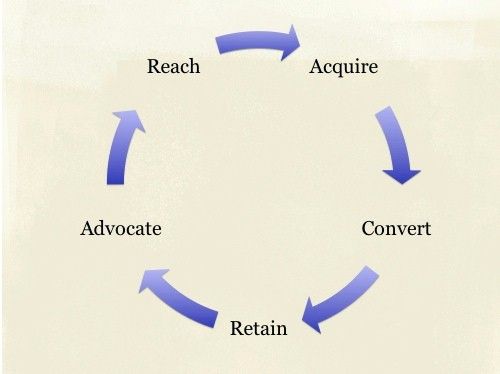
Moments of truth can lay anywhere within the customer lifecycle. It’s important to examine the lifecycle from end-to-end to determine where they actually are.

© Unknown, Unknown

Magical Moments

A magical moment is one where the customer’s expectations are not just met but are exceeded. Many designers will think big picture on this (for example; a guest in a hotel checks in on their birthday and is rewarded with an upgrade to a suite) but in truth magical moments can be delivered by just handling an interaction well (for example; a fast food restaurant rapidly delivering a warm and tasty burger when the customer is in a rush).

Miserable Moments

Miserable moments not only suck but increase the likelihood of customer churn and the customer telling others about poor service. They are the moments where a shop assistant ignores a client looking for help or where a call center operative speaks rudely to the client.

It is worth noting that miserable moments can be created into magical moments if the customer is concerned enough to complain to the service provider about the issue. How issues are resolved can often help create lasting positive impressions on the customer; which is good because it is unlikely (if not impossible) to prevent all possible lapses in service before they occur.

Four Discrete Moments of Truth

There are four moments of truth in service and customer experiences that have been recently conceptualized and defined in service design. The first was developed by Google, the next two by Proctor and Gamble and the final one by Brian Solis, the author of “What’s the Future of Business: Changing the Way Businesses Create Experiences.”

  • Zero Moment of Truth – this is the first possible moment of contact between a brand or product and the customer. It’s when a problem arises in the customer’s mind and they get online and go hunting for the perfect solution or to learn about possible solutions.

  • First Moment of Truth – this occurs the first time a potential client comes into contact with your products. It’s the impression that they form when they see the product for the first time and begin learning about it. Proctor and Gamble say that this is the moment that marketers should concentrate their efforts on to turn potential customers into actual customers.

  • Second Moment of Truth – this is the ongoing relationship with a product. The things your customers think, see, here, touch, smell, etc. about the product and the brand over the lifetime of the relationship.

  • Ultimate Moment of Truth – the stage when the user or customer begins to share their experiences with others and thus creates many more zero moments of truth.
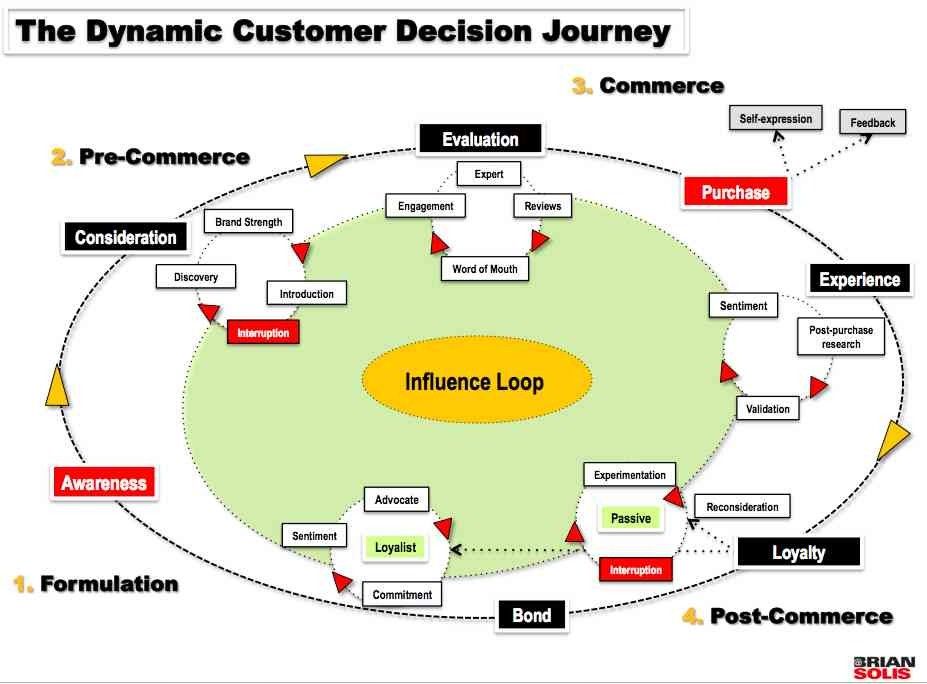
Brian Solis also invented the dynamic customer decision journey – awareness of this journey can help you pinpoint moments of truth for your brand/product.

© Brian Solis, CC BY 2.0

How Can You Create Magical Moments of Truth?

There are no real surprises here. As with all areas of design – talking to customers and users will enable you to create magical moments that matter to those customers and users. Everyone’s customers and users are different – there’s no single formula to aid in creating the right experiences at the moments of truth.

The Take Away

Moments of truth are based on interactions with your product or brand that either make or break the user or customer experience. These moments of truth can be designed by UX or CX or Service Design professionals as long as they are aware of them and are able to talk to their users and customers to find out what will work for them.
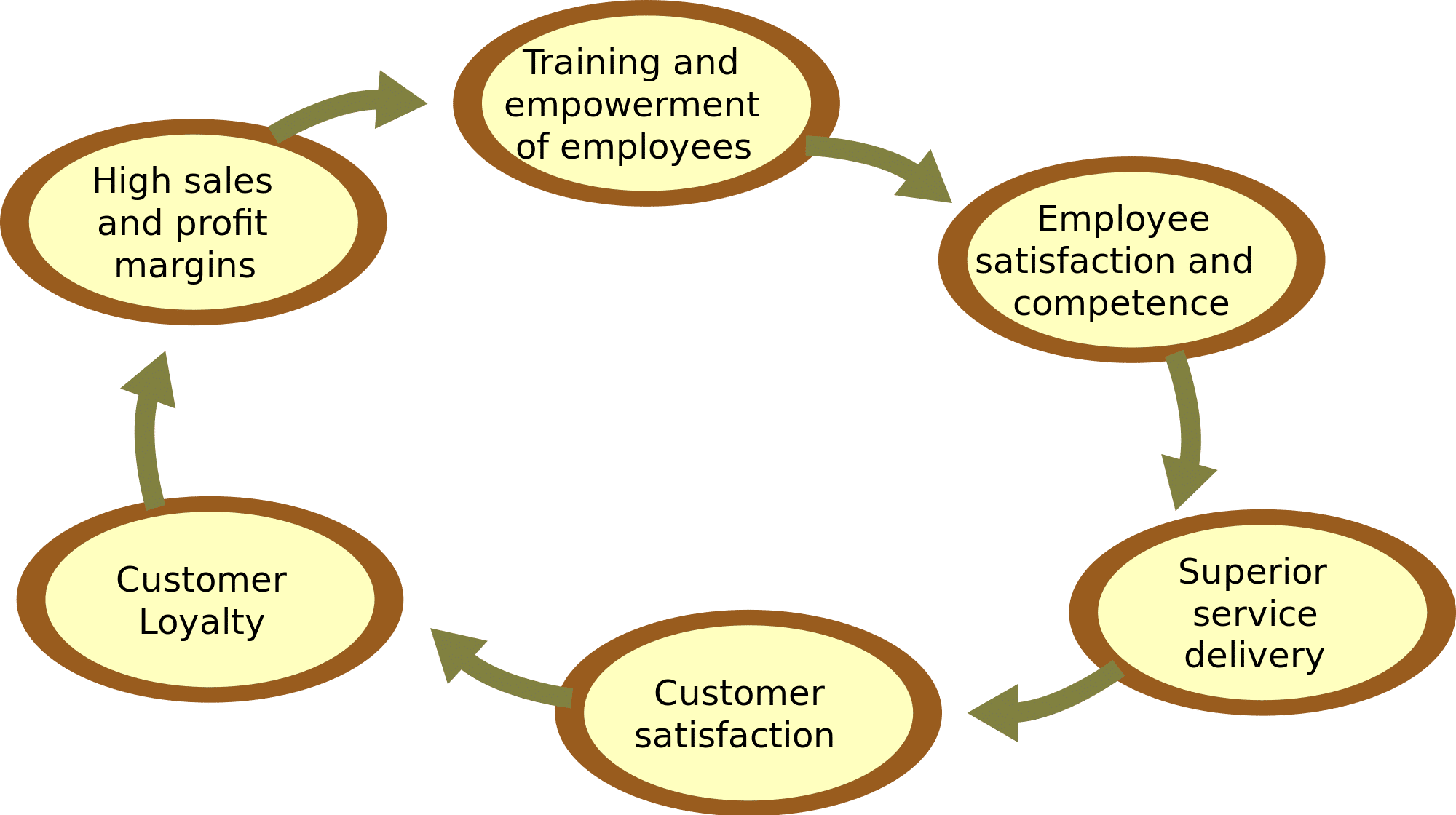
Moments of truth contribute a lot to superior service delivery and customer satisfaction – which in turn drive the cycle of profitable business evolution.

DarkEvil, Public Domain

Resources

Moments of Magic by Shep Hyken

What’s the Future of Business: Changing the Way Businesses Create Experiences by Brian Solis

McKinsey offer an interesting analysis of moment of truth as applied to customer care

Hero Image: DaveHarkins, CC BY-NC-ND 2.0

Learn More in This Course:

AI for Designers

12 days
13 % booked
View Course

What You Should Read Next

  • Read full article
    What is Interaction Design? - Article hero image
    Interaction Design Foundation logo

    What is Interaction Design?

    Interaction design is an important component within the giant umbrella of user experience (UX) design. In this article, we’ll explain what interaction design is, some useful models of interaction design, as well as briefly describe what an interaction designer usually does.A simple and useful unders

    Social shares
    1.5k
    Published
    Read Article
  • Read full article
    Apple’s Product Development Process – Inside the World’s Greatest Design Organization - Article hero image
    Interaction Design Foundation logo

    Apple’s Product Development Process – Inside the World’s Greatest Design Organization

    Apple’s Product Development Process may be one of the most successful design processes ever implemented. With a valuation that exceeds $2 trillion, there’s a lot that designers can learn from Apple and introduce into their own design environments.Apple is a notoriously secretive business. In Steve J

    Social shares
    1.4k
    Published
    Read Article
  • Read full article
    Shneiderman’s Eight Golden Rules Will Help You Design Better Interfaces - Article hero image
    Interaction Design Foundation logo

    Shneiderman’s Eight Golden Rules Will Help You Design Better Interfaces

    Follow Ben Shneiderman’s 'Eight Golden Rules of Interface Design' if you want to design great, productive and frustration-free user interfaces. Apple, Google and Microsoft are among some of the highly successful companies whose well-designed products reflect Shneiderman’s rules. The characteristics

    Social shares
    1.4k
    Published
    Read Article
  • Read full article
    How to Change Your Career from Graphic Design to UX Design - Article hero image
    Interaction Design Foundation logo

    How to Change Your Career from Graphic Design to UX Design

    If there’s an occupation that is 100% linked with the public’s idea of what design is all about, it’s graphic design. From the familiar golden arches of the McDonald’s brand to the typography and colors of movie posters, graphic designers create some of the most iconic and ubiquitous designs around

    Social shares
    1.4k
    Published
    Read Article
  • Read full article
    The Grid System: Building a Solid Design Layout - Article hero image
    Interaction Design Foundation logo

    The Grid System: Building a Solid Design Layout

    Now that we’ve seen some grids at work in the Rule of Thirds article, let’s examine them a little more deeply. As a concept that deals so fundamentally with the fabric and background of our work as designers, it’s easy to overlook the power of grids and think more about the elements we want to creat

    Social shares
    1.4k
    Published
    Read Article
  • Read full article
    The Principles of Service Design Thinking - Building Better Services - Article hero image
    Interaction Design Foundation logo

    The Principles of Service Design Thinking - Building Better Services

    Service design is all about taking a service and making it meet the user’s and customer’s needs for that service. It can be used to improve an existing service or to create a new service from scratch. In order to adapt to service design, a UX designer will need to understand the basic principles of

    Social shares
    1.4k
    Published
    Read Article
  • Read full article
    A Simple Introduction to Lean UX - Article hero image
    Interaction Design Foundation logo

    A Simple Introduction to Lean UX

    Lean UX is an incredibly useful technique when working on projects where the Agile development method is used. Traditional UX techniques often don’t work when development is conducted in rapid bursts – there’s not enough time to deliver UX in the same way. Fundamentally Lean UX and other forms of UX

    Social shares
    1.3k
    Published
    Read Article
  • Read full article
    Dieter Rams: 10 Timeless Commandments for Good Design - Article hero image
    Interaction Design Foundation logo

    Dieter Rams: 10 Timeless Commandments for Good Design

    Let’s pay a virtual visit to a famous industrial designer’s workshop. By examining the principles of his winning approach, we can incorporate vital elements into our designs in the “less is more” age.As user experience practitioners, most of us have worked with Nielsen and Molich’s 10 heuristics or

    Social shares
    1.3k
    Published
    Read Article
  • Read full article
    The 7 Factors that Influence User Experience - Article hero image
    Interaction Design Foundation logo

    The 7 Factors that Influence User Experience

    User Experience (UX) is critical to the success or failure of a product in the market but what do we mean by UX? All too often UX is confused with usability which describes to some extent how easy a product is to use and it is true that UX as a discipline began with usability – however, UX has grown

    Social shares
    1.3k
    Published
    Read Article
  • Read full article
    10 Free-to-Use Wireframing Tools for UX Designers in 2026 - Article hero image
    Interaction Design Foundation logo

    10 Free-to-Use Wireframing Tools for UX Designers in 2026

    Wireframes help you quickly ideate and test your ideas. While paper wireframes are the fastest to create, digital wireframes look more polished and presentable. If you are looking for a pocket-friendly wireframing tool, look no further.Whether you prefer browser-based apps or offline desktop tools,

    Social shares
    1.3k
    Published
    Read Article

Top Articles

Top Topic Definitions

Feel Stuck?
Want Better Job Options?

AI is replacing jobs everywhere, yet design jobs are booming with a projected 45% job growth. With design skills, you can create products and services people love. More love means more impact and greater salary potential.

At IxDF, we help you from your first course to your next job, all in one place.

See How Design Skills Turn Into Job Options
Privacy Settings
By using this site, you accept our Cookie Policy and Terms of Use.
Customize
Accept all

Be the One Who Inspires

People remember who shares great ideas.

Share on:

Academic Credibility — On Autopilot

Don't waste time googling citation formats. Just copy, paste and look legit in seconds.

Feel Stuck? Want Freedom?

Join 326,020+ designers who get one powerful email each week. Learn to design a life you love.

Next email in
1
day
15
hrs
56
mins
40
secs

Free forever. No spam. Unsubscribe anytime.