Question time: Have you gained substantial experience in UX (user experience) design—as in, to the point where you’re considering a career change?
If your answer is YES and conducting in-depth research makes you feel more content—along with helping brands “nail” it in the marketplace with their product and service releases—then smile; you’re ready for a career as a UX strategist!
However, the question that follows on from that is this: Do you understand how strategizing works?
“Strategy is about connecting the dots. It requires you to look at what’s happened in the past and what’s going on in the present to make better guesses about the future.”
-Jaime Levy, author of UX Strategy - How to Devise Innovative Digital Products That People Want
Now that you’ve got an idea, you’ll see that the road ahead is to combine strategy with UX design. And that’s how you create compelling digital products!
The role of a UX strategist is a special one, for sure—and it’s a powerful presence that (or, who, rather) bridges the gap between user experience design and strategic plans to achieve business goals. With a good user experience strategist on board, a brand is in with a far bigger chance at making it in the marketplace—and the rewards can be immense, not least in the prestige department—so, if you’re wondering just how you might get into UX strategy, stick around. Read on to learn the difference between UX designers and strategists, and then find out all about the roles, responsibilities, and required skills for strategy for UX, and the best way to get ready for this role to begin with.
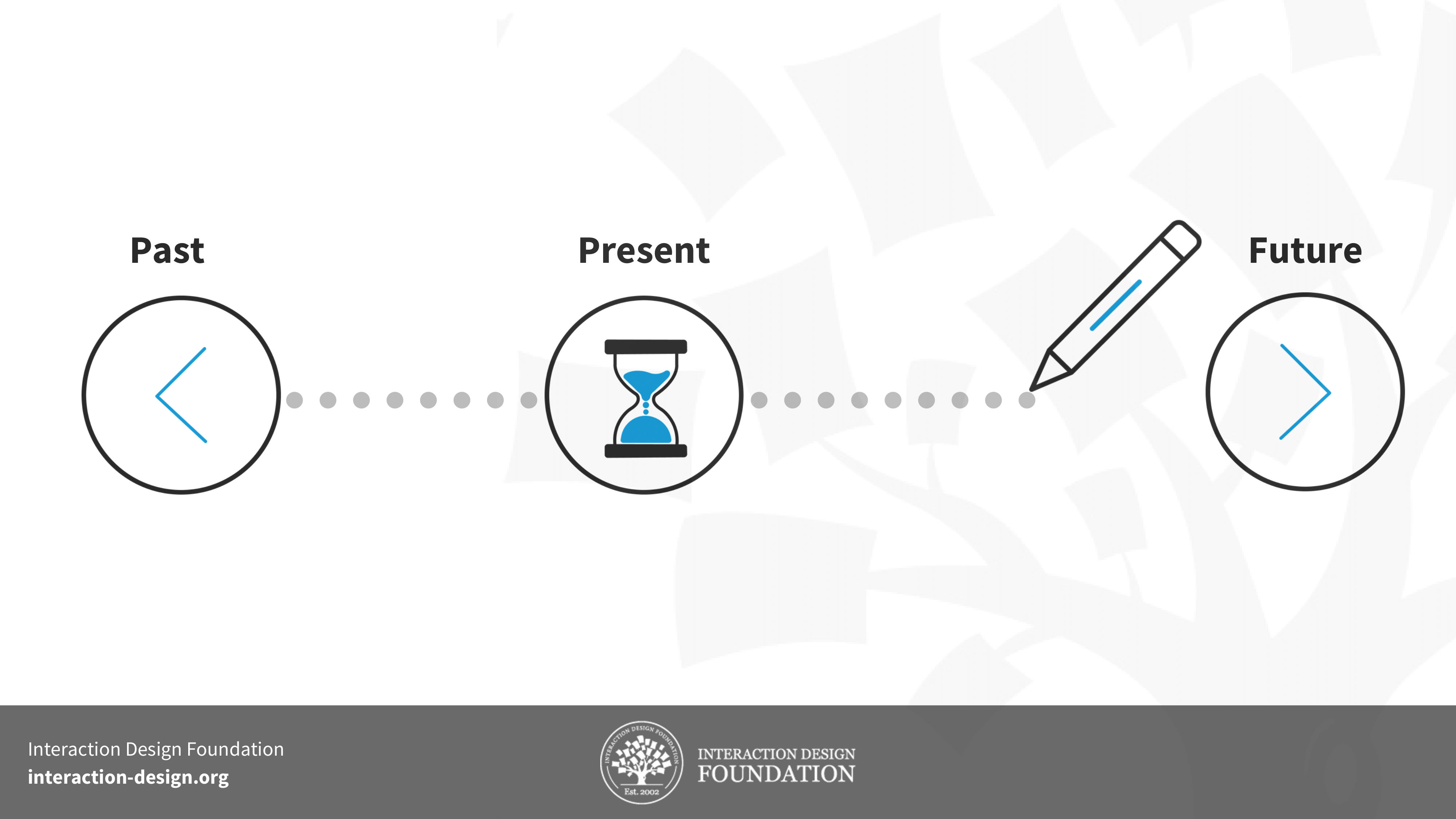
This visual metaphor conveys the importance of strategic thinking and connecting different elements in the UX design process.
© Interaction Design Foundation, CC BY-SA 4.0
What Is a UX Strategy?
First off—and before we get right down into the nitty-gritty of UX strategy for a deep dive, let’s think about a deep question: What is the foundation of good user experience?
The foundation of good user experience—and great and first-rate exceptional ones, too—is to have a well-defined UX strategy in place to work from, from the get-go. A UX strategy sets out the course your product will take to succeed, and it’s quintessential for giving users an engaging, seamless, consistent experience.
What’s more, though, UX strategy is the vision—an even bigger picture of a solution you must validate with real potential customers before getting it into the real-world marketplace. It is more about problem-diagnosing even before the problem arises; so, it’s to stay one (or three) steps ahead of what’s going on.
While UX design is the process of designing solutions, UX strategy is all about planning the creation of these solutions. That’s not to say designers aren’t good planners, but strategists kick it up a gear and know how to incorporate user-centered insights with the business strategy to guide the UX team’s work toward fulfilling both.
But what if there is no UX strategy in place? Ever heard the saying, “Those who fail to plan, plan to fail.” (a quote that’s attributed to Benjamin Franklin)? Well, this is kind of along those lines—not least because misguided research, substandard results, and reduced growth opportunities can come from all the bother. It’s akin to going off half-cocked—not thinking through where efforts should go—which means a complete waste of design and development time, and time is money... and annoyed clients or employers.
Without strategy, execution is aimless. Without execution, strategy is useless.
— Morris Chang, Founder of the Semiconductor Industry in Taiwan
What’s The Difference Between UX Strategists and UX Designers?
You’re going to find there are several differences in the roles and responsibilities of UX designers and strategists, and they’re things they do and parts of their remits that may vary—even in drastic ways—depending on the organization and its specific roles. But in general:
A user experience strategist studies user research methods and data to invent a long-term vision for a product or service, and they work with the UX and development teams to align UX design with business objectives, user needs, and technical requirements. Another area—or set of areas—that a UX strategist gets involved in is developing user personas, customer journey maps, and information architecture.
Learn more about UX strategy in the course the IxDF has for you | UX Management: Strategy and Tactics
Now, to see how that compares with being a UX designer—when you’re a designer, you’re responsible for designing a product or service’s user experience and aspects of the user interface. Your main objective with that is to meet the end user’s expectations and enhance their experience, and you’ll need to collaborate with UX strategists—and stakeholders—to understand user needs so you can fine-tune a design that’s in step with user behaviors. With that in mind, you’ll create wireframes, prototypes, and digital experiences, handling the side that ensures the digital product is intuitive, has good usability, and solves the users’ problems. That sets the stage for appealing visual designs to come—which visual designers tend to do—but we’ve got the differences between UX designers and UX strategists broken down in this table below:
Differences Between UX Designers and UX Strategists | |
UX Designer | UX Strategist |
Focuses on the end users’ needs. | Focuses on bridging the gap between business goals with end users’ needs. |
Designs the visuals and experience of the product. | Makes sure UX design is applied to a broader design and business strategy. |
Is a team player and collaborates with various teams and departments. | Leads the design team to steer the brainstorming and research sessions. |
Focuses on improving and enhancing user experience. | Focuses on improving and enhancing the business overall. |
Common Roles and Responsibilities of a UX Strategist
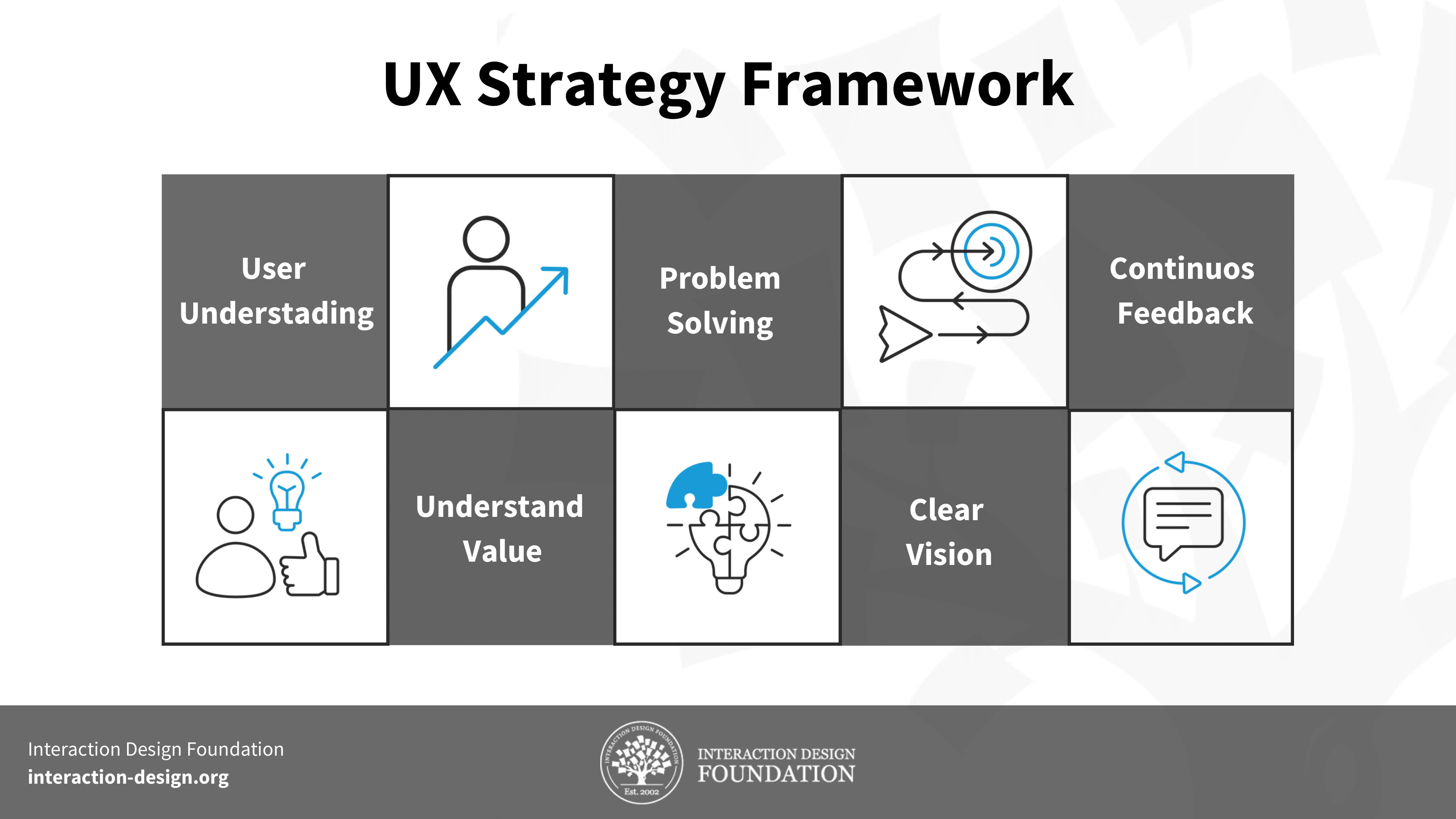
Now that you know what UX strategy is—and what the differences between the role of a UX designer and a UX strategist are—it’ll be a good idea to get on and look at what the responsibilities of a user experience strategist are like so you can see if it’s something that’s up your street.
© Interaction Design Foundation, CC BY-SA 4.0
Note that these expectations of what strategists do may vary from company to company, exact position description, and the like, but a UX strategist job description in the main tends to feature these typical roles and responsibilities.
First up is dealing with those clients, the ones who are all about the brand and business but who mightn’t have too much of a clue when it comes to design in itself, so client negotiations are one of the foremost elements—where you communicate in a direct way with clients to discuss and understand their business needs and goals.
Then—and not that these role tasks have to run in a strict chronological order as they appear (we’re just putting them in a logical flow)—comes the UX research side of things. It’s the remit of the strategist to conduct user research, and lead user research and brainstorming sessions so that what comes from the efforts is where they can develop appropriate solutions.
Watch as UX Strategist and Consultant, William Hudson explains important aspects of UX research:
That’s the user side per se, but there’s also the need to make use of business data—namely, to implement data-driven strategies so they help clients reach business goals and prosper from a product or service that’s viable, as well as feasible and desirable, in the marketplace and runs in line with the organization’s vision and mission.
What’s part and parcel of this strategic role too is to unify discovery research, and combine the collected data through content strategy documents, presentation decks, and project briefs—so all the data on the user needs, user behaviors, motivations, and aspects of the problem space they’ll need to dig into to frame the problem well channels into a format they can use when it comes to figuring out the solution space in earnest.
Then there’s the user story aspect to work on—and strategists create concepts, roadmaps, and user journey maps through design sprints to make sure clear results arise for user stories to be valid ones. In the vein of tales to use, there’s also a storytelling aspect, and UX strategists draft use case scenarios so they explain the user problem and strategy briefs in a storytelling format. Why all this emphasis on stories is there is down to the point that stories are the best ways to communicate impactful and relatable concepts, and get ideas flowing to support narratives that lead to happy endings for the users—and customers—of the digital product or service and, by association, the brand.
That isn’t to say, though, that everything ends there, with the release of a digital solution in the marketplace, for example. And the strategist is the one who’ll perform site/app audits and use various measurement tools that show user behavior insights and suggest required design changes. From conducting performance audits and gathering data and insights on what’s going on with the brand’s product, the strategist then works to identify scope for improvement—and they study the product and review results to enhance user experience and see how they can boost that UX to the maximum.
What Skills Does a UX Strategist Need?
This question is one that’s best answered first with three questions from you, and they’re these:
Do you have good communication skills?
How good are you at giving presentations?
How well do you manage client negotiations?
As you ask yourself these and be as frank as you can, you’ll understand that having solid UX design abilities is not enough—and you need more than that to take your career up a notch as a UX strategist.
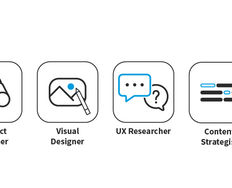
© Interaction Design Foundation, CC BY-SA 4.0
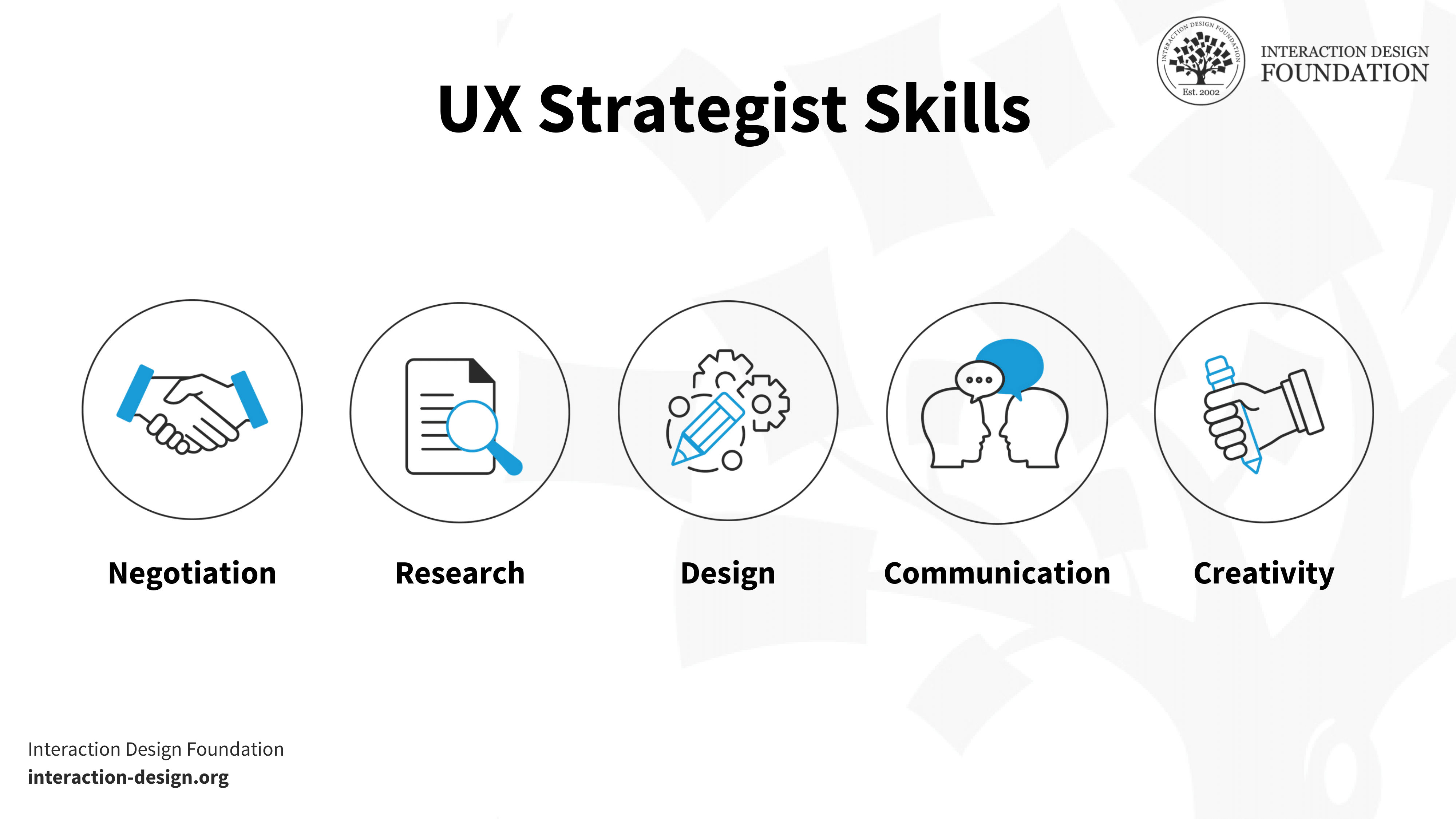
You’re going to have to skill up if you’re at the designer level and make sure that your profile checks the following technical and soft skill requirements:
Negotiation skills are a must, and you’ll need to be confident and composed whenever you’re negotiating with clients and stakeholders to make feasible compromises. Assertiveness is key, as is being able to keep a clear picture of who stakeholders and clients are—and a particular point to watch and remember is if they have no design background and how you’ll need to work with that reality.
Research skills are up there too as a high-priority prerequisite—not least since you’ll need to perform qualitative and quantitative user research to interpret and deliver the most insightful results for the project you’re on.
Design thinking is another “biggie,” and you’ll need to understand the design process—in particular, the design thinking process—have proficiency in UX design tools, and stay informed about industry trends and methods; design is like a “living” thing and takes insight to work within.
Communication skills are also a huge asset to have in the field (and note that this list isn’t in order of importance), so be sure to practice active listening for effective communication with stakeholders, product development, and product design teams. In many ways, a strategist is a bridge as well as a kind of UX consultant geared to users and business strategy, and this will help you present ideas, demonstrate designs, and collect—as well as give—feedback.
Creativity is something else that’s great to have in bucket-loads, and—true to a creative designer’s mindset—it’s best that an effective UX strategist have a good sense of incorporating innovative ideas to use-case scenarios and solutions.
How Much Do UX Strategists Earn?
To compare it to other UX design roles, UX strategists get a good hike in salary—and, as it’s a mid-level UX role, the average salary of a UX strategist is $104,937 / yr in the United States; but it gets better if you’re considering a Senior UX strategist role—Sr. UX strategists can expect to earn an average salary of $131,408 / yr.
Salaries Across Various Experience Levels
UX Designer Salary - $110,392 / yr
UX Strategist Salary (Average) - $104,937 / yr
Sr. UX Strategist - $131,408 / yr
Salaries of Different UX Job Titles
UX Researcher Salary - $119,335 / yr
UX Writer Salary - $140,736 / yr
UX Architect Salary - $109,233 / yr
UX Content Strategists Salary - $80,845 / yr
UX Strategist Toolkit
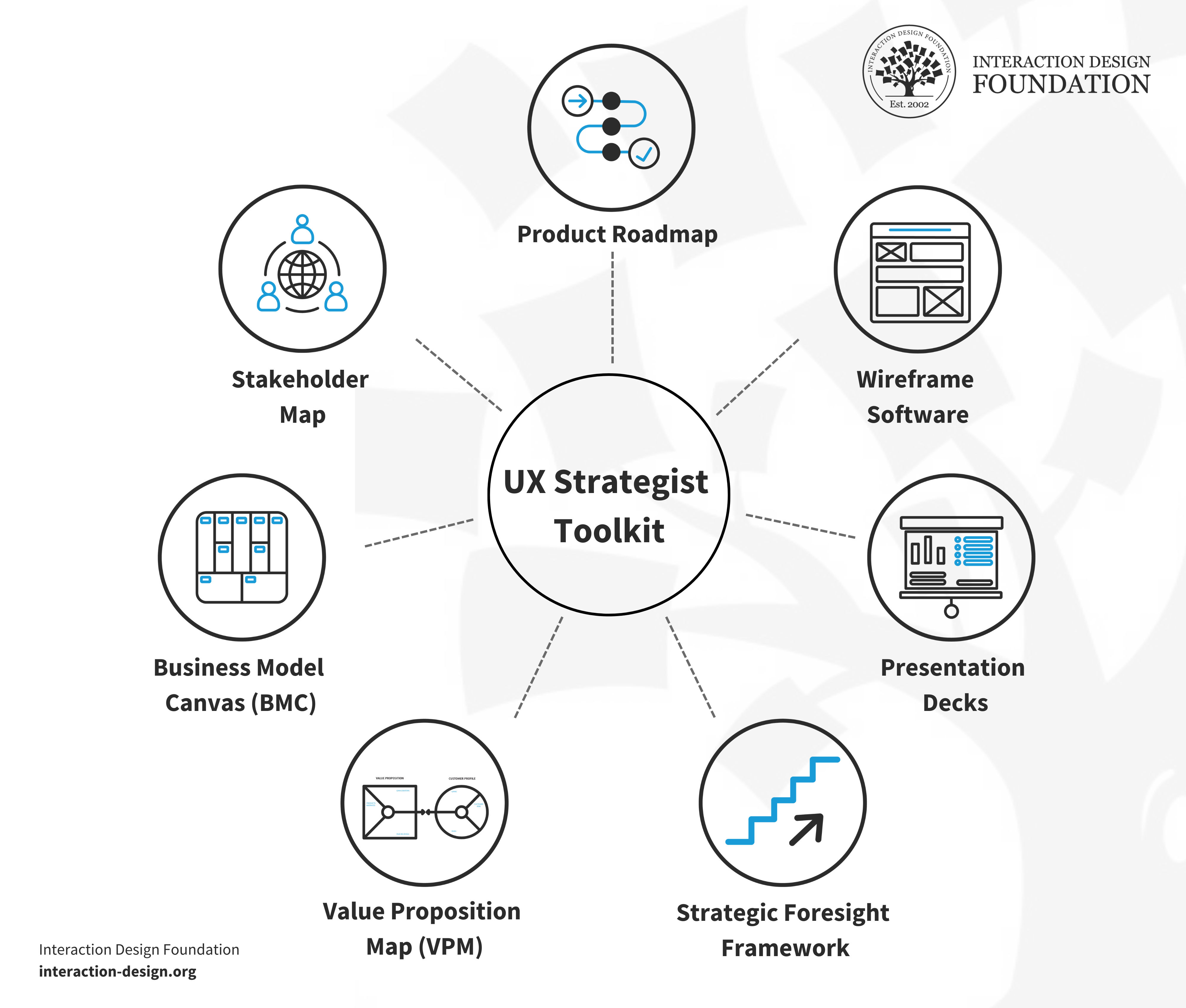
While as a UX designer, you usually work with various designing tools like Adobe Illustrator, Photoshop, and Figma, as a UX strategist, you’ll need to deal with different strategic frameworks so you can meet business goals, and to know what these frameworks are—along with how to use them—a list of them is below.
© Interaction Design Foundation, CC BY-SA 4.0
1. Business Model Canvas (BMC)
The BMC framework helps you get a better understanding of how a business and product creates, delivers, and captures value, and it’s a tool that visually portrays and summarizes essential business activities to make sure that they do in fact align with the overall value proposition.
2. Value Proposition Map (VPM)
A VPM (Value-Positioning Map) is a powerful tool, and it’s one that visually depicts key things that make up your product in a simple yet effective way. “What better way to get important information across!” you might say, and it does ease communication between UX designers and product managers, helping understand the needs of both parties and so helping pave the way towards good things ahead.
3. Stakeholder Map
You can use a stakeholder map to identify, analyze, and prioritize the key stakeholders involved in a project, and—like the other tools around it here—what this map does can’t be overstated in importance. It’s a power-interest matrix that helps you understand the stakeholders’ perspectives and their level of influence in the project and from there you can work with a far better idea of who sees what from which angle and how to suit their views and needs in a project.
4. Product Roadmap
A product roadmap helps predict and plan the evolution of a product throughout a specific time, and it’s a vital piece of kit to have for product managers, too. As a strategist, what you do with this map is you can assess the priorities through the perspective of a user and business needs to make sure you record both in the same direction.
5. Strategic Foresight Framework
The Strategic Foresight Framework might sound like a super-tool and an indispensable thing to have on board, almost with crystal ball-like, preternatural powers, but it’s the real deal in that it combines various tools that help identify emerging trends in an industry. With these tools at your disposal, you can help avoid potential future risks your product might have to face while driving toward new opportunities.
6. Presentation Decks
These aren’t decks of cards—in case anyone’s following on from the crystal ball reference above and thinks they’ve got forecasting powers as such—they’re slides and they will always remain your favorite tools as a UX strategist. With the help of presentation decks, you can effectively unify and present data, insights, and critical points of a business strategy and help everyone involved get—and stay on board—with what’s going on and what needs to be going on with brand efforts on a project.
7. Wireframe Software
Like a UX designer, you’re going to have to deal with UX wireframing to demonstrate how UX design can help to meet business goals.
The Take Away—Or, How to Become a UX Strategist?
UX strategy = Business goals + User experience.
First and foremost, familiarize yourself with the role’s responsibilities, industry best practices, and essential tools—and once you’ve gained a solid understanding, it’s time to evaluate your current standing and contemplate your next move.
With several years of professional experience as a UX designer, you’ll be—or maybe already are—well-prepared to take on the role of a UX strategist.
Apply for the UX Strategy course by the IxDF to learn more about how to become a UX Strategist.
References and Where to Learn More
Learn UX strategy in depth and through use cases in this fantastic book by Jaime Levy: UX Strategy - How to Devise Innovative Digital Products That People Want
Learn more about UX strategy in the course provided by the IxDF: UX Management: Strategy and Tactics
Watch the masterclass by Kelly Jura, Vice-President, Brand & User Experience at ScreenPal User Journey Mapping for Better UX.
Watch the masterclass on How To Create Actionable Personas by Daniel Rosenberg, UX Professor, Designer, Executive, and Early Innovator in HCI.
Read this article, What is Information Architecture, to learn more about information architecture.
Read this article, Understanding Your Business To Get Your UX Strategy Right, to understand your business goals better.