Service Design

Your constantly-updated definition of Service Design and collection of videos and articles.
Be a conversation starter: Share this page and inspire others!

1,282 Shares

What is Service Design?

Service design is a process where designers create sustainable solutions and optimal experiences for both customers in unique contexts and any service providers involved. Designers break services into sections and adapt fine-tuned solutions to suit all users’ needs in context—based on actors, location and other factors.

“When you have two coffee shops right next to each other, and each sells the exact same coffee at the exact same price, service design is what makes you walk into one and not the other.”

— 31Volts Service Design Studio

See how effective service design can result in more delightful experiences.

Transcript

Service Design is about Designing for the Biggest Picture

Users don’t access brands in a vacuum, but within complex chains of interactions. For example, a car is a product, but in service design terms it’s a tool when an elderly customer wants to book an Uber ride to visit a friend in hospital. There’s much to consider in such contexts. This user might be accessing Uber on a smartphone, which she’s still learning to use. Perhaps she’s infirm, too, lives in an assisted living facility and must inform the driver about her specific needs. Also, she’s not the only user involved here. Other users are any service providers attached to her user experience. For example, the driver that customer books also uses Uber—but experiences a different aspect of it. To cater to various users’ and customers’ contexts as a designer, you must understand these sorts of relations between service receivers and service providers and the far-reaching aspects of their contexts from start to finish. Only then can you ideate towards solutions for these users’/customers’ specific ecosystems while you ensure brands can deliver on expectations optimally and sustainably.

In service design, you work within a broad scope including user experience (UX) design and customer experience (CX) design. To design for everyone concerned, you must appreciate the macro- and micro-level factors that affect their realities.
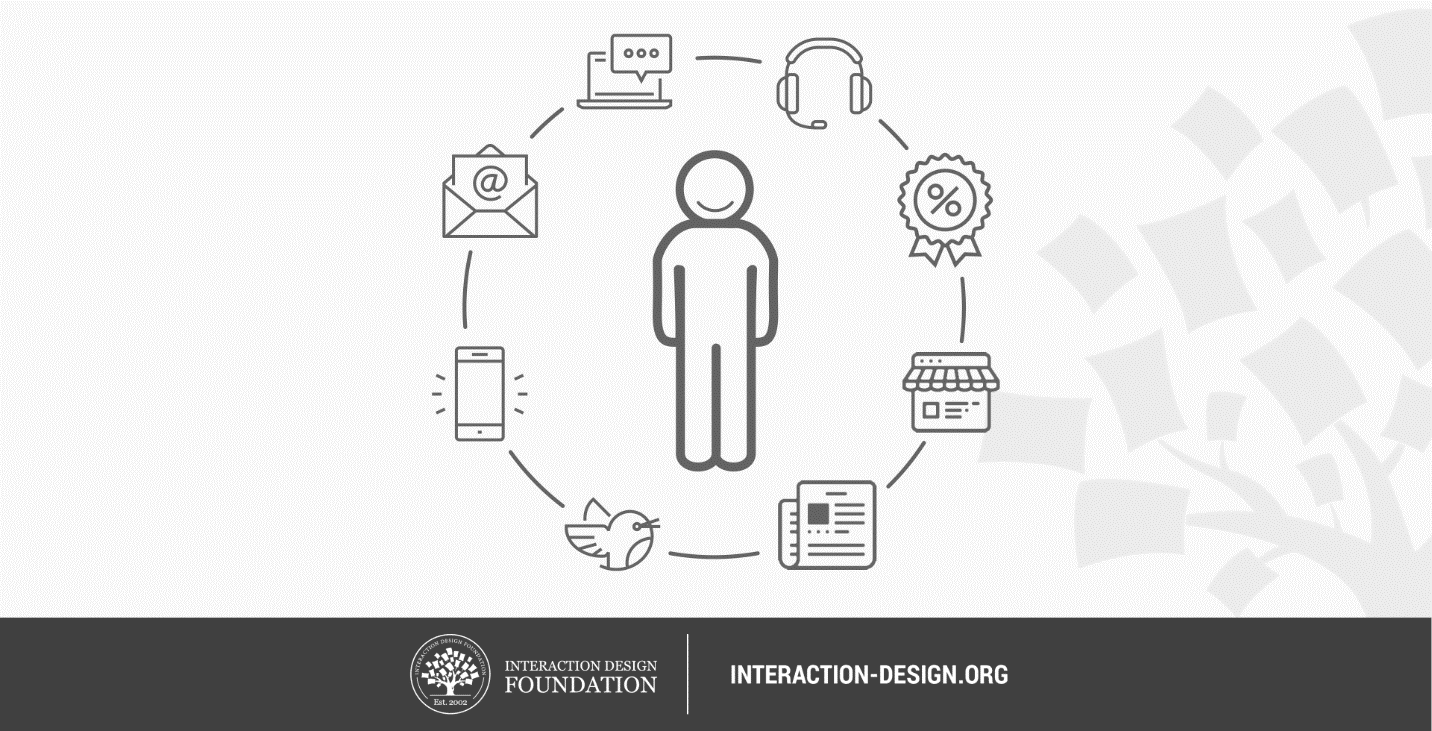
A service design experience often involves multiple channels, contexts and products.

Marc Stickdorn and Jakob Schneider, authors of This is Service Design Thinking, identify five key principles—for service design to be:

  1. User-centered – Use qualitative research to design focusing on all users.

  2. Co-creative – Include all relevant stakeholders in the design process.

  3. Sequencing – Break a complex service into separate processes and user journey sections.

  4. Evidencing – Envision service experiences to make them tangible for users to understand and trust brands.

  5. Holistic – Design for all touchpoints throughout experiences, across networks of users and interactions.

Designers increasingly work more around services than around physical products—e.g., SaaS (software as a service). Meanwhile, with advances in digital technology continually redefining what users can expect whenever they proceed towards goals, brands focus on maximizing convenience and removing barriers for their users. A digital example is Square, which unbundles point-of-sale systems from cash registers and rebundles smartphones as potential point-of-sale systems.

How to Do Service Design Best

First, identify these vital parts of any service encounter:

  1. Actors (e.g., employees delivering the service)

  2. Location (e.g., a virtual environment where customers receive the service)

  3. Props (e.g., objects used during service delivery)

  4. Associates (other organizations involved in providing the service – e.g., logistics)

  5. Processes (e.g., workflows used to deliver the service)

You’ll need to define problems, iterate and address all dimensions of the customers’, users’ and business needs best in a holistic design. To begin, you must empathize with all relevant users/customers. These are some of the most common tools:

  1. Customer journey maps(to find the customers’ touchpoints, barriers and critical moments)

  2. Personas (to help envision target users)

  3. Service blueprints (elevated forms of customer journey maps that help reveal the full spectrum of situations where users/customers can interact with brands)

You should use these to help leverage insights to account for such vital areas as accessibility and customer reengagement.
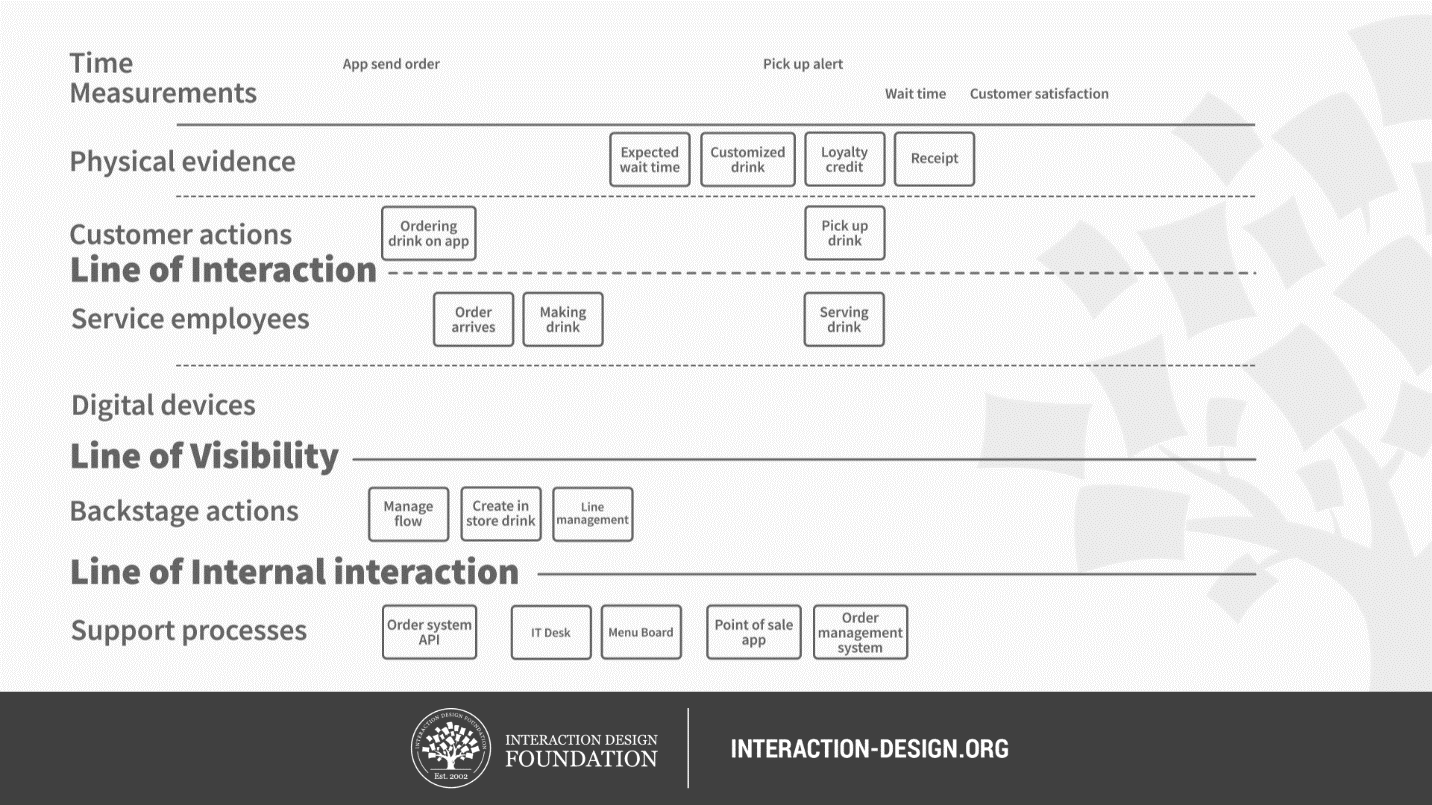
Service blueprints are an important tool in the service design process.

Do Service Design for the Complete Experience

Remember to design for the complete experience. That means you should accommodate your users’/customers’ environment/s and the various barriers, motivations and feelings they’ll have. Here are some core considerations:

  1. Understand your brand’s purpose, the demand for it and the ability of all associated service providers to deliver on promises.

  2. The customers’ needs come ahead of the brand’s internal ones.

  3. Focus on delivering unified and efficient services holistically—as opposed to taking a component-by-component approach.

  4. Include input from users.

  5. Streamline work processes to maximize efficiency.

  6. Co-creation sessions are vital to prototyping.

  7. Eliminate anything (e.g., features, work processes) that fails to add value for customers.

  8. Use agile development to adapt to ever-changing customer needs.

Service design applies both to not-so-tangible areas (e.g., riders buying a single Uber trip) and tangible ones (e.g., iPhone owners visiting Apple Store for assistance/repairs). Overall, service design is a conversation where you should leave your users and customers satisfied at all touchpoints, delighted to have encountered your brand.

Questions About Service Design?
We've Got Answers!

What is a service design diagram?

A service design diagram is a visual representation of the overall structure and components of a service, including the interactions between different elements. It provides an overview of the service and helps stakeholders understand how different parts of the service fit together. It may include information such as user interfaces, system components, data flows, and more.

What is an ecosystem map?

Transcript


An ecosystem map visualizes the entirety of an ecosystem in which a service operates. It focuses on understanding all the connections, dependencies, and exchanges of value within the service ecosystem. This mapping tool captures:

  1. Actors/Roles: Entities bringing the experience to the customer.

  2. Information Flow: Details of data shared, required, or used.

  3. Interactions: Between people, systems, and services.

  4. Devices & Channels: Tools and mediums of communication.

The diagram is essential for understanding the current state of a service, emphasizing the intricacies and interdependencies, guiding service blueprint creation, and identifying potential breakpoints or areas for enhancement.

What are frontstage and backstage in service design?

In the context of service design, frontstage refers to the actions performed by employees that are visible to the customer. It includes interactions such as customer service, product demonstrations, and any other activities that customers can directly observe.

On the other hand, backstage actions are performed by employees that are not visible to the customer. These actions support the service delivery and may include tasks such as inventory management, quality control, and other behind-the-scenes operations.

What does good service design look like?

Good service design is a holistic approach that prioritizes every user interaction, both in digital and real-life contexts. Jonas Piet, Director and Service Design Lead at Inwithforward shares the example of Kudoz, a learning platform to demonstrate backstage service design.

Transcript

While the digital platform is a crucial component, the user's journey begins long before they interact with the app. It might start with discovering the service at a community event or through a promotional video. Service designers ensure that every touchpoint, from community events to the digital interface, provides a coherent and positive experience. They focus on the intricate details, be it designing the role of an 'Experience Curator', crafting a compelling story, or ensuring safety checks. In essence, good service design intertwines various interactions, ensuring they align perfectly.

Where to learn human-centered design?

Discover the principles of human-centered design through Interaction Design Foundation's in-depth courses: Design for the 21st Century with Don Norman offers a contemporary perspective on design thinking, while Design for a Better World with Don Norman emphasizes designing for positive global impact. To deepen your understanding, Don Norman's seminal book, "Design for a Better World: Meaningful, Sustainable, Humanity Centered," from MIT Press, is an invaluable resource.

Transcript

How do you develop a service design?

Developing service design begins with 

  1. In-depth user research, often ethnographic field studies, forming personas and journey maps. 

  2. Engage stakeholders early and consistently. 

  3. Utilize tools like the business model and value proposition canvases for a strategic foundation. 

  4. Transition from journey maps to service blueprints, mapping out the entire service ecosystem. 

  5. Embrace prototyping, iteratively refining with stakeholder input. 

  6. Thoroughly test prototypes, launch the finalized service, and continuously measure its impact. 

Learn more from the video below:

Transcript

Where should service design start?

Service design starts by understanding all pieces of an activity, centered on a user's need. 

Transcript

It involves figuring out systems from the ground up to support the experience, considering digital, physical, and social contexts. In-depth user research, stakeholder engagement, and aligning organizational resources, user needs, and outcomes are vital. 

Why is service design difficult?

Transcript

Service design, as discussed in our video, encompasses both the visible interactions a customer experiences and the underlying processes staff engage with. It deals with a complex web of interconnectivity, from front-end interactions to back-end systems and distribution. However, the challenge isn't just about designing services. The organizational culture must be receptive. Even if service designers identify areas of improvement, if the organization isn't prepared or faces legislative and technological barriers, change becomes arduous. Despite having dedicated individuals wanting change, they can often be constrained by larger, intricate issues. Service design requires a holistic approach, and while it can pinpoint problems, actual implementation might be held back by factors beyond the design realm.

What is UX vs CX vs service design?

UX (User Experience) design centers on the digital experience of users, focusing on specific touchpoints (which are often screen-based interactions). CX (Customer Experience) is broader, encompassing every touchpoint a customer has with a brand, from digital to in-store. 

Transcript

Service design has the highest scope of the three concepts, factoring in business processes, systems, and other back-end elements that the customer does not interact with. While UX zooms in on digital interactions, service design steps back, integrating everything for a seamless journey. All three disciplines aim to enhance the user's or customer's experience but operate at different scales and depths.

Is service design in demand?

Absolutely! As businesses increasingly recognize the value of delivering exceptional customer experiences, service design has become a pivotal discipline. It ensures seamless and holistic services that cater to both customer needs and business goals.

Copyright
Transcript

The demand for professionals with expertise in service design is growing across various industries, from tech to hospitality. In order to stay competitive and satisfy the current demand, many individuals are looking to improve their skills. For those keen on mastering this domain, Interaction Design Foundation's course on Service Design provides an in-depth understanding and hands-on learning. It's a great way to get started or deepen your expertise!

Earn a Gift Earn a Gift, Answer a Short Quiz!

1
2
3
4
1
2
3
4
Question 1
Question 2
Question 3
Get Your Gift
Interaction Design Foundation logo

Question 1

What is the primary goal of service design?

1 point towards your gift

  • To create visually appealing service interfaces
  • To ensure financial growth for service providers
  • To optimize experiences for both customers and service providers
Interaction Design Foundation logo

Question 2

Which principle of service design involves breaking complex services into manageable parts?

1 point towards your gift

  • Co-creative
  • Evidencing
  • Sequencing
Interaction Design Foundation logo

Question 3

Which tool is an elevated form of a customer journey map to reveal a full spectrum of user interactions with a brand?

1 point towards your gift

  • Personas
  • Service blueprints
  • User scenarios

Learn More About Service Design

Make learning as easy as watching Netflix: Learn more about Service Design by taking the online IxDF Course Service Design: How to Design Integrated Service Experiences.

Why? Because design skills make you valuable. In any job. Any industry.

In This Course, You'll

  • Get excited when you learn how to turn everyday services into seamless experiences people love. Service Design helps you make life better for others and more fulfilling for yourself by applying timeless human-centered design skills to everyday services. Whether you help people book a flight, order takeout, or use government services, every interaction matters. Service Design is valuable to everyone, in all jobs and industries, because every role involves creating, improving, or interacting with services in some way. As automation and AI take over more of the technical execution, you stay in demand when you can understand the full service from the human side and decide where improvements actually matter. Whether you're designing customer experiences, improving internal workflows, or streamlining processes, you'll create smoother, more efficient, and more people-friendly interactions. You'll learn the Service Design secrets used by brands like Amazon, Disney, and Southwest Airlines.

  • Make yourself invaluable as the go-to expert in a field where 1 in 3 leaders admit they're in the dark. With 82% of people happy to pay more for great service, this is your chance to stand out and bring in those profits left on the table. With Service Design skills, you'll improve the customer experience, optimize workflows, and save time and resources. Your efforts will pay off in increased revenue, customer loyalty, and recognition—a win for your users, your company, and your career. Why? Because people love smooth, thoughtful service—and so do businesses. You'll create more love, more impact, and the kind of salary that reflects your value. With step-by-step guidance and real-world case studies, you'll apply your skills right away.

  • Gain confidence and credibility as you build a research foundation with journey mapping, role-based personas, and service safaris. You'll work with lifecycle maps, ecosystem maps, and service blueprints as you prototype. You'll master the Business Model Canvas and learn how to connect service design decisions to business goals and strategy. With over 30 downloadable templates, you'll easily apply what you've learned to your own work. Showcase your ability to lead and collaborate on Service Design initiatives with an optional portfolio-ready project.

It's Easy to Fast-Track Your Career with the World's Best Experts

Master complex skills effortlessly with proven best practices and toolkits directly from the world's top design experts. Meet your experts for this course:

  • Frank Spillers: Service Designer and Founder and CEO of Experience Dynamics.

  • David Bill: Interaction Designer who led service design for five U.S. federal agencies at Booz Allen Hamilton before driving innovative design solutions as a Senior UX Designer at Amazon Web Services (AWS).

  • Kendra Shimmell: Vice President of Design at Remitly and former Senior Director of Research and Central Science at Twitch (Amazon).

Get an Industry-Recognized IxDF Course Certificate

Increase your credibility, salary potential and job opportunities by showing credible evidence of your skills.

IxDF Course Certificates set the industry gold standard. Add them to your LinkedIn profile, resumé, and job applications.

Course Certificate Example

Be in distinguished company, alongside industry leaders who train their teams with the IxDF and trust IxDF Course Certificates.

Our clients: IBM, HP, Adobe, GE, Accenture, Allianz, Phillips, Deezer, Capgemin, Mcafee, SAP, Telenor, Cigna, British Parliament, State of New York

All Free IxDF Articles on Service Design

Read full article
10 Ideas to Help You Sell UX Work - Article hero image
Interaction Design Foundation logo

10 Ideas to Help You Sell UX Work

We know that UX is important. Google knows that UX is important. But when it comes to selling in UX work it can often feel like nobody else knows that it’s important. Clients and colleagues often seem completely intractable on ideas when we present them. So how can we better serve those customers an

Social shares
841
Published
Read Article
Read full article
Making sense of new UX words: A first dictionary for UX Ecosystem Design - Article hero image
Interaction Design Foundation logo

Making sense of new UX words: A first dictionary for UX Ecosystem Design

User experience (UX) is very much about communicating, advocating and spreading. As UX practitioners, we spend a great amount of our time engaged in these types of activities. To help you learn and understand new buzzwords, I have written this article to introduce some of the words related to the Us

Social shares
538
Published
Read Article
Read full article
Service Design - Design is Not Just for Products - Article hero image
Interaction Design Foundation logo

Service Design - Design is Not Just for Products

Service design is concerned with the design of services and making them better suit the needs of the service’s users and customers. It examines all activities, infrastructure, communication, people, and material components involved in the service to improve both quality of service and interactions b

Social shares
1k
Published
Read Article
Read full article
The Moment of Truth: Build Desirable Relationships with Users and Customers - Article hero image
Interaction Design Foundation logo

The Moment of Truth: Build Desirable Relationships with Users and Customers

In order to understand “the moment of truth”; it’s important to understand the customer lifecycle with a brand or product. There are many moments at which a customer (or potential customer or former customer) will interact with a brand.A moment of truth is simply any interaction during which a custo

Social shares
980
Published
Read Article
Read full article
The Principles of Service Design Thinking - Building Better Services - Article hero image
Interaction Design Foundation logo

The Principles of Service Design Thinking - Building Better Services

Service design is all about taking a service and making it meet the user’s and customer’s needs for that service. It can be used to improve an existing service or to create a new service from scratch. In order to adapt to service design, a UX designer will need to understand the basic principles of

Social shares
1.4k
Published
Read Article
Read full article
Product-Service Hybrids – When Products and Services Become One - Article hero image
Interaction Design Foundation logo

Product-Service Hybrids – When Products and Services Become One

Mikal Hallstrup,, the Chief Visionary Officer of Designit says; “The world doesn’t necessarily need more products, it needs better solutions.” While a solution may commonly be a product or a service, it’s more likely to be a combination of the two in many instances today.The combination of a product

Social shares
896
Published
Read Article

Service Design - Design is Not Just for Products

Service Design - Design is Not Just for Products

Service design is concerned with the design of services and making them better suit the needs of the service’s users and customers. It examines all activities, infrastructure, communication, people, and material components involved in the service to improve both quality of service and interactions between the provider of the service and its customers.

The objective of service design is to formulate both front office and back office strategies that meet the customers’ needs in the most relevant way whilst remaining economic (or sustainable) for the service provider. Ideal services are considered to be user-friendly and competitive within their market.

There are many different disciplines that comprise service design. The most common are ethnography, information and management sciences, interaction design and process design.

Service design is used both to create new services and to improve the performance of existing services. As Matt Beale, from the Carnegie School of Design says; “Design is about making things good (and then better) and right (and fantastic) for the people who use and encounter them.”

A Brief History of Service Design

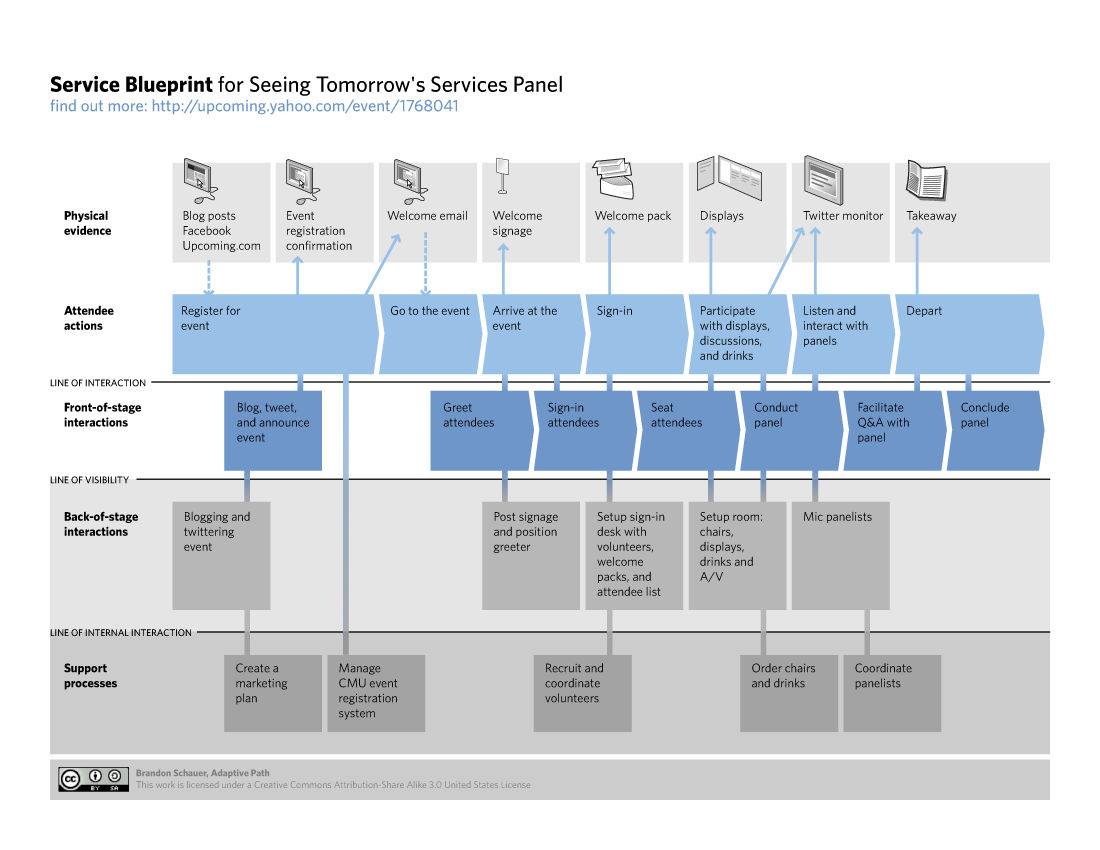
In 1982, the term “service design” was coined by Lynn Shostack. They considered service design to be a responsibility of marketing and of management. It was proposed that a business should develop a “service blueprint” which details the processes within a company and how each process interacts with other processes. While this blueprint was initially only used for service design – it has now become a tool for managing operational efficiency as well.


(c)brandon schauer, Fair Use

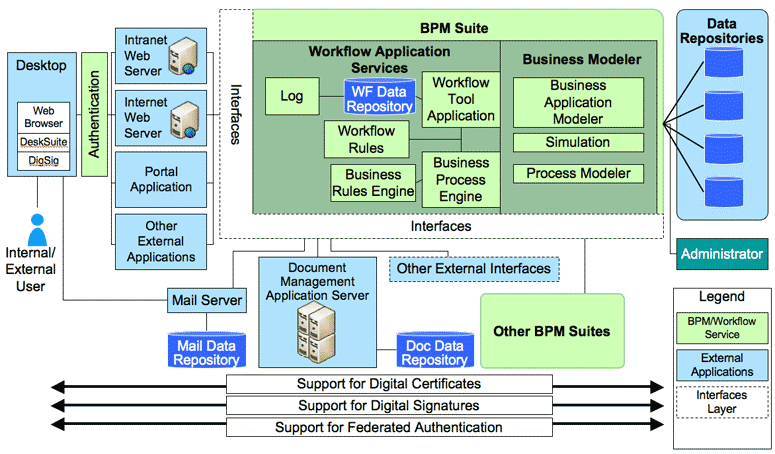
The service design blueprint clearly articulates the interactions between each part of the process.

Then in 1991, Prof. Dr. Michael Erlhoff (of Köln International School of Design - KISD) proposed that service design be considered a design discipline. He would go on to form an international conglomerate of universities that provided service design education and a network for academics and professionals involved in the discipline.

This network then proposed some structure for the discipline:

"[Service Design] is an emerging discipline and an existing body of knowledge, which can dramatically improve the productivity and quality of services.

Service Design provides a systematic and creative approach to:

  • meeting service organisations’ need to be competitive

  • meeting customers’ rising expectations of choice and quality

  • making use of the technologies’ revolution, that multiplies the possibilities for creating, delivering and consuming services

  • answering the pressing environmental, social and economic challenges to sustainability

  • fostering innovative social models and behaviours

  • sharing knowledge & learning”

They also provided the format for a service designer’s responsibilities:

“The Service Designer can:

  • visualise, express and choreograph what other people can’t see, envisage solutions that do not yet exist

  • observe and interpret needs and behaviours and transform them into possible service futures

  • express and evaluate, in the language of experiences, the quality of design”

As well as setting out expectations for the way service design would perform:

  • “Service Design aims to create services that are Useful, Useable, Desirable, Efficient & Effective

  • Service Design is a human-centred approach that focuses on customer experience and the quality of service encounter as the key value for success.

  • Service Design is a holistic approach, which considers in an integrated way strategic, system, process and touchpoint design decisions.

  • Service Design is a systematic and iterative process that integrates user-oriented, team-based, interdisciplinary approaches and methods, in ever-learning cycles."

While these definitions have evolved a little over the years – they remain the core ethos of service design and what service designers should do in their work.


(c) Annant2015, Fair Use

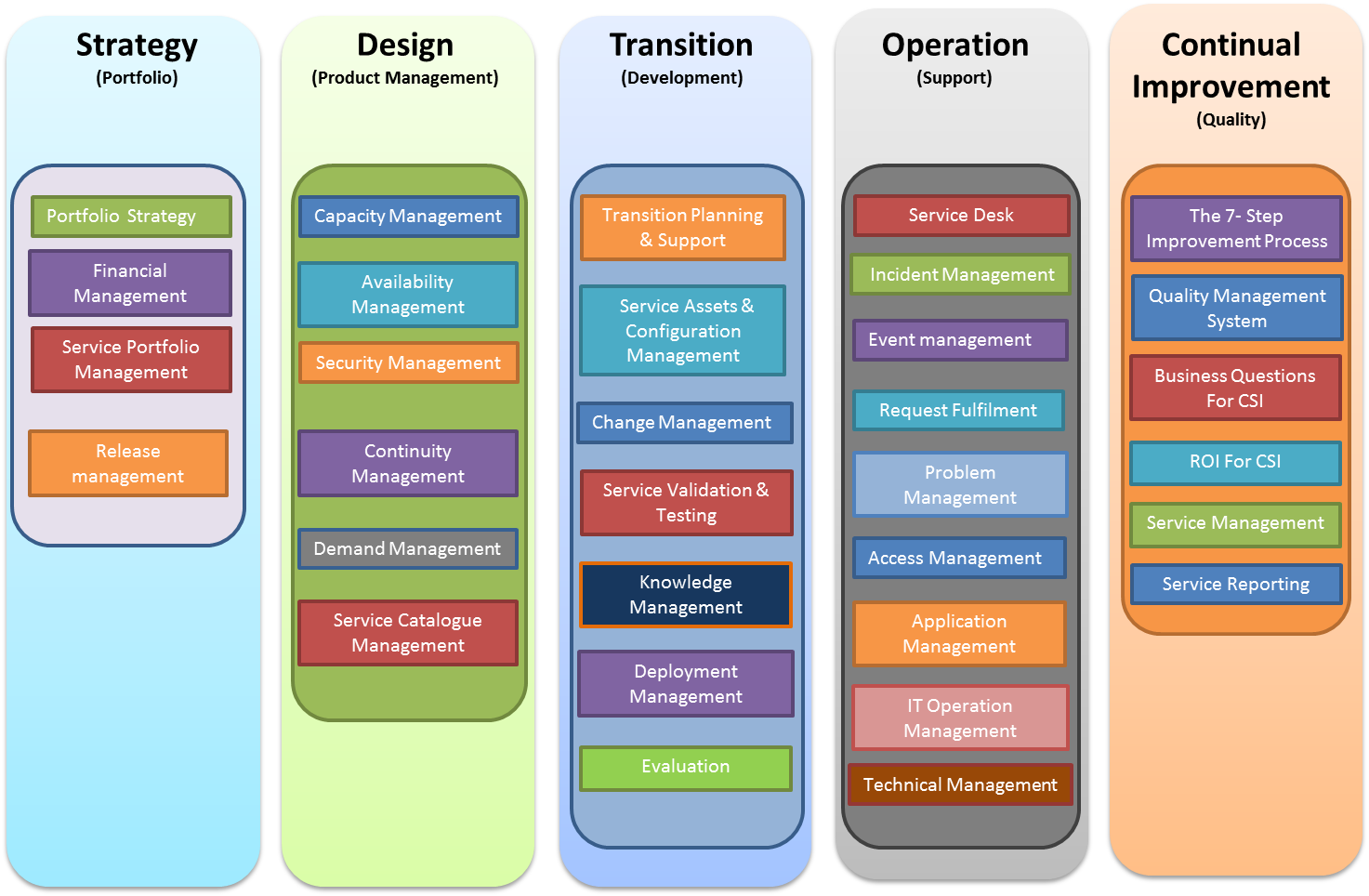
Service Design fits neatly into all industries – including those managed by ITIL process (shown here).

Service Design Methodology

Morelli proposed in 2006 that service design methodologies should operate in 3 directions:

  • The actors on the service must be identified and defined with respect to the service. This can be done using analytical tools.

  • The service scenarios should be defined. Then user cases should be developed and sequenced to reflect the interactions with the actors.

  • The service should be then represented using diagrams and written elements as required to show all the physical components, actors, interactions and sequences.

The tools for analysis can involve social studies, ethnographic studies, anthropology, etc. these areas offer an incredible number of tools and care should be taken to select the right tool for the service design project.

Design tools are used to create the blueprint of the service and the nature and characteristics of the interactions that fall within it. These tools include (but are not limited to) development of service scenarios and use cases. These tools are similar to those employed in software design and UX designers should have little trouble adapting to them. It is worth noting that in service design these tools tend to be broader in scope and accommodate management techniques (such as Kaizen, Just-In-Time – JIT, Total Quality Management – TQM, etc.). Care should be taken when selecting management techniques as in many service systems customer interactions are too loosely defined to be forced into the narrow path of quality management (which was originally designed for manufacturing).

Blueprints can be any useful form of diagram which elicits the services’ scope. Storyboards are often the preferred tool but there is no requirement for this and designers should choose the tool which suits them and the project best.

The Take Away

Service design is every bit as important as product design and UX designers will find that as web products evolve to become web services, they are more and more involved in service design. The good news is that the core skills of UX design are similar when it comes to service design – they are just altered somewhat in scope.


(c) _dChris, Fair Use

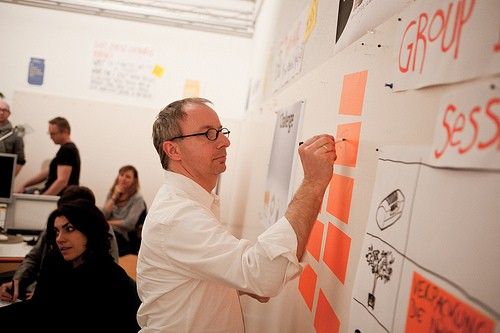
Service design methodologies are very similar to existing UX methodologies. UX designers may find big opportunities in this field.

Resources

Lynn Shostack’s original publications can be found here "How to Design a Service." European Journal of Marketing 16(1): 49–63. and here, "Design Services that Deliver." Harvard Business Review(84115): 133-139. They are available in hard copy only.

You can find out more about Service Design Blueprints Wikipedia

Read Morelli’s work can on Designing product/service systems. A methodological exploration." Design Issues 18(3): 3–17 and "Developing new PSS, Methodologies and Operational Tools." Journal of Cleaner Production 14(17): 1495–1501.

Explore The Design4Services website, a great resource for service designers in general

Hero Image: (c) Marcel Münch, Fair Use

Feel Stuck?
Want Better Job Options?

AI is replacing jobs everywhere, yet design jobs are booming with a projected 45% job growth. With design skills, you can create products and services people love. More love means more impact and greater salary potential.

At IxDF, we help you from your first course to your next job, all in one place.

See How Design Skills Turn Into Job Options
Privacy Settings
By using this site, you accept our Cookie Policy and Terms of Use.
Customize
Accept all

Be the One Who Inspires

People remember who shares great ideas.

Share on:

Academic Credibility — On Autopilot

Don't waste time googling citation formats. Just copy, paste and look legit in seconds.