Service design is concerned with the design of services and making them better suit the needs of the service’s users and customers. It examines all activities, infrastructure, communication, people, and material components involved in the service to improve both quality of service and interactions between the provider of the service and its customers.
The objective of service design is to formulate both front office and back office strategies that meet the customers’ needs in the most relevant way whilst remaining economic (or sustainable) for the service provider. Ideal services are considered to be user-friendly and competitive within their market.
There are many different disciplines that comprise service design. The most common are ethnography, information and management sciences, interaction design and process design.
Service design is used both to create new services and to improve the performance of existing services. As Matt Beale, from the Carnegie School of Design says; “Design is about making things good (and then better) and right (and fantastic) for the people who use and encounter them.”
A Brief History of Service Design
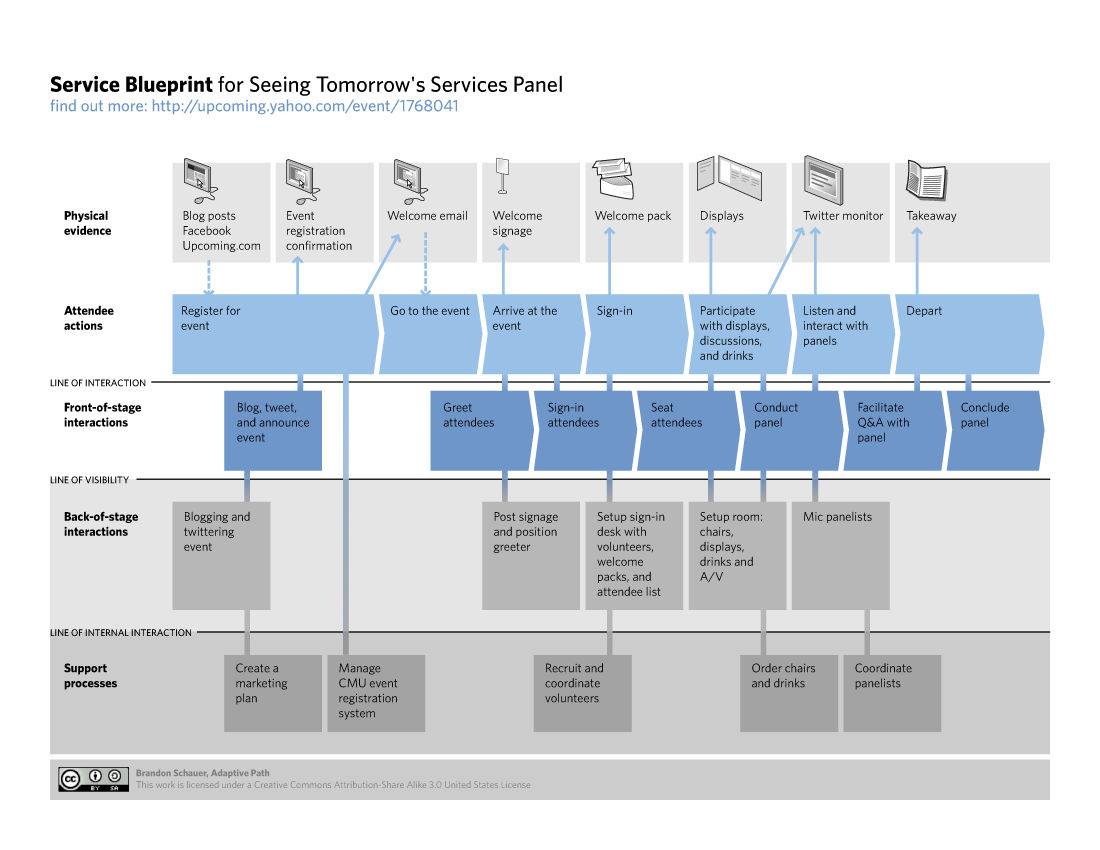
In 1982, the term “service design” was coined by Lynn Shostack. They considered service design to be a responsibility of marketing and of management. It was proposed that a business should develop a “service blueprint” which details the processes within a company and how each process interacts with other processes. While this blueprint was initially only used for service design – it has now become a tool for managing operational efficiency as well.
(c)brandon schauer, Fair Use
The service design blueprint clearly articulates the interactions between each part of the process.
Then in 1991, Prof. Dr. Michael Erlhoff (of Köln International School of Design - KISD) proposed that service design be considered a design discipline. He would go on to form an international conglomerate of universities that provided service design education and a network for academics and professionals involved in the discipline.
This network then proposed some structure for the discipline:
"[Service Design] is an emerging discipline and an existing body of knowledge, which can dramatically improve the productivity and quality of services.
Service Design provides a systematic and creative approach to:
meeting service organisations’ need to be competitive
meeting customers’ rising expectations of choice and quality
making use of the technologies’ revolution, that multiplies the possibilities for creating, delivering and consuming services
answering the pressing environmental, social and economic challenges to sustainability
fostering innovative social models and behaviours
sharing knowledge & learning”
They also provided the format for a service designer’s responsibilities:
“The Service Designer can:
visualise, express and choreograph what other people can’t see, envisage solutions that do not yet exist
observe and interpret needs and behaviours and transform them into possible service futures
express and evaluate, in the language of experiences, the quality of design”
As well as setting out expectations for the way service design would perform:
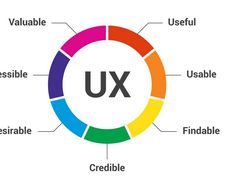
“Service Design aims to create services that are Useful, Useable, Desirable, Efficient & Effective
Service Design is a human-centred approach that focuses on customer experience and the quality of service encounter as the key value for success.
Service Design is a holistic approach, which considers in an integrated way strategic, system, process and touchpoint design decisions.
Service Design is a systematic and iterative process that integrates user-oriented, team-based, interdisciplinary approaches and methods, in ever-learning cycles."
While these definitions have evolved a little over the years – they remain the core ethos of service design and what service designers should do in their work.
(c) Annant2015, Fair Use
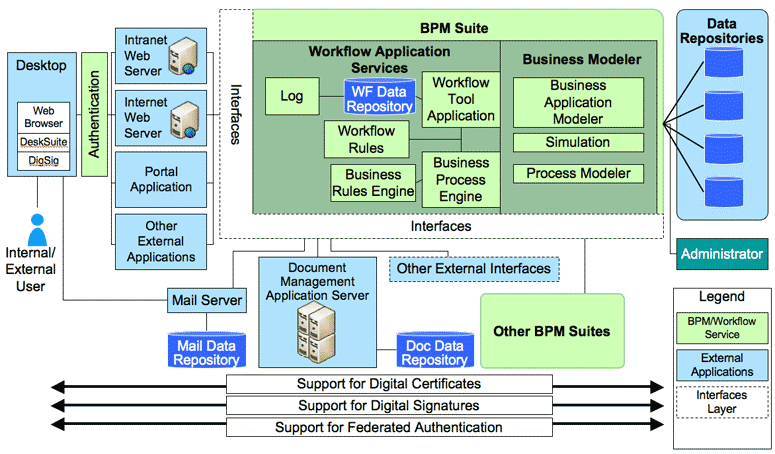
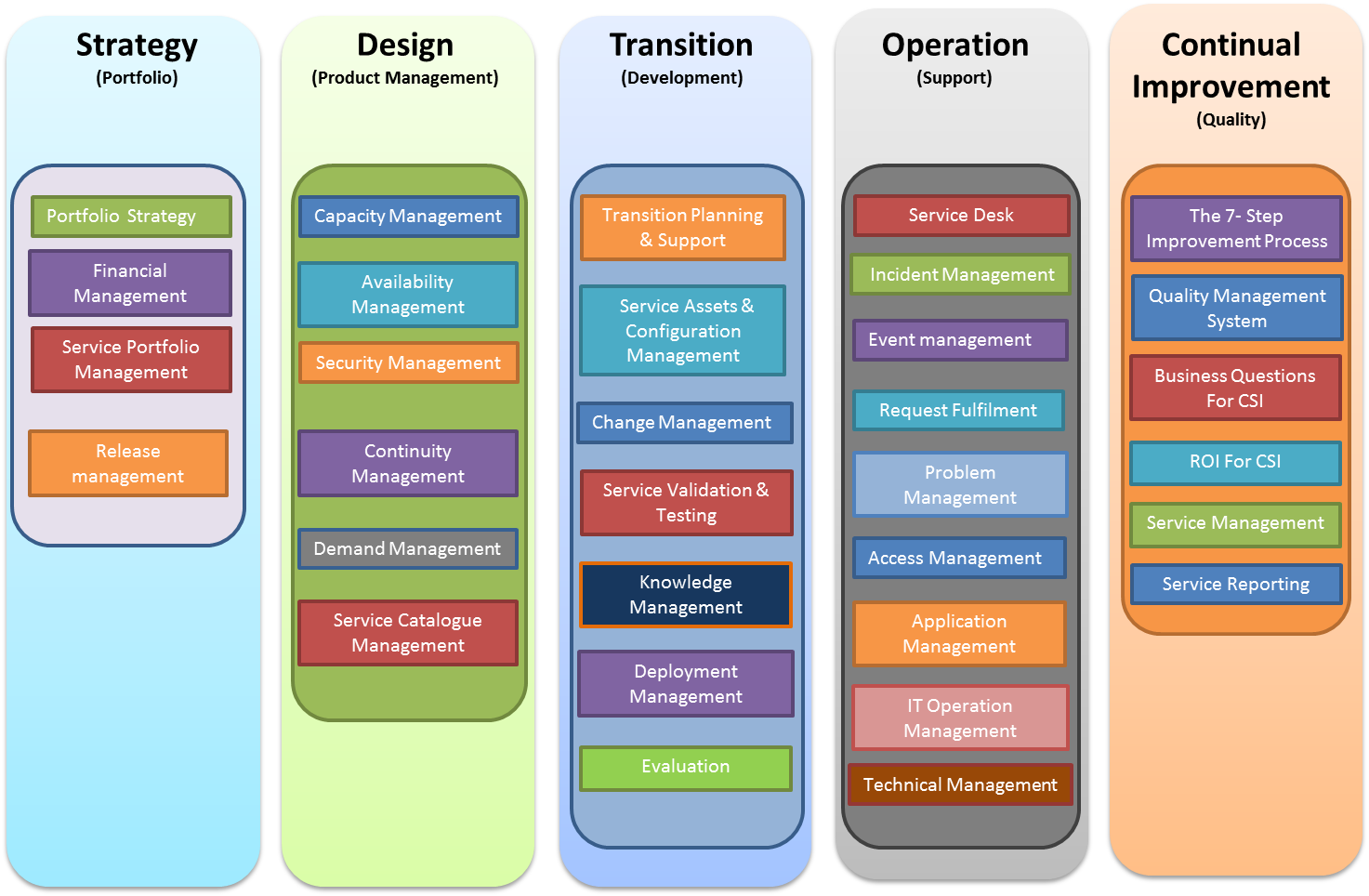
Service Design fits neatly into all industries – including those managed by ITIL process (shown here).
Service Design Methodology
Morelli proposed in 2006 that service design methodologies should operate in 3 directions:
The actors on the service must be identified and defined with respect to the service. This can be done using analytical tools.
The service scenarios should be defined. Then user cases should be developed and sequenced to reflect the interactions with the actors.
The service should be then represented using diagrams and written elements as required to show all the physical components, actors, interactions and sequences.
The tools for analysis can involve social studies, ethnographic studies, anthropology, etc. these areas offer an incredible number of tools and care should be taken to select the right tool for the service design project.
Design tools are used to create the blueprint of the service and the nature and characteristics of the interactions that fall within it. These tools include (but are not limited to) development of service scenarios and use cases. These tools are similar to those employed in software design and UX designers should have little trouble adapting to them. It is worth noting that in service design these tools tend to be broader in scope and accommodate management techniques (such as Kaizen, Just-In-Time – JIT, Total Quality Management – TQM, etc.). Care should be taken when selecting management techniques as in many service systems customer interactions are too loosely defined to be forced into the narrow path of quality management (which was originally designed for manufacturing).
Blueprints can be any useful form of diagram which elicits the services’ scope. Storyboards are often the preferred tool but there is no requirement for this and designers should choose the tool which suits them and the project best.
The Take Away
Service design is every bit as important as product design and UX designers will find that as web products evolve to become web services, they are more and more involved in service design. The good news is that the core skills of UX design are similar when it comes to service design – they are just altered somewhat in scope.
(c) _dChris, Fair Use
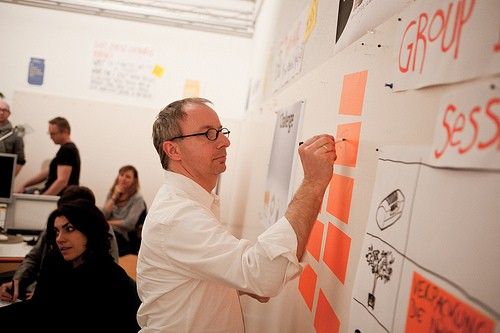
Service design methodologies are very similar to existing UX methodologies. UX designers may find big opportunities in this field.
Resources
Lynn Shostack’s original publications can be found here "How to Design a Service." European Journal of Marketing 16(1): 49–63. and here, "Design Services that Deliver." Harvard Business Review(84115): 133-139. They are available in hard copy only.
You can find out more about Service Design Blueprints Wikipedia
Read Morelli’s work can on Designing product/service systems. A methodological exploration." Design Issues 18(3): 3–17 and "Developing new PSS, Methodologies and Operational Tools." Journal of Cleaner Production 14(17): 1495–1501.
Explore The Design4Services website, a great resource for service designers in general
Hero Image: (c) Marcel Münch, Fair Use