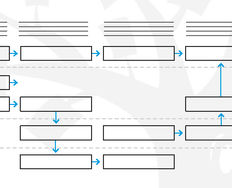
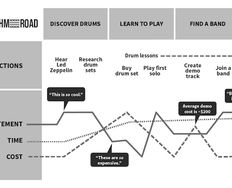
A service blueprint expands on a customer journey map. It details every interaction a customer has with an organization during their lifecycle. This blueprint goes deeper and examines all supporting physical and digital interactions. It often appears as a diagram with swim lanes. Each lane represents a specific category. Arrows link interactions between lanes to show the workflow.
Service blueprints enable great service. The world-leading customer service trainer, Kate Zabriskie, says, “Although your customers won’t love you if you give bad service, your competitors will.”
Service blueprints assist with service design, which fits into the bigger picture of brand management.
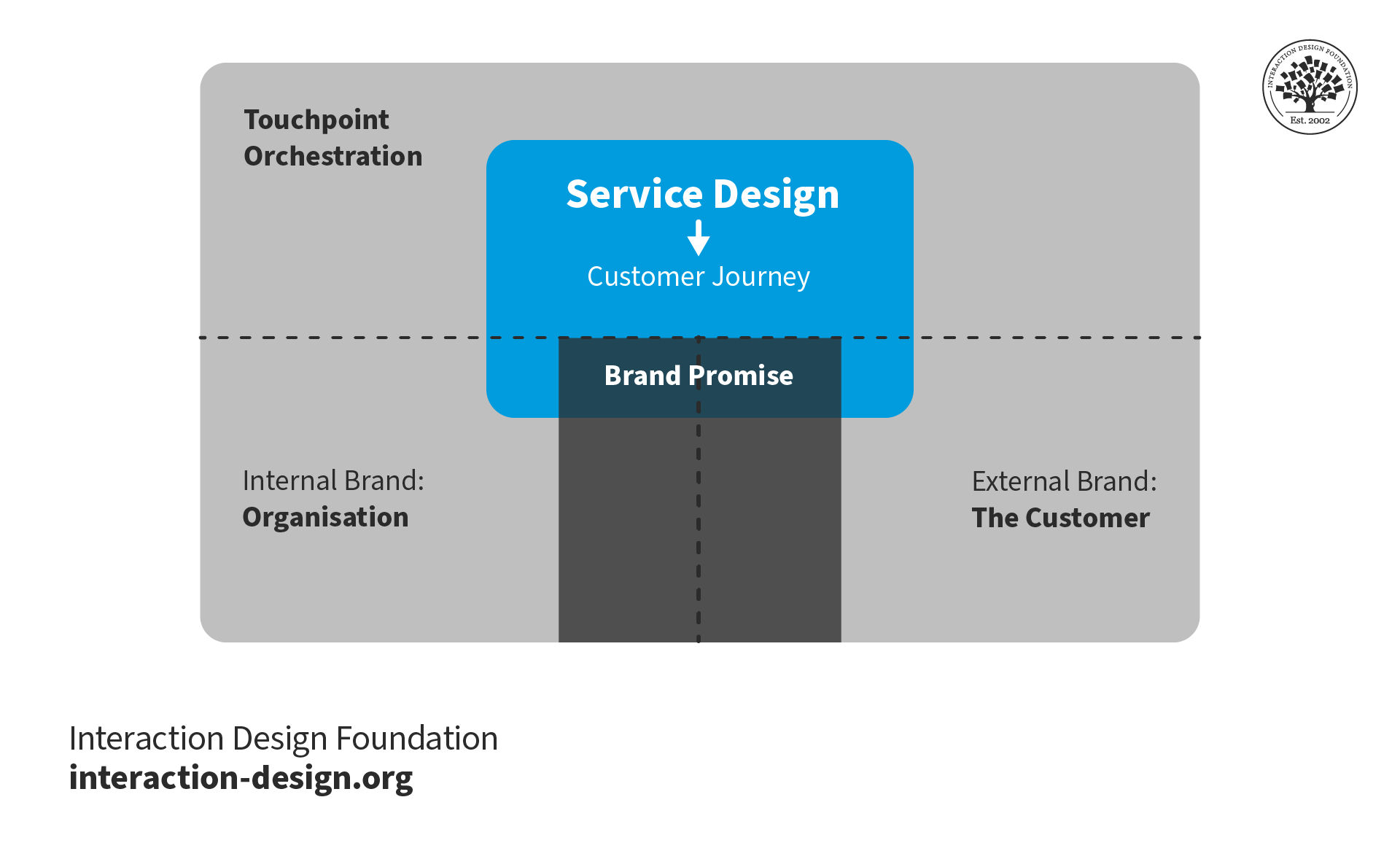
Service blueprints assist with service design which in turn fits into the bigger picture of brand management.
Interaction Design Foundation, CC BY-SA 4.0
The service blueprint acts as a vital part of the service design, which is broader. Watch Frank Spillers, CEO at Experience Dynamics, discuss the service design process and the role of the service blueprint in this process.
Lynn Shostack, a banking executive, described service blueprints back in 1982 in the Harvard Business Review. They’ve become popular over the last few years as service design grew as a profession. Besides being useful in service design, operational management often uses them. They gauge the efficiency of work within an organization using a service blueprint.
What are the Benefits of Service Blueprinting?
Service blueprints fulfill a number of uses, but most often, designers use them to:
Improve a service: Understand the original service in detail. This makes it possible to identify, eliminate or improve pain points.
Design a new service: A blueprint for a new service allows you to create service prototypes. You can test the service before you launch it to customers.
Understand a service: Many services have become ingrained in corporate culture and often, people, even within the organization don’t understand them. Blueprints can reveal silos and areas of opacity in existing processes.
Understand the actors in service: A blueprint can help manage the complexity of a situation, particularly when the service involves many actors (customers, suppliers, consultants, employees, teams, etc.).
Transition a high-touch service to a low-touch service or vice-versa: It requires careful consideration when you broaden or narrow the audience for a service. A blueprint can help guide the way for how you might achieve this.
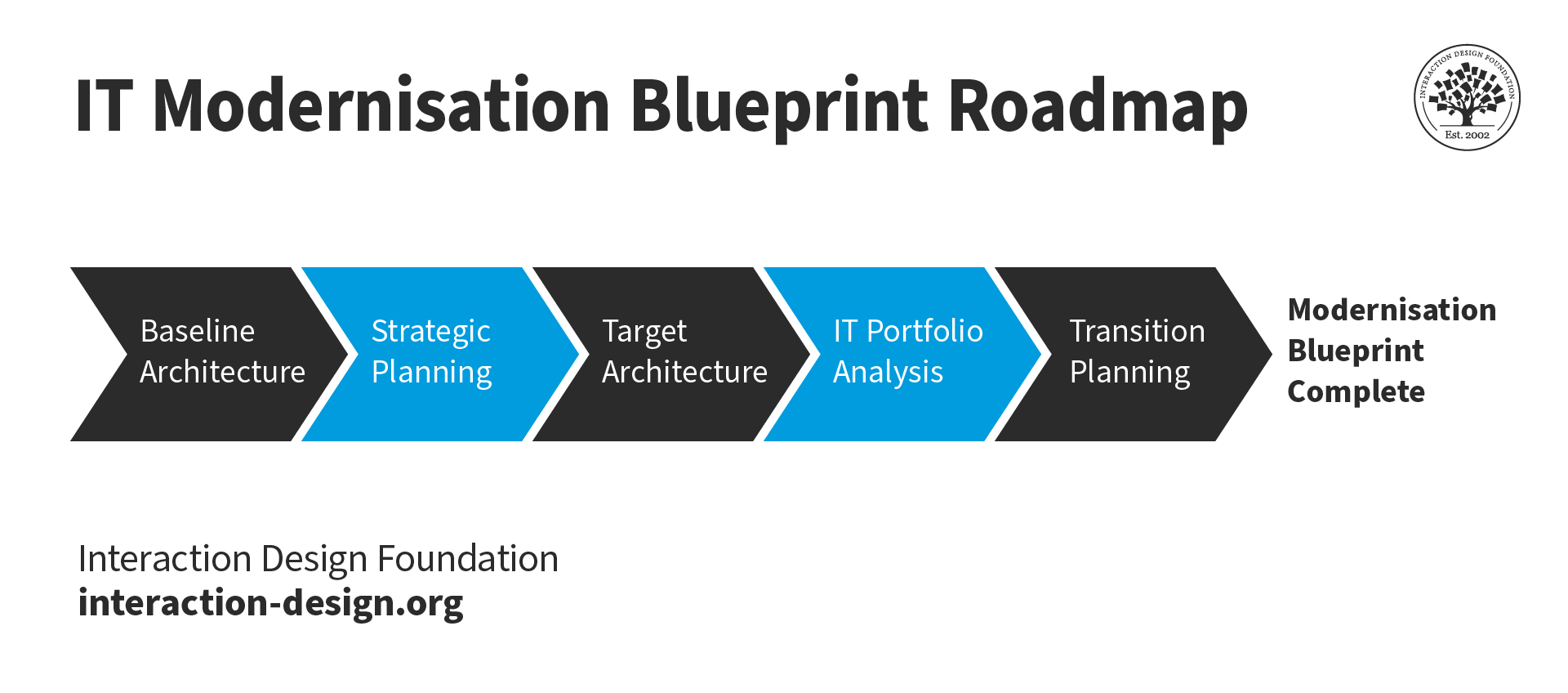
Service blueprints can be drawn from business roadmap blueprints as a starting point.
Interaction Design Foundation, CC BY-SA 4.0
Key Elements of a Service Blueprint
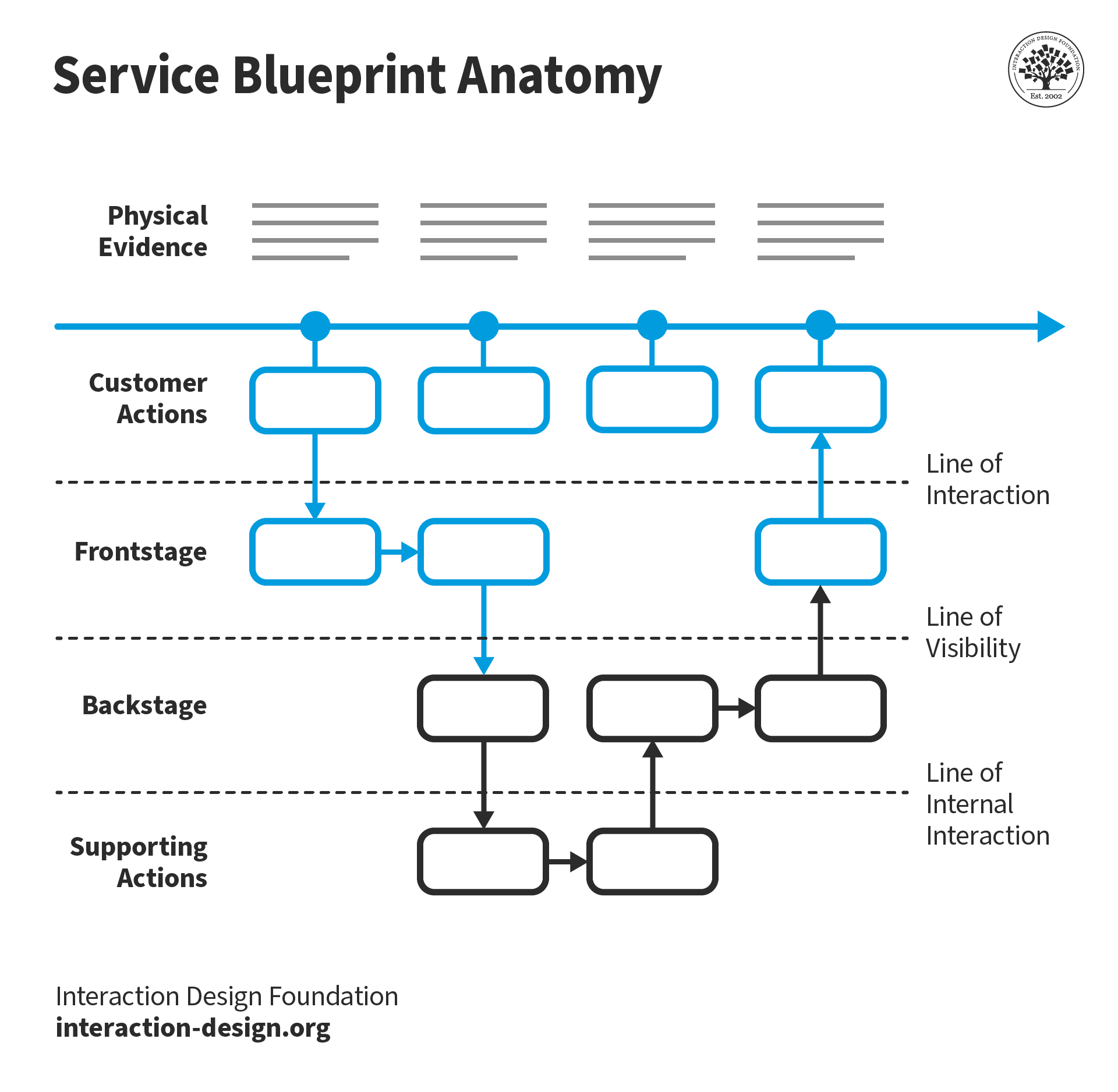
A service blueprint breaks down the service process into manageable parts. The blueprint is usually represented in a diagram based on swim lanes (each lane being assigned to a specific category) with interactions linked between lanes (using arrows to represent the flow of work).
© Interaction Design Foundation, CC BY-SA 4.0
The five main swim lanes captured in a service blueprint are as follows:
The physical evidence: This lane should contain anything a customer can see, hear, smell or touch. It includes not only storefronts and websites but also signs, forms and products.
The customer’s actions: What must your client base do to use the service at the touchpoint? If the customer doesn’t take action, you can’t respond to their needs.
The frontstage: The activities, people and physical evidence that a customer can observe after they take an action.
The backstage: Actions and processes not visible to customers needed for the customer actions to have results on the frontstage.
Learn about the concepts of frontstage and backstage in the context of service design from David Bill, Service Designer at Booz Allen Hamilton, seen here in conversation with Frank Spillers.
Supporting actions: Internal steps that support the delivery of the service.
You can split up any swim lanes if you find them too complicated. For example, you might want to clarify digital and physical interactions in different lanes.
You can enhance service blueprints with secondary elements. These elements tailor the blueprint to specific contexts and goals. Let's explore them:
Arrows: Arrows depict relationships and dependencies. A single arrow shows a one-way exchange. A double arrow indicates mutual dependence and agreement.
Time: Time plays a crucial role in many services. Your blueprint should include estimated durations for each customer action. This helps you assess the efficiency of the service process.
Regulations or Policy: It's important to incorporate relevant policies or regulations. These dictate how you execute processes and highlight inflexible aspects of the service.
Emotion: Just like a customer journey map tracks customer emotions, you can use a blueprint to represent employee emotions. You can do this through visual cues like green and red faces. Understand where employees feel frustrated or motivated. Qualitative data from internal surveys can pinpoint pain points and focus the design process.
Metrics: Success metrics add context. Metrics might include time spent on processes or financial costs. They help identify areas where you might waste resources. It will guide your improvements in communication and efficiency.
You also have some optional inclusions:
Time indicator: You can use them to show the time taken at any process step. Knowing the time can help you understand whether you have an efficient service that meets customer expectations.
Quality KPIs: What will you measure and what targets have you set to achieve customer satisfaction?
Customer’s emotional state: Not all services deal with distressed customers. But, those services that deal with this should give some thought to the emotions a customer deals with at the point of interaction.
Sketches: Whenever you feel words won’t do justice – feel free to include sketches, diagrams, etc., to make the blueprint more user-friendly.
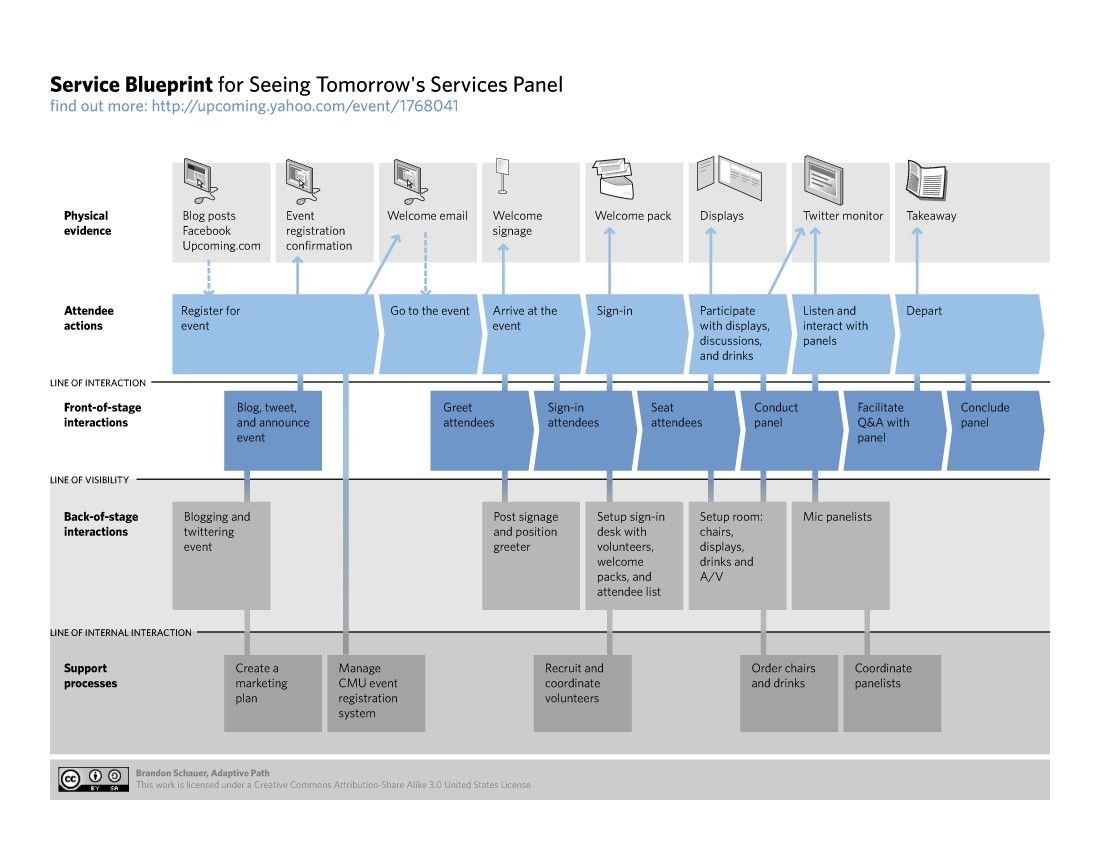
An example of a well-articulated service blueprint – with the swim lanes clearly defined and all interactions clearly demonstrated too.
Author/Copyright holder: brandon schauer. Copyright terms and licence: CC BY-SA 2.0
How to Create a Service Blueprint
Consider a service blueprint as a structured approach to understanding a service process. It involves identifying key components and their interactions.
The need to create a better user experience gained much traction in the 21st century. Alan Dix explains why user experience is important.
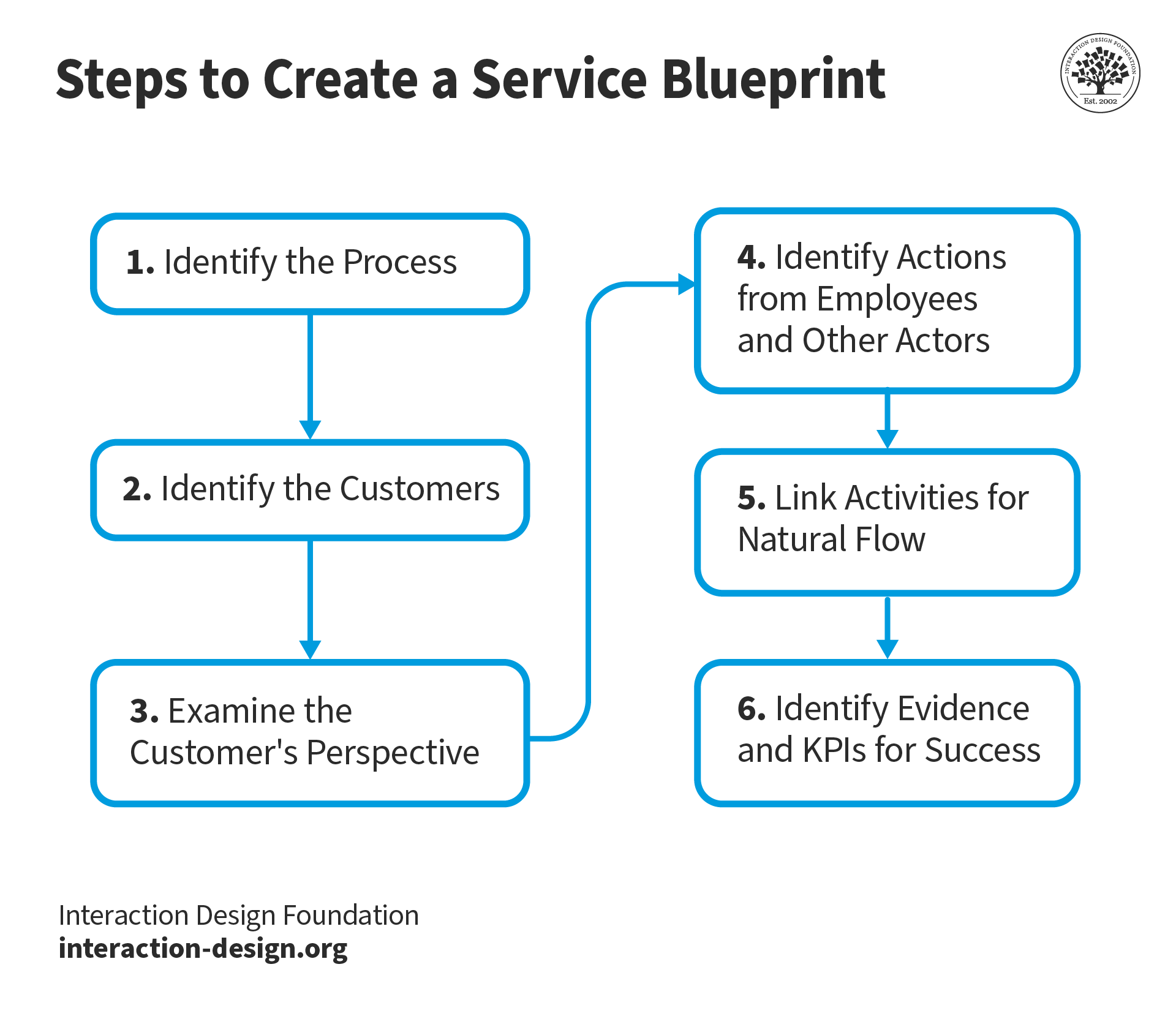
Following the step-by-step process to create an effective service blueprint can ensure a seamless customer experience and efficient service delivery.
© Interaction Design Foundation, CC BY-SA 4.0
Identify the Process
Define the specific process you want to blueprint. Understand its scope and boundaries. This step sets the foundation for your blueprint. It focuses on the service area that needs analysis or improvement.
Identify the Customers
Determine the customers who interact with this process. You must know your audience. It helps tailor the service experience to meet their specific needs and expectations.
Examine the Customer's Perspective
Analyze the service from the customer's viewpoint. This involves creating a customer journey blueprint. You must map out the entire customer journey. Understanding their experience highlights areas for enhancement and innovation in service delivery.
One of the service design goals is to transform the service delivery experience. Frank Spillers talks about the origins and other goals that service design aims to fulfill. Have a look.
Identify Actions from Employees and Other Actors
Identify all actions employees, technology and other stakeholders like suppliers take. This step ensures you capture every interaction that influences the service process.
Link Activities for Natural Flow
Arrange the identified activities in the order they occur. This creates a logical flow of the service process. It helps you visualize and understand each step in context.
Identify Evidence and KPIs for Success
Find the physical evidence and key performance indicators (KPIs) that show a successful service outcome. This step will help you measure and check the service's effectiveness and efficiency.
Notations on Blueprints
There are two common notations on a service blueprint. Arrows and annotations.
Arrows
Single-headed arrows denote the source of control moving to the next dependency. Double-headed arrows show that actors must reach agreements before the process moves forward.
Annotations
You can make notes on your diagrams any way you like (they are your diagrams). But it can help build a legend and key for clarity and ease of communication.
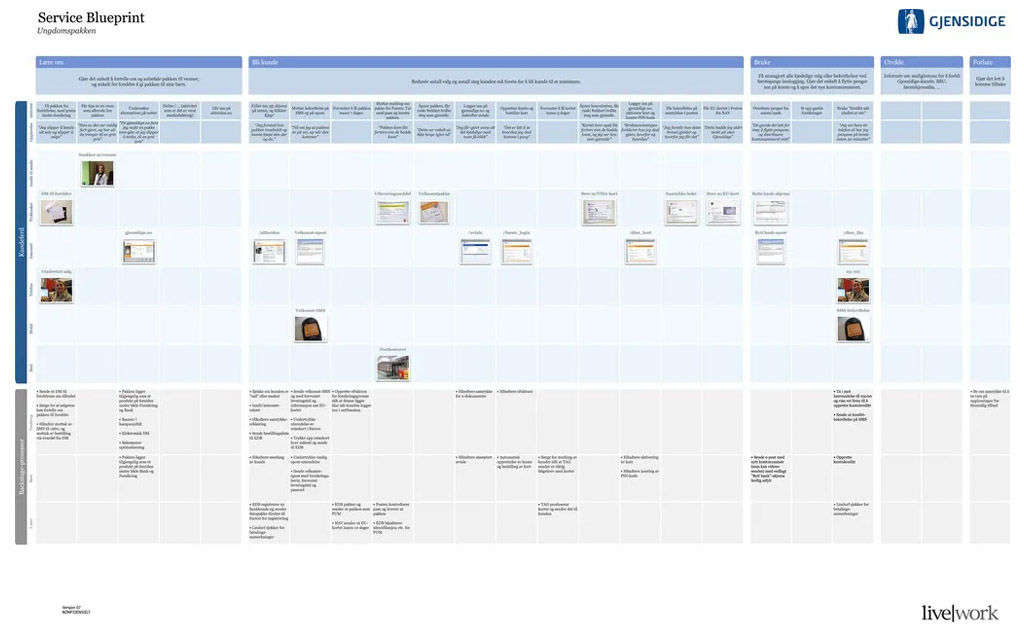
Service blueprints can be as detailed as you want to make them. Here you see notes and images against the swim lanes of a service blueprint.
Author/Copyright holder: Rosenfeld Media. Copyright terms and licence: CC BY 2.0
Service Blueprint Examples
1. E-commerce Blueprint
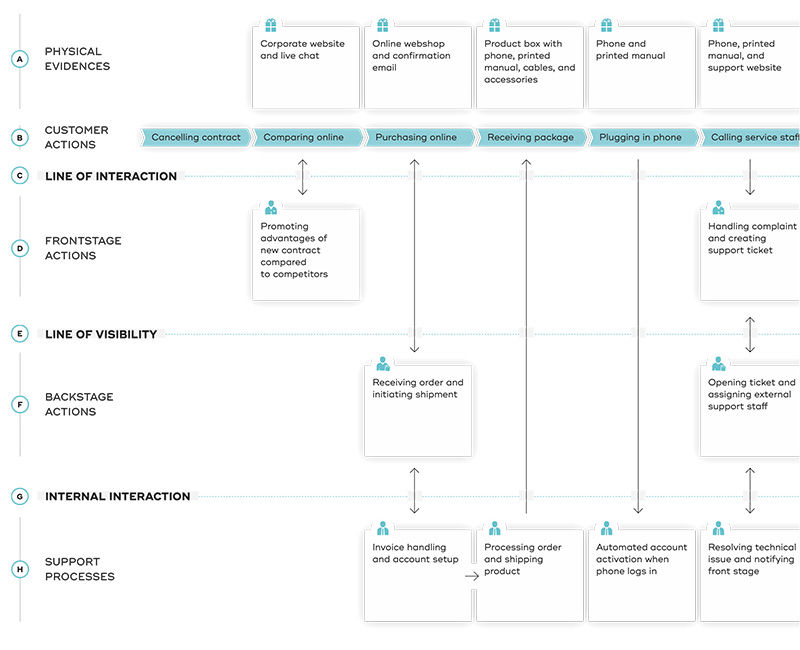
© Samply, Fair Use
The example shows a service blueprint for a technology company's customer journey. The blueprint outlines the process from contract cancellation to post-sales support.
Physical evidence includes the company's website, online shop, and product packaging.
Customer actions involve service comparison, a purchase, and engaging with the product.
The interaction line denotes customer-employee engagement points.
Frontstage actions include promoting new contracts and handling complaints. Behind the scenes, staff processes orders and manages shipments.
The internal interaction layer captures administrative tasks like invoice handling and account setup. Support processes ensure smooth service, like resolving technical issues.
This blueprint shows a clear visual structure to understand and improve the customer experience.
2. Online Shopping Blueprint
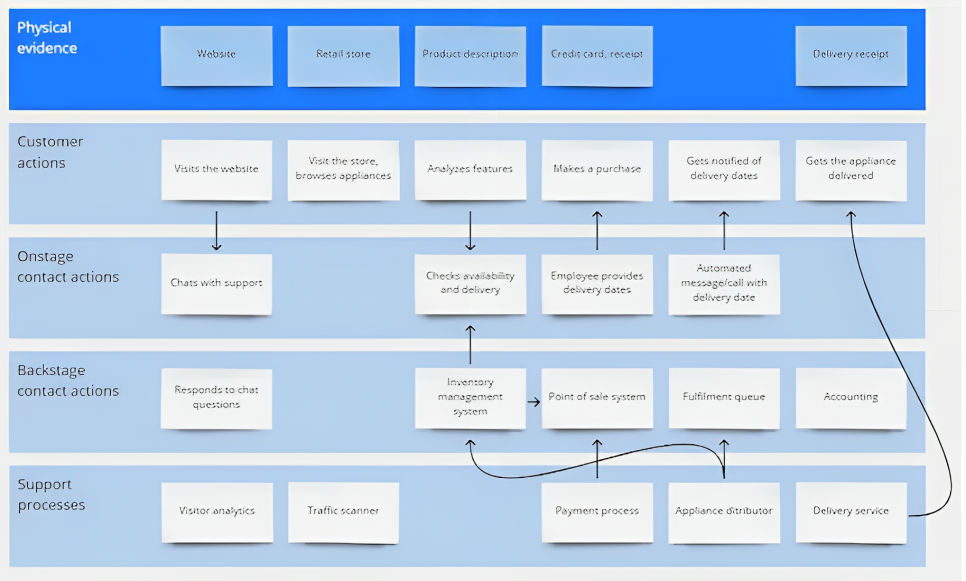
© Miro, Fair Use
The service blueprint depicts a customer's experience with a home appliance retailer.
It begins with the customer visiting the website, indicated under 'Physical evidence.' The customer journey continues with store visits, feature analysis, and finally, making a purchase.
During these steps, 'Onstage contact actions' occur. It includes chatting with support and inquiring about product availability.
Similarly, 'Backstage contact actions' involve staff responding to queries and managing inventory.
'Support processes' like visitor analytics and traffic scanning run to enhance service delivery.
Post-purchase includes payment processing and coordination with appliance distributors.
All these steps culminate in delivering the appliance to the customer and completing the service cycle.
3. Hospital Service UX Blueprint
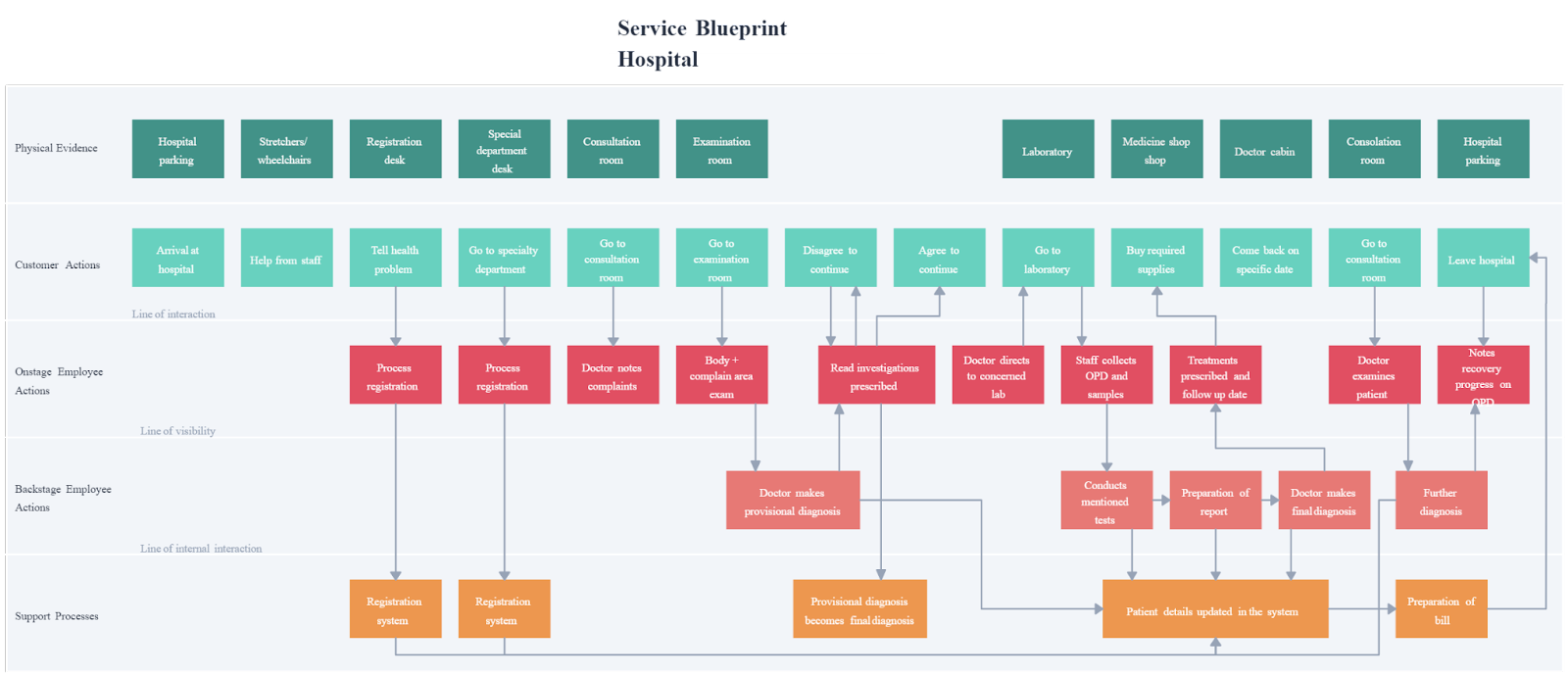
© Creately, Fair Use
The service blueprint outlines a patient's journey through a hospital service.
It begins with physical evidence, such as the hospital building and registration desk.
The customer's actions include arrival and moving through various stages of care. It includes registration, initial check-ups, diagnosis, and treatment.
Onstage employee actions involve direct patient interactions, such as consultations and administering tests.
You’ll see backstage employee actions less visible to the patient. They include preparing medication and updating patient records.
You have support processes, like registration systems and diagnostic services. They support the activities for a smooth transition between stages.
The blueprint captures the complexity of healthcare delivery. It highlights the critical points of interaction that define a patient's experience in the hospital.