Gamification user research is the study of player needs, motivations, and behaviors. These insights help designers develop engaging and fun gamification systems. This critical research leads to successful systems that achieve your gamification system's mission while meeting your players' needs.
“Games give us unnecessary obstacles that we volunteer to tackle."
— Jane McGonigal, American game designer and author.
Player motivation plays an essential part in gamifying a product or service. Your research will help the design team tailor the gamification features to the player's motivations. Former director of UX at Epic Games and 15-year game industry veteran Celia Hodent explains two types of motivation, extrinsic and intrinsic, in this video:
Why Is Gamification User Research Important?
Knowing your players is vital to gamification design. You wouldn’t dream of designing a system without knowing the users, would you? Gamification projects follow the same principle based on the understanding that play is voluntary.
Before you implement point systems and badges, you need to ask questions like “Who are our players?”, “What do they need?” and “What motivates our players?”
Your research will enable your team to:
Focus on the player during the design process.
Prioritize the players’ design needs.
Empathize with the player.
Identify problems.
Monitor and measure performance.
Highlight areas for improvement.
Gamification and Games: What’s the Difference?
Gamified systems and games both employ user research in their design and improvement. However, before you learn about research for gamification, it’s important to understand the difference:
Gamification adds game mechanics to non-game products, services, and systems to engage users. An example of a product that uses gamification is the language learning app Duolingo. Duolingo uses gamification features like badges, experience points, in-game currency, and leaderboards to create a fun learning experience. These features encourage users to stay on the app and continue learning instead of, for example, switching to a social media app or mobile game.
Games are primarily intended as entertainment. An example of a game is the online multiplayer game Fortnite. In Fortnite, many players fight, and the last one standing wins. The main point is not just to win but to enjoy the game. The purpose of every feature implemented into a game is to make it more fun.
When you work on gamification implementation, your research will differ from that of a user researcher working on a game.
One of the key differences is in a game, the main need of the player is to have fun. The purpose of game user research is to evaluate the designer's vision rather than discover the player's needs.
In a gamification system, what the player wants will be different based on the purpose of the product. For example, in Duolingo, the player needs to learn a new language.
That said, there are also similarities. For example, you must first research whether your players are competitive before you implement a leaderboard in your game or gamification system.
Users Become Players: Player-Centered Design
Like many other forms of design, gamification has its roots in user-centered design. In user-centered design, the user is the first consideration in every step of the design process. It allows you to develop a product that satisfies the user and engages them with their task. Gamification uses its own revised version – player-centered design.
User-centered design strives to build products that help users achieve their goals efficiently and satisfactorily. Gamification adds increased engagement to these goals.
For example, in Duolingo, if you use the app every day, this adds to your “streak.” This gamification feature encourages users and empowers them to learn daily, or they must start from zero. Similarly, leaderboards, experience points, and rewards add delight and fun to the satisfaction of learning.
When Does Research Begin?
As a gamification user researcher, you will be involved in each element of the design process. You will use your research to achieve the gamification mission, identify the players’ motivations, and decide which mechanics to implement. Beyond this, your research will monitor your players, measure the mission’s success, and help the design team manage the project’s overall progress.
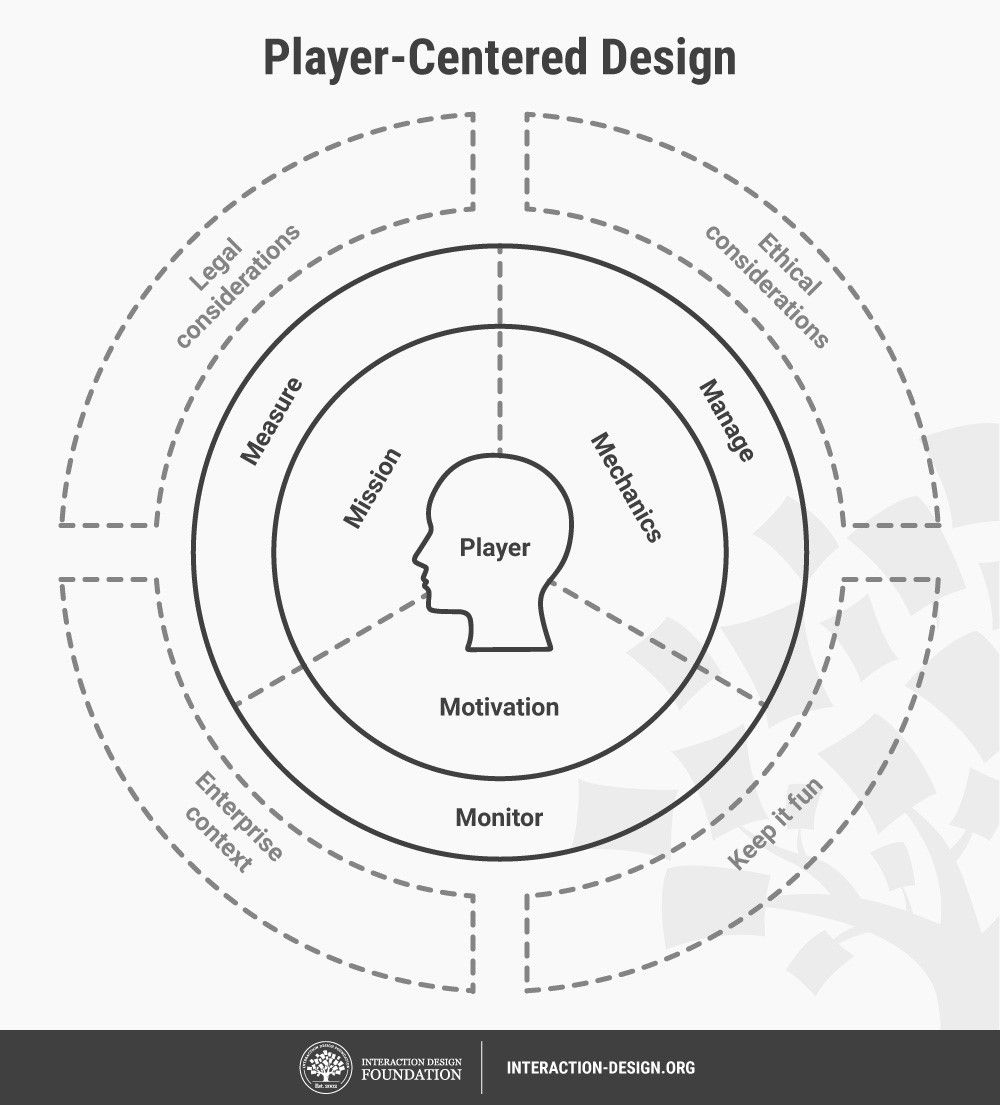
In player-centered design, the player should be the first consideration in everything you do. As a researcher, you create a bridge between the designers and the player through your key research.
© Interaction Design Foundation, CC BY-SA 4.0
Mission and Manage
What is the mission? Why do you or your client want to implement gamification features? The mission could be to increase engagement in a language learning app like Duolingo. It could be to motivate a sales team to reach their quarterly targets.
Once you define your mission, you need to manage it. When you manage your mission, you ensure you stay focused on the purpose of your gamification project. You can use the SMART framework for this. SMART is “Specific, Measurable, Actionable, Realistic and Timely.”
Your research will inform the design team on how to achieve the mission and help them to stay on track.
Motivation and Monitor
What makes your players tick? What will motivate them to use your app or reach their targets? In gamification, you must appeal to both the extrinsic and intrinsic motivations of the player.
You also need to monitor the lifecycle of every player. They begin as a rookie, then become a regular, and finally, a master. After this, if your gamification features are not improved or expanded upon, they become tired and bored. You must stay one step ahead and ensure your gamification system keeps them engaged.
As a researcher, you will determine your players’ motivations. You’ll also need to discover at what stage of your players' life cycle.
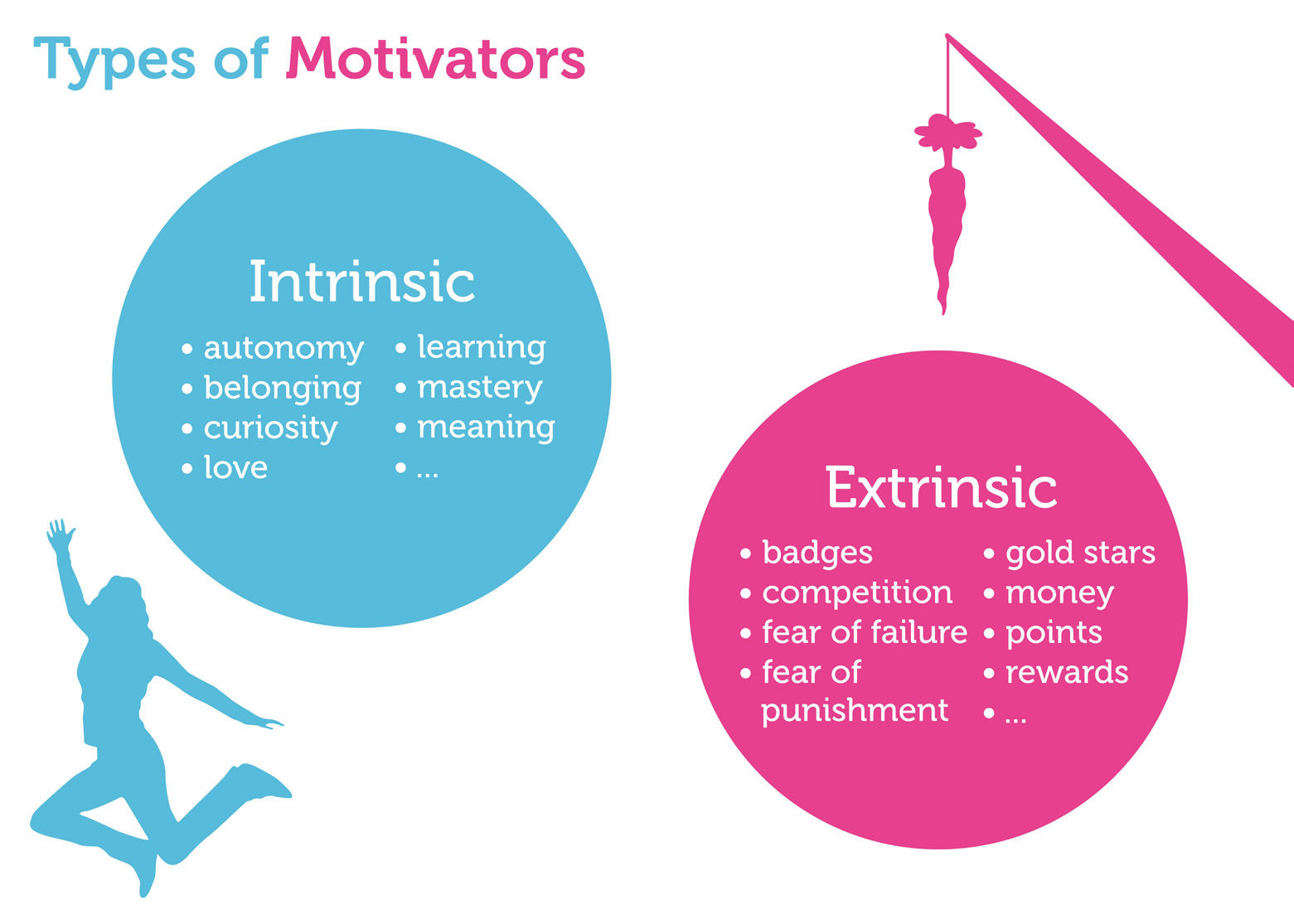
Intrinsic and extrinsic motivators will be critical to your research as you design your gamification system. You are extrinsically motivated when you do something to earn external rewards or outcomes, like when you finish a game task to get a special item or resource. You are intrinsically motivated when you do something just for the pleasure it brings, often fuelled by the satisfaction of competence, autonomy, and relatedness.
© Interaction Design Foundation, CC BY-SA 4.0
Mechanics and Measure
Which mechanics will work best based on the mission, your players’ motivations, and your research? Will a leaderboard work for your sales team? Will achievements keep language learners coming back?
It is extremely important to measure the effectiveness of your gamification project. Not only will this help to keep the project funded, but it will highlight areas for improvement. Some common metrics used to measure effectiveness include engagement, return on investment, quality, and time.
You will conduct usability testing to determine whether the mechanics achieve the mission. After launch, you can also identify areas for improvement through measuring the system’s effectiveness.
What Should You Research?
The areas you choose to research will depend on where you will implement the gamification system. The mission might be to increase engagement levels in a diversity e-learning course. On the other hand, it might be to motivate people to contribute to an online community platform.
The following are a few key areas to focus on:
What Do the Players Need?
This one might seem obvious, but it’s one of the reasons gamification is notoriously challenging to implement. While the mission of the gamification system will be clear, you must balance it against the players' needs. Remember, play is voluntary - your players will not play if forced to.
What Are Your Players’ Pain Points?
What are the specific problems or difficulties your players encounter while they interact with your gamification features? If you understand your players’ pain points, you’ll be able to design a system that works for them. You will also contribute to the success of your mission.
Demographics
Demographic data, including gender, age/generation, and education level, are helpful in gamification. For example, there’s a significant difference in how players from different generations approach their play. However, it is always important to remember there are exceptions to every generalization within a population.
Bartle’s Test of Psychology
A simple measure designed by games writer, professor, and researcher Richard Bartle breaks up how people play games into four simple categories. These categories are the Achiever, the Explorer, the Socializer, and the Killer. Any combination of these types, or even all of them, may exist in your gamification environment. Careful gamification user research will reveal the motivations of your players.
Professional Information and Work Culture
When you develop a gamification system for a business or workplace, it is beneficial to capture professional information. This information will help put your gamification into a business context to ensure you meet the player's needs. Corporate culture also has a strong influence on how players will approach a gamification project. For example, a sales team with a competitive work culture may respond better to leaderboards than a customer experience team with a purpose-driven culture.
Research Methods
Gamification user research employs many user research methods. As a gamification user researcher, you will benefit from understanding a range of methods. If your user research knowledge is varied, you can select the right methods for each situation.
For example, if you want to discover why none of your players are spending their experience points, qualitative research may reveal more than quantitative research. Alternatively, if you want to understand the categories of your players, quantitative research will help you to gather the data.
Some methods include:
Qualitative and Quantitative Research
We use qualitative research to observe and talk with players in smaller groups to gain a deeper understanding of them. Qualitative research will help you discover how players feel, act, and think, and this will lead to better designs.
We use quantitative research to study people's attitudes and behaviors through data collection. Techniques include surveys and questionnaires. Quantitative research will give you accurate information about people in different situations. This way, the information you acquire is fair and unbiased.
Attitudinal and Behavioral Approaches
We use the attitudinal approach to determine what users think and feel about a design. This research helps you understand why users have these thoughts and feelings and how they affect their decisions.
We use the behavioral approach to observe and understand how people use a design. This type of research helps you discover the habits and patterns of people's decision-making in real-life or controlled settings.
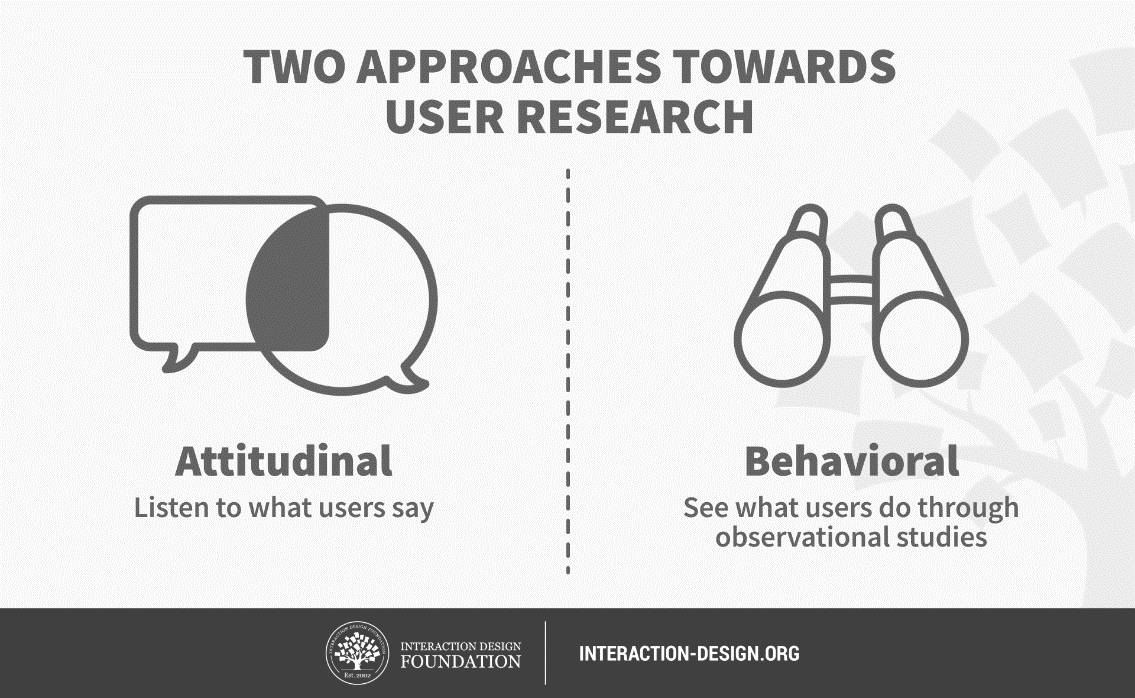
Gamification user research employs both attitudinal and behavioral approaches. A combination of these approaches will give you relevant and actionable information.
© Interaction Design Foundation, CC BY-SA 4.0
Research Techniques
Some research techniques you may use are:
Contextual inquiries – It's helpful to talk to your players while they use your gamification features. You visit your players in their usual work or home environment and ask them questions during contextual inquiries.
Diary studies – Ask your players to record their daily interactions with the gamification system.
Surveys/Questionnaires – Use surveys and questionnaires to gather information about what your players like, how they act, and what they think. Surveys and questionnaires help you understand what your players need and if they are happy with your gamification features.
Player Personas
Personas are simplified versions of real players. In gamification design, the design team uses personas to build empathy with their players and focus on their world. The design team’s personas will be built on your research.
A persona is a character that represents the players who will use your gamification system. Personas help the designer better understand what players want, how they act, and what they want to achieve. Your research will inform the creation of this persona or multiple personas.
When you create personas, you should always use research on your players and never use assumptions. You must map your players’ needs to your gamification functionality.
You should update your personas throughout the design and implementation processes. Your players’ needs, motivations, and goals may change; personas are essential to communicate this to the design team.
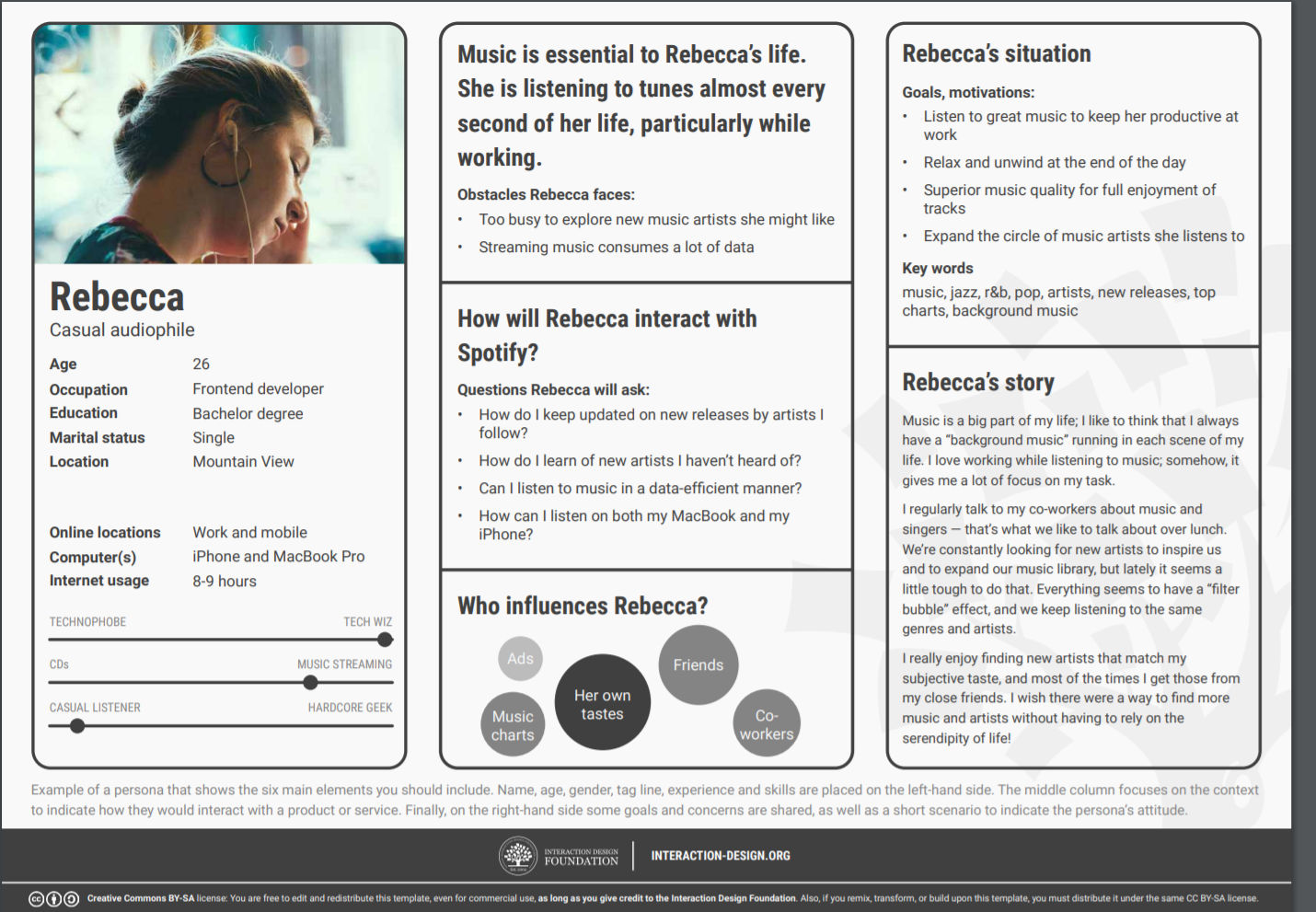
Your personas should contain information relevant to the product you are working on. In this example, the product is Spotify, and the persona is called Rebecca. The persona includes information the design team can refer to throughout the design process. This information will help the design team to empathize with the users and create a product specifically for them.
© Interaction Design Foundation, CC BY-SA 4.0










 Author/Copyright holder: Steve Jurvetson. Copyright terms and licence: CC BY 2.0

 Author/Copyright holder: Pixabay. Copyright terms and licence: CC0