The best projects in gamification focus on the players themselves. Players, unlike users, choose to become involved with your efforts (or they choose not to). As such, even in a corporate setting, you would have to encourage your players to become involved. In order to do so effectively, you would need to know enough about them.
Which is more appetizing?
Imagine we’re taking you out for lunch. We choose a small bistro next to a river where we can sit out in the sun and talk about our next gamification project. The menu arrives… and the descriptions of the meal choices appear on plain paper, in black and white, as follows:
“Hamburger and Fries”, “Sausage in a Bun”, etc.
How appetising does this sound to you ? Not very? That’s OK – we think so, too. Although these descriptions may be accurate, they don’t really tell us very much about the food; they’re not exciting or vivid enough to get us in the mood about eating, are they?
Now let’s try this again. We move to the restaurant next door, and whoever made the menu has produced it with real care and attention. The high-quality, glossy paper menu features a picture of each menu item corresponding with each menu item description. All of the menu choices appear to be mouth-watering. “Hamburger and fries” is not a menu item. Instead, next door’s menu features a “prime Abderdeen Angus homemade burger, with lashings of tomato relish, crisp lettuce, red onions and slices of the perfect local cheese. It’s served with handmade fries from fresh potatoes picked on the farm this morning.”
That’s better isn’t it? We’ll be honest, we started getting hungry just writing that…
The difference between the two menus is that the writer of the first menu appears to show no real understanding of how we like to think about food. We see no care to connect the item to the diner’s mind. For all we know, the hamburger could be a fast-food-style affair—or, perhaps the local value supermarket supply-chains the restaurant and they charge an 800% markup on something you could have grilled at home. The writer of the second menu, however, provides enough information about each menu choice so as to enable us to relate to the food. This makes it so much easier for us to make a decision.
 Author/Copyright holder: BillyTFried. Copyright terms and licence: CC BY-SA 3.0
What makes us hungry is in the details; it’s the ability to connect with the food that we’re envisioning being served.
Know Your Player 101
The deeper the understanding you have about your players, the better you’ll be able to visualize their wants, dreams, needs, etc. from your gamification process. In the beginning, you may have an idea of who they might be; however, the true nature of your ‘playership’ will be enigmatic—a problem for you to address.
“Design’s fundamental role is problem solver.”
—The Fast Company
In order to know a player deep down, we can use a specific tool used within gamification environments known as the Player Persona. Janaki Kumar and Mario Herger developed this tool and showcased it in their book, Gamification at Work: Designing Engaging Business Software. This is a fictional but archetypal player profile that demonstrates the perceived characteristics, needs and behaviours of the target player.
The idea is to:
- Focus on the way the team’s imaginative process develops around the player. It also prevents design creep for the “elastic player”. This happens when you add more features and functions throughout the project and end up with a confusing end-product due to a de-structured approach.
- Enable effective prioritization within the team by ensuring that priorities remain with the player and not the team’s needs.
- Create empathy throughout the design team for the player, and humanize the player’s needs. It’s very useful to be able to keep that in mind in order to ensure you’ll have results players will appreciate.
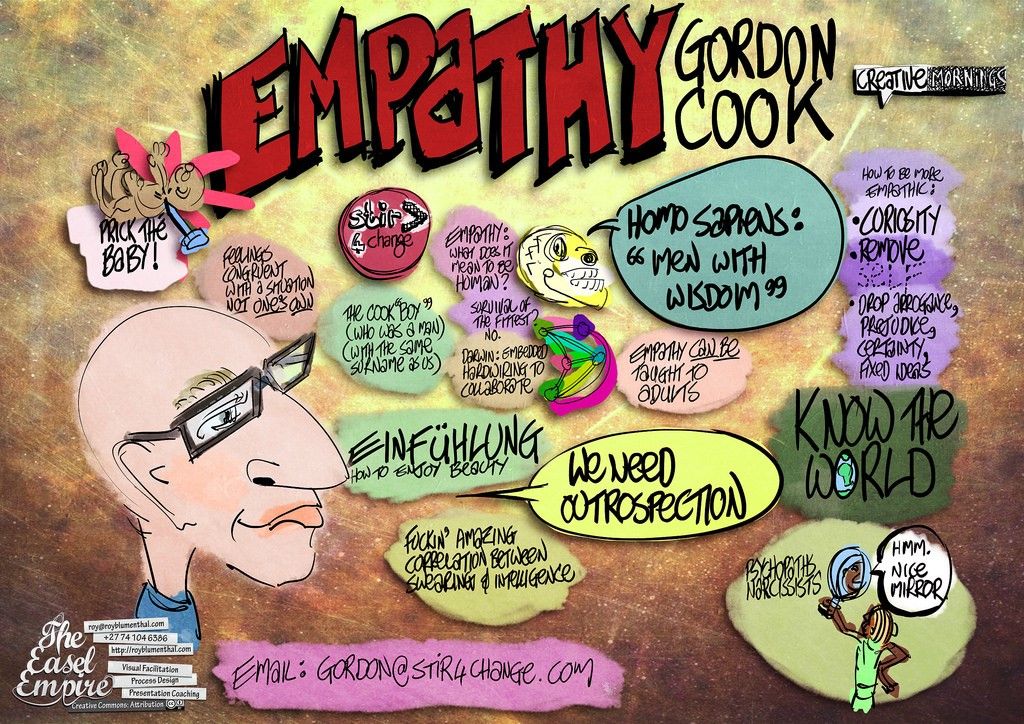 Author/Copyright holder: Roy Blumenthal. Copyright terms and licence: CC BY 2.0
Creating empathy with your players will make it easier to support them through gamification.
The player persona, in the context of business software, will examine a range of factors including:
- The individual’s personal business objectives
- The individual’s experience within the business
- The individual’s aspirations in his/her role and career
- Demographics such as age, gender, education, etc.
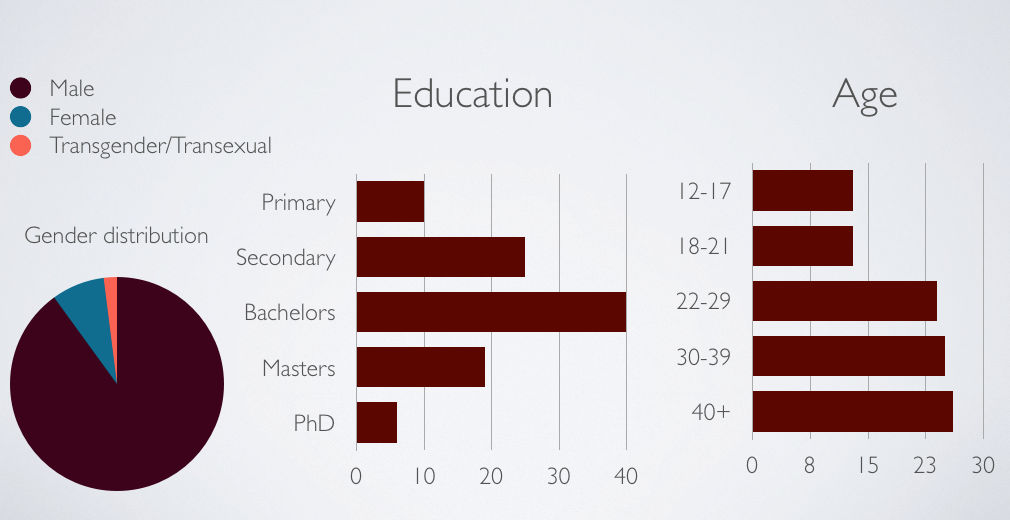 Author/Copyright holder: Manipande. Copyright terms and licence: CC BY-SA 3.0
Demographic data can provide general insights into your player base for gamification projects.
At this point, it’s worth noting that many enterprise applications will target a range of player personas, because many different roles may access the same system in a complex enterprise personnel hierarchy.
You may wish to make some player personas as “primary” (e.g., they will have most contact with the gamified system) and others as “secondary” (or even “supplementary”).
The player persona also provides a quick reference in order to ensure that your project is on track and is likely to meet the players’ needs when it is completed.
The Take Away
Knowing your players plays a vital part in gamification design. You wouldn’t dream of designing a system without knowing the users, would you? It’s exactly the same with gamification projects, and it’s based on understanding that play is a voluntary activity. Getting to know the players will enable you to focus on the player during design, prioritize their needs for design, and create empathy between the design team and the player throughout the entire design and development process.
References & Where to Learn More
Janaki Mythily Kumar and Mario Herger, Gamification at Work: Designing Engaging Business Software, The Interaction Design Foundation, 2014
Hero Image: Author/Copyright holder: Max Slowik. Copyright terms and licence: CC BY 2.0