Games User Research focuses on understanding players' behavior, interactions, and experiences in video games. Researchers use methodologies like observations, interviews, and surveys to gather valuable data. This data helps improve games, remove bugs, and increase player experience.
Steve Bromley, a games user research expert who has worked with companies such as Sony Interactive Entertainment and EA, gives an overview of Games User Research:
The Role of a Games User Researcher
Games user researchers combine principles of psychology, human-computer interaction, and UX design to study how players interact with video games. Their studies uncover potential issues in the game mechanics, user interface, or any other aspect that could negatively affect the player's experience.
Games user researchers work closely with game designers, producers, and the UX team to ensure the game aligns with the designer’s vision and meets the player's expectations.
Researchers analyze the collected data to identify patterns, trends, and potential usability issues. Then, they communicate these findings to the design team in a way that is easy to understand. Their conclusions create empathy between the design team and the players. Researchers also provide actionable recommendations to improve the game's design and enhance the player experience.
Differences between User Research and Games User Research
While games user research and user research are similar, there are a few key differences.
User Needs: Tasks vs Entertainment
User researchers focus on user needs—what users want to achieve, their challenges, etc.
For example, the design team for an e-commerce website creates a mega menu to help users see all product categories at once. However, the research team finds that their users find it challenging to find the products because of the way they are ordered on the menu. The design team incorporates this insight to restructure the navigation. The navigation is a functional element to help users complete a goal, in this case, to find products quickly.
On the other hand, games are a form of entertainment, an art form, like movies. Scriptwriters write movies with the intention of creating an emotional response in the viewer. Game designers do the same but for games. Therefore, in games, user researchers approach their work from the designer’s point of view. Unlike other products where designers rely on user research to decide what to create, game designers begin with a vision, and researchers evaluate if users' experience matches the designers’ vision.
For example, if the purpose of a horror game is to make players feel scared and nervous, the research team’s goal is to find out how the players are feeling. If the players are not “scared enough,” the designer can use research insights to reach their vision.
Difficulty
User researchers ask users, “What difficulties do you encounter while using our platform/product/service?” Designers use this research to remove these difficulties.
However, in games, difficulty improves the experience. It's essential as it keeps players interested while enhancing their skills. As players overcome challenges, they have more fun.
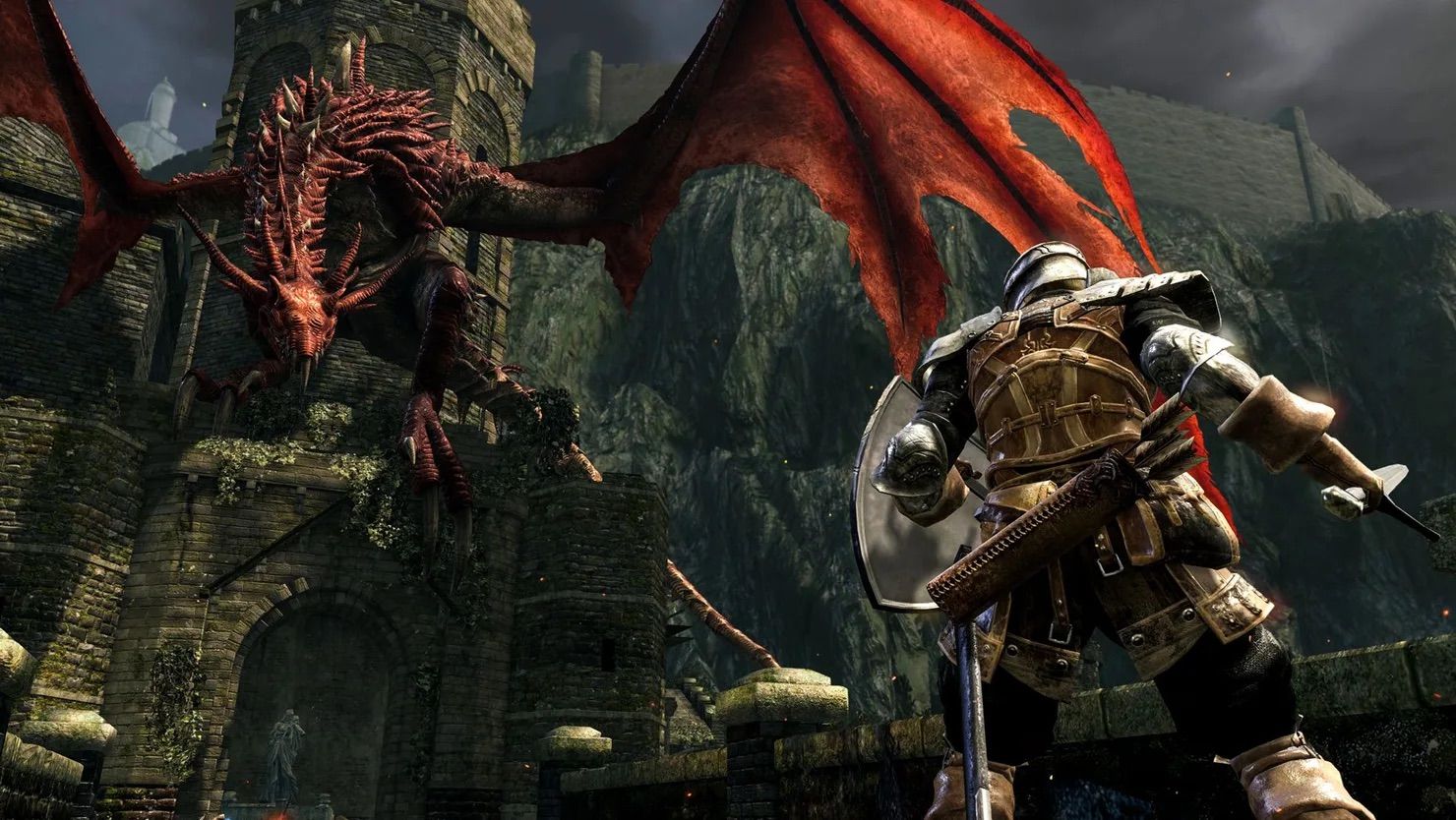
An excellent example of difficulty in games is the popular game series Dark Souls. The Dark Souls games are famous for being incredibly difficult to complete. However, this is what has made them popular. Players enjoy the satisfaction of overcoming the challenges of the game.
© Bandai Namco, Fair Use
Researchers need to identify when difficulty is intentional or accidental:
When difficulty is intentional, it elevates the gaming experience. As players move through the game, they will become bored if it does not get progressively more difficult. As intentional difficulty increases, so does the skill of the player. Equally, If level 5 is easy compared to level 3, this will not meet the players’ expectation of increasing difficulty through the game.
When difficulty is accidental, it reduces the player's enjoyment level. The game does not immerse the player, who may eventually give up. Examples of unintentional difficulty include glitches and bugs, poor balancing, or illogical changes in gameplay.
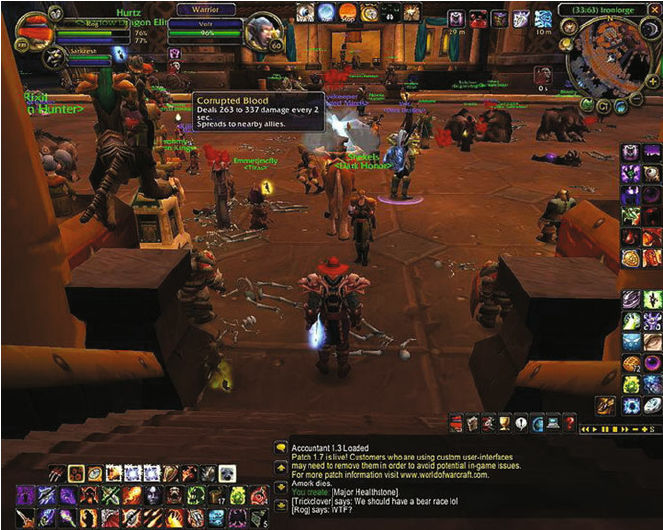
In the massively multiplayer online game World of Warcraft, there was an incident known as the “Corrupted Blood Incident.” The game's developers introduced a new enemy who cast a spell on players, giving them a contagious disease. Only when a player defeated the enemy was the disease healed. Many players left the area where the enemy existed without beating it and spread the disease throughout the game. This unintended consequence resulted in many players having difficulty playing the game. Their characters would get infected, die, respawn, and then catch the disease again, repeating the cycle—an example of accidental difficulty.
© Blizzard Entertainment, Fair Use
Secrecy
Game researchers need to understand secrecy's crucial role in game development. Marketing and advertising are critical to a game’s commercial success. Game studios usually protect their games to prevent leaks that could disrupt marketing strategies.
Secrecy directly impacts research methods, especially those involving the public. Some research methods, like public surveys, are not usable when you must preserve secrecy. Therefore, the research methods in games user research can differ from those used in other industries.
Why Is Games User Research Important?
“Games user researchers bring structure to the playtesting process so that game developers are confident that the game they’re making is experienced by players in the way they want them to be experiencing it.”
– Steve Bromley, Games user research expert
The video game industry is highly competitive. Studios aim to create games that captivate players and keep them engaged so they don’t switch to a competitor’s game. Games user researchers help achieve this by identifying issues to fix throughout development.
Steve Bromley explains the concept of playtesting and why applying user research practices to the process is important:
Let’s look at a simple scenario: a game studio is building a game. They know what type of game they want to make and begin developing it.
1. What Happens If You Don’t Use Games User Research?
Only the game studio employees play the game throughout the development process. Since they’ve built it, they are biased and only identify and fix issues they find themselves. This approach saves them time and money and means they can launch the game sooner.
When the game launches, they look at the user feedback and discover their game is filled with bugs. Players also find the game too complicated and don’t understand how to play. Ultimately, the game doesn't sell many copies, and the industry considers it a failure.
2. What Happens If You Do Use Games User Research?
Throughout the development process, the game studio employs user research. Since the users testing the game are new to it, they highlight and identify many issues the studio hadn’t noticed.
Using these findings, they fix the issues and continue to employ user research to identify and fix further issues. This approach adds extra time to the development process and costs money, but the studio feels more confident their game will succeed.
When the game launches, the feedback is positive, and the players enjoy the game. Ultimately, the game sells many copies, and the industry considers it successful.
Games User Research Sets You Up for Success
The process of game design is, of course, much more complex than this. However, these scenarios show how vital games user research is to game development.
Researchers can provide important information to guide the design team when they understand the players' preferences and behaviors. This results in better game experiences, higher player retention rates, and commercially successful games.
Games User Research Methods
Games user researchers use many of the same user research methods employed in other industries, such as observation, interviews, surveys and analytics.
Once the development team has a working version or demo of the game, researchers will do most of their user research through playtesting. Playtesting is where users play the game, and researchers collect data using qualitative and quantitative approaches.
Researchers conduct playtesting with one-to-one or small groups and large groups of 20+ players (also known as mass playtesting or multi-seat testing).
Typically, researchers employ qualitative methods for small groups and quantitative methods for mass playtesting.
Qualitative Research
Researchers use qualitative research to observe and talk with players in smaller groups to understand them better. Qualitative research helps us discover how players feel, act, and think, leading to better designs.
Qualitative research methods include:
User interviews – It's helpful to talk to players throughout game development. In the ideation phase, you can understand their behaviors and preferences. Later on, through playtesting, you can ask about their experience with the game and how it makes them feel.
Observation – Watch your players as they play. Record their choices, successes, and struggles.
Diary Studies – Participants record their thoughts, feelings, and experiences. This approach allows you to gain insights into users' experiences over a period of time.
Quantitative Research
Researchers use quantitative research to study people's attitudes and behaviors based on statistical data. Due to the importance of secrecy in games, quantitative research methods like public surveys may not be available during game development. This research method is more likely to result in someone leaking the game than if you work directly with a smaller group of users.
However, games have many variables and require many users to test them. For this reason, game studios employ mass playtesting, where dozens of players test the game simultaneously. Given these large user groups, researchers can use quantitative methods to collect data.
Quantitative research methods include:
Analytics – Monitor players' actions while they play. Examples of analytics include:
Time spent playing.
How many times players had to restart a level.
How many items players have collected.
Surveys and Questionnaires – Gather information from players after they have played the game. Use carefully crafted questions to understand how players felt and what they experienced when they played the game.
When Does Games User Research Begin?
Researchers conduct research throughout the whole game development process. It is essential to keep the bridge between designers and players strong. This empathy avoids scenarios where designers build features and find out too late that players don’t like them.
Ideation
In the ideation phase, game designers want to understand:
Do users find this idea fun?
Is it worth building a game from this idea?
Does this idea give users the emotional response and reaction we want?
To answer these questions, researchers speak to target users of the game. Since secrecy is crucial in game design, researchers typically use qualitative methods such as interviews and diary studies. This research helps design teams create mental models of their target users to understand their expectations and how they think.
For example, a design team plans to build a platform game like Super Mario. Before they begin development, they interview users who love platform games. Through this research, they discover players prefer platform games with strong narratives. When the character grows, learns, and changes over the story's progression, it makes it worth investing their time in the game.
Pre-production
As soon as designers have a playable demo, they playtest it. The players will reveal if the basics of the game are fun.
At this stage, researchers can begin using the observation method. By watching how users play and approach the game, they can understand essential information to inform game development.
For example, in the platform game, researchers might discover that players try to explore areas of the level that don’t exist. This discovery can translate into a design element where the team includes secret and hidden areas to add further engagement and player retention to the game.
Production
The production phase is where studios build the whole game. Game studios conduct playtesting regularly to ensure that the game meets the designers' vision and that players enjoy it.
Since mass testing is now possible, researchers can employ quantitative methods like analytics to understand where designers can improve the game.
For example, players may spend more time on a particular level than others. These findings show that the level's objectives need to be clearer and that it should be easier for players to achieve them.
Post-Production
During post-production, studios balance and tune the game. Researchers gather much information from playtests at this stage to inform final design decisions.
For example, a game studio builds a game where you can play multiple characters. The majority of players are choosing one character in particular. Researchers discover that this is because, compared to the other characters, this specific character is much stronger. These findings inform the design team that they must refine this character to make them equally powerful as the other characters.
Post-Launch
Before the widespread use of the internet, video game developers could not update games after releasing them. Occasionally, developers released updated versions of popular games with improvements, but this was rare.
Most game developers now have the option to update their games after launch. Since secrecy is no longer a concern, researchers can use quantitative methods such as public surveys and questionnaires to gather vast amounts of player feedback and data. With this new data, studios can fix previously undiscovered issues and improve the player experience.
Some game developers also employ early access. Early access is when developers release a game unfinished before they complete development. Indie developers and crowdfunded games often use this tactic to fund the game's completion. Early access contradicts the need for secrecy in game development but ultimately can be more beneficial to some game studios.
Early access is a particularly effective way to gather study participants. Since players are usually fans of the game genre or developer, they will happily play an unfinished game.
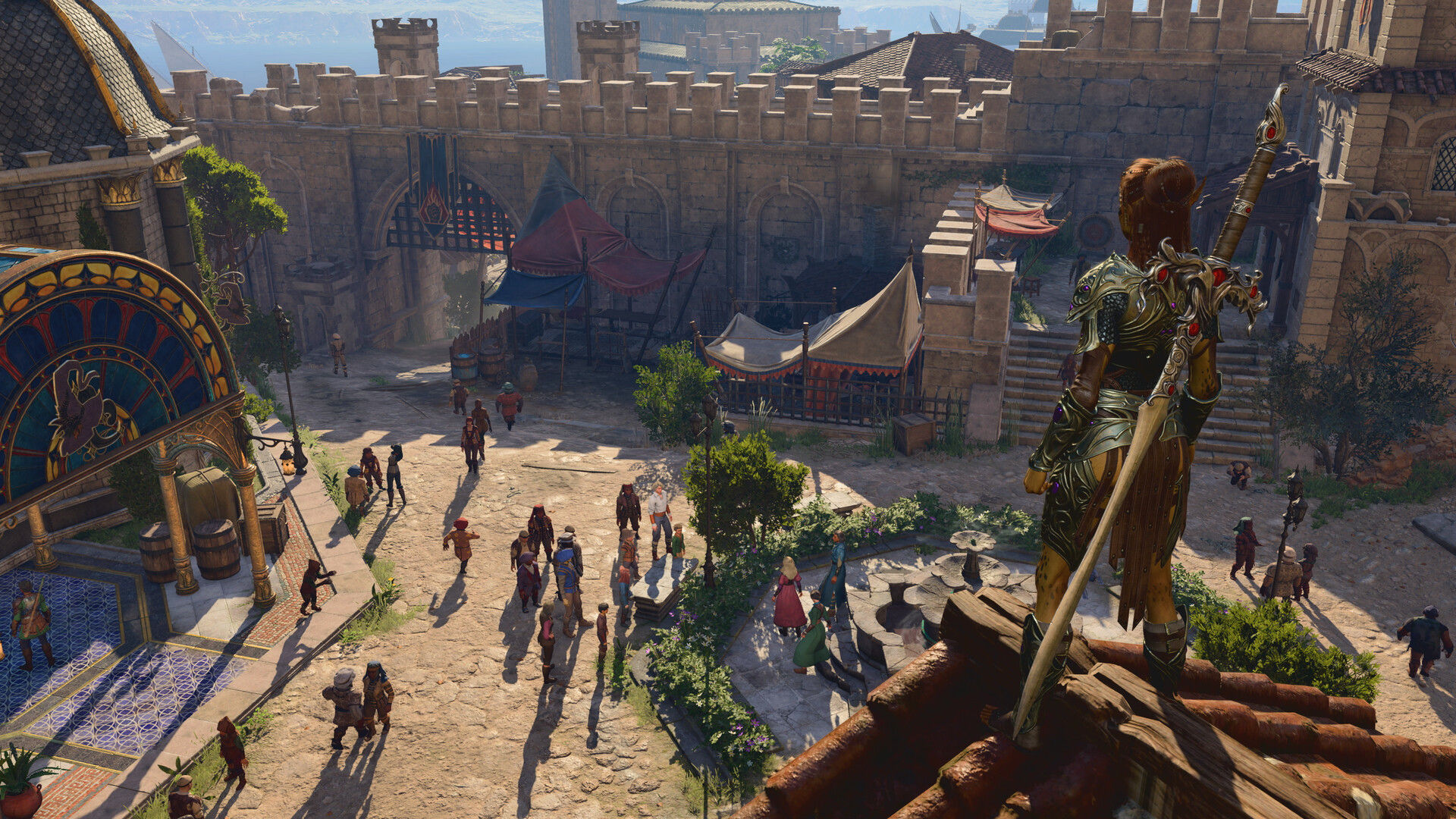
An example of a successful early access release is the role-playing game Baldur’s Gate 3. Developer Larian Studios released the early access version of the game in October 2020. Baldur’s Gate 3 is a sprawling, incredibly complex game with many paths players can take. The early access period lasted almost three years until Larian Studios released the game in September 2023. Early access allowed Larian Studios to collect vast user feedback to improve the game. Baldur’s Gate 3 became one of the best-selling, top-rated games of 2023.
© Larian Studios, Fair Use
How to Approach Games User Research
Researchers use a 4-step process to carry out their study.
1. Plan
The first step in the research process is to define the objectives—what is the purpose of the research? What do you want to find out? Talk to the game designers, producers, and UX designers to understand what they want to discover.
Researchers may also read through previous research and analysis to understand what others have uncovered. It is also essential they play the current version of the game, as well as similar games from competitors.
Armed with this knowledge, researchers can answer the following questions:
What goals do we want to reach with our research, and what do we want to learn from it?
What plan do we have to carry out the study?
When are we scheduling the study, and who are our targeted participants?
Which stakeholders will benefit from the study results?
Those working individually or on a small design team may already know the purpose of their research. However, anyone conducting research must ask themselves these questions to ensure they get the data they need.
2. Prepare
Depending on the research objectives and the game development stage, researchers choose the appropriate research method(s).
If the research aims to understand how a game level makes your players feel, they may use a qualitative method like user interviews. On the other hand, they might use a quantitative method like analytics to learn how long players spend on a certain level.
Researchers also need to gather research participants. Design consultancy IDEO's uses a method to recruit “Extremes” and “Mainstreams.” This method enables researchers to cover the entire spectrum of the target group.
Extremes are users who, for example:
Have minimal gaming experience.
Prefer other genres.
If these participants enjoy the game, most other players will, too.
If you use the extremes and mainstreams methods, remember to include the mainstream users as well. Mainstream users are the ones who represent the majority of your target group.
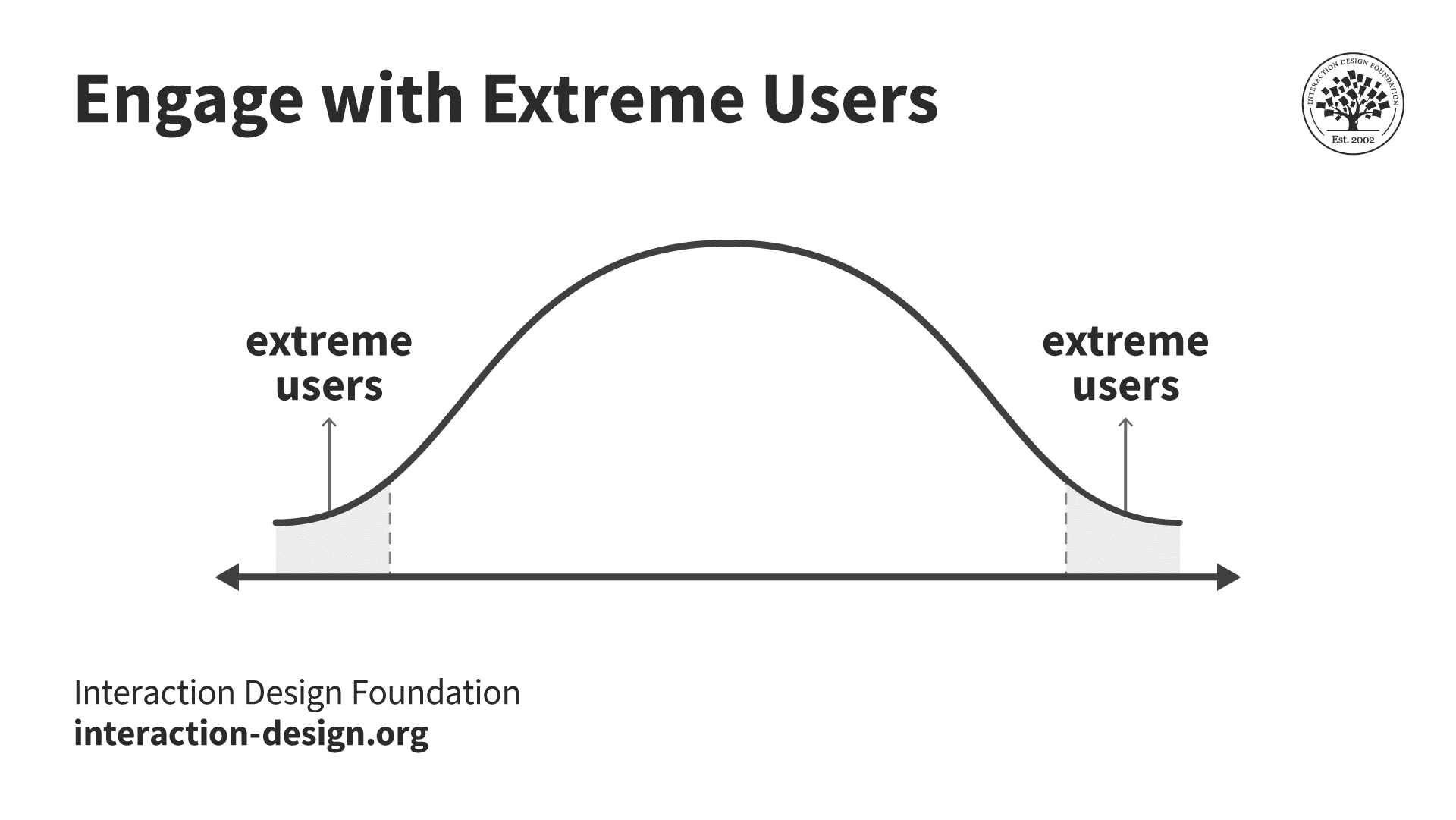
Always include a small number of extreme users in your study. They are more likely to highlight issues only newcomers will encounter with your game.
© Interaction Design Foundation, CC BY-SA 4.0
3. Collect
Many researchers also act as moderators when using qualitative research methods like interviews or observations. Moderators help their research participants feel comfortable. A solid ability to empathize and be inquisitive is beneficial to being a moderator.
4. Action
Once researchers have gathered their data, they analyze it and present their findings. How researchers present their data will depend on the research purpose and methods. However, it is essential to present data in a way the design and development teams can easily understand.