15 Guiding Principles for UX Researchers

• 8 min read

854 Shares

We’ve found that a lot of first time UX researchers have similar questions and concerns when they start working in UX design. So, we thought we’d round up and tackle some of the most common questions to form a set of useful principles for UX researchers. Of course, this isn’t a complete guide to UX research (there are some fairly weighty tomes out there which do that) but it’s a good starting place to answer some of those nagging UX questions.

Mix It Up

The best researchers don’t use a single tool to do their research. They take a host of different methods, tools, etc. and then mix them together. This gives you a much greater chance of finding the actual issues and then being able to fix them.

It’s Easier To Find “You Got it Wrong”

Research can quickly help us work out when we’ve got something wrong. If you add a new feature and your first five research participants hate it – there’s probably a problem. However, a hundred people can use something without comment and it may still not work.

You Can’t Standardize Sample Sizes For All Your Research

Sorry, but sample sizes need to be calculated based on the risks you’re willing to assume in any given piece of research and based on the type of research you’re carrying out. Don’t try and use a single size for all of your research – it’s a flawed approach.

Testing With Just One User is Not Pointless

Imagine you’re creating a new word-processing package and you sit down with your first user and they try to save a document and you see that the process is broken. How many more users do you need to test that with? None, right? Some problems are universal and it only takes one user to point them out.

Author/Copyright holder: Luca Mascaro. Copyright terms and licence: CC BY-SA 2.0

Increase Sample Sizes for Better Accuracy

The bigger your sample size, the more likely your data is to be accurate. There’s a general rule of thumb that says to double the accuracy you have to increase the sample size by a factor of four!

Randomizing Can Overcome Research Design Flaws

If you can change the order of questions, responses, process flow, etc. then do it. The more random the path you take – the more likely it is that you’re going to get consistency and minimize experimental design flaws.

Research Results Belong to No-One

All that data you’re collecting? It’s not yours. It’s not your team’s. It’s the company’s. The more you get your user experience research out into the company as a whole – the more likely it is that your company will start focusing on user needs as a priority. Don’t create a UX silo in your business; let the data flow and reap the rewards.

Scale Ratings In Questions Aren’t That Important

Sure, there are plenty of arguments about whether an x-point scale is more accurate than a y-point scale and whether you should have a neutral rating or not. None of them are important enough to spend more than 5 minutes worrying over – pick a scale and do the research already.

Participants Need to Reflect Personas

Not everyone is a user or even likely user of your product. Not every user fits your target market. Get your user personas out and recruit to the persona – that way you have the most chance of getting results that actually work for your target users. You can’t please all the people all of the time and UX professionals shouldn’t even try to.
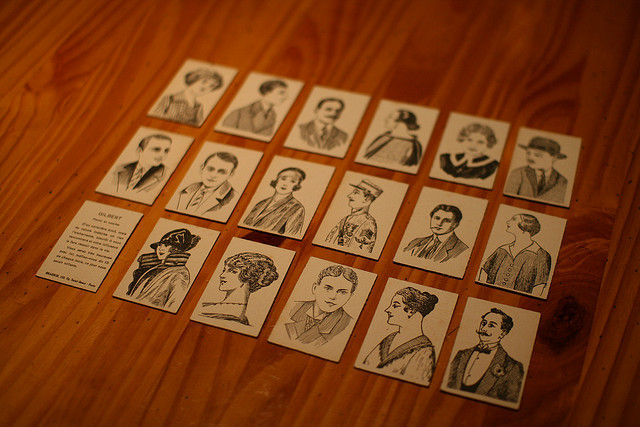
Author/Copyright holder: Nicolas Nova. Copyright terms and licence: CC BY 2.0

What They Say vs. What They Do

It’s often said that what people do is what matters and not what they say. We don’t agree. You need to measure both what people say and what they do. Then you can explore the reasons for the disconnection between the two positions. Sometimes people really do want what they say they want and sometimes they don’t. Knowing when those things are true matters to the user experience.

Keep Growing Your Toolkit

There are going to be new ideas and methods floating out there for a long time to come. Don’t dismiss them without trying them. Even if they suck, you’ll have learned that they suck rather than assuming it. In many cases even the worst tools can offer reasonable insights if they’re adapted properly.

Usability – A Polite Fiction?

It is impossible to measure usability. What we can measure is when something is not usable. Those measures are fluid – they change from product to product, user to user and UX researcher to UX researcher. That’s OK, finding problems is part of what research is about. We already know it’s much harder to show there is no problem than to find a problem.

Keep Reports Short

Sure, the method was amazing and innovative and the results were incredible but… you don’t need to write a book to get that across. If you want your research to have wide value in the organization keep your reports to a minimum. However, don’t let that stop you from creating more detailed work as a learning tool within your own environment or from writing that book if you intend to publish it commercially.

Be Aware that Observers Observe Differently

There’s a reason police treat eyewitness testimony with a certain healthy scepticism. People see what they’re going to see and rarely will witnesses see the same things. That’s not a major problem; in fact, it means that adding observers may increase the overall success of research – if you all identify different problems, that’s better for the users (as long as you intend to fix all those problems, of course).

And don’t forget that the act of observation may also change the results that you get.

Cults of Personality Suck

There are a ton of UX gurus out there. Some will be highly trendy today and treated with contempt tomorrow or vice-versa. There’s no one “right” way to be a UX researcher; ignore the name attached to UX ideas and focus on the underlying idea instead and treat everything with a healthy dose of scepticism and interest.

Header Image: Author/Copyright holder: Zeke Franco. Copyright terms and licence: CC BY-NC-ND 2.0

Learn More in This Course:

AI for Designers

12 days
13 % booked
View Course

What You Should Read Next

  • Read full article
    What is Interaction Design? - Article hero image
    Interaction Design Foundation logo

    What is Interaction Design?

    Interaction design is an important component within the giant umbrella of user experience (UX) design. In this article, we’ll explain what interaction design is, some useful models of interaction design, as well as briefly describe what an interaction designer usually does.A simple and useful unders

    Social shares
    1.5k
    Published
    Read Article
  • Read full article
    Apple’s Product Development Process – Inside the World’s Greatest Design Organization - Article hero image
    Interaction Design Foundation logo

    Apple’s Product Development Process – Inside the World’s Greatest Design Organization

    Apple’s Product Development Process may be one of the most successful design processes ever implemented. With a valuation that exceeds $2 trillion, there’s a lot that designers can learn from Apple and introduce into their own design environments.Apple is a notoriously secretive business. In Steve J

    Social shares
    1.4k
    Published
    Read Article
  • Read full article
    Shneiderman’s Eight Golden Rules Will Help You Design Better Interfaces - Article hero image
    Interaction Design Foundation logo

    Shneiderman’s Eight Golden Rules Will Help You Design Better Interfaces

    Follow Ben Shneiderman’s 'Eight Golden Rules of Interface Design' if you want to design great, productive and frustration-free user interfaces. Apple, Google and Microsoft are among some of the highly successful companies whose well-designed products reflect Shneiderman’s rules. The characteristics

    Social shares
    1.4k
    Published
    Read Article
  • Read full article
    How to Change Your Career from Graphic Design to UX Design - Article hero image
    Interaction Design Foundation logo

    How to Change Your Career from Graphic Design to UX Design

    If there’s an occupation that is 100% linked with the public’s idea of what design is all about, it’s graphic design. From the familiar golden arches of the McDonald’s brand to the typography and colors of movie posters, graphic designers create some of the most iconic and ubiquitous designs around

    Social shares
    1.4k
    Published
    Read Article
  • Read full article
    The Grid System: Building a Solid Design Layout - Article hero image
    Interaction Design Foundation logo

    The Grid System: Building a Solid Design Layout

    Now that we’ve seen some grids at work in the Rule of Thirds article, let’s examine them a little more deeply. As a concept that deals so fundamentally with the fabric and background of our work as designers, it’s easy to overlook the power of grids and think more about the elements we want to creat

    Social shares
    1.4k
    Published
    Read Article
  • Read full article
    The Key Elements & Principles of Visual Design - Article hero image
    Interaction Design Foundation logo

    The Key Elements & Principles of Visual Design

    Visual design is about creating and making the general aesthetics of a product consistent. To create the aesthetic style of a website or app, we work with fundamental elements of visual design, arranging them according to principles of design. These elements and principles together form the building

    Social shares
    1.4k
    Published
    Read Article
  • Read full article
    The Principles of Service Design Thinking - Building Better Services - Article hero image
    Interaction Design Foundation logo

    The Principles of Service Design Thinking - Building Better Services

    Service design is all about taking a service and making it meet the user’s and customer’s needs for that service. It can be used to improve an existing service or to create a new service from scratch. In order to adapt to service design, a UX designer will need to understand the basic principles of

    Social shares
    1.4k
    Published
    Read Article
  • Read full article
    A Simple Introduction to Lean UX - Article hero image
    Interaction Design Foundation logo

    A Simple Introduction to Lean UX

    Lean UX is an incredibly useful technique when working on projects where the Agile development method is used. Traditional UX techniques often don’t work when development is conducted in rapid bursts – there’s not enough time to deliver UX in the same way. Fundamentally Lean UX and other forms of UX

    Social shares
    1.3k
    Published
    Read Article
  • Read full article
    Dieter Rams: 10 Timeless Commandments for Good Design - Article hero image
    Interaction Design Foundation logo

    Dieter Rams: 10 Timeless Commandments for Good Design

    Let’s pay a virtual visit to a famous industrial designer’s workshop. By examining the principles of his winning approach, we can incorporate vital elements into our designs in the “less is more” age.As user experience practitioners, most of us have worked with Nielsen and Molich’s 10 heuristics or

    Social shares
    1.3k
    Published
    Read Article
  • Read full article
    The 7 Factors that Influence User Experience - Article hero image
    Interaction Design Foundation logo

    The 7 Factors that Influence User Experience

    User Experience (UX) is critical to the success or failure of a product in the market but what do we mean by UX? All too often UX is confused with usability which describes to some extent how easy a product is to use and it is true that UX as a discipline began with usability – however, UX has grown

    Social shares
    1.3k
    Published
    Read Article

Top Articles

Top Topic Definitions

Feel Stuck?
Want Better Job Options?

AI is replacing jobs everywhere, yet design jobs are booming with a projected 45% job growth. With design skills, you can create products and services people love. More love means more impact and greater salary potential.

At IxDF, we help you from your first course to your next job, all in one place.

See How Design Skills Turn Into Job Options
Privacy Settings
By using this site, you accept our Cookie Policy and Terms of Use.
Customize
Accept all

Be the One Who Inspires

People remember who shares great ideas.

Share on:

Academic Credibility — On Autopilot

Don't waste time googling citation formats. Just copy, paste and look legit in seconds.

Feel Stuck? Want Freedom?

Join 326,020+ designers who get one powerful email each week. Learn to design a life you love.

Next email in
1
day
15
hrs
37
mins
56
secs

Free forever. No spam. Unsubscribe anytime.