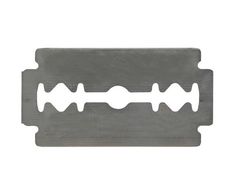
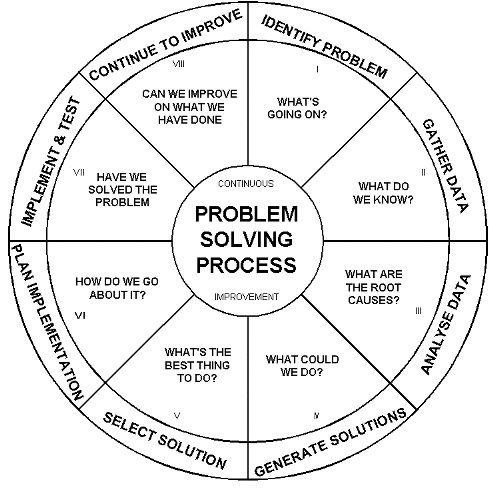
Occam's Razor is a problem-solving principle. It suggests the simplest explanation or solution—with the fewest assumptions—is often most likely the right one. It encourages designers to take out unnecessary complexity and focus on a design’s essential elements. Designers apply it to make intuitive and efficient user interfaces.

Occam's Razor takes its name from the 14th-century philosopher William of Ockham.
© Chris Simms, Fair Use
Occam's Razor Helps Cut to the Chase
The 14th-century philosopher William of Ockham suggested that the simplest explanation or solution is often the one that’s most accurate. Because of its focus on direct simplicity and minimal assumptions, it’s been a driving force among a wide range of problem-solvers for centuries.
More precisely, this philosophical principle advises decision-makers to select the simplest explanation or solution when they face multiple options. An essential point behind the approach to choose the most straightforward solution is that thinkers should avoid making unnecessary assumptions. William of Ockham never explicitly formulated this principle. Even so, he frequently used a similar idea in his philosophical and theological work. The real essence of Occam's Razor goes back to the concept of "Pluralitas non est ponenda sine necessitate." That Latin sentence means "Plurality should not be posited without necessity."

Occam’s Razor—clean simplicity in the modern age.
© Craig Barber, Fair Use
How to Apply Occam's Razor: UX Design
Occam's Razor plays a crucial role in user experience (UX) design and—more visibly—in user interface (UI) design. Because it’s about promoting user-friendliness and simplification, it’s a powerful asset in any UX design process—and the digital design of products or services. When designers work to create products such as web pages and mobile apps, they strive to stick to the principle of “sufficient to explain.” That means they ensure that their designs are intuitive, efficient and user-centric. From web design to app creation, Occam's Razor therefore helps prevent—or eliminate—unnecessary features. In its approach to ensure a well-solved problem, it enables designers to minimize cognitive overload and enhance the overall user experience.
Occam's Razor is a particularly powerful principle—and one that designers leverage to produce the following:
1. Streamlined Navigation
One of the key areas where Occam's Razor comes into play is for designers to create streamlined navigation systems. So, designers should avoid cluttered menus and convoluted navigation paths. Then, they can help to create interfaces that let users find what they need to effortlessly. Some well-known brands—such as Google and Airbnb—truly excel in this aspect. These brands use clean and straightforward interfaces that make ease of navigation a real priority.

Google’s iconic clean and minimalist look embodies the principle of streamlining.
© Google, Fair Use
2. Minimalist Visuals
Occam's Razor extends beyond navigation—it has a direct influence on the aesthetic aspects of visual design in digital products. When UX designers take minimalist design principles close to heart, they can focus on truly essential elements. Meanwhile, they reduce unnecessary visual noise. Brands like Apple are renowned for their minimalist approach. Apple creates elegant and user-friendly experiences—ones that prioritize core features and functionalities.

Apple’s iconic look is geared around minimalism and classy user-friendliness.
© Apple, Fair Use
3. Clear and Concise Messaging
Effective communication is vital if a designer wants to make a seamless user experience. One central part of Occam's Razor in design is how it puts an emphasis on clear and concise messaging. When designers apply it—and do it well—they make sure that users understand the purpose and functionality of an interface effortlessly. Designers should use straightforward language, not use jargon and give concise instructions—this makes sure that users understand and interact with their products seamlessly.

Airbnb gets the point across concisely in its highly intuitive design.
© Airbnb, Fair Use
4. Streamlined Forms and Inputs
Online forms are an integral part of many digital experiences. Occam's Razor can guide designers to create streamlined and user-friendly forms. Designers minimize the number of form fields, pre-fill information when possible and give helpful input validation. When they do this, they can lessen the amount of friction. They can also make completion rates rise.
The principle of Occam's Razor highlights how important it is to make communication straightforward and succinct. If designers prevent or remove cluttered menus and complex navigation routes—they can develop interfaces that empower users to easily locate the information they need. Typeform and similar platforms have streamlined intricate forms that provide seamless and user-friendly interfaces.

Simple forms enable users to get information across fast and with minimum work.
© Paul Capcan, Fair Use
5. Reduction of Cognitive Load
A core part of the advice in Occam's Razor is that designers minimize their users’ cognitive load. So, designers should be sure they take out unneeded complex things and organize content and features in a logical and efficient way. This they can do if they apply thoughtful organization, make the information architecture efficient, create a clear hierarchy and include intuitive interaction patterns. Designers can tap into users' existing mental models, lessen the learning curve and give usability a boost if they use familiar icons and standard conventions.
6. Consistent Design Elements
An Occam’s Razor design generally features a uniformity in colors, fonts and icons throughout the interface. This helps keep things coherent. It also helps in the user flow and overall user and customer experience. What’s more, when designers apply consistent design patterns and standards across an interface, they line up with Occam’s Razor in terms of how it promotes familiarity and predictability.
7. Progressive Disclosure
The Occam’s Razor principle recommends that information in interfaces should just be revealed when users need it. For example, when users access one section of an onboarding screen, they only encounter the information necessary for that part of it. This doesn’t just reduce clutter and cognitive load—it also matches users’ expectations as they move forward.
8. Error Prevention and Handling
Designers can stay one step ahead of and prevent errors through clear and concise instructions with this design principle. This reduces the need for troubleshooting—and it can take the form of—for example—a calendar date picker for booking tickets.

Calendar widget for selecting travel dates.
© UXPlanet.org, Fair Use
9. Clear Calls To Action
Designers should use clear and concise calls to action (CTAs) that guide users toward their intended actions without ambiguity. This is something that supports Occam's Razor—as it streamlines the user's decision-making process on the way to the goals they want to achieve.

PayPal’s simple and straightforward look helps users check out with a clear sense of trust and security.
© Radiant Digital, Fair Use
Tips to Successfully Use Occam's Razor in UX Design
Designers should incorporate these tips into the design process so that they apply Occam's Razor effectively. When they use it as one of their centermost design tools, they can help create exceptional user experiences, ones that prioritize simplicity and effectiveness.
1. Know the users: Designers should do their user research thoroughly so they can understand the target audience's needs, goals—and pain points. This knowledge will help them design with simplicity and relevance in mind.
2. Prioritize clarity: They need to make sure that messaging and instructions are clear, concise and easily understandable. It’s best to use plain language and avoid any unneeded technical jargon. Clear communication lightens the cognitive load. Plus, it lets users navigate the interface more efficiently.
3. Prioritize essential elements: Spot the core features and functionalities that run in line with the users' goals. Focus on these elements and eliminate any extraneous features that could distract or confuse users.
4. Embrace minimalism: Strive for simplicity in visual design, typography and color schemes. Use white space strategically and take out any unnecessary visual elements to create a clean and uncluttered interface.
5. Simplify navigation: Streamline menus and group similar items for easy navigation. Cut down the number of steps users need to follow to complete tasks. What’s more, guide users through a clear and intuitive information architecture.
6. Test and iterate: Continuously test designs with real users. Get the feedback collected and find areas for improvement. Usability testing is a vital ingredient in the design process to see how users interact with a prototype or product. So, use insights from user testing to iterate with design team members, refine and simplify designs further.

The best designs speak clearly to users.
© 62 Management, Fair Use
Occam's Razor: Risks and Considerations
While Occam's Razor is a valuable principle in UX design, it's important to consider potential risks and limitations:
● Oversimplification
If a designer over-simplifies an interface, it can lead to a lack of necessary functionality or usability issues. It's crucial to strike a balance between simplicity and meeting user needs. Continuously collect that all-important user feedback and iterate on designs—to make sure there’s the right level of simplicity without sacrificing functionality.
● Context Matters
Keep in mind that how best to work Occam's Razor into a design project is something that may vary depending on the context and specific user requirements. What works for one user group mightn’t work for another. So, understand the user journey, cultural considerations and other fine-tuned aspects of the people to design for. Tailor the design decisions to the unique needs of that target audience.
● Complexity is Sometimes Necessary
Occam's Razor serves as a guiding principle to prioritize simplicity and elegance in designs and deliver seamless, streamlined, user-centric experiences. Don’t apply it blindly, though. In certain cases, designers may need more complex solutions to address specific user needs or intricate tasks. Carefully evaluate the trade-offs between simplicity and functionality to make sure that the design effectively does meet user requirements.
Overall, Occam's Razor serves as—and remains—an invaluable principle in UX design. It guides designers to prioritize simplicity and minimal assumptions. Still, it’s only a guide to create intuitive and efficient user interfaces that give the overall user experience a boost. Discretion and judgment are vital to consider potential risks and make sure that design decisions strike the right balance between simplicity and functionality. Ultimately, it’s a valuable part of a designer’s toolbox and a good form of insurance against user uncertainty and lack of trust.

Zara’s simple and clean look speaks to fashion lovers in no uncertain terms.
© Zara, Fair Use