Design Agencies

Your constantly-updated definition of Design Agencies and collection of videos and articles.
Be a conversation starter: Share this page and inspire others!

1,775 Shares

What are Design Agencies?

UX (user experience) design agencies are specialized firms that focus on creating user-centered digital experiences for websites, applications and products. These agencies employ a team of skilled professionals—including UX designers, researchers and strategists—who work collaboratively to boost user satisfaction and engagement. Among their activities, agencies conduct user research, create wireframes and prototypes, perform usability testing and develop intuitive user interfaces (UIs) for clients.

Design Director at Societe Generale CIB, Morgane Peng explains important points about UX portfolios—a principal means for a designer to get an agency position:

Transcript

Why Are UX Design Agencies Popular?

A successful UX design agency is a valuable resource for many clients who wish to reach their target users and customers with the best design solutions for digital products and services. UX design agencies can offer a variety of services, unlike—for example—graphic design agencies that only offer graphic designers’ skills. UX agencies are specialized firms that bring together talented professionals who create user-friendly interfaces and seamless experiences for website designs and mobile apps. From startups to global corporations, UX design agencies help businesses connect with their audiences through intuitive designs and effective user journeys—all under a strong brand identity.

CEO of Experience Dynamics, Frank Spillers explains important points about user journeys:

Transcript

The goal of both the agency and the client who hires them is often to optimize the interaction between real users and a proposed digital product. So, the best UX design agencies can make sure that the dream of seamless navigation, accessibility and overall positive user experiences that align with client objectives and end-user needs does become a reality.

A top agency can be one of the wisest investments for a brand that seeks a high conversion rate. In a competitive marketplace, brands’ websites, apps and other products and services enter a kind of real-world arena to win and retain user and customer loyalty. So, a brand has much to consider before consulting—or outsourcing to—a design agency. That includes how its digital strategy and marketing strategy, including social media marketing, can contribute to making the most impact.

Some brands build their own in-house UX/UI teams. The benefits of that include the point that the teams will be more aligned with company goals and long-term vision, partly since they’re within the company and its culture. In-house teams can also be cost-effective for consistent workloads—if there's a steady stream of work. However, there also comes the challenge of resource management—from a financial and human resource (HR) standpoint. What’s more, there’s the risk of tunnel vision, where in-house teams may lack the external perspective that agencies can provide.
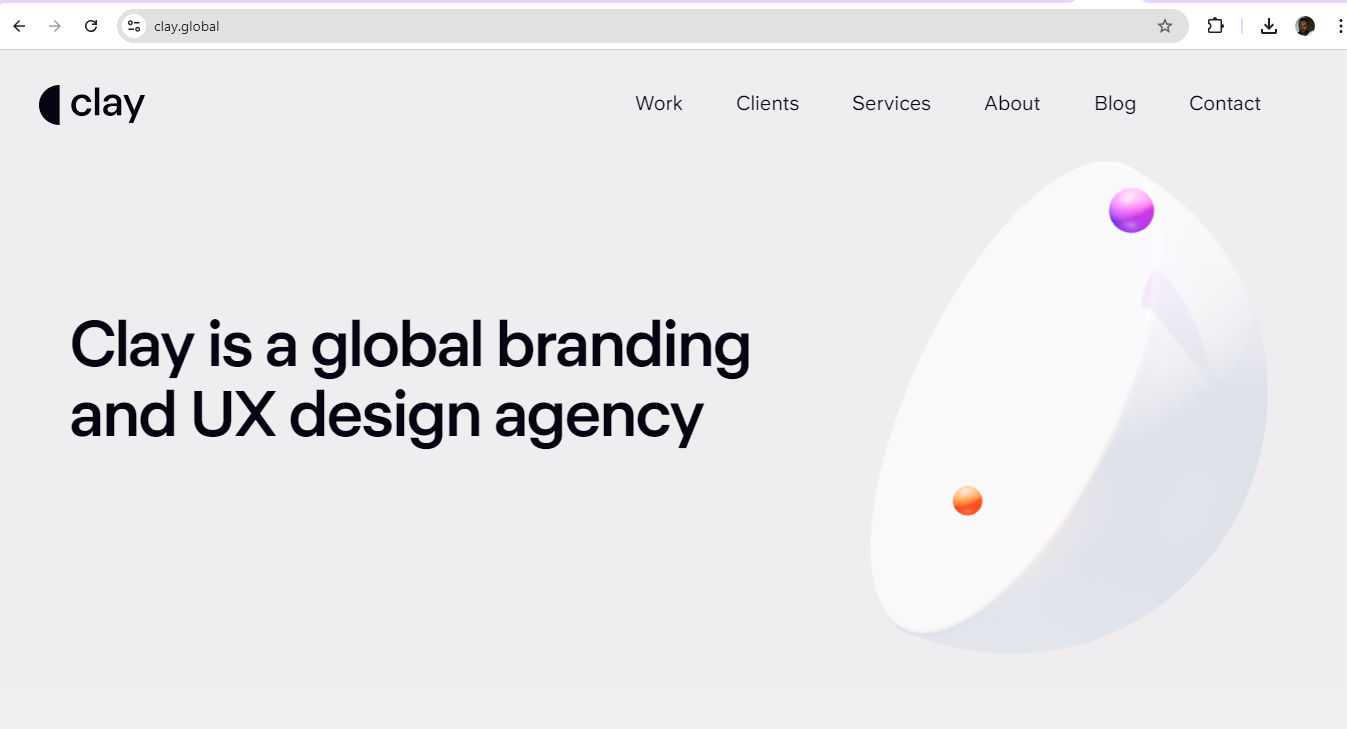
A screenshot of Clay's landing page.

Clay is a UX design agency in San Francisco that focuses on creating transformative digital experiences for brands.

© Clay, Fair Use

What Are Types of UX Design Agencies?

UX design agencies come in various forms. Each has its own strengths and specialties. The choice between these options depends on factors such as project scope, budget and long-term design needs. The main types of UX/UI design agencies include these ones:

1. Full-Service Digital Agencies

Full-service digital agencies offer a comprehensive range of services—from UX/UI design to development and marketing. These agencies have the equipment to handle all aspects of a digital project, which makes them a one-stop solution for businesses.

Key characteristics of full-service digital agencies include:

  1. Diverse expertise: They employ professionals with skills in UX research, UI design, development and digital marketing.

  1. End-to-end solutions: These agencies can take a project from concept to launch—and beyond.

  1. Holistic approach: They consider all aspects of a digital product. They make sure of consistency across user experience, branding and functionality.

Examples of full-service digital agencies include—in no particular order:

  • Beyond: This agency combines design thinking with cutting-edge technology to offer a wide range of services, including UX/UI design, product design and digital transformation.

  • Frog: With over 50 years of experience, Frog has worked with major brands like Volvo, Ikea and Coca-Cola.
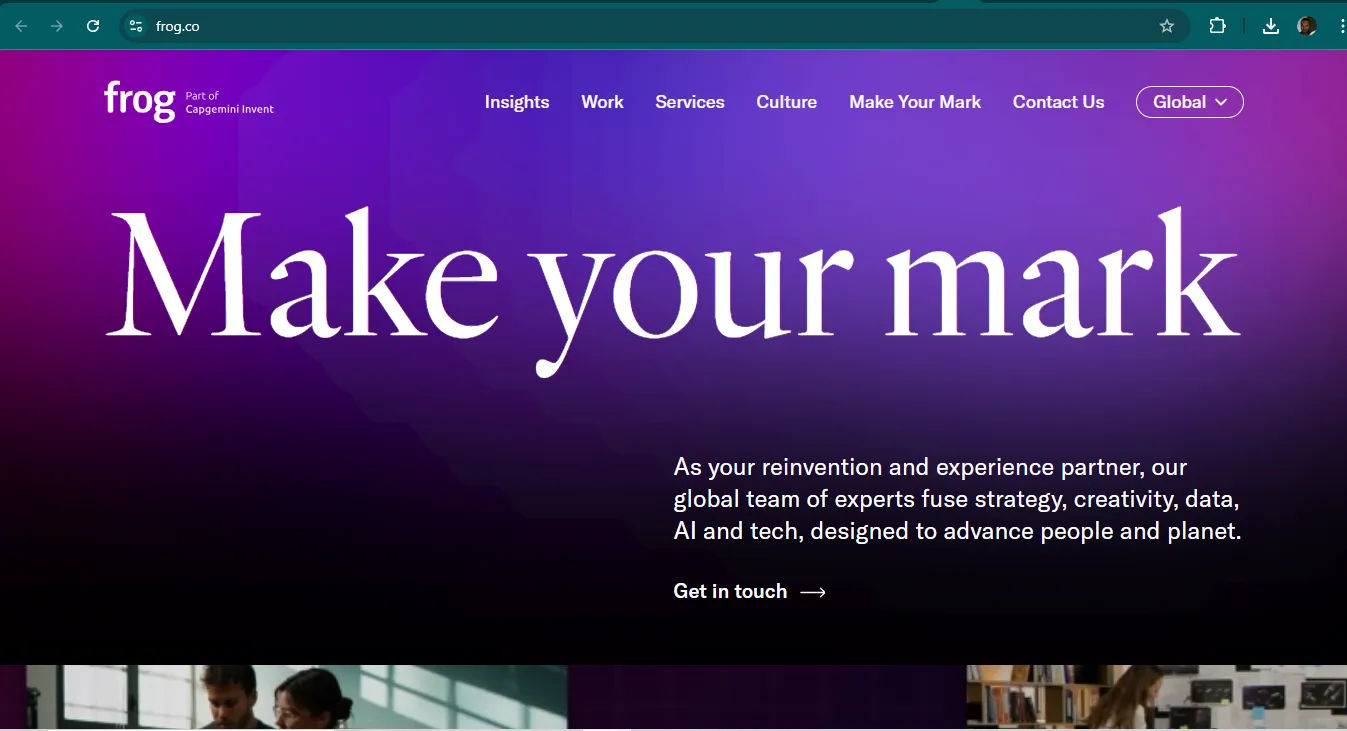
A screenshot from Frog's landing page.

© Frog, Fair Use

2. Specialized UX Firms

Specialized UX firms focus exclusively on user experience and user interface design. These agencies often have deep expertise in specific industries or types of digital products.

Key characteristics of specialized UX firms include:

  1. Focused expertise: They excel in UX research, user testing and creating intuitive interfaces.

  1. Industry-specific knowledge: Many specialize in particular sectors like healthcare, finance or e-commerce.

  1. Innovative approaches: They often have cutting-edge design methodologies and tools to assist them.

Examples of specialized UX/UI firms include—again, in no particular order:

  • Ramotion: Based in San Francisco, Ramotion focuses on web and mobile development, as well as UI/UX design.

  • Work & Co: This agency puts senior designers and engineers on every project, and makes sure there’s a high level of expertise behind the creation of digital products and services.

  • UX Studio: This award-winning European agency specializes in UX research and digital product design.

The choice between these options depends on factors like project scope, budget and long-term design needs.
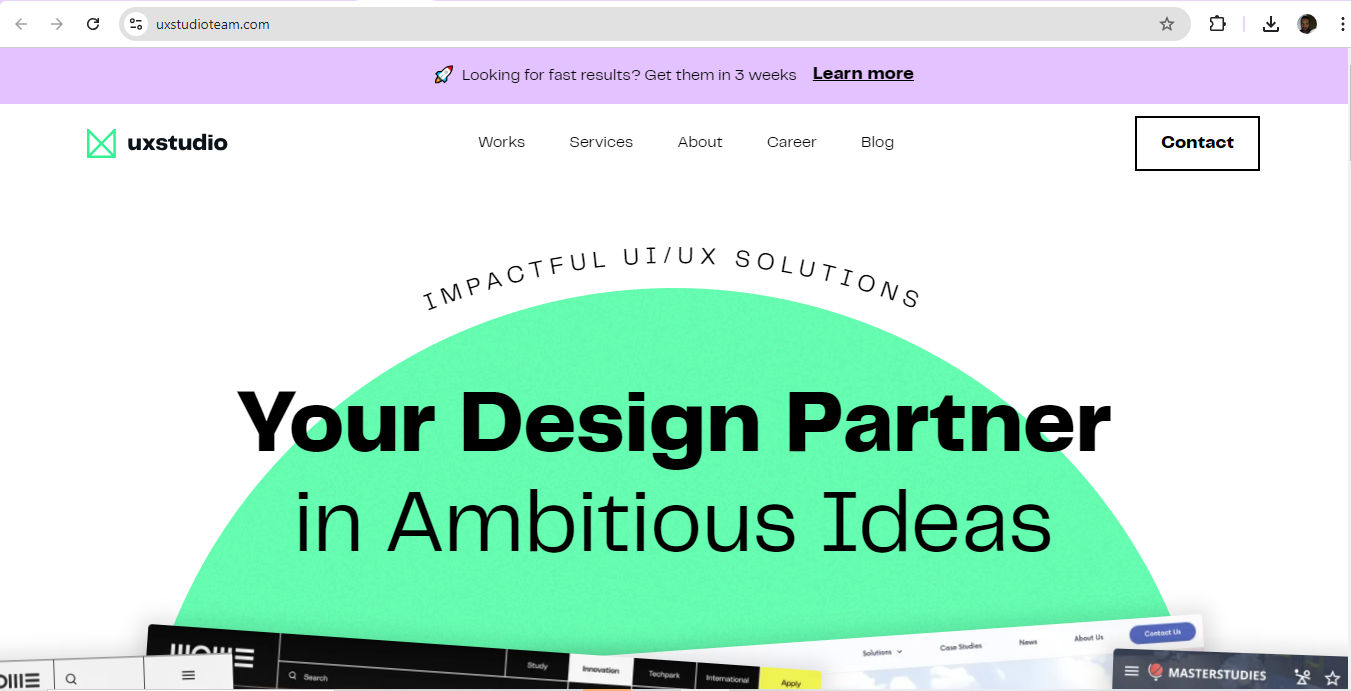
A screenshot from UX Studio's landing page.

© UX studio, Fair Use

What Benefits Can a UX/UI Designer Enjoy if They Work for a Design Agency?

There are pros and cons to agency work; here are some key benefits:

  1. Diverse project exposure: Design agencies typically work with a variety of clients across different industries. This lets UX/UI designers gain experience in multiple sectors—so they can expand their portfolio and skill set.

  1. Collaborative environment: Agencies often have teams of designers, developers and other creative professionals. This is something that nurtures a collaborative atmosphere—and it’s one where designers can learn from their peers and benefit from diverse perspectives in real time.

  1. Professional growth: Good design agencies usually invest in their employees' growth through training programs, workshops and conference attendance opportunities. This helps designers stay updated with the latest trends and technologies.

  1. Networking opportunities: To work with different clients and attend industry events can help designers build a strong professional network—and it’s something that can be valuable for future career opportunities.

  1. Access to cutting-edge tools and technologies: Reputable agencies often invest in the latest design tools and software. This means that a top UX design agency will give designers access to a massive fund of state-of-the-art resources.

  1. Structured workflow and processes: Agencies typically have established workflows and project management processes. These can help designers improve their efficiency and time management skills.

  1. Client interaction experience: Designers in agencies often get the opportunity to interact directly with clients. That exposure will improve their communication and presentation skills.

  1. Work on high-profile projects: Good agencies often attract well-known clients. That will give designers the chance to work on high-profile, impactful projects that can boost their portfolio and reputation. Naturally, the best design agencies in the world will be likely to have contacts with top-name brands.

  1. Faster skill development: The fast-paced nature of agency work and the variety of projects can accelerate a designer's skill development compared to in-house roles.

  1. Creative freedom: Many agencies encourage creative thinking and innovation—including out-of-the-box thinking. That lets designers explore new ideas and push boundaries in their work.

Author and Human-Computer Interaction Expert, Professor Alan Dix explains important points about how designers think outside the box:

Transcript

  1. Career advancement opportunities: As designers build up experience and prove their skills, they may have chances to advance to senior designer roles, creative director positions or even partnership roles within the agency.

  1. Work-life balance: Many modern design agencies recognize how important a work-life balance and offering flexible working hours or remote work options are.

  1. Competitive compensation: Good design agencies often offer competitive salaries and benefits packages to attract and retain top talent.

  1. Recognition and awards: Agencies frequently submit their best work for industry awards. That gives designers the chance to gain recognition for their contributions.

  1. Mentorship opportunities: Junior designers can often benefit from mentorship programs or informal guidance from more experienced colleagues in an agency setting.

It's important to note that the specific benefits can vary depending on the agency, its size, culture and focus. When a UX/UI designer considers joining a design agency, it's best to research the agency's reputation, work culture and growth opportunities. That way, they can make sure the agency aligns with their career goals and expectations.

An image showing a person reviewing one portfolio among many.

Designers need to make sure they stand out to an agency, principally through their UX portfolio.

© Interaction Design Foundation, CC BY-SA 4.0

What Challenges Might a Designer Face When Working for a Design Agency?

Here are some potential downsides of design agency work:

  1. Fast-paced environment: Design agencies often work on multiple projects simultaneously. That can lead to tight deadlines and high-pressure situations.

  1. Client-driven work: Designers may have to compromise their creative vision to meet client demands. It’s something that can be frustrating for those who prefer more creative freedom.

  1. Limited involvement in the full product lifecycle: Agency work often focuses on specific stages of a project. So, designers mightn’t see their work through to implementation or have long-term involvement with a product.

  1. Frequent context switching: To work on multiple projects for different clients can make it challenging to keep focus and dive deep into any single project.

  1. Less opportunity for user research: Due to time and budget constraints, agencies mightn’t always have the resources for extensive user research—or UX research—which is crucial for UX design.

UX Strategist and Consultant, William Hudson explains important points about user research:

Transcript

  1. Potential for burnout: The fast-paced nature of agency work—combined with tight deadlines and high expectations—can lead to stress and burnout.

  1. Limited specialization: Designers in agencies often need to be generalists who work on various types of projects. That reality may not allow for deep specialization in a particular area.

  1. Less stable work environment: Economic fluctuations can affect agency work—and potentially lead to cutbacks and job losses.

  1. Challenging client relationships: It can be hard to deal with difficult clients or manage their expectations. This aspect of agency work can be stressful and time-consuming, especially when it comes to client feedback.

Design Director at Societe Generale CIB, Morgane Peng explains important points about feedback.

Transcript

  1. Limited input on project selection: Designers typically don't have much say in which projects the agency takes on. It’s a lack of control that can—potentially—lead to work on less interesting or fulfilling projects.

  1. Reduced long-term impact: Unlike in-house roles where designers can see the long-term evolution of a product, agency work often involves shorter-term engagements.

  1. Potential for creative burnout: It can be creatively taxing, over time, to constantly have to come up with new ideas for different clients.

  1. Less opportunity for product ownership: Agency designers mightn’t have the chance to truly own a product and see it evolve over time. It’s someone else’s “baby” to see through to “adulthood.”

  1. Limited access to user feedback: Once a project is complete, designers mightn’t have access to user feedback or usage data to inform future iterations.

  1. Pressure to constantly pitch and win new business: Some agencies involve designers in the pitching process. That “sell” side of the coin can add extra pressure and take time away from design work.

It's important to note that these potential downsides can vary greatly depending on the specific agency, its culture and management style. Many designers find agency work exciting and rewarding despite these challenges—as it offers variety, exposure to different industries and opportunities to work on diverse projects. It can therefore be a chance for them to make good on the value proposition they offer the agency and—by association—their clients.
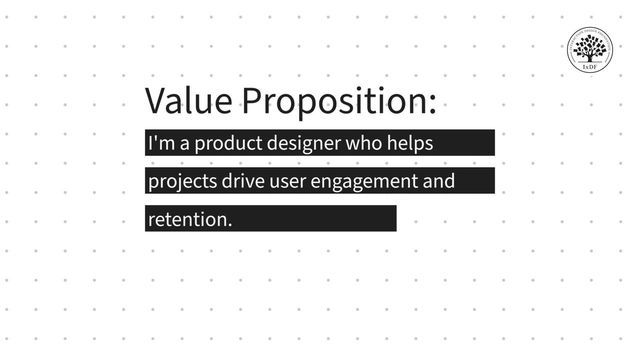
An image representing a value proposition of a designer.

© Interaction Design Foundation, CC BY-SA 4.0

What are Key Skills of UX/UI Design Professionals?

UX/UI design professionals need a diverse set of skills to create effective and user-friendly digital products. These skills span the range of technical expertise, creative abilities and interpersonal qualities. The required skill set will depend on what the agency specifically wants in a designer to join them. Still, key skills that are essential for success in this field include:

1. User Research Methods

To understand user behaviors, needs and challenges forms the foundation of UX/UI design. Professionals in this field need to be adept at various user research methods to collect valuable insights. These methods include:

  1. Quantitative research: This involves collecting numerical data through surveys, polls and systematic observations to identify patterns and trends.

  1. Qualitative research: This method focuses on gathering in-depth insights through interviews, field studies, focus groups and usability tests to understand user attitudes and behaviors.

UX Strategist and Consultant, William Hudson explains the difference between quantitative and qualitative research:

Transcript

  1. Card sorting: This technique helps designers organize information in a logical structure—something that’s crucial to make intuitive navigation and information architecture.

  1. Usability testing: This involves observing users as they interact with a product—identifying pain points and areas for improvement.

William Hudson explains essential aspects of user testing:

Transcript

  1. Personas: Designers create user personas—representative user profiles based on research data to guide design decisions.

When UX/UI designers master these research methods, they can make data-driven decisions and create products that truly meet user needs.

Author and Human-Computer Interaction Expert, Professor Alan Dix explains important points about personas:

Transcript

2. Experience with Design Tools and Software

Proficiency in various design tools and software is crucial for UX/UI designers to bring their ideas to life. Some essential tools include:

  1. Prototyping and wireframing tools: To create interactive mockups and prototypes.

  1. Visual design software: To create visual elements and high-fidelity mockups.

  1. Collaboration tools: Especially vital for working with remote teams.

  1. User testing platforms: To conduct usability tests and collect user feedback efficiently.

  1. Project management software: To help manage tasks, timelines and team collaboration.

Designers should stay updated with the latest quality tools and continuously improve their skills to enhance their workflow and productivity.

Professor Alan Dix explains important points about prototyping:

Transcript

3. Excellent “Soft Skills” in Collaboration and Communication

Effective collaboration and communication are vital for UX/UI designers to work successfully within teams. Key aspects of this skill include:

  1. Cross-functional teamwork: UX/UI designers have to collaborate with product managers, developers, marketers and other stakeholders to make sure the design goals are in line with the business objectives.

UX Designer and Author of Build Better Products and UX for Lean Startups, Laura Klein explains important points about working with cross-functional teams:

Transcript

  1. Presentation skills: Designers need to articulate their ideas clearly and persuasively to gain buy-in from stakeholders and team members.

Author, Speaker and Leadership Coach, Todd Zaki Warfel explains vital aspects of presenting to stakeholders:

Transcript

  1. Empathy: It’s crucial for designers to understand and consider the perspectives of users, team members and stakeholders if they’re to create truly user-centered designs. Empathy is also a core part of design thinking, a design process with which designers should be familiar—but, ideally, proficient in it.

Watch our video to see why empathy is vital in design:

Transcript

  1. Design handoffs: To ensure smooth transitions from design to development phases is something that calls for clear communication and documentation.

  1. Feedback management: Designers have got to be open to receiving and providing constructive feedback to improve their work and nurture a collaborative environment.

  1. Design systems: To create and maintain design systems promotes consistency and makes for better collaboration between designers and developers.

When UX/UI designers hone these collaboration and communication skills, they’ll have a vital asset in that they can prove they can contribute to a more efficient and harmonious work environment—and make themselves more attractive to hiring agencies.
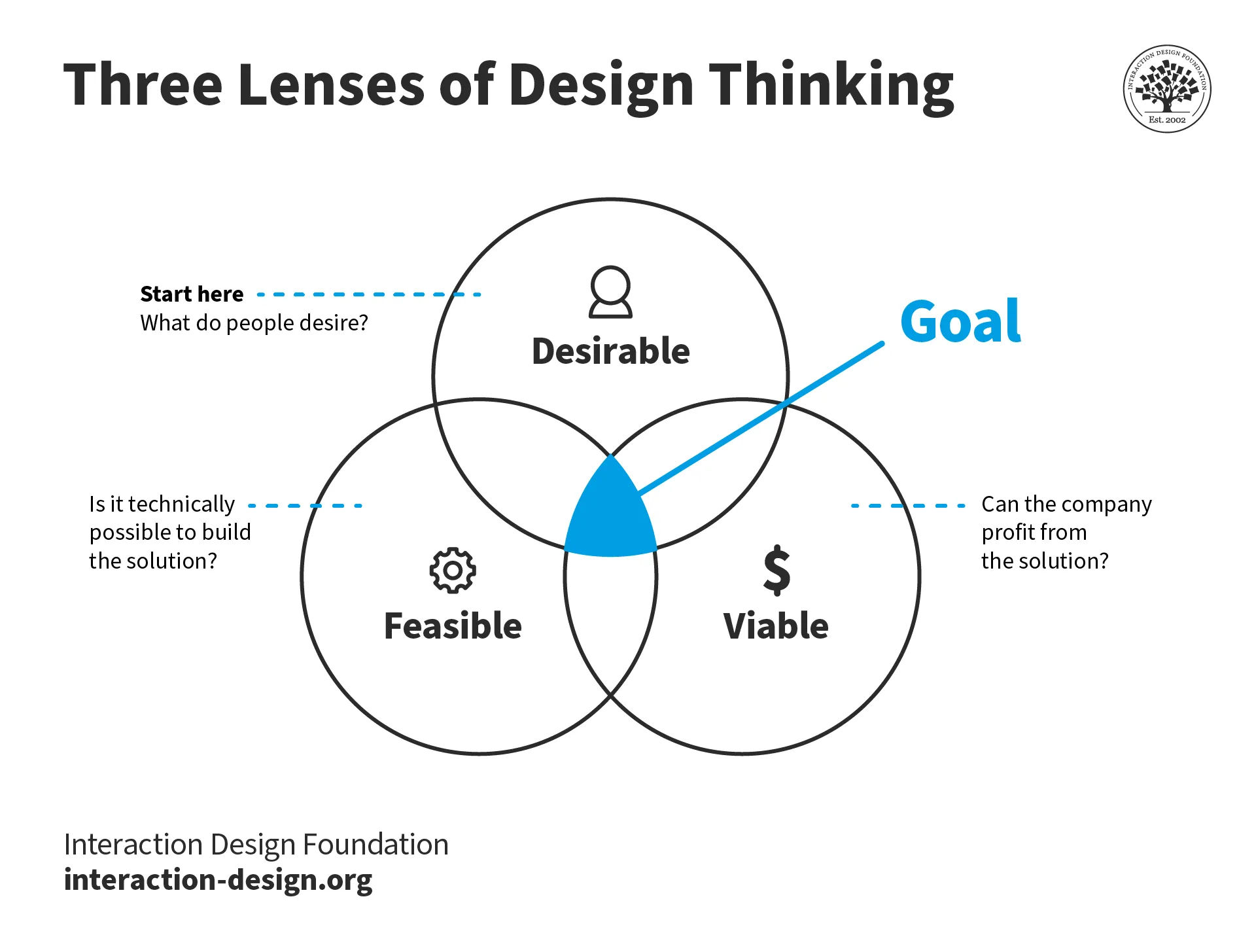
A Venn diagram with three circles of feasible, desirable and viable with the goal in the overlap.

Design thinking is a particularly useful UX design process for agencies to use for their clients—and the design thinking process helps design teams zero in on the goal of a UX project.

© Interaction Design Foundation, CC BY-SA 4.0

What’s the Best Way to Get Work with a Design Agency?

Best practices for UX and UI designers to join a design agency include these important tips:

1. Polish the UX Portfolio

The portfolio is often the first point of contact between prospective new agency designers and the agencies that take them on.
An image of two people with the caption Your portfolio is your most important design project.

This adage will serve designers well—be it to join an agency, work as freelancers or approach brands for in-house positions.

© Interaction Design Foundation, CC BY-SA 4.0

So, it’s important for designers to:

  • Showcase their best and most relevant work.

  • Highlight diverse projects that demonstrate their versatility.

  • Include case studies that explain their design process and problem-solving skills—ideally with storytelling to give each case study a powerful arc.
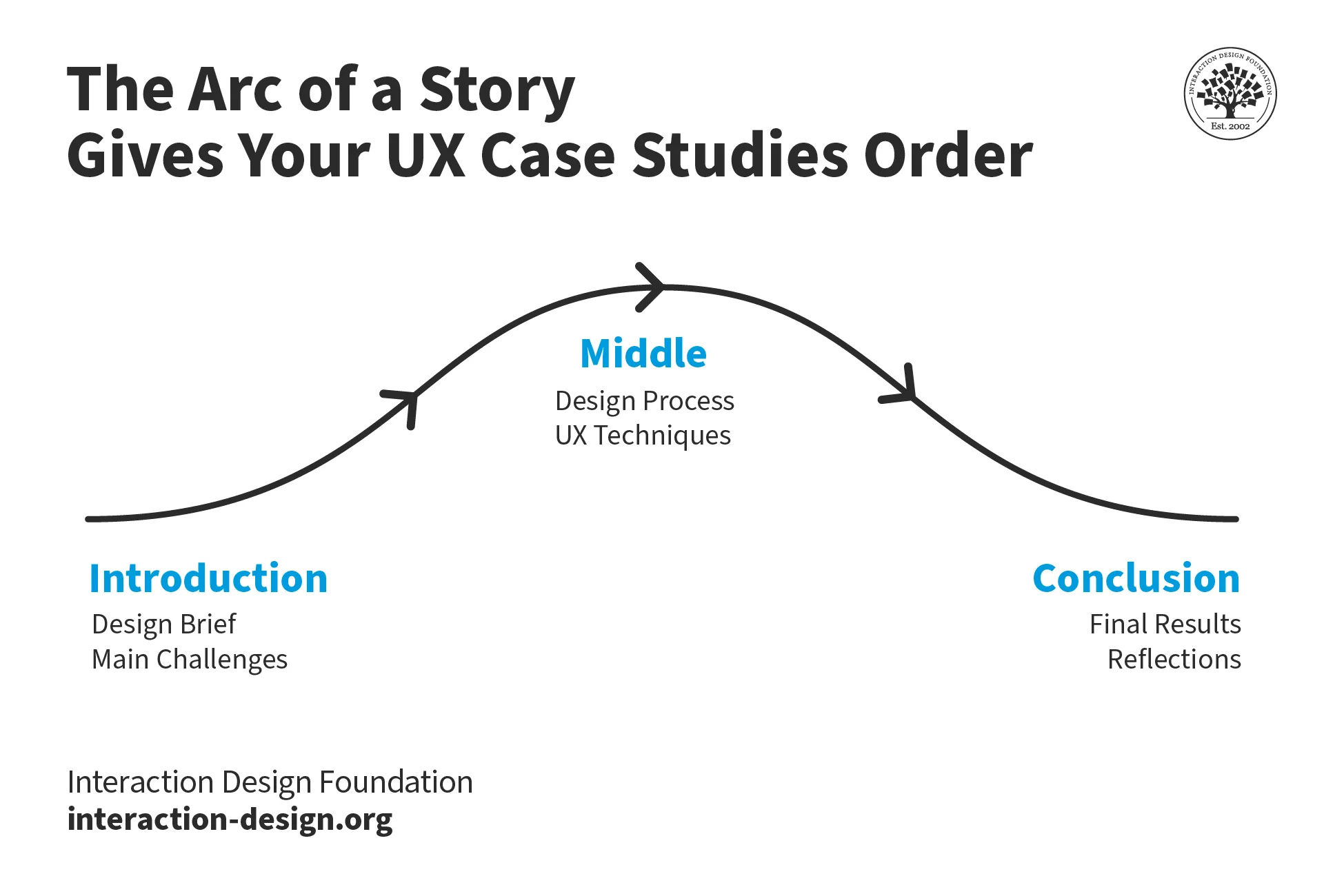
A diagram showing how a story arc is good for case studies.

© Interaction Design Foundation, CC BY-SA 4.0

  • Make sure the portfolio is easily accessible online and optimized for various devices.

Design Director at Societe Generale CIB, Morgane Peng explains another vital aspect of UX portfolios:

Transcript

2. Stay Current with Industry Trends

It’s important to:

  • Keep up-to-date with the latest design tools and software.

  • Follow industry leaders and design agencies on social media.

  • Attend design conferences, workshops and webinars.

  • Regularly read design blogs, books and the like.

3. Develop a Strong Skill Set

Designers should also be sure they have:

  • Enhanced prototyping and wireframing skills.

  • Proficiency with tools and be able to collaborate with developers.

  • Cultivated soft skills like communication, teamwork and time management.

4. Network Effectively

It’s always a plus to network, so designers should:

  • Attend industry events and meetups.

  • Engage with design communities online.

  • Reach out to professionals in desired agencies for informational interviews.

  • Use professional sites like LinkedIn to connect with recruiters and agency employees.

5. Tailor The Application

To fine-tune the approach is a vital part of the application process, so designers should:

  • Research the agency thoroughly before they apply.

  • Understand its policies regarding non-disclosure agreements (NDAs) and other matters.

Morgane Peng explains essential aspects of NDAs:

Transcript

  • Customize the cover letter and resume for each application.

Morgane Peng explains important points about resumes:

Transcript

  • Show genuine interest in the agency's work and culture.

  • Highlight skills and experiences that align with the agency's focus and values, such as augmented reality (AR) and virtual reality (VR), artificial intelligence (AI) and machine learning (ML), and voice user interfaces (VUIs).

Founding Director – Design Lab at University of California, San Diego, and Co-Founder of Nielsen Norman Group, Don Norman explains important points about AR and VR:

Transcript

6. Prepare for the Interview

It’s essential to get this aspect into sharp focus, and designers should:

  • Practice explaining their design decisions and process, as well as their value proposition.

  • Be ready to discuss their favorite projects and challenges they've overcome.

  • Prepare thoughtful questions about the agency and the role.

  • Consider bringing a small design challenge or exercise to showcase their skills.

Morgane Peng explains important points about value propositions:

Transcript

7. Demonstrate Adaptability

Designers should also:

  • Show willingness to learn new tools and methodologies.

  • Highlight experiences working in cross-functional teams.

  • Emphasize their ability to receive and incorporate feedback.

  • Showcase any experience with agile or other project management methodologies.

Laura Klein explains important points about the agile design approach:

Transcript

8. Understand The Business Side

It’s also helpful for designers to:

  • Familiarize themselves with basic business concepts and terminology.

  • Show interest in how design impacts business goals and metrics.

  • Demonstrate their ability to balance user needs with business objectives.

  • Be prepared to discuss the return on investment (ROI) of good design.

CEO of Experience Dynamics, Frank Spillers explains important aspects of ROI:

Transcript

9. Embrace Collaboration

Designers can also enhance their employability for an agency if they:

  • Highlight experiences working with diverse teams—such as developers and product managers.

  • Show enthusiasm for brainstorming and ideation sessions.

  • Demonstrate their ability to give and receive constructive criticism.

  • Emphasize skills in presenting and defending design decisions.

UX Strategist and Consultant, William Hudson explains important points about brainstorming:

Transcript

10. Experience Continuous Learning and Growth

Last—but not least—it’s helpful for a designer’s chances to:

  • Show commitment to ongoing professional development.

  • Highlight any relevant certifications or courses they've completed.

  • Discuss their design philosophy and how it evolves with new knowledge.

  • Express eagerness to mentor junior designers or learn from senior team members.
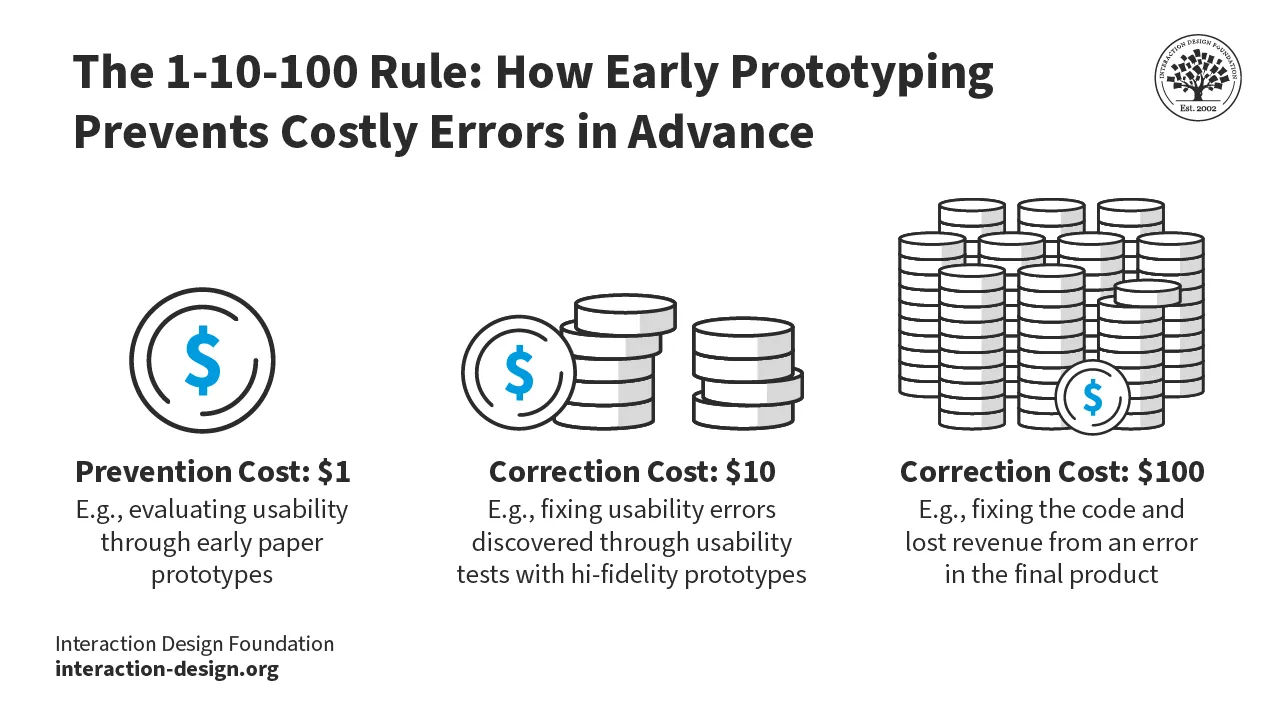
A diagram of the 1-10-100 rule and how early prototyping prevents costly errors in advance.

Clients don’t necessarily have to turn to the best UX design company in the world to enjoy wise savings in the investment they make in skilled and insightful UX-UI agency designers who understand rules like this one.

© Interaction Design Foundation, CC BY-SA 4.0

Overall, UX/UI design agencies play a crucial role in shaping digital experiences. These design firms bring together skilled professionals to create user-friendly interfaces and seamless journeys for websites and apps. From startups to global corporations, design agencies help businesses connect with their audience through intuitive design and effective user experiences—and with talented individuals who don’t just have strong design skills but are a good fit for the agency’s culture, too. What’s more, the designers who join agencies can enjoy a range of benefits while they build up experience—including on the cutting edge of technology and design itself—and consider if they should stay on, become freelance UX/UI designers or attach themselves to the most profitable brands directly.

Questions About Design Agencies?
We've Got Answers!

How do I choose the right UX design agency to work for as a designer?

First, identify what you value in a job. Do you prefer creative freedom, a strong team or opportunities to learn? Some “market research” will help—so look at agencies’ work culture, projects and employee reviews. Check if their design style matches your own and if they have clients or industries you find interesting. Talk to current or former employees—if you can—to get an inside view of things like design processes or development processes, for example.  

During interviews, ask about the team, the design process and chances for growth and advancement. The best UI/UX design agency for you will align with your career goals, offer a supportive environment and let you do work you truly enjoy. 

Read our piece, How to Write Great Case Studies for Your UX Design Portfolio for valuable additional insights. 

Go to our piece, How to Price Your Freelance and B2B Work for further helpful insights. 

How do UX design agencies differ from freelance designers?

UX design agencies and freelance designers differ in a few key ways. Agencies usually have a team of designers—each with different skills, so they can handle bigger projects and offer a range of services. They often follow a set process and have more resources, like research tools and testing labs. 

Meanwhile, freelance designers work alone. That gives them more flexibility and allows for closer collaboration with clients. They might be more affordable and can offer a personalized approach. Even so, they mightn’t have the same level of support as an agency. A client might choose an agency for complex projects with tight deadlines. Or they might choose a freelancer if they want a more tailored experience and direct communication. It depends. 

Read our piece, How to Write Great Case Studies for Your UX Design Portfolio for valuable additional insights. 

Go to our piece, How to Price Your Freelance and B2B Work for further helpful insights. 

Why should I hire a UX design agency instead of doing it in-house?

To hire a UX design agency can offer several advantages over doing the work in-house. Agencies bring a team of experts with diverse skills. So, they can tackle various aspects of UX design—from research to final design. They often have experience with many industries. That means they can offer fresh perspectives and proven solutions.  

Agencies can also work faster since they can focus solely on a client’s project, while an in-house team may have other duties. What’s more, agencies provide access to specialized tools and resources that a company mightn’t have. If a brand’s in-house team lacks UX experience or if they need to complete a project quickly and at a high standard, it’s a smart choice to hire a UX design agency. 

Read our piece, How to Write Great Case Studies for Your UX Design Portfolio for valuable additional insights. 

Go to our piece, How to Price Your Freelance and B2B Work for further helpful insights. 

What services do UX design agencies typically offer?

UX design agencies typically offer a range of services to improve user experience. They start with user research to understand the target audience’s needs and user behaviors. They then create wireframes and prototypes to plan the layout and flow of the client’s product.  

Agencies conduct usability testing to find and fix problems early, too. They design user interfaces (UIs) that are both attractive and easy to use. Some agencies provide additional services. These could be content strategy, information architecture and accessibility audits, for instance. They ensure that every part of the digital product works together to create a smooth and enjoyable experience for users. When they handle everything from research to final design, UX design agencies can more effectively help their clients build products that meet user needs and business goals. 

UX Strategist and Consultant, William Hudson explains important points about user research: 

Transcript
 

Read our piece, How to Write Great Case Studies for Your UX Design Portfolio for valuable additional insights. 

Go to our piece, How to Price Your Freelance and B2B Work for further helpful insights. 

What is the typical process of working with a UX design agency?

When a client works with a UX design agency, the process usually starts with a discovery phase. The agency learns about the client’s business, goals and users. Next, they conduct user research to collect insights and understand—in depth—the client’s target users or audience.  

Based on this research, the agency staff create wireframes and prototypes to map out the design. The client reviews these drafts and gives feedback. After the agency refines the designs, they conduct usability tests to make sure that everything works well for users. Once the design is finalized, they hand over the final files—and they may even help with implementation. Throughout the process, the agency stays in close contact with the client to make sure that the project stays on track and meets their needs. 

Read our piece, How to Write Great Case Studies for Your UX Design Portfolio for valuable additional insights. 

Go to our piece, How to Price Your Freelance and B2B Work for further helpful insights. 

UX Strategist and Consultant, William Hudson explains important points about user research: 

Transcript
 

How do UX design agencies handle revisions and feedback?

UX design agencies handle revisions and feedback through a structured process. After presenting their initial designs, they ask the client for feedback. They listen carefully to the client’s suggestions and concerns. Then, they make the necessary changes.  

Most agencies allow several rounds of revisions to ensure the final design meets client expectations. They often set clear timelines for each round of feedback, so the project stays on schedule. Communication remains open and transparent. This lets the client track progress and address any issues quickly. Agencies value their clients’ input throughout the process and work to balance a client’s vision with best practices in UX design. This collaborative approach helps create a final product that aligns with the client’s goals. 

Design Director at Societe Generale CIB, Morgane Peng explains important points about feedback. 

Transcript
 

How do UX design agencies work with startups versus large companies?

UX design agencies approach startups and large companies differently. With startups, agencies often focus on building a strong foundation. They help define the brand, create user-friendly designs and prioritize essential features for a successful launch. Agencies that work with startups usually offer more flexibility—adapting quickly to changes as the startup evolves.  

For large companies, agencies tend to handle more complex projects. They might redesign existing products, improve user experiences or integrate new features into established systems. Agencies that work with large companies follow structured processes and stick to strict timelines. They also collaborate with multiple teams within the company to make sure the design really does fall in line with overall business goals. 

In both cases, agencies tailor their approach to meet the unique needs and challenges of the client, such as extensive user research. 

UX Strategist and Consultant, William Hudson explains important points about user research: 

Transcript
 

How do UX design agencies handle intellectual property?

UX design agencies handle intellectual property (IP) by clearly defining ownership in the contract. Before the start of a project, the agency and client agree on who will own the final designs, research data and other deliverables. Most agencies transfer full ownership of the IP to the client after the project is completed and paid for. This means the client has the right to use, modify or distribute the work as they see fit.  

Some agencies may retain rights to certain tools or templates they used, but these usually aren’t part of the final deliverables. It’s important for clients to discuss IP rights at the beginning to avoid confusion later. This ensures that the client owns the work and can use it without any legal concerns. It’s also wise for the designers within the agency to be aware of such aspects of copyright, such as what a non-disclosure agreement (NDA) contains—and means.  

Design Director at Societe Generale CIB, Morgane Peng explains important points about NDAs. 

Transcript
 

How do UX design agencies help with post-launch support?

UX design agencies offer post-launch support to make sure a product continues to perform well after it goes live. They monitor user feedback and analyze data to spot any issues or areas for improvement. If problems arise, the agency makes adjustments to the design or user flow to fix them. They may also provide updates to keep the product current with user needs or industry trends.  

Agencies often conduct follow-up usability tests to confirm that users are satisfied with the product. Some agencies offer ongoing maintenance services—which makes sure the product stays functional and user-friendly over time. This post-launch support helps the product stay effective and keeps users engaged. 

UX Strategist and Consultant, William Hudson explains important points about usability testing: 

Transcript
 

How do UX design agencies adapt to different industries?

UX design agencies adapt to different industries by first understanding the unique needs and challenges of each sector. To begin, they research industry-specific trends, user behaviors and regulations. This research helps them create designs that meet the specific demands of the industry—whether it’s healthcare, finance, e-commerce or another field.  

Agencies also draw on their experience from past projects to apply best practices that suit each industry. They collaborate closely with clients to make sure the design aligns with industry standards and the client’s goals. From tailoring their approach to the specific requirements of each industry, UX design agencies deliver solutions that resonate with the target audience and address the industry's unique challenges—and get the content just right for the target audience. 

CEO of Experience Dynamics, Frank Spillers explains essential points about content strategy: 

Transcript
  

What are some highly cited articles about UX/UI design agencies?

Brown, T. (2008). Design thinking. Harvard Business Review, 86(6), 84-92.   

This seminal article by Tim Brown, CEO of IDEO, introduced the concept of design thinking to a broader business audience. It has been highly influential in shaping how design agencies approach problem-solving and innovation. Brown argues that design thinking—a human-centered approach to innovation—is applicable to various business challenges beyond traditional product design. The article outlines the key principles of design thinking, including empathy, ideation and experimentation; plus, it provides examples of how this approach has been successfully applied in different industries. This publication has been instrumental in elevating the role of design agencies from mere aesthetic service providers to strategic partners in business innovation. 

Earn a Gift Earn a Gift, Answer a Short Quiz!

1
2
3
4
1
2
3
4
Question 1
Question 2
Question 3
Get Your Gift
Interaction Design Foundation logo

Question 1

What is one key difference between a design agency and a freelance designer?

1 point towards your gift

  • A design agency usually consists of a team of designers working together, while a freelance designer typically works alone.
  • A design agency only works with corporate clients, whereas freelancers work with individuals.
  • A design agency focuses only on web design, while freelancers can work in any design field.
Interaction Design Foundation logo

Question 2

Which of the following services is commonly offered by a design agency besides design?

1 point towards your gift

  • Branding and identity creation.
  • Accounting and financial management.
  • Legal services.
Interaction Design Foundation logo

Question 3

What advantage does a design agency typically have over an individual designer?

1 point towards your gift

  • Ability to handle multiple aspects of a project simultaneously.
  • Lower cost for clients.
  • Simpler project management.

Learn More About Design Agencies

Make learning as easy as watching Netflix: Learn more about Design Agencies by taking the online IxDF Course Build a Standout UX/UI Portfolio: Land Your Dream Job.

Why? Because design skills make you valuable. In any job. Any industry.

In This Course, You'll

  • Get excited when you discover the secret to a portfolio that fast-tracks your way to job offers. Did you know most hiring managers decide on your application in just 7.4 seconds? In today's competitive job market, first impressions are everything

  • Learn to build a career where you fulfill your potential and earn a salary that reflects your true value. Your design portfolio is your ultimate advocate. It speaks for you when you're not in the room. In this course, you'll get real-world insider insights from an expert who's reviewed thousands of portfolios. Take the course and build the career you're truly meant for.

  • Make yourself invaluable when you learn how to hook hiring managers with your problem-solving mindset, user-centered design approach, and business acumen. We know how frustrating it is to apply for job after job with no response. As AI makes it easier to generate generic portfolios and case studies, you stay in demand by clearly showing your timeless human-centered design skills: How you think, make decisions, and solve real problems. This User Experience/User Interface (UX/UI) portfolio course gives you the skills to finally stand out from the pack. Whether you're new to design or already experienced, you'll turn your past work experiences into portfolio gold and create a portfolio they love! No matter your background, it's easier than you think.

  • Gain confidence and credibility with our step-by-step blueprint for a portfolio that gets you hired faster into a role where you'll fulfill your purpose and increase your salary potential. Through hands-on projects and ready-to-use downloadable templates, you'll develop a winning portfolio strategy, write attention-grabbing hooks, present your portfolio with confidence, and master the first impression formula. You'll walk away with a pitch-ready UX/UI design portfolio you can use to land your dream job.

It's Easy to Fast-Track Your Career with the World's Best Experts

Master complex skills effortlessly with proven best practices and toolkits directly from the world's top design experts. Meet your expert for this course:

  • Morgane Peng: Designer, speaker, mentor, and writer who serves as Director and Head of Design at Societe Generale CIB.

Get an Industry-Recognized IxDF Course Certificate

Increase your credibility, salary potential and job opportunities by showing credible evidence of your skills.

IxDF Course Certificates set the industry gold standard. Add them to your LinkedIn profile, resumé, and job applications.

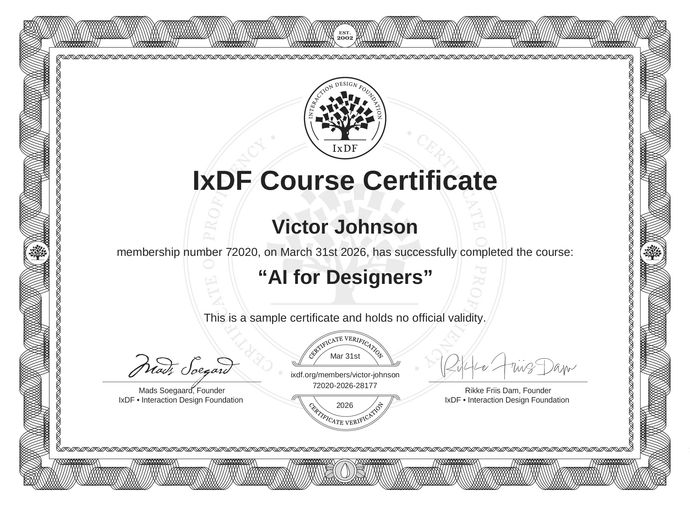
Course Certificate Example

Be in distinguished company, alongside industry leaders who train their teams with the IxDF and trust IxDF Course Certificates.

Our clients: IBM, HP, Adobe, GE, Accenture, Allianz, Phillips, Deezer, Capgemin, Mcafee, SAP, Telenor, Cigna, British Parliament, State of New York

All Free IxDF Articles on Design Agencies

Read full article
The Business Models of Freelancing and Design Agencies and Who Can Start Their Own Business - Article hero image
Interaction Design Foundation logo

The Business Models of Freelancing and Design Agencies and Who Can Start Their Own Business

When you’re looking at going freelance or starting your own design agency, you’ll want to understand and examine the business models and the different types of work available to you before you start. This will help you understand and define what you intend to do with your business and how you will d

Social shares
699
Published
Read Article
Read full article
Discover and Understand your Passions and Interests – and Increase Your Success Rate as an Entrepreneur or Freelancer - Article hero image
Interaction Design Foundation logo

Discover and Understand your Passions and Interests – and Increase Your Success Rate as an Entrepreneur or Freelancer

Many would-be freelancers and entrepreneurs know exactly what they want to do; others aren’t really sure. Whichever position you are in, sitting down and working out your passions and interests before you begin a business is a good idea. A wealth of evidence shows that when we work in harmony with o

Social shares
550
Published
Read Article
Read full article
How to Choose Your Specialist Freelance or Entrepreneur Niche and Become Remarkable - Article hero image
Interaction Design Foundation logo

How to Choose Your Specialist Freelance or Entrepreneur Niche and Become Remarkable

Do you want to have your own business, but you’re not sure what niche to enter? That’s OK; you’re not alone. However, it is important to choose a niche before you get too far along in launching your business. That’s because specialists who become remarkable in a field of endeavour are much better re

Social shares
534
Published
Read Article
Read full article
What Kind of Business Setup Should You Choose as a Freelancer or Entrepreneur? - Article hero image
Interaction Design Foundation logo

What Kind of Business Setup Should You Choose as a Freelancer or Entrepreneur?

Four common options exist in most parts of the world. The options include sole trading, partnerships, limited companies, offshore companies. Learn the advantages and disadvantages of each—it’s vital on the path to running an efficient business.We’ll teach you the most common options and the usual ad

Social shares
503
Published
Read Article
Read full article
How to Write Your First Business Plan - Article hero image
Interaction Design Foundation logo

How to Write Your First Business Plan

Planning a business means planning to succeed in business. A business plan helps you define what you do so that you can explain this clearly and succinctly to customers. It helps you see if your plans are going astray so that you can take corrective action. It helps you think about your position in

Social shares
669
Published
Read Article
Read full article
7 Powerful Steps for Creating the Perfect Freelance CV - Article hero image
Interaction Design Foundation logo

7 Powerful Steps for Creating the Perfect Freelance CV

A CV is a great way of explaining your expertise to a would-be client. Not all freelancers use a CV/resume to market their services or to convey their experience to their clients. Those who do use one will tell you that it’s a great way of explaining complex information to potential clients and part

Social shares
882
Published
Read Article

How to Write UX/UI Design Case Studies That Boost Your Portfolio and Get You Hired

How to Write UX/UI Design Case Studies That Boost Your Portfolio and Get You Hired

The term “case study” sounds a little boring, doesn’t it? What if, instead, it were called a “design story”? Well, that’s exactly how you should think of it! Approach your UX/UI design case studies like stories, not just a list of tasks you completed. You will not only make your portfolio easier and more enjoyable to create, but you will engage the reader and leave them wanting more. Give hiring managers structure, intrigue, and emotion as you tell your design successes. You’ll find yourself preparing to interview for your dream job in no time.

UX (user experience) design projects can be messy. Deadlines change, project goals shift, and new findings can fundamentally alter design specifications. Stories will give your past experiences form and organize your case studies. In this video, Stephen Gay, UX Design Lead for Google One, explains why you should include narrative in your UX/UI design portfolio:

Transcript

When you arrange your experience into a meaningful sequence of events, recruiters will understand the path you took to the final product. The path is the juicy part of your case study—it shows how you make decisions, problem-solve, and work with others. Combine structure with storytelling elements like emotion and conflict, and your design stories will come to life.

The UX/UI Design Story Blueprint: How to Structure Your Case Studies

Before you begin weaving tales, it’s important to create a structure for your case studies that keeps you on track as you write.

Your case study structure has three main goals:

  1. To showcase your design process and your solutions.

  2. To keep the reader engaged as you guide them through your design projects.

  3. To make it as easy as possible for busy hiring managers to navigate your case study.

Therefore, your goal is a logical, well-organized, and easy-to-navigate structure. The best way to achieve this is to follow the design process or methodology you used, such as design thinking, plus a hook and conclusion. Morgane Peng, Managing Director and Head of Design at Societe Generale CIB, explains what to include in your case study in this video:

Transcript

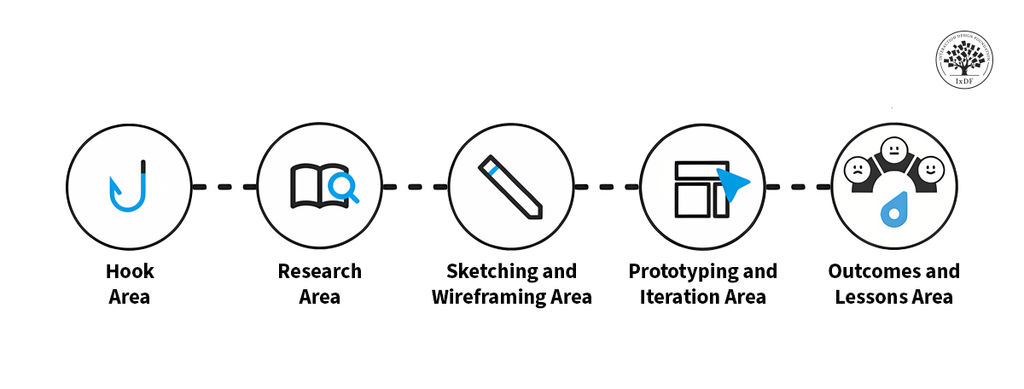
A typical structure for a case study might be:

  1. The hook

  2. Research

  3. Sketches and wireframing

  4. Prototyping and iteration

  5. Outcomes and lessons learned

Each section should include a combination of text and media (images, video, interactive elements, etc.). A good benchmark is 60%-80% text and 20%-40% media.

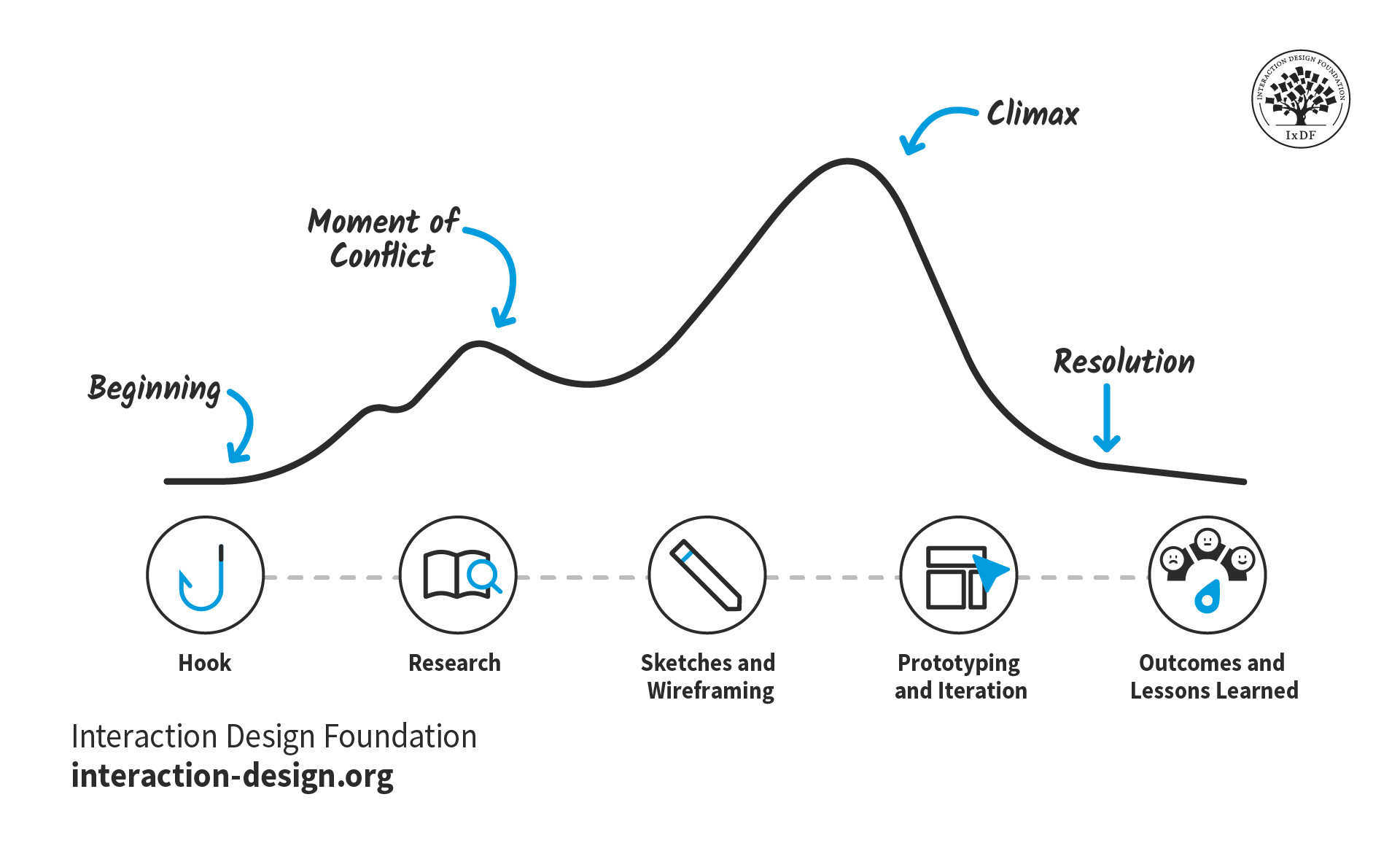
The stages of your design process serve as an ideal structure for your case study. They’re universal and relatable, so busy hiring managers can immediately understand what they’re reading. Your narrative can then flow through this structure as you set up your story with exposition, introduce and resolve conflicts, and reach the climax.

© Interaction Design Foundation, CC BY-SA 4.0

Depending on the message you want to convey in your case study, you might focus on one area in particular. For example, if you want to show off your UI (user interface) design skills, you might only include the prototyping and iteration section. For another project where you’re proud of the research you did, you could make this the primary section.

However, regardless of your project, you should always include two sections: the hook and the outcomes and lessons learned.

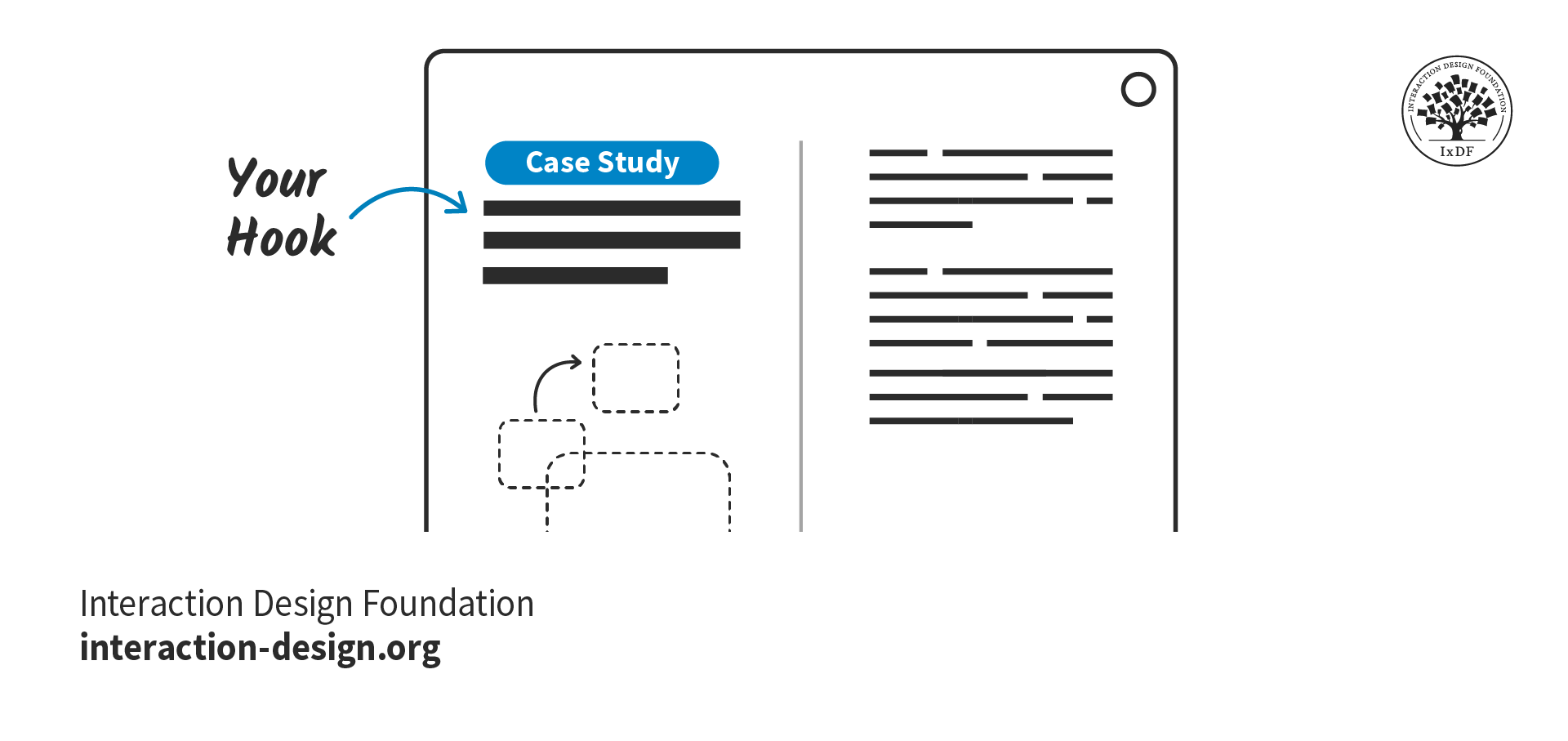
The Hook Area

The purpose of the hook is to immediately grab attention and entice the reader to read on. Your hook should convince hiring managers they’ve made the right choice by opening your case study.

© Interaction Design Foundation, CC BY-SA 4.0

To craft a hook that potential employers can’t say no to, make sure you include these elements:

  • The key characteristics of your project:

    • The type of project, e.g., a school project, client project, hypothetical project.

    • Your role, g., UX Designer, Product Designer, User Researcher, UX Writer

    • Your contribution, e.g., checkout flow, search optimization, information architecture

  • Whether you worked solo or in a group, and how you collaborated with others.

  • The design approach and methodologies you used to solve challenges and why they were effective. For example, design thinking, agile, lean UX, etc.

  • A preview of the work, such as screens, videos, or prototypes, to capture attention early on.

  • An introduction, or “exposition,” that sets the scene for the rest of the case study (more on this later on).

Where your case study differs from a typical story is that you should include the results of the project before the full case study begins. Why? Hiring managers are busy people and may only have allocated five minutes to review your whole portfolio. If you show them the results first, they will be more inclined to run over their time limit and find out how you got there. Even if the project did not reach its goals, include the positive outcomes, for example, the lessons you learned or the skills you gained.

“This might sound a bit counterintuitive … but as a hiring manager, I'd rather see the results first before diving into the case study and committing 7 to 10 minutes of my life reading it. If the preview is not available, I usually just scroll down to see it and back up to start reading.”

- Morgane Peng, Managing Director and Head of Design at Societe Generale CIB

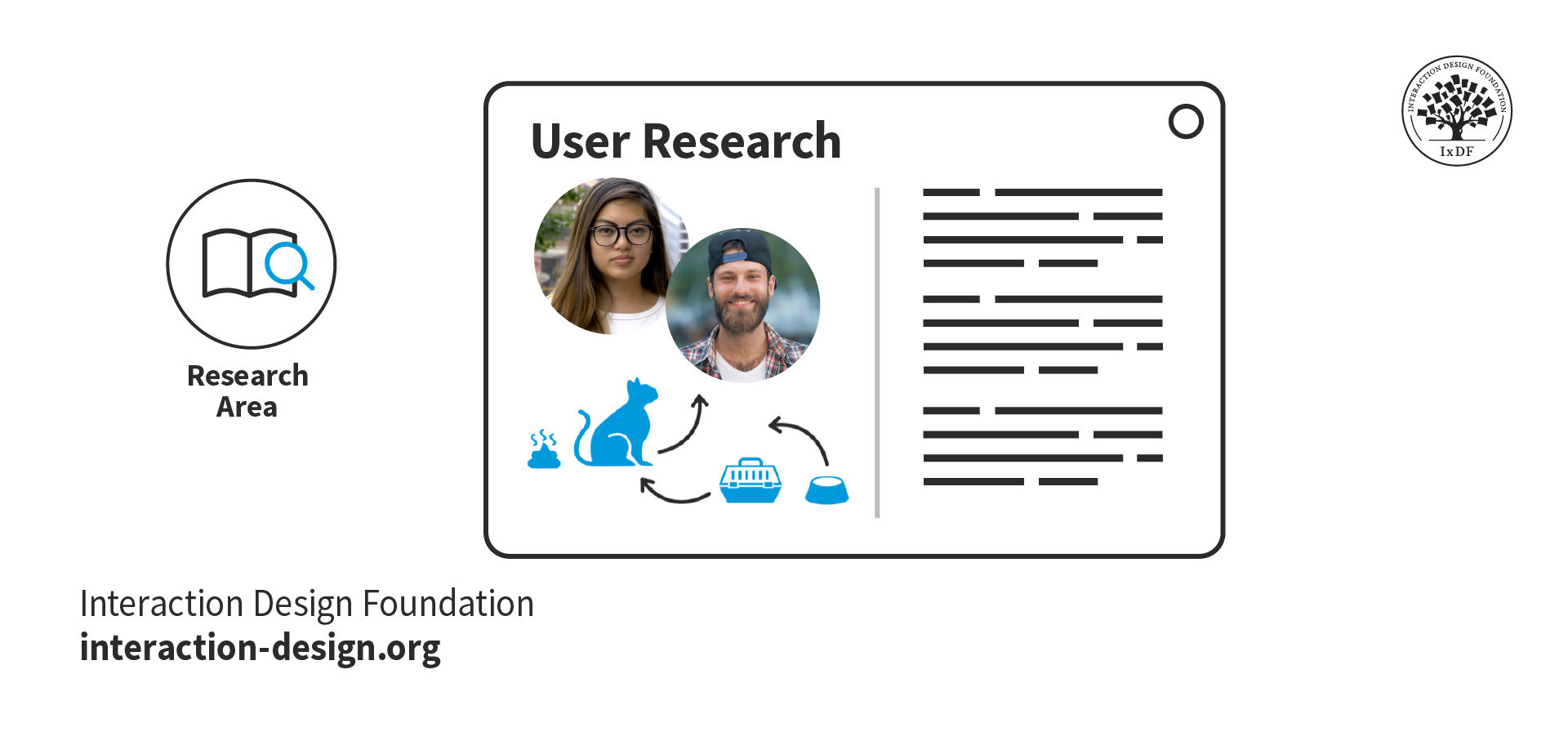
Research Area

If your case study project followed a typical design process like design thinking, then the next part of your story will likely be user research.

© Interaction Design Foundation, CC BY-SA 4.0

When you present your research and outcomes in your case study, you show that you care about research-driven, user-centered solutions. Follow these top tips when you write about your research:

  • Provide context, constraints, and clear research goals.

  • Insights are more valuable than screenshots of interview scripts or the tools you used. However, you should still include deliverables such as empathy maps, personas, and affinity diagrams to show your processes.

  • Organically link your research findings and explain how they informed your problem statement and design process.

  • Explain the reasoning behind your research methodologies and what you learned from them. Otherwise, it may seem you just ticked off research as part of a checklist.

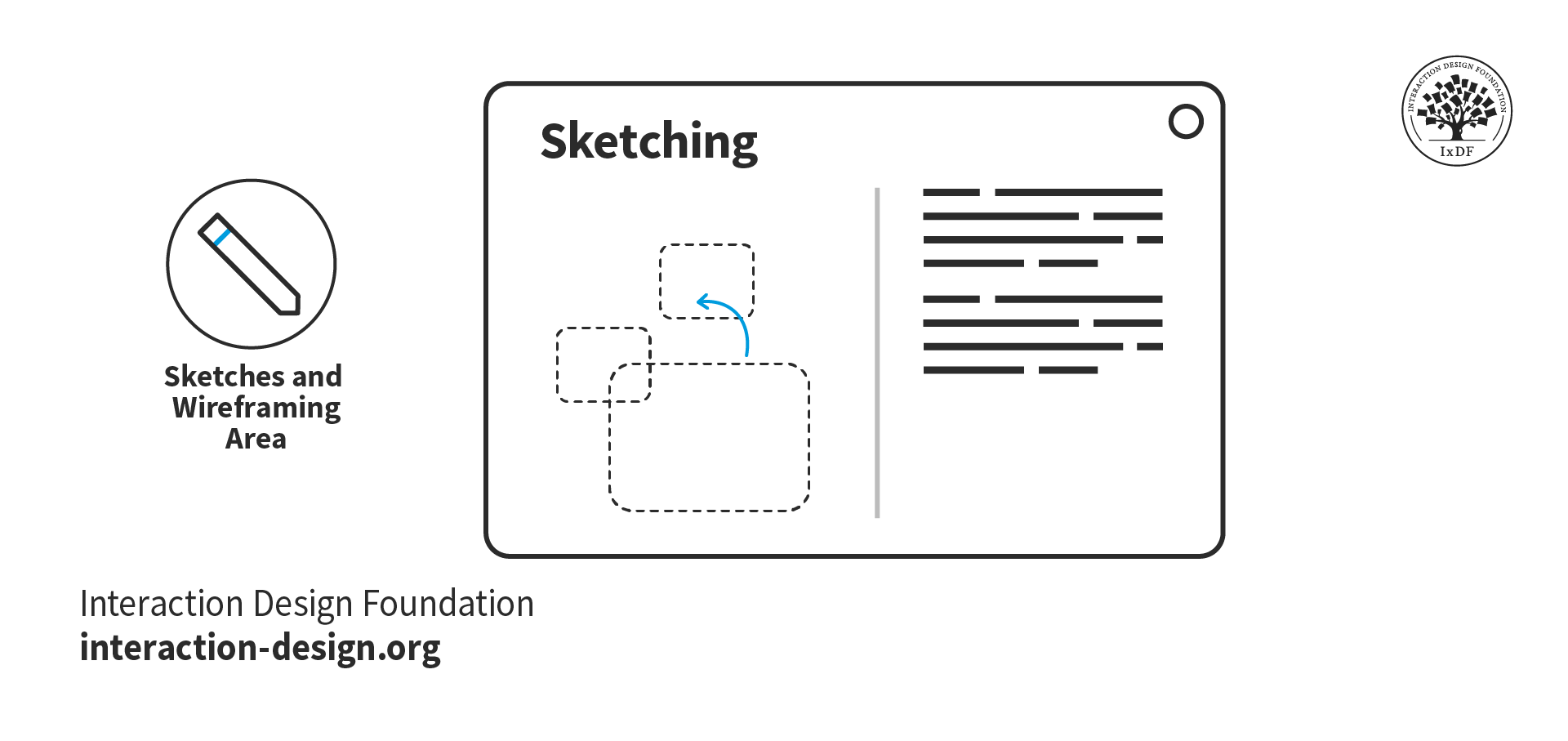
Sketching and Wireframing Area

Sketches and wireframes demonstrate your understanding of layout concepts, UI elements, and information hierarchy. They also show your thought processes and the journey from ideas and research insights to final prototypes.

© Interaction Design Foundation, CC BY-SA 4.0

This section is your opportunity to demonstrate the core of your design process:

  • Armed with research insights, how do you approach solutions for your users’ problems?

  • How do you collaborate in a team to generate and develop ideas?

  • When you face a roadblock, how do you get past it?

As for the sketches themselves, you may have created them rapidly while brainstorming, and unless you’re an excellent illustrator, they could be a little messy! Given this, it’s good practice to redraw your sketches for your portfolio. You want to make sure hiring managers can easily understand them and that your handwriting is clear.

Similarly, your hand-drawn wireframes should be well-presented. Even if you understand them, unaligned UI elements may appear as bad design. Redrawn sketches and wireframes also give you the opportunity to annotate and explain your design decisions. In this video, Mike Rohde, Illustrator, Teacher, and Designer, explains how to use sketches in your portfolio.

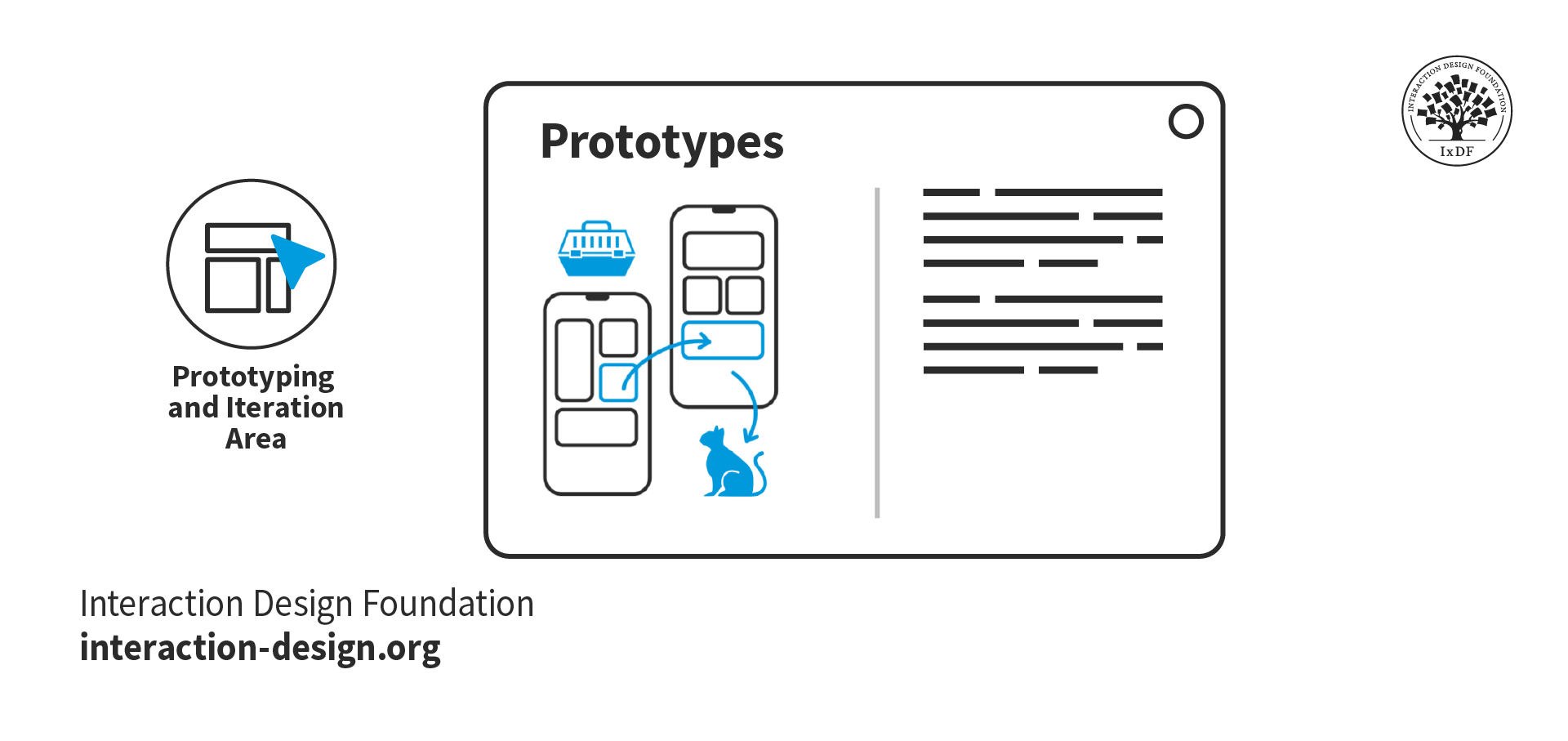
Prototyping and Iteration Area

The prototype and iterations section is the penultimate section of your case study, where you showcase your final design. You’ll also tell hiring managers about the road your designs took, from sketches to high-fidelity prototypes.

© Interaction Design Foundation, CC BY-SA 4.0

The time has come to show off your final designs! Use this opportunity to showcase how your design process paid off. These are some tips to get the most out of this section:

  • Include both mobile and desktop prototypes in context if your design is multi-device. For example, show the mobile version to scale within a phone mockup.

  • Link to your prototype files to allow hiring managers to explore the design in detail.

  • Highlight any usability testing and the design changes you implemented based on the insights you found. This approach shows how you improve designs through iteration.

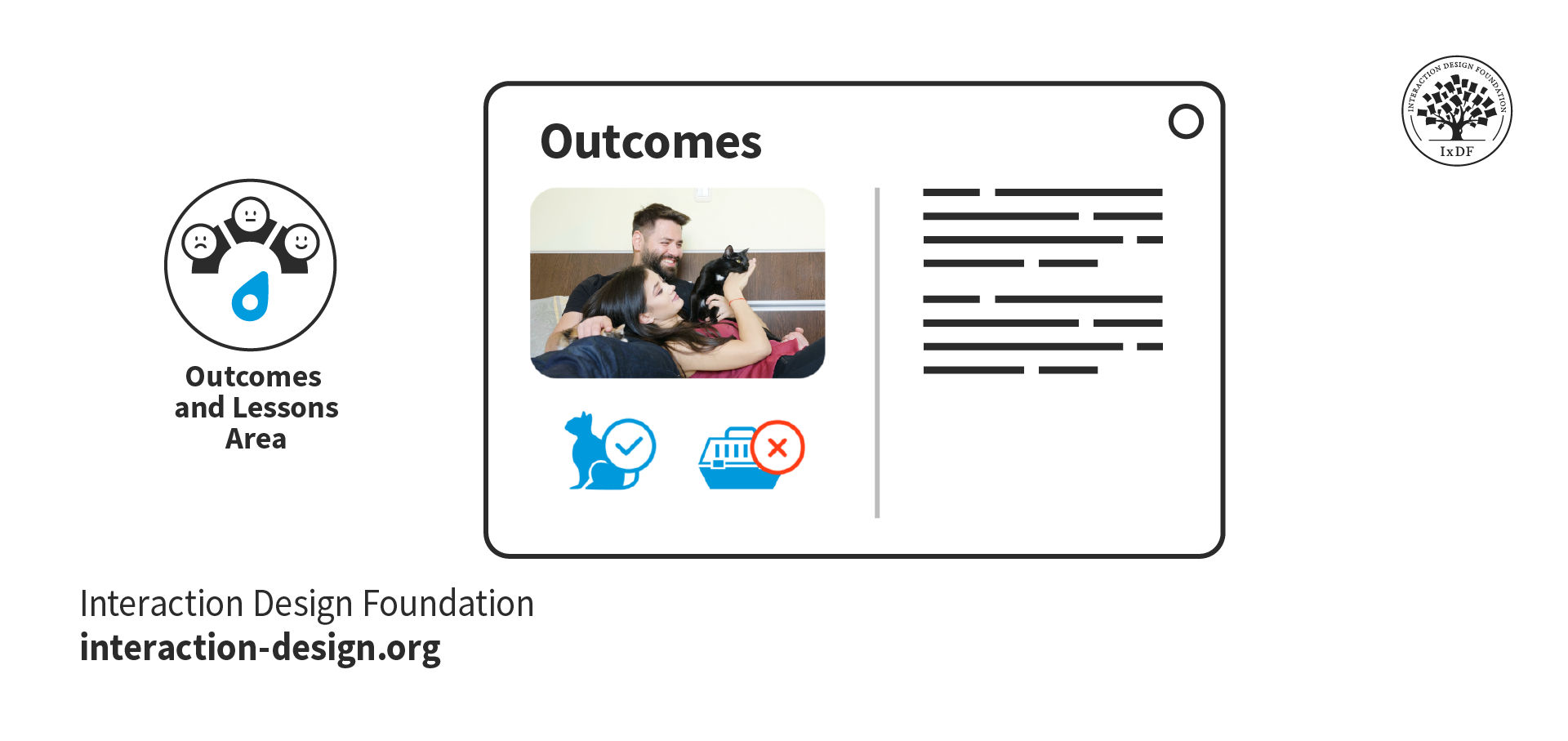
Outcomes and Lessons Learned

The outcomes and lessons from your project are arguably the most important part of your case study. Hiring managers want to see how you reflect on and grow from your experiences.

© Interaction Design Foundation, CC BY-SA 4.0

Finish your case studies with a conclusion. Did the project achieve its goals? If not, why? If yes, how? While the result is important, how you reflect on the project tells recruiters the most about you as a designer. Make sure you include the following as you write:

  • Include self-reflection and what you have learned to show growth and adaptability. Hiring managers want to see what you learned and how you’ve grown from a project, even if the project was not a business success.

  • Acknowledge your mistakes and the lessons learned from them, such as adapting complex interfaces for advanced users. Employers will trust you more when you admit your mistakes and show your ability to evolve and self-improve.

Take the Fast Lane with Our Case Study Template

You can get started on the structure of your case study right now with our free downloadable template. For each section, the template shows you what to include and presents a simple example:

Advance Your Career With This Free Template for “Craft Case Studies That Get You Invited To Your Dream Interview”
Craft Case Studies That Get You Invited To Your Dream Interview
We respect your privacy
Get 1 powerful email each week: Design a life you love!

The Narrative: Your Design Story

“Tell me the facts, and I’ll learn. Tell me the truth, and I’ll believe. But tell me a story, and it will live in my heart forever.”

—Native American proverb

Now that you have your structure, you can begin to thread your narrative through it. Consider the following as you write your case study stories.

Exposition

Exposition is where you set the scene of your story—it should be short, sweet, and fit into your hook. In your exposition, you should include:

  • The project background: Provide only as much background as necessary to understand the project's context. Introduce the client or company, the product, and anything else relevant. If it doesn’t add to the story, remove it!

  • The “inciting incident”: The earliest event in the story that sets it in motion. Instead of “My company tasked me with the project,” aim for “My company wanted to increase conversions to improve year-on-year sales figures, and identified our product pages as an opportunity for this.”

  • Your motivation: This is the most important part of the exposition. What motivated you to take on the project tells hiring managers a lot about you. For example, “I was eager to develop my user rapport skills, and this project required a lot of qualitative research.” This example shows you’re committed to growth and up for challenges.

  • The project goal(s): Where possible, use measurable goals so it is clear in your conclusion whether you met them or not. For example, “The project goal was to increase conversions by 1.5% and monthly revenue by 3%.”

If you are transitioning to UX/UI design from a different industry, you may need to provide a little more exposition. This additional information will help recruiters understand how your experiences relate to design. Find out more from Morgane Peng, Managing Director and Head of Design at Societe Generale CIB, on how to use your non-design experience in your design portfolio:

Transcript

Emotion

Emotion helps readers relate to the story and imagine themselves in your shoes. An emotional account will always provide a better reading experience than a dry, factual account ever could.

However, emotion doesn’t mean melodramatic. Keep your writing professional, and don’t exaggerate the emotion. You want to engage recruiters—not perform a soap opera.

Look at the following two examples; which one is more engaging?

Factual:

The main finding was that the assumption that users shopped based on their weekly nutritional needs was invalid.

Emotional:

Our finding threw a giant wrench in the works. We realized our assumption—that users shopped based on their weekly nutritional needs—was completely wrong.

Emotion is a tremendous factor in decision making, as Susan Weinschenk, Chief Behavioral Scientist and CEO, The Team W, Inc., explains in this video:

Transcript

Moments of Conflict

Conflict introduces problems that require a resolution. Conflict drives the story forward, creates emotional engagement, and shows character development.

Think about the challenges you faced in your project. How did you resolve them? Some examples of conflict could be:

  • A lack of accessibility that resulted in user complaints.

  • Conflicting stakeholder expectations that slowed a project down.

  • Differing opinions within the design team on how to move forward with a design.

  • Technical limitations of the product or platform that required design compromises.

The Climax

The climax can happen anywhere from about two-thirds of the way through a story and should be the most pivotal event. It could happen in any section of your case study; however, make sure to allow sufficient time to build up to it. If the climax happens too soon, everything after it will feel flat.

In a UX/UI design case study, you have a lot of freedom in what the climax can be. It can be a turning point, a victory, or, in some cases, a failure. However, it is important that the climax makes sense in the context of the rest of the narrative. It is followed by the “falling action,” which is where the story winds down and all conflicts are resolved.

 Some examples of the climax of a UX design case study are:

  • The positive results of a usability test for a risky, unconventional design.

  • The agreement of stakeholders to implement a design after much discussion and convincing.

  • The discovery of a user research insight that explains a previously misunderstood low user completion rate.

  • The creation of an ingenious design element that solves a complex problem.

The Take Away

The best way to write a case study is to tell a story. Design stories are vessels through which recruiters can imagine a future working with you.

  • Structure creates familiarity and facilitates navigation. Use your design process as chapter headings and include a good balance of text and media. Include the sections that are most relevant to you or that you wish to focus on.

  • Storytelling helps hiring managers experience and understand exactly how you solve a design problem. Use exposition, emotion, conflict, and the climax to engage readers and make your case studies memorable.

If you enjoy the process of writing your design stories, recruiters will enjoy reading them, too. Inject color and passion into a framework that is easy to understand, and you’ll soon be getting invited to interviews!

References and Where to Learn More

Want to create a portfolio that gets you hired? Take our course, Build a Standout UX/UI Portfolio: Land Your Dream Job, and learn how to showcase your skills, tell compelling project stories, and impress employers.

Learn more on how to Turn Your Non-Design Experience into Design Portfolio Gold.

Find out how to Keep Your Case Studies Confidential and Showcase Your NDA-Protected Design Work.

Incorporate Freytag’s Pyramid and Craft Compelling UX/UI Design Case Studies the Easy Way.

Discover How Aristotle’s 6 Elements of Drama Will Transform Your UX/UI Design Case Studies into Page-Turners.

Justinmind reveals case study tips from the industry in their article, How to Impress in a UX Job Interview: Recruiters & UX Managers Reveal Their Top Tips.

Images

Hero image: © Interaction Design Foundation, CC BY-SA 4.0

Feel Stuck?
Want Better Job Options?

AI is replacing jobs everywhere, yet design jobs are booming with a projected 45% job growth. With design skills, you can create products and services people love. More love means more impact and greater salary potential.

At IxDF, we help you from your first course to your next job, all in one place.

See How Design Skills Turn Into Job Options
Privacy Settings
By using this site, you accept our Cookie Policy and Terms of Use.
Customize
Accept all

Be the One Who Inspires

People remember who shares great ideas.

Share on:

Academic Credibility — On Autopilot

Don't waste time googling citation formats. Just copy, paste and look legit in seconds.