Usability Evaluation

Your constantly-updated definition of Usability Evaluation and collection of videos and articles.
Be a conversation starter: Share this page and inspire others!

295 Shares

What is Usability Evaluation?

Usability evaluation assesses how easy and enjoyable it is for users to achieve their goals while using a product. Designers use qualitative and quantitative research methods to identify User Experience (UX) issues.

"If a User is having a problem, it's our problem."
– Steve Jobs

Usability evaluation is important in design and essential for user satisafaction, but it's not enough by itself. In this quick video, you'll find out why usability evaluation is only one part of the whole picture. When you use it along with other tools designers have, you can come up with better and more useful solutions.

Transcript

To fully understand usability evaluation, it’s necessary to grasp the concept of usability first. The International Organization for Standardization (ISO) defines usability as:

“The extent to which a product can be used by specified users to achieve specified goals with effectiveness, efficiency, and satisfaction in a specified context of use.”

– ISO 9241-11, Ergonomics of human-system interaction—Part 11, Guidance on usability

Usability Evaluation measures (or in some cases, predicts) this effectiveness, efficiency and satisfaction. You can use usability evaluation methods at any stage of design or development.

  • Effectiveness checks how accurately users achieve goals in specific situations.

  • Efficiency looks at the resources used to accomplish goals.

  • Satisfaction examines how comfortable and pleasant the system is to users.

Let's take an online fitness tracker app as an example. You've downloaded the app to log your daily workouts. Effectiveness measures how accurately the app records the type and duration of your exercises. If it consistently gets this right, that's effective tracking.

Efficiency looks at how the app uses your phone's resources. Is it draining your battery too quickly while you log your workouts?

Satisfaction refers to how users feel about the entire experience. For example, how easy is it to set your fitness goals and track your progress?

In this example, user evaluation helps designers create a fitness app that is easy to use and meets the users' needs.

When to Use Usability Evaluation

Designers who learn how to use usability evaluation throughout the design process will find themselves at an advantage.

Evaluate early on in your design process: An architect will always check that a building's foundation is solid before construction begins. Similarly, usability evaluation can be a powerful foundational step in the early design and prototyping stages.

For example, a design team might use usability tests on an early prototype of a smartphone to catch potential issues like unclear navigation. You can save time and resources when issues like this are found and fixed early.

William Hudson, UX strategist and educator, explains why tree testing and first-click testing can be useful early in your design process.

Transcript

Evaluate throughout your design process: Continuous user feedback keeps a product on the right track throughout the design process. Designers who get user feedback throughout product development can rest assured that their product meets user needs and expectations.
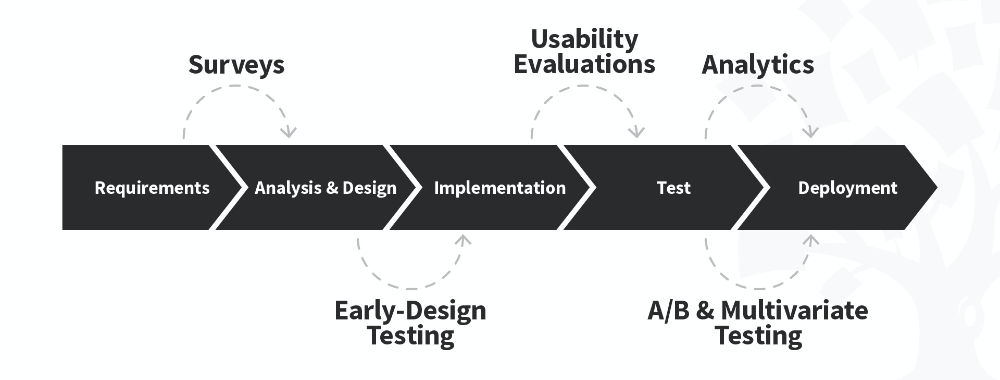
Usability evaluation happens at every step of a project, including during the requirements, analysis and design, implementation, testing and deployment stages.

Usability evaluation happens at every step of a project, including during the requirements, analysis and design, implementation, testing and deployment stages.

© Interaction Design Foundation, CC BY-SA 4.0

Evaluate before you launch a new product or relaunch an existing product: Always conduct usability evaluation when you're getting ready to make big changes or launch a new product. You can think of it like taste-testing a new recipe before you decide to use it for a special occassion.

For example, if you’ve been hired to redesign an online store, usability evaluation will help you ensure the site is user-friendly.

You’d use remote usability testing to make sure the process of buying products is smooth and error-free and it’ll be easy for more people to make purchases.

Why Usability Evaluation is Important in User Experience (UX) Design

Usability evaluation acts as a sense checker and keeps User Experience (UX) designers user-focused. Usability, a subset of UX design, makes sure that products are simple to use, work well, and meet users’ expectations.

User Experience (UX) encompasses the overall emotional and psychological response a user has when using a product.

Let’s look at why usability evaluation is important in UX design:

  1. User-centered design: Usability evaluation keeps the design focused on the people who will use the product. It ensures the user’s needs drive design decisions. This leads to a more effective and user-friendly interface.

  2. Problem identification: Usability evaluation methods help find potential problems within the user experience. Feedback from real users gives the design team useful insights that help them identify opportunities.

  3. Iterative improvement: Regular usability testing helps designers make continuous improvements. They test, improve, and test designs again, which leads to small but valuable improvements and a better user experience.

  4. Reduced costs: Design teams can use early-stage usability checks to save time and resources. It's a cost-friendly way to prevent expensive changes after the product is released.

  5. Competitive advantage: Products that go through usability testing often do better than their competition. It can result in users sticking aroundmore and help the brand build a solid reputation.

Alan Dix, professor and bestselling author, walks through three non-negotiable usability guidelines.

Transcript

Usability Testing vs Usability Evaluation - What’s the difference?

Usability testing involves observing the behavior of real users and is the most used usability evaluation method.

Take a group of people trying out a new mobile app for example. UX researchers will observe to see if any issues come up. These observations could include issues like a menu that’s difficult to find and a confusing signin process.

Usability evaluation includes usability testing, asking users for feedback (also known as inquiry) and examining the product's design (also known as inspection).

The Three Main Types of Usability Evaluation

The three main types of usability evaluation are usability testing, usability inquiry, and usability inspection. Together, these methods provide rich qualitative user insights. Researchers use these insights to gain a better understanding of user interactions, preferences, and challenges.
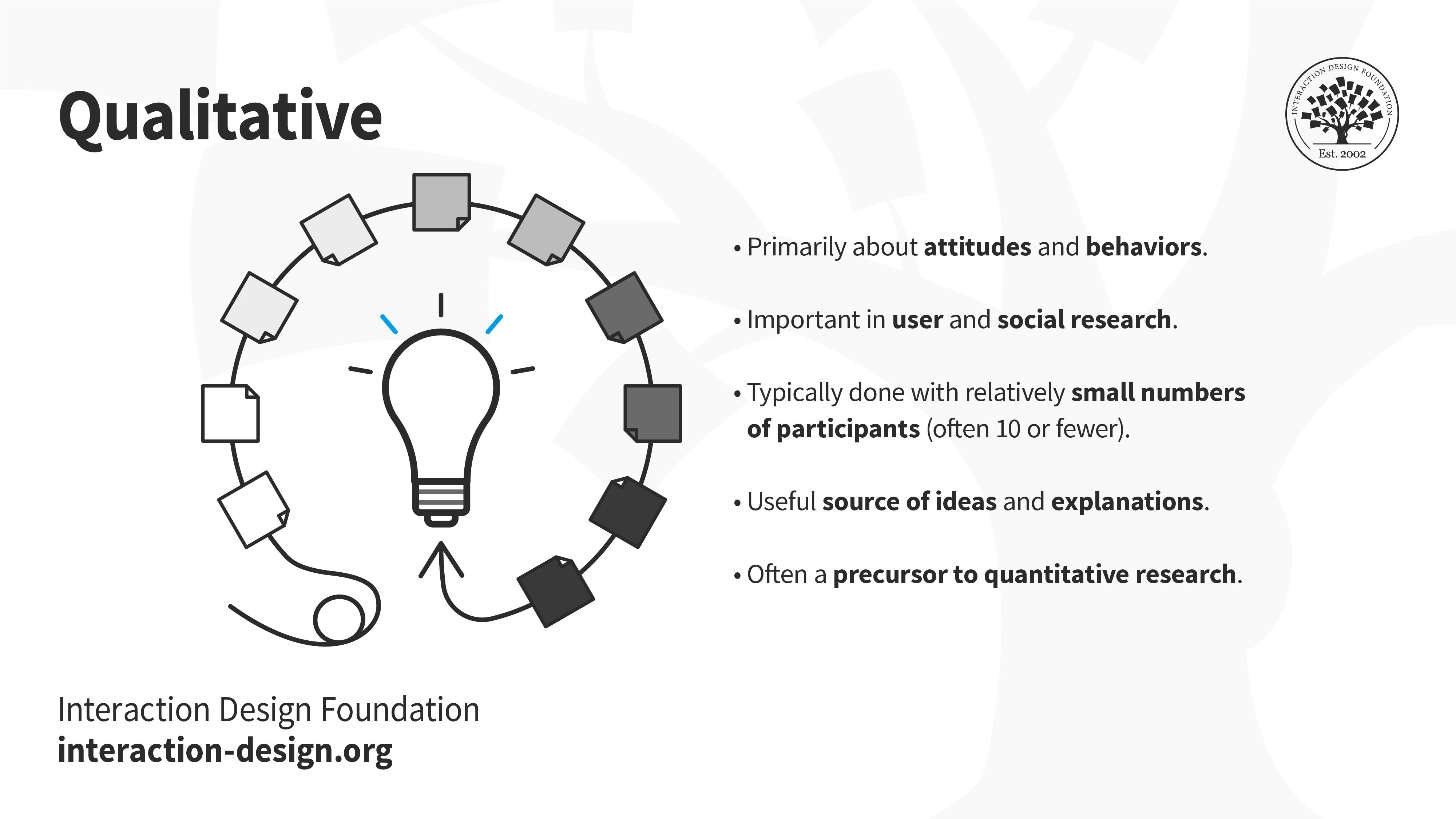
Often conducted before quantitative research, the qualitative research methods used in usability evaluation provide insight into user attitudes and behaviors. Qualitative research methods are typically done with 10 participants or less. Researchers use interviews and focus groups in combination with usability testing to obtain these qualitative user insights.

Often conducted before quantitative research, the qualitative research methods used in usability evaluation provide insight into user attitudes and behaviors. Qualitative research methods are typically done with 10 participants or less. Researchers use interviews and focus groups in combination with usability testing to obtain these qualitative user insights.

© Interaction Design Foundation, CC BY-SA 4.0

1. Usability Testing

Like watching people trying to cook a new recipe, usability testing involves observing real users. In the same way a chef in the kitchen can see if an ingredient is hard to find, UX designers can spot issues by watching how users behave. This qualitative hands-on approach provides actionable insights that ultimately help make the product easier to use.

2. Usability Inquiry

Usability inquiry involves talking to users to find out what they expect and what they need. It's important to get information from users to make designs people like and help them achieve their goals. Two common ways to do this are focus groups and interviews.

In focus groups, participants come together to discuss their experiences. For example, you can organize a focus group to learn how a group of gamers feels about a new mobile game’s interface.

Interviews involve one-on-one conversations. An example of this would be when a designer talks directly to a smartphone user to find out what they like and what their challenges are.

Ann Blandford, Professor of Human-Computer Interaction at University College London, explains the pros and cons of user interviews.

Transcript

Both focus groups and interviews can help UX designers understand what users want and need.

3. Usability Inspection

Usability inspection involves expert assessments to find usability problems. Heuristic evaluations and cognitive and pluralistic walkthroughs are methods used to test how easy a product is to use.

Heuristic evaluations use predefined principles. For example, think about testing a mobile app. You'd have a list of guidelines or rules for making a good app, like "clear navigation" and "simple registration." If you had trouble using the menu, you'd use these rules to recommend changes to the app.
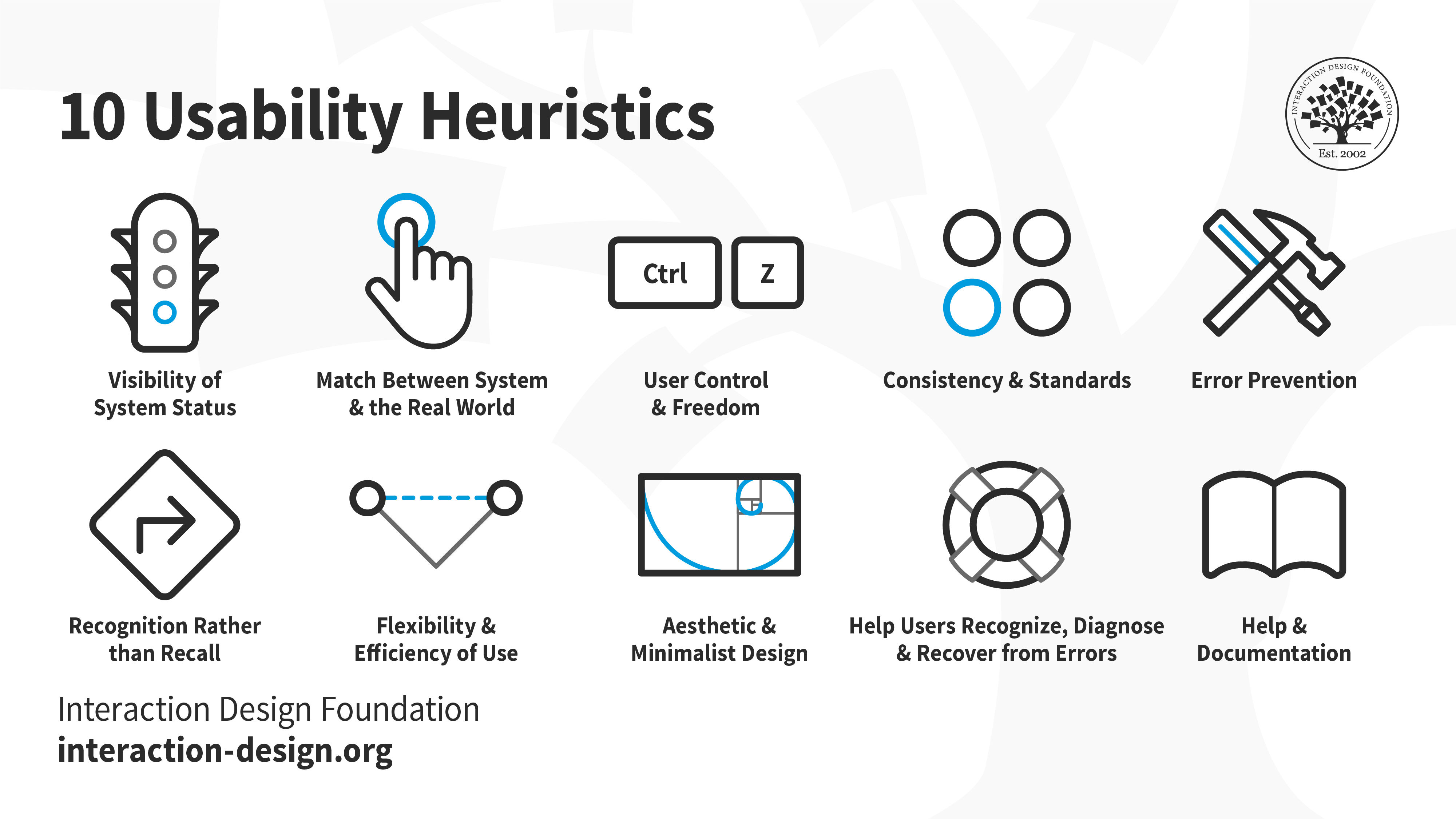
The ten Nielsen-Molich usability heuristics are visibility of system status, system match to the real world, user control and freedom, consistency and standards, error prevention, recognition instead of recall, flexibility and efficiency of use, aesthetic and minimalist design, help users recognize, diagnose and recover from errors and help and documentation. These usability heuristics help UX designers measure how user-friendly a digital product is.

The ten Nielsen-Molich usability heuristics are visibility of system status, system match to the real world, user control and freedom, consistency and standards, error prevention, recognition instead of recall, flexibility and efficiency of use, aesthetic and minimalist design, help users recognize, diagnose and recover from errors and help and documentation. These usability heuristics help UX designers measure how user-friendly a digital product is.

© Interaction Design Foundation, CC BY-SA 4.0

Cognitive walkthroughs are when experts pretend to be users. They go through the interface one step at a time to find any problems with how user-friendly it is.

An example of a cognitive walkthrough is when a team of UX specialists, engineers, and experts evaluate a new mobile app:

  • They plan which specific user activities they want to check. This includes tasks like signing in, finding a product, and completing a purchase.

  • They perform each step while putting themselves in the mindset of a first-time user of the app.

  • The goal of this exercise is to identify any problems with how easy the mobile app is to use.

Pluralistic walkthroughs are similar to cognitive walkthroughs. A group of experts, users, and other stakeholders work together to share their perspectives.

For example, a user might say, "I can't figure out how to buy that Nike shoe in size 38." The product manager might interpret that as, "This design doesn't yet match our project goals. It doesn’t give the user the feedback that this particular size is out of stock." This gives a broader view of what needs fixing.

These techniques provide a structured approach to evaluating usability. They also provide useful ideas for improving the design.

Quick Comparison Table: The Three Usability Evaluation Methods

Usability

Evaluation Method

Pros

Cons

Examples

Helpful Tools

Usability Testing

- Real user interactions

- Identifies actual user issues

- Provides direct user feedback

- Requires user recruitment and coordination

- Can be resource-intensive

- Limited to the skills and insights of the test users

UX researchers observe users completing a list of tasks on their new food-ordering app. They make notes of potential usability issues.

- UserTesting

- Maze

Usability Inquiry

- In-depth user opinions

- Uncovers user preferences and expectations

- Facilitates open-ended discussions

- Highly dependent on user availability

- Biased by users’ personal perspective

- May not uncover all usability issues

A UX designer wants to gather user feedback and opinions about their new e-commerce website. They conduct user interviews, focus groups, and surveys.

- SurveyMonkey

- Zoom for remote interviews

- Microsoft Forms

Usability

Inspection

- Expert-driven assessments

- Identifies potential issues

- Cost-effective and quicker

- May not catch all real user issues

- Limited to the expertise of the inspectors

- Less user-focused than testing and inquiry methods

A group of UX designers and developers evaluate their new mobile game UI using predefined criteria like heuristics.

- Nielsen's 10 Usability Heuristics

- Lyssna (previously UsabilityHub)

- UXCheck

How to Recruit Users for Usability Evaluation

You’ll gain useful, valuable insights into the usability of your product if you take a well-thought-out approach to recruitment for usability evaluation.

Recruitment Planning Guidelines

Understand Your Users: Before you start recruiting, figure out who your ideal users are. Take the time you need to get clear about details like their age, what they like, and why they might use your product. This will help you find the right people for the usability evaluation.

Look for people who are genuinely interested in what your product is about. Think about this as if you’re starting a sci-fi book club. Would you invite sci-fi enthusiasts or romance readers? Sci-fi readers who already enjoy the genre are a better fit. You can expect them to engage and provide relevant feedback during book club meetings. In the same way, feedback from users who are likely to use your product in their real lives will provide the valuable insights you’re after.

Refine Your Recruitment Messages: First impressions matter. Your recruitment message is the first point of contact with potential participants. When writing your message, tell users why you're doing this usability evaluation and what's in it for them. Make it easy for users to express interest, learn more and sign up to participate.

Offer Incentives: Incentives can be a powerful tool in user recruitment. Experiment with rewards you offer participants, such as gift cards and discounts. Incentives show your appreciation for their time.

Prioritize Diversity: You’ll gain a better understanding of what real users may think of your product if your recruitment efforts are inclusive. Inclusive recruitment results in a healthy mix of backgrounds and experiences and contributes to more in-depth usability insights.

Instructor William Hudson talks about user research recruitment and how to identify participants who aren’t a good fit.

Transcript

Where to Find Usability Evaluation Participants

Existing Users: Your existing user base is a goldmine for usability feedback. It's best to avoid assuming they'll join in. Invite your users to join through emails, website pop-ups, social media groups, or even have sales and customer service teams reach out.

Online Platforms: You can tap into the large pool of potential participants available online via social media platforms, user forums, and online communities.

Think about where your target users might naturally gather online. Platforms like Reddit, LinkedIn groups or Discord channels provide spaces where users share their experiences. Many of the users found in these online spaces are willing to take part in usability studies.

Collaborate with User Research Platforms: User research platforms connect UX designers with potential participants. These platforms make it easy to find a lot of different users, which can save time and give you a more diverse group to learn from.

The Nielsen Norman Group discusses five ways to recruit participants for user research.

How to Deal with Common Usability Evaluation Challenges

A lack of budget, time and buy-in from stakeholders can derail even the best-laid usability evaluation plan. Experienced UX designers understand the importance of forward planning. Instead of viewing these challenges as obstacles, try to see them as opportunities.

How to Handle Small Budgets and Tight Timelines

Tight budgets and timelines can limit resources available for usability evaluations. You can still get valuable insights into user experiences if you learn to work with these challenges.

Strategies you can use to deal with a restrictive usability testing budget and time constraints:

  1. Focus on Key Objectives: Identify the aspects of usability that match project goals. You can then allocate limited resources to the most impactful areas of usability.

    For example, an online clothing store would focus on making it easy to buy clothing and search for specific items. They’d focus their resources on testing the checkout and search functionality.

  2. Lean Methodologies: Efficient usability testing methods like guerrilla testing are quick, informal approaches that provide valuable insights.

  3. Open-Source Tools: Open-source usability testing tools keep costs down. These tools will help you conduct usability assessments without a big financial investment.

Managing Resistance to Usability Changes

Resistance to usability changes, often from stakeholders, poses another challenge for many UX designers. It’s necessary to overcome this resistance if you want to improve certain aspects of the product based on usability findings.

Strategies you can use to overcome resistance to usability changes:

  1. Keep Communication Open: Establish open lines of communication between researchers and stakeholders. Clearly explain why you suggest the changes you’ve proposed.

  2. Show Clear Proof: Back up the suggested changes with data, feedback from users, and usability metrics.

  3. Highlight Long-Term Benefits: Point out the good that will happen in the long-run because of user-centric design. Teach stakeholders how valuable it is to fix usability issues early in the design process. Emphasize benefits like more satisfied users, spending less money, and building stronger loyalty to the brand.
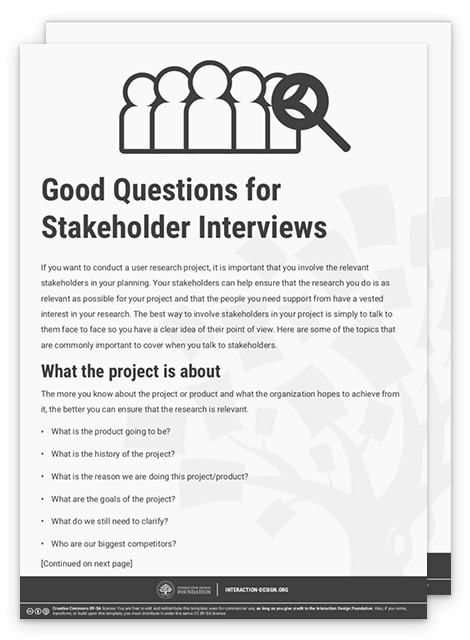
Advance Your Career With This Free Template for “Good Questions for Stakeholder Interviews”
Good Questions for Stakeholder Interviews
We respect your privacy
Get 1 powerful email each week: Design a life you love!

Questions About Usability Evaluation?
We've Got Answers!

How do you evaluate the usability of a website?

UX design professionals use usability testing to evaluate how easy it is to use a website:

1. Recruit real users to conduct usability testing.

2. Use Heuristic evaluation such as Nielsen's 10 heuristics, to identify potential usability problems.

3. Perform cognitive walkthroughs to identify potential usability issues.

4. Analyze user feedback and available analytics from user feedback forms, support tickets, and web analytics.

Accessibility and usability are closely related in web design. Watch the video below and read the article, Usability for All, to learn more.

Transcript

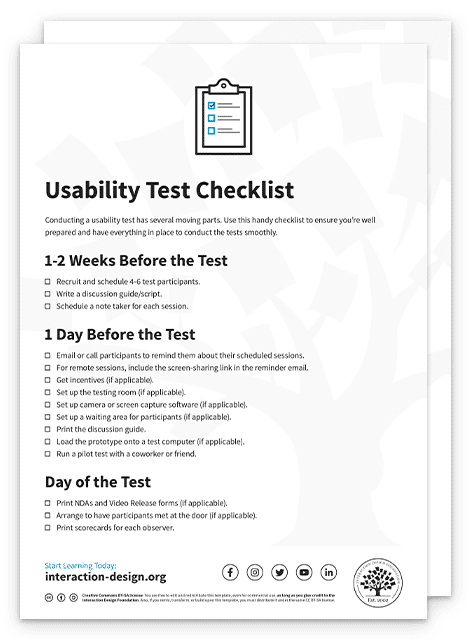
What is a usability checklist?

A usability checklist outlines the steps needed during a usability test. The researcher is the only person who uses the usability checklist. They do so to ensure they remember to do or say anything important during the test.

Advance Your Career With This Free Template for “Usability Test Checklist”
Usability Test Checklist
We respect your privacy
Get 1 powerful email each week: Design a life you love!

To learn more, read this article for a semi-structured qualitative study (SSQS) checklist.

What is the difference between usability and heuristic evaluation?

Heuristic evaluation is a specific method within usability evaluation. Experts, often UX professionals, test the product using some predetermined rules or guidelines.

The heuristics are rules of thumb for good design and usability, like Jakob Nielsen’s 10 usability heuristics. Read how to conduct a heuristic evaluation for usability to learn more.

William Hudson, author and instructor in user-centered design, shares what it means to conduct a heuristic evaluation.

Transcript

What are some highly cited scientific research about usability evaluation?

1. Nielsen, J. (1993). Usability Engineering. Academic Press.

You’ll find a framework for usability engineering and improving the usability of interactive systems in this book by Jakob Nielsen.

2. Brooke, J. (1996). SUS: A quick and dirty usability scale. In Usability evaluation in industry (Vol. 189, pp. 4-7). CRC Press.

Designers use John Brooke’s System Usability Scale (SUS) to evaluate the usability of products and services.

3. Lewis, J. R. (1995). IBM computer usability satisfaction questionnaires: Psychometric evaluation and instructions for use. International Journal of Human-Computer Interaction, 7(1), 57-78.

Lewis’s paper presents the IBM Computer Usability Satisfaction Questionnaires (CSUQ). These are well-established standardized questionnaires for assessing user satisfaction.

4. Tullis, T., & Stetson, J. (2004). A comparison of questionnaires for assessing website usability. Paper presented at the Usability Professionals Association Conference.

This conference paper compares various questionnaires for assessing website usability.

5. Bangor, A., Kortum, P. T., & Miller, J. T. (2009). An empirical evaluation of the system usability scale. International Journal of Human-Computer Interaction, 24(6), 574-594.

This paper critically evaluates the System Usability Scale (SUS).

If you’d like to cite content from the IxDF website, click the ‘cite this article’ button near the top of your screen.

Is usability testing formative or summative?

Usability testing can be both formative and summative. How you classify it depends on when the testing takes place and for what reason,

Designers use formative usability testing during the initial stages of the design process. You can then use summative testing after the product is released to see how well it works.

Learn more about formative vs summative usability evaluation on the Nielsen Norman Group website.

1. Krug, S. (2006). Don’t Make Me Think: A Common Sense Approach to Web Usability. New Riders.

Many designers consider Steve Krug’s book to be a classic. It offers a common-sense approach to web usability.

2. Norman, D. A. (2013). The Design of Everyday Things. Basic Books.

Don Norman’s book is a must-read for UX designers. It emphasizes the importance of user-centered design and understanding the psychology of users.

3. Barnum, C. M. (2010). Usability Testing Essentials: Ready, Set... Test! Morgan Kaufmann.

Carol M. Barnum’s book is an excellent resource if you want to understand and conduct usability testing.

4. Krug, S. (2009). Rocket Surgery Made Easy: The Do-It-Yourself Guide to Finding and Fixing Usability Problems. New Riders.

This is another practical book by Steve Krug. It offers a step-by-step guide to conducting usability tests and improving user experiences.

5. Garrett, J. J. (2011). The Elements of User Experience: User-Centered Design for the Web and Beyond. New Riders.

Jesse James Garrett’s book breaks down the elements of the user experience and how they relate to the design process.

6. Lidwell, W., Holden, K., & Butler, J. (2010). Universal Principles of Design. Rockport Publishers.

You’ll find 125 design principles in a visually engaging and easily digestible format in this book.

7. Buley, L. (2013). The User Experience Team of One: A Research and Design Survival Guide. Rosenfeld Media.

This is an ideal read for designers working in smaller teams or as the sole UX designer on a project.

You can find a full list of the top UX Design books, catering to both beginners and experts, in this article.

What are the 5 usability evaluation criteria?

The five usability evaluation criteria are:

1. how easily you can learn it,

2. how efficiently you can use it,

3. how well you remember how to use it,

4. how often you make mistakes,

5. and how much you like using it.

Each of these five factors aren’t always equally important for every project.

Short on time or resources? These 5 Simple Usability Tips are easy to implement and won’t break the bank.

What is usability in HCI (Human Computer Interaction)?

Usability is a cornerstone concept in Human-Computer Interaction (HCI). The five usability factors in HCI are how easy it is to learn, how efficiently it works, how well you remember how to use it, how often mistakes happen, and how satisfied you are with the experience.

You can learn more about the relatively new discipline of Human-Computer Interaction, with our foundational course.

Transcript

Can I conduct usability testing remotely?

Remote usability testing is a widely used research method. UX researchers use online tools to capture how test participants use a digital product. The most common types of data collected are screen and voice recordings.

In moderated remote testing, UX researchers follow along in real time and talk to users as they do specific tasks. Moderated testing works well for tricky tasks where more talking and asking questions will help with testing.

In unmoderated testing, the researcher shares a set list of tasks, and the participant does them on their own. Remote usability testing is a practical and money-saving way to observe real people do real tasks.

You can learn more by taking our popular Conducting Usability Testing UX design course.

Transcript

How will AI affect UX research?

UX researchers can use AI to streamline tedious work processes. AI tools can look at data, spot trends and figure out how users feel about your product. UX designers who choose to make use of the AI tools available will have more time and mental energy to focus on more important tasks.

It’s important to know AI tools can bring in human biases when people use AI-powered results in decision-making. Designers must use critical thinking when dealing with any type of AI-generated content. Read ‘How Can Designers Adapt to New Technologies?’ to learn more.

AI will eventually impact all areas of UX design. Let’s hear what Don Norman, author and co-founder of the Nielsen Norman Group, thinks about AI.

Transcript

Earn a Gift Earn a Gift, Answer a Short Quiz!

1
2
3
4
1
2
3
4
Question 1
Question 2
Question 3
Get Your Gift
Interaction Design Foundation logo

Question 1

What is the primary goal of usability evaluation?

1 point towards your gift

  • To assess how enjoyable a product is for developers.
  • To evaluate how effectively users can achieve their goals using a product.
  • To compare a product’s aesthetic value with competitors.
Interaction Design Foundation logo

Question 2

What is a key benefit of conducting usability testing early in the design process?

1 point towards your gift

  • It allows users to suggest major design changes.
  • It identifies potential usability issues before implementation.
  • It reduces the need for user feedback later.
Interaction Design Foundation logo

Question 3

What distinguishes usability testing from usability inspection?

1 point towards your gift

  • Usability testing focuses on observing real users, while usability inspection involves expert reviews.
  • Usability testing evaluates the code, while usability inspection assesses user interfaces.
  • Usability testing requires expert knowledge, while usability inspection is user-driven.

Learn More About Usability Evaluation

Make learning as easy as watching Netflix: Learn more about Usability Evaluation by taking the online IxDF Course The Practical Guide to Usability.

Why? Because design skills make you valuable. In any job. Any industry.

In This Course, You'll

  • Get excited as you master usability to create products and services people love. Users don't notice good usability, but they never forget bad design. If you had to choose between a product requiring a manual and one that's intuitive from the start, you'd choose intuitive usability every time. This course helps you turn complexity into simplicity and frustration into love. Studies show that 79% of people abandon websites due to poor usability. Think of the advantage you gain when you identify problems early and design solutions users genuinely love. As AI becomes part of design workflows, your timeless human-centered design skills help you decide which usability problems are worth solving and how solutions should actually work for people. This is how you stay in demand: Human-centered design skills transform AI from a tool into your new superpower.

  • Make yourself invaluable by learning how to think like your users. A well-designed user interface can boost a website's conversion rate by up to 200%. This course equips you to observe user behavior, uncover hidden pain points, and make data-backed decisions that increase loyalty, efficiency, and profits. Usability ensures your designs connect with people on a human level, whether you create software, marketing campaigns, or operational processes. All industries and roles benefit from great usability. You already practice usability intuitively when you arrange apps for easy access or label folders clearly—professional usability naturally builds on these skills.

  • Gain confidence and credibility with ready-to-use templates, real-world examples, and clear guidance you can immediately apply. No matter your background, you'll be guided to easily master heuristic evaluations, cognitive walkthroughs, and user testing to transform “good enough” designs into firm favorites. You'll apply best practices directly to your work, designing products and services that are not only functional but loved. This course empowers you to create meaningful experiences, enhance your career, and make a lasting impact on people's lives.

It's Easy to Fast-Track Your Career with the World's Best Experts

Master complex skills effortlessly with proven best practices and toolkits directly from the world's top design experts. Meet your experts for this course:

  • Marc Hassenzahl: Professor of Ubiquitous Design/Experience & Interaction in the Department of Business Computing at the University of Siegen.

  • William Hudson: User Experience Strategist and Founder of Syntagm.

Get an Industry-Recognized IxDF Course Certificate

Increase your credibility, salary potential and job opportunities by showing credible evidence of your skills.

IxDF Course Certificates set the industry gold standard. Add them to your LinkedIn profile, resumé, and job applications.

Course Certificate Example

Be in distinguished company, alongside industry leaders who train their teams with the IxDF and trust IxDF Course Certificates.

Our clients: IBM, HP, Adobe, GE, Accenture, Allianz, Phillips, Deezer, Capgemin, Mcafee, SAP, Telenor, Cigna, British Parliament, State of New York

All Free IxDF Articles on Usability Evaluation

Read full article
Four Assumptions for Usability Evaluations - Article hero image
Interaction Design Foundation logo

Four Assumptions for Usability Evaluations

Usability is a vital part of the user experience as a whole. It’s vital for UX design teams to be able to assess whether a system they’ve developed is “usable”. When we say “usable” what we normally mean is the “extent to which a system is simple and enjoyable to use”. Yet, as with all simple concep

Social shares
556
Published
Read Article
Read full article
System Usability Scale for Data-Driven UX - Article hero image
Interaction Design Foundation logo

System Usability Scale for Data-Driven UX

Ever wondered how the top designers, researchers, and product developers manage to create products that are user-friendly, efficient, and enjoyable—consistently? One of the key things there is what’s called the System Usability Scale (SUS), a vital tool and questionnaire-based method that profession

Social shares
932
Published
Read Article

Four Assumptions for Usability Evaluations

Four Assumptions for Usability Evaluations

Usability is a vital part of the user experience as a whole. It’s vital for UX design teams to be able to assess whether a system they’ve developed is “usable”. When we say “usable” what we normally mean is the “extent to which a system is simple and enjoyable to use”. Yet, as with all simple concepts the reality of conducting usability evaluations is far more complex.

Before we can begin to look at the field of usability evaluations there are four useful assumptions we can make about usability:

Author/Copyright holder: Rob Enslin. Copyright terms and licence: CC BY 2.

Assumption 1

Usability is a built in property of all interactive digital technology. It is also a measurable property of those technologies.

Assumption 2

There are existing methods prepared by both Human Computer Interaction and Interaction Design professionals that should be able to determine if a system is usable.

Assumption 3

If a system is determined to be usable. The same methods should be able to tell us how usable. These methods should give us useful metrics which are both robust and objective.

Assumption 4

These methods have been documented. If you want to learn about usability evaluation; you should be able to read the literature and then via application and practice – you should be able to tell if a system is usable and if so how usable it is.

This sounds fantastic doesn’t it? It makes everything sound easy. The good news is that we can measure usability; so that should avoid any arguments over semantics when we put our system through an evaluation right?

The fact that there are existing methods means that we don’t have to develop our own methods. This sounds even better. None of us like reinventing the wheel and if someone else has done all the hard work; so much the better. We can grab a reference text and roll out some other expert’s test on our system and just write down the results.

In fact, this makes usability evaluation sound like the easiest job in the world doesn’t it? Yet, usability evaluation can still be a surprisingly tricky field. You see, it’s a relatively new field. In the days of relatively simple technology; like, for example, the wheel – we could determine usability very easily. “Does it go round and make moving stuff easier?” “Why, yes it does!”

But our modern technologies are far more complex and users have different inherent interests, abilities and experiences. An electron microscope is certainly “usable” to a trained laboratory technician but probably much less usable to a random passer-by.

Author/Copyright holder: Paul Lamere. Copyright terms and licence: CC BY 2.0

The assumptions above are a useful starting point for usability evaluations because they are, to some extent, true. However, they are a starting point only and the usability evaluations you conduct are an end point. You may have to devise your own methods (or build on existing ones) and yes, you may have to argue semantics about what makes “usable” the right word in your context too.

If you’d like to know more about how you might do that; you can read the full text of Usability Evaluation by Gilbert Cockton (Professor of Design Theory in the School of Design at Northumbria University) here.

Header Image: Author/Copyright holder: Arcadiuš. Copyright terms and licence: CC BY 2.0

Feel Stuck?
Want Better Job Options?

AI is replacing jobs everywhere, yet design jobs are booming with a projected 45% job growth. With design skills, you can create products and services people love. More love means more impact and greater salary potential.

At IxDF, we help you from your first course to your next job, all in one place.

See How Design Skills Turn Into Job Options
Privacy Settings
By using this site, you accept our Cookie Policy and Terms of Use.
Customize
Accept all

Be the One Who Inspires

People remember who shares great ideas.

Share on:

Academic Credibility — On Autopilot

Don't waste time googling citation formats. Just copy, paste and look legit in seconds.