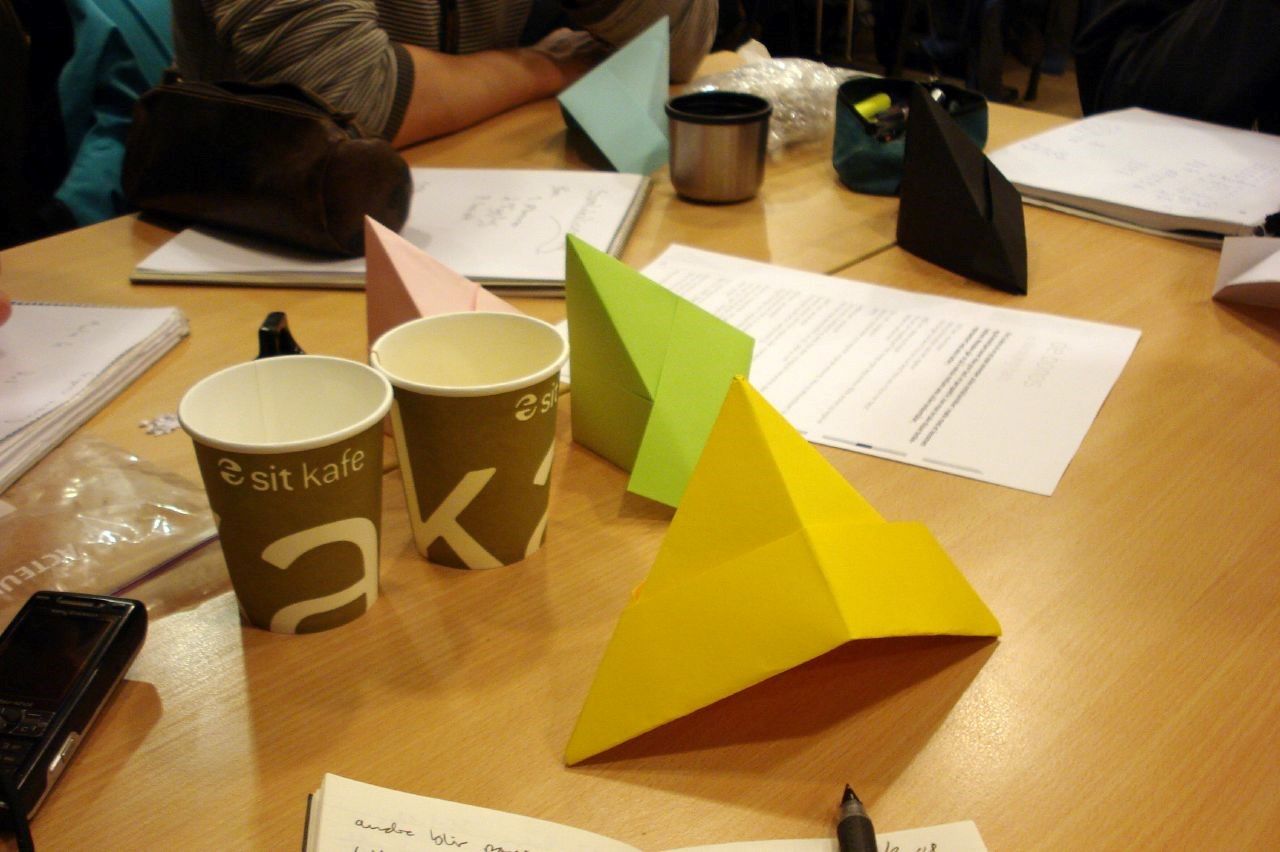
Brainwalking is a collaborative ideation technique where participants generate ideas by moving around in a designated space. It is an extension of brainstorming. Designers aim to overcome the limitations of traditional idea generation methods by walking around, observing visual stimuli, and sharing their ideas.
How do UX Design Teams Use Brainwalking to Generate Ideas?
In the user experience (UX) design world, it’s crucial to generate innovative ideas to ultimately create exceptional products. One popular technique among UX design teams is brainwalking. In traditional brainstorming sessions, everyone sits. However, in brainwalking, design team members walk around a room or space adorned with items that act as stimuli. These could be posters, images, or other items related to the design challenge at hand. As you walk, you and your team members observe the stimuli and share your ideas. You do this verbally or by jotting ideas down on sticky notes.
Brainwalking is one of a number of brainstorming variants like brainwriting and braindumping. UX design teams use it to foster creativity, collaboration, and diverse perspectives during the ideation phase of a project. Because it involves physical movement and visual stimuli, brainwalking stimulates the brain's associative thinking. Some powerful insights can come when you go from station to station in a room. It’s a unique way to reach into the problem-solving space and get to more diverse, innovative, and good ideas.
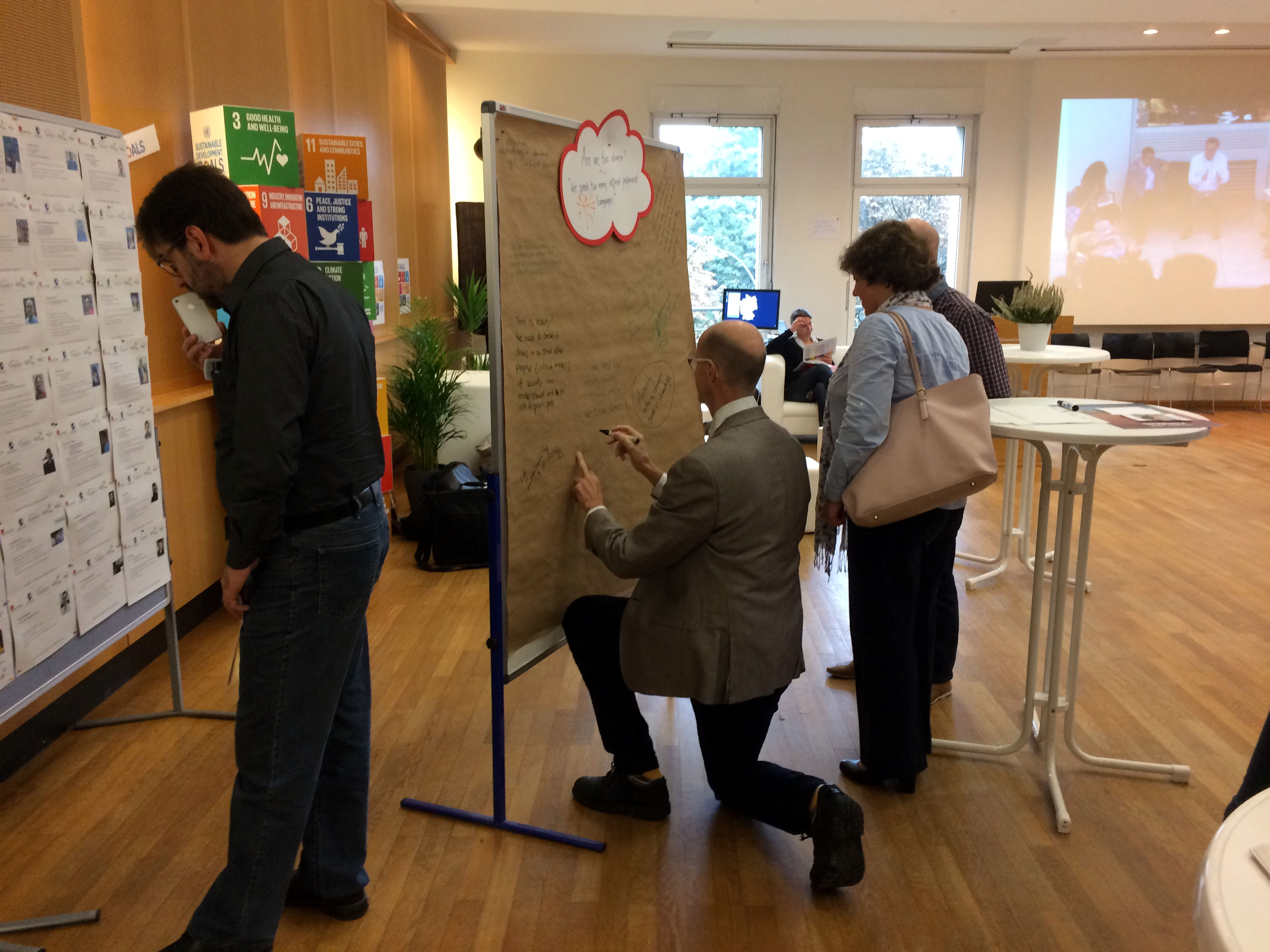
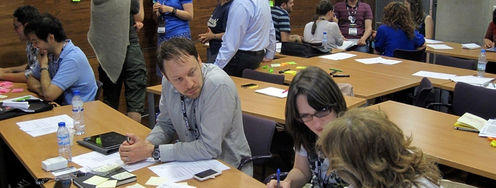
Everyone gets to flex their creative muscles in this activity.
© Michaela Haase, Fair Use
The Benefits of Brainwalking
Here are some ways that brainwalking can help your ideation process.
1. Enhanced Creativity and Idea Generation
The physical movement and exposure to visual stimuli can go a long way towards the beginnings of potential solutions. The activity stimulates creative thinking and lets you and others generate a wide range of ideas. What’s more, the combination of moving and observing helps you all think outside the box. You might make connections to fresh ideas that you may not have made while seated in a traditional brainstorming session.
2. Improved Collaboration and Communication
The activity encourages active participation and collaboration among team members. As you all move around the space, you engage in discussions, share ideas, and build upon each other's thoughts. This collaborative environment fosters better communication and ensures everyone gets to consider diverse perspectives. That diversity is going to be a major key for you to solve problems in the real world. Ultimately, it will be instrumental in how your team arrives at the best products or services to address your design challenge.
3. Diverse Perspectives and Increased Innovation
The activity allows you and the other participants to approach the design challenge from different angles—literally and figuratively. When you move around and come upon a new item, you bring unique insights and idiosyncrasies to what you find. This leads to a broader range of perspectives and ideas. That promotes innovation and prevents groupthink.
4. Engaging and Energizing Experience
Unlike traditional brainstorming sessions that can be static and repetitive, brainwalking provides an engaging and energizing experience. The physical movement and interaction with stimuli keep participants actively involved. Everyone can enhance their focus and motivation throughout the session.

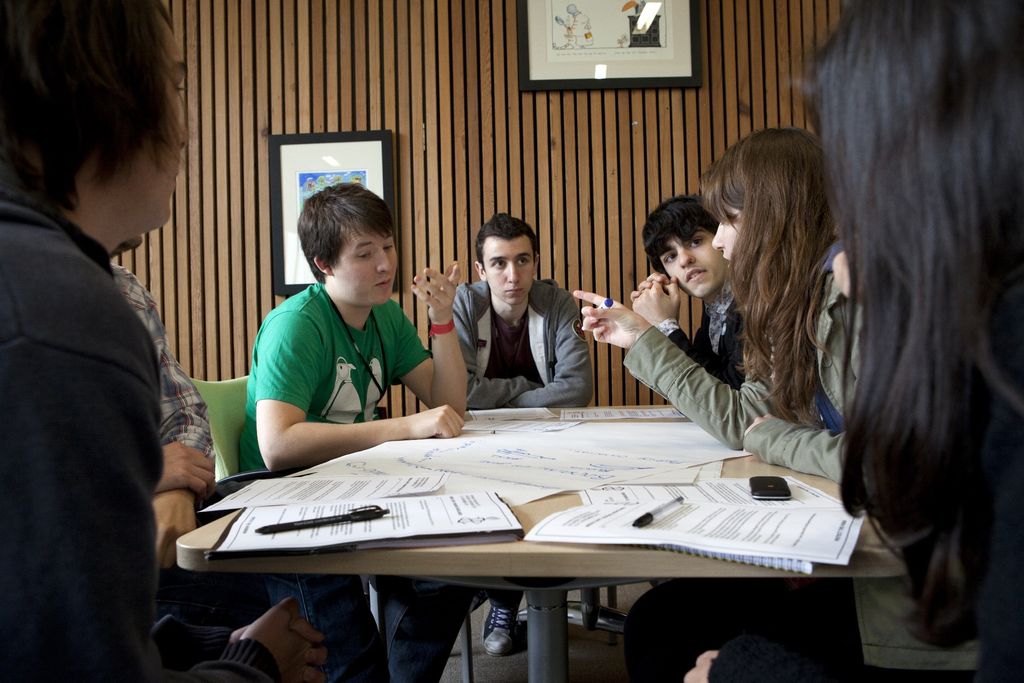
To brainwalk is to get up and stoke your creative idea engine.
© Rebeka Costa, Fair Use
How Do You Do Brainwalking?
To conduct a successful brainwalking session, try this step-by-step process:
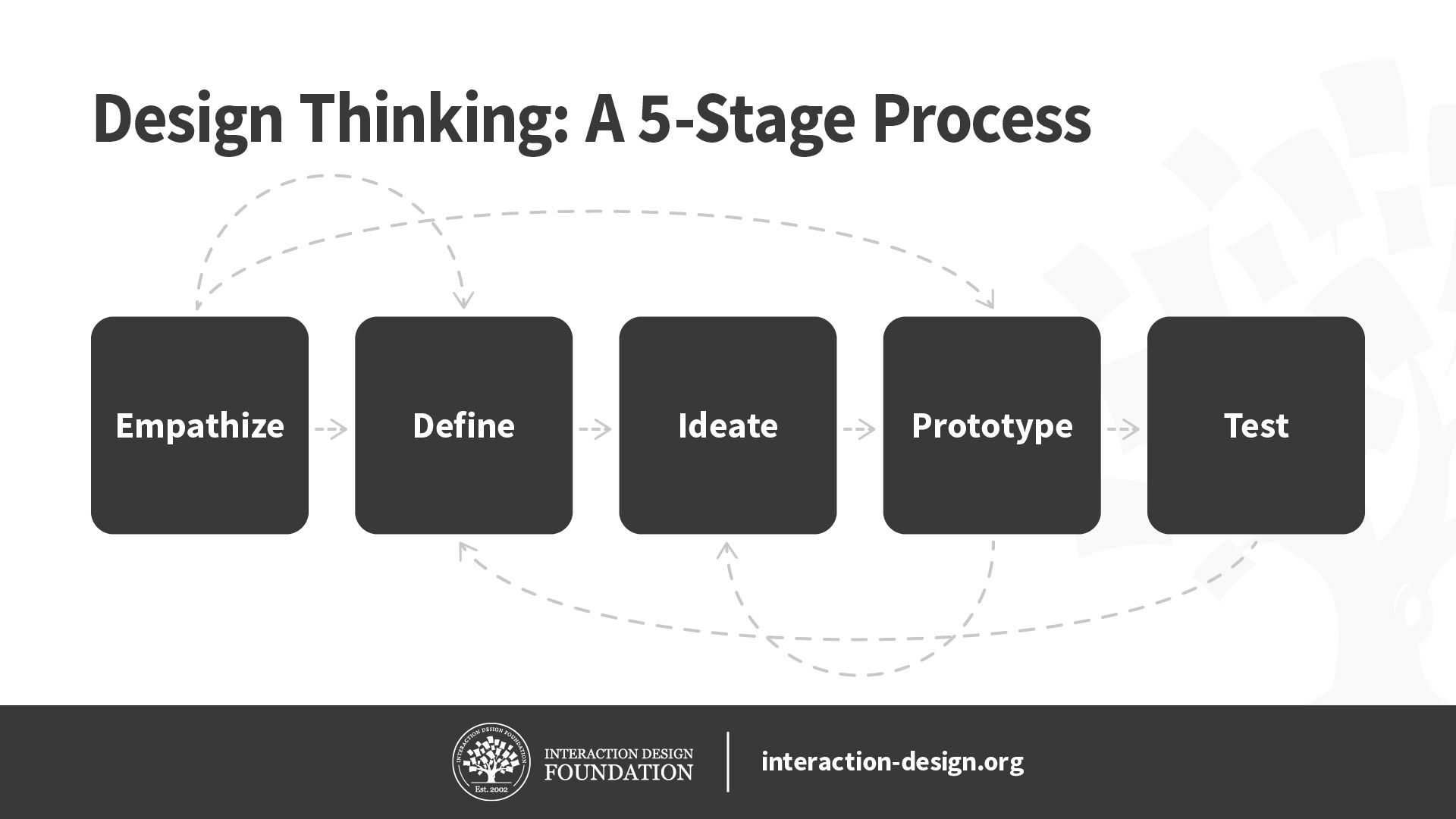
Step 1: Have Your Design Challenge Defined
You’ll want to have your design challenge all ready to go. For example, in the design thinking process, the define phase is when you do this. Your design challenge is vital to your ideation now. It sets the stage and guides the activities you’ll need to undertake. The most important thing to have here is an actionable statement. This is the Point of View (POV). Your POV will have this formula:
[User… (descriptive)] needs [Need… (verb)] because [Insight… (compelling)].
For example, you could have the POV of:
“An elderly person who lives on their own in a rural area needs access to healthy meals and health supplements with deliveries 2 times a week. They want good variety in the foods they get. However, they would prefer not to have to wade through a typical grocery website twice a week. But they’re still not sure about using voice-controlled devices to do the work for them.”
It’s vital to clearly articulate the design challenge or problem statement that the brainwalking session aims to address. This will provide a focused direction for everyone’s ideation efforts. You want to gear your brainwalking to how your design team might address this for the user you want to help.
Step 2: Set Up the Brainwalking Space
Prepare a designated space for the brainwalking session. Hang posters, display images, and place other artifacts related to the design challenge around the room. Ensure that the stimuli are visually appealing and relevant to the problem at hand.
For example, for our elderly rural resident, you might have a picture of an older lady doing gardening outside her cottage. She might be a great persona to use. What is her name? Does she have adult children who live far away or who might be too busy to help her? How computer literate is she? Does she have a disability? Is she wary of new technology? Who might interact with her on a daily basis? These are some of the questions that can bring her—and her user needs—closer to your design and ideation space.
Step 3: Explain the Brainwalking Process
Briefly explain the brainwalking process to participants. Emphasize the importance of physical movement, observation, and verbal or written idea sharing. Encourage everyone to freely explore the space and engage with the stimuli.
Note, this may be the first brainwalking session for some team members. So, maybe a quick warm-up activity might help break the ice, get you all in the mood, and start the creative juices flowing.
Step 4: Start the Brainwalking Session
Instruct participants to start walking around the space, observing the stimuli, and generating ideas. Encourage them to share their thoughts verbally or by writing them down on sticky notes. Emphasize the importance of building upon each other's ideas and fostering a collaborative environment.
For example, for our elderly user, it might help to suggest your team members think of their grandparents or parents. That common bond may provide the in-roads you all need to head towards truly helpful insights.
Step 5: Rotate and Repeat
After a set period of so many minutes, instruct participants to rotate to the next stimulus and continue generating ideas. Repeat this rotation process multiple times to ensure everyone engages with a variety of stimuli and generate a diverse range of ideas.
For example, everyone in your design team might spend 5 minutes looking at each poster, picture, artifact, etc. Then, from seeing pictures portraying personas, a screenshot of an existing online grocery service, printouts of news about forecast population trends, maps of rural areas, and the like, everyone can feel exposed to what they need to be able to trigger ideas.
Step 6: Share Ideas and Discuss
Conclude the brainwalking session by allowing participants to share their ideas with the group. Each participant should have an opportunity to present their thoughts. So, be mindful that some team members may be more vocal than others. Also, everyone should feel on an entirely equal footing with each other. So, be sure to leave your job titles at the door. From here, the group can engage in a more open discussion to explore and refine the generated ideas further.
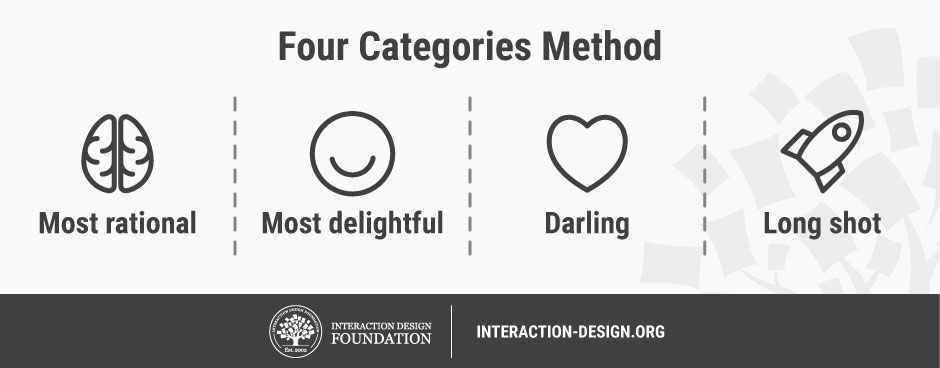
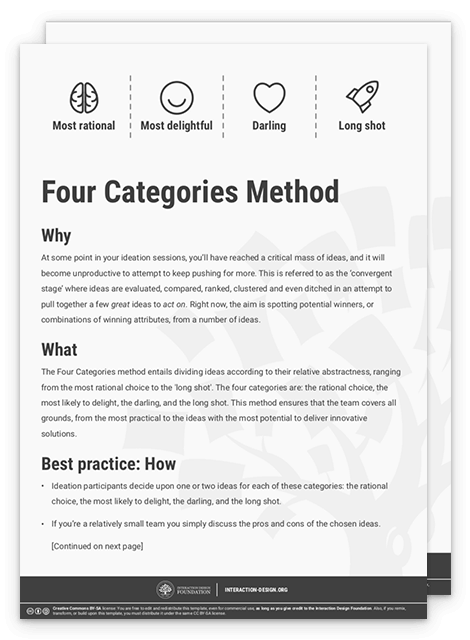
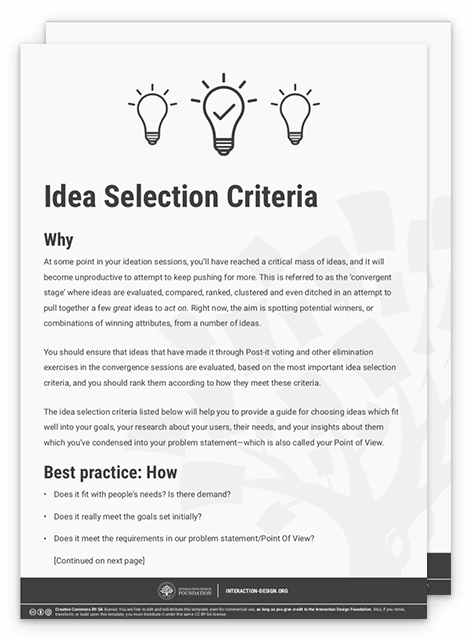
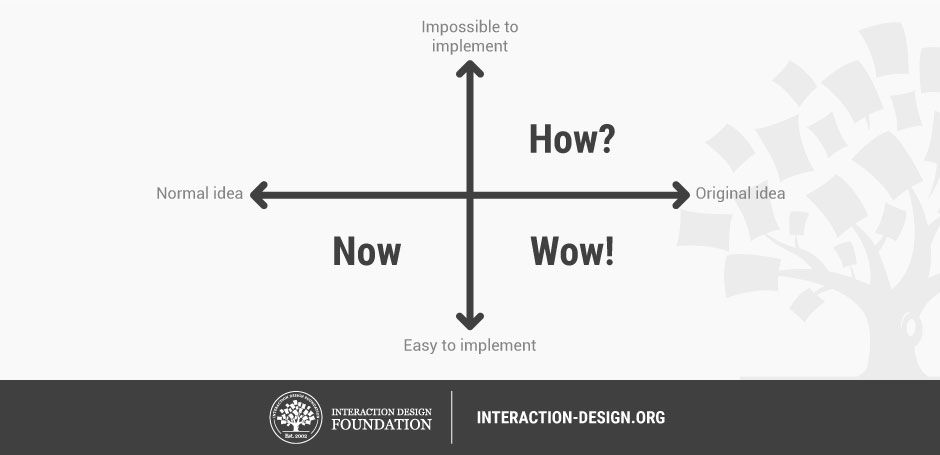
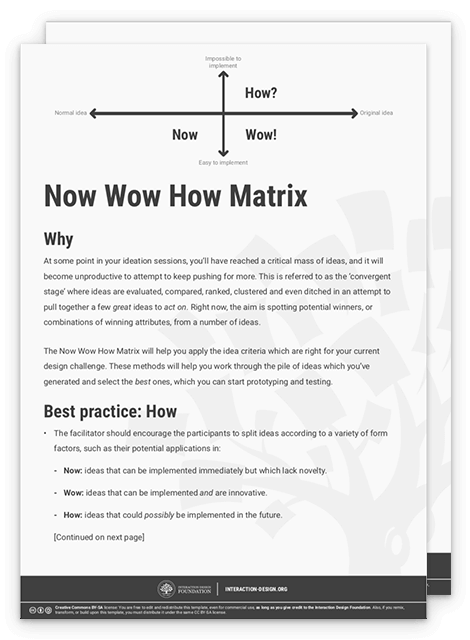
To pick the best ideas, you can use various methods (e.g., “Now Wow How Matrix”). You can continue to build on these in future ideation sessions.

This is one form of brainstorming that can arrive at good insights in a literal sense, too.
© Interaction Design Foundation, CC BY-SA 4.0
Best Practices and Tips for Brainwalking
Here are some ways to help you get the most out of brainwalking sessions:
1. Create a Stimulating Environment
Ensure that the brainwalking space is visually appealing and relevant to the design challenge. Use posters, images, prototypes, or any other relevant stimuli to spark participants' creative thinking.
2. Encourage Active Participation
Foster a collaborative environment where all participants feel comfortable contributing their ideas. Encourage active participation by promoting open discussions and building upon each other's thoughts. Remember to brief everyone that it’s vital for everyone to have an equal voice. For example, one team member might be shy. Another may have valuable insights but keep quiet as they don’t want to contend with a senior design team member.
3. Emphasize Diverse Perspectives
Encourage everyone to approach the stimuli from different angles and perspectives. This diversity in thinking will lead to a broader range of ideas. It will also raise the chances of finding innovative solutions. It can be hard to overcome the set ways we sometimes see things—called déformation professionnelle. Still, it’s essential to be able to step back and get the distance to approach from new perspectives.
4. Set a Time Limit
Allocate a specific time limit for each rotation. This is to keep the session focused and ensure that everyone engages with all the stimuli. This time limit will also help maintain the session's energy and momentum.
5. Capture and Document Ideas
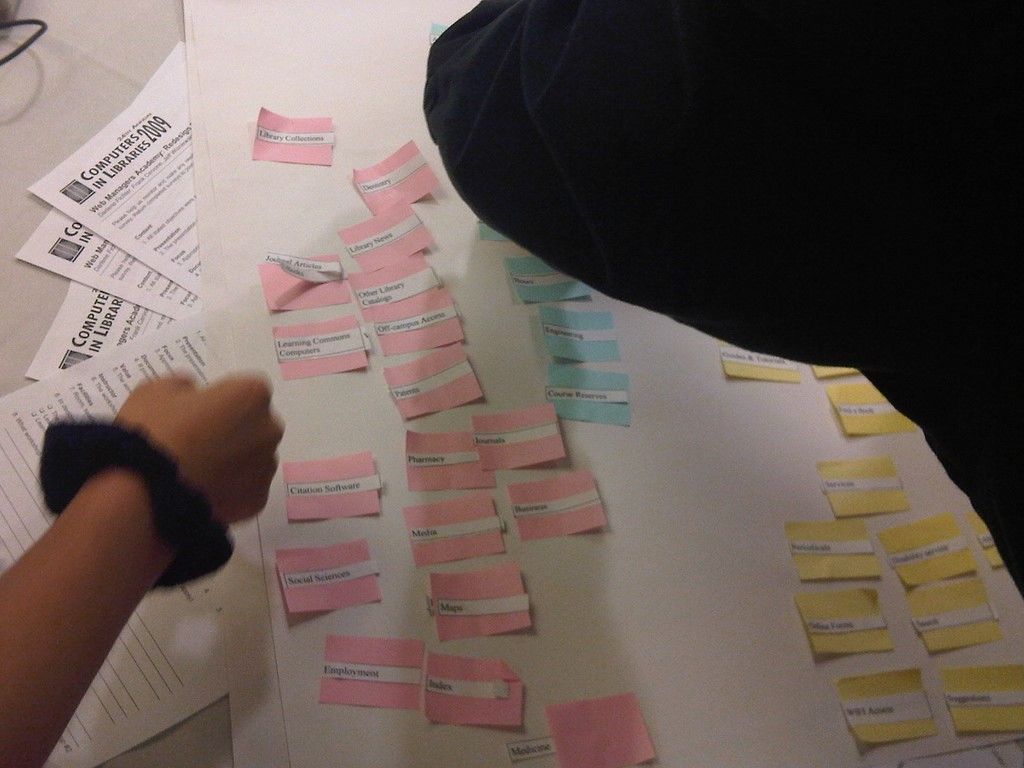
Provide everyone with sticky notes or a dedicated space to write down their ideas as they brainwalk. This documentation ensures that no ideas vanish. It also means you can do further analysis and make refinements after the session.
What you end up with can be powerful insights to shed light on innovative solutions to your users' real needs.
© Michaela Haase, Fair Use
Considerations for Brainwalking
Here are some factors to think about so you can ensure sessions are effective:
1. Group Size
The ideal group size for a brainwalking session is typically between 3 and 8 participants. Larger groups may become challenging to manage. Smaller groups may lack the diversity of perspectives necessary for fruitful ideation. If your design team is large, try to invite people with the most diverse perspectives.
2. Physical Space
Ensure the brainwalking space is big enough to accommodate everyone comfortably. A spacious environment allows for free movement and exploration so no one feels cramped or restricted. It can help to ensure team members can spontaneously respond to each stimulus when they arrive at it. It’s better than if they spot it from a distance and consider it instead of an important stimulus they encounter first.
3. Accessibility
Consider the accessibility needs of participants when you’re selecting the brainwalking space. Ensure it’s easily accessible for individuals with mobility challenges or other disabilities. For example, is the print large enough? Are the spaces between the tables or desks wide enough to allow someone in a wheelchair easy passage? Also reckon on inclusivity here. Do the stimuli depict a diverse potential user population, for example?
4. Time Management
Plan the brainwalking session carefully to ensure everyone has enough time to engage with all the stimuli and generate sufficient ideas. Time management is crucial to maintaining the session's energy and achieving productive outcomes. This can sometimes get in the way if team members need longer because they feel an idea coming on. Still, it’s vital to make sure everyone gets around everything on show.

There's something about moving around that's conducive to a good idea!
© Taylor Record, Fair Use
Example of Brainwalking by A Famous Brand
Several famous brands have embraced brainwalking as an ideation technique in their design process to generate innovative ideas. Here is a notable example:
IDEO
IDEO, a renowned design consultancy, uses brainwalking extensively in its design thinking process. The company emphasizes the importance of physical movement and visual stimuli to inspire creativity and generate diverse ideas. IDEO's brainwalking sessions have resulted in numerous successful design solutions across various industries.
Overall, brainwalking can give your design team an extra edge in exploring the problem space thoroughly. It can serve as an asset to supercharge your team’s creative ideation prowess. That’s important to do long before you reach the prototyping and testing stages. Remember, too, that brainwalking involves communicating with your team members, so be sure to listen to their insights. As the “Father of UX design” writes:
“Design is really an act of communication, which means having a deep understanding of the person with whom the designer is communicating.”
— Don Norman, “The Design of Everyday Things”
Consider brainwalking as a kind of a literal exploration process. It’s like being able to move around in a “magic warehouse” full of ideas stored in “boxes.” With brainwalking, you can access many areas you might otherwise miss and develop the beginnings of groundbreaking solutions. It can help you unlock the full potential of your ideation process on the road to designing exceptional user experiences.