Why do some designs feel intuitive while others feel frustrating? When you design without user research, you’re designing for yourself, not them. Personas are research-based representations of real users—without them, we default to our assumptions and create products, services and experiences that fall short. This step-by-step guide shows you how to build personas that lead to designs people actually love.
What Are Personas and Why They Matter
Personas are fictional representations of real users, built from research and designed to help teams understand who they are designing for. Instead of thinking about "users" as a vague, impersonal group, personas bring them to life as individuals with specific needs, behaviors, and challenges.
In this video, William Hudson, User Experience Strategist and Founder of Syntagm Ltd, explains how personas focus design on real users and prevents you from designing based on assumptions.
This is why personas are essential and how they impact the design process:
They focus design on real users: Most design processes default to a technology-first or business-first approach. Personas correct this by placing real user needs at the center, so you can prioritize people over assumptions.
They create a shared understanding across teams: Everyone needs a clear and consistent view of the user—developers, marketers, business leaders and other stakeholders. Personas provide a common reference point to help you make user-aligned decisions rather than working in silos.
They guide design decisions with real-world data: Personas ensure that every choice—UI layout, navigation, content tone, feature prioritization etc.—is shaped by actual user behaviors and motivations.
They circumvent assumptions: Without personas, teams often design for themselves rather than their users. Research-backed personas replace personal biases with real insights so that you and your team can design for how users actually think and behave.
Simple Steps to Create Your First Persona

© Interaction Design Foundation, CC BY-SA 4.0
Creating a persona doesn’t have to be complicated. Here’s a beginner-friendly process to get started:
Step 1: Conduct User Research
Personas should be based on real data, not guesses. If you already have access to user data, great! If not, you should:
Interview real users to learn about their needs, challenges, and behaviors.
Observe users when they interact with similar products.
Collect survey responses to identify trends in how people think and behave.
A good rule of thumb: personas should be built on patterns, not single anecdotes.
Step 2: Identify Key User Segments
Once you’ve gathered research, look for recurring patterns in user behaviors and needs. Users with similar goals and challenges can be grouped together into persona types.
For example, if you’re designing a fitness app, you may discover:
"Motivated Beginners" who need encouragement and simple routines.
"Busy Professionals" who want quick, effective workouts.
"Fitness Enthusiasts" who seek advanced tracking and performance data.
Step 3: Create Persona Profiles
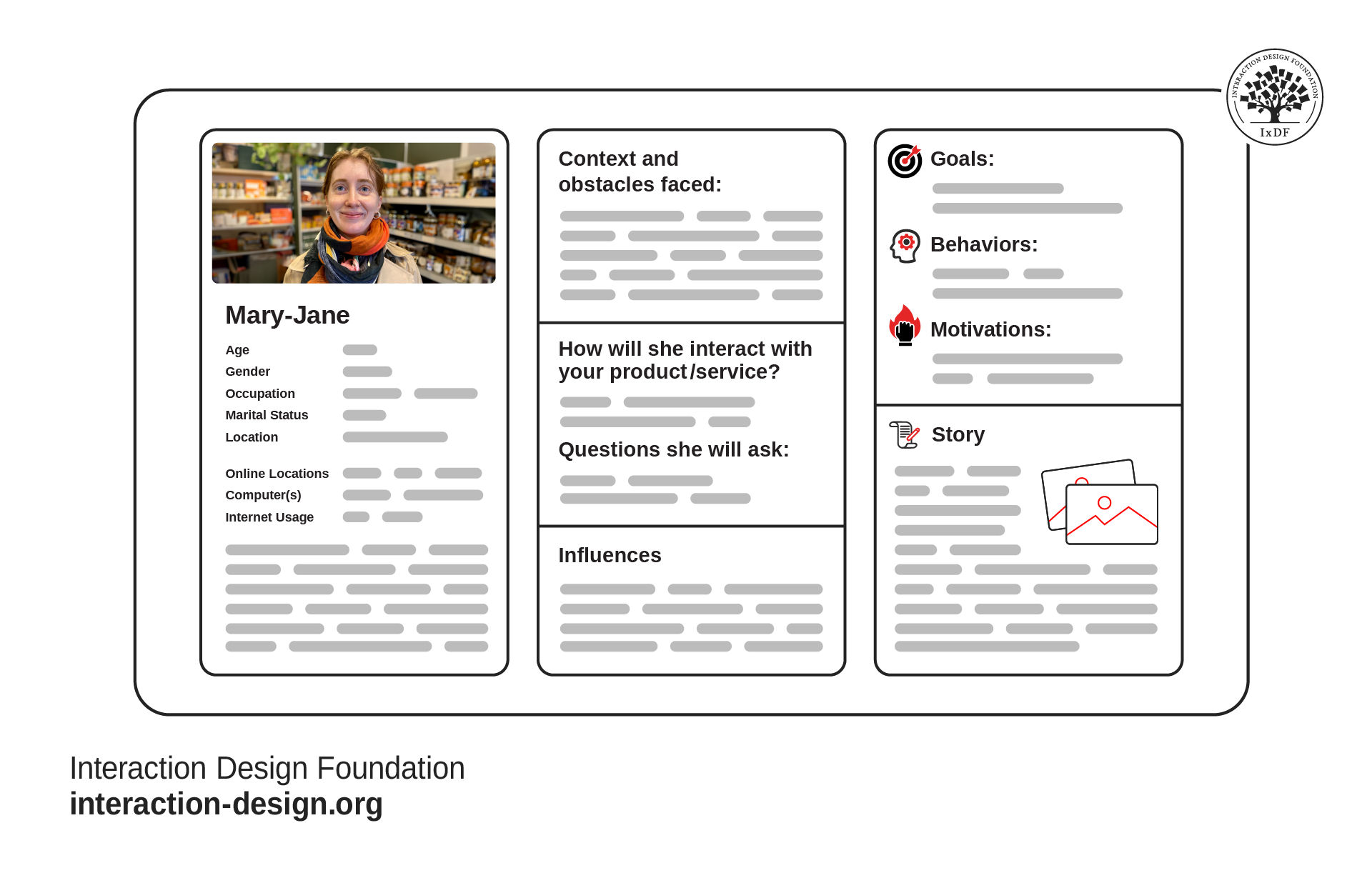
Now it’s time to bring your personas to life. A basic persona should include:
Name and photo: Helps the team visualize the user.
Demographics: Age, occupation, location (only if relevant).
Goals and motivations: Why does this user need your product or service?
Influences: What external factors shape their decisions—social proof, expert opinions, budget constraints, etc.?
Behaviors: How do they interact with technology or services? Do they prefer mobile or desktop? Are they task-focused or exploratory?
Here’s a simple persona:
© Interaction Design Foundation, CC BY-SA 4.0
Step 4: Use Your Persona to Guide Design Decisions
A persona is only useful if it’s actively used. Before making a design decision, ask:
Would Emma find this feature helpful?
Does this design solve her biggest pain points?
Is this experience intuitive for her level of tech familiarity?
Be consistent—refer to your persona throughout the design process. This way, you ensure that every decision is made with your user in mind.
Bring Personas to Life with Empathy
Now that you have a step-by-step process for creating personas, it’s important to remember that a persona is only as effective as the level of understanding behind it. It’s not just about listing user traits—it’s about stepping into their shoes and seeing the world from their perspective.
Many design and development teams struggle with user empathy, particularly in technology-driven environments where the focus is often on functionality rather than human needs. This gap can lead to design decisions based on assumptions rather than real user behaviors.
In this video, William Hudson discusses why empathy is often lacking in IT and engineering fields and explains why direct user research is a non negotiable for creating meaningful experiences. When you understand these challenges, you can apply personas more effectively and make sure they genuinely reflect the needs of your users.
Real-World Examples and Success Stories
Personas are not just theory—they are widely used by top companies to create better user experiences. Here are a few examples:
Airbnb
Airbnb’s success is in part due to its ability to serve a diverse global audience—from solo backpackers to families on vacation, business travelers, and digital nomads. Through user research and persona development, Airbnb segments its users by travel goals, group size, booking behavior, and trust preferences.
For example, a solo traveler might prioritize budget, local experiences, and safety, while a family may look for spacious homes, kid-friendly amenities, and strong host reviews. These differences guide how Airbnb personalizes everything from search filters and homepage layouts to messaging and host recommendations to create a seamless experience for every user type.
Spotify

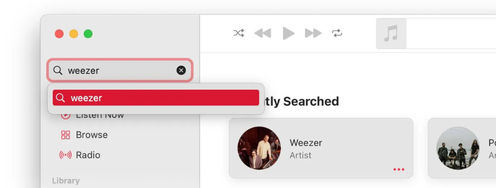
© Spotify, Fair Use
Spotify builds personas based on listening behavior, emotional context, and usage patterns into account. They analyze how, when, and why people listen to content, to develop distinct user profiles such as:
Casual listeners who rely on curated playlists and background music.
Music enthusiasts who dig into genres, build their own playlists, and explore new artists.
Podcast fans who return regularly for new episodes from favorite creators.
These personas shape how Spotify delivers features like Discover Weekly, personalized recommendations, podcast placement, and home screen layouts to ensure that each type of listener feels like the platform was made just for them.
Amazon
Amazon uses persona-driven insights to refine product discovery and purchasing journeys across millions of users. Amazon incorporates browsing habits, device use, location, delivery preferences, and buying frequency instead of relying solely on past purchases, to better understand different shopper profiles.
For instance, a persona for a last-minute shopper might prioritize same-day shipping and simple reordering, while a budget-conscious user might respond better to discount bundles, product comparisons, and user reviews. These insights power Amazon’s highly adaptive recommendation engine and tailor homepage content, email marketing, push notification and other features to personalize the experience and make it more efficient.
Next Steps: Continue Your Persona Journey
Now that you understand how to create and use personas, the next step is to refine your skills and apply them in real-world projects.
Start with your own product or service: Try building a persona based on available data.
Test your personas: Validate them with real users to ensure accuracy.
Iterate and improve: Personas evolve as user needs change—keep updating them.
Learn from the best: Join our course, Personas and User Research: Design Products and Services People Need and Want, for practical training and valuable insights.
The Take Away
Successful user experiences starts with understanding who you are designing for. Personas provide a structured, research-backed approach to ensure that products, services, and experiences are aligned with real user needs—not assumptions.
Follow the steps—conduct user research, identify key segments, and create well-defined personas—to make informed design decisions and tailor your designs to real user needs. When applied consistently, personas help teams prioritize user needs, improve usability, and create products that feel intuitive and engaging.
The most successful companies such as Airbnb, Spotify and Amazon don’t guess what their users want—they invest in research, refine their personas, and adapt as behaviors evolve. You can do the same. Keep testing, iterating, and evolving your personas to make sure your designs continue to meet real-world needs.
Personas are more than a tool—they are a mindset. Master them, and you’ll build experiences that resonate with your users. In our course, Personas and User Research: Design Products and Services People Need and Want, you’ll learn how to turn real user research into clear, actionable personas that guide better design decisions and align your team around user needs—with expert guidance every step of the way.
References and Where to Learn More
Want to know more about personas and how to use them effectively? Personas and User Research: Design Products and Services People Need and Want will show you how to gather meaningful user insights, avoid bias, and build research-backed personas that help you design intuitive, relevant products. You’ll walk away with practical skills and a certificate that demonstrates your expertise in user research and persona creation.
Read Personas: What They Are and Why They Matter to learn how personas improve team alignment, support user-centered decisions, and help avoid assumptions by focusing on real user needs.
Read Personas – A Simple Introduction
Consult NNG’s Personas: Study Guide
Explore Spotify’s R&D Engineering Blog to see how they use data and user behavior to drive personalized listening experiences.
Visit Airbnb’s Engineering & Data Blog for insights into how they design personalized, user-focused experiences at scale.
Discover Amazon’s Research at Amazon Science to learn how they apply machine learning and behavioral insights to improve the customer experience.
Hero image: © Interaction Design Foundation, CC BY-SA 4.0