UX Research

Your constantly-updated definition of UX Research and collection of videos and articles.
Be a conversation starter: Share this page and inspire others!

3,551 Shares

What is UX Research?

UX (user experience) research is the systematic study of target users and their requirements, to add realistic contexts and insights to design processes. UX researchers adopt various methods to uncover problems and design opportunities. Doing so, they reveal valuable information which can be fed into the design process.

See why UX research is a critical part of the UX design process.

Transcript

UX Research is about Finding Insights to Guide Successful Designs

When you do UX research, you’ll be better able to give users the best solutions—because you can discover exactly what they need. You can apply UX research at any stage of the design process. UX researchers often begin with qualitative measures, to determine users’ motivations and needs. Later, they might use quantitative measures to test their results. To do UX research well, you must take a structured approach when you gather data from your users. It’s vital to use methods that 1) are right for the purpose of your research and 2) will give you the clearest information. Then, you can interpret your findings so you can build valuable insights into your design.

“I get very uncomfortable when someone makes a design decision without customer contact.”

– Dan Ritzenthaler, Senior Product Designer at HubSpot

We can divide UX research into two subsets:

  1. Qualitative research – Using methods such as interviews and ethnographic field studies, you work to get an in-depth understanding of why users do what they do (e.g., why they missed a call to action, why they feel how they do about a website). For example, you can do user interviews with a small number of users and ask open-ended questions to get personal insights into their exercise habits. Another aspect of qualitative research is usability testing, to monitor (e.g.) users’ stress responses. You should do qualitative research carefully. As it involves collecting non-numerical data (e.g., opinions, motivations), there’s a risk that your personal opinions will influence findings.

  2. Quantitative research – Using more-structured methods (e.g., surveys, analytics), you gather measurable data about what users do and test assumptions you drew from qualitative research. For example, you can give users an online survey to answer questions about their exercise habits (e.g., “How many hours do you work out per week?”). With this data, you can discover patterns among a large user group. If you have a large enough sample of representative test users, you’ll have a more statistically reliable way of assessing the population of target users. Whatever the method, with careful research design you can gather objective data that’s unbiased by your presence, personality or assumptions. However, quantitative data alone can’t reveal deeper human insights.

We can additionally divide UX research into two approaches:

  1. Attitudinal – you listen to what users say—e.g., in interviews.

  2. Behavioral – you see what users do through observational studies.

When you use a mix of both quantitative and qualitative research as well as a mix of attitudinal and behavioral approaches, you can usually get the clearest view of a design problem.
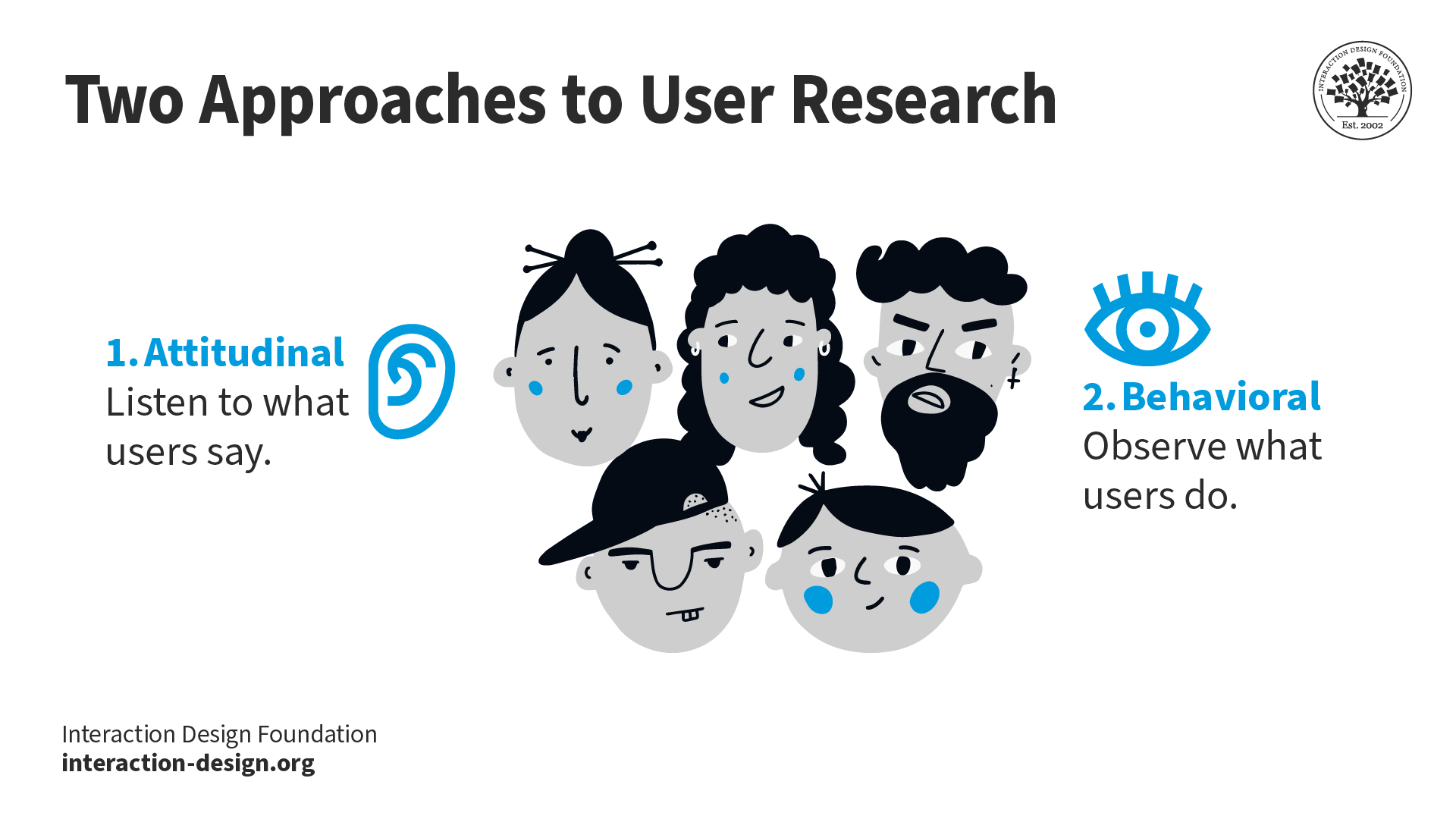
Two Approaches to User Research

© Interaction Design Foundation, CC BY-SA 4.0

Use UX Research Methods throughout Development

The Nielsen Norman Group—an industry-leading UX consulting organization—identifies appropriate UX research methods which you can use during a project’s four stages. Key methods are:

  1. Discover – Determine what is relevant for users.

    • Contextual inquiries – Interview suitable users in their own environment to see how they perform the task/s in question.

    • Diary studies – Have users record their daily interactions with a design or log their performance of activities.

  1. Explore – Examine how to address all users’ needs.

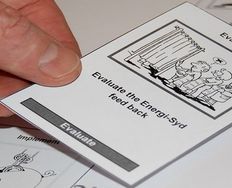
    • Card sorting – Write words and phrases on cards; then let participants organize them in the most meaningful way and label categories to ensure that your design is structured in a logical way.

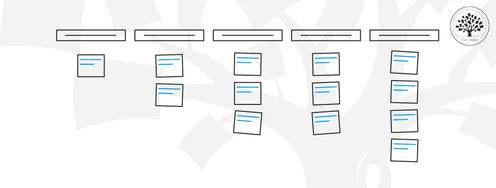
    • Customer journey maps – Create user journeys to expose potential pitfalls and crucial moments.

  2. Test – Evaluate your designs.

  1. Listen – Put issues in perspective, find any new problems and notice trends.

    • Surveys/Questionnaires – Use these to track how users’ feel about your product.

    • Analytics – Collect analytics/metrics to chart (e.g.) website traffic and build reports.

Copyright
Transcript

Whichever UX research method you choose, you need to consider the pros and cons of the different techniques. For instance, card sorting is cheap and easy, but you may find it time-consuming when it comes to analysis. Also, it might not give you in-depth contextual meaning. Another constraint is your available resources, which will dictate when, how much and which type of UX research you can do. So, decide carefully on the most relevant method/s for your research. Moreover, involve stakeholders from your organization early on. They can reveal valuable UX insights and help keep your research in line with business goals. Remember, a design team values UX research as a way to validate its assumptions about users in the field, slash the cost of the best deliverables and keep products in high demand—ahead of competitors’.
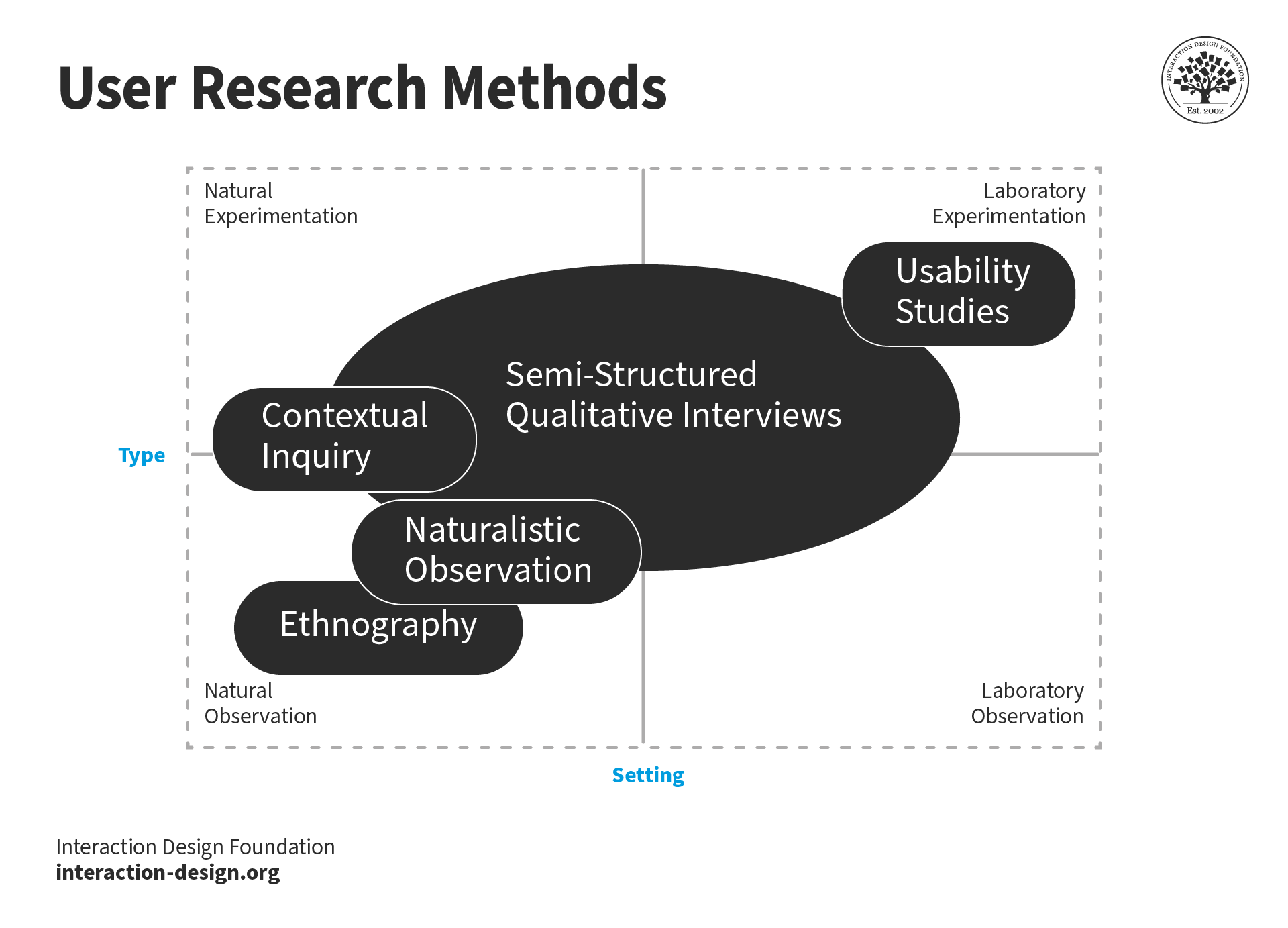
User Research Methods - from natural observation to laboratory experimentation

© Interaction Design Foundation, CC BY-SA 4.0

User research methods have different pros and cons,and vary from observations of users in context to controlled experiments in lab settings.

Questions About UX Research?
We've Got Answers!

Is UX research a good career?

UX research is a good career for those who enjoy working with a team and have strong communication skills. As a researcher, you play a crucial role in helping your team understand users and deliver valuable and delightful experiences. You will find a UX research career appealing if you enjoy scientific and creative pursuits. 

Start exploring this career option; see the User Researcher Learning Path.

How much does a UX researcher earn?

Studies suggest that companies are also willing to pay well for research roles. The average salary for a UX researcher ranges from $92,000 to $146,000 per year.

In smaller companies, user research may be one of the responsibilities of a generalist UX designer. How much can your salary vary based on your region? Find out in UI & UX Designer Salaries: How Much Can I Earn.

UX research vs UX design: What’s the difference?

Research is one part of the overall UX design process. UX research helps inform the design strategy and decisions made at every step of the design process. In smaller teams, a generalist designer may end up conducting research.

  • A UX researcher aims to understand users and their needs. A UX designer seeks to create a product that meets those needs.

  • A UX researcher gathers information. A UX designer uses that information to create a user-friendly and visually appealing product.

Learn more about the relationship between UX research and UX design in the course:

User Experience: The Beginner’s Guide

Is there a difference between UX research and user research?

If we consider a very broad definition of UX, then all user research is UX research.

However, in practice, there is a subtle difference between user research and UX research. While both involve understanding people, user research can involve users in any kind of research question, and some questions may not be that directly connected to user experience.

For example, you might do user research relating to a customer’s experience in relation to pricing, delivery or the experience across multiple channels.

What are UX research methods?

Common UX research methods are usability testing, A/B testing, surveys, card sorting, user interviews, usage analytics and ethnographic research. Each method has its pros and cons and is useful in different scenarios. Hence, you must select the appropriate research method for the research question and target audience. Learn more about these methods in 7 Great, Tried and Tested UX Research Techniques.

Get started with user research. Download the User Research template bundle.

Fast-Track Your Promotion With This Master Bundle of 17 “User Research” Templates
User Research

For a deep dive into usability testing—the most common research method, take the course Conducting Usability Testing.

Do you need a degree to become a UX researcher?

Having a degree in a related field can give you an advantage. However, you don’t need a specific degree to become a UX researcher. A combination of relevant education, practical experience, and continuous learning can help you pursue a career in UX research. Many UX researchers come from diverse educational backgrounds, including psychology, statistics, human-computer interaction, information systems, design and anthropology.

Some employers may prefer candidates with at least a bachelor’s degree. However, it does not have to be in a UX-related field. There are relatively fewer degrees that focus solely on user research.

Data-Driven Design: Quantitative Research for UX

User Research – Methods and Best Practices

What is the UX research process?

Every research project will vary. However, there are some common steps in conducting research, no matter which method or tool you decide to use: 

  • Define the research question

  • Select the appropriate research method

  • Recruit participants

  • Conduct the research

  • Analyze the data

  • Present the findings

User Research – Methods and Best Practices

What are the UX research tools?

You can choose from various UX research tools. Your choice depends on your research question, how you're researching, the size of your organization, and your project. For instance:

  • Survey tools such as Typeform and Google Forms.

  • Card sorting tools such as Maze and UXtweak.

  • Heatmap tools such as HotJar and CrazyEgg

  • Usability testing (through first-click testing and tree-testing) tools such as Optimal Workshop and Loop 11

  • Diagramming applications such as Miro and Whimsical to analyze qualitative data through affinity diagramming.

  • Spreadsheet tools such as Google Sheets and Microsoft Excel for quantitative data analysis

  • Interface design and prototyping tools like Figma, Adobe XD, Sketch and Marvel to conduct usability testing.

  • Presentation tools such as Keynote, Google Slides and Microsoft PowerPoint.

Many of these tools offer additional features you can leverage for multiple purposes. To understand how you can make the most of these tools, we recommend these courses:

There are relatively fewer degrees that focus solely on user research.

Data-Driven Design: Quantitative Research for UX

User Research – Methods and Best Practices

How can you build a UX research case study?

While there are no universal research case study formats, here’s one suggested outline: 

  • An overview of the project: Include the problem statement, goals and objectives.

  • The research methods and methodology: For example, surveys, interviews, or usability testing).

  • Research findings

  • The design process: How the research findings led to design decisions.

  • Impact of design decisions on users and the business: Include metrics such as conversion and error rates to demonstrate the impact.

  • Optionally, include notes on what you learned and how you can improve the process in the future.

Learn how to showcase your portfolio to wow your future employer/client in the How to Create a UX Portfolio course.

Will AI replace UX research?

Transcript

While AI can help automate tasks and help UX researchers, it will not completely replace them. AI lacks the creativity and empathy that human designers bring to the table.

Human researchers are better at understanding the nuances of human behavior and emotions. They can also think outside the box and develop creative solutions that AI cannot. So, AI can help researchers be more efficient and effective through data analysis, smart suggestions and automation. But it cannot replace them.

Watch AI-Powered UX Design: How to Elevate Your UX Career to learn how you can work with AI.

How to conduct UX research in agile teams?

Agile teams often struggle to incorporate user research in their workflows due to the time pressure of short sprints. However, that doesn’t mean agile teams can’t conduct research. Instead of seeing research as one big project, teams can break it into bite-sized chunks. Researchers regularly conduct research and share their findings in every sprint.

Researchers can involve engineers and other stakeholders in decision-making to give everyone the context they need to make better decisions. When engineers participate in the decision-making process, they can ensure that the design will be technically feasible. There will also be lower chances of errors when the team actually builds the feature. Here’s more on how to make research a team effort.

For more on bite-sized research, see this Master Class: Continuous Product Discovery: The What and Why

For more practical tips and methods to work in an agile environment, take our Agile Methods for UX Design course.

Why is UX research important?

User research is very important in designing products people will want and use. It helps us avoid designing based on what we think instead of what users actually want.

UX research helps designers understand their users’ needs, behaviors, attitudes and how they interact with a product or service. Research helps identify usability problems, gather feedback on design concepts, and validate design decisions. This ultimately benefits businesses by improving the product, brand reputation and loyalty. A good user experience provides a competitive edge and reduces the risk of product failure.

Learn more about the importance of user research in the design process in these courses:

Design Thinking: The Ultimate Guide

User Experience: The Beginner’s Guide

Earn a Gift Earn a Gift, Answer a Short Quiz!

1
2
3
4
1
2
3
4
Question 1
Question 2
Question 3
Get Your Gift
Interaction Design Foundation logo

Question 1

What is the primary purpose of UX research in design processes?

1 point towards your gift

  • To ensure the product is visually appealing.
  • To reduce the cost of marketing the product.
  • To understand user needs and enhance design decisions.
Interaction Design Foundation logo

Question 2

Which type of UX research do designers use to collect non-numerical data such as opinions and motivations?

1 point towards your gift

  • Behavioral research
  • Qualitative research
  • Quantitative research
Interaction Design Foundation logo

Question 3

Which UX research method involves users sorting terms into categories to help structure design logically?

1 point towards your gift

  • Card sorting
  • Information architecture
  • Usability testing

Learn More About UX Research

Make learning as easy as watching Netflix: Learn more about UX Research by taking the online IxDF Course User Research – Methods and Best Practices.

Why? Because design skills make you valuable. In any job. Any industry.

In This Course, You'll

  • Get excited as you learn the business superpower: user research! Master it, and you'll solve meaningful problems, create better experiences, and drive success in any field. Why? User research empowers you to become a detective of human behavior. You'll discover what people truly need so that you can create products and services they love. You can use user research to reduce abandoned carts in online shopping, improve patient outcomes in healthcare, and solve challenges in any industry. It's easier than you think! With step-by-step guidance, you'll master User Research quickly—no matter your background. Studies show that user research can improve time to market by up to 330% and increase revenue by up to 320%. So get on board, do work you're proud of, and get paid what you're worth.

  • Make yourself invaluable with timeless human-centered skills. At the heart of great design is understanding people: What they need, what holds them back, and what keeps them coming back. As AI becomes part of how teams build and iterate, this deep understanding of people turns AI from a tool into your superpower. Effortlessly transform insights into Return on Investment (ROI) as you design solutions people love. You'll learn to make data-driven decisions that eliminate guesswork as you design products and services based on real user needs. That drives loyalty and outperforms competitors. You'll easily translate research into visuals that win over stakeholders, managers, and clients. Discover exactly what motivates people and build solutions that consistently deliver results.

  • Gain confidence and credibility with hands-on experience in usability testing, contextual inquiries, semi-structured qualitative interviews, and observational methods. Master how to ask the right questions and create actionable personas from your research. You'll plan, conduct, and analyze research in real-world scenarios, fast-tracking your success with 40+ ready-to-use templates like interview guides, affinity diagrams, and customer journey maps. If you want to leave assumptions behind and create with precision, purpose, and impact, this course is perfect for you. If you're interested, we'll even help you build your portfolio around an app, so your new superpowers shine clearly.

It's Easy to Fast-Track Your Career with the World's Best Experts

Master complex skills effortlessly with proven best practices and toolkits directly from the world's top design experts. Meet your experts for this course:

  • Frank Spillers: Service Designer and Founder and CEO of Experience Dynamics.

  • Ann Blandford: Professor of Human-Computer Interaction at University College London.

  • Alan Dix: Author of the bestselling book “Human-Computer Interaction” and Director of the Computational Foundry at Swansea University.

Get an Industry-Recognized IxDF Course Certificate

Increase your credibility, salary potential and job opportunities by showing credible evidence of your skills.

IxDF Course Certificates set the industry gold standard. Add them to your LinkedIn profile, resumé, and job applications.

Course Certificate Example

Be in distinguished company, alongside industry leaders who train their teams with the IxDF and trust IxDF Course Certificates.

Our clients: IBM, HP, Adobe, GE, Accenture, Allianz, Phillips, Deezer, Capgemin, Mcafee, SAP, Telenor, Cigna, British Parliament, State of New York

All Free IxDF Articles on UX Research

Read full article
Card Sorting: The Ultimate Guide for 2026 - Article hero image
Interaction Design Foundation logo

Card Sorting: The Ultimate Guide for 2026

Whenever you’re working in UX (User Experience) design, you have to understand user expectations if you’re going to be able to group information effectively. Card sorting is a handy and relatively simple way to engage participants so they categorize topics in a way they find logical. This approach h

Social shares
925
Published
Read Article
Read full article
6 Tips for Better International UX Research - Article hero image
Interaction Design Foundation logo

6 Tips for Better International UX Research

The whole world is coming online. Even here in Cambodia there’s internet available in nearly every town and village and Cambodia is one of the world’s “least developed nations”. Then there’s the fact that globally there are dozens of emerging economies starting to grow impressively the BRICs nations

Social shares
569
Published
Read Article
Read full article
7 Great, Tried and Tested UX Research Techniques - Article hero image
Interaction Design Foundation logo

7 Great, Tried and Tested UX Research Techniques

Thinking about conducting some user research? Wondering which techniques are most likely to provide useful results? Then look no further. We’ve compiled a list of 7 excellent techniques which are tried and tested and have been proven to deliver real value in UX projects. Let’s take a look at each te

Social shares
1.2k
Published
Read Article
Read full article
4 Common Pitfalls in Usability Testing and How to Avoid Them to Get More Honest Feedback - Article hero image
Interaction Design Foundation logo

4 Common Pitfalls in Usability Testing and How to Avoid Them to Get More Honest Feedback

Usability testing is a cornerstone of the design thinking process. There are, however, common pitfalls that reduce the value of your test sessions. Here, we’ll go through four common issues you’ll encounter when you test your prototypes, as well as how to avoid each of them. At the end, we’ll also g

Social shares
717
Published
Read Article
Read full article
What are the Five Elements of UX Design? - Article hero image
Interaction Design Foundation logo

What are the Five Elements of UX Design?

When you think about user experience design (UX design) and what the ingredients for users to enjoy great experiences are—and so, what you need to think about presenting to them in innovative and delightful ways they can hit the ground running with—does it seem a little overwhelming sometimes? Does

Social shares
760
Published
Read Article
Read full article
15 Guiding Principles for UX Researchers - Article hero image
Interaction Design Foundation logo

15 Guiding Principles for UX Researchers

We’ve found that a lot of first time UX researchers have similar questions and concerns when they start working in UX design. So, we thought we’d round up and tackle some of the most common questions to form a set of useful principles for UX researchers. Of course, this isn’t a complete guide to UX

Social shares
854
Published
Read Article

15 Guiding Principles for UX Researchers

15 Guiding Principles for UX Researchers

We’ve found that a lot of first time UX researchers have similar questions and concerns when they start working in UX design. So, we thought we’d round up and tackle some of the most common questions to form a set of useful principles for UX researchers. Of course, this isn’t a complete guide to UX research (there are some fairly weighty tomes out there which do that) but it’s a good starting place to answer some of those nagging UX questions.

Mix It Up

The best researchers don’t use a single tool to do their research. They take a host of different methods, tools, etc. and then mix them together. This gives you a much greater chance of finding the actual issues and then being able to fix them.

It’s Easier To Find “You Got it Wrong”

Research can quickly help us work out when we’ve got something wrong. If you add a new feature and your first five research participants hate it – there’s probably a problem. However, a hundred people can use something without comment and it may still not work.

You Can’t Standardize Sample Sizes For All Your Research

Sorry, but sample sizes need to be calculated based on the risks you’re willing to assume in any given piece of research and based on the type of research you’re carrying out. Don’t try and use a single size for all of your research – it’s a flawed approach.

Testing With Just One User is Not Pointless

Imagine you’re creating a new word-processing package and you sit down with your first user and they try to save a document and you see that the process is broken. How many more users do you need to test that with? None, right? Some problems are universal and it only takes one user to point them out.

Author/Copyright holder: Luca Mascaro. Copyright terms and licence: CC BY-SA 2.0

Increase Sample Sizes for Better Accuracy

The bigger your sample size, the more likely your data is to be accurate. There’s a general rule of thumb that says to double the accuracy you have to increase the sample size by a factor of four!

Randomizing Can Overcome Research Design Flaws

If you can change the order of questions, responses, process flow, etc. then do it. The more random the path you take – the more likely it is that you’re going to get consistency and minimize experimental design flaws.

Research Results Belong to No-One

All that data you’re collecting? It’s not yours. It’s not your team’s. It’s the company’s. The more you get your user experience research out into the company as a whole – the more likely it is that your company will start focusing on user needs as a priority. Don’t create a UX silo in your business; let the data flow and reap the rewards.

Scale Ratings In Questions Aren’t That Important

Sure, there are plenty of arguments about whether an x-point scale is more accurate than a y-point scale and whether you should have a neutral rating or not. None of them are important enough to spend more than 5 minutes worrying over – pick a scale and do the research already.

Participants Need to Reflect Personas

Not everyone is a user or even likely user of your product. Not every user fits your target market. Get your user personas out and recruit to the persona – that way you have the most chance of getting results that actually work for your target users. You can’t please all the people all of the time and UX professionals shouldn’t even try to.

Author/Copyright holder: Nicolas Nova. Copyright terms and licence: CC BY 2.0

What They Say vs. What They Do

It’s often said that what people do is what matters and not what they say. We don’t agree. You need to measure both what people say and what they do. Then you can explore the reasons for the disconnection between the two positions. Sometimes people really do want what they say they want and sometimes they don’t. Knowing when those things are true matters to the user experience.

Keep Growing Your Toolkit

There are going to be new ideas and methods floating out there for a long time to come. Don’t dismiss them without trying them. Even if they suck, you’ll have learned that they suck rather than assuming it. In many cases even the worst tools can offer reasonable insights if they’re adapted properly.

Usability – A Polite Fiction?

It is impossible to measure usability. What we can measure is when something is not usable. Those measures are fluid – they change from product to product, user to user and UX researcher to UX researcher. That’s OK, finding problems is part of what research is about. We already know it’s much harder to show there is no problem than to find a problem.

Keep Reports Short

Sure, the method was amazing and innovative and the results were incredible but… you don’t need to write a book to get that across. If you want your research to have wide value in the organization keep your reports to a minimum. However, don’t let that stop you from creating more detailed work as a learning tool within your own environment or from writing that book if you intend to publish it commercially.

Be Aware that Observers Observe Differently

There’s a reason police treat eyewitness testimony with a certain healthy scepticism. People see what they’re going to see and rarely will witnesses see the same things. That’s not a major problem; in fact, it means that adding observers may increase the overall success of research – if you all identify different problems, that’s better for the users (as long as you intend to fix all those problems, of course).

And don’t forget that the act of observation may also change the results that you get.

Cults of Personality Suck

There are a ton of UX gurus out there. Some will be highly trendy today and treated with contempt tomorrow or vice-versa. There’s no one “right” way to be a UX researcher; ignore the name attached to UX ideas and focus on the underlying idea instead and treat everything with a healthy dose of scepticism and interest.

Header Image: Author/Copyright holder: Zeke Franco. Copyright terms and licence: CC BY-NC-ND 2.0

Feel Stuck?
Want Better Job Options?

AI is replacing jobs everywhere, yet design jobs are booming with a projected 45% job growth. With design skills, you can create products and services people love. More love means more impact and greater salary potential.

At IxDF, we help you from your first course to your next job, all in one place.

See How Design Skills Turn Into Job Options
Privacy Settings
By using this site, you accept our Cookie Policy and Terms of Use.
Customize
Accept all

Be the One Who Inspires

People remember who shares great ideas.

Share on:

Academic Credibility — On Autopilot

Don't waste time googling citation formats. Just copy, paste and look legit in seconds.