Freelancing in UX (user experience) design is the practice where professionals provide UX design services for clients on a project-by-project basis—instead of working full-time for a single organization. UX freelancers often design intuitive, user-friendly digital experiences for digital products. Tasks may include user research, interaction design, visual design, usability testing and more.
Principal and Owner of Lebsontech LLC, Cory Lebson explains how to brand oneself as a UX professional:
Who are UX Freelancers?
UX freelancers are unique professionals. They promote themselves based on the skill sets they have, their portfolios—with case studies—and in ways that stand out in the marketplace. Potential clients can examine and then consider them for hire for the type of freelance UX projects they’ve got available.
Freelancers’ clients can vary widely. One client might require just a professional freelancing in UX for a shorter project to fine-tune a user interface (UI). Another client might need UX freelancers for projects that go for extensive periods—across the lifecycle of the inception and development of a digital solution like a website. Other clients might decide to request to retain freelancers’ services for series of projects—and this can go on for considerably longer periods. For example, a freelance UX consultant or freelance UI-UX designer can enjoy extended stays this way, and do all their freelance UX jobs remotely.
In most freelance UX jobs—whether they’re functioning as longer-term freelance UX research team members or they’ve signed up for brief, one-off freelance UX designer jobs—UX freelancers typically work with clients to understand their needs and the needs of the relevant target audience of the client’s brand. Then, after the freelancers get extensive knowledge of the type of solution required, they create prototypes and iterate on designs until they deliver solutions that can give the clients what they want—typically, exceptional user experiences.
Much depends on the nature and scope of the project at hand; so, freelancers can be UX designers, user interface (UI) designers, UX researchers, UX writers and more. Sometimes—and typically whenever they work with smaller organizations—they can function as UI-UX designers and do all the required research, as well as the UX writing such as microcopy. UX design freelance work in general can take many forms—including UI-UX freelancers who may find themselves working alongside freelance UX developers for the same client. However, in all UX freelance jobs, the freelancer reserves the right to take on a contract—or not—in the first instance.

It’s vital to stand out from the competition—by far—to potential clients.
© Interaction Design Foundation, CC BY-SA 4.0
What are the Benefits of Freelancing in UX Design?
Freelancing in UX design offers a wealth of benefits for both sides of the equation. The freelancers who work on UX-related projects and the clients who hire them can forge and enjoy long-lasting working relationships. According to giant freelancing website Upwork (UPWK), 73% of all departments will have remote workers by 2028. That figure is a healthy indicator that there’s a growing comfort with this work style. All sorts of business goals and skill sets can match up easily when there’s so much demand for the best websites, mobile apps and more to come into being. Whomever clients need to help produce their products or services, the call for skilled professionals who can design the best user interactions for a brand is set to remain high—and to keep growing.
Key advantages for Freelancers
1. Time Flexibility
Freelancers can work whenever they're most creative—and they don’t have to endure a 9-to-5 schedule caging them in.
2. Income Flexibility
There's no income cap for freelancers—and they can set their rates, plus even put clients on waiting lists for future earnings. In the mid-2020s, the average hourly rate that a UX designer can command—via Upwork, for instance—is $25 to $39 per hour.
3. Location Independence
Freelancers can work from anywhere, as long as they’ve got a laptop and a stable internet connection. There’s the rise of a phenomenon known as digital nomadism that’s associated with this. It’s where freelancers can travel extensively—even if they trek around the world—and maintain fruitful working relationships with their clients over a reliable internet connection.
4. Continuous Career Growth
Freelancers can pitch for a wide range of projects, take on challenging assignments and get invaluable experience—all from a comfortably independent remove as they work outside of corporate culture.
5. Higher Earning Potential
Freelancers can manage multiple clients. There’s mainly the limitation of how many clients and projects they can work on responsibly and effectively at a time. Still, they can maximize their billable hours and set—and get—premium rates over time and as they build up solid portfolios and feedback.
6. Diverse Project Exposure
Freelancers can work on various projects that span across different industries—it’s this exposure which can boost their versatility while it deepens their expertise in niche areas. What’s more, it prevents career stagnation and lets them transfer their knowledge and skills widely.
7. Direct Client Relationships
UX freelancing—as with other types of work that freelancers do—helps UX professionals gel close working relationships with their clients. That proximity can keep communication channels more open and nurture a productive freshness than if they were working in departments tucked away under the boardroom. What’s more, freelancers get to build up their client management skills extensively and take more ownership as captains of their own “ships.”
8. Easy To Advertise
UX freelancers can easily showcase their expertise and UX portfolios on sites such as Upwork and stand out to potential clients as product designers—for example—as well as present strong communication skills in visual design and much more.
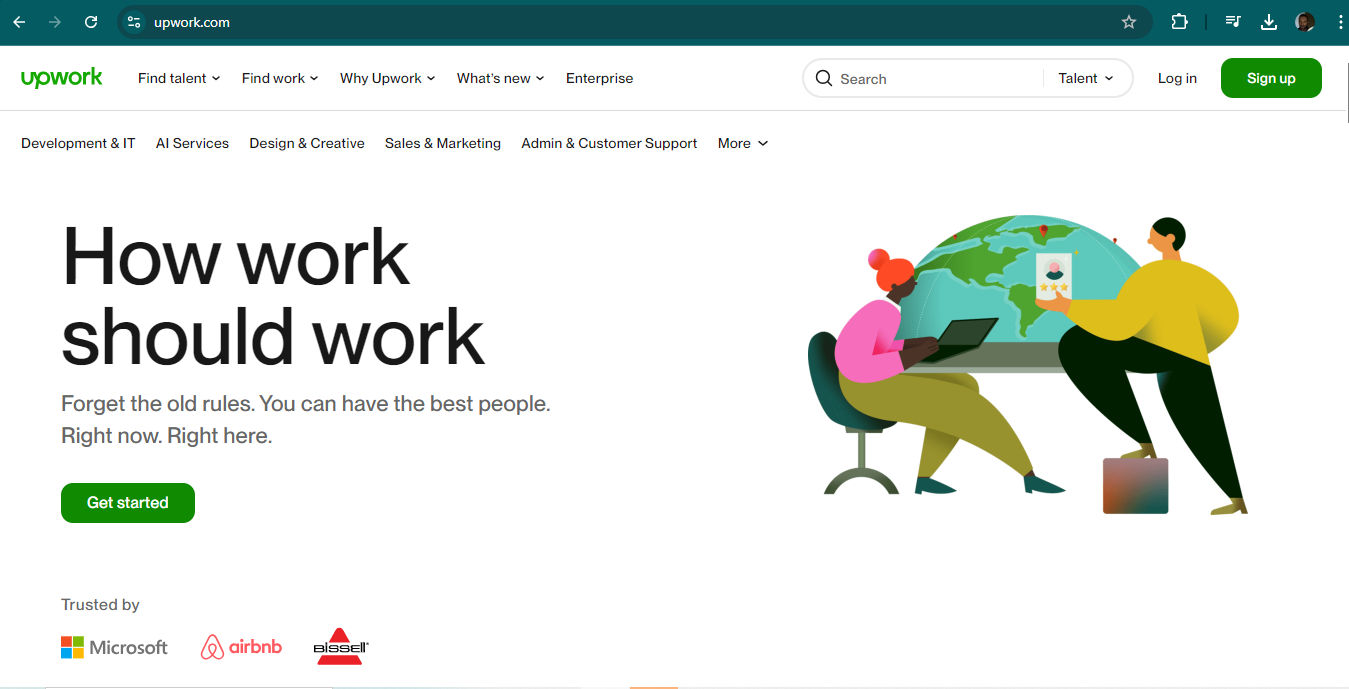
Upwork is one of the largest and most popular freelancing platforms—and many UX jobs appear there.
© Upwork, Fair Use
Key Advantages for Clients
1. Cost-Effectiveness
It can be far more cost-effective for clients to hire freelancers than to employ full-time staff. Clients typically only pay for the work done, and they don’t have to foot bills for additional costs like benefits, office space or equipment.
2. Flexibility
As freelancers offer flexibility in terms of workload and project duration, clients can hire them for short-term projects—including UX design within product development or “one-offs” such as later-stage aspects of an existing project—or ongoing work as needed. What’s more, there’s far less long-term commitment when a client hires freelancers—so it’s far easier to adjust workforce needs and keep things fluid, minus a lot of risk.
3. Access to Specialized Skills
Freelancers often specialize in specific areas—so clients can tap into expertise that mightn’t be available in-house. This can be a fast find for them, something that’s especially important if they need someone to dive in quickly to examine user flows so they can begin work on a solution to remove pain points from user interactions and get a new product—or a better version of an existing one—on the market.
4. Quick Turnaround
Many freelancers become—and are—used to working on tight deadlines, and they can often deliver projects to clients faster than traditional employees might set before their bosses.
5. Global Talent Pool
Clients can access a worldwide pool of talent—and they don’t have to put up with geographical constraints limiting them. It’s a dynamic which works well with the digital nomad phenomenon.
6. Fresh Perspectives
Seasoned freelancers bring diverse experiences from their work with various clients—and they can offer fresh new ideas and inventive approaches to newer clients later.
7. Scalability
It's easier to scale up or down with freelancers—and clients can hire in a fine-tuned way based on whatever their business needs and project requirements are like.
8. Specialized Project Focus
Freelancers can dedicate their full attention to specific projects and not have the distractions of other company responsibilities getting in the way—such as admin-related tasks, corporate-oriented meetings and the like.
9. Time Zone Advantages
When clients work with international freelancers, they can—potentially—have work that progresses around the clock. That means they can aim for appropriate release times of deliverables during the day while they tap a global realm of expertise.
10. Lower Training Costs
Experienced freelancers often require far less training—if any at all—as they come with the necessary skills for the job. This can also include the point that designers understand how accessibility is almost certainly going to be a legal requirement for whichever brand a “freelance UXer” works for. In any case, accessibility helps not just users with disabilities but all users, too, such as high-contrast color choices in designs so users can see screens in bright outside conditions.
Watch our video to understand more about the quintessential importance of accessibility in design:
Freelancing is a two-way street with benefits that run on both sides to make the freelancer an attractive option for many businesses. That’s especially the case for remote project-based work or when clients need specialized skills and an assurance that freelancers understand how to work in an effective design process such as design thinking.
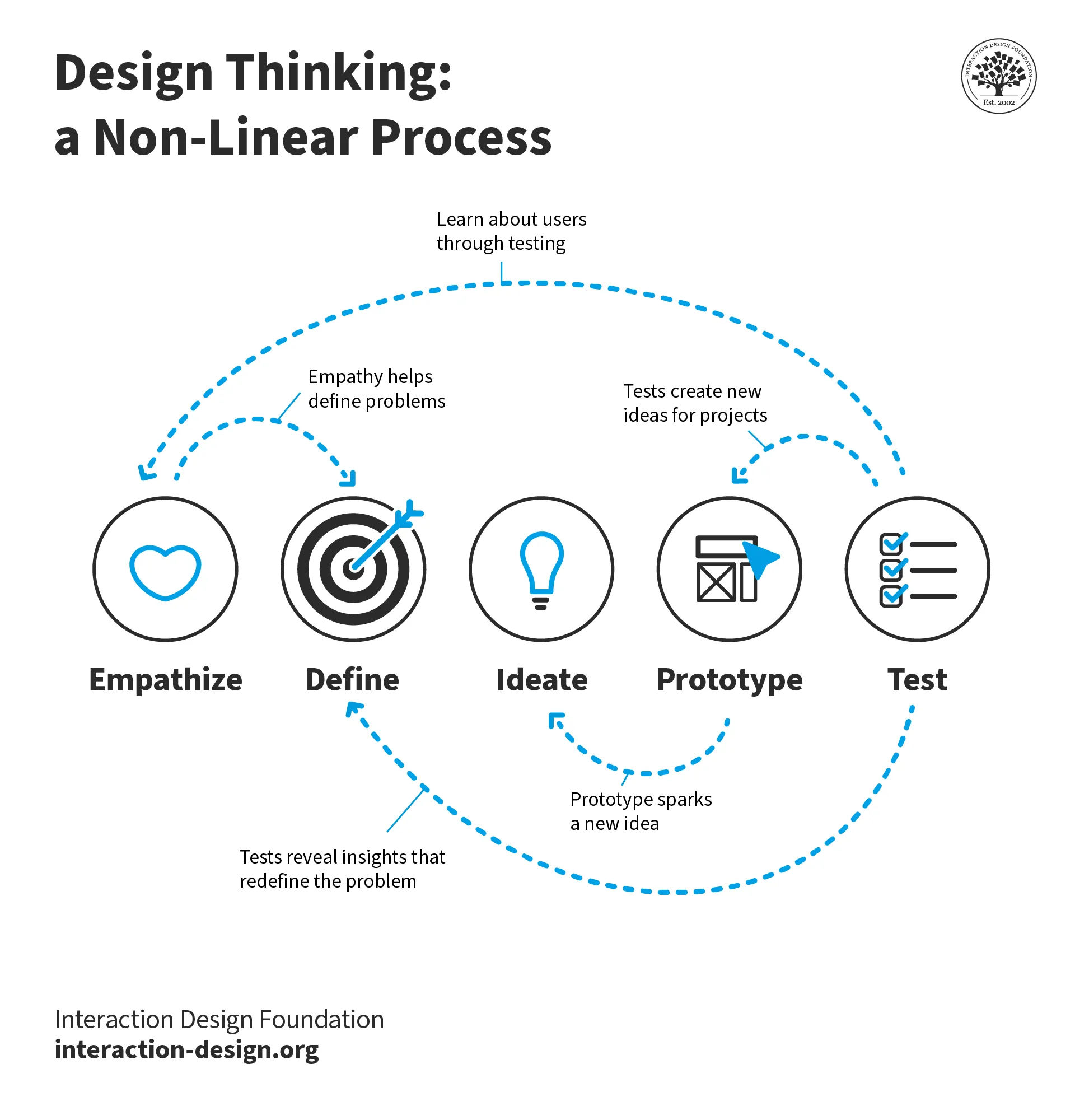
Design thinking is an example of a UX design process that many freelancers’ clients may be familiar with—and expect freelancers to be proficient in—for product design.
© Interaction Design Foundation, CC BY-SA 4.0
How to Develop a Brand as a Freelancer?
It’s crucial to develop a personal brand as a freelance UX designer. That’s largely because it’s vital to differentiate oneself in a highly competitive market. A personal freelancer’s brand tells that designer's story—and lets their prospects know what to expect from them.
For one thing, designers need to find their niche and mission—and get these out in the open in words. They should ask themselves, “Why would clients need to hire me?”—and—from that—what sets them apart from other freelancers. The brand a designer chooses to make, cultivate and profess should be well in line with their own personal interests and goals. It should resonate with them—they’ll need to believe in it, and in themselves, long into the future. What’s more, they’ll need to make it resonate with their potential clients just as strongly.
© Interaction Design Foundation, CC BY-SA 4.0
How to Build a Successful UX Design Freelance Business?
UX freelancers such as designers need to focus on several core parts to succeed with their freelance business. Some questions they should ask themselves are:
How to Make the Best UX Portfolio?
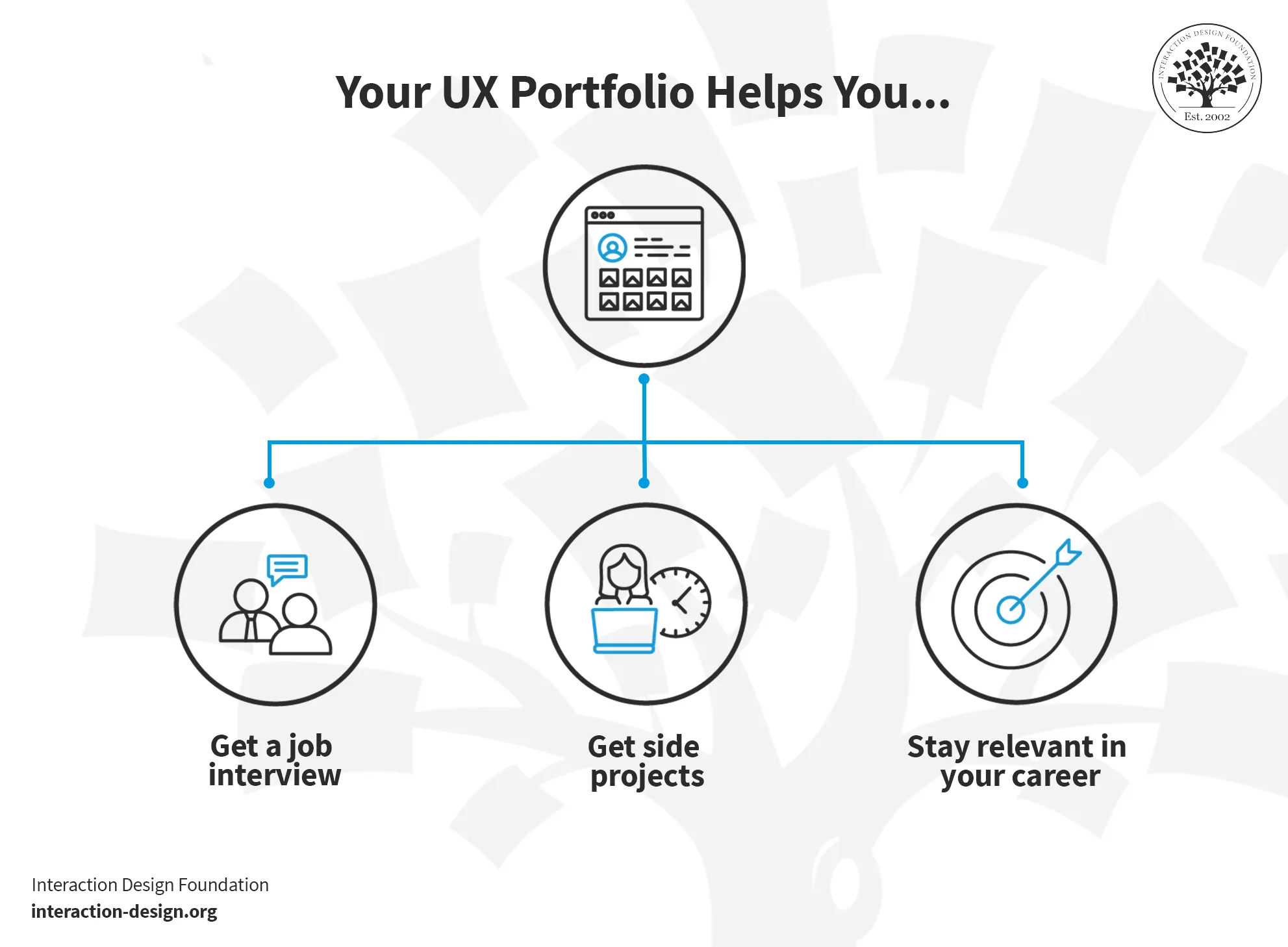
Aside from a designer’s experience in how they apply such fundamentals as visual design principles and research skills—and also because they have built up experience in how they apply these core areas—a strong portfolio is the foundation of a successful UX design freelance business.
© Interaction Design Foundation, CC BY-SA 4.0
A UX portfolio showcases a designer's skills, expertise and design style—it’s a “shop front” to show their potential clients. When designers create a portfolio, they should present the best of their best work—those precious pieces that demonstrate their range and expertise.
The portfolio should include these:
Case studies that tell a story from problem to solution: 3–4 are best for designers to have in there. Each case study should introduce the client, describe the problem, explain the designer's role and outline any constraints that were in the way. It's important to discuss the user research process—which includes the creation of personas or user journey maps—to show how data and empathy guide design decisions.
UX Leader and Author of Why Always Wins, Stephen Gay explains how to write great case studies for a UX portfolio:
Explicitly clear evidence of a designer’s approach to problem-solving: This includes preliminary prototypes, sketches or wireframes. Depending on confidentiality agreements, designers might include photos from meetings or workshops to demonstrate the collaborative nature of the design process.
Detailed visuals of the finished product: These can also feature metrics, user comments or testimonials that highlight the value added for the client.
Watch as Design Director at Societe Generale CIB, Morgane Peng explains what to avoid in a UX portfolio:
It’s impossible to overstate how vital it is for designers—especially UX freelancers—to invest in their portfolios. The portfolio will often be a potential client’s first look at a freelancer. So, it’s crucial to stand out from the competition if designers want to land great opportunities in the field. Here are some tips to help create an impressive UX portfolio:
Identify the target audience: The portfolio is a kind of design solution in itself—and it needs to prove its value as such. First, it must show that the UX freelancer knows who will review it, such as a hiring manager for an app startup. So, it’s got to lift off from the screen with an energy that reflects the projects it claims to encapsulate. That’s why UX freelancers need to start with their content strategy.
Morgane Peng explains content strategy as a powerful plus:
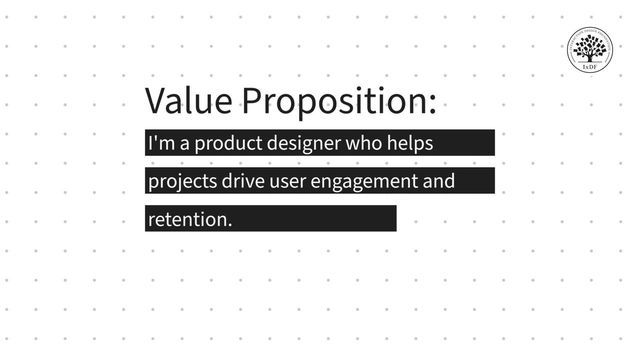
Bring out the value proposition: It’s a crucial asset for a UX professional to show what they have that a prospective client wants most—and what competitor freelancers don’t.
Morgane Peng explains value propositions—and why they’re so valuable:
Curate the best work: Freelancers who take care to pick their strongest projects that mirror their technical acumen, designer judgment and ideation prowess can enjoy the increased potential that clients will see both their versatility and high expertise in the best of their “greatest hits.”
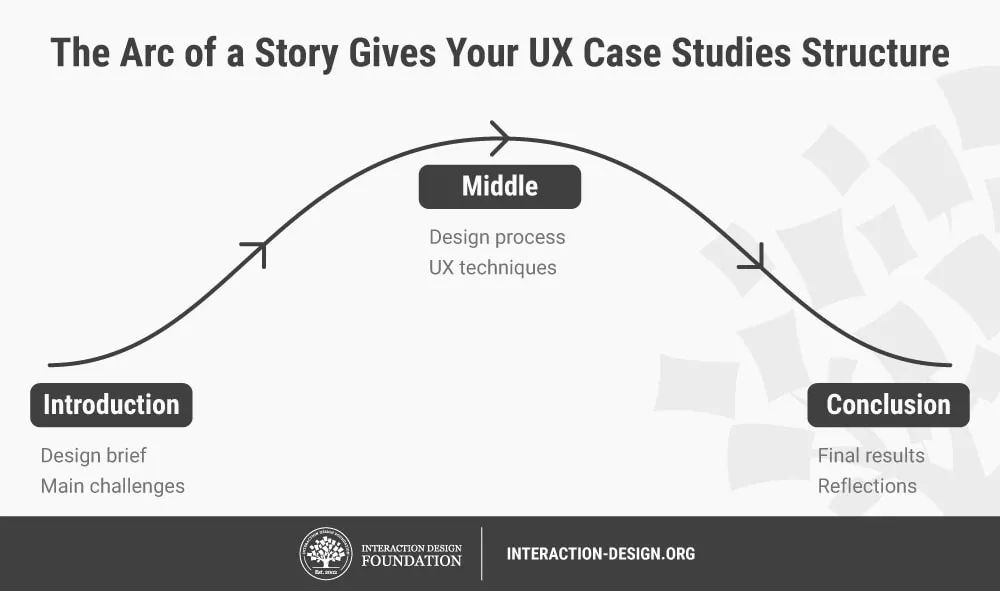
Include the entire story: Perhaps the greatest risk for designers when they approach how to write a portfolio is the belief that it will help them to show only the end result of an outstanding project to hiring managers who don’t have time to read so many details. It’s a misconception that does a disservice to the spirit of design and to the rationale of a portfolio.
So, freelancers should clearly—and concisely—include their problem statement, research, design process and the vital steps on the way towards that great final outcome. It’s extremely beneficial to explain the rationale behind key decisions, and to highlight how they overcame obstacles or pivoted from what they’d noticed in user feedback. In the case of case studies, for example, storytelling is the most effective way to bring what a designer did to a level where it can grab a potential client’s attention.
© Interaction Design Foundation, CC BY-SA 4.0
Demonstrate technical skills: It’s important for a designer to include examples of how proficient they are with relevant UX tools—like Sketch and Figma—plus, their ability to create responsive designs for various devices.
CEO of Experience Dynamics, Frank Spillers explains important points about responsive design:
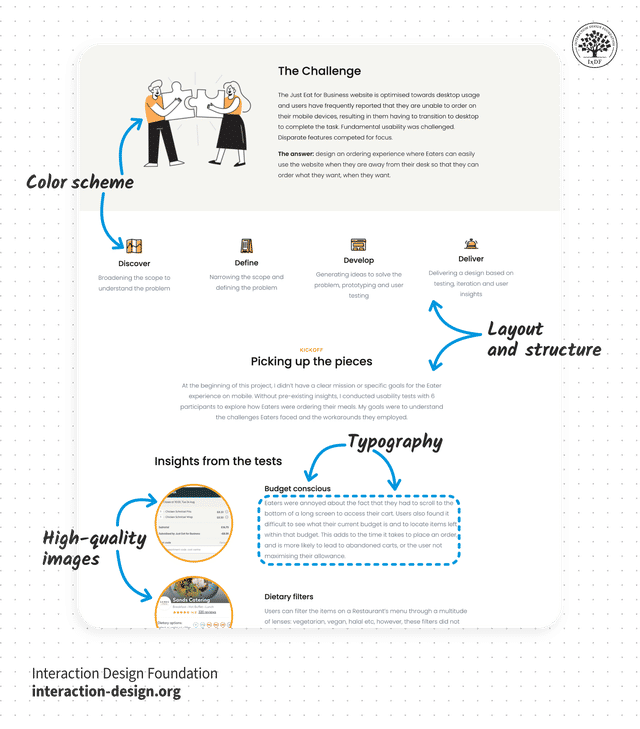
Incorporate visual design elements: As a design solution of sorts, the portfolio needs a clean, intuitive layout—hence why it’s vital to use consistent branding and typography throughout.
© Interaction Design Foundation, CC BY-SA 4.0
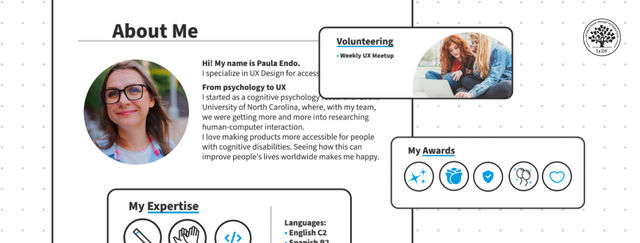
Add a personal touch: An effectively compelling "About Me" section can share a freelancer’s background and passion for UX and bring them more to life—complete with a professional photo to make that all-important personal connection.
Make it accessible: Accessible design is in—in all senses—and it’s important to mirror that spirit; so, create an online version of a portfolio for easy sharing, and make sure that it's responsive and works well on different devices.
Include testimonials: Quotes from clients or colleagues about, for example, a UX designer’s work and collaboration skills can help that freelancer stand out as a legitimately strong contender.
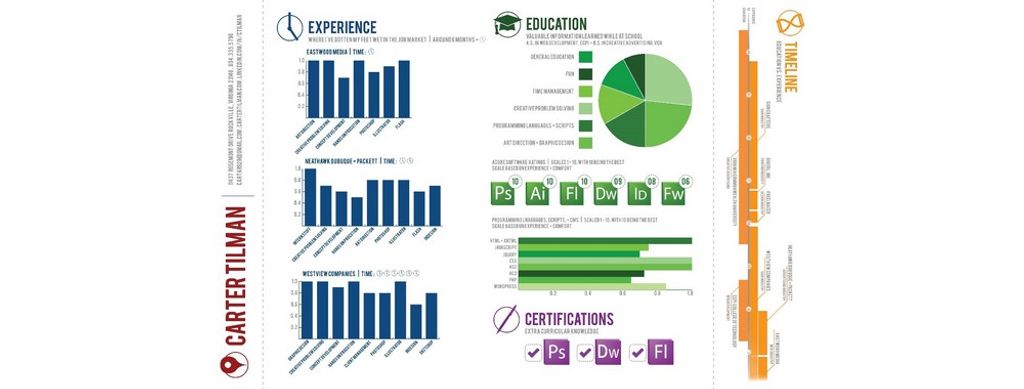
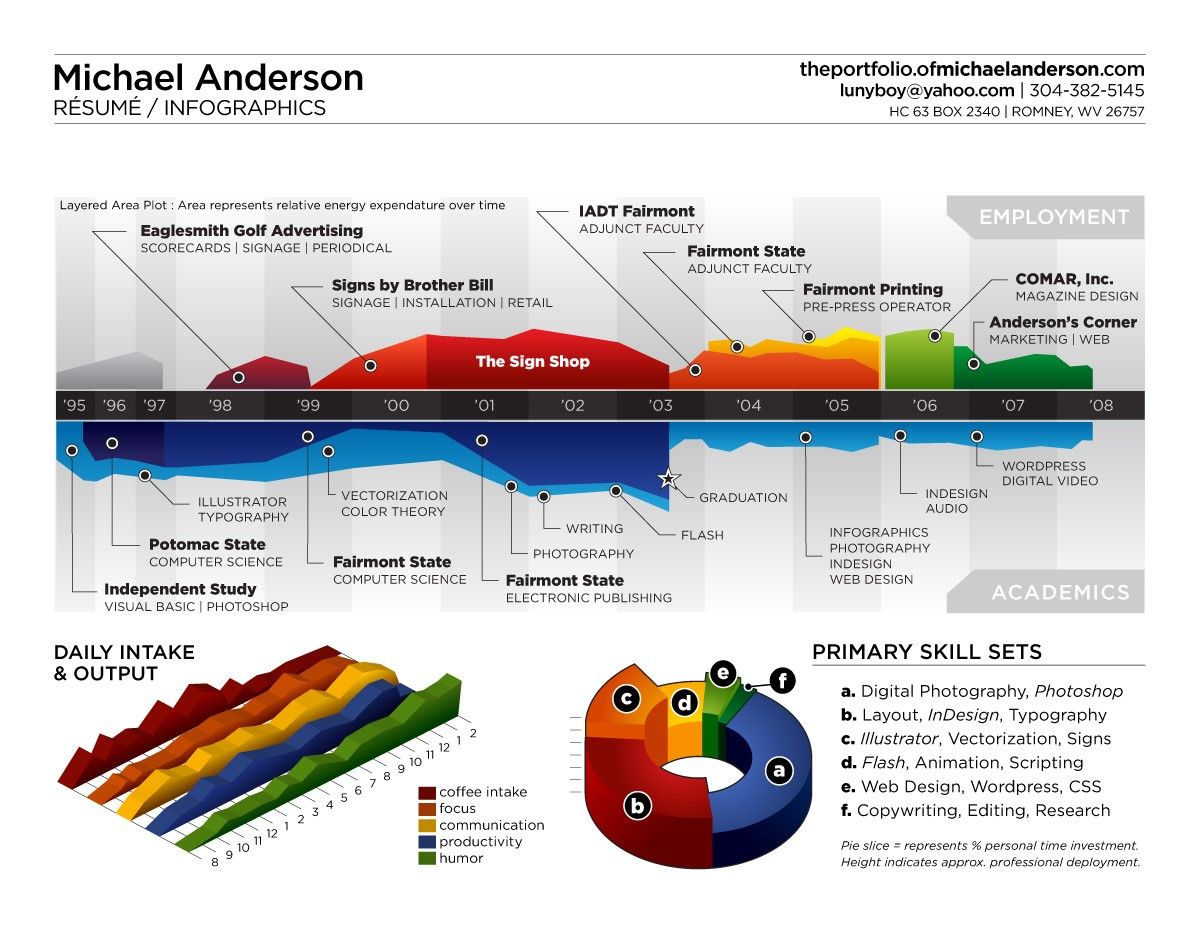
Consider supporting it with a resume/CV: Sites like LinkedIn can act effectively as resumes or CVs—still, some UX design freelancers can benefit from these if they include them whenever they approach potential clients.
Design Director at Societe Generale CIB, Morgane Peng explains resumes/CVs and how they are helpful:
Keep it up-to-date: Regularly update the portfolio with new projects and skills; take out older or less relevant work as time goes on.
Seek feedback: Fellow UX designers or mentors can review a portfolio and give constructive criticism—and some nuggets of wisdom for a freelancer to make improvements with.
Optimize for discoverability: It’s vital to use relevant keywords in a portfolio to improve SEO—and also to share it on professional networks like LinkedIn.
Prepare to discuss work: Rather like an elevator pitch—and extended as needed in length—a freelancer should be ready to explain their process, decisions and more in interviews. That’s why it’s vital to practice presenting case studies concisely, and think value in process and journey as well as value in result.
Remember, a UX portfolio shouldn’t just showcase the final designs—it’s got to demonstrate the problem-solving skills, design thinking process and ability to create user-centered solutions that lie behind the end products, too. It also needs to reflect the person well—especially as potential clients will wonder about important aspects such as communication style. This is also where personal-touch elements such as UX cover letters can supplement the clout of a powerful portfolio and add leverage to how drawn a potential client’s attention will be to such a detail-oriented and careful candidate.
© Interaction Design Foundation, CC BY-SA 4.0
What are Networking and Marketing Strategies for UX Design Freelancers?
Networking and marketing are simply vital ingredients to build a successful UX design freelance business. One strategy that’s particularly effective is to become a valuable contributor to peer communities. When a freelancer is part of a strong community of peers, they can:
Feel far less alone while they work independently.
Have a reliable sounding board for questions and advice.
Build a brand as someone who’s invested in improving their work and helping others.
Get access to precious collaboration opportunities.
Enjoy exposure to projects and clients they mightn’t find through traditional channels.
Get access to referrals and “social proof.”
With joining communities, it's important to prioritize one or two—the ones that are the best fit—and commit to being an active participant there. Designers should remember the adage that it’s better to give more than they take, and share interesting articles, pose questions to create discussions, answer others' questions—great ways to cultivate a brand presence for themselves.
Some recommended communities for UX freelancers include:
UX Freelancers: A Slack group for intermediate to senior UX freelancers.
MixedMethods: A Slack group for mixed-methods researchers.
The Learners Community: A Slack group for junior and intermediate UX researchers.
Advancing Research: A Slack group for intermediate to senior UX researchers.
What are Potential Hazards with Being a Freelancer?
Freelancing does come with several downsides—or potential risks—such as:
1. Lack of Stable Income
This is just a fact of life for all self-employed individuals. Even so, it’s something a UX professional can mitigate when they’re consistently moving from successful contract to successful contract and have a number of satisfied—or delighted—clients’ feedback to show for it. Tied in with this is how important it is to be able to “feel out” stable projects and clients. It therefore might be a good idea to start out with a few clients on shorter contracts—or ones with fewer hours’ commitment per week—and not “put all the eggs in one basket.”
2. Potential for Undercutting
The phenomenon of “cheaper labor abroad” also applies to the remote and digital sphere. For example, a designer in Indonesia will almost certainly be able to offer their services for less than one in Switzerland. It can be a headache for freelancers from “developed” countries if they find it’s harder to get the clients in because of cost. However, it needn’t be a barrier if the freelancer self-promotes effectively. One “trick” to the whole process is to temper value with self-respect. Clients need to realize that they’ll get what they pay for, as much as freelancers must protect the actual worth of the “value” they offer. The instant it becomes a “race to the bottom”—like a reverse auction—is when it’s maybe the best idea to steer clear of clients who expect perfection in return for a pittance.
3. Unethical Clients
It may be rare, but it can happen that some clients end up behaving unethically or even atrociously. Fortunately, just feedback from former freelancers is often enough to encourage such individuals to amend their ways or leave the marketplace. Even so, it’s best to be mindful in the first instance. What’s more, stay resolute and self-respectful. Freelancers should check their contracts to the letter and be careful about submitting work until, for example, the client verifies their payment method to the freelancing site. It’s best to keep a spirit of good value underscoring the work ethic—but to keep to one’s values at the same time.
4. Burnout
This mistake can wear down even freelancers with the strongest constitutions. It usually comes early in their careers as freelancers—when they’re still finding the edges of what they can do “out there” or exploring the freedom freelancing offers after years of corporate drudgery—and it’s important to practice self-care and accept sane limitations. The “team of one” or “one-person show” in this sense means it’s vital to guard the person behind the brand and not ignore health, sanity and reasonable expectations when it comes to “wowing” clients from project milestone to milestone.
5. Taxes
Aside from the potential for physically overtaxing oneself, there come the woes of paying both as employer and employee in some countries. This means that it’s vital to forecast all the expenses early on—and for freelancers to pay themselves in a separate “bucket” and put money aside regularly so they won’t have nasty shocks when it comes to the end of the tax year.
Fortunately, the benefits of freelancing tend to make it more than worth the potential risks—and the confidence freelancers build as they progress can see them go from strength to strength in the marketplace, with solid portfolios, positive feedback and many hours logged on a freelancing site to prove their value.

© Interaction Design Foundation, CC BY-SA 4.0
What’s Important to Know Once a Freelancer Gets Contracts?
When UX freelancers land their first contracts, it’s best to be mindful of several key areas in particular:
1. What’s the Law of the Land?
This is especially relevant to newcomers to freelancing as well as digital nomads who may be crossing several borders as they work. In any case, it’s vital to understand the laws—including tax laws—about how freelancers can work remotely, and what they’re accountable for. That’s why they need to look into keeping good accounts, see what expenses they can claim for—such as home office space, internet rates and printer cartridge costs—and factor in the percentage they “lose” automatically to tax when they’re weighing up clients’ negotiated rates for projects.
2. How to Navigate Client Relationships?
Several points are vital to consider, such as:
Effective Communication
This is crucial for successful UX design freelancing—not least since it creates harmony throughout a project and aligns goals and expectations from the start. This alignment is what helps achieve milestones, complete projects on time, stay within budget and build trusting relationships between clients and freelancers—or vendors, as they’re sometimes called.
To establish effective communication, freelancers should:
Set clear expectations: Before a project starts, it’s vital to work out the communication preferences, meeting schedules and working hours. That’s especially important when work happens across different time zones.
Use appropriate channels: Clearly communicate preferred communication channels—like email, chat apps, video conferencing or project management tools—so both sides know how to reach each other without inconvenience or nuisance.
Keep records: A written record of all communications and project updates will help a freelancer stay organized, plus give great visibility into the project status.
Be responsive and professional: Politeness, responsiveness and professionalism—they’re vital throughout the project to support a positive relationship, and to remember when it comes to feedback.
How to Manage Client Expectations
For a smooth relationship with a client, it’s best to:
Understand client expectations: Designers and other UX freelancers should clearly communicate with their clients so they understand the expectations in a contract, and to make sure these line up with their own capabilities.
Be clear about non-disclosure agreements (NDAs): These are a fact of life when a freelancer works for a client. These documents are important to understand and follow—so no legal headaches occur later. Who owns the work? What about inventive ideas that come up during a contract? Both freelancer and client need to be aware of what NDAs assure for the protection of copyright and more.
Watch as Morgane Peng explains important points about NDAs:
Schedule regular check-ins: Keep the client engaged throughout the project with regular check-ins. This helps make for easier adjustments; plus, it helps strengthen the client-agency relationship and keep friction from misunderstandings to an absolute minimum.
Use collaborative content approval software: These tools can streamline the revision process. So, all stakeholders can give their feedback in one place—something that eliminates confusing email chains.
Encourage specific feedback: There needs to be an environment where clients feel comfortable enough to give honest and detailed feedback—which could be about anything from font preferences to larger changes.
How to Handle Feedback and Revisions
Here are some helpful strategies:
Don't take it personally: Remember that criticism is usually restricted to the design, not the designer behind the design.
Involve the client: Give clients the impression that they’re truly involved in the design process—and if their ideas don't work, politely but firmly explain why, and if possible, compare two versions side by side.
Set revision limits: To prevent endless back-and-forth, have a set number of meetings for revisions and clearly inform the client of this well in advance.
Prioritize feedback: Not all feedback is equal—so, analyze and prioritize feedback depending on how it impacts goals and overall user experience.
Overall, freelancing is a powerful asset to both the professionals who offer valuable expertise and the clients who hire them. The freedom, flexibility and fluidity involved are a welcome alternative to those who wish to avoid long-term commitment to a single brand from within a corporate culture. The same thing holds true for the businesses that—similarly—don’t have to worry about fielding such “regular” staff on their books as employees.
Nevertheless, the price of freedom and flying one’s own flag is a long-term commitment to one’s own brand as a freelancer. That includes how to negotiate promoting oneself, working as a branded freelancer and all the associated responsibilities that come with moving from contract to contract over time. It’s important to keep one’s self-respect intact at all times—and not let the honeymoon effect of leaving corporate work, for example, convince a freelancer that they should put value to their clients above the value they need to place on themselves.
Ultimately, the advantages freelancing offers and the investments freelancers make in their own brands are powerful reasons for talented individuals with skills and ingenuity to offer to keep the momentum high with this precious alternative to “traditional” work—and for clients to flock to those who prove they know their stuff and are more than worth the hire.

© Interaction Design Foundation, CC BY-SA 4.0











 Author/Copyright holder: Kristian Bjornard. Copyright terms and licence: CC BY-SA 2.0
 Author/Copyright holder: Bart Claeys. Copyright terms and licence: CC BY-NC-ND 2.0