Incrementalism

Your constantly-updated definition of Incrementalism and collection of videos and articles.
Be a conversation starter: Share this page and inspire others!

295 Shares

What is Incrementalism?

Incrementalism is an approach designers use to address large problems. Doing incremental design, they wait for a chance to take small steps toward a known goal and win community support. Designers learn from and modify these interventions to match the current situation, promoting sustainable design instead of investing in high-risk grand solutions.

“The day the product team is announced, it is behind schedule and over its budget.”

Don Norman: Father of User Experience design, author of the legendary book The Design of Everyday Things, co-founder of the Nielsen Norman Group, and former VP of the Advanced Technology Group at Apple.

See why incrementalism works best for tricky, real-world problems.

Copyright
Transcript

Big Problems Demand Little Steps

It can seem counterintuitive to address big issues this way, but the world is far too complex to afford designers the luxury of producing grand solutions that might, at least theoretically, fix its serious problems. Apart from the massive expense and disruption such remedies involve, there’s another problem: time. We can’t hit “pause” on the rest of the world while we design miracle cures in a vacuum.

Cognitive science and usability engineering expert Don Norman considers 21st-century design the way for designers to tackle the world’s biggest and most important challenges, such as poverty, hunger and unequal access to healthcare. These critical challenges are difficult to solve because they involve complex interconnected systems that feed back and forth between one another. Furthermore, humans are designed to understand simple cause-and-effect chains instead of approaching feedback loops insightfully. For example, poverty is often the cause of many other significant socio-technical problems, but what about the many factors that feed into it and from it that keep the vicious cycle going? Designers face such complex socio-technical systems, which, like wicked problems, are:

  • Difficult to define.

  • Complex systems.

  • Difficult to know how to approach.

  • Difficult to know whether a solution has worked.

Associate Professor of Economics at Yale University Charles E. Lindblom’s article “The Science of ‘Muddling Through’” appeared in 1959. Although it focused on the policy-formulation approach of the U.S. executive bureaucracy, Lindblom’s work contains a kernel of truth for designers: Avoid applying grand solutions to big problems. Not only are these obscenely expensive, they also end up disrupting too many people’s lives. Moreover, big problems are, like other moving targets, hard to hit. And by the time you’d be ready with a grand solution, too much would have changed, anyway: the situation, the culture of the people you’re trying to help, even the problem itself. That’s why Norman’s principles of human-centered design are invaluable:

  1. People-Centered: Focus on people and their context to create appropriate solutions. This includes participatory design that ensures user involvement in the process.

  1. Understand and Solve the Right Problems: Address the root causes and underlying fundamental issues rather than just symptoms.

  1. Everything is a System: Recognize that everything exists as a system of interconnected parts.

  1. Small and Simple Interventions: Work iteratively rather than rushing to solutions.

Incrementalism is central to the last one: Small and simple interventions.
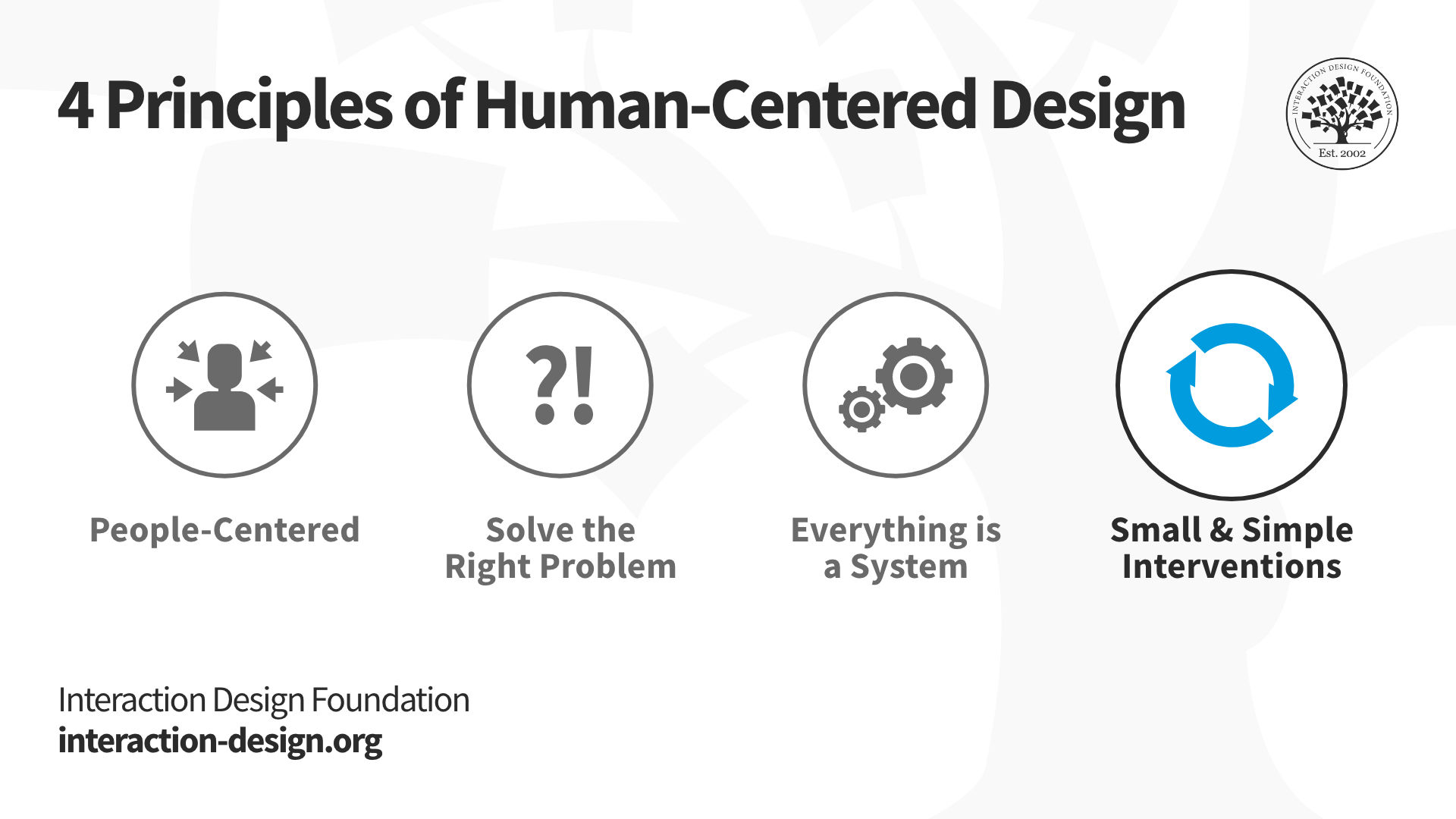
Incrementalism is central to the fourth principle of Human-Centered Design, Small & Simple Interventions. The other principles are People-Centered, Solve the Right Problem, and Everything is a System.

© Interaction Design Foundation, CC BY-SA 4.0

Use Incremental Design to Edge Towards Good Solutions

Make the best of the situation and use human- or humanity-centered design:

  • Be people-centered. Live among the people you want to help, to understand the true nature of the issues they face, their ways of seeing these, and any attempts they’ve made to solve them. For example, your population might be malnourished and can’t use all their farmland because of ill-marked landmine fields from an old civil war.

  • Solve the right problem. Deeply examine the factors driving the people’s problems. Try the 5 Whys approach. The landmines might seem to be the root cause, but they might be symptoms of something else that runs deeper (e.g., longstanding group factionalism). So, in this case you might suggest farming alternatives, to feed the people sustainably so they can work towards progress. For example, might they grow food hydroponically (i.e., in water containers) until demining efforts clear the land properly?

  • See everything as a system. Use systems thinking to untangle as many parts of the problem(s) as possible. Complex socio-technical systems demand hard investigation and working alongside experts and, principally, the people you intend to help. Community-driven design is crucial for finding optimal solutions within the system(s) involved.

Now, take the first steps towards a real solution:

  • Wait for the opportunity to do a small test of the small-scale solution you’ve co-created with the community. E.g., Build hydroponic farms in old, unused buildings using repurposed mirrors and solar panels.

  • If it’s successful, evaluate the degree of success; then adapt and modify it or repeat it several times. If it fails, learn from the experience to guide yourself towards the known goal. E.g., you introduce more cheap-to-grow crops in two more improvised hydroponic farms.

  • If it keeps succeeding, you’ll gain more community support and find you/they can achieve even more. E.g., the community can start selling their surplus crops.

  • Over time, monitor outcomes and modify the approach as needed. E.g., the hydroponic farms win government support, and demining efforts improve to help clear the way for safe farmland again.

Tips:

  • Divide big problems extensively and be patient for the best chance to take the best small-level action.

  • Work with the local community leaders and listen carefully to their views about everything.

  • Check if some of the community’s existing solutions are salvageable or modifiable.

  • Remember, low-tech solutions are typically cheap and easy to build, understand, use and maintain.

  • Move slowly; let the results speak for themselves to the community, government agencies and beyond.

The journey is rarely smooth or predictable, but small steps in the right direction work best.

A tree-lined street with houses on one side, and a partial view of a stone staircase on the other side.

Questions About Incrementalism?
We've Got Answers!

What is the definition of incrementalism in design?

Incrementalism in design is making small, step-by-step improvements to existing systems rather than creating entirely new ones. This approach is practical and often necessary, especially in complex environments like healthcare, education, or government, where sweeping changes can be risky or disruptive. Big solutions can be too expensive and take too long to implement; indeed, the problem itself may have changed by the time a big-fix effort is ready.

Incrementalism, or “muddling through,” works well when designers focus on solving real user problems within current constraints. Instead of aiming for a “perfect” solution, they improve what already exists through continuous iteration. Good design does not always mean revolution; it often means careful evolution.

This approach helps teams gather feedback, test ideas quickly, and reduce the risk of failure.

Watch as UX Pioneer and the Godfather of UX Design, Don Norman explains incrementalism:

Copyright
Transcript

Take our courses Design for the 21st Century with Don Norman and Design for a Better World with Don Norman for a vast array of important insights.

What are the main benefits of using an incremental approach in UX design?

The main benefits of using an incremental approach in UX design include faster feedback, reduced risk, and better alignment with real-world constraints. Rather than launch a massive redesign, designers make small, user-focused changes that improve the product over time. This helps teams learn what works, avoid costly mistakes, and respond quickly to user needs.

Incremental design also builds trust with users. Gradual changes are easier to adopt and less likely to disrupt their experience. It’s more “alive” as it supports continuous improvement—a core principle in Lean and Agile practices—by focusing on value delivery in short cycles.

This approach works especially well in large systems or regulated environments, where big overhauls are too risky. It allows designers to make meaningful progress without waiting for perfect conditions. Even if “perfect” conditions were to arise, chances are they would pass into imperfect ones by the time even the most capable design team could release the “perfect solution.”

Watch as UX Pioneer and the Godfather of UX Design, Don Norman explains incrementalism:

Transcript

Take our courses Design for the 21st Century with Don Norman and Design for a Better World with Don Norman.

How do I apply incremental design in a real UX project?

To apply incremental design in a real UX project, start by identifying small, high-impact areas that you can improve quickly—like simplifying a form, clarifying navigation, or speeding up a common task. Use user feedback, analytics, and usability testing to guide these priorities.

Tackle one change at a time and validate it with real users. After each improvement, assess its impact and use those insights to plan the next step. This cycle of design, test, and refine allows your team to deliver value steadily without overwhelming users or taking big risks.

Document your changes and decisions along the way. Over time, these small shifts can transform the entire experience. Incremental design keeps progress user-focused, sustainable, and responsive.

Enjoy our Master Class, Exclusive: Design for a Better World, a Discussion with Don Norman, Founding Director - Design Lab, University of California, San Diego. Co-Founder, Nielsen Norman Group.

Watch Don Norman explain important points about incremental modular design:

Transcript

Does incrementalism prevent innovation in UX?

Incrementalism doesn’t prevent innovation in UX design, but it can be limiting if teams use it without strategic reflection. Small, steady improvements help refine products and respond to user needs. However, when teams focus on incremental tweaks, they may miss deeper issues or bigger opportunities.

Real innovation sometimes requires stepping back and rethinking the entire experience, not just polishing existing parts. If teams never question the foundation, they risk improving the wrong thing.

To balance both, combine incremental changes with moments of big-picture thinking. Regularly pause to ask, “Are we still solving the right problem?” That mindset makes incrementalism a pathway to innovation—not a roadblock.

Watch as UX Designer and Author of Build Better Products and UX for Lean Startups, Laura Klein explains important points about innovation versus incremental improvement:

Transcript

Enjoy our Master Class, Design For Agile: Common Mistakes and How to Avoid Them with Laura Klein.

How can I tell if a design problem needs incremental fixes or a complete redesign?

To decide whether a design problem needs incremental fixes or a complete redesign, examine the issue's depth and spread. If users consistently struggle with one specific feature, an incremental fix, like simplifying a form or clarifying labels, can solve the problem quickly and safely. However, if confusion, frustration, or inefficiencies appear across multiple parts of the product, it’s likely a sign of deeper flaws that a redesign should address.

Don Norman emphasizes the importance of root cause analysis. Ask why users encounter the problem and whether it’s a symptom of broader issues, like poor information architecture, outdated mental models, or misaligned user flows. If minor tweaks no longer move the “needle” towards improvements, the system may need rethinking.

Also, look at technical constraints. If the platform or codebase makes even small changes hard to implement, redesigning might be more efficient in the long term. Combine this with user research and business goals to guide the decision.

Enjoy our Master Class, Exclusive: Design for a Better World, a Discussion with Don Norman, Founding Director of the Design Lab at the University of California, San Diego, and co-founder of Nielsen Norman Group.

How does incrementalism relate to designing for equity and inclusion?

Incrementalism supports equity and inclusion when designers use small, ongoing changes to remove barriers and improve access for underserved users. Instead of waiting for extensive overhauls, teams can fix real problems—like confusing language, poor contrast, or biased defaults—one step at a time. These changes build momentum and create space for more profound systemic shifts.

Don Norman highlights the power of designing for humanity, not just efficiency. Incrementalism aligns with this by embedding care and empathy into everyday design work. Even minor tweaks can make a product more inclusive, especially when designers guide these with continuous user feedback and testing with diverse groups.

However, designers must stay alert. Incrementalism can reinforce existing inequities if it becomes a substitute for real change. Regular reflection ensures that each update moves toward fairness, not just surface-level polish.

Enjoy our Master Class, Exclusive: Design for a Better World, a Discussion with Don Norman.

How do I know if I’m improving the right thing with minor changes?

To know if you're improving the right thing with minor changes, look closely at user behavior, feedback, and context. Good design solves real problems—not symptoms. So, start by identifying friction points through usability testing, support tickets, or drop-off analytics. Then ask: “What’s causing this issue? Are we fixing the surface, or the root?” You may need to dig down using the 5 whys approach.

Before implementing any fix, define what success looks like. Will this change reduce errors, improve flow, or boost engagement? Track those outcomes, not just outputs. If the problem persists, you may be improving the wrong thing, or need a broader change.

Check if your fix aligns with user goals and business objectives, too. Incrementalism only works when it’s intentional. You're on track if each change makes life easier for users and moves the product in the right direction.

Watch as Don Norman explains the 5 Whys method:

Transcript

Enjoy exploring in our Master Class, Exclusive: Design for a Better World, a Discussion with Don Norman.

How do UX designers avoid getting stuck in a loop of small changes?

UX designers avoid getting stuck in a loop of small changes by regularly zooming out to reflect on the bigger picture. While incremental improvements help refine products, focusing only on tweaks can reinforce broken systems. Designers must ask, “Are we solving the right problem, or just smoothing over symptoms?”

To break the loop, set periodic checkpoints. Step back from day-to-day fixes and review the overall experience with fresh eyes. User research, journey mapping, or system audits can spot deeper issues. Invite cross-functional teams into the conversation to uncover misalignments.

Also, balance quick wins with long-term goals. Try a dual-track approach: one for short-term improvements and another for strategic exploration. This lets teams stay agile without losing sight of innovation or equity.

Enjoy our Master Class, Design For Agile: Common Mistakes and How to Avoid Them, with Laura Klein.

Why do stakeholders often prefer incremental changes?

Stakeholders often prefer incremental changes because they feel safer, faster, and more predictable. Small updates are also easier to approve, budget, and release, especially in environments with tight deadlines, complex systems, or risk-averse leadership.

Incremental changes can show quick wins, which helps maintain momentum and stakeholder support. They let teams respond to user feedback, fix issues early, and measure outcomes without waiting for a big launch. This reduces risk and builds trust over time.

However, this preference can limit innovation if it’s not balanced with strategic thinking. Designers must communicate when a minor fix won’t solve the deeper issue, and help stakeholders see the long-term value of broader change.

Take our courses Design for the 21st Century with Don Norman and Design for a Better World with Don Norman.

What are highly cited or recent articles about incrementalism?

Norman, D. A., & Verganti, R. (2014). Incremental and radical innovation: Design research versus technology and meaning change. Design Issues, 30(1), 78–96.

In this influential article, Norman and Verganti differentiate between incremental and radical innovation within the design process. They argue that human-centered design (HCD) methods are effective for incremental improvements—refinements that enhance existing products or services. However, they contend that HCD is less effective for achieving radical innovation, which requires fundamental changes in technology or meaning. The authors introduce the "hill-climbing" metaphor to illustrate how designers optimize within existing paradigms but may struggle to identify entirely new ones. This work is pivotal in understanding the limitations and strengths of HCD, emphasizing the need for different approaches when aiming for transformative design solutions.

Norman, D. A. (2023). Design for a Better World: Meaningful, Sustainable, Humanity centered. The MIT Press.

In Design for a Better World, Don Norman expands upon his foundational work in human-centered design, advocating for a shift towards humanity-centered design to address global challenges. He introduces the concept of "incremental modular design," emphasizing the importance of small, community-driven changes that collectively lead to significant impact. This approach aligns with UX principles of iterative development and user-centered design, promoting adaptability and sustainability. Norman's insights are crucial for designers aiming to create meaningful and lasting solutions in an increasingly complex world.

Earn a Gift Earn a Gift, Answer a Short Quiz!

1
2
3
4
1
2
3
4
Question 1
Question 2
Question 3
Get Your Gift
Interaction Design Foundation logo

Question 1

What is the primary benefit of incrementalism in design?

1 point towards your gift

  • To avoid feedback from users
  • To implement large-scale changes over time
  • To make small, manageable improvements over time
Interaction Design Foundation logo

Question 2

How does incrementalism help solve complex problems?

1 point towards your gift

  • It applies a one-size-fits-all solution.
  • It breaks them into smaller, more manageable parts.
  • It ignores the complexity altogether.
Interaction Design Foundation logo

Question 3

Why is iterative testing important in incrementalism?

1 point towards your gift

  • To complete projects faster
  • To finalize designs without user input
  • To validate and refine solutions through feedback

Learn More About Incrementalism

Make learning as easy as watching Netflix: Learn more about Incrementalism by taking the online IxDF Course Design for the 21st Century with Don Norman.

Why? Because design skills make you valuable. In any job. Any industry.

In This Course, You'll

  • Get excited as you learn to design a better world. Whether you want to help families save money while reducing their carbon footprint, redesign how cities manage waste, or improve public health systems, this course will show you how. You don't need to be a designer. You just need the desire to make things better. Led by world-renowned designer Don Norman, you'll learn the powerful tools of human-centered design, systems thinking, and design thinking to tackle real-world challenges like climate change, inequality, public health, and more.

  • Make yourself invaluable when you build timeless human-centered design skills that are essential to make AI your superpower, so speed never comes at the cost of people's wellbeing. This course builds on and expands your deeply human skills like empathy, problem framing, and root-cause thinking that guide AI toward better, more responsible outcomes. You'll learn to apply these skills to drive innovation at work, lead meaningful projects, communicate your ideas clearly, and capture people's attention. This course helps you grow your impact, salary potential, and confidence—and feel deeply fulfilled. Did you know that design-driven companies are twice as likely to outperform their industry peers in revenue growth? The key is to go beyond traditional approaches and solve the real problems behind surface-level symptoms while integrating solutions seamlessly into real people's lives. You'll get the ability to design lasting change and learn how to work effectively with stakeholders to make it happen. You'll also discover how to move up in your company and take on bigger challenges.

  • Gain confidence and credibility as you apply your new skills from day one with ready-to-use templates such as the 5 Whys method. Create an optional case study aligned with the UN Sustainable Development Goals. By the end of this course, you'll have the skills and mindset to make a difference, whether that's in your job, your community, or the world. Let's co-create a better future starting now.

It's Easy to Fast-Track Your Career with the World's Best Experts

Master complex skills effortlessly with proven best practices and toolkits directly from the world's top design experts. Meet your expert for this course:

  • Don Norman: Father of User Experience (UX) Design, author of the legendary book “The Design of Everyday Things,” co-founder of the Nielsen Norman Group, and former VP of the Advanced Technology Group of Apple.

Get an Industry-Recognized IxDF Course Certificate

Increase your credibility, salary potential and job opportunities by showing credible evidence of your skills.

IxDF Course Certificates set the industry gold standard. Add them to your LinkedIn profile, resumé, and job applications.

Course Certificate Example

Be in distinguished company, alongside industry leaders who train their teams with the IxDF and trust IxDF Course Certificates.

Our clients: IBM, HP, Adobe, GE, Accenture, Allianz, Phillips, Deezer, Capgemin, Mcafee, SAP, Telenor, Cigna, British Parliament, State of New York

All Free IxDF Articles on Incrementalism

Read full article
Human-Centered Design: How to Focus on People When You Solve Complex Global Challenges - Article hero image
Interaction Design Foundation logo

Human-Centered Design: How to Focus on People When You Solve Complex Global Challenges

When we design products and services, we use human-centered design insights to help us focus on the people. But how do we focus on the people in the context of complex global challenges? What should we be aware of? What are the pitfalls? And when should we reach out to help people? In this video, Do

Social shares
578
Published
Read Article
Read full article
If You Don’t Fail, You’re Not Trying Hard Enough - Article hero image
Interaction Design Foundation logo

If You Don’t Fail, You’re Not Trying Hard Enough

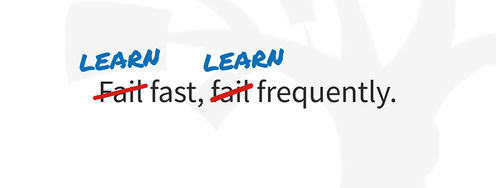
In some cultures, people never recover from failure, and Don Norman says this is wrong. In other cultures, failure is seen as a way to learn. David Kelley, the founder of design firm IDEO, once said, “Fail faster, succeed sooner.” Don says this is good, but encourages us to take it one step further,

Social shares
590
Published
Read Article
Read full article
How to Apply Incremental Modular Design to Global Challenges - Article hero image
Interaction Design Foundation logo

How to Apply Incremental Modular Design to Global Challenges

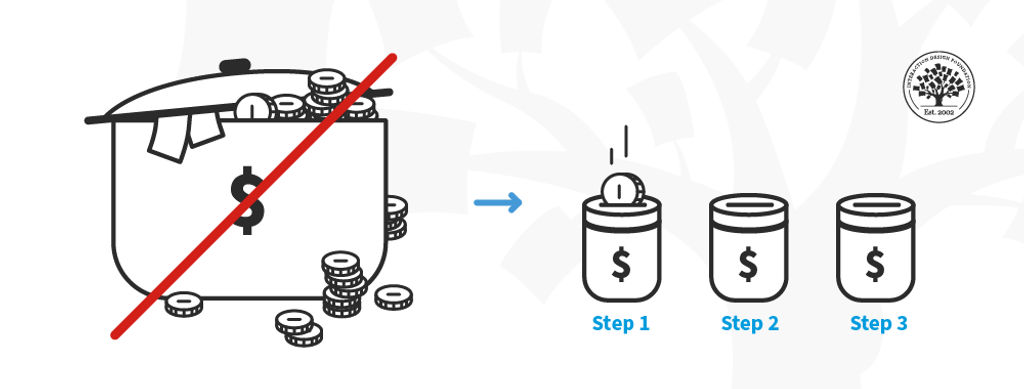
Incrementalism or muddling through offers a flexible way to approach complex problems. However, pitching to funders who want to see concrete results from their investments can be difficult. To address this, Don Norman offers a modified version of incrementalism that borrows concepts from software de

Social shares
438
Published
Read Article

How to Apply Incremental Modular Design to Global Challenges

How to Apply Incremental Modular Design to Global Challenges

Incrementalism or muddling through offers a flexible way to approach complex problems. However, pitching to funders who want to see concrete results from their investments can be difficult. To address this, Don Norman offers a modified version of incrementalism that borrows concepts from software development. Here he explains the idea of incremental modular design.

Transcript

Key Features of Incremental Modular Design

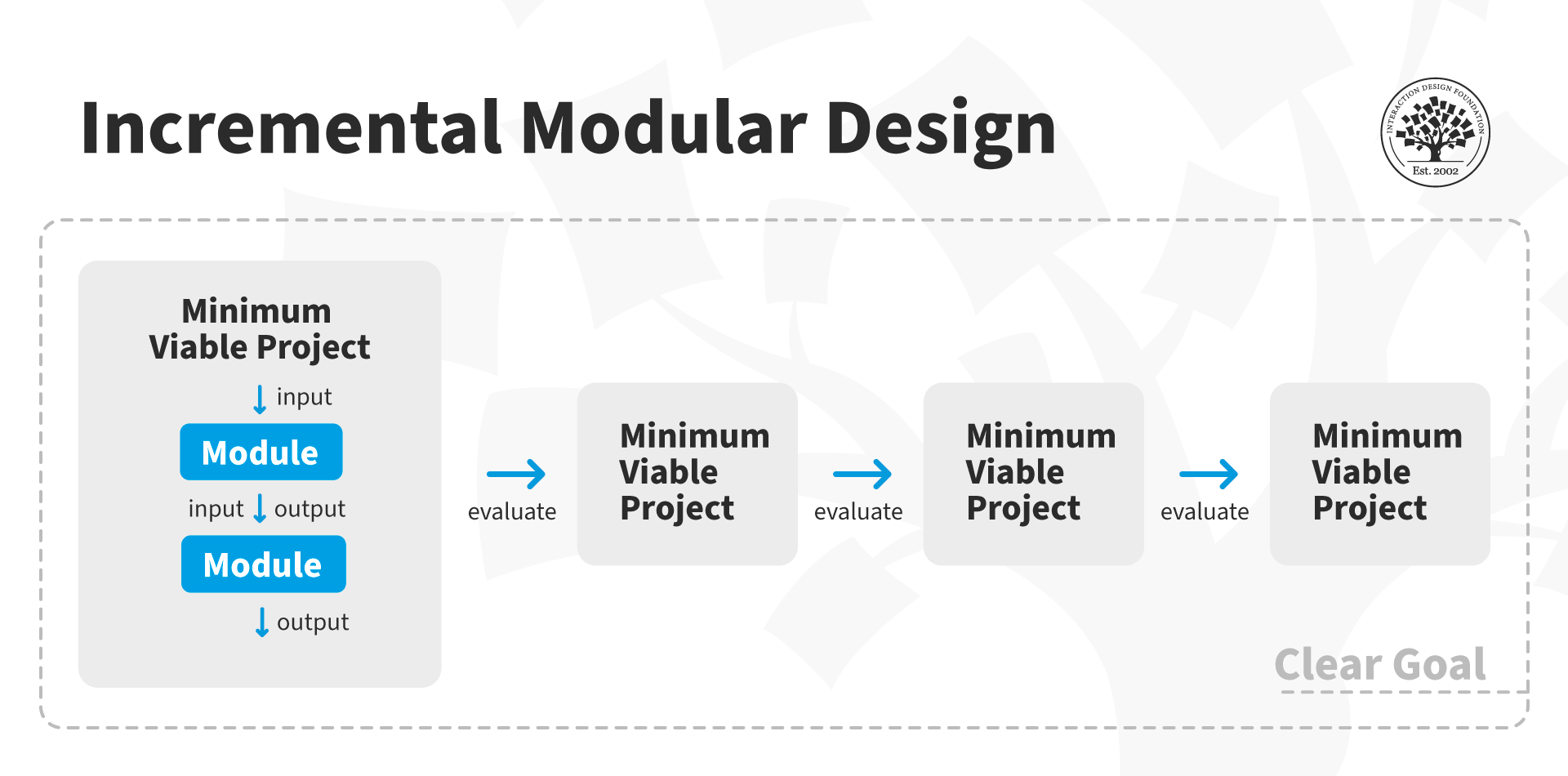
  1. Define the goals: Get everyone—the funders, the communities, and all the stakeholders—to agree on the goals of the large project. 

  2. Democratize design: Involve the people we are designing for, through methods such as participatory design. They will identify their problems and needs and help us develop solutions.

  3. The minimum viable project: Deliver the solution in small steps, analyze the results, and decide the next course of action based on the analysis. 

  4. Independent modules: Develop modules with clearly defined input and output requirements but hidden internal workings. Teams must be able to change how the modules work internally without affecting the inputs and outputs.

Advantages of Incremental Modular Design

We can adapt to different social and technical conditions when we have a clear goal and use multiple smaller projects divided into standalone modules.

© Interaction Design Foundation, CC BY-SA 4.0

Incremental modular design offers flexibility in terms of:

  1. Requirements: As the team delivers, tests and learns from each incremental step, it can adapt and course-correct easily and even tweak the requirements if needed.

  2. Module replacement: Since modules are independent, the team can update any module without harm to the system as long as the input and output requirements remain the same.

  3. Local adaptation: It doesn’t matter how the module works internally. So, the team can change the internal workings to suit local cultures.

The Take Away

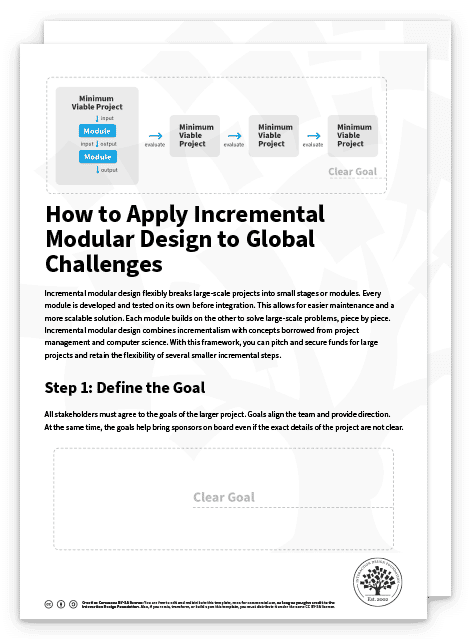
Incremental modular design combines incrementalism with concepts borrowed from project management and computer science. Teams divide a project into relatively small steps, then each step into modules. Each module has predefined input and output requirements, which they use to evaluate their progress. Each module should produce a useful result, which the team can test to ensure it meets the input and output requirements. How each module works internally does not matter as long as the module meets the requirements.

With this framework, teams can pitch and secure funds for large projects and retain the flexibility of several smaller incremental steps. 

Download this step-by-step guide on incremental modular design to tackle large problems flexibly.

Advance Your Career With This Free Template for “How to Apply Incremental Modular Design to Global Challenges”
How to Apply Incremental Modular Design to Global Challenges
We respect your privacy
Get 1 powerful email each week: Design a life you love!

References and Where to Learn More

For more on incremental modular design, see Don Norman’s book Design for a Better World: Meaningful, Sustainable, Humanity Centered.

Additional resources from the book “Design for a Better World” are available at the Resources for DBW website.

Read more articles and essays by Don Norman on JND.org.

Incremental modular design borrows from agile principles. Take the course Agile Methods UX Design to learn more (included in your IxDF membership).

Here is a quick overview of Agile Development.

The goal of agile design is not to be perfect, but “good enough” and deliver results iteratively. This article expands on this notion further in the context of agile, and the same applies to incremental modular design:
How to Succeed as a Designer on Agile Teams: Embrace Imperfection

What are Minimum Viable Products?

Hero image: © Interaction Design Foundation, CC BY-SA 4.0

Feel Stuck?
Want Better Job Options?

AI is replacing jobs everywhere, yet design jobs are booming with a projected 45% job growth. With design skills, you can create products and services people love. More love means more impact and greater salary potential.

At IxDF, we help you from your first course to your next job, all in one place.

See How Design Skills Turn Into Job Options
Privacy Settings
By using this site, you accept our Cookie Policy and Terms of Use.
Customize
Accept all

Be the One Who Inspires

People remember who shares great ideas.

Share on:

Academic Credibility — On Autopilot

Don't waste time googling citation formats. Just copy, paste and look legit in seconds.