Socio-Technical Systems

Your constantly-updated definition of Socio-Technical Systems and collection of videos and articles.
Be a conversation starter: Share this page and inspire others!

887 Shares

What are Socio-Technical Systems?

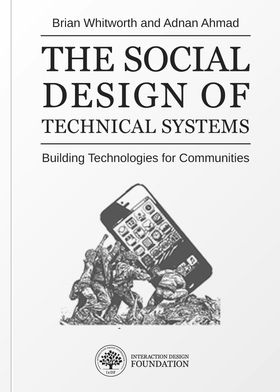
A socio-technical system (STS) is one that considers requirements spanning hardware, software, personal, and community aspects. It applies an understanding of the social structures, roles and rights (the social sciences) to inform the design of systems that involve communities of people and technology. Examples of STSs include emails, blogs, and social media sites such as Facebook and Twitter.

Transcript

The basis of STSs is general systems theory, which describes what the disciplines of science have in common—i.e., that they all refer to systems: sociologists see social systems, psychologists cognitive systems, computer scientists information systems, and engineers hardware systems. In general systems theory, no discipline has a monopoly on science—all are valid.

These disciplinary perspectives on computing allow us to view computing through distinct levels and trace its evolution. Computing began at the mechanical level (hardware devices), evolved an information level (devices + software), then acquired a human level (IT + human-computer interaction), and finally a community level (STSs). A community works through people using technology, as people work through software using hardware. Consequently, social requirements are now an important part of computing design.

While sociologists study the social level alone as if it were apart from physicality, and technologists study technology as if it were not part of society, socio-technology is a distinct field of inquiry on how personal and social requirements can be met by IT system design. As such, STSs seek to merge people and technology, viewing the integration of computers into societal systems as the next evolutionary step of humanity. An STS approach to design raises the cost of development but results in complex systems, like social networks, that have far more performance potential. Exploring a design problem by rising to an STS mindset can reveal further dimensions of a design’s use potential and inspire development.


Questions About Socio-Technical Systems?
We've Got Answers!

What is an example of a socio-technical system?

Social media platforms are prime examples of socio-technical systems. Take Facebook as a case. It combines technology with human interaction. People connect, share, and communicate through this digital platform. Facebook uses complex algorithms and software. It also relies on users to create, share, and engage with content. This interaction between human behavior and technological infrastructure makes it a socio-technical system. It showcases how technology and social dynamics intertwine to form a unified system.

What is the socio-technical systems theory?

Socio-technical systems theory explores how social and technical elements interact. Organizations work best when their social and technological parts align. Socio-technical systems theory believes people and technology should not be separated in analysis. Instead, you should view them as interconnected parts of a whole system. This approach helps design strategies that consider human needs and technological capabilities. It aims to create a balanced environment where technology supports human roles and social structures. The theory applies to workplace design, software development, and organizational change management.

What is a socio-technical system in software engineering?

A socio-technical system (STS) in software engineering is the complex interplay between social aspects (people, organizations, cultures) and technical aspects (machines, software, hardware, etc.) of a system. It underlines the idea that the design and functioning of organizational systems are influenced not only by the technical elements of tools and methods used but also by social factors such as human interactions, values, norms, and expectations.

Watch the video below to learn more about the complexity of understanding socio-technical systems. It emphasizes the challenges people face in grasping these interconnected systems.

Transcript

Understanding the socio-technical system in software engineering can help teams better design, implement, and maintain software systems. It helps teams acknowledge that a change in the technical parts of a system may impact the social aspects and vice versa. This approach encourages a holistic view of systems, considering all aspects that will play a role in successfully developing, deploying, maintaining, and improving software systems.

What are the characteristics of socio-technical systems?

Characteristics of socio-technical systems include:

  • Integration of Social and Technical Elements: These systems blend technology with human social elements.

  • User-Centric Design: Designers focus on designing systems based on how people interact with the technology.

Transcript

  • Adaptability: They are flexible and can adapt to changes in social or technical environments.

  • Complex Interactions: These systems feature complex interactions between people, technology, and the environment.

  • Goal-oriented: They aim to achieve specific objectives, balancing technical efficiency with social needs.

  • Collaborative Nature: They often involve collaboration among stakeholders. 

  • Evolutionary Development: They evolve through continuous feedback and learning.

  • Interdisciplinary Approach: Their development and analysis need engineering, sociology, and psychology knowledge.

What are the five components of the socio-technical system?

The five components of a socio-technical system are:

  • Goals and Values: Define the purpose and guiding principles of the system. They shape how the procedure operates and its ultimate objectives.

  • Technical: Comprise the tools, technologies, and techniques used in the system. They enable the system to function and achieve its goals.

  • Structural: Involve the organizational framework and roles within the system. They dictate how you coordinate tasks and distribute responsibilities.

  • Psychosocial: Relate to the human aspects, including relationships, teamwork, and communication. They impact the well-being and collaboration of individuals within the system.

  • Managerial: Include leadership and management practices guiding the system. They play a crucial role in decision-making, strategy, and system optimization.

What are the principles of the socio-technical approach?

The 6 principles of the socio-technical approach are:

1. Compatibility: The system should be compatible with the organization's objectives, users' skills, and environment. Technology should support and not interfere with organizational activities.

2. Optimization of social and technical elements: The system's social and technical elements must be jointly optimized to ensure system success. This means keeping a balance. Improvements in one aspect should not deteriorate the other.

3. Adaptability: The system should adapt to environmental changes, like market shifts or regulatory adjustments.

4. Human Values: The system should consider the values, comfort, safety, and satisfaction of all stakeholders, leading to a work environment that encourages employee well-being and productivity.

5. Socio-technical Systems are Irreducible: The system viewed as a whole differs from the sum of its parts. Unintended consequences may arise from changing a single component, affecting the entire system.

6. Variety: The systems should be designed to handle the maximum variety of tasks, situations, or problems.

These principles' clear understanding and application lead to more effective and sustainable system designs.

How is social-systems theory different from socio-technical theory?

Differences between Social-Systems Theory and Socio-Technical Theory:

  • Focus: Social-Systems Theory concentrates on social structures, roles, and interactions. The socio-technical theory integrates these social aspects with technical systems.

  • Components: Social-Systems Theory deals primarily with human relationships and societal norms. Socio-Technical Theory considers both human and technological elements.

  • Application: Social-Systems Theory applies to understanding and analyzing social groups and organizations. Socio-Technical Theory applies to designing and improving systems involving technology and human interaction.

  • Goal Orientation: Social-Systems Theory aims to understand social dynamics. Socio-Technical Theory seeks to create balanced and effective systems combining social and technical factors.

Where to learn more about socio-technical systems?

To deepen your understanding of socio-technical systems, consider these two resources:

  • Read an article on Complex Socio-Technical Systems: This article talks in detail about complex socio-technical systems. It covers topics like:

  • The definition of complex socio-technical systems.

  • The complexity of the human world.

  • Strategies for handling complex socio-technical systems.

  • Watch the ‘21st-century design’ video: In the video, Don Norman discusses the concept of "complex socio-technical systems" and their relation to "wicked problems." He explains why people avoid the term "wicked problem" due to its ambiguity and overuse.

Transcript

Take the Course with Don Norman: Enroll in "Design for the 21st Century" to learn from Don Norman. It helps you apply your design skills to address global challenges using socio-technical systems.

What are socio-technical systems from design methods?

Socio-technical systems from design methods refer to systems integrating social and technical components. This perspective focuses on creating solutions that consider technology and the human aspects. In this context:

  • User-Centered Design: Prioritizes the users' needs, experiences, and behaviors. It ensures the system is intuitive, usable, and satisfies user requirements.

Copyright
Transcript

  • Collaborative Design: Involves stakeholders in the design process, including users. This collaboration helps understand the social context and better align with user needs.

  • Iterative Development: Encourages refining and improving the system through continuous feedback from users and stakeholders.

  • System Flexibility: Designs systems that can adapt to changes in social or technological environments.

  • Holistic Approach: Considers the broader impact of the system, including societal, organizational, and ethical implications.

Learn More About Socio-Technical Systems

Make learning as easy as watching Netflix: Learn more about Socio-Technical Systems by taking the online IxDF Course Design for a Better World with Don Norman.

Why? Because design skills make you valuable. In any job. Any industry.

In This Course, You'll

  • Get excited when you use humanity-centered design to improve lives and solve global challenges. Don Norman's insights aren't just game-changing, they're world-changing. Between 2030 and 2050, the climate crisis is projected to cause about 250,000 additional deaths every year. This course gives you the tools to use Design Thinking and timeless, human-centered skills to drive positive change and shape a more sustainable future. You'll learn to solve real-world problems like climate change, inequality, wars, and waste. You'll get the confidence and practical methods to create solutions that make a real impact, locally and globally.

  • Make yourself invaluable with in-demand skills to tackle both small and large-scale projects. You'll discover how to mobilize people towards common goals, overcome resistance to change, and move into leadership roles that influence systemic change. This course will give you the tools to solve complex socio-technical problems in any industry. You'll position yourself as an expert in eco-friendly solutions. You'll learn how to drive lasting business success with circular design solutions that reverse harm and design a better world.

  • Gain confidence and credibility as you use design as a way of thinking to influence entire ecosystems! No matter your background, you'll apply your new skills from day one. Step-by-step, you'll learn to apply incremental modular design, measure what truly matters, and incorporate AI into your work. You'll master timeless human-centered skills like empathy, ethics, systems thinking, creativity, and deep societal insight that form the foundation of humanity-centered design. As AI accelerates ideation, prototyping, and simulation in complex challenges, these uniquely human perspectives become even more powerful: They turn AI into your superpower for creating meaningful, ethical, and genuinely sustainable design outcomes that only your human insight can deliver. It's easier than you think! The optional portfolio case study helps you identify organizations that truly make a difference, and quickly spot those that are merely superficial. With downloadable templates and guided projects, the Design for a Better World course gives you the tools to build real expertise and create solutions that make a difference.

It's Easy to Fast-Track Your Career with the World's Best Experts

Master complex skills effortlessly with proven best practices and toolkits directly from the world's top design experts. Meet your expert for this course:

  • Don Norman: Father of User Experience (UX) Design, author of the legendary book “The Design of Everyday Things,” co-founder of the Nielsen Norman Group, and former VP of the Advanced Technology Group of Apple.

Get an Industry-Recognized IxDF Course Certificate

Increase your credibility, salary potential and job opportunities by showing credible evidence of your skills.

IxDF Course Certificates set the industry gold standard. Add them to your LinkedIn profile, resumé, and job applications.

Course Certificate Example

Be in distinguished company, alongside industry leaders who train their teams with the IxDF and trust IxDF Course Certificates.

Our clients: IBM, HP, Adobe, GE, Accenture, Allianz, Phillips, Deezer, Capgemin, Mcafee, SAP, Telenor, Cigna, British Parliament, State of New York

All Free IxDF Articles on Socio-Technical Systems

Feel Stuck?
Want Better Job Options?

AI is replacing jobs everywhere, yet design jobs are booming with a projected 45% job growth. With design skills, you can create products and services people love. More love means more impact and greater salary potential.

At IxDF, we help you from your first course to your next job, all in one place.

See How Design Skills Turn Into Job Options
Privacy Settings
By using this site, you accept our Cookie Policy and Terms of Use.
Customize
Accept all

Be the One Who Inspires

People remember who shares great ideas.

Share on:

Academic Credibility — On Autopilot

Don't waste time googling citation formats. Just copy, paste and look legit in seconds.