Illustration of a designer trying to introduce a light bulb to a community with no electricity.

Human-Centered Design: How to Focus on People When You Solve Complex Global Challenges

by Rikke Friis Dam • 11 min read

578 Shares

When we design products and services, we use human-centered design insights to help us focus on the people. But how do we focus on the people in the context of complex global challenges? What should we be aware of? What are the pitfalls? And when should we reach out to help people? In this video, Don Norman will tell you how he thinks we can learn from the people-centered principle of human-centered design and how we can strive to solve complex global challenges.

“When you design, you have to understand what the capabilities are of the people you're designing for.”

Don Norman: Father of User Experience design, author of the legendary book The Design of Everyday Things, co-founder of the Nielsen Norman Group, and former VP of the Advanced Technology Group at Apple.

So, how can we start to leverage the power and insights of the local people? Don Norman, who coined the term “user experience,” will help us understand how to use community-based design and let the people drive the projects. Let’s watch.

Copyright
Transcript

The 4 Principles of Human-Centered Design: People-Centered
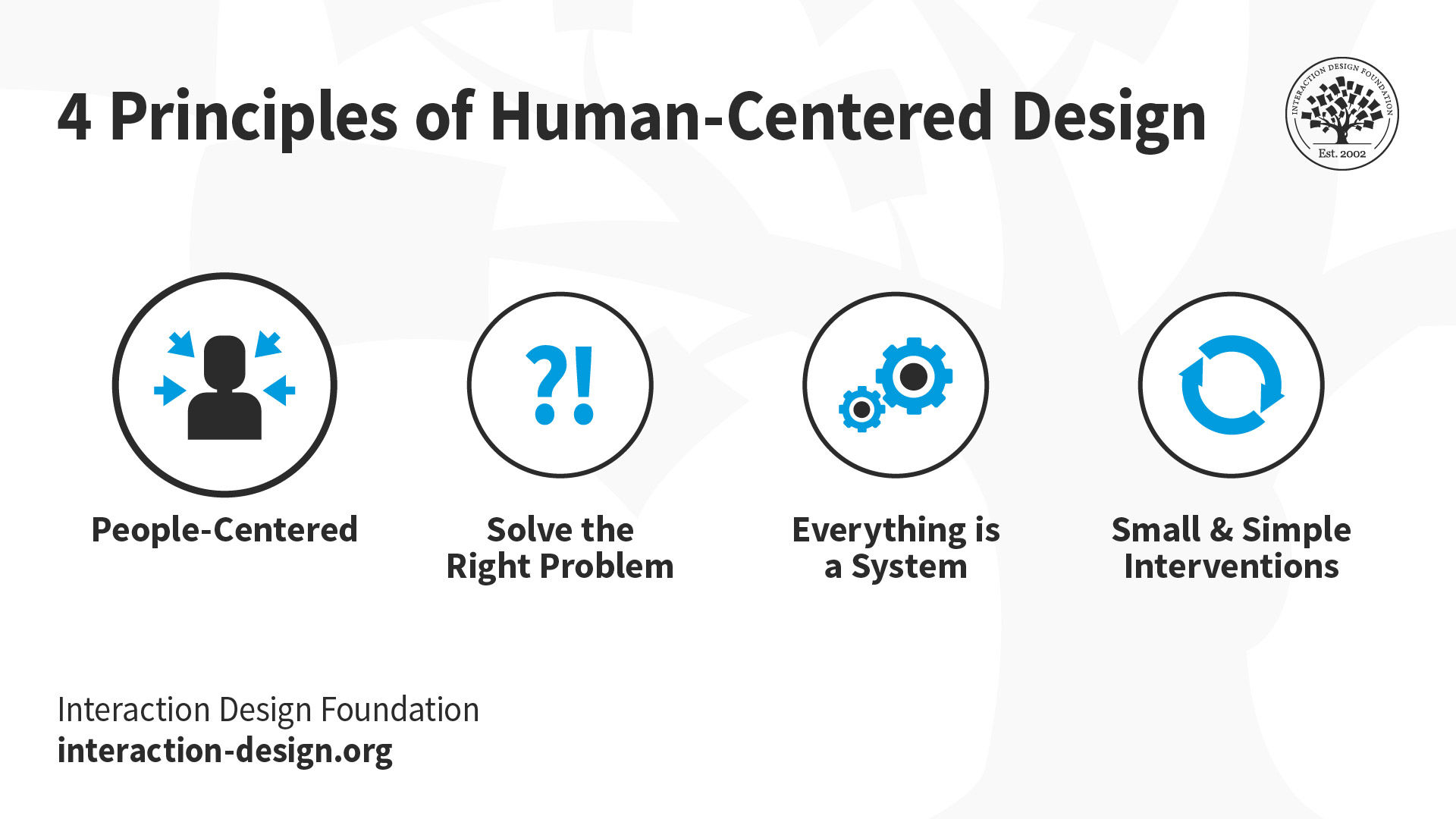
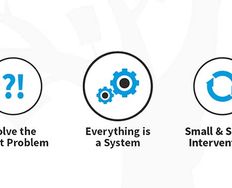
Text that says 4 Principles of Human-Centered Design. The first is People-Centered, which is highlighted. The second is Solve the Right Problem, the third is Everything is a System and the fourth is Small and Simple Interventions.

People are at the heart of human-centered design. As Don Norman explains above, when we tackle complex global challenges, we should not design for people. Instead, we should involve and design with the people who are closest to those challenges.
© Interaction Design Foundation, CC BY-SA 3.0

References and Where to Learn More

Read Don’s insight-laden book The Design of Everyday Things to learn more about Human-Centered Design.

Ready to shape the future, not just watch it happen? Join the Father of UX Design, Don Norman, in his two courses, Design for the 21st Century and Design for a Better World, and turn your care for people and the planet into design skills that elevate your impact, your confidence, and your career.

Images

© Interaction Design Foundation, CC BY-SA 3.0
Learn More in This Course:

Design for a Better World with Don Norman

6 days
52 % booked
View Course

What You Should Read Next

  • Read full article
    What Are Wicked Problems and How Might We Solve Them? - Article hero image
    Interaction Design Foundation logo

    What Are Wicked Problems and How Might We Solve Them?

    Have you ever come across a problem so complex that you struggled to know where to start? Then you might have stumbled upon a wicked problem. While wicked problems may not have a definite solution, there are certainly things you can do to mitigate any negative effects. When you learn how to tackle w

    Social shares
    1.2k
    Published
    Read Article
  • Read full article
    System Usability Scale for Data-Driven UX - Article hero image
    Interaction Design Foundation logo

    System Usability Scale for Data-Driven UX

    Ever wondered how the top designers, researchers, and product developers manage to create products that are user-friendly, efficient, and enjoyable—consistently? One of the key things there is what’s called the System Usability Scale (SUS), a vital tool and questionnaire-based method that profession

    Social shares
    932
    Published
    Read Article
  • Read full article
    The Future of Design—What’s Next? - Article hero image
    Interaction Design Foundation logo

    The Future of Design—What’s Next?

    The design profession is evolving, and it’s up to designers to shape their future. Traditional design was focused on aesthetics, the visual appeal. Up until the 20th century, generally designers were not included in strategic decisions; they were thought of as simply producers, as craftspeople. Now,

    Social shares
    681
    Published
    Read Article
  • Read full article
    Emotion and Design - Article hero image
    Interaction Design Foundation logo

    Emotion and Design

    Factors specific to the things we use in our everyday lives influence how we feel when we are using them. It is, therefore, the role of designers to both understand how we are affected by the products they design, and how they can be developed to (on a small scale) improve the associated user experi

    Social shares
    645
    Published
    Read Article
  • Read full article
    The 4 Types of Designers Who Will Thrive in 2030 (And the One Most Schools Still Ignore) - Article hero image
    Interaction Design Foundation logo

    The 4 Types of Designers Who Will Thrive in 2030 (And the One Most Schools Still Ignore)

    What is the future of design? Which skills will you need in the 21st century? In this video, Don Norman gives four examples of the tasks that designers might be doing in the 21st century, and the four types of designers that will be needed.“So there you are. Four different kinds of design problems,

    Social shares
    637
    Published
    Read Article
  • Read full article
    Don Norman: How You Can Rapidly Move Up by Thinking in Systems (Not Features) - Article hero image
    Interaction Design Foundation logo

    Don Norman: How You Can Rapidly Move Up by Thinking in Systems (Not Features)

    How can you move up in a company? Learn the fundamentals of business such as statistics, finance, accounting, marketing, supply chain and administration. How do you do that? One way to do this is to get a Master of Business Administration (MBA) degree. But Don says you can also learn them without go

    Social shares
    597
    Published
    Read Article
  • Read full article
    How to Explain Complex Design Ideas So People Get Excited and Promote You - Article hero image
    Interaction Design Foundation logo

    How to Explain Complex Design Ideas So People Get Excited and Promote You

    You are an expert! If you want to move up in a company or convince people to support your ideas, you need to communicate your expertise and excitement clearly. Sounds easy, right? The problem is that the more expertise you have, the harder it can be to communicate. In this video, Don Norman shares h

    Social shares
    596
    Published
    Read Article
  • Read full article
    If You Don’t Fail, You’re Not Trying Hard Enough - Article hero image
    Interaction Design Foundation logo

    If You Don’t Fail, You’re Not Trying Hard Enough

    In some cultures, people never recover from failure, and Don Norman says this is wrong. In other cultures, failure is seen as a way to learn. David Kelley, the founder of design firm IDEO, once said, “Fail faster, succeed sooner.” Don says this is good, but encourages us to take it one step further,

    Social shares
    590
    Published
    Read Article
  • Read full article
    Don Norman’s Top Tips from the Design for the 21st Century Course - Article hero image
    Interaction Design Foundation logo

    Don Norman’s Top Tips from the Design for the 21st Century Course

    The design field is evolving. It’s been proven that aside from driving business success and delivering beautiful and successful products, design can be pivotal to solving complex human issues. For instance, GE Healthcare used Design Thinking to improve the MR scanner experience for children—which is

    Social shares
    566
    Published
    Read Article
  • Read full article
    How You as a Lone Designer Can Change the World - Article hero image
    Interaction Design Foundation logo

    How You as a Lone Designer Can Change the World

    Has Don Norman convinced you to work on important societal issues? As a lone designer, what can you do? If you are a new designer who has just graduated from design school, an experienced designer, or a designer who would like to shift your company’s path toward helping the world, there are ways to

    Social shares
    557
    Published
    Read Article

Top Articles

Top Topic Definitions

Feel Stuck?
Want Better Job Options?

AI is replacing jobs everywhere, yet design jobs are booming with a projected 45% job growth. With design skills, you can create products and services people love. More love means more impact and greater salary potential.

At IxDF, we help you from your first course to your next job, all in one place.

See How Design Skills Turn Into Job Options
Privacy Settings
By using this site, you accept our Cookie Policy and Terms of Use.
Customize
Accept all

Be the One Who Inspires

People remember who shares great ideas.

Share on:

Academic Credibility — On Autopilot

Don't waste time googling citation formats. Just copy, paste and look legit in seconds.

Feel Stuck? Want Freedom?

Join 326,029+ designers who get one powerful email each week. Learn to design a life you love.

Next email in
1
day
13
hrs
32
mins
34
secs

Free forever. No spam. Unsubscribe anytime.