People-Centered Design

Your constantly-updated definition of People-Centered Design and collection of videos and articles.
Be a conversation starter: Share this page and inspire others!

98 Shares

What is People-Centered Design?

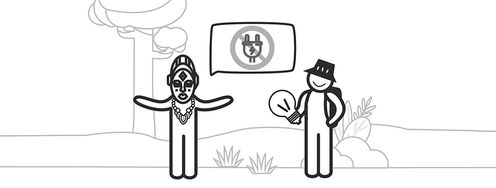
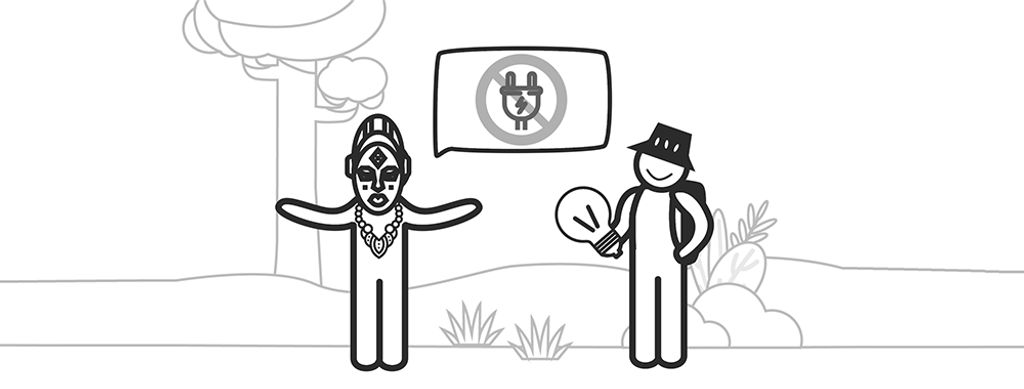
People-centered design is a practice where designers focus on specific people’s needs, taking the time to learn from particular populations. “People-centered” is a human-centered design principle. Designers can co-create proper solutions when they live among their target groups, tap their insights and find real issues.

“When you design, you have to understand what the capabilities are of the people you're designing for.”
— Don Norman, “Godfather of User Experience

See why people-centered design is vital to finding the best solution to a certain group’s problem.

Copyright
Transcript

The Peoples of the World Need Solutions That They Help Customize

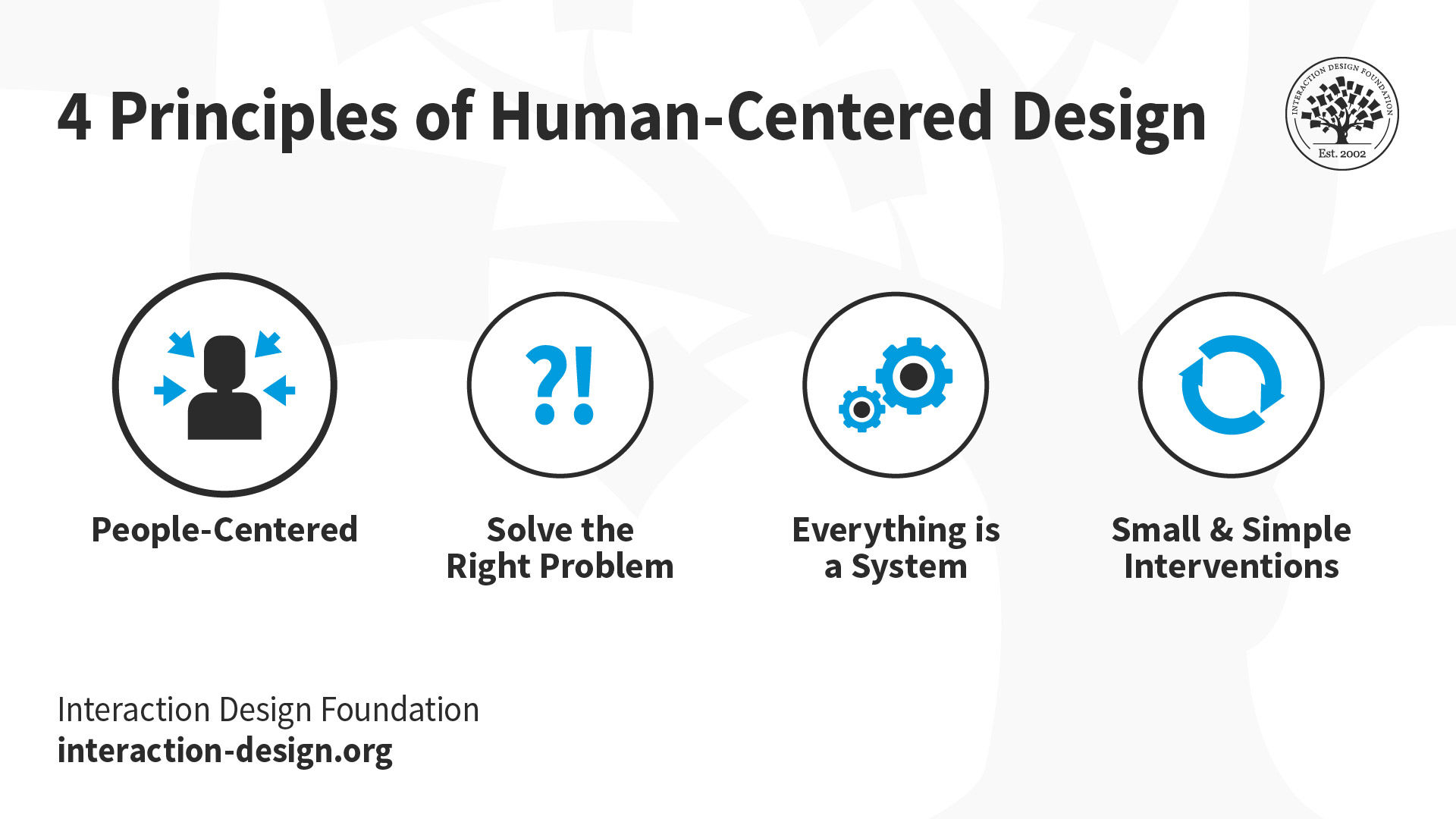
Cognitive science and usability engineering expert Don Norman saw the need to evolve away from user-centered design to give designers a more humanized view of their responsibilities to the people they design for. Human-centered design represents the shift towards that, on the road to humanity-centered design, which is the ultimate challenge for us as designers in helping the people we design for improve their lives. People-centered design is a refined term for human-centered design, comprising four principles: People-centered, Solve the right problem, Everything is a system and Small & simple interventions.
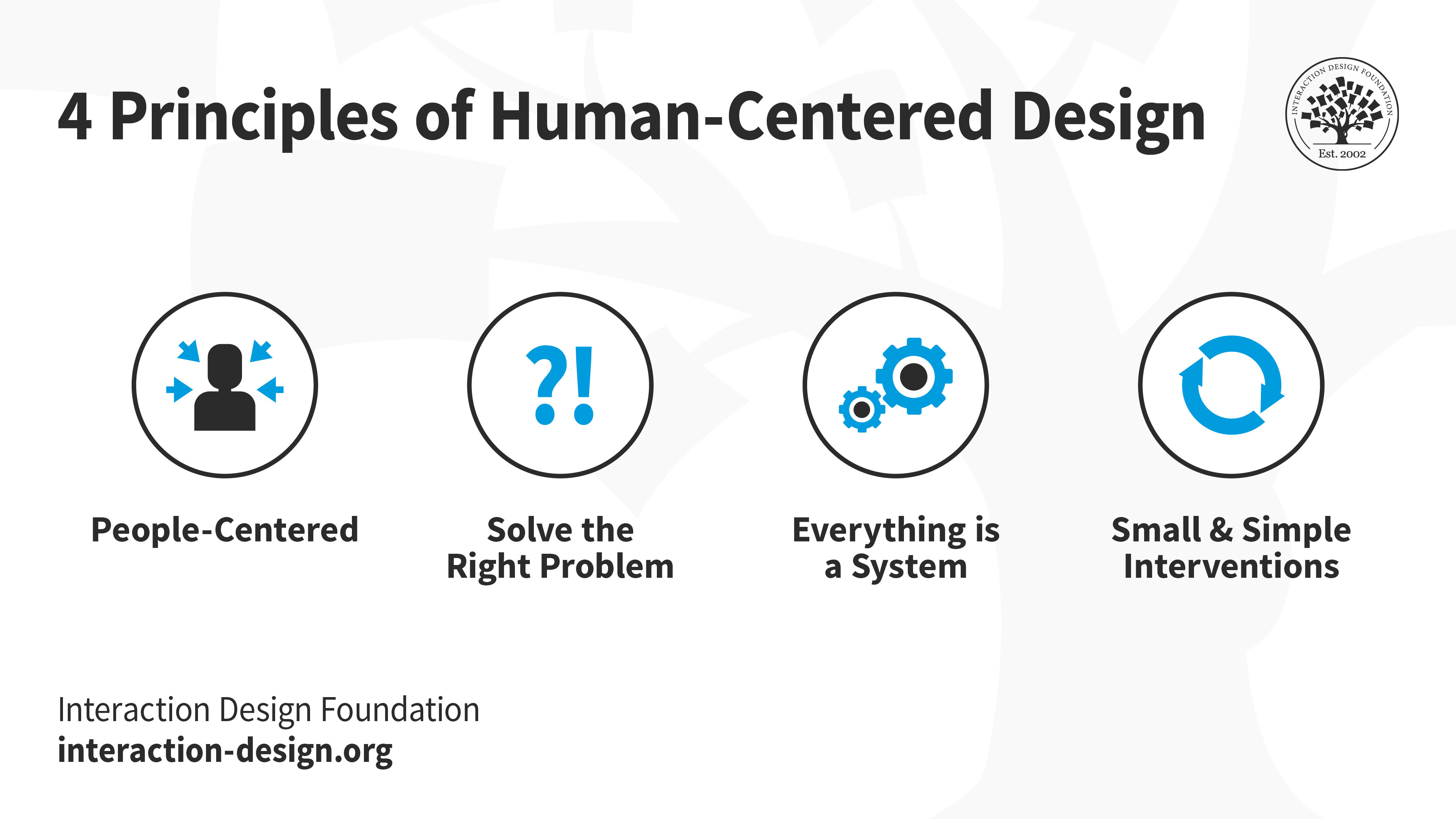
People-Centered is the first of the four principles of Human-Centered Design. The other principles are Solve the Right Problem, Everything is a System, and Small & Simple Interventions.

© Daniel Skrok and Interaction Design Foundation, CC-BY-SA 3.0

People-centeredness is a way to design for people in unfamiliar settings. The traditional approach to designing for “foreign” groups is a Western-centric one. Indeed, the West has access to the most advanced technologies and possesses vast economic resources to deliver intricately grand solutions. However, with that comes a problem. Western-based (or -oriented) designers tend not to understand the people they want to help, since they rarely spend longer than several weeks with them in their location. And because design teams tend to rush to a solution with only a Western perspective on problems, they run into difficulties by failing to do one or more of the following:

●      Appreciate that the people in the areas they have entered often already have a solid understanding of what they need.

●      Understand what these people really need and strive for, and what their environment lets them do.

●      See past the illusion of big fixes that “should work” on paper (but fail when implemented). Large-scale interventions can prove disastrous because:

  • The people and their governing entities get frustrated at not having effective results fast enough, and politics get in the way.

  • The sheer expense of large-scale projects causes problems, particularly through the waste from a failed solution.

  • The local populations can’t understand or maintain the solution. For example, there’s no point in installing sophisticated infrastructure if the local people don’t have the resources to repair it.

  • The time a large-scale intervention takes means that the problem itself can change, or newer problems can arise.

It’s easy to overlook the fact that local populations very often know the nature of their issues. The old way of sending anthropologists to “understand” local people often blinds designers to this fact. While people who are experiencing problems may not be able to dig their way out on their own, very often this is not due to a lack of knowledge or even ideas about good solutions.

School children gathered around a water pump in India. One child is operating the hand-pump, while another is drinking the freshly pumped water.

How to Apply People-Centered Design

Here’s how to work your way towards real solutions for real people around the world:

●      Spend years in the location. It’s the only way to discover the true nature of the problems in an area and gather invaluable insights.

●      Collaborate closely with the local populations. Earn their trust, learn their language and closely study what they show you about the world through their eyes. Many are creative and imaginative, and understand their problems as well as their own capabilities and limitations.

●      See everything as a system. Even the most simple-looking problems are usually intricately intertwined. So, aim past the symptoms (although symptoms still need treatment) to get at the root causes in the “big picture.”

●      Co-design with your population. Where the community drives things, you’re more likely to do things that the local people accept, and achieve real change. Get these people on board; let them contribute to the research, ideation, prototyping and production processes the solution involves. If they’re invested in the solution like this, they’ll feel ownership and be able to step in to fix things if the solution breaks or fails; or even improve it. Also, small and simple interventions work far better than grandiose, expensive big fixes (which often fail disastrously).

●      Keep an open eye on the solutions the population has attempted themselves. Understand what the people intended to do. If these were abandoned, learn why they failed. For example, was it the wrong technology? Did a natural disaster render them useless?

●      Remember that “foreign” can mean within your own country, province/state or even city. Regional disparity can mean huge differences in quality of life over just a matter of a few miles.

Overall, an approach to helping other populations achieve better lives and self-sustainability means involving them as co-creators and respecting their dignity and what they have to offer.

Questions About People-Centered Design?
We've Got Answers!

What are the main goals of people-centered design?

People-centered design aims to improve not just individual experiences but collective well-being. It focuses on designing with empathy for communities, emphasizing equity, inclusion, and long-term social impact. Unlike approaches that target user convenience alone, people-centered design tackles complex problems, such as sustainability, accessibility, and systemic inequality.

This approach values diversity and involves stakeholders throughout the process to ensure solutions reflect real-world contexts. It considers how design choices affect relationships, cultures, and ecosystems. For example, when redesigning public services, people-centered design ensures marginalized voices influence the outcome. Designers use it to drive ethical innovation, build trust, and create meaningful change.

Explore how to design with culture in mind, in this video with Alan Dix: Author of the bestselling book “Human-Computer Interaction” and Director of the Computational Foundry at Swansea University. 

Copyright
Transcript

How does people-centered design consider long-term impact on society and the planet?

People-centered design prioritizes long-term impact by aligning solutions with society's and the planet's well-being. It extends beyond solving immediate user needs to anticipate future consequences—socially, environmentally, and ethically. Designers who use this approach assess how products, systems, or services influence communities, ecosystems, and future generations.

This mindset leads to more sustainable, inclusive, and responsible outcomes. It encourages circular design, resource efficiency, and social equity. For instance, when designers approach urban infrastructure projects with a people-centered design mindset, they consider accessibility, climate resilience, and community cohesion over decades.

Since it embeds foresight and empathy into the design process, people-centered design helps prevent harm and fosters regenerative change.

Discover how circular design considerations help designers create durable, repairable, recyclable, and reusable solutions.

What role does ethics play in people-centered design?

Ethics sits at the very core of people-centered design. It guides designers to make decisions that respect human dignity, promote fairness, and reduce harm. Rather than focusing solely on what’s efficient or profitable, people-centered design asks, “Is this the right thing to do?”

Designers use ethical principles to assess the impact of their work on privacy, equity, sustainability, and power dynamics. They involve diverse voices, especially from vulnerable groups, to ensure outcomes serve the many, not just the privileged few. For example, ethical design practices might challenge algorithmic bias or prevent environmental degradation.

People-centered design builds trust and supports just, inclusive futures by embedding ethics into every step.

Gain a greater grasp of how to apply ethics in design; enjoy our Master Class Ethics in Design: A Practical Guide with Guthrie Weinschenk, COO, The Team W, Inc.

How can I involve communities in the design process?

To involve communities in the design process, treat them as equal partners, not just end users. Co-design sessions, workshops, and interviews empower people to share their needs, ideas, and lived experiences. Go beyond surveys, which lack the personal presence you need to access deeper, more “human” aspects. Meet communities where they are—in schools, local events, or online forums they already trust.

Use inclusive methods that encourage diverse participation, especially from marginalized voices. Prioritize transparency about goals, timelines, and how their input shapes outcomes. For example, inviting residents to map problems and co-create solutions in urban planning leads to designs that truly serve the community. Ongoing collaboration, not one-off feedback—builds trust and drives meaningful change for real people in the real world.

Above all, don’t design for a community; design with them by going out there and living in their world for a few years to get a clearer idea of the challenges and opportunities in their country.

Find out how designers can shift to focus on solving people’s real-world problems and make a better world in the process with design centered on communities.

Copyright
Transcript

What methods help me understand people’s real needs in context?

To understand people’s real needs in context, use immersive, qualitative methods like ethnographic research and contextual inquiries. These approaches place designers in users’ environments, where they can observe behaviors, routines, and pain points firsthand. Instead of relying on what people say, designers uncover what people actually do—and why.

Empathy mapping, journey mapping, and shadowing also reveal needs users may not articulate. For example, healthcare designers often shadow nurses during shifts to learn workflow challenges invisible in surveys. These methods uncover deep insights and help design solutions that fit real-life conditions—not assumptions.

To get a clearer understanding of what users really want, need, and expect in a design solution that works for them in their unique contexts and settings, explore ethnographic research.

How is people-centered design different from user-centered design?

People-centered design and user-centered design differ in scale and intent. User-centered design (UCD) focuses on optimizing the experience of individual users. It’s about improving usability, functionality, and satisfaction by tailoring products to user behaviors, goals, and pain points. UCD often answers, “How can we make this easier or better for a user?”

People-centered design takes a wider lens. It asks, “How does this design affect people, communities, and society as a whole?” It considers ethical implications, cultural impact, and long-term sustainability. For example, while UCD might enhance app navigation, people-centered design takes considerations further into how the app influences mental health, digital equity, or environmental impact. It’s not that UCD doesn’t care about people—indeed, the user’s welfare should always come first. It’s just that this broader perspective helps designers create solutions that support not just better use, but better lives, too.

Gain a clearer understanding of user-centered design and what it involves.

How can I balance user needs with environmental and societal needs?

To balance user needs with environmental and societal needs, design with a systems mindset. Everything is a system—or a part of one—so get things in context and work to understand user goals and then expand the lens to include long-term ecological and social impacts. Map stakeholders, supply chains, and lifecycle stages to identify ripple effects. Ask not only, “What does the user want?” but also, “What’s sustainable and fair?”

Use frameworks like circular design and regenerative thinking. For example, a food delivery app can satisfy user convenience while minimizing packaging waste and supporting local producers. If they’re to be part of creating a better world, designers must make trade-offs visible, involve diverse voices, and prioritize solutions that serve both people and the planet.

Explore systems thinking to find out how to get past the surface-level factors and down to the “guts” of the matter and what it’s connected to in the human and natural worlds.

How do I measure the success of a people-centered design project?

To measure the success of a people-centered design project, track both user outcomes and the broader social impact. Go beyond usability metrics, such as task completion or satisfaction scores, and assess long-term value for communities and ecosystems.

Use mixed methods: combine surveys, interviews, and observations with impact assessments or social return on investment (SROI) analyses. Include indicators like equity, inclusion, trust, accessibility, and environmental benefit. For example, a public transport redesign could measure reduced commute time and improved access for underserved neighborhoods. Involve caring stakeholders in defining success early on. Their insights ensure that metrics reflect lived realities, not just business goals. Ultimately, you want reports that mirror the “real deal” of how a project improved the lives of real people and why your design solution matters.

Listen to Don Norman’s important message about what designers must—and must not—do when tackling real-world problems that affect people, in this video.

Transcript

How can I make sure my design avoids harm to people or the planet?

To ensure your design avoids harm to people or the planet, identify potential risks early. Use ethical design frameworks, stakeholder mapping, and impact assessments to uncover how your choices affect users, communities, and ecosystems.

Involve diverse voices—especially from vulnerable groups—to reveal blind spots. Apply principles like inclusive design and sustainability. For example, a smart device might meet user needs, but if it fuels e-waste or reinforces surveillance, then it causes harm.

Designers should prototype responsibly, test for unintended consequences, and adjust based on real-world feedback. Always ask, “Who might this hurt, and how can we prevent that?”

Discover how designing with a circular economy in mind helps optimize resources and minimize negative impacts.

Norman, D. A. (2023). Design For A Better World: Meaningful, Sustainable, Humanity Centered. The MIT Press.

In Design for a Better World, “Godfather of user experience design” and pioneer Don Norman critiques traditional human-centered design, arguing for a shift toward humanity-centered design that prioritizes sustainability, ethics, and long-term impact. The book explores how human behavior has contributed to global crises, from climate change to social instability, and how design can be a tool for designers to make meaningful changes with. Norman emphasizes the importance of designing for quality of life, not just usability, advocating for a systemic approach that considers ecological and social factors. By rethinking design’s role in shaping the future, he presents a compelling vision for how designers can contribute to a more equitable and sustainable world.

Papanek, V. (2005). Design For The Real World: Human ecology and social change (2nd ed.). Chicago Review Press.

This title originally appeared in 1971 and so predates Don Norman’s humanity-centered design. Nonetheless, in Design for the Real World, Victor Papanek critiques conventional design practices, emphasizing designers' ethical responsibilities. Papanek argues against creating frivolous, unsafe, and environmentally harmful products, advocating instead for designs that address genuine human needs, particularly for marginalized communities.

Papanek introduces the concept of socially and ecologically responsible design, and he urges designers to consider the broader impacts of their work on society and the environment. The book challenges designers to move beyond aesthetics and market-driven motives, promoting a more humane and sustainable approach to design. Its enduring relevance has made it a seminal text in design education and catalyzed discussions on ethical design practices.

Earn a Gift Earn a Gift, Answer a Short Quiz!

1
2
3
4
1
2
3
4
Question 1
Question 2
Question 3
Get Your Gift
Interaction Design Foundation logo

Question 1

What is the main idea behind people-centered design?

1 point towards your gift

  • Design primarily for technological advancement to help people.
  • Focus on the specific needs and contexts of people.
  • Prioritize cost efficiency over user needs and wants.
Interaction Design Foundation logo

Question 2

Why should designers spend years in the locations where they are designing solutions?

1 point towards your gift

  • To discover the true nature of the problems and gather insights
  • To guarantee the use of the latest technologies and research
  • To work onsite with the people and lower the overall project cost
Interaction Design Foundation logo

Question 3

What principle in people-centered design involves the understanding of interconnected problems?

1 point towards your gift

  • Design for immediate results
  • Focus only on technological solutions
  • See everything as a system

Learn More About People-Centered Design

Make learning as easy as watching Netflix: Learn more about People-Centered Design by taking the online IxDF Course Design for the 21st Century with Don Norman.

Why? Because design skills make you valuable. In any job. Any industry.

In This Course, You'll

  • Get excited as you learn to design a better world. Whether you want to help families save money while reducing their carbon footprint, redesign how cities manage waste, or improve public health systems, this course will show you how. You don't need to be a designer. You just need the desire to make things better. Led by world-renowned designer Don Norman, you'll learn the powerful tools of human-centered design, systems thinking, and design thinking to tackle real-world challenges like climate change, inequality, public health, and more.

  • Make yourself invaluable when you build timeless human-centered design skills that are essential to make AI your superpower, so speed never comes at the cost of people's wellbeing. This course builds on and expands your deeply human skills like empathy, problem framing, and root-cause thinking that guide AI toward better, more responsible outcomes. You'll learn to apply these skills to drive innovation at work, lead meaningful projects, communicate your ideas clearly, and capture people's attention. This course helps you grow your impact, salary potential, and confidence—and feel deeply fulfilled. Did you know that design-driven companies are twice as likely to outperform their industry peers in revenue growth? The key is to go beyond traditional approaches and solve the real problems behind surface-level symptoms while integrating solutions seamlessly into real people's lives. You'll get the ability to design lasting change and learn how to work effectively with stakeholders to make it happen. You'll also discover how to move up in your company and take on bigger challenges.

  • Gain confidence and credibility as you apply your new skills from day one with ready-to-use templates such as the 5 Whys method. Create an optional case study aligned with the UN Sustainable Development Goals. By the end of this course, you'll have the skills and mindset to make a difference, whether that's in your job, your community, or the world. Let's co-create a better future starting now.

It's Easy to Fast-Track Your Career with the World's Best Experts

Master complex skills effortlessly with proven best practices and toolkits directly from the world's top design experts. Meet your expert for this course:

  • Don Norman: Father of User Experience (UX) Design, author of the legendary book “The Design of Everyday Things,” co-founder of the Nielsen Norman Group, and former VP of the Advanced Technology Group of Apple.

Get an Industry-Recognized IxDF Course Certificate

Increase your credibility, salary potential and job opportunities by showing credible evidence of your skills.

IxDF Course Certificates set the industry gold standard. Add them to your LinkedIn profile, resumé, and job applications.

Course Certificate Example

Be in distinguished company, alongside industry leaders who train their teams with the IxDF and trust IxDF Course Certificates.

Our clients: IBM, HP, Adobe, GE, Accenture, Allianz, Phillips, Deezer, Capgemin, Mcafee, SAP, Telenor, Cigna, British Parliament, State of New York

All Free IxDF Articles on People-Centered Design

Read full article
Human-Centered Design: How to Focus on People When You Solve Complex Global Challenges - Article hero image
Interaction Design Foundation logo

Human-Centered Design: How to Focus on People When You Solve Complex Global Challenges

When we design products and services, we use human-centered design insights to help us focus on the people. But how do we focus on the people in the context of complex global challenges? What should we be aware of? What are the pitfalls? And when should we reach out to help people? In this video, Do

Social shares
578
Published
Read Article

Human-Centered Design: How to Focus on People When You Solve Complex Global Challenges

Human-Centered Design: How to Focus on People When You Solve Complex Global Challenges

When we design products and services, we use human-centered design insights to help us focus on the people. But how do we focus on the people in the context of complex global challenges? What should we be aware of? What are the pitfalls? And when should we reach out to help people? In this video, Don Norman will tell you how he thinks we can learn from the people-centered principle of human-centered design and how we can strive to solve complex global challenges.

“When you design, you have to understand what the capabilities are of the people you're designing for.”

Don Norman: Father of User Experience design, author of the legendary book The Design of Everyday Things, co-founder of the Nielsen Norman Group, and former VP of the Advanced Technology Group at Apple.

So, how can we start to leverage the power and insights of the local people? Don Norman, who coined the term “user experience,” will help us understand how to use community-based design and let the people drive the projects. Let’s watch.

Copyright
Transcript

The 4 Principles of Human-Centered Design: People-Centered

Text that says 4 Principles of Human-Centered Design. The first is People-Centered, which is highlighted. The second is Solve the Right Problem, the third is Everything is a System and the fourth is Small and Simple Interventions.

People are at the heart of human-centered design. As Don Norman explains above, when we tackle complex global challenges, we should not design for people. Instead, we should involve and design with the people who are closest to those challenges.
© Interaction Design Foundation, CC BY-SA 3.0

References and Where to Learn More

Read Don’s insight-laden book The Design of Everyday Things to learn more about Human-Centered Design.

Ready to shape the future, not just watch it happen? Join the Father of UX Design, Don Norman, in his two courses, Design for the 21st Century and Design for a Better World, and turn your care for people and the planet into design skills that elevate your impact, your confidence, and your career.

Images

© Interaction Design Foundation, CC BY-SA 3.0

Feel Stuck?
Want Better Job Options?

AI is replacing jobs everywhere, yet design jobs are booming with a projected 45% job growth. With design skills, you can create products and services people love. More love means more impact and greater salary potential.

At IxDF, we help you from your first course to your next job, all in one place.

See How Design Skills Turn Into Job Options
Privacy Settings
By using this site, you accept our Cookie Policy and Terms of Use.
Customize
Accept all

Be the One Who Inspires

People remember who shares great ideas.

Share on:

Academic Credibility — On Autopilot

Don't waste time googling citation formats. Just copy, paste and look legit in seconds.